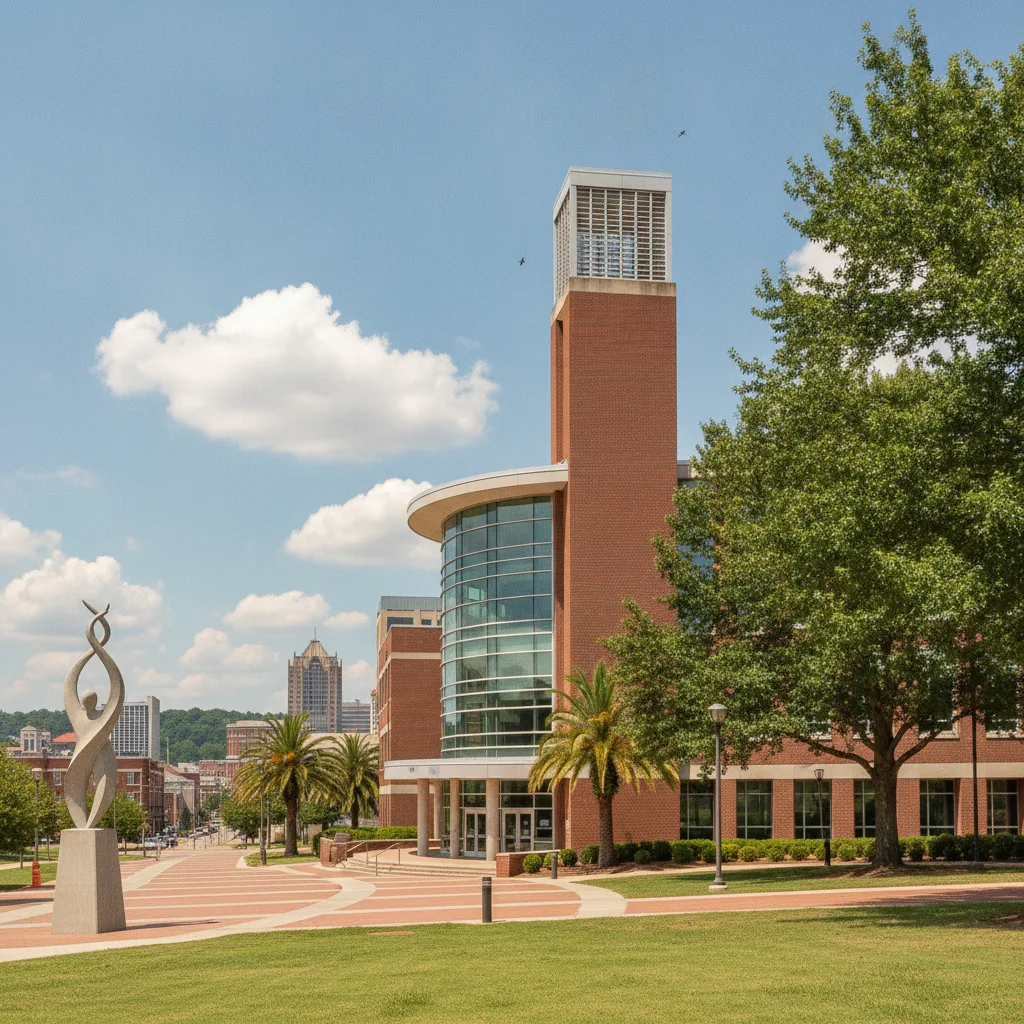
The Birmingham Civil Rights Institute Alabama stands as a powerful testament to a pivotal era in American history. Our team at Roam States recognizes its profound significance, not just as a museum, but as a living memorial dedicated to understanding the struggle for civil and human rights. This guide is designed to help you navigate your visit, offering confident and specific recommendations that cut through generic travel advice, ensuring you gain the most from this essential destination.
Why Visit Birmingham Civil Rights Institute
Visiting the Birmingham Civil Rights Institute is more than just a trip to a museum; it's an immersive journey into a crucial chapter of American history. We believe it's an essential experience for anyone seeking to understand the profound impact of the Civil Rights Movement and its enduring legacy. The institute serves as a vital connection to the Birmingham Civil Rights National Monument, a collection of sites that bore witness to the struggle for equality.
The exhibits here transport you to a segregated city in the 1950s, allowing for a visceral understanding of the challenges faced by African Americans during that era. You'll encounter powerful displays, including a replica of a Freedom Riders bus and the actual jail cell door from behind which Dr. Martin Luther King Jr. penned his iconic "Letter From Birmingham Jail". The institute's mission is to "enlighten each generation about civil and human rights by exploring our common past and working together in the present to build a better future". This commitment is evident in its comprehensive approach, preserving and telling Birmingham's story while fostering cultural awareness and dialogue. It's a place where history comes alive, offering invaluable lessons on courage, resilience, and the ongoing fight for justice.
Who It's Best For
The Birmingham Civil Rights Institute offers a profound experience for a diverse range of visitors. We specifically recommend it for:
- **History Enthusiasts:** Those with a deep interest in American history, particularly the Civil Rights Movement, will find the institute's extensive archives, oral histories, and detailed exhibits incredibly enriching. Scholars can even access the archives by appointment for research purposes.
- **Educators and Students:** The institute is an invaluable educational resource, offering programs and exhibits that make complex historical events accessible and engaging. School field trips are available for students in 3rd grade and above, with reservations recommended at least 30 days in advance.
- **Families with Older Children:** While children in 3rd grade and below visit for free, the powerful and sometimes intense nature of the exhibits means it's best suited for students in 3rd grade and above. It provides an excellent opportunity for meaningful discussions about social justice and historical events.
- **Advocates for Social Justice:** For individuals passionate about civil and human rights, the institute serves as a powerful reminder of past struggles and an inspiration for continued advocacy. It champions civil and human rights by facilitating an atmosphere of dialogue and understanding.
- **Anyone Seeking Reflection and Understanding:** Even if you don't fall into the above categories, the institute offers a space for contemplation and a deeper understanding of the human experience. The self-guided, multi-media tours typically take about 90 minutes, providing ample time for reflection.
The Birmingham Civil Rights Institute is fully accessible to all visitors, with accessible parking, ramps, and wheelchairs available at the Ticket Booth. A Sensory Room is also offered for guests needing a quiet space.
Getting There & Parking
Navigating to the Birmingham Civil Rights Institute is straightforward, as it's centrally located in the city's historic district. We've compiled the most current information to ensure your arrival is as smooth as possible.
How to Get There
The Birmingham Civil Rights Institute is located at 520 16th Street North, Birmingham, AL 35203. This area is highly walkable, placing you in immediate proximity to other significant sites like Kelly Ingram Park and the 16th Street Baptist Church.
- By Car: Driving is a common way to reach the institute. The road distance from Birmingham Airport (BHM) to the institute is approximately 5.6 miles, a drive that typically takes around 10 minutes.
- Public Transportation: The Birmingham-Jefferson County Transit Authority (BJCTA) provides public transport services with bus stops conveniently located within walking distance of the institute's entrance. MAX Transit offers fixed-route bus service throughout the Birmingham-Jefferson County area, with stops at key locations including the Civil Rights Museum. The Magic City Connector also runs along 20th Street, connecting various downtown Birmingham attractions.
- Ride-Sharing & Taxis: Taxis and popular ride-sharing services such as Uber and Lyft are readily available throughout the city. A taxi from Birmingham-Airport-BHM to the institute typically costs between $15 and $19 and takes about 10 minutes.
- Walking: If you're already exploring downtown Birmingham, the institute is easily accessible on foot.
Parking
For those driving, free parking for cars and buses is available behind the building, with access from 15th Street North. Additionally, accessible parking spaces are provided in the rear parking lot.
If the on-site lot is full or you prefer other options, several nearby parking lots are available through services like SpotHero and BestParking:
- 1601 4th Ave N - Lot (0.2 miles, 3 min walk)
- 1628 3rd Ave N (1634 3rd Ave N) - Lot (0.2 miles, 5 min walk)
- 1701 3rd Ave N - Citizens Lot (0.3 miles, 7 min walk)
- 1720 2nd Ave N - Al Theater Lot (0.4 miles, 9 min walk)
The Birmingham Parking Authority also provides information for special event parking in the downtown area, including for the Birmingham Civil Rights Institute. We recommend checking their website or services like SpotHero or BestParking for the most up-to-date availability and pricing if you prefer off-site parking.
Top Things to Do
When you visit the Birmingham Civil Rights Institute Alabama, you're stepping into a profound educational experience. Our team has identified the top things to do at Birmingham Civil Rights Institute itself, as well as other essential things to do in Birmingham that complement your historical journey.
Top Things to Do at Birmingham Civil Rights Institute
The core of your visit will be the institute's permanent exhibitions, which chronologically detail the events of the 1950s and 1960s. These self-guided, multi-media tours typically take about 90 minutes to thoughtfully explore. We recommend allocating 2-3 hours for a comprehensive visit, or 3-4 hours if you plan to delve into archival materials or temporary exhibitions.
- Explore the Permanent Galleries: Immerse yourself in the "Barriers Gallery," which vividly portrays life under segregation in the 1950s, and the "Confrontation Gallery," detailing the pivotal events of the Civil Rights Movement in Birmingham, including the Children's Crusade and the 1963 campaign. You'll see interactive installations, rare film footage, and realistic reconstructions that convey the atmosphere of the time.
- Witness Historical Artifacts: See powerful artifacts like a replica of a Freedom Riders bus and the actual door from Dr. Martin Luther King Jr.'s jail cell, where he penned his famous letter.
- Discover Traveling Exhibitions: The institute frequently hosts temporary exhibitions that delve deeper into specific aspects of the movement and the Black experience in the United States. Past and current examples include exhibits on the Freedom Rides, Selma-to-Montgomery marches, the 16th Street Baptist Church bombing, and contemporary issues like "Is This America?" and "The 99 Exhibit". Check the official BCRI website for current offerings.
- Utilize the Archives: For those with a deeper interest in research, the institute houses an extensive archive of documents from the Civil Rights Movement and nearly 500 recorded oral histories relevant to the period. These are open by appointment to scholars.
- Reflect in Kelly Ingram Park: Directly across from the institute is Kelly Ingram Park, an integral part of the historical complex. Take time to walk through this park, where haunting statues recall the violent confrontations with student protesters in 1963. A free cellphone audio tour guides you through the park, explaining the significance of its sculptures and interpretive signs.
Other Essential Things to Do in Birmingham
Beyond the Birmingham Civil Rights Institute, the city offers a wealth of historical, cultural, and recreational attractions. We recommend extending your visit to explore these other significant things to do in Birmingham:
- 16th Street Baptist Church: Just a block away from the institute, this historic church was the site of a tragic bombing in 1963. It remains an active church and welcomes visitors for tours, which we recommend booking in advance. Consider a visit to the 16th Street Baptist Church to complete your understanding of the Civil Rights District.
- Birmingham Civil Rights National Monument & A.G. Gaston Motel: This National Monument encompasses several key sites. The former A.G. Gaston Motel served as the headquarters for the Birmingham Campaign, where Dr. Martin Luther King Jr. and other leaders strategized. While the 1954 wing and visitor center are temporarily closed for renovations, parts of the restored motel are open, and rangers can help visitors connect to the past.
- Vulcan Park and Museum: Perched atop Red Mountain, the Vulcan Park and Museum features the world's largest cast-iron statue of Vulcan, the Roman god of fire and forge. It offers panoramic views of the city and tells the story of Birmingham's industrial past. Consider a visit to Vulcan Park and Museum for a different perspective on the city's history.
- Sloss Furnaces National Historic Landmark: Explore this preserved industrial site, a former pig iron-producing blast furnace that now stands as a National Historic Landmark. It offers a unique glimpse into Birmingham's "Magic City" origins. For more on industrial history, Sloss Furnaces is a must-see.
- Birmingham Museum of Art: Home to an extensive collection of over 27,000 works, including a highly regarded Asian art collection, this museum offers a cultural counterpoint to the city's historical sites. Admission is free.
- McWane Science Center: A fantastic option for families, this interactive science museum features four floors of exhibits, a dinosaur collection, and an IMAX Dome theater.
- Birmingham Botanical Gardens & Railroad Park: For outdoor enjoyment, these offer beautiful green spaces. The Botanical Gardens are free to enter, as is Railroad Park, a popular urban green space downtown.
These attractions provide a comprehensive view of Birmingham, from its industrial roots to its pivotal role in the Civil Rights Movement and its vibrant cultural present. For more on the best places in Alabama, check out our guide to Alabama.
Best Time to Visit
Choosing the best time to visit the Birmingham Civil Rights Institute and the wider city of Birmingham can significantly enhance your experience. Our team has analyzed the climate and event schedules to offer our top recommendations.
Weather Considerations
Birmingham experiences a humid subtropical climate with mild winters and hot, humid summers.
- Spring (April to early June) and Fall (late August to mid-October): We consider these the ideal seasons for warm-weather activities and exploring the city. Temperatures are pleasant, typically ranging from the mid-60s to high 70s Fahrenheit, making it comfortable for walking between the Civil Rights District sites and enjoying outdoor attractions. Precipitation is moderate during these periods.
- Summer (July and August): Summers in Birmingham are hot and muggy, with average daily high temperatures above 83°F, often reaching 90°F or higher. July is the hottest month, with an average high of 90°F and a low of 72°F. While the institute is air-conditioned, walking between outdoor sites can be challenging. Expect higher chances of wet days in July.
- Winter (December to February): Winters are mild, with average daily high temperatures below 61°F. January is the coldest month, with an average low of 36°F and high of 54°F. Snow is rare, and while cold spells can occur, they are usually short-lived. This can be a good time to visit if you prefer fewer crowds and cooler temperatures, especially for indoor attractions.
Crowd Levels and Events
The Birmingham Civil Rights Institute is a popular destination, and crowd levels can vary. We recommend considering these factors:
- Weekdays vs. Weekends: Weekdays typically see fewer crowds than weekends. The institute is open Tuesday through Saturday.
- Special Events: Be aware of major events or holidays that might draw larger crowds. For example, the institute offers free admission for Juneteenth, which occurs on June 19th, and features special programs, drawing a significant number of visitors. Black History Month in February also sees increased programming and attendance.
- School Groups: School field trips are common, particularly from September through May. Booking your visit in advance and checking the institute's website for any specific advisories can help you plan around these.
Overall, for the most comfortable weather and moderate crowds, we suggest planning your visit during the spring or fall. If you visit in summer, plan outdoor activities for early mornings or late afternoons, and hydrate frequently. Winter visits are excellent for focusing on indoor exhibits and enjoying a quieter experience.
Where to Stay Nearby
Finding the right Birmingham Civil Rights Institute lodging is key to a convenient and enriching visit. The area surrounding the institute offers a range of options, from historic hotels to modern accommodations. Our team has identified several excellent choices for your stay.
Hotels Within Walking Distance (or a very short drive)
Staying close allows you to easily walk to the Birmingham Civil Rights Institute and other key sites in the Civil Rights District. Here are some of our recommendations for Birmingham Civil Rights Institute lodging:
- Kings Inn Civic Center/UAB: This centrally located hotel is a mere 7-minute walk from the Birmingham Civil Rights Institute and offers free Wi-Fi and free parking. It's a practical choice for those prioritizing proximity and budget.
- Sheraton Birmingham Hotel: Located about a 15-minute walk from the institute, this 3.5-star hotel is pet-friendly and features an indoor pool and fitness center. Valet parking is available.
- Hampton Inn & Suites Birmingham-Downtown-Tutwiler: A highly-rated 3.5-star hotel located about half a mile from the institute, offering comfort and convenience.
- Elyton Hotel, Autograph Collection by Marriott: This 4-star hotel is also approximately half a mile away, offering a more upscale experience with a restaurant and rooftop terrace.
- Redmont Hotel Birmingham, Curio Collection by Hilton: Another 4-star option within half a mile, known for its historic charm.
- Fairfield Inn & Suites by Marriott Birmingham Downtown: A 3-star hotel conveniently located about half a mile from the institute.
Hotels a Short Drive Away (with family-friendly options)
If you prefer to stay slightly outside the immediate downtown core, or are looking for specific amenities like pools or kitchenettes, these options are a short drive from the Birmingham Civil Rights Institute:
- Hilton Birmingham Downtown at UAB: Situated about 1.5 miles from the institute, this 4-star hotel is well-suited for families, offering spacious rooms with kitchenettes, free cribs, and an outdoor pool.
- Residence Inn by Marriott Birmingham Downtown at UAB: Located near UAB, this hotel offers suites with kitchens, an outdoor pool (seasonal), and free hot breakfast. Parking costs $14 per night.
- Aloft Birmingham Soho Square: Approximately 4.2 miles from the institute, this 3-star hotel is family-friendly with connecting rooms, free cribs, and an accessible indoor pool.
- Embassy Suites Hotel Birmingham: About 3.5 miles away, this 3.5-star hotel features spacious rooms with balconies, a complimentary full breakfast, an indoor pool, and free parking. It's also pet-friendly.
When considering Birmingham Civil Rights Institute lodging, we always recommend checking recent reviews and booking directly or through reputable travel sites to confirm current rates and amenities for 2026. Many hotels in the downtown area offer parking, though some may charge a fee.
Sample 2-Day Itinerary
To fully appreciate the historical depth of Birmingham and its pivotal role in the Civil Rights Movement, we've crafted a sample 2-day itinerary. This plan balances immersive historical experiences with other cultural and recreational things to do in Birmingham, ensuring a comprehensive visit.
Day 1: Immersion in the Civil Rights District
- Morning (9:30 AM - 1:00 PM): Birmingham Civil Rights Institute
Begin your day at the Birmingham Civil Rights Institute Alabama. We recommend arriving shortly after opening at 10:00 AM to allow ample time to explore the exhibits. Dedicate 2-3 hours to the self-guided tour, which chronologically details the movement's history through powerful displays and artifacts.
- Lunch (1:00 PM - 2:00 PM): Local Eatery in the District
Grab a casual lunch at a nearby restaurant in the Civil Rights District. There are several options within walking distance.
- Afternoon (2:00 PM - 5:00 PM): Kelly Ingram Park & 16th Street Baptist Church
Immediately after the institute, cross the street to Kelly Ingram Park. Take a reflective walk through the park, utilizing the cell-phone audio tour to understand the significance of its poignant sculptures. Afterwards, visit the historic 16th Street Baptist Church, located directly across from the park. We advise booking a tour of the church in advance to ensure entry.
- Late Afternoon (5:00 PM - 6:00 PM): A.G. Gaston Motel (Exterior/Visitor Center)
Walk to the nearby A.G. Gaston Motel, a significant site where Civil Rights leaders strategized. While the 1954 wing and visitor center are currently undergoing renovations, you can still observe the exterior and learn about its importance.
- Evening: Dinner & Reflection
Enjoy dinner in downtown Birmingham. Consider a quiet evening to reflect on the day's powerful experiences. Many of the Birmingham Civil Rights Institute lodging options are conveniently located for easy access to dining.
Day 2: Birmingham's Broader History & Culture
- Morning (9:30 AM - 12:30 PM): Vulcan Park and Museum
Start your second day with a visit to Vulcan Park and Museum. Ascend to the observation deck for panoramic views of Birmingham and learn about the city's industrial heritage through the museum exhibits. This offers a different historical perspective on the "Magic City."
- Lunch (12:30 PM - 1:30 PM): The Pizitz Food Hall
Head to The Pizitz Food Hall for a diverse and vibrant lunch experience, offering numerous culinary options in a lively setting.
- Afternoon (1:30 PM - 4:30 PM): Choose Your Adventure
Depending on your interests, choose one of these engaging things to do in Birmingham:
- Art & Culture: Explore the Birmingham Museum of Art, known for its extensive collections, including Asian art. Admission is free.
- Science & Family Fun: If traveling with children, the McWane Science Center offers interactive exhibits and an IMAX theater.
- Industrial History: Visit Sloss Furnaces National Historic Landmark for a deeper dive into Birmingham's iron and steel past.
- Nature & Relaxation: Stroll through the beautiful Birmingham Botanical Gardens or enjoy the urban green space of Railroad Park.
- Late Afternoon (4:30 PM onwards): Explore a Neighborhood or Depart
Spend your remaining time exploring a charming Birmingham neighborhood like Five Points South, known for its dining and entertainment, or head towards the airport for your departure. For those planning a longer trip through the region, our USA Road Trip Planner can help you connect to other incredible destinations.
This itinerary provides a robust experience, highlighting the significance of the Birmingham Civil Rights Institute Alabama while showcasing the broader appeal of the city. Remember to check specific operating hours and any reservation requirements for each attraction in advance.
Is It Worth Visiting?
When planning a trip, travelers often ask, "Is Birmingham Civil Rights Institute worth visiting?" Our editorial team confidently asserts that it is not just worth visiting, but it is an essential and deeply impactful destination. The Birmingham Civil Rights Institute offers an unparalleled opportunity to engage with one of the most significant periods in American history in a profoundly personal way.
The institute's meticulous preservation of historical artifacts, compelling narratives, and immersive exhibits create an experience that transcends a typical museum visit. It's a place where the struggles and triumphs of the Civil Rights Movement are brought to life, fostering a deeper understanding of the sacrifices made and the progress achieved. From the chilling recreation of a segregated city to the inspiring stories of resilience, the institute challenges visitors to confront difficult truths and celebrate the human spirit. The presence of Dr. Martin Luther King Jr.'s actual jail cell door, for instance, offers a tangible connection to a pivotal moment in the fight for freedom.
Furthermore, the institute's role as an affiliate of the Smithsonian Institution and a part of the Birmingham Civil Rights National Monument underscores its national and international importance. It's recognized for its award-winning programs and its mission to enlighten each generation about civil and human rights. For anyone seeking to understand the complexities of American society, the ongoing pursuit of equality, and the power of non-violent protest, the answer to "is Birmingham Civil Rights Institute worth visiting" is an unequivocal yes. It's a journey that will undoubtedly leave you more informed, more empathetic, and more inspired.
Birmingham Civil Rights Institute with kids
Visiting the Birmingham Civil Rights Institute with kids can be a powerful educational experience, but it's important to approach it thoughtfully. Our team recommends that the institute is best suited for students in 3rd grade and above, as some exhibits deal with sensitive and challenging historical events. Children in 3rd grade and below receive free admission. We suggest preparing older children beforehand by discussing the Civil Rights Movement in an age-appropriate manner. The self-guided nature of the tours allows families to move at their own pace, and the interactive elements can help engage younger visitors. Remember that children and students must be accompanied by an adult at all times. Consider combining the visit with a walk through Kelly Ingram Park, where the statues can spark discussion, and perhaps a trip to the McWane Science Center for a lighter, more interactive experience afterward. The institute also offers a Sensory Room for guests who may need a quiet, calming space.
best hotels near Birmingham Civil Rights Institute
For the best hotels near Birmingham Civil Rights Institute, we recommend options that offer convenience and comfort. The Kings Inn Civic Center/UAB is a strong contender, being just a 7-minute walk away and offering free parking. Other excellent choices within a short walk or drive include the Sheraton Birmingham Hotel, Hampton Inn & Suites Birmingham-Downtown-Tutwiler, Elyton Hotel, Autograph Collection by Marriott, and Redmont Hotel Birmingham, Curio Collection by Hilton. For families, the Hilton Birmingham Downtown at UAB (1.5 miles away) offers spacious rooms with kitchenettes and an outdoor pool, while the Aloft Birmingham Soho Square (4.2 miles away) has connecting rooms and an indoor pool. Always check current amenities and reviews, especially regarding parking, as some hotels may charge a fee. For more options, explore our detailed section on Where to Stay Nearby.
Birmingham Civil Rights Institute tips
To make the most of your visit to the Birmingham Civil Rights Institute, our team offers these key tips:
- Allow Ample Time: Plan for at least 2-3 hours to thoughtfully explore the permanent exhibitions, or 3-4 hours if you wish to engage with temporary exhibits or archival materials.
- Visit on a Weekday: Weekdays generally see fewer crowds, allowing for a more reflective experience. The institute is open Tuesday through Saturday.
- Book Tickets Online: Admission tickets are available for purchase online and in person. While self-guided tours are standard, groups of 25 or more receive a reduced rate and may have specific booking requirements.
- Combine with Nearby Sites: The institute is part of a larger Civil Rights District. Plan to visit Kelly Ingram Park and the 16th Street Baptist Church, both within a block, to complete your historical immersion.
- Utilize Free Parking: Free parking for cars and buses is available behind the building, accessible from 15th Street North.
- Check for Special Events/Closures: The institute may have temporary closures for maintenance, as seen in May 2026 due to HVAC issues. Always check the official website (bcri.org) for the most up-to-date hours, fees, and any temporary closures before your visit. They also host annual celebrations like Martin Luther King Jr. Day and Black History Month, which may offer special programming.
- Review Bag Policy: The institute has a bag policy, requiring bags larger than 9½ x 8½ inches to be stored in lockers. Clear bags, medical bags, and diaper bags are permitted after inspection.
- Consider Accessibility: The facility is fully accessible with ramps, wheelchairs available, and a Sensory Room.
where to stay near Birmingham Civil Rights Institute
For convenience and immersion in the historic district, our team recommends several options for where to stay near Birmingham Civil Rights Institute. The Kings Inn Civic Center/UAB is exceptionally close, just a 7-minute walk, and offers free parking. Other highly-rated hotels within a 15-minute walk include the Sheraton Birmingham Hotel and the Hampton Inn & Suites Birmingham-Downtown-Tutwiler. Slightly further, but still a short drive, are family-friendly options like the Hilton Birmingham Downtown at UAB and the Embassy Suites Hotel Birmingham, both offering amenities such as pools and complimentary breakfast. Choosing accommodation in the downtown area allows for easy access to not only the institute but also other significant sites like Kelly Ingram Park and the 16th Street Baptist Church. For more detailed recommendations, refer to our Where to Stay Nearby section.
Birmingham Civil Rights Institute parking
Finding Birmingham Civil Rights Institute parking is generally straightforward. Our team confirms that free parking for cars and buses is available directly behind the building, with access from 15th Street North. Accessible parking spaces are also located in this rear lot. For peak times or if you prefer alternative options, several paid parking lots are available within a short walking distance. These include lots at 1601 4th Ave N (0.2 miles, 3 min walk), 1628 3rd Ave N (0.2 miles, 5 min walk), and 1701 3rd Ave N (0.3 miles, 7 min walk). Services like SpotHero and BestParking can help you locate and reserve parking in advance if you wish. The Birmingham Parking Authority also provides information for event parking in the downtown area.
best time to visit Birmingham Civil Rights Institute
The best time to visit Birmingham Civil Rights Institute, according to our team, is during the spring (late April to early June) or fall (late August to mid-October). These seasons offer comfortable temperatures, typically ranging from the mid-60s to high 70s Fahrenheit, which are ideal for exploring the outdoor Civil Rights District sites in addition to the institute. While summer is hot and humid, and winter is mild but can have cold spells, spring and fall provide the most pleasant weather for a comprehensive visit. Weekdays are generally less crowded than weekends. It's always a good idea to check the institute's official website for current hours, special events (like Juneteenth, which offers free admission and special programming), and any temporary closures before planning your trip.
Last updated: 2026-07-12 by the Roam States team.