Alabama" —
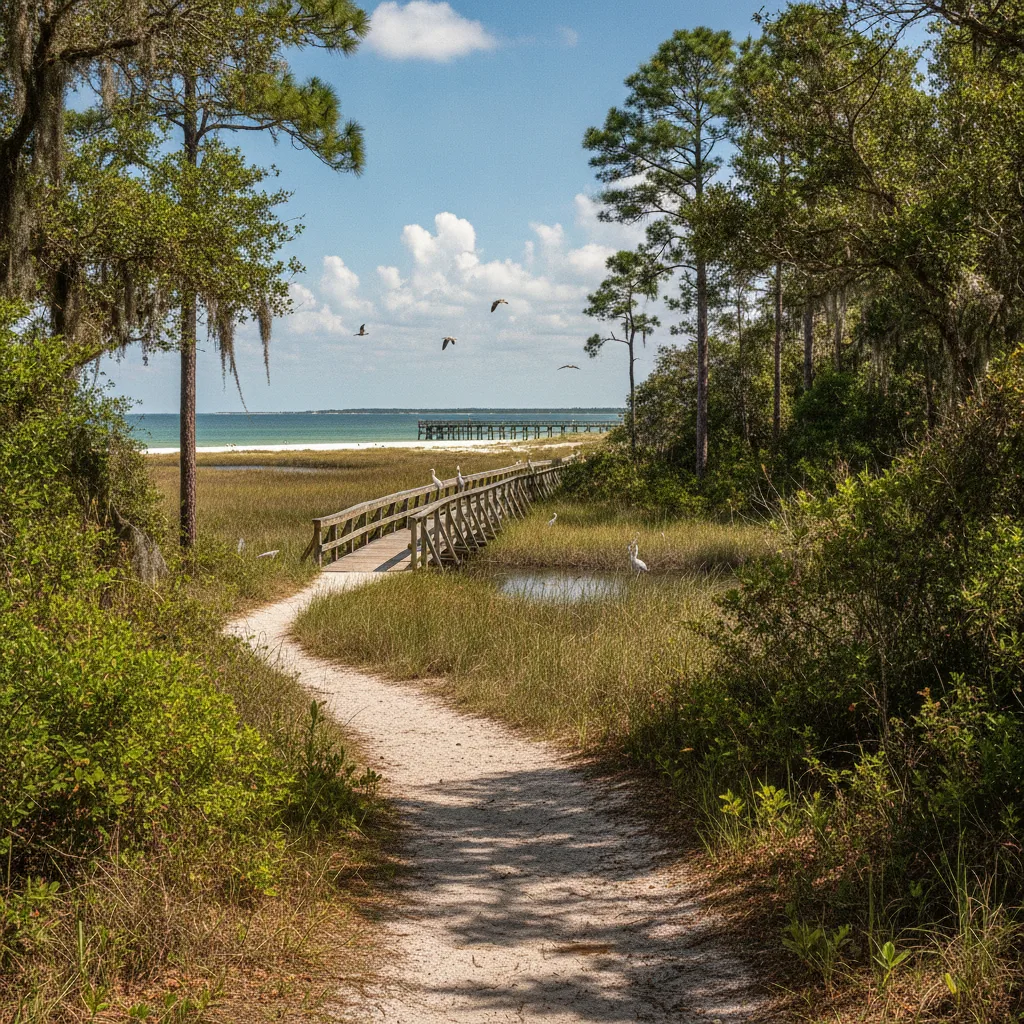
For those seeking an authentic encounter with Alabama's pristine coastal ecosystems, the Bon Secour National Wildlife Refuge Alabama offers an unparalleled experience. This 7,157-acre national wildlife refuge, whose name fittingly means "safe harbor" in French, protects undisturbed coastal habitats, serving as a critical resting and feeding area for hundreds of species of migratory birds and endangered species like the Alabama beach mouse and various sea turtles. Our team believes it's a vital natural oasis, providing a sanctuary for native flora and fauna amidst the developing Gulf Coast.
Why Visit Bon Secour National Wildlife Refuge
We champion the Bon Secour National Wildlife Refuge as a premier destination for nature lovers and those craving tranquility away from the typical beach resort bustle. Established in 1980, the refuge's primary mission is the protection of neotropical migratory songbird habitat and threatened and endangered species. Annually, it plays a crucial role in the life cycle of monarch butterflies, serving as a vital stopover during their migration. With its diverse landscapes—ranging from constantly changing beach dunes and pristine white-sand beaches to rolling pine-oak woodlands, maritime forests, scrub habitats, and freshwater swamps—the refuge offers a rich tapestry of environments to explore. It's a living laboratory, providing both educational opportunities for visitors and a critical site for scientific research and conservation efforts.
Beyond its ecological importance, the refuge provides a serene escape, allowing visitors to immerse themselves in Alabama's natural heritage. We find that the quiet marshes and dunes offer ample space for reflection and connection with the natural world, leaving you feeling rejuvenated and enlightened.
Who It's Best For
The Bon Secour National Wildlife Refuge appeals to a broad spectrum of visitors, making it a versatile addition to any Plan Your US Trip itinerary. It's an ideal spot for avid **birdwatchers**, particularly during the spring (April-May) and fall (September-October) migration seasons when hundreds of species of neotropical birds pass through. **Hikers and nature enthusiasts** will appreciate the well-maintained trails that weave through varied landscapes, offering glimpses of Alabama's rich biodiversity. **Photographers** will find endless opportunities to capture the stunning coastal scenery, wetlands, maritime forests, and diverse wildlife. **Families with older children** who enjoy outdoor activities like hiking and wildlife spotting will also find the refuge engaging, though we note that pets are not allowed on the trails.
For those seeking a quiet, unhurried encounter with nature, contrasting with the more developed areas of the Gulf Coast, this refuge is perfect. It's less suited for those expecting extensive visitor amenities, as the focus here is purely on the natural environment. However, for anyone looking to understand and appreciate the intricate ecosystems of coastal Alabama, it's an essential visit.
Getting There & Parking
Navigating to the Bon Secour National Wildlife Refuge is straightforward, especially if you're coming from nearby Gulf Shores & Orange Beach. To get to Bon Secour National Wildlife Refuge, we recommend starting your journey by heading south on AL-59. Continue straight onto AL-180W, where you'll take a right turn. After approximately 13 miles, keep an eye out for Bon Secour signs, then turn left onto Refuge Headquarters Road. The refuge's main address is 12295 State Highway 180, Gulf Shores, AL 36542. Alternatively, visitors can reach the refuge by ferry from the west side of Mobile Bay.
Regarding Bon Secour National Wildlife Refuge parking, you'll find designated parking lots at various trailheads, including the Chan West Pine Beach Trailhead, Jeff Friend Trailhead, and Mobile Street Parking Lot. We've found that parking is generally ample, and there is no fee to park or use the hiking trails. The Visitor Contact Station is located at the refuge office on State Highway 180. While the trails are open daily from sunrise to sunset, the Visitor Contact Station operates Monday through Friday from 9 a.m. to 1 p.m., except on Federal holidays.
Top Things to Do
There are numerous things to do at Bon Secour National Wildlife Refuge that cater to every nature enthusiast. Our team highly recommends exploring the refuge's extensive trail system. The **Pine Beach Trail** is a popular choice, offering a moderate to strenuous 2-mile (one-way) hike through maritime forest, scrub, and dune habitats, culminating in a pristine sandy beach. Along this trail, you'll find an observation tower providing views of Gator Lake and Little Lagoon, excellent for spotting wading birds and alligators. The **Jeff Friend Trail** is an easier, wheelchair-accessible 1-mile loop, perfect for families, which winds through coastal marshes and maritime forest adjacent to Little Lagoon. The **Centennial Trail** is a moderate 2-mile connector trail through maritime forest, swamp, and dune swales, while the **Gator Lake Trail** (1 mile one-way) offers waterfront views and opportunities for wildlife sightings.
**Birdwatching** is a highlight, with over 370 species recorded, making it a premier migratory stopover site along the Gulf Coast. We suggest bringing binoculars to spot everything from warblers and tanagers during migration to egrets, herons, osprey, and even bald eagles. **Wildlife viewing** extends beyond birds; keep an eye out for the endangered Alabama beach mouse, various sea turtles (loggerhead, green, Kemp's ridley) nesting on the shores from May to October, American alligators, white-tailed deer, and red foxes. For those interested in water activities, **fishing** is permitted in Little Lagoon and Gator Lake, as well as surf fishing along the beach, though a valid Alabama saltwater fishing license is required. **Kayaking and canoeing** are also popular, with a launch site available at the Jeff Friend Trail for access to Little Lagoon. Guided walks and talks, such as "Critters of the Coast" and "Creatures of Little Lagoon," are offered seasonally and often require reservations.
Beyond the refuge, there are many things to do in Gulf Shores. We highly recommend visiting Gulf State Park, which boasts the largest pier in the Gulf of Mexico, miles of white-sand beaches, and opportunities for hiking, camping, and other outdoor activities. The Alabama Gulf Coast Zoo is another excellent family-friendly attraction, home to nearly 200 species of animals. For entertainment, consider the Brandon Styles Showroom in Foley or the amusement rides at The Track. Dolphin-watching eco-boat tours are also very popular in Orange Beach.
Best Time to Visit
Our team consistently recommends visiting the Bon Secour National Wildlife Refuge during the **spring (April through May)** and **fall (September through October)**. These periods coincide with the peak migratory seasons, offering unparalleled birdwatching opportunities as hundreds of species use the refuge as a critical stopover and feeding ground. You can expect to see a remarkable number of warblers, tanagers, and other neotropical birds.
If you're sensitive to heat, October, November, or April are ideal months for cooler temperatures, making hiking more comfortable. Summers (July and August) can be very hot. While the trails are open year-round from sunrise to sunset, it's worth noting that portions of the beach may close seasonally between May and October to protect nesting loggerhead sea turtles. Visiting early in the morning is often best for spotting wildlife like alligators basking near freshwater ponds and for enjoying cooler temperatures.
Where to Stay Nearby
While there is no Bon Secour National Wildlife Refuge lodging directly within the refuge itself, the surrounding areas of Gulf Shores, Orange Beach, and Foley offer a wide array of accommodations to suit every preference and budget. We've found that many visitors choose to stay in vacation rentals or hotels in Gulf Shores due to its proximity and extensive amenities. Options range from charming beach resorts to cozy bungalows and spacious private vacation homes.
For those seeking convenience and a variety of amenities, hotels like Southern Shores Beach Resort (5.0 miles away), Best Western On The Beach (4.9 miles away), and Microtel Inn & Suites by Wyndham Gulf Shores (4.2 miles away) are popular choices, often featuring pools and family-friendly facilities. If you prefer a more secluded feel with direct beach access, the Fort Morgan Peninsula, just a short drive from the refuge, offers numerous vacation rentals. The West Beach area of Gulf Shores also provides a good balance of relaxation and proximity to dining and activities while still offering convenient access to the refuge.
For a slightly different experience, Orange Beach, located about 16 miles from the refuge, is a vibrant coastal city with a perfect blend of beach life and outdoor adventure, offering hotels like The Lodge at Gulf State Park and Hampton Inn & Suites Orange Beach/Gulf Front. Even Foley, a bit further inland, provides budget-friendly options such as the Econo Lodge Inn & Suites Foley - North Gulf Shores and TownePlace Suites by Marriott Foley at OWA. Many accommodations offer amenities like complimentary breakfast, WiFi, and parking.
Sample 2-Day Itinerary
Our team has crafted a sample 2-day itinerary to help you make the most of your visit to Bon Secour National Wildlife Refuge and the surrounding Gulf Shores area:
Day 1: Immersion in the Refuge
- **Morning (Sunrise - 12:00 PM):** Arrive early at Bon Secour National Wildlife Refuge. Head to the Jeff Friend Trailhead and embark on the 1-mile Jeff Friend Trail loop, which is easy and wheelchair-accessible, offering excellent birdwatching opportunities along Little Lagoon. If available, consider joining a guided bird walk (reservations often required).
- **Lunch (12:00 PM - 1:00 PM):** Enjoy a packed picnic lunch at one of the scenic spots near a trailhead, as there are no restaurants within the refuge. Remember to bring plenty of water and snacks.
- **Afternoon (1:00 PM - Sunset):** Tackle the Pine Beach Trail (2 miles one-way), a more challenging hike through maritime forest and dunes that leads to a secluded, pristine beach. Take time to relax on the beach and enjoy the untouched Gulf views. Keep an eye out for signs of sea turtle nesting (May-October).
- **Evening:** Head back to Gulf Shores for dinner. Enjoy fresh seafood at a local restaurant.
Day 2: Gulf Shores Exploration & Relaxation
- **Morning (9:00 AM - 1:00 PM):** Explore more of the Gulf Shores & Orange Beach area. Visit Gulf State Park, where you can walk along the white-sand beaches, stroll the Gulf State Park Pier, or rent bikes to explore the park's extensive trail system.
- **Lunch (1:00 PM - 2:00 PM):** Grab lunch at a casual eatery in Gulf Shores.
- **Afternoon (2:00 PM - 5:00 PM):** Choose from a variety of activities:
- **Family Fun:** Visit the Alabama Gulf Coast Zoo, home to nearly 200 species.
- **Water Adventure:** Take a dolphin-watching eco-boat tour from Orange Beach.
- **History & Culture:** Drive out to Fort Morgan, a historic site that played a role in the Civil War.
- **Evening:** Enjoy a final dinner in Gulf Shores, perhaps with live music, reflecting on your coastal Alabama adventure.
Last updated: 2026-07-05 by the Visit America team.