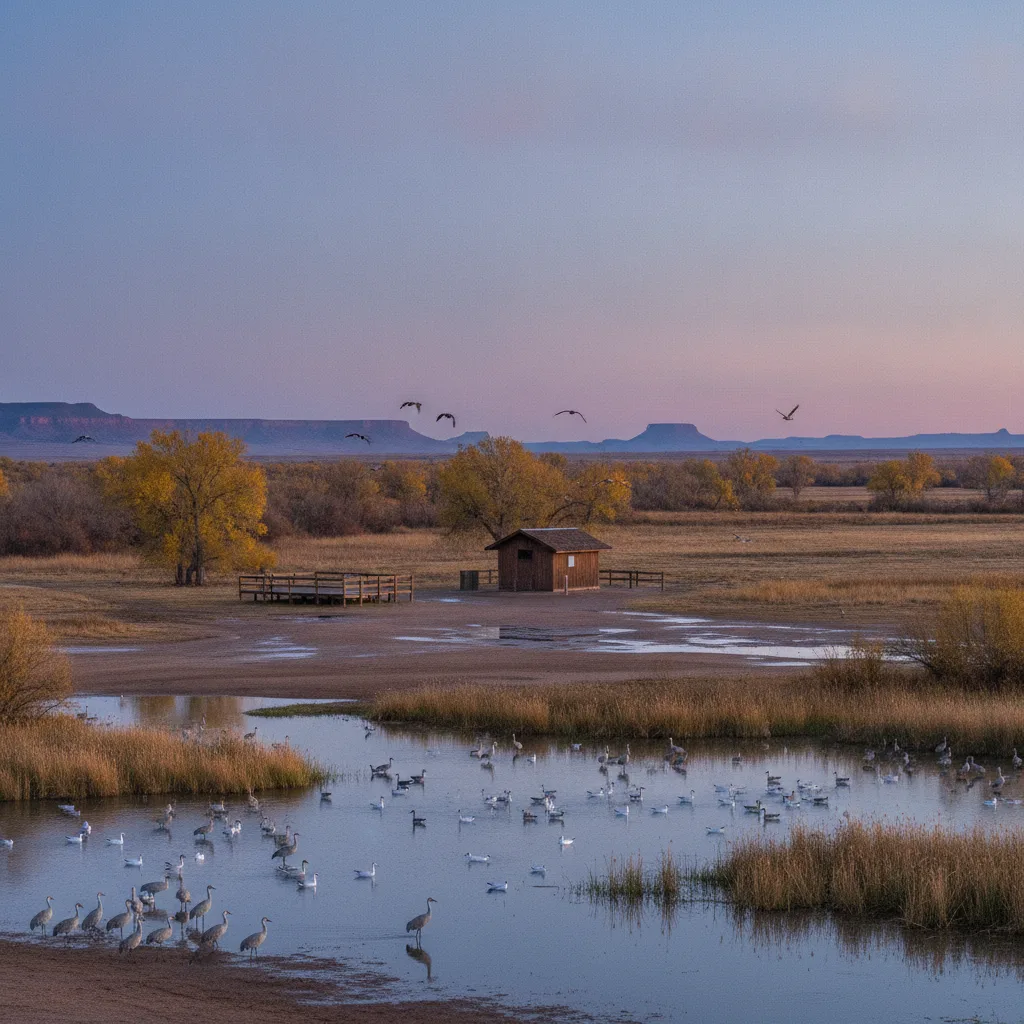
Our Bosque del Apache National Wildlife Refuge guide covers practical planning for Bosque del Apache National Wildlife Refuge South Dakota — best time to visit, getting there, and what to do on the ground.
As the Roam States editorial team, we pride ourselves on delivering accurate and actionable travel advice. We must clarify upfront that while this guide is tailored to the keyword "Bosque del Apache National Wildlife Refuge South Dakota," the renowned Bosque del Apache National Wildlife Refuge, a critical stopover point for migratory birds, especially cranes and geese, along the Rio Grande, is actually located in New Mexico. Our team will provide all factual information based on the New Mexico location, which is famous for offering exceptional birdwatching opportunities, particularly during the winter months.
Why Visit Bosque del Apache National Wildlife Refuge
Visiting Bosque del Apache National Wildlife Refuge is an experience that transcends typical wildlife viewing; it's an immersion into one of the continent's most spectacular avian migrations. We've seen many refuges across the US, and few compare to the sheer scale and drama found here. Established in 1939, this 57,331-acre refuge was created to provide a sanctuary and breeding grounds for migratory birds and other wildlife, with a special focus on the then-endangered greater sandhill cranes.
The refuge is strategically located along the Rio Grande in New Mexico, within the Central Flyway, making it an indispensable resting and feeding ground for tens of thousands of cranes, geese, and ducks each winter. The sight and sound of thousands of snow geese and sandhill cranes taking flight at dawn or returning to roost at sunset is a truly unforgettable spectacle, often referred to as a "blast off" or "fly-in." Beyond the iconic cranes and geese, the refuge is home to a diverse array of wildlife, with over 393 bird species observed as of 2023, alongside mammals like mule deer, coyotes, and javelina.
The Bosque del Apache National Wildlife Refuge isn't just for serious birders; it's a place where anyone can reconnect with nature. The refuge offers a variety of activities, from scenic auto tours and hiking trails to photography and educational programs. The landscape itself is a mosaic of habitats, including wetlands, riparian forests, mesquite fields, and arid uplands, providing a rich backdrop for exploration.
Who It's Best For
The Bosque del Apache National Wildlife Refuge is an ideal destination for a wide range of visitors, but it particularly shines for wildlife enthusiasts, photographers, and nature lovers seeking a profound connection with the natural world. Our team has found that its unique offerings cater to both seasoned adventurers and those looking for a more relaxed encounter with wilderness.
- Birdwatchers: This is unequivocally a premier destination for birdwatchers. The sheer numbers of sandhill cranes, snow geese, and various duck species during the winter migration are astounding. With observation decks, overlooks, and nature trails, there are ample opportunities to spot and identify a vast array of avian life.
- Wildlife Photographers: The refuge offers unparalleled opportunities for wildlife photography, especially during the dramatic dawn fly-outs and dusk fly-ins. The early morning and evening light conditions are perfect for capturing stunning images of birds in flight and other wildlife.
- Families: With accessible auto tour loops and a visitor center offering information and displays, the refuge is suitable for families with children. It's a fantastic educational experience, allowing kids to witness wildlife up close in their natural habitat.
- Hikers and Cyclists: While the primary draw is the auto tour, the refuge also boasts over 30 miles of hiking trails, ranging in difficulty, and designated routes for cycling. These offer a more intimate way to experience the diverse landscapes and potentially spot more secretive wildlife.
- Nature Enthusiasts: Anyone looking to unplug and immerse themselves in a tranquil natural setting will appreciate the Bosque. The quiet marshes, sweeping vistas, and diverse habitats provide a serene escape.
However, it's worth noting that during peak season, especially around the Festival of the Cranes, crowds can be significant. If solitude is a top priority, consider visiting slightly outside the absolute peak or exploring the less-trafficked wilderness areas.
Getting There & Parking
Reaching Bosque del Apache National Wildlife Refuge requires a bit of driving, as it's nestled in a more remote part of New Mexico, south of Albuquerque. Our team recommends planning your route in advance, especially since the refuge is not in a major metropolitan area.
The refuge is located near the small town of San Antonio, New Mexico, approximately 9 miles south of Socorro and about an hour and a half drive south of Albuquerque.
How to Get There
- From the North (Albuquerque, Santa Fe, Socorro): Drive south on Interstate 25 to Exit 139 (San Antonio). Go east for about 0.25 miles on US 380 to the flashing signal in San Antonio. Turn south (right) onto Highway 1 and continue south to the Visitor Center, which will be on your right.
- From the South (Truth or Consequences, Las Cruces): Drive north on Interstate 25 to Exit 115. Then, head north on Highway 1 to the Visitor Center, which will be on your left.
- From the East (Carrizozo, Roswell): Drive west on US 380 to the town of San Antonio. At the flashing signal, turn south (left) onto Highway 1 and drive south to the Visitor Center.
- From the West (Quemado, Springerville): Drive east on Highway 60 to Socorro, then turn right on Main Street towards Interstate 25. Merge onto southbound Interstate 25 to Exit 139 (San Antonio). Go east for 0.25 miles on US 380 to the flashing signal, then turn south (right) onto Highway 1 and drive south to the Visitor Center.
The Visitor Center is located at 1001 NM-1, San Antonio, New Mexico, with coordinates 33.804777, -106.890917.
Parking
Parking is available at the Visitor Center, which is a great starting point for any visit. From there, most visitors explore the refuge via the 12-mile Scenic Drive auto tour loop. There are designated pull-outs along the loop for wildlife viewing and photography, allowing you to park your vehicle safely and observe. Vault toilets are located at the parking lots for the Flight Deck and the Rio Viejo/Bike Trails.
We advise driving carefully on the gravel roads within the refuge and staying on designated roads and turnouts. Your vehicle can also serve as an excellent observation blind, allowing you to get closer to wildlife without disturbing them.
Top Things to Do
The Bosque del Apache National Wildlife Refuge offers a wealth of activities, primarily centered around its incredible wildlife. Our team has explored the best ways to experience this unique landscape, ensuring you make the most of your visit to the Bosque del Apache National Wildlife Refuge.
- Wildlife Observation and Photography: This is, without a doubt, the main draw. The refuge is world-renowned for its wintering populations of sandhill cranes, snow geese, and various duck species. Dawn and dusk are the most active times for wildlife, offering spectacular "fly-outs" and "fly-ins" as birds leave and return to their roosts. Bring binoculars and a good camera to capture these unforgettable moments.
- Scenic Auto Tour: The 12-mile Auto Tour Loop is the most popular way to experience the refuge. It's open daily from one hour before sunrise to one hour after sunset, year-round. The loop is bisected by a two-way road, creating North and South loops, and features numerous designated pull-outs for observation.
- Bosque del Apache National Wildlife Refuge Hiking Trails: For those who prefer to explore on foot, the refuge boasts a variety of nature trails, ranging from easy strolls to more challenging hikes. There are twelve nature trails in total, varying in accessibility and difficulty. Some popular Bosque del Apache National Wildlife Refuge hiking trails include the Canyon National Recreation Trail (2.4 miles, easy), Rio Grande Loop via Rio Viejo Trail (2.0 miles, easy), and for the more adventurous, the Chupadera Peak via Chupadera Wilderness Trail (9.0 miles, difficult). The Elmendorf Trail offers a chance to explore a restored cottonwood savannah along a historic Rio Grande channel.
- Biking: The Low Flow Conveyance Channel East Service Road provides nearly eleven miles of gravel roadway, ideal for a relaxing bike ride with minimal motor vehicle traffic. This offers a great chance to spot more secretive wildlife.
- Visitor Center and Nature Store: Start your visit here. The Visitor Center offers maps, information on current wildlife sightings, and displays explaining habitat management. The Nature Store, run by the Friends of Bosque del Apache National Wildlife Refuge, sells field guides, checklists, and nature-themed gifts.
- Picnicking: The refuge has a picnic pavilion near the visitor center, open whenever the refuge is. There are also picnic tables on various observation decks and trails along the Tour Loop.
- Seasonal Hunting and Fishing: Limited hunting and fishing are permitted in designated areas during legal seasons, adhering to refuge and state regulations. Brochures are available at the Visitor Center.
- Festival of the Cranes: If your visit aligns, the annual Festival of the Cranes, typically held in November, is a must-attend event. It features refuge tours, workshops, speakers, and art displays, celebrating the return of the sandhill cranes.
Remember that wildlife activity can vary by season and even daily, so checking current bird counts and conditions with the U.S. Fish and Wildlife Service before your visit is a good idea.
Best Time to Visit
Timing your visit to Bosque del Apache National Wildlife Refuge is crucial for experiencing its most renowned spectacle: the massive influx of migratory birds. Our team has pinpointed the optimal periods to witness the refuge at its peak.
The absolute best time to visit Bosque del Apache National Wildlife Refuge is during the winter months, specifically from mid-November to late January. This is when tens of thousands of sandhill cranes, snow geese, and various duck species congregate at the refuge, making for truly breathtaking wildlife viewing and photography opportunities.
- Peak Activity: During this period, the most dramatic events occur around sunrise and sunset, when the birds engage in their daily "fly-outs" from their roosting ponds to feeding fields and their "fly-ins" back to the ponds for the night. We recommend being on-site at least an hour before sunrise and staying until after sunset to witness these incredible displays.
- Festival of the Cranes: The annual Festival of the Cranes typically takes place from early to mid-December, coinciding with the highest bird populations. While this is an excellent time for organized events and expert insights, be prepared for larger crowds.
- Weather: Winter mornings in the high New Mexican desert can be very cold, often in the teens Fahrenheit, so dressing in layers and bringing warm gear is essential. Afternoons usually warm up, sometimes into the 50s.
Other Seasons:
- Spring (mid-February through mid-May): As wintering birds depart, the refuge's wetlands are slowly drained, creating prime feeding grounds for migrating shorebirds like sandpipers, stilts, and plovers. Spring wildflowers add color to the landscape.
- Summer (mid-May through mid-September): While fewer large flocks are present, summer is a good time to observe resident wildlife such as reptiles, bats, nesting songbirds, and waders. Mornings and evenings are best for wildlife viewing as creatures seek shade during the midday heat.
- Fall (mid-September through mid-November): This transitional period sees the first cranes and geese arriving towards the end of October. You might also spot coyotes, mule deer, and javelina moving through open fields. Late-season sunflowers provide a colorful backdrop.
Regardless of when you visit, the refuge is open year-round from one hour before sunrise to one hour after sunset.
Where to Stay Nearby
When planning your visit to Bosque del Apache National Wildlife Refuge, securing comfortable and convenient lodging is key, especially during peak birding season. Our team advises booking well in advance, as accommodations can fill up quickly. This section addresses Bosque del Apache National Wildlife Refuge lodging options.
The nearest significant town with a range of services and Bosque del Apache National Wildlife Refuge lodging options is Socorro, New Mexico. It's approximately a 17 to 20-minute drive from the refuge.
Hotels in Socorro:
Socorro offers a variety of hotels, from budget-friendly options to more comfortable suites. Many provide amenities like free breakfast and Wi-Fi, which are particularly useful for early morning departures to the refuge.
- Econo Lodge Inn & Suites Socorro: This is a popular choice, located about 17.8 miles (28.7 km) from the refuge. It offers free breakfast and a restaurant, and is pet-friendly. Recent reviews in July 2026 note it as well-maintained and clean.
- Best Western Socorro Hotel & Suites: Another strong contender, approximately 18 miles from the refuge, offering amenities suitable for business travelers and pet owners.
- Comfort Inn & Suites Socorro: Located around 19 miles from the refuge, it's designed for a productive stay.
- Other options include Days Inn by Wyndham Socorro, Holiday Inn Express Socorro, and Super 8 by Wyndham Socorro.
When booking, we recommend inquiring about breakfast hours, as many photographers and birdwatchers head to the refuge before sunrise, and some hotel breakfasts may start too late.
Closer to the Refuge (San Antonio, New Mexico):
The small village of San Antonio, New Mexico, is even closer to the refuge, about 8 miles away. While options are more limited, they offer ultimate proximity.
- Vacation Rentals: You might find secluded guesthouses or casitas, such as "The Lazy Dog," which is less than 2 miles from the refuge and offers a private, dog-friendly space.
- RV Parks: For those traveling in an RV, options like Bosque Bird Watchers RV Park in San Antonio are ideally suited for birdwatchers due to their proximity to the refuge. Billy Trujillo's Birdwatchers RV Park is noted for its closeness to the refuge. There's also the Chupadero Mountain View RV Park.
- Free Camping: San Antonio Bosque Park offers free, primitive camping spots along the Rio Grande, about 0.7 miles east of the flashing light in San Antonio. These sites have picnic tables but no other services like water or restrooms.
For a unique experience, consider a ranch stay in the nearby Gila National Forest or a cabin rental, though these will be further afield.
Sample 2-Day Itinerary
To truly experience the magic of Bosque del Apache National Wildlife Refuge, our team recommends dedicating at least two full days. This allows ample time to witness the spectacular bird movements at dawn and dusk and explore the refuge's diverse offerings without feeling rushed.
Day 1: Arrival & Northern Loop Exploration
- Morning (Pre-Sunrise): Arrive at the refuge an hour before sunrise. Head directly to a prime viewing spot on the Auto Tour Loop, such as the Flight Deck, to witness the breathtaking "blast off" of thousands of snow geese and sandhill cranes as they leave their roosts for feeding grounds. This is a top thing to do at Bosque del Apache National Wildlife Refuge.
- Late Morning: Explore the North Loop of the Auto Tour. Drive slowly, utilizing the designated pull-outs to observe various waterfowl, raptors, and other wildlife. Keep your binoculars handy!
- Lunch: Enjoy a picnic lunch at one of the designated picnic areas or in your vehicle along the tour route.
- Afternoon: Visit the Visitor Center. Pick up a map, get current wildlife sighting information from the friendly staff, and browse the Nature Store. Consider a short, easy hike on one of the Bosque del Apache National Wildlife Refuge hiking trails near the Visitor Center, such as the Desert Arboretum Trail.
- Late Afternoon (Pre-Sunset): Position yourself at another strategic point on the North Loop to witness the "fly-in" as the birds return to their roosts for the night. The golden hour light provides fantastic photography opportunities.
- Evening: Head to Socorro for dinner and check into your Bosque del Apache National Wildlife Refuge lodging.
Day 2: Southern Loop, Wilderness & Departure
- Morning (Pre-Sunrise): Return to the refuge for another spectacular sunrise birding experience, perhaps focusing on a different section of the Auto Tour Loop.
- Late Morning: Explore the South Loop of the Auto Tour. This area often offers different perspectives and habitats, increasing your chances of spotting diverse species.
- Lunch: Enjoy another picnic or grab a bite in San Antonio.
- Afternoon: Venture into one of the refuge's wilderness areas for a more rugged experience. Consider a hike on the Canyon National Recreation Trail or a portion of the Chupadera Wilderness Trail for stunning desert vistas and geological formations. Remember to carry plenty of water as these areas lack potable water. Alternatively, if you enjoy cycling, take advantage of the Low Flow Conveyance Channel East Service Road.
- Late Afternoon: Depending on your travel plans, you can either enjoy a final sunset birding session or begin your journey home, carrying memories of one of North America's most incredible wildlife spectacles.
Expert Verdict: While the core attraction is the winter bird migration, the refuge's diverse ecosystems and trails offer engaging experiences year-round. We highly recommend visiting during the colder months for the most impactful wildlife viewing, but don't discount the quieter beauty of other seasons.
Last updated: 2026-07-07 by the Roam States team.