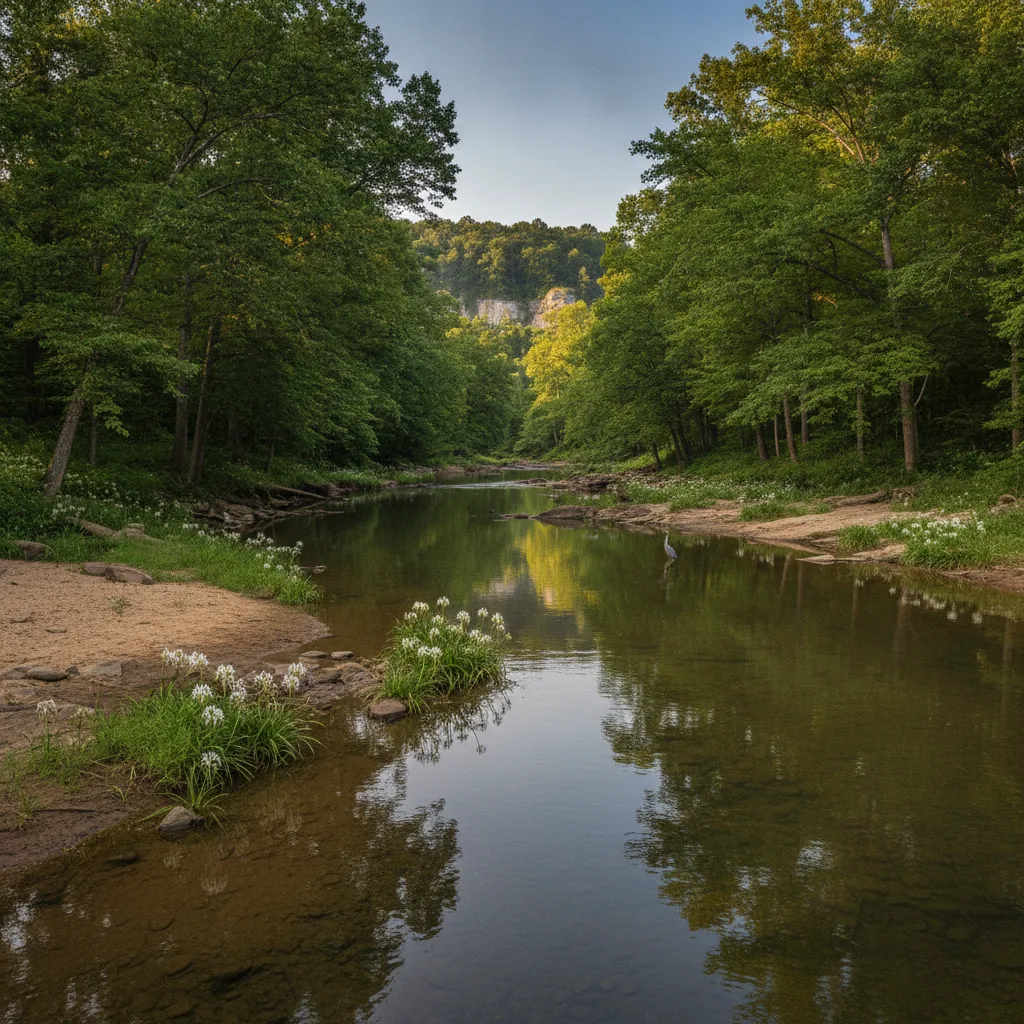
Cahaba River National Wildlife Refuge Travel Guide — Alabama
If you're seeking an authentic immersion into Alabama's unique natural heritage, the Cahaba River National Wildlife Refuge Alabama is an essential destination. Our team at Roam States has meticulously gathered the details to help you navigate this ecological gem, protecting a critical section of the Cahaba River. This refuge is renowned for its exceptional biodiversity, including numerous rare and endemic species, most famously the stunning Cahaba lily, which transforms the rocky shoals into a white wonderland each late spring. It offers unparalleled opportunities for paddling, hiking, and wildlife viewing, promising a memorable escape into the heart of Alabama's wild beauty.
Why Visit Cahaba River National Wildlife Refuge
The Cahaba River National Wildlife Refuge stands as a testament to Alabama's rich ecological tapestry, safeguarding one of the most biodiverse river systems in North America. What draws visitors here, beyond the sheer tranquility, is the chance to witness nature in its most pristine and unique forms. The refuge protects 3,681 acres in Bibb County, with an approved acquisition boundary of 7,784 acres, all dedicated to preserving the biological integrity of the Cahaba River.
At the heart of its allure are the 64 rare and imperiled plant and animal species found within its borders, 13 of which are found nowhere else in the world. Among these are five federally listed species, including the Cahaba shiner, goldline darter, round rocksnail, and cylindrical lioplax snail. This incredible concentration of unique life makes the refuge a living laboratory and a vital conservation area.
However, for many, the crowning glory of a visit is the spectacular blooming of the Cahaba lily (Hymenocallis coronaria). These delicate white flowers thrive only in the fast-flowing, rocky shoals of a few southeastern rivers, and the Cahaba boasts the largest known stand. Witnessing thousands of these lilies in bloom, typically from late April through May or mid-May to mid-June, is a breathtaking experience that draws nature enthusiasts from across the globe. The Cahaba Lily Festival, scheduled for May 16, 2026, is a special event celebrating this unique floral display.
Beyond the lilies, the refuge offers a serene backdrop for a variety of outdoor pursuits. Whether you're a paddler navigating the gentle currents, a birdwatcher hoping to spot a bald eagle or osprey, or a photographer capturing the vibrant ecosystem, the Cahaba River National Wildlife Refuge provides a profound connection to the natural world. It’s a place where the quiet rush of the river and the rustle of leaves replace the clamor of daily life, offering a genuine sense of escape and wonder.
Who It's Best For
The Cahaba River National Wildlife Refuge is an ideal destination for a diverse range of visitors, particularly those who appreciate untouched natural environments and seek active outdoor experiences.
- Nature Enthusiasts and Conservationists: With its exceptional biodiversity and federally listed species, the refuge is a must-visit for anyone passionate about ecology, botany, and wildlife conservation. The opportunity to see rare species, especially the Cahaba lily, is a major draw.
- Paddlers and Kayakers: The Cahaba River offers excellent conditions for non-motorized boating. Experienced paddlers will enjoy navigating the shoals, while calmer sections are suitable for more relaxed excursions. Remember to check water levels before heading out, as the river can become swift after rains.
- Hikers and Walkers: While extensive, long-distance trails are not the primary focus, the refuge offers several trails and access roads perfect for leisurely walks and moderate hikes, allowing for wildlife observation and scenic views.
- Photographers: From macro shots of delicate lilies to sweeping river landscapes and diverse wildlife, the refuge presents endless photographic opportunities, particularly during the spring bloom.
- Families with Older Children: While younger children might find the lack of developed facilities challenging, older children who enjoy hiking, paddling, and wildlife spotting will appreciate the natural exploration. We recommend preparing them with information about the refuge's unique plants and animals.
- Birdwatchers: The refuge is home to a variety of bird species, including bald eagles, ospreys, and great blue herons, making it a rewarding spot for birdwatching.
It’s important to note that visitors should be prepared for a rustic experience. There are no developed visitor centers, restrooms, or convenience stores directly within the refuge, so planning ahead is crucial. This raw, unspoiled nature is precisely what makes the Cahaba River National Wildlife Refuge so special for those seeking genuine outdoor adventure.
How to Get There & Parking
Navigating to the Cahaba River National Wildlife Refuge Alabama requires a bit of planning, as it’s intentionally kept in a more natural, undeveloped state. The refuge is located in Bibb County, Alabama, approximately six miles east of West Blocton on County Road 24.
**Directions:** From I-20/59, take Exit 97. Head south on Highway 11 for about 3 miles until you reach Highway 5 at a traffic light. Turn left onto Highway 5 South and follow it for approximately 9 miles to County Road 24. Turn left onto County Road 24 and continue for roughly 6 miles. River access is typically provided by a gravel road on the south (right) side of Bibb County Road 24, about 250 yards past the refuge entrance sign.
**Parking:** Parking within the Cahaba River National Wildlife Refuge is generally limited and can be challenging on peak visitation days, especially during the Cahaba lily bloom. There are a few pull-offs and designated parking spots along the gravel roads.
- **Caffee Creek Access:** This natural access point, where Caffee Creek meets the Cahaba River, offers parking for approximately five cars.
- **Canoe Beach:** Located along River Terrace Road, this access point also has limited parking.
- **River Trace Road:** This is considered the main road entrance, and you can drive down a one-way road with pull-offs for viewing the lilies.
There are no fees for parking at the refuge. However, given the limited space, especially when planning how to get to Cahaba River National Wildlife Refuge during the lily season, we recommend arriving early or considering a weekday visit to secure a spot. Always ensure your vehicle is parked safely and does not obstruct any roads or access points.
Top Things to Do
The Cahaba River National Wildlife Refuge offers a wealth of activities for those looking to connect with nature, making it a prime spot for things to do at Cahaba River National Wildlife Refuge. Our team suggests focusing on these key experiences:
Alabama.travel provides additional insights into the state's natural wonders, including the Cahaba River.
- Paddling and Canoeing: The Cahaba River is the lifeblood of the refuge, and exploring it by canoe or kayak is arguably the best way to experience its beauty. Non-motorized boating is a popular activity, allowing you to get up close to the Cahaba lilies during their bloom and observe riverine wildlife. Access points like Caffee Creek and Canoe Beach provide entry to the water. Be sure to check water levels before you go, as conditions can change rapidly after rainfall.
- Wildlife Viewing and Photography: The refuge is a haven for diverse wildlife. Keep an eye out for bald eagles, ospreys, great blue herons, wood ducks, white-tailed deer, wild turkeys, and river otters. The dense foliage and riverbanks provide excellent opportunities for spotting these creatures in their natural habitat. For photographers, the Cahaba lily bloom provides an unparalleled subject.
- Hiking and Nature Walks: While not a traditional hiking park with extensive marked trails, there are opportunities for walks and hikes. The "Cahaba River National Wildlife Refuge hiking trails" include the Overlook Trail, an accessible path leading to a viewing platform for the lilies, and the Piper Trail, a loop hike that also leads to viewing platforms overlooking the shoals. Walking along the gravel roads and pull-outs can also offer scenic views and birdwatching opportunities. Remember, overnight camping is not permitted.
- Fishing: Anglers can find several spots along the Cahaba River within the refuge that welcome fishing. Be sure to obtain an Alabama fishing license and consult the Alabama Department of Public Health's Advisory on Safe Fish Consumption.
- Picnicking: Although there are no designated picnic facilities, the natural setting is perfect for a packed lunch amidst the sounds of the river. Remember the "pack it in, pack it out" policy, as there are no trash cans.
- Swimming and Wading: On warm days, visitors often enjoy swimming and wading in the river. However, exercise caution: the shoals can be very slippery, and the river can become swift and treacherous after rains. Always evaluate water conditions and your own skill level before entering the water.
When considering things to do at Cahaba River National Wildlife Refuge, remember that its beauty lies in its wildness. Come prepared with water, snacks, and appropriate gear, and leave no trace behind.
Best Time to Visit
Timing your visit to the Cahaba River National Wildlife Refuge can significantly enhance your experience, particularly if you're hoping to witness its most famous natural phenomenon.
- Late Spring (May to June): The Cahaba Lily Bloom This is undeniably the most popular and arguably the best time to visit. The rare Cahaba lilies typically bloom from late April through May, or mid-May to mid-June, transforming the rocky shoals into a spectacular white carpet. The Cahaba Lily Festival is a highlight, scheduled for May 16, 2026. During this period, the weather is generally pleasant, making it ideal for paddling and hiking. Be prepared for larger crowds, especially on weekends, as many come to admire the blooms.
- Spring (March-April) and Fall (September-November): Mild Weather and Wildlife Outside of the lily bloom, spring and fall offer excellent conditions for general outdoor activities. The temperatures are mild and comfortable for hiking, biking, and paddling. Fall brings beautiful foliage changes along the riverbanks, and both seasons are prime for birdwatching as migratory species pass through. You'll likely encounter fewer visitors during these times, offering a more serene experience.
- Summer (July-August): Paddling and Swimming Summer can be hot and humid in Alabama, but it's a great time for cooling off in the river. Paddling, swimming, and wading are popular ways to beat the heat. Just be mindful of potential afternoon thunderstorms and check river levels, as heavy rains can make the water swift.
- Winter (December-February): Quiet Reflection Winter is the quietest season at the refuge. While the lilies are dormant, the bare trees offer clearer views of the river and surrounding landscape, and wildlife can be easier to spot without dense foliage. It's a peaceful time for solitude and contemplation, though temperatures can be chilly.
Regardless of when you plan your trip, the refuge is open during daylight hours, from sunrise to sunset. We always recommend checking local weather forecasts and river conditions before your visit, especially if you plan to get on the water.
Where to Stay Nearby
Given the Cahaba River National Wildlife Refuge's undeveloped nature, there is no Cahaba River National Wildlife Refuge lodging directly within its boundaries. Overnight camping is not permitted. Therefore, visitors will need to seek accommodations in nearby towns. The closest amenities, including hotels, are generally more than 15 miles away, with West Blocton being the nearest small town. For a wider range of options, we recommend looking towards larger cities like Birmingham or even smaller towns that offer a good base for exploring central Alabama.
Here are some areas and types of Cahaba River National Wildlife Refuge lodging we recommend considering:
- West Blocton: As the closest town, West Blocton will offer the most immediate proximity. While options might be limited to smaller, local establishments or budget-friendly motels, it provides a convenient base if your primary focus is the refuge. For things to do in Centreville, which is also nearby, you'll find a few local eateries and shops.
- Centreville: Another nearby town, Centreville might offer a few more local lodging choices. It's a small community, so don't expect extensive hotel chains, but it could provide a quaint, small-town experience.
- Calera/Alabaster: Located a bit further east, these towns offer more modern hotel chains (e.g., Hampton Inn, Holiday Inn Express) and a greater selection of restaurants and services. They are still within a reasonable driving distance to the refuge and provide a comfortable base.
- Birmingham: For those who prefer a wider array of lodging, dining, and entertainment options, Birmingham is approximately 45 minutes to an hour's drive north of the refuge. Here, you'll find everything from luxury hotels to boutique stays and budget accommodations. It also provides an excellent opportunity to combine your nature trip with urban exploration, perhaps visiting the Birmingham Civil Rights Institute.
- Vacation Rentals: Consider looking for Airbnb or VRBO rentals in the smaller towns surrounding the refuge. This can be an excellent option for families or groups, offering more space and amenities like kitchens.
When searching for Cahaba River National Wildlife Refuge lodging, always book in advance, especially during the peak Cahaba lily blooming season, as accommodations can fill up quickly.
Sample 2-Day Itinerary
To truly appreciate the natural splendor of the Cahaba River National Wildlife Refuge, we recommend dedicating at least two days. This allows for a deeper immersion into its unique ecosystem and provides ample time to experience its key attractions without feeling rushed.
Day 1: River Exploration and Lily Viewing
- Morning (8:00 AM - 12:00 PM): Paddle the Cahaba. Start your day early to make the most of the calm morning waters. Launch your canoe or kayak from Caffee Creek Access or Canoe Beach. Paddle downstream to Hargrove Shoals, home to the world’s largest stand of Cahaba lilies. During the bloom season (late April to mid-June), this is an unforgettable experience, allowing you to get up close with the delicate flowers. Even outside of bloom season, the river offers beautiful scenery and opportunities for wildlife spotting.
- Lunch (12:00 PM - 1:00 PM): Riverside Picnic. Pack a picnic lunch to enjoy on a sandy bank or a quiet spot along the river. Remember to pack out all your trash, as there are no facilities within the refuge.
- Afternoon (1:00 PM - 4:00 PM): Hiking and Overlook Views. After your paddle, explore some of the Cahaba River National Wildlife Refuge hiking trails. Take the accessible Overlook Trail to a viewing platform for panoramic views of the river and shoals. Alternatively, hike a portion of the Piper Trail loop for different perspectives. Keep an eye out for birds like ospreys or bald eagles soaring overhead.
- Evening: Dinner and Relaxation in West Blocton/Centreville. Head to West Blocton or Centreville for dinner. These small towns offer local eateries and a chance to unwind after a day of adventure.
Day 2: Further Exploration and Local Culture
- Morning (9:00 AM - 12:00 PM): Wildlife Photography and Nature Walks. Return to a different section of the refuge or re-visit a favorite spot from Day 1. Focus on wildlife photography, using the early morning light. The refuge is home to various species, including deer, wild turkeys, and river otters. Take a leisurely walk along River Trace Road, pulling off to explore different vantage points.
- Lunch (12:00 PM - 1:00 PM): Local Fare. Enjoy lunch at a local diner in Centreville or West Blocton, sampling some Southern hospitality.
-
Afternoon (1:00 PM - 5:00 PM): Explore Beyond the Refuge. Depending on your interest, you could:
- Historical Exploration: Visit the nearby Brierfield Ironworks Historical State Park, offering a glimpse into Alabama's industrial past.
- More Nature: Explore other natural areas in central Alabama, perhaps heading towards Cheaha State Park for higher elevations and different ecosystems, or venturing to Cathedral Caverns State Park for an underground adventure.
- Birmingham Day Trip: If you're staying in Birmingham or heading that direction, spend the afternoon at Vulcan Park and Museum for city views or the Birmingham Civil Rights Institute for a powerful historical experience.
- Evening: Departure or Extended Stay. Conclude your trip or choose to extend your stay to explore more of what Alabama has to offer. For more ideas, check out our guide to the Best Places in Alabama.
This itinerary provides a balanced approach to experiencing the Cahaba River National Wildlife Refuge and its surroundings. Remember to pack essentials like water, snacks, sunscreen, insect repellent, and a camera, and always practice Leave No Trace principles.
Is It Worth Visiting?
Absolutely, the Cahaba River National Wildlife Refuge is worth visiting for anyone with a genuine appreciation for unique natural landscapes and biodiversity. Our team confidently recommends this destination for its unparalleled ecological significance and the serene, immersive experience it offers.
What makes the Cahaba River National Wildlife Refuge truly stand out is its role as a critical sanctuary for a remarkable array of species, including the federally listed Cahaba shiner and the iconic Cahaba lily. Witnessing the Cahaba lilies in bloom, transforming the river's rocky shoals into a breathtaking white spectacle, is an experience that few other places can offer. This alone makes the trip worthwhile for many.
Beyond the lilies, the refuge provides a peaceful escape for paddling, hiking, and wildlife observation, allowing visitors to disconnect and reconnect with nature. It's a place where the sounds of the river and the rustle of the trees dominate, providing a stark contrast to urban life. While it lacks extensive developed facilities, this very aspect contributes to its charm, preserving its wild character. For those willing to embrace a more rustic, self-sufficient adventure, the rewards are immense. If you're pondering, "is Cahaba River National Wildlife Refuge worth visiting?" and your idea of a perfect trip involves unique natural beauty, quiet contemplation, and active outdoor pursuits, then the answer is a resounding yes.
FAQ About Cahaba River National Wildlife Refuge
Cahaba River National Wildlife Refuge camping
No, Cahaba River National Wildlife Refuge camping is not permitted. Overnight camping and ATVs are explicitly not allowed within the refuge boundaries. Visitors must plan to stay in nearby towns such as West Blocton, Centreville, or larger cities like Birmingham.
things to do in Centreville
Centreville, a small town near the Cahaba River National Wildlife Refuge, offers a glimpse into local Alabama life. While not a major tourist hub, you can find local restaurants, small shops, and the Cahaba Historical Park. The Perry Lake Park is another spot for outdoor enjoyment. It serves as a convenient stop for supplies or a meal before or after your refuge visit.
Cahaba River National Wildlife Refuge with kids
Visiting Cahaba River National Wildlife Refuge with kids can be a rewarding experience, especially for those who enjoy outdoor adventures. We recommend it for older children who can appreciate hiking, paddling, and wildlife viewing. The accessible Overlook Trail is great for all ages to see the lilies. You can download a free coloring and activity book from the U.S. Fish and Wildlife Service to engage them. Be prepared with snacks, drinks, and bug spray, as there are no facilities. Emphasize safety around the river, especially regarding slippery shoals and potential swift currents.
best hotels near Cahaba River National Wildlife Refuge
Since there's no Cahaba River National Wildlife Refuge lodging, the best hotels near Cahaba River National Wildlife Refuge are found in surrounding towns. For convenience, look for smaller motels in West Blocton or Centreville. For a wider selection of modern amenities and chain hotels, consider Calera or Alabaster. If you prefer a full range of services, dining, and entertainment, Birmingham offers numerous options and is about an hour's drive away.
Cahaba River National Wildlife Refuge tips
- Go Prepared: There are no restrooms, convenience stores, or trash cans within the refuge. Bring all your necessities, including water, snacks, and a trash bag to pack out everything you pack in.
- Check Conditions: Before paddling, always check weather and river water levels. The river can become swift and dangerous after heavy rains.
- Lily Season: If seeing the Cahaba lilies is your priority, plan your visit for late April through May or mid-May to mid-June. Expect larger crowds during this time.
- Wear Appropriate Footwear: The shoals are very slippery if you plan to wade or swim. Sturdy water shoes with good grip are essential.
- Leave No Trace: Help preserve this unique ecosystem by staying on designated paths, not disturbing wildlife, and packing out all trash.
- Administrative Office: Note that the administrative office for Cahaba River National Wildlife Refuge is located in Anniston, not at the refuge site itself.
where to stay near Cahaba River National Wildlife Refuge
When considering where to stay near Cahaba River National Wildlife Refuge, your options range from small-town accommodations to larger city hotels. West Blocton and Centreville are the closest towns, offering basic lodging. For more amenities and hotel choices, look to Calera or Alabaster. Birmingham, roughly an hour away, provides the most comprehensive selection of hotels, restaurants, and attractions, making it a good base for a combined nature and city trip.
For more inspiration on planning your trip to the US, explore our Plan Your US Trip guide or consider a USA Road Trip Planner.
Last updated: 2026-07-12 by the Roam States team.