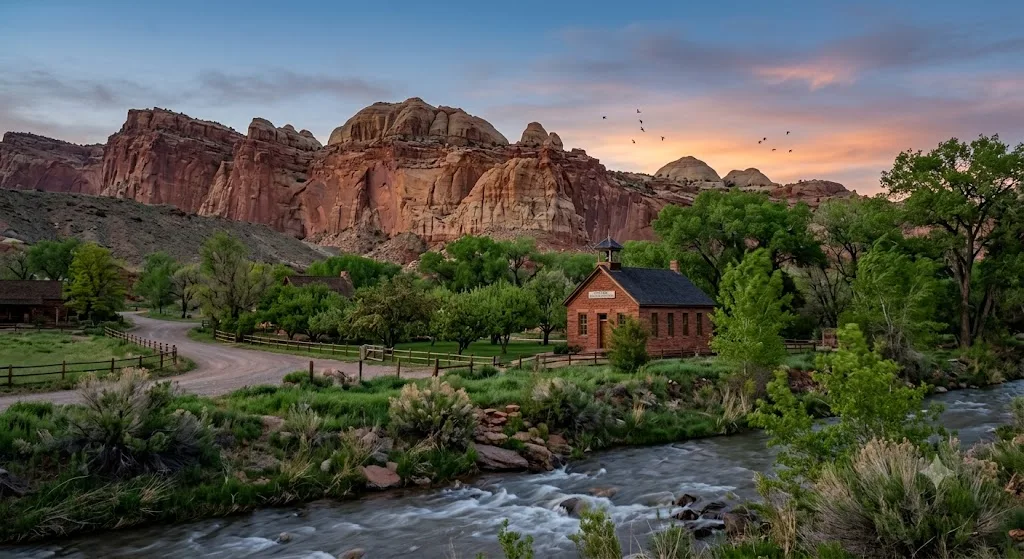
Capitol Reef National Park Travel Guide — Utah
Welcome to Capitol Reef National Park, Utah, a hidden gem among the state's iconic "Mighty 5" national parks. Our team at Roam States has extensively explored this unique landscape, and we’re here to tell you that Capitol Reef National Park, Utah, offers an unparalleled experience for those seeking solitude, stunning geology, and a touch of pioneer history. Unlike its more bustling neighbors, Capitol Reef provides a quieter, more intimate encounter with the dramatic red rock country of south-central Utah, centered around the magnificent Waterpocket Fold.
Why Visit Capitol Reef National Park
Capitol Reef National Park stands apart, offering a distinctive blend of natural beauty and cultural heritage that often goes overlooked. We find it to be a refreshing alternative to the often-crowded trails of other Utah parks. Here, the star is the Waterpocket Fold, a nearly 100-mile-long wrinkle in the Earth's crust that exposes layers of colorful sandstone, creating a landscape of domes, cliffs, canyons, and natural bridges. This geological marvel is a sight to behold, offering endless opportunities for exploration and photography.
Beyond the geology, Capitol Reef preserves the historic Fruita Rural Historic Landscape, a verdant oasis along the Fremont River where Mormon pioneers planted extensive orchards in the late 1800s. This living history provides a unique charm, allowing visitors to pick their own fruit in season, a truly special experience found in few other national parks. The park's relatively uncrowded nature means you can often find tranquility on its trails and scenic drives, making it perfect for those who prefer a more serene adventure.
Who It's Best For
Capitol Reef National Park caters to a diverse range of travelers. It’s ideal for:
- Geology Enthusiasts: The Waterpocket Fold is a textbook example of a monocline, and the exposed rock layers tell a fascinating story of millions of years of geological activity.
- Hikers of All Levels: From easy strolls through orchards to strenuous climbs to panoramic viewpoints, the park offers a variety of Capitol Reef National Park hiking trails.
- Families: With accessible scenic drives, the Junior Ranger program, and opportunities for fruit picking, Capitol Reef National Park with kids is a fantastic experience.
- Photographers: The dramatic light on the colorful cliffs, especially at sunrise and sunset, provides endless photographic opportunities. Don't miss the chance for astrophotography under its incredibly dark night skies.
- Those Seeking Solitude: While still a national park, Capitol Reef generally sees fewer visitors than Zion or Bryce Canyon, allowing for a more peaceful visit.
How to Get There
Getting to Capitol Reef National Park is part of the adventure, as it's nestled in a more remote part of Utah. The park's main entrance and Visitor Center are located on Utah State Route 24, approximately 11 miles east of the town of Torrey.
Most visitors arrive by car, as public transportation options are limited. If you're flying in, the closest major airports are Salt Lake City International Airport (SLC) to the north (about a 3.5 to 4-hour drive) or McCarran International Airport (LAS) in Las Vegas to the southwest (about a 6-hour drive). From either airport, you'll need to rent a vehicle. We recommend planning your route in advance, especially if you intend to explore the more remote sections of the park, as cell service can be limited.
For those exploring Utah's "Mighty 5" national parks, Capitol Reef is conveniently located between Bryce Canyon National Park and Arches National Park, connected by scenic Highway 24 and the famous Scenic Byway 12. This makes it a perfect stop on a larger Utah road trip.
Getting There & Parking
The main corridor of Capitol Reef National Park is easily accessible via Highway 24, which runs directly through the park and is free to drive. The Visitor Center, Fruita Historic District, and orchards are all located just off this highway. Parking is generally available at the Visitor Center, popular trailheads, and along the Scenic Drive. However, during peak seasons, popular spots can fill up, so arriving early is always a good Capitol Reef National Park tip.
The Scenic Drive, a paved 7.9-mile (one-way) road that leads to some of the park's most iconic features, requires an entrance fee beyond the Fruita Campground. This fee is $20 per vehicle, valid for seven consecutive days, as of 2026. America the Beautiful passes are honored here. The Scenic Drive itself is suitable for passenger cars and RVs up to 27 feet long. Side roads like Grand Wash and Capitol Gorge Road are unpaved but generally accessible to passenger vehicles, though longer RVs might find them challenging. Always check current road conditions at the Visitor Center, as rain can quickly make unpaved roads impassable.
Top Things to Do
When considering things to do at Capitol Reef National Park, we encourage you to look beyond a quick drive-through. This park rewards those who linger and explore its diverse offerings. Here are our top recommendations for things to do at Capitol Reef National Park:
- Drive the Scenic Drive: This 7.9-mile paved road (15.8 miles roundtrip) offers breathtaking views of the Waterpocket Fold's dramatic cliffs, domes, and canyons. Allow 1.5 to 2 hours with stops. It provides access to trailheads for Grand Wash and Capitol Gorge.
- Explore the Fruita Historic District: Wander through the historic orchards, many planted by Mormon pioneers in the late 1800s. Depending on the season, you can pick your own fruit (apricots, peaches, apples, pears, cherries) for a small fee. Visit the Gifford Homestead for homemade pies and local crafts.
- View the Petroglyphs: Along Highway 24, near the Visitor Center, you'll find accessible boardwalks leading to ancient Fremont Culture petroglyphs carved into the rock walls.
- Visit Panorama Point and Goosenecks Overlook: These easily accessible viewpoints offer expansive vistas of the park's varied terrain, including the winding Sulphur Creek carving its way through the landscape.
- Take a Ranger-Led Program: Park rangers offer daily interpretive talks and, during summer, evening programs and astronomy programs at the Fruita Campground amphitheater. Check the Visitor Center for the current schedule.
- Discover Cathedral Valley: For the more adventurous with a high-clearance or 4WD vehicle, the remote Cathedral Valley Loop offers an all-day drive through a landscape of massive sandstone monoliths like the Temples of the Sun and Moon.
Capitol Reef National Park Hiking Trails
The network of Capitol Reef National Park hiking trails is extensive, ranging from easy riverside strolls to challenging backcountry expeditions. We've found that hiking is truly the best way to immerse yourself in the park's unique geology and history. Here are some of our favorite Capitol Reef National Park hiking trails:
- Hickman Bridge Trail: A moderate 1.8-mile roundtrip hike that leads to a magnificent natural arch. It's one of the most popular trails and offers fantastic views of the Fremont River canyon.
- Grand Wash Trail: An easy, relatively flat 4.4-mile (one-way) trail that follows a sandy wash through a narrow canyon with towering walls. You can hike a portion of it or do the full traverse if you arrange a shuttle.
- Capitol Gorge Trail: An easy 2-mile roundtrip walk at the end of Capitol Gorge Road, leading to the Pioneer Register, where early settlers carved their names into the canyon walls.
- Cassidy Arch Trail: A strenuous 3.4-mile roundtrip hike with an 845-foot elevation gain, leading to a spectacular arch you can walk across. This is a rewarding challenge for experienced hikers.
- Cohab Canyon Trail: A moderate 1.7-mile (one-way) trail that connects the Fruita area with the Scenic Drive, offering views into hidden canyons and unique rock formations.
- Chimney Rock Trail: A strenuous 3.6-mile loop that climbs steeply to an overlook of Chimney Rock and offers panoramic views of the surrounding landscape.
Always carry plenty of water, wear appropriate footwear, and check current conditions at the Visitor Center, especially for flash flood warnings in narrow canyons during monsoon season (July-September).
Best Time to Visit
Choosing the best time to visit Capitol Reef National Park depends on your priorities. We generally recommend spring and fall for the most pleasant weather and ideal hiking conditions.
- Spring (April-May): Temperatures are mild, wildflowers bloom, and the park's orchards burst into blossom, creating a stunning contrast with the red rock. This is an excellent time for hiking and photography.
- Summer (June-August): Summers are hot, with July daily highs ranging from 87°F to 102°F and lows between 61°F and 75°F. Monsoon season typically runs from July through September, bringing afternoon thunderstorms and a risk of flash floods. Despite the heat, Capitol Reef is often cooler than other Utah parks due to its higher elevation, and mornings and late afternoons are still excellent for activities. All park services are open.
- Fall (September-October): Similar to spring, fall offers mild temperatures and beautiful autumn colors in the orchards, with fruit ripe for picking. It's another prime season for hiking and exploring.
- Winter (November-March): While cold and potentially snowy, winter offers solitude and a unique beauty with snow-dusted red rocks. Some roads may close due to snow. The Visitor Center operates on winter hours.
Where to Stay Nearby
Capitol Reef National Park does not have any lodges or restaurants within its boundaries. However, the nearby town of Torrey, Utah, located just west of the park, serves as the primary gateway and offers a range of accommodations and dining options. We've found Torrey to be a charming and convenient base for exploring the park.
In Torrey, you'll find hotels, motels, cabins, and vacation rentals to suit various budgets and preferences. Many establishments offer stunning views of the surrounding red rock landscape. Other nearby towns like Fruita (within the park, primarily camping), Bicknell, and Loa also offer limited services.
For those looking to explore more of Utah's incredible landscapes, consider extending your trip to include stays near Zion National Park or Bryce Canyon National Park, both accessible via scenic drives from Capitol Reef.
Capitol Reef National Park Camping
For those who prefer to sleep under the stars, Capitol Reef National Park offers excellent camping opportunities. Our team believes camping is one of the best ways to experience the park's natural beauty, especially its incredible dark night skies.
- Fruita Campground: This developed campground is located in the heart of the Fruita Historic District, surrounded by lush orchards and shaded by cottonwood trees. It offers amenities like picnic tables, fire pits, flush toilets, and potable water. Reservations for the Fruita Campground are required year-round and can be made up to six months in advance via recreation.gov. Given its popularity, especially during peak seasons, we highly recommend booking well in advance.
- Primitive Campgrounds: Capitol Reef also offers two primitive campgrounds: Cedar Mesa Campground (south of Fruita, accessible via the Scenic Drive and Notom-Bullfrog Road) and Cathedral Valley Campground (in the remote northern district, requiring a high-clearance or 4WD vehicle). These offer fewer amenities but provide a more rugged and secluded experience. They are typically first-come, first-served.
- Backcountry Camping: For experienced backpackers, backcountry camping is permitted with a free permit obtained at the Visitor Center during open hours. This allows for deep exploration into the Waterpocket Fold and its remote canyons.
Always check for current fire restrictions before your visit, as campfires may be prohibited, especially during dry periods.
Is It Worth Visiting?
Absolutely, Capitol Reef National Park is worth visiting. While it might not have the immediate name recognition of some of its "Mighty 5" counterparts, our team firmly believes that Capitol Reef offers a profoundly rewarding experience that often exceeds expectations. The park's unique geology, particularly the Waterpocket Fold, presents a landscape found nowhere else.
For those who appreciate stunning natural beauty without the overwhelming crowds, Capitol Reef is worth visiting. The opportunity to pick fresh fruit in historic orchards, explore ancient petroglyphs, and hike incredible trails in relative solitude makes it a standout destination. It provides a sense of discovery and tranquility that is increasingly rare in popular national parks. If you're planning a trip to Utah, we wholeheartedly recommend including Capitol Reef National Park in your itinerary for a truly memorable adventure.
Sample 2-Day Itinerary
To truly appreciate the diverse offerings of Capitol Reef National Park, we recommend dedicating at least two full days. This allows you to explore the main Fruita corridor and venture into one of the more remote districts.
Day 1: Fruita & Scenic Drive Exploration
- Morning: Start at the Capitol Reef Visitor Center (open daily, except major holidays, with hours varying seasonally – call 435-425-3791 for current information). Pick up maps, check current conditions, and get your Junior Ranger booklet if traveling with kids. Then, hike the moderate 1.8-mile roundtrip Hickman Bridge Trail, a park highlight.
- Midday: Explore the Fruita Historic District. Walk through the historic orchards, visit the Gifford Homestead for a famous fruit pie, and see the historic schoolhouse and barn.
- Afternoon: Drive the Capitol Reef Scenic Drive (requires a $20 vehicle fee beyond Fruita Campground). Take your time at overlooks and consider a short, easy hike into Grand Wash or Capitol Gorge to see the Pioneer Register.
- Evening: Enjoy dinner in Torrey. If available, attend a ranger-led evening program or stargazing event at the Fruita Campground amphitheater.
Day 2: Remote Exploration or Challenging Hikes
- Option A: Cathedral Valley (Requires High-Clearance/4WD)
- Full Day: Embark on the Cathedral Valley Loop. This remote, unpaved scenic drive takes you through a stunning landscape of massive sandstone monoliths like the Temples of the Sun and Moon. Pack a picnic, plenty of water, and extra fuel. Allow 6-8 hours for this rugged adventure.
- Option B: Challenging Hikes & Waterpocket Fold Views
- Morning: Tackle the strenuous 3.4-mile roundtrip Cassidy Arch Trail, which offers incredible views and the unique experience of walking on a natural arch.
- Afternoon: Choose another challenging trail like the Rim Overlook Trail (4.6 miles roundtrip, strenuous) for sweeping views of the Fruita area and the Waterpocket Fold, or continue to Navajo Knobs (9.1 miles roundtrip, strenuous) for 360-degree panoramas. Alternatively, explore the more accessible trails around Panorama Point and Goosenecks Overlook.
- Evening: Enjoy a final meal in Torrey or a quiet evening at your campsite.
Remember to check current conditions, especially for road accessibility and flash flood warnings, before embarking on any remote drives or canyon hikes.
Frequently Asked Questions
What are things to do in Torrey?
Torrey, Utah, serves as the primary gateway to Capitol Reef National Park and offers its own charm and activities. Beyond park exploration, you can enjoy scenic drives along Highway 12 (an All-American Road), explore parts of the Dixie National Forest, or visit local shops and art galleries. Dining options range from casual cafes to more upscale restaurants. For unique experiences, consider guided tours of the Bentonite Hills or Capitol Reef's Temples of the Sun and Moon. The Wayne County Farmers' Market offers local produce and artisanal goods.
Is Capitol Reef National Park good for kids?
Yes, Capitol Reef National Park is excellent for kids! Our team finds it to be one of the most family-friendly national parks. The Junior Ranger program is a fantastic way for children to engage with the park's natural and cultural history, earning a badge upon completion. Kid-friendly hikes like Hickman Bridge, Grand Wash, and Capitol Gorge are popular choices. The Fruita Orchards offer a unique experience of picking fresh fruit, and the Gifford Homestead sells delicious homemade treats. Ranger programs are also often tailored to engage younger visitors.
What are some Capitol Reef National Park tips?
Our top Capitol Reef National Park tips include: always carry plenty of water, especially during warmer months, as the desert climate can be dehydrating. Check the Visitor Center for current weather, road conditions, and flash flood warnings before heading out. Download maps offline as cell service is limited throughout much of the park. Wear layers, sturdy hiking shoes, and sun protection. Consider visiting during the shoulder seasons (spring and fall) to avoid summer heat and crowds. Finally, embrace the slower pace; Capitol Reef is best enjoyed with time for exploration rather than rushing through.
What is Capitol Reef National Park parking like?
Capitol Reef National Park parking is generally straightforward. There are ample parking lots at the Visitor Center, the Gifford Homestead, and popular trailheads along Highway 24. For the Scenic Drive, parking is available at various pull-offs and trailheads, including Grand Wash and Capitol Gorge. While the main areas are usually manageable, during peak times, popular spots can fill up. We recommend arriving early for popular trailheads to secure a spot. The Scenic Drive itself is paved and accessible for most vehicles, but be aware that the spur roads into Grand Wash and Capitol Gorge are unpaved.
What is the best time to visit Capitol Reef National Park?
The best time to visit Capitol Reef National Park is during the spring (April-May) and fall (September-October). These seasons offer mild temperatures, ideal for hiking and outdoor activities. In spring, the orchards are in bloom, and in fall, the leaves change color, and fruit is ripe for picking. Summer can be very hot, with average July highs around 92°F, and is also monsoon season, bringing a risk of flash floods. Winter offers solitude but can bring cold temperatures and snow, potentially closing some roads.
What are Capitol Reef National Park hours and fees?
Capitol Reef National Park itself is open 24 hours a day, 365 days a year. The Visitor Center, however, has seasonal hours, typically from 8:00 AM to 4:30 PM (or until 6:00 PM in summer) and is closed on major holidays like Thanksgiving and Christmas. The Gifford House Store and Museum is open daily from March 14th through October 31st.
There is no fee to enter the main part of the park via Highway 24 or to visit the Visitor Center and Fruita Historic District. However, an entrance fee of $20 per private vehicle (valid for 7 days) is required to access the Scenic Drive beyond the Fruita Campground. This fee can also be covered by an America the Beautiful pass. Individual fees apply for pedestrians ($10) and motorcycles ($15).
Last updated: 2026-07-08 by the Roam States team.