Chaco Culture National Historical Park Travel Guide — South Dakota
Our Chaco Culture National Historical Park guide covers practical planning for Chaco Culture National Historical Park South Dakota — best time to visit, getting there, and what to do on the ground. Please note, however, that Chaco Culture National Historical Park is actually located in New Mexico, not South Dakota. Our team has compiled the most accurate and up-to-date information for planning your visit to this significant historical site in New Mexico.
As independent US travel authorities, we at Roam States are dedicated to bringing you the most precise and actionable travel advice. While the primary keyword for this guide is Chaco Culture National Historical Park South Dakota, it's crucial to understand that this extraordinary site, preserving one of the most important pre-Columbian cultural and historical areas in North America, is situated in the remote desert landscape of northwestern New Mexico. This guide focuses on helping you navigate the unique challenges and immense rewards of visiting Chaco Culture National Historical Park, featuring the monumental public and ceremonial buildings of the Ancestral Pueblo people.
Why Visit Chaco Culture National Historical Park
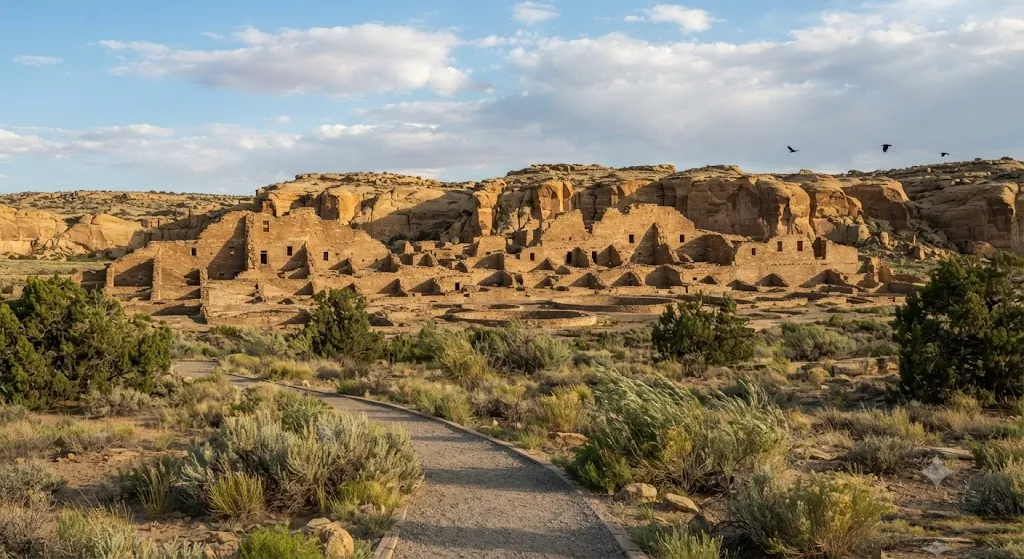
Visiting Chaco Culture National Historical Park is an unparalleled journey into the heart of an ancient civilization. This UNESCO World Heritage site offers a profound connection to the Ancestral Pueblo people, whose innovative architectural and engineering feats flourished here between 850 and 1250 A.D. We recommend a visit for anyone seeking to understand the rich tapestry of North American history and experience a landscape imbued with spiritual significance. The sheer scale and sophistication of the "Great Houses" like Pueblo Bonito, Chetro Ketl, and Hungo Pavi are astounding, showcasing complex astronomical alignments and advanced construction techniques that continue to baffle archaeologists today. It's a place where the silence of the desert speaks volumes, inviting contemplation and wonder at the ingenuity of those who thrived in this arid environment.
Beyond the impressive ruins, the park's remote setting contributes to an exceptional dark sky experience, making it an International Dark Sky Park. Stargazing here is an experience that transcends the ordinary, offering views of the Milky Way unobscured by light pollution. For those who appreciate history, archaeology, astronomy, and the quiet majesty of the desert, Chaco Culture National Historical Park delivers an unforgettable experience.
Who It's Best For
Chaco Culture National Historical Park is best suited for travelers with a deep interest in history, archaeology, and Native American cultures. It's ideal for those who appreciate remote, off-the-beaten-path destinations and are prepared for a rugged travel experience. Adventurous families with older children who can appreciate historical sites and tolerate primitive conditions will find it rewarding. The park is also a haven for photographers, stargazers, and hikers eager to explore ancient trails and breathtaking landscapes. Due to its remote location and limited amenities, it's less suitable for those seeking luxury accommodations, extensive dining options, or easy access. Visitors should be comfortable with driving on unpaved roads and being largely self-sufficient. It's a destination for the curious, the respectful, and those ready to immerse themselves in a truly unique cultural landscape.
Getting There & Parking
Getting to Chaco Culture National Historical Park requires careful planning, as it is intentionally located in a remote area of northwestern New Mexico, far from paved highways. Our team emphasizes that access involves driving on unpaved roads, which can be challenging, especially after rain or snow. There are two primary routes to consider.
The most common approach is from the north, via US 550. From Bloomfield, New Mexico, head south on US 550 for approximately 3 miles, then turn west onto County Road 7900 (at mile marker 112). Follow CR 7900 for about 17 miles, which will turn into State Road 57. Continue on SR 57 for another 8 miles to the park entrance. This route includes about 21 miles of unpaved road.
Alternatively, from the south, you can take US 9 from Thoreau, New Mexico, turning north onto State Road 371. Drive approximately 50 miles north, then turn east onto County Road 7900 (which becomes State Road 57). Follow this road for about 20 miles to the park entrance. This route involves approximately 23 miles of unpaved road.
We strongly recommend checking current road conditions before your trip, especially if you plan to visit during or after inclement weather. The National Park Service website for Chaco Culture National Historical Park (which you can find at nps.gov/chcu) is the best source for up-to-date road information. A high-clearance vehicle is highly recommended, and four-wheel drive may be necessary depending on conditions. Allow ample time for travel, as the unpaved sections will significantly slow your progress.
Once you arrive at Chaco Culture National Historical Park, parking is available at the Visitor Center and at designated trailheads along the 9-mile Canyon Loop Drive. All parking is free. We advise arriving early, especially during peak season, to secure a spot at popular trailheads. Oversized vehicles and RVs should be aware that some parking areas may have limited space, but the Visitor Center typically accommodates larger vehicles. Always park in designated areas to protect the fragile desert environment and ensure accessibility for emergency services.
Top Things to Do
When planning your visit to Chaco Culture National Historical Park, our team recommends prioritizing exploration of the Great Houses and immersing yourself in the unique desert environment. There are numerous things to do at Chaco Culture National Historical Park that will leave a lasting impression.
- Explore the Great Houses: The monumental Ancestral Pueblo structures are the park's main draw. Pueblo Bonito is the largest and most iconic, a D-shaped complex with hundreds of rooms and dozens of kivas. Chetro Ketl, Hungo Pavi, Casa Rinconada, and Kin Kletso are also easily accessible from the Canyon Loop Drive. We suggest allowing plenty of time to walk through these sites, imagining life within their ancient walls.
- Hike the Backcountry Trails: Beyond the main loop, several backcountry trails lead to more remote Great Houses atop the mesa. These offer incredible views and a deeper sense of solitude. (More on Chaco Culture National Historical Park hiking trails below).
- Visit the Visitor Center: Start your trip here to get oriented. The Chaco Culture National Historical Park Visitor Center offers exhibits, a park film, and rangers who can provide current conditions and recommendations. It's an essential first stop to enhance your understanding of the park's significance.
- Stargazing: As an International Dark Sky Park, Chaco offers phenomenal stargazing opportunities. We highly recommend staying overnight in the campground or nearby to experience the truly dark skies. Ranger-led night sky programs are often available during warmer months.
- Attend Ranger Programs: Check the schedule for ranger-led talks, walks, and evening programs. These offer invaluable insights into Chacoan culture, astronomy, and the natural environment.
- Drive the Canyon Loop Drive: This 9-mile paved loop provides access to the major Chacoan sites. You can drive it, stopping at various points for short walks to the ruins, or even bike it if you're prepared for the desert conditions.
These things to do at Chaco Culture National Historical Park provide a comprehensive experience of this extraordinary place.
Chaco Culture National Historical Park Hiking Trails
The Chaco Culture National Historical Park hiking trails offer an intimate way to experience the ancient landscape and discover more remote ruins. Our team finds that these trails provide a deeper connection to the Ancestral Pueblo people's world, allowing you to walk in their footsteps. Always carry plenty of water, wear appropriate footwear, and be aware of weather conditions, as the desert environment can be harsh.
Here are some of the key Chaco Culture National Historical Park hiking trails:
- Pueblo Bonito Trail: An easy, accessible 0.8-mile loop that takes you directly through the heart of the largest Great House.
- Chetro Ketl Trail: A 0.5-mile loop exploring the impressive Chetro Ketl, often connected with the Pueblo Bonito trail.
- Una Vida Trail: A 1-mile round trip to one of the earliest Great Houses, featuring a large kiva and a unique petroglyph panel.
- Pueblo Alto Trail: This challenging 5.1-mile loop (or 3-mile round trip to Pueblo Alto) ascends the mesa behind Pueblo Bonito, offering panoramic views of the canyon and access to the Pueblo Alto and New Alto ruins. This trail is part of the Chacoan road system and provides insight into their extensive network.
- Penasco Blanco Trail: The longest and most remote of the main trails, this 7.6-mile round trip leads to the Penasco Blanco Great House and features a fascinating "Supernova" pictograph.
- Wijiji Trail: An easy 1.5-mile round trip to the Wijiji Great House, known for its distinct architecture.
- Kin Kletso and Casa Chiquita Trails: These shorter trails (0.6 and 0.5 miles round trip, respectively) lead to smaller, but equally significant, Great Houses.
Remember to pick up a trail map at the Visitor Center before embarking on any of the Chaco Culture National Historical Park hiking trails and inform a ranger of your plans, especially for the longer backcountry routes. The solitude and expansive views on these trails are truly rewarding.
Best Time to Visit
The best time to visit Chaco Culture National Historical Park is during the spring (April to May) and fall (September to October). During these seasons, the temperatures are generally mild and pleasant for hiking and exploring the ruins. Daytime highs typically range from the 60s to 70s Fahrenheit, with cooler nights. These shoulder seasons also tend to have fewer visitors than the peak summer months, allowing for a more serene experience.
Summer (June to August) can be very hot, with daytime temperatures often exceeding 90 or even 100 degrees Fahrenheit. Thunderstorms are common in July and August, which can make the unpaved access roads muddy and potentially impassable. If you visit in summer, we strongly advise starting your explorations early in the morning to avoid the midday heat and carrying ample water. Winter (November to March) brings cold temperatures, often below freezing, and can include snow. While a winter visit can offer stark beauty and extreme solitude, road conditions can be treacherous, and some facilities may have reduced hours or be closed.
Regardless of the season, our team recommends checking the weather forecast and road conditions before you depart, as the remote desert environment can be unpredictable. For the best stargazing, aim for a new moon phase, as Chaco's dark skies are truly spectacular without moonlight interference.
Where to Stay Nearby
When considering Chaco Culture National Historical Park lodging, it's important to set expectations: accommodations directly adjacent to the park are extremely limited. The park's remote nature means that true "nearby" options are scarce. Most visitors either camp within the park or stay in towns a few hours' drive away.
Chaco Culture National Historical Park Camping
The primary and most recommended Chaco Culture National Historical Park lodging option is the Gallo Campground, located within the park itself. It offers 32 individual campsites and two group sites. These are primitive sites with picnic tables and fire grates, but no hookups for RVs. Vault toilets and potable water are available. Reservations for Gallo Campground are highly recommended, especially during peak season, and can be made through Recreation.gov. We advise booking well in advance, as sites fill up quickly. Staying at Gallo Campground allows you to experience the park's dark skies and provides easy access to the ruins early in the morning or late in the evening.
Best Hotels Near Chaco Culture National Historical Park
For those preferring traditional lodging, the closest towns with hotels are Farmington (approximately 2.5-3 hours north), Bloomfield (approximately 2.5 hours north), and Grants (approximately 2.5-3 hours south). These towns offer a range of chain hotels and motels. Our team suggests Farmington or Bloomfield as generally more convenient for access from the north. However, remember that you will still face a significant drive on unpaved roads to reach the park entrance from any of these locations. Be sure to factor in travel time and road conditions when planning your day trips to the park.
Where to Stay Near Chaco Culture National Historical Park
If you're looking for more amenities or a different experience, Gallup, New Mexico (west of Grants), and Albuquerque, New Mexico (further southeast) are larger cities with more extensive lodging, dining, and shopping options, but they are considerably further away – 3.5 to 4.5 hours' drive, respectively. Staying in these cities would necessitate longer travel days to Chaco. For a truly immersive experience, we firmly believe that camping at Gallo Campground is the ideal Chaco Culture National Historical Park lodging choice, despite its primitive nature.
Sample 2-Day Itinerary
To truly appreciate Chaco Culture National Historical Park, our team recommends a minimum of two full days. This allows for in-depth exploration without feeling rushed, especially given the travel time to and from the park.
Day 1: Arrival & Canyon Exploration
- Morning (Travel & Arrival): Depart early from your base city (e.g., Farmington, Grants). Allow 2.5-3 hours for the drive, including the unpaved sections. Arrive at the Chaco Culture National Historical Park Visitor Center by late morning. Check in, get a map, and watch the park film to orient yourself.
- Lunch: Enjoy a packed lunch at a picnic area near the Visitor Center or at your campsite if you're staying at Gallo Campground.
- Afternoon (Canyon Loop Drive & Major Sites): Drive the 9-mile Canyon Loop Drive. Begin with the Pueblo Bonito Trail (0.8-mile loop), allowing 1.5-2 hours to explore this magnificent structure. Continue to Chetro Ketl and Hungo Pavi, taking the shorter, easy trails to explore these sites.
- Late Afternoon (Casa Rinconada): Head to Casa Rinconada, a large, isolated great kiva, for a contemplative experience.
- Evening (Dinner & Stargazing): Return to Gallo Campground for dinner. As dusk settles, prepare for an unparalleled stargazing experience. Attend a ranger-led night sky program if available, or simply find a quiet spot to marvel at the Milky Way.
Day 2: Mesa Top Hikes & Deeper Immersion
- Morning (Mesa Top Hike): Start early to beat the heat. Embark on one of the Chaco Culture National Historical Park hiking trails that ascend the mesa. We recommend the Pueblo Alto Trail (5.1-mile loop) for its panoramic views and access to additional ruins, or the Penasco Blanco Trail (7.6-mile round trip) for a more remote experience and the "Supernova" pictograph. Bring plenty of water and snacks.
- Lunch: Enjoy a trailside picnic or return to the campground for a packed lunch.
- Afternoon (Further Exploration or Relaxation): Depending on your energy levels, revisit a favorite site, explore one of the shorter trails you missed, or spend time at the Visitor Center delving deeper into the exhibits. This is also a good time for quiet reflection or photography.
- Late Afternoon (Departure): Begin your drive out of the park, allowing ample time to navigate the unpaved roads before nightfall.
This itinerary for Chaco Culture National Historical Park provides a robust exploration of the park's highlights, balancing major sites with more adventurous hikes.
Is It Worth Visiting?
In our expert verdict, Chaco Culture National Historical Park is absolutely worth visiting, but with a clear understanding of what the experience entails. This isn't a destination for casual tourists seeking quick thrills or luxurious amenities. Instead, it's a profound journey for those with a genuine interest in history, archaeology, and the natural world.
The monumental architecture, the palpable sense of ancient history, and the incredible dark skies combine to create an experience that is truly unique in North America. We find that the effort required to reach this remote site only enhances the sense of discovery and appreciation for the Ancestral Pueblo people's achievements. The solitude and spiritual atmosphere are unlike anything you'll find at more accessible national parks. If you are prepared for primitive conditions, unpaved roads, and a focus on cultural immersion, then Chaco Culture National Historical Park is unequivocally worth visiting. It offers a rare opportunity to connect with a powerful and mysterious past, leaving visitors with a deep sense of wonder and respect for human ingenuity.
How to Get There
Understanding how to get to Chaco Culture National Historical Park is critical for a successful trip, as its remote location is both part of its charm and its challenge. Our team cannot stress enough the importance of planning your route carefully and checking current road conditions before you depart. The park is located in northwestern New Mexico, and all routes involve driving on unpaved county or state roads for a significant distance.
The most commonly recommended approach is from the north, off US 550. From Bloomfield, New Mexico, you'll turn onto County Road 7900, which becomes State Road 57. This route involves approximately 21 miles of unpaved road. From the south, you can access the park via State Road 371 from Thoreau, New Mexico, then turning onto County Road 7900 (State Road 57). This southern approach has about 23 miles of unpaved road.
For detailed, up-to-the-minute directions and road condition alerts, we highly recommend consulting the official National Park Service website for Chaco Culture National Historical Park. A high-clearance vehicle is strongly advised, and four-wheel drive may be necessary, especially after rain or snow. Do not rely solely on GPS, as it may direct you onto impassable roads. Always carry a physical map and plenty of water, and ensure your vehicle has a full tank of gas before heading to the park, as there are no services available once you leave the main highways. Knowing how to get to Chaco Culture National Historical Park safely is the first step to an incredible experience.
For those planning a broader exploration of the American West, consider how Chaco might fit into a larger USA Road Trip Planner. While Chaco Culture National Historical Park is a unique destination in New Mexico, adventurers might also find interest in exploring the diverse landscapes of South Dakota, home to iconic sites like Badlands National Park, Bear Butte State Park, and the expansive Black Hills National Forest. These destinations offer a different, but equally compelling, slice of American heritage and natural beauty. Our comprehensive Plan Your US Trip guide can assist with integrating multiple destinations into your travel plans.
Last updated: 2026-07-13 by the Roam States team.