Craters of the Moon National Monument Travel Guide — Idaho
Idaho" — This unique volcanic landscape, filled with lava flows, cinder cones, and lava tube caves, offers an unparalleled opportunity to step onto a world shaped by powerful geological forces. Our team at Visit America is dedicated to providing you with the most accurate and inspiring information to plan your journey to this extraordinary corner of Idaho.
Why Visit Craters of the Moon National Monument
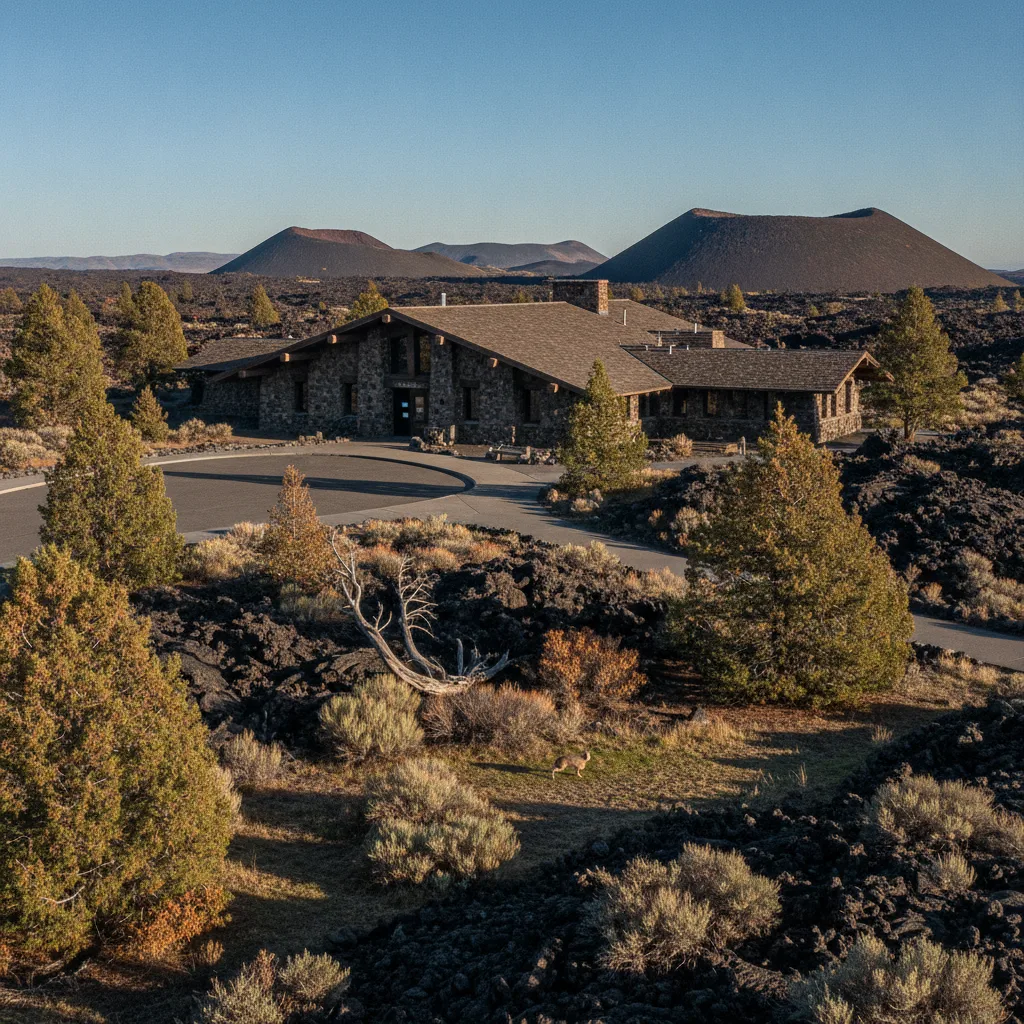
There are few places on Earth where you can experience a landscape so profoundly alien, yet so accessible, as Craters of the Moon National Monument Idaho. This vast ocean of lava flows, dotted with scattered islands of cinder cones and sagebrush, truly lives up to its "weird and scenic landscape" reputation.
Visiting Craters of the Moon offers a unique glimpse into the raw power of volcanism. Formed from the Great Rift, a 52-mile-long chain of deep cracks in the earth, the monument showcases a diverse array of volcanic features including volcanic rifts, spatter cones, shield volcanoes, and extensive lava tube caves. It's a place where you can walk on solidified lava, explore underground tunnels, and hike up cinder cones for panoramic views that stretch to the distant Pioneer Mountains and Lost River Range.
Beyond its geological marvels, Craters of the Moon is also an International Dark Sky Park, offering some of the most spectacular stargazing opportunities in the country. Far removed from major city lights, the night sky here is a breathtaking canvas of stars, making it a magical experience for anyone who chooses to stay past sunset.
Moreover, the monument holds historical significance, having been established in 1924 by President Calvin Coolidge to preserve its unique features. Astronauts even trained here, preparing for lunar missions in an environment that closely mimicked the moon's surface. A surprising number of plants and animals have adapted to thrive in this harsh volcanic and high desert environment, adding another layer of intrigue to your visit.
Who It's Best For
Craters of the Moon National Monument is an ideal destination for a wide range of travelers, particularly those with a keen interest in geology, unique landscapes, and outdoor adventure. It's perfect for:
- Geology Enthusiasts: Anyone fascinated by volcanic activity, lava formations, and Earth's geological history will find this monument a living classroom. The interpretive signs and diverse features make it an educational journey.
- Hikers and Explorers: With trails ranging from easy, paved loops to more strenuous climbs up cinder cones and explorations of lava tubes, there's something for every activity level.
- Families with Curious Kids: The "moon-like" landscape sparks imagination, and the Junior Ranger program provides engaging activities for children of all ages. Exploring caves and climbing small volcanoes offers an adventurous and educational experience.
- Stargazers and Photographers: As an International Dark Sky Park, it provides unparalleled opportunities for night sky photography and simply marveling at the cosmos. The stark, dramatic landscape also offers incredible photographic subjects during the day.
- Road Trippers: Its location in southern Idaho makes it a fantastic stop on a larger US road trip, especially for those exploring the Pacific Northwest or heading towards Yellowstone and Grand Teton National Parks.
- Those Seeking Solitude: While popular, especially in peak season, the vastness of the preserve and wilderness areas means you can often find quiet corners for reflection and immersion in nature.
However, it's important to note that services within the monument are limited, so those seeking luxury accommodations or extensive dining options directly within the park might prefer to stay in nearby towns like Arco or Carey.
Getting There & Parking
Understanding how to get to Craters of the Moon National Monument is straightforward, but it requires planning, as the area is quite remote. The park's main entrance and visitor center are conveniently located directly off U.S. Highway 20/26/93.
Driving Directions:
- From Arco, Idaho: The monument is approximately 18 miles southwest.
- From Carey, Idaho: The monument is about 24 miles northeast.
- From Boise, Idaho: Expect a drive of roughly 2.5 to 2.75 hours (around 174 miles).
- From Twin Falls, Idaho: The drive is about 1.5 hours (around 90-94 miles).
- From Idaho Falls, Idaho: It's approximately a 1.5-hour drive (around 82-90 miles).
Our team strongly advises against relying solely on GPS navigation systems, as they can sometimes provide inaccurate directions in remote areas. Always follow signs for the park entrance off U.S. Highway 20/26/93.
Parking:
Parking at Craters of the Moon National Monument is generally ample, with designated areas for different vehicle types. The Robert Limbert Visitor Center has a parking area, including specific spots for RVs and buses. All parking lots along the scenic Loop Drive are designed for easy pull-in and pull-out, ensuring a smooth flow of traffic. We recommend utilizing these designated spots and being mindful not to block other vehicles. There are no gas stations within the monument, so ensure your tank is full before arriving; the nearest gas is in Arco, about 18 miles away.
Top Things to Do
There are countless things to do at Craters of the Moon National Monument, offering a variety of experiences for every type of adventurer. Our team recommends allocating at least 2-4 hours to explore the main features, but a full day or even an overnight stay will allow for a more immersive experience.
Drive the Scenic Loop Road
The 7-mile (11 km) Scenic Loop Road is your gateway to the monument's highlights. This paved, one-way road features several stops and trailheads, providing easy access to many of the top things to do in Craters of the Moon National Monument. The Loop Road is typically open from mid-April through late November, weather permitting. During winter, it closes to vehicles but becomes a popular route for snowshoeing and cross-country skiing.
Explore Lava Tube Caves
Caving is undoubtedly one of the most thrilling things to do at Craters of the Moon National Monument. The park boasts over 700 documented caves, with several lava tube caves accessible to the public. As of 2026, Indian Tunnel and Dewdrop Cave are typically open, while Buffalo Caves, Boy Scout Cave, and Beauty Cave are permanently closed to protect bats and sensitive environmental conditions. A free cave permit is required for entry and can be obtained in person at the visitor center during business hours. Remember to bring a flashlight or headlamp and wear sturdy shoes that haven't been worn in other caves to prevent the spread of White-Nose Syndrome, a bat disease.
- Indian Tunnel: This massive lava tube, up to 30 feet high and 50 feet wide, is easily accessible via metal steps. It features skylights where the ceiling has collapsed, allowing natural light to filter in.
- Dewdrop Cave: A smaller, "trainer" cave, it offers a good introduction to caving with a relatively easy descent.
Hike Up Cinder Cones and Explore Trails
The monument offers a variety of hiking trails, from short interpretive walks to more challenging ascents. Here are some of the best things to do in Craters of the Moon National Monument on foot:
- Inferno Cone: A must-do, this short but steep 0.2-mile hike takes you to the summit of a cinder cone, offering unparalleled 360-degree views of the lava fields, spatter cones, and distant mountains.
- Spatter Cones: These mini-volcanoes are a short walk, allowing you to get up close and even peer into their vents.
- Devils Orchard Nature Trail: This 0.5-mile paved loop winds through an open limber pine woodland, showcasing "lava bombs" and islands of vegetation amidst the dark rock.
- Broken Top Loop Trail: A 1.8-mile round trip, this trail circles cinder cones and traverses lava fields, providing diverse views of volcanic features and educational interpretive signs.
- North Crater Flow Trail: A short, paved loop that offers an interpretive introduction to the lava fields, suitable for most visitors.
- Wilderness Trail: For those seeking a longer, more solitary experience, this trail extends into the monument's wilderness, offering views of Buffalo Cave and Echo Crater. A free backcountry permit is required for overnight camping or hiking in the North End of the park.
Stargazing
As an International Dark Sky Park, Craters of the Moon is a prime location for stargazing. On clear nights, the Milky Way is often visible, and ranger-led astronomy programs are sometimes offered during peak season. We highly recommend staying past sunset to witness this truly unforgettable experience.
Junior Ranger Program
For families visiting Craters of the Moon National Monument with kids, the Junior Ranger program is an excellent way to engage young explorers. Children can earn a badge by completing activity booklets tailored for different age groups. Craters of the Moon even offers a unique "Lunar Ranger" program, acknowledging the park's role in the space program.
Best Time to Visit
Our team at Visit America considers the best time to visit Craters of the Moon National Monument to be during the **spring (April to early June) and fall (September to October)**.
- Spring and Fall: During these seasons, the weather is mild, with daytime temperatures ranging from 50-73°F (10-23°C). This makes for comfortable hiking and exploration. Spring also brings a beautiful wildflower bloom, adding a splash of color to the stark landscape. The Loop Road is typically open during these times, and crowds are generally smaller than in summer.
- Summer (July to August): Summers are hot, with temperatures often ranging from 70-86°F (21-30°C) and the black lava absorbing heat, making it feel even warmer. Strenuous hiking can be challenging, and strong afternoon winds and occasional thunderstorms are common. However, summer offers the greatest access to all park facilities and trails, and the visitor center has extended hours (8:00 AM to 6:00 PM from May 21 to October 5). July is typically the busiest month.
- Winter (November to March): Winter brings snow and very cold temperatures, often dropping below freezing. While the Loop Road closes to vehicles from mid-November to mid-April, it transforms into a unique landscape for snowshoeing and cross-country skiing, and entry is free. Snow camping is permitted with a free permit. The visitor center has limited hours in winter and spring (9:00 AM to 4:30 PM, closed Tuesdays and Wednesdays from January 29 to May 20, 2026, and closed entirely from December 1, 2025, to January 28, 2026).
For the best experience, we recommend checking the park's official website for current conditions and operating hours before your visit, as dates for road and facility openings/closures can vary based on weather.
Where to Stay Nearby
While there is no lodging available directly within Craters of the Moon National Monument, several options exist in nearby towns and within the park's campground.
In-Park Camping: Lava Flow Campground
The Lava Flow Campground is the only developed campground within the monument, located just beyond the visitor center. It operates on a first-come, first-served basis and typically accommodates vehicles from mid-April through November. The cost is $16 per night, or $8 for Senior or Access pass holders (as of May 2026). Payment is accepted via credit card at an automated fee machine. The campground offers picnic tables, charcoal grills (wood fires are not permitted due to scarcity of wood), flush toilets, and drinking water (from mid-May through early October). RVs are permitted, but there are no hook-ups. During winter, snow camping is allowed with a free permit.
Nearby Towns for Lodging and Services
For those preferring traditional lodging or more extensive services, the small towns of Arco and Carey are your closest options.
- Arco, Idaho (18 miles east): Arco is the larger of the two towns and offers a variety of visitor services including motels, restaurants, gas stations, and grocery stores. Options include the Arco Inn and DK Motel.
- Carey, Idaho (24 miles west): Carey provides more limited services, with a few motels and a gas station/grocery store.
For a wider selection of hotels and amenities, you might consider larger cities like Sun Valley (70 miles), Idaho Falls (90 miles), or Twin Falls (94 miles), though these are further drives.
Dispersed and Group Camping
Backcountry camping is permitted within the Craters of the Moon Wilderness and the NPS Preserve/BLM Monument with a free self-issued permit obtained at the visitor center. This is a rare opportunity within an NPS unit for free dispersed camping. There is also a group campground at the base of Sunset Cone, which can be reserved for up to 30 people from late May through September for a flat fee of $30 per night. This group site is for tent camping only and does not accommodate RVs or trailers.
Visiting With Kids
Craters of the Moon National Monument with kids is an incredibly enriching and memorable experience. The otherworldly landscape naturally sparks curiosity and offers a fantastic outdoor classroom. Our team has found that the park is very kid-friendly, with many activities tailored to young explorers.
- Junior Ranger Program: This is a highlight for families. The park offers two different Junior Ranger booklets for various age groups, allowing children to learn about geology, wildlife, and the park's unique history while earning a special badge. They even have a "Lunar Ranger" program, connecting the park to space exploration.
- Easy Hikes: Many trails are short and manageable for little legs. The North Crater Flow Trail is a paved, half-mile loop that provides an excellent introduction to the lava fields. The Spatter Cones are also a quick and exciting stop where kids can look into miniature volcanoes.
- Exploring Caves: The lava tube caves, particularly Indian Tunnel with its wide entrance and natural skylights, are a huge hit with kids. Remember to get a free cave permit at the visitor center and bring flashlights.
- Climbing Inferno Cone: For slightly older or more adventurous children, the steep but short hike up Inferno Cone offers a rewarding challenge and incredible panoramic views.
- Stargazing: As an International Dark Sky Park, staying after dark for stargazing is a magical experience that will captivate children and adults alike.
When visiting Craters of the Moon National Monument with kids, we recommend bringing plenty of water, snacks, sunscreen, hats, and sturdy closed-toe shoes. The black lava can get very hot in summer, and shade is limited. Vault toilets are available throughout the park, but drinking water is only at the visitor center.
Is It Worth Visiting?
Absolutely, Craters of the Moon National Monument is worth visiting. Our team wholeheartedly believes this unique Idaho destination offers an unparalleled experience that stands out among other national parks and monuments. If you're wondering, "is Craters of the Moon National Monument worth visiting?", the answer is a resounding yes, especially for those seeking something truly different.
The stark, volcanic landscape provides a dramatic contrast to Idaho's more famous mountainous and riverine scenery, like the Sawtooth National Recreation Area or Shoshone Falls. It's a place where you can literally walk on a landscape that feels like another planet, shaped by geological forces over thousands of years. The opportunity to explore lava tube caves, hike up cinder cones, and witness an International Dark Sky at night makes it a truly distinctive destination.
While some might find the remote location a deterrent, we view it as part of its charm and appeal, contributing to the exceptional dark skies and sense of isolation. The limited services within the park itself necessitate some planning, but this also helps preserve its rugged beauty. For a relatively small park, it offers a surprising diversity of activities, from easy scenic drives to challenging wilderness hikes, making it accessible and engaging for various interests and fitness levels.
In short, if you're looking for a destination that offers a profound connection to Earth's geological past, stunning photographic opportunities, and an adventure that feels truly out of this world, then Craters of the Moon National Monument is worth visiting. It's a testament to Idaho's incredible natural diversity and a must-see for any discerning traveler.
Sample 2-Day Itinerary
To truly immerse yourself in the unique landscape of Craters of the Moon National Monument Idaho, our team recommends a two-day visit. This allows ample time to explore the main attractions, venture into the wilderness, and experience the incredible night sky.
Day 1: Loop Road Highlights & Caving
- Morning (8:00 AM - 12:00 PM): Arrival & Scenic Loop Drive
- Arrive at the Robert Limbert Visitor Center. Pick up a park map, free cave permits, and Junior Ranger booklets if traveling with kids. Chat with rangers for current conditions and recommendations.
- Begin your drive along the 7-mile Scenic Loop Road.
- Stop at the North Crater Flow Trail for an easy, paved interpretive walk through recent lava flows.
- Continue to the Devils Orchard Nature Trail, a 0.5-mile loop showcasing islands of vegetation.
- Hike up Inferno Cone (0.2 miles, steep) for breathtaking panoramic views of the entire monument.
- Lunch (12:00 PM - 1:00 PM): Picnic Lunch
- Enjoy a packed lunch at one of the picnic areas near the visitor center or along the Loop Road. Remember, no food services are available in the park.
- Afternoon (1:00 PM - 5:00 PM): Lava Tube Caves Exploration
- Head to the Caves Area. With your free cave permit in hand, explore Indian Tunnel and Dewdrop Cave. Allow plenty of time for scrambling and photography. Remember flashlights and sturdy shoes.
- Consider a quick stop at the Spatter Cones for a close-up view of these miniature volcanoes.
- Evening (5:00 PM onwards): Campground & Stargazing
- Set up camp at the Lava Flow Campground (first-come, first-served).
- Prepare dinner at your campsite.
- As darkness falls, find a good spot away from campfires for unparalleled stargazing. Craters of the Moon is an International Dark Sky Park, offering incredible views of the Milky Way.
Day 2: Wilderness & Nearby Attractions
- Morning (8:00 AM - 12:00 PM): Wilderness Hike or Broken Top Loop
- For serious hikers, obtain a free backcountry permit and embark on a portion of the Wilderness Trail towards Echo Crater (check conditions and trail length with rangers).
- Alternatively, for a moderately challenging hike, tackle the Broken Top Loop Trail (1.8 miles round trip) to see varied lava formations and cinder cones.
- Lunch (12:00 PM - 1:00 PM): Depart for Arco or Carey
- Pack up camp and head to Arco or Carey for lunch and to refuel.
- Afternoon (1:00 PM - 5:00 PM): Explore Beyond the Monument
- Depending on your onward journey, consider visiting other Idaho gems. Head west towards Shoshone Falls in Twin Falls, often called the "Niagara of the West" (about 90 miles from Craters of the Moon).
- Alternatively, explore the stunning Sawtooth National Recreation Area to the north (about 1.5 hours drive), offering alpine lakes and rugged mountains.
- For a taste of Idaho's state capital, consider the Boise River Greenbelt if heading towards Boise.
This itinerary provides a comprehensive exploration of Craters of the Moon National Monument Idaho, balancing iconic sights with deeper dives into its unique geology and natural beauty. Remember to always carry plenty of water and wear appropriate footwear.
Last updated: 2026-07-05 by the Visit America team.