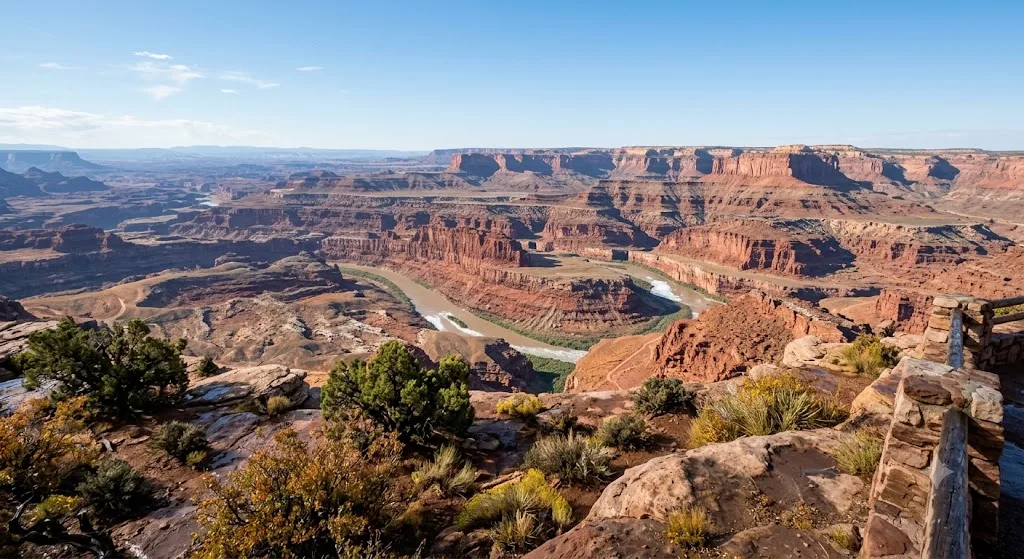
Dead Horse Point State Park Travel Guide — Utah
Our team at Roam States has explored the dramatic landscapes of the American Southwest extensively, and we can confidently say that Dead Horse Point State Park Utah offers one of the most breathtaking and iconic vistas you’ll encounter. Perched 2,000 feet above a severe gooseneck in the Colorado River, this state park delivers a panoramic spectacle of sculpted pinnacles and buttes that rivals its more famous national park neighbors. We’ve compiled this comprehensive guide to help you plan an unforgettable trip to this truly spectacular corner of Utah.
Why Visit Dead Horse Point State Park
For us, the primary draw of Dead Horse Point State Park is undeniably its namesake overlook. Standing at the edge of the mesa, gazing down at the emerald ribbon of the Colorado River carving its way through a labyrinth of red rock canyons, is an experience that stays with you long after you’ve left. It's a view so dramatic, so perfectly framed, that it has become one of the most photographed scenic vistas in the world. Millions of years of geological activity, from ancient oceans to wind-blown sand dunes, have sculpted this incredible landscape, creating a visual feast of stratified rock layers that tell a story of deep time.
Beyond the iconic viewpoint, this state park offers a serene escape, often with fewer crowds than the nearby national parks. It provides an intimate connection with the high desert environment, allowing visitors to appreciate the intricate details of the canyon country without feeling overwhelmed. We find it to be a perfect complement to a wider Utah adventure, offering a distinct perspective on the region's unparalleled natural beauty.
Who It's Best For
Dead Horse Point State Park caters to a surprisingly diverse range of travelers. It’s ideal for:
- Photographers: With its dramatic light, sweeping panoramas, and vibrant colors, especially at sunrise and sunset, the park is a dream for capturing stunning landscape shots.
- Families: The main overlook is easily accessible via a short, paved path, making it suitable for all ages and mobility levels. There are also relatively easy hiking and biking trails.
- Casual Sightseers: If you're looking for an awe-inspiring view without strenuous hiking, Dead Horse Point delivers. You can drive right to the main overlook and enjoy the scenery with minimal effort.
- Hikers and Mountain Bikers: The park boasts miles of well-maintained trails for both activities, offering varying levels of difficulty and incredible scenery.
- Campers and Glampers: With two campgrounds and luxurious yurts, it's a fantastic spot for an overnight stay, offering unparalleled access to dark skies and early morning views.
- Stargazers: As a certified International Dark Sky Park, Dead Horse Point offers phenomenal night sky viewing, a truly magical experience away from city lights.
Essentially, if you appreciate dramatic natural beauty and outdoor recreation, you'll find something to love at Dead Horse Point State Park.
Getting There & Parking
Understanding how to get to Dead Horse Point State Park is straightforward, though it requires a dedicated drive. The park is conveniently located near Moab, Utah, a central hub for exploring the region's natural wonders. From Moab, you'll drive approximately 9 miles northwest on US 191, then turn southwest onto Utah 313 for about 23 miles until you reach the park entrance. The entire drive from Moab to the visitor center typically takes around 45 minutes. The roads leading to the park are paved and well-maintained, accessible year-round.
For those visiting other nearby attractions, Dead Horse Point State Park is also very close to Canyonlands National Park's Island in the Sky district, often just a 15-20 minute drive away. It's also about 27 miles from Arches National Park, taking approximately 55 minutes by car.
Regarding Dead Horse Point State Park parking, you'll find complimentary parking available at both the Visitor Center and the Dead Horse Point Overlook. These areas are well-equipped to handle day-use visitors. However, it's important to note that overnight parking is only permitted if you have a camping or yurt reservation within the park. The park officially closes to day-use visitors at 10:00 PM. If the entrance station is unstaffed, a self-serve drop box is available for fee payment.
Top Things to Do
There are a wealth of things to do at Dead Horse Point State Park, far beyond simply gazing at the main overlook. Our team recommends dedicating ample time to explore the park's diverse offerings. Here's a breakdown of the best ways to experience this incredible landscape:
Witness the Iconic Dead Horse Point Overlook
This is, without a doubt, the park's showstopper. The dramatic 2,000-foot vertical drop to the Colorado River and the expansive views of Canyonlands National Park are simply mesmerizing. We suggest visiting at sunrise or sunset for the most spectacular light and vibrant colors that paint the canyons. It's an easy walk from the parking area, making it accessible for everyone.
Explore the Rim Trails
For those who want to stretch their legs and gain different perspectives, the rim trails offer fantastic opportunities. The park features approximately 7 miles of hiking trails, covering eight different overlooks. All hiking trails are relatively flat with minimal elevation gain, traversing the mesa top.
Dead Horse Point State Park Hiking Trails
When it comes to Dead Horse Point State Park hiking trails, you have excellent options that showcase the park's beauty. The two primary hiking-specific trails both depart from the visitor center and lead to the Dead Horse Point Overlook.
- East Rim Trail: This trail is about 1.5 miles one way and offers stunning views along the ridge. It's an easy, relatively flat path, suitable for all fitness levels.
- West Rim Trail: Slightly longer at 2.5 miles one way, this trail also provides incredible vistas.
You can combine both the East and West Rim trails for a loop of just over 5 miles, starting and ending at the Visitor Center. These Dead Horse Point State Park hiking trails are pet-friendly, provided your furry companions are on a leash.
Mountain Biking on the Intrepid Trail System
Mountain biking is another premier activity here. The Intrepid Trail System offers 16.6 miles of moderate to intermediate riding, with slickrock sections, looping singletrack, and sandy washes. It's known for providing a great taste of Moab mountain biking and is perfect for families and riders of all skill levels. You can even rent mountain bikes at the park. Note that dogs are generally not allowed on the mountain bike trails.
Stargazing
As a designated International Dark Sky Park, Dead Horse Point offers unparalleled opportunities for stargazing. We highly recommend staying past sunset (if camping) or joining a ranger-led program to experience the sheer brilliance of the Milky Way and countless stars. Day-use fees only extend until 10:00 PM, so overnight access for stargazing is a perk of camping or joining a permitted tour.
Visit the Visitor Center
The Visitor Center is open daily from 9:00 AM to 5:00 PM and provides valuable information on the park's geology, history, and wildlife through interactive exhibits. It's a great starting point for your visit, offering maps, restrooms, water, and souvenirs.
Best Time to Visit
To truly enjoy Dead Horse Point State Park, timing your visit is key. We find that the best time to visit Dead Horse Point State Park is during the spring (March to May) and fall (September to November). During these seasons, temperatures are mild and pleasant for hiking, biking, and exploring. Spring brings wildflowers, while fall offers crisp air and comfortable daytime temperatures. These shoulder seasons also tend to have fewer extreme weather conditions compared to summer or winter.
Summer (June to August) can be very hot, with midday temperatures making strenuous activity challenging. If you visit in summer, we recommend planning activities for early mornings and late afternoons, spending the midday hours relaxing or exploring indoor attractions in Moab. Winter (December to February) offers a unique, often snowy, perspective on the canyons, but can bring unpredictable weather and colder temperatures. The park remains open year-round, but some facilities or trail conditions might be affected by snow or ice.
For stargazing, any clear night is fantastic, but the cooler temperatures of spring and fall often make for more comfortable viewing experiences. Remember that the park officially closes at 10:00 PM for day-use visitors, so campers have the advantage of extended night sky access.
Where to Stay Nearby
While Dead Horse Point State Park offers excellent camping options within its boundaries, the closest major town with a wide range of accommodations is Moab, Utah. Located about 32 miles or a 45-minute drive away, Moab serves as the perfect base for exploring Dead Horse Point, as well as Arches National Park and Canyonlands National Park.
In Moab, you'll find everything from budget-friendly motels to upscale hotels, vacation rentals, and a plethora of private campgrounds and RV parks. Many accommodations in Moab cater specifically to outdoor enthusiasts, offering amenities like bike washes, gear storage, and early breakfast options. We recommend booking your lodging well in advance, especially if you're traveling during peak spring and fall seasons, as Moab is a very popular destination.
For a unique experience, consider staying at one of the many glamping resorts or eco-lodges that have sprung up around Moab, offering a blend of comfort and immersion in the desert landscape.
Sample 2-Day Itinerary
To help you make the most of your visit to Dead Horse Point State Park and the surrounding area, our team has crafted a sample 2-day itinerary. This plan balances the park's unique offerings with other nearby attractions, ensuring a fulfilling trip.
Day 1: Dead Horse Point Immersion
- Morning (6:00 AM - 12:00 PM): Arrive at Dead Horse Point State Park early to beat any potential crowds and experience the magic of sunrise over the canyons. Head directly to the Dead Horse Point Overlook for breathtaking views. Spend the rest of the morning exploring the Dead Horse Point State Park hiking trails. We suggest hiking the entire 5-mile loop of the East and West Rim Trails, starting from the Visitor Center, to enjoy diverse perspectives of the canyon and river below.
- Lunch (12:00 PM - 1:00 PM): Enjoy a picnic lunch at one of the designated picnic areas within the park. The Visitor Center also offers snacks and beverages.
- Afternoon (1:00 PM - 5:00 PM): If you're a mountain biking enthusiast, hit a section of the Intrepid Trail System. There are options for all skill levels, from easy loops to more challenging singletrack. Alternatively, visit the park's Visitor Center to learn more about the geology and history of the area.
- Evening (5:00 PM onwards): Check into your campsite or yurt within Dead Horse Point State Park. Prepare dinner and then settle in for an evening of unparalleled stargazing. As an International Dark Sky Park, the views of the Milky Way are truly spectacular.
Day 2: Canyonlands & Iconic Views
- Morning (7:00 AM - 12:00 PM): Enjoy a leisurely breakfast at your campsite, soaking in the morning light. Then, depart Dead Horse Point State Park and head a short distance to the Island in the Sky district of Canyonlands National Park. Spend the morning driving the scenic roads and stopping at iconic viewpoints like Mesa Arch (a short, easy hike) and Grand View Point.
- Lunch (12:00 PM - 1:00 PM): Enjoy a packed lunch at a scenic overlook within Canyonlands or head back towards Moab for dining options.
- Afternoon (1:00 PM - 5:00 PM): Drive to Arches National Park, located just north of Moab. While you won't be able to see everything in one afternoon, focus on a few key attractions like the Windows Section or a shorter hike to Delicate Arch Viewpoint.
- Evening (5:00 PM onwards): Return to Moab for dinner and reflect on the incredible canyon country you've experienced. Consider exploring the town's shops or enjoying a local brew.
This itinerary provides a solid foundation, but remember to tailor it to your interests and pace. For more ideas on exploring the Beehive State, check out our guide to Best places in Utah.
FAQ Longtails
things to do in Moab
Moab is an adventurer's paradise, offering a vast array of activities. Beyond visiting Dead Horse Point State Park and the nearby national parks (Arches and Canyonlands), you can enjoy world-class mountain biking on trails like Slickrock, go off-roading on iconic routes such as the Shafer Trail, or try whitewater rafting on the Colorado River. Other popular activities include rock climbing, canyoneering, scenic drives along Highway 128, and visiting local art galleries and breweries. For a deeper dive, consider a visit to the Moab Museum of Film and Western Heritage. There are truly endless things to do in Moab.
Dead Horse Point State Park with kids
Visiting Dead Horse Point State Park with kids is an excellent choice for families. The main Dead Horse Point Overlook is easily accessible via a short, paved path, making it stroller and wheelchair-friendly. The park also offers several easy hiking trails, like the East and West Rim Trails, which are relatively flat and suitable for younger children. The Intrepid Trail System is known for its family-friendly mountain biking options. Kids will also love the opportunity for stargazing, as the park is a designated International Dark Sky Park. Restrooms and picnic areas are available, and the Visitor Center provides educational exhibits. Remember to bring plenty of water, snacks, and sun protection for the whole family.
Dead Horse Point State Park tips
Our top Dead Horse Point State Park tips include: arrive early or stay late to experience sunrise or sunset for the best photographic opportunities and fewer crowds. Bring plenty of water, as the park has limited potable water, especially for RV fill-ups. Dress in layers, as temperatures can fluctuate, and it can be windier and cooler than in Moab. Be aware that the America the Beautiful National Parks Pass is not valid here, as it's a state park, so be prepared to pay the entrance fee. If hiking or biking, stay on marked trails to protect the fragile desert ecosystem. Finally, consider booking camping or yurts well in advance, especially during peak seasons, as they fill up quickly.
Dead Horse Point State Park parking
For Dead Horse Point State Park parking, visitors will find complimentary parking available at the Visitor Center and the Dead Horse Point Overlook. These areas are designed for day-use visitors. It's crucial to remember that the park closes at 10:00 PM for day-use, and overnight parking is strictly reserved for those with confirmed camping or yurt reservations. If you're camping, your campsite fee typically includes parking for one vehicle, with an additional fee for extra vehicles. Tent-only sites may have limited parking, often requiring a short walk from a designated parking area.
best time to visit Dead Horse Point State Park
The best time to visit Dead Horse Point State Park is during the spring (March to May) and fall (September to November). During these seasons, the weather is most comfortable for outdoor activities like hiking and mountain biking, with pleasant temperatures and less extreme heat or cold. Spring showcases wildflowers, while fall offers crisp air and beautiful light. Summer can be very hot, requiring early morning or late afternoon activity, while winter offers solitude but can bring cold and snow, impacting trail conditions. For stargazing, clear nights in any season are fantastic, but spring and fall generally provide the most comfortable conditions.
Dead Horse Point State Park hours and fees
Regarding Dead Horse Point State Park hours and fees for 2026: The park is open year-round from 6:00 AM to 10:00 PM daily for day use. The Visitor Center operates from 9:00 AM to 5:00 PM daily, though it closes on Thanksgiving, Christmas, and New Year's Day. The standard day-use entrance fee is $20 per vehicle (up to 8 passengers), valid for two consecutive days. Discounts are available for Utah seniors ($15), motorcycles ($10), and pedestrians/cyclists ($10). Camping fees vary: RV sites are $60 per night during peak months (March-June, Sept-Oct) and $50 during off-peak months; hike-in tent-only sites are $40 per night; yurts are $150 per night. Reservations for camping and yurts can be made up to four months in advance via Reserve America.
Our team at Roam States firmly believes that Dead Horse Point State Park is an essential stop on any Utah itinerary. Its iconic overlook provides a perspective on the Colorado River and Canyonlands that is truly unique and unforgettable, a dramatic testament to the power of geological time. Whether you're seeking a quick, awe-inspiring view, a challenging mountain bike ride, or a peaceful night under a blanket of stars, this state park delivers an authentic and profound connection to the American West. Don't let it be overshadowed by its national park neighbors; Dead Horse Point stands proudly on its own as a must-visit destination.
Last updated: 2026-07-08 by the Roam States team.