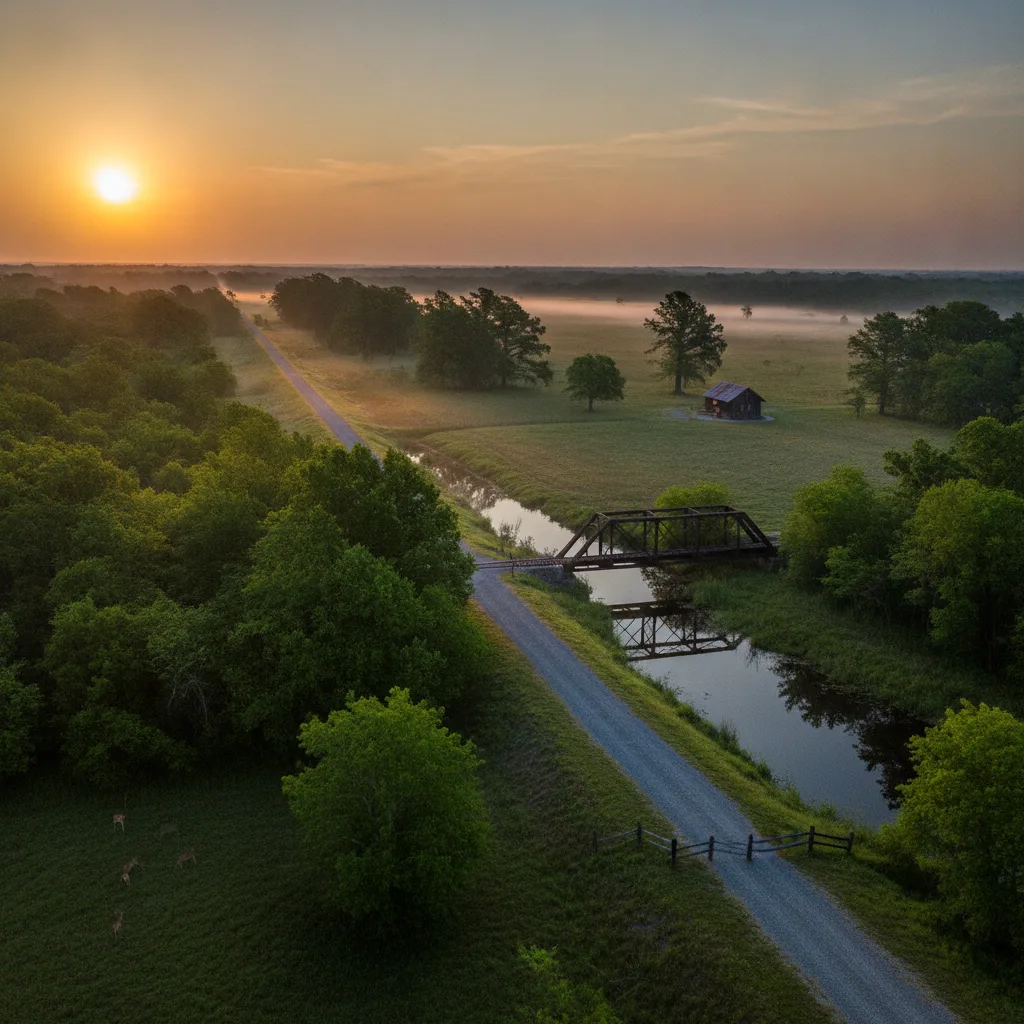
Our Delta Heritage Trail State Park guide covers practical planning for Delta Heritage Trail State Park Arkansas — best time to visit, getting there, and what to do on the ground.
Delta Heritage Trail State Park Travel Guide — Arkansas
The Arkansas Delta holds a unique charm, a landscape shaped by mighty rivers, rich history, and resilient communities. At its heart lies the Delta Heritage Trail State Park Arkansas, a remarkable rail-to-trail conversion that invites visitors to explore this captivating region at their own pace. Our team has traversed this evolving pathway, and we’re here to share everything you need to know for an unforgettable journey.
Why Visit Delta Heritage Trail State Park
We believe the Delta Heritage Trail State Park offers a truly distinctive experience, unlike many other state parks in Arkansas. This isn't just a trail; it's a journey through a living landscape, a testament to the region's past, and a corridor for its future. The park is built along a former Union Pacific Railroad right-of-way, transforming abandoned tracks into a scenic pathway for outdoor enthusiasts. As you pedal or stroll, you'll witness the unique beauty of the Arkansas Delta, from dense bottomland hardwood forests and wetlands to expansive agricultural fields.
What sets this park apart is its blend of natural beauty and historical significance. The trail provides glimpses into a bygone era of rail travel and the communities it connected. Interpretive panels along the way share stories of the Delta's agricultural and transportation history, offering a deeper understanding of the land you're exploring. For those seeking tranquility, the trail's remote sections offer a peaceful escape, where the sounds of nature replace the hustle and bustle of daily life. It’s a place where you can truly unplug and reconnect with the outdoors.
Furthermore, the Delta Heritage Trail State Park is a fantastic destination for wildlife and birdwatching. The diverse ecosystems along the corridor serve as a haven for numerous species. Keep your eyes peeled for white-tailed deer during the quieter hours, and if you venture to the southern sections, you might even spot an alligator in the bayous. Birdwatchers will be particularly delighted, as the trail lies within the Mississippi Flyway, a major migratory route for over 325 bird species. Every visit offers a chance to encounter something new and exciting in this vibrant natural setting.
Who It's Best For
The Delta Heritage Trail State Park truly caters to a wide array of travelers, making it an inclusive destination for many. We've found it to be particularly ideal for:
- Cyclists of All Levels: With its nearly flat grade (around 1 percent) and firm, packed limestone or crushed gravel surface, the trail is incredibly welcoming for cyclists, from casual riders to those seeking longer distances. Road bikes with larger tires or hybrid/gravel bikes are recommended for the best experience on the crushed rock sections.
- Hikers and Walkers: The smooth, level surface also makes it perfect for walking and hiking. Whether you're looking for a leisurely stroll or a longer trek, the shaded canopy and scenic views provide a refreshing environment.
- Nature Enthusiasts and Birdwatchers: As a corridor through bottomland hardwood forests and wetlands, the park is a hotspot for observing diverse wildlife and migratory birds. It's an excellent opportunity for quiet observation and photography.
- History Buffs: The "heritage" aspect of the trail is significant. With interpretive panels and historical sites like the Rohwer Heritage Site nearby, visitors can delve into the rich past of the Arkansas Delta, including its railroad history and the stories of its communities.
- Families with Children: The ADA-compliant, flat trail is safe and accessible for families. Kids can enjoy biking, spotting wildlife, and learning about history in an engaging outdoor setting. Bike rentals are available at the Barton visitor center, making it easy for families to get started.
- Those Seeking Tranquility: Many sections of the trail pass through remote and scenic areas, offering a peaceful escape from urban life. It's a place for quiet contemplation and enjoying the natural sounds of the Delta.
Ultimately, if you appreciate outdoor recreation combined with a rich cultural and natural narrative, the Delta Heritage Trail State Park is likely to be a perfect fit for your travel itinerary.
Getting There & Parking
Understanding how to get to Delta Heritage Trail State Park is crucial for planning your visit. The park is a linear trail spanning multiple counties in eastern Arkansas, and access points are distributed along its length. The main visitor center is a great starting point for many, but numerous trailheads offer convenient access depending on which section you wish to explore.
The Delta Heritage Trail State Park visitor center is situated at the Barton Trailhead, near the northern end of the trail, specifically on Route 49 in Barton. This is a prime location to begin, offering maps, restrooms, and bike rentals. For those driving, ample parking is available at the visitor center. We always recommend starting here if it's your first time, as the staff can provide up-to-date information and recommendations for your visit.
Beyond the Barton Trailhead, there are numerous other access points, making it easy to hop on and off the trail. As of 2026, there are currently 11 trailheads identified along the route, including Lexa, Lick Creek, Lake View, Elaine, Mellwood, Snow Lake, Yancopin, Watson, Rohwer, and Arkansas City. Most of these trailheads offer dedicated parking areas. We've found that trailhead restrooms are available at Barton, Elaine, Mellwood, Snow Lake, Arkansas City, Watson, and Rohwer, which is helpful for longer excursions.
For visitors approaching from major cities, Helena-West Helena is a significant gateway to the northern portion of the trail, located just six miles east of Lexa, one of the northernmost trailheads. From there, you can easily drive to the Barton visitor center or other northern access points. The southern end of the trail terminates at Arkansas City, which also features a trailhead designed in the style of an old train depot, complete with restrooms, picnic areas, and a bicycle repair station. When considering how to get to Delta Heritage Trail State Park, we suggest reviewing the official park map to identify the trailhead closest to your desired starting point or the section of the trail you wish to experience.
Top Things to Do
When planning your visit, you'll find a wealth of engaging activities, making the Delta Heritage Trail State Park a destination with something for everyone. Our team has highlighted the top things to do at Delta Heritage Trail State Park to help you make the most of your adventure.
The primary draw, of course, is exploring the trail itself. With over 80 miles of finished surface as of 2026, and the full 84.5-mile route expected to be open by mid-December 2026 with the completion of the White River bridge, the opportunities for biking and walking are extensive. The trail's crushed gravel surface is well-maintained and generally flat, making it suitable for most ages and abilities. We recommend bringing your own bicycle or taking advantage of the bike rentals available at the Barton visitor center. Whether you choose a short, leisurely ride or a longer, multi-segment journey, the changing scenery of forests, wetlands, and agricultural fields will keep you captivated.
Beyond cycling and walking, other top things to do at Delta Heritage Trail State Park include immersing yourself in the rich natural and cultural heritage of the Delta. Birdwatching is a standout activity, especially during spring and fall migrations when the trail becomes a vibrant corridor for numerous species along the Mississippi Flyway. Keep an eye out for white-tailed deer, coyotes, and even alligators in the sloughs and bayous of the southern sections. The park also offers interpretive programming, often originating from the visitor center, which can enhance your understanding of the local ecology and history.
For a unique experience, consider the "Pedal & Paddle Tour." This guided activity, offered by the park, combines a bike ride from Barton to Lake View (approximately 10 miles one way) with kayaking on Old Town Lake. It's an excellent way to see the Delta from both land and water. History enthusiasts should also make time to visit the Rohwer Heritage Site, a poignant former Japanese American internment camp, accessible via a side trip near the Rohwer trailhead. Additionally, the Arkansas City Trailhead features the John H. Johnson Commemorative Plaza, honoring the publishing magnate born in the area. These historical elements add significant depth to the outdoor adventure, making the Delta Heritage Trail State Park a truly multifaceted destination.
Best Time to Visit
Choosing the best time to visit Delta Heritage Trail State Park can significantly enhance your experience, as the Arkansas Delta experiences distinct seasons. Our team generally recommends planning your trip during the spring or fall for optimal conditions.
Spring (March to May) is a fantastic time to visit. The temperatures are mild and comfortable, typically ranging from the 60s to 70s Fahrenheit, making it ideal for extended biking and hiking. This season also brings vibrant trail conditions, with lush greenery returning and wildflowers blooming. Critically, spring is a peak season for birdwatching, as countless migratory birds pass through the Mississippi Flyway, offering spectacular viewing opportunities. The visitor center and its services are fully operational during this period, and programmed events are more frequent.
Similarly, Fall (September to November) offers excellent weather, with comfortable temperatures and often less humidity than summer. The changing foliage provides a beautiful backdrop for your outdoor activities, and bird migrations continue, albeit with different species than in spring. We find the scenic vistas to be particularly comfortable and picturesque during autumn.
Summer (June to August) is the warmest and most humid season in the Delta, with temperatures often reaching around 90°F. While the trail is fully accessible, we suggest planning early morning rides or walks to avoid the midday heat. Be sure to bring plenty of water and insect repellent if visiting during these months.
Winter (December to February) brings quieter trails and crisp, cooler mornings, with temperatures around 30°F. For those seeking solitude and a peaceful experience, winter can be quite rewarding, especially if you're prepared for the cold. However, the visitor center may have reduced hours during this off-peak season, so it's wise to check ahead.
In summary, for the most comfortable weather and abundant wildlife viewing, aim for a spring or fall visit. If you prioritize solitude and don't mind cooler temperatures, winter can be a serene option.
Where to Stay Nearby
Finding suitable Delta Heritage Trail State Park lodging is an important part of planning your trip, and while the park itself offers primitive camping, there are several towns and types of accommodations nearby to suit different preferences. Our team has explored the options to help you choose the best base for your adventure.
For those who enjoy a rustic experience, the Delta Heritage Trail State Park offers primitive camping. At the Barton Trailhead, you'll find five primitive tent sites equipped with tent pads, picnic tables, standing grills, and access to a community water spigot. These Class D campsites are open year-round and operate on a first-come, first-served basis, as the park does not take reservations for them. The Arkansas City Trailhead also provides limited camping facilities with oversized tent pads. While there are no showers or utility hookups at these sites, they offer direct access to the trail and a true immersion in nature. Future plans for the Yancopin Trailhead include additional primitive campsites and even camper cabins, which will expand the park's lodging offerings.
If you prefer more comfort and amenities, the nearby city of Helena-West Helena is your best bet for Delta Heritage Trail State Park lodging. Located a short drive from the northern trailheads, Helena-West Helena offers a selection of hotels and motels, along with charming bed-and-breakfasts like The Edwardian Inn. Staying in Helena-West Helena allows you to combine your trail adventures with exploring the city's rich Civil War history, Delta blues heritage, and local dining. The Edwardian Inn, for example, positions itself as an ideal basecamp for the Delta Heritage Trail journey.
Beyond Helena-West Helena, the broader Arkansas Delta region offers a growing number of private rentals through platforms like Airbnb and Vrbo, providing unique stay options. You might also find specialized accommodations such as the Delta Heritage Lodge, which caters to outdoor enthusiasts, particularly hunters, but also offers lodging for general visitors with rooms and amenities like a lounge with satellite TV and Wi-Fi. For those with RVs, while the state park's primitive sites lack hookups, several private RV parks are located within a reasonable driving distance, such as Yoder Outpost RV Park and Open Season RV Park. When considering Delta Heritage Trail State Park lodging, we recommend balancing your desire for trail proximity with your preferred level of comfort and amenities.
Sample 2-Day Itinerary
To help you make the most of your visit to the Delta Heritage Trail State Park, our team has crafted a sample 2-day itinerary, focusing on both trail exploration and nearby cultural immersion.
Day 1: Northern Trail Exploration & Helena-West Helena History
- Morning (9:00 AM - 1:00 PM): Biking the Northern Corridor. Start your day at the Barton Trailhead and Visitor Center. Pick up a map, inquire about current trail conditions, and if needed, rent bicycles. Begin your ride heading south towards Lake View. This section offers a pleasant ride through shaded canopy and agricultural fields. You can aim for a 10-mile one-way ride to Lake View, enjoying the smooth crushed gravel surface. Take a short break at the Lake View trailhead before heading back to Barton.
- Lunch (1:00 PM - 2:00 PM): Picnic at the Visitor Center. Utilize the picnic tables and grills available at the Barton visitor center for a packed lunch, or head into nearby Helena-West Helena for local dining options.
- Afternoon (2:00 PM - 5:00 PM): Helena-West Helena Exploration. Drive to Helena-West Helena, approximately 15-20 minutes from Barton. Immerse yourself in the city's rich history. Visit the Delta Cultural Center, which offers award-winning interactive exhibits focusing on the Arkansas Delta's cultural heritage, including its music. Explore downtown Helena's historic buildings and consider a walk along the Levee Walk at Helena River Park.
- Evening (6:00 PM onwards): Dinner & Relaxation. Enjoy dinner at one of Helena-West Helena's local restaurants. If you're staying at The Edwardian Inn, take advantage of its historic charm and comfortable amenities.
Day 2: Southern Trail & Delta Culture
- Morning (9:00 AM - 1:00 PM): Southern Trail & Rohwer Heritage. Drive south to the Watson or Rohwer Trailhead. From Watson, you can explore the finely crushed gravel trail towards Yancopin, enjoying views of wetlands and bottomland hardwoods. Alternatively, focus your ride around Rohwer. Near the Rohwer trailhead, take a side trip to the Rohwer Heritage Site, a significant historical landmark that tells the story of Japanese American internment during WWII.
- Lunch (1:00 PM - 2:00 PM): Trailside or Local Eatery. Pack a picnic to enjoy at one of the trailheads, or seek out a local diner in one of the small communities along the southern route.
- Afternoon (2:00 PM - 4:00 PM): Arkansas City & John H. Johnson Plaza. Continue your journey to the southernmost point of the trail at Arkansas City. Here, you can ride the 14 miles of on-street riding along the Mississippi River Mainline Levee, offering expansive views. Visit the Arkansas City Trailhead, designed as an old train depot, and explore the John H. Johnson Commemorative Plaza, honoring the influential publishing magnate.
- Late Afternoon/Evening: Departure or Extended Stay. Depending on your plans, you can begin your journey home or extend your stay to further explore the Delta. Consider visiting other Arkansas gems like Hot Springs National Park for relaxation or Crater of Diamonds State Park for a unique treasure hunt. For more ideas on exploring the state, check out our guide to Best places in Arkansas.
Delta Heritage Trail State Park Hiking Trails
The Delta Heritage Trail State Park hiking trails offer a distinctive experience for walkers and runners, providing a flat and accessible pathway through the heart of the Arkansas Delta. Unlike rugged mountain trails, these trails are characterized by their smooth surface and gentle grade, making them enjoyable for a wide range of fitness levels. The primary surface of the Delta Heritage Trail State Park hiking trails is packed limestone or finely crushed gravel, which provides a firm and even footing. This makes it suitable for most standard walking shoes, though sturdy athletic shoes are always a good choice.
Currently, over 80 miles of the planned 84.5-mile Delta Heritage Trail are complete and open for use, with the final White River bridge expected to open the entire route by mid-December 2026. This extensive length means you can choose to hike short segments or embark on longer, multi-hour treks. The trail is generally open from sunrise to one hour after sunset, year-round. As you explore the Delta Heritage Trail State Park hiking trails, you'll be treated to diverse scenery, from shaded corridors of bottomland hardwood forests to open vistas alongside agricultural fields and across historic railroad bridges over sloughs and bayous.
For those interested in longer hikes, the trail is divided into several segments accessible from various trailheads, including Lexa, Barton, Lake View, Elaine, Watson, Rohwer, and Arkansas City. Each trailhead provides parking, and many offer restrooms, making it convenient for planning your hiking route. We particularly enjoy the sections that pass through the Trusten Holder State Game Management Area, where the dense bottomland forests and wetlands create a tranquil and wildlife-rich environment. The flat terrain and well-maintained surface of the Delta Heritage Trail State Park hiking trails make them an excellent choice for a peaceful and scenic outdoor excursion in Arkansas.
Is It Worth Visiting?
From our perspective as independent US travel authorities, the answer to "is Delta Heritage Trail State Park worth visiting?" is a resounding yes, especially for those who appreciate a unique blend of outdoor recreation, natural beauty, and historical immersion. This isn't your typical mountainous Arkansas state park; instead, it offers a distinct charm rooted in its flat Delta landscape and rail-to-trail conversion.
The park's primary appeal lies in its extensive, well-maintained pathway, ideal for both cycling and walking. With over 80 miles currently open and the full 84.5-mile length expected by late 2026, it offers a significant recreational corridor through a part of Arkansas often overlooked by outdoor travelers. The smooth, crushed gravel surface makes it accessible for nearly all ages and abilities, a major plus for families or those seeking a less strenuous outdoor experience. We find the continuous canopy of trees in many sections provides welcome shade, and the elevated roadbed offers unique views of the surrounding wetlands and agricultural fields.
Beyond the physical activity, the question of "is Delta Heritage Trail State Park worth visiting?" is affirmed by its rich interpretive elements. The "heritage" in its name is well-deserved, with historical markers and nearby sites like the Rohwer Heritage Site offering insights into the region's past. The park also serves as a vital habitat for wildlife and a prime location for birdwatching along the Mississippi Flyway, adding another layer of engagement for nature lovers. While some older reviews might have noted shorter completed sections, the significant progress and nearing completion of the entire trail in 2026 solidify its status as a major recreational asset and a destination that showcases an important part of Arkansas's natural and cultural story. For a truly authentic Delta experience, we confidently recommend adding it to your itinerary.
Last updated: 2026-07-05 by the Roam States team.