Edge of the Cedars State Park Museum Travel Guide — Utah
Our Edge of the Cedars State Park Museum guide covers practical planning for Edge of the Cedars State Park Museum Utah — best time to visit, getting there, and what to do on the ground. We’ve meticulously researched the latest 2026 facts on hours, fees, and unique offerings so you can plan a seamless and enriching journey into the heart of Ancestral Puebloan history.
Why Visit Edge of the Cedars State Park Museum
For those of us drawn to the profound narratives of ancient civilizations, the Edge of the Cedars State Park Museum Utah stands as an indispensable pilgrimage. This isn't just another roadside attraction; it's a meticulously preserved archaeological site, a world-class museum, and a vital federal repository for artifacts unearthed across southeastern Utah. We consider it the premier gateway to understanding the Ancestral Puebloan peoples, a culture that thrived across the Four Corners region for over a millennium.
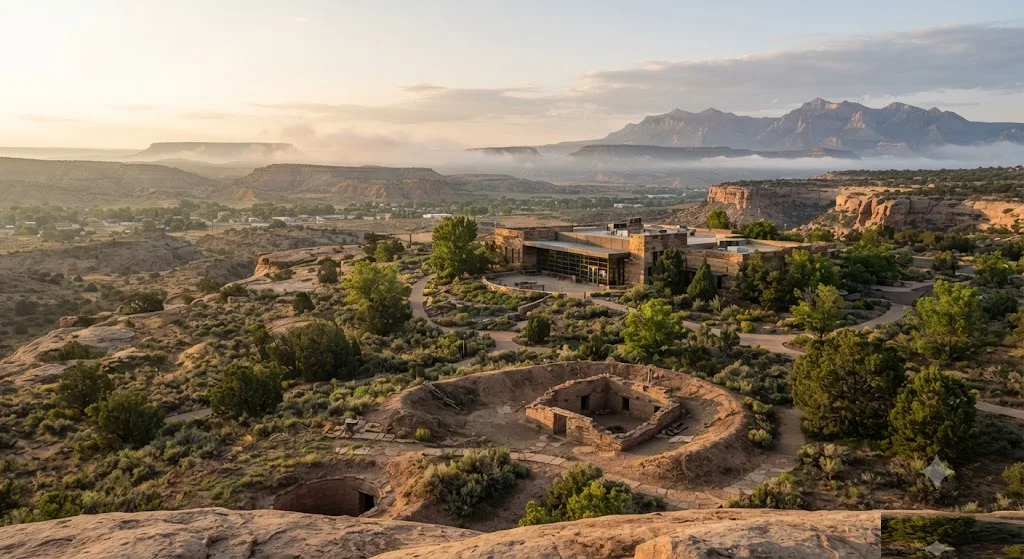
What truly sets this destination apart is its dual nature: a modern museum complex built directly adjacent to an ancient village site. This unique arrangement allows us to first immerse ourselves in comprehensive exhibits, gaining crucial context from the largest collection of Ancestral Puebloan pottery and relics in southeastern Utah. Then, with that knowledge fresh in our minds, we can step outside and walk among the very ruins where these ancient people lived, worked, and worshipped. It's a tangible connection to history that few other places offer.
The museum's commitment to education extends beyond static displays. It serves as an active archaeological repository, preserving invaluable materials excavated from public lands, complete with archives and a research library. This means your visit contributes directly to ongoing efforts to understand and protect these irreplaceable cultural treasures. From the intricate designs on a thousand-year-old pot to the silent echoes within a restored kiva, Edge of the Cedars State Park Museum offers an unparalleled opportunity to connect with the past and appreciate the enduring legacy of Indigenous cultures in the American Southwest.
Who It's Best For
Our team at Roam States confidently recommends Edge of the Cedars State Park Museum for a diverse array of travelers. Primarily, it's a must-visit for history buffs, archaeologists, and anyone with a deep interest in Native American cultures, particularly the Ancestral Puebloans. The sheer volume and quality of artifacts on display, coupled with the ability to explore an actual ruin site, provide an educational experience that is both profound and deeply engaging.
Families with children will also find this a remarkably rewarding destination. Unlike some museums that can feel overly academic, Edge of the Cedars embraces interactive learning. There’s a fantastic children's area equipped with puzzles, books, and hands-on activities, including a miniature Puebloan dwelling where kids can build their own walls. The Junior Ranger program is a highlight, offering a fun and accessible way for even toddlers to engage with the exhibits. The opportunity to climb down a ladder into a 1,000-year-old kiva is often cited by younger visitors as a truly unforgettable experience, offering a rare, tangible connection to ancient life that sparks curiosity and wonder.
Furthermore, the museum caters to those seeking a deeper understanding of the Four Corners region. It serves as an excellent introductory point before venturing to larger, more remote Ancestral Puebloan sites like Mesa Verde National Park, Hovenweep National Monument, or Natural Bridges National Monument. By providing essential context and a comprehensive overview, Edge of the Cedars enhances subsequent explorations, allowing visitors to appreciate the broader cultural landscape with greater insight. Even casual travelers looking for a unique and educational stop on a Utah road trip will find the museum's accessibility and engaging exhibits well worth their time.
How to Get There (and Parking)
Navigating to Edge of the Cedars State Park Museum is straightforward, as it's conveniently located within the city limits of Blanding, Utah. For most travelers, the journey will involve driving on U.S. Highway 191. The museum is approximately 310 miles southeast of Salt Lake City.
Once you arrive in Blanding, follow the clear signs from US 191 to the park. Specifically, if you're traveling through Blanding on Highway 191, you'll encounter a 90-degree turn at the junction of West Center Street and Main Street. Turn west onto West Center Street, continue for six blocks to 600 West, then turn north. The museum and its parking lot will be two blocks north, on the west side of the street. We recommend using GPS coordinates for precision, which are approximately 37.6318255, -109.4920997.
Parking at Edge of the Cedars State Park Museum is ample and readily available on-site, making access hassle-free for visitors. You won't need to worry about searching for street parking or navigating complex lots. The museum's design ensures that once you arrive, your focus can immediately shift to the rich history and cultural experiences awaiting you inside. For those coming from Bluff, Utah, the museum is about 27 miles away. You'll take Highway 191 North to Blanding, turn left on W. Center Street, then right on N 600 W.
Top Things to Do
A visit to Edge of the Cedars State Park Museum offers a rich tapestry of experiences, blending indoor archaeological wonders with outdoor exploration of ancient ruins. Our team has identified the absolute must-dos to ensure you make the most of your time here.
Explore the Museum's World-Class Collections
Step inside the museum to discover the largest collection of Ancestral Puebloan pottery and relics in southeastern Utah. We encourage you to spend ample time in the exhibit halls, which trace 700 years of life in the Four Corners region through an incredible array of artifacts. You'll marvel at intricately crafted pottery, delicate basketry, ancient tools, and unique items like a macaw feather sash, which speaks to extensive trade networks reaching Central America.
Don't miss the "Visible Storage Room," a truly innovative exhibit where glass walls allow you to peer into rows upon rows of pottery vessels, spanning centuries of pottery-making traditions. An interactive computer terminal lets you delve deeper into the history and origin of specific pieces, providing a personalized learning experience. The museum also features educational displays on contemporary Native American cultures, connecting the past to living traditions.
Descend into the Ancient Kiva
One of the most unique and memorable things to do at Edge of the Cedars State Park Museum is to explore the excavated and restored Ancestral Puebloan village site located directly behind the museum. The highlight here is the opportunity to climb down a wooden ladder into a 1,000-year-old kiva, a partially subterranean ceremonial room. This immersive experience offers a profound sense of connection to the ancient inhabitants and their architectural ingenuity. We found it to be a powerful moment, stepping into a space that once held deep spiritual and community significance.
Wander the Interpretive Trail and Outdoor Exhibits
Surrounding the ancient village site is a short, paved interpretive trail that is ADA-accessible. This leisurely walk allows us to appreciate the remnants of the ancient pueblo from various angles, with interpretive signs providing insights into the daily life and culture of the people who lived here from approximately AD 825 to 1125/1220. Along the trail, you'll also encounter outdoor sculptures and landscaping with native plants. Keep an eye out for petroglyph figures, some reproduced as murals inside the museum, which offer a glimpse into ancient rock art.
Engage with Family-Friendly Activities
For families, the museum goes above and beyond to make history accessible and fun. The dedicated children's room is a treasure trove of interactive learning, featuring puzzles, books, and hands-on activities that simulate archaeological work. Our youngest explorers especially love the Junior Ranger program, which provides an engaging bingo-style activity to keep them interested as they move through the exhibits. These thoughtful additions ensure that everyone, regardless of age, can find something captivating to do at Edge of the Cedars State Park Museum.
Attend Special Events and Exhibitions
The museum hosts various special events, archaeology and art exhibitions, and workshops throughout the year. A notable annual event is the Indian Art Market, held on the first Saturday of May, showcasing contemporary Native American artists and their work. We recommend checking the official museum website for current and upcoming schedules to enhance your visit with these unique cultural opportunities.
Edge of the Cedars State Park Museum Hiking Trails
While Edge of the Cedars State Park Museum is primarily an archaeological museum and ruin site, it does offer a specific type of walking experience directly on its grounds. The main "hiking" opportunity at Edge of the Cedars State Park Museum is a short, paved interpretive loop trail that encircles the ancient Puebloan village ruins. This trail is designed for ease of access, with no significant elevation gain, making it suitable for all ages and mobility levels. It’s more of a leisurely stroll than a strenuous hike, but it’s rich in cultural and natural insights.
As you follow this interpretive path, you'll encounter various signs that illuminate the history of the Ancestral Puebloan culture that once thrived here. It's an excellent way to gain perspective on the ancient structures and the surrounding landscape. While some sources might broadly refer to "hiking" in the context of the museum, it's important to clarify that extensive, multi-mile backcountry hiking trails are not found within the immediate museum grounds, unlike some other Utah State Parks. However, the short loop at Edge of the Cedars State Park Museum is perfectly complemented by the indoor exhibits, allowing for a holistic understanding of the site.
For those seeking more extensive hiking experiences, the broader San Juan County and the Four Corners region offer countless opportunities. Nearby areas like Bears Ears National Monument, Natural Bridges National Monument, and Canyonlands National Park feature a vast network of trails ranging from easy walks to challenging backcountry routes. Popular regional trails include Arch Canyon Trail and Comb Wash Ridge Trail for mountain biking and hiking. When planning for these longer excursions, we always advise carrying plenty of water, a printed map (as cell service can be spotty), and being prepared for rapidly changing weather conditions at higher elevations.
Best Time to Visit
Our team recommends visiting Edge of the Cedars State Park Museum during the shoulder seasons—spring (April-May) and fall (September-October)—for the most comfortable and rewarding experience. During these months, the daytime temperatures in southeastern Utah are generally pleasant, making it ideal for exploring both the indoor museum exhibits and the outdoor ruin site and interpretive trail. The crowds are also typically thinner than during the peak summer months, allowing for a more serene and immersive visit.
However, the museum is open year-round, offering different advantages depending on your preferences. In the summer (April through October), the museum extends its hours, opening Monday-Saturday from 9 a.m. to 5 p.m. and Sunday from Noon to 4 p.m. While summer can bring higher temperatures, it's a popular time for families traveling through Utah, and the museum's air-conditioned interior provides a welcome respite. If you visit in summer, we suggest arriving early in the morning to enjoy the outdoor ruins before the heat of the day sets in. Mornings are consistently better for both comfortable temperatures and dramatic light for photography.
During the winter months (November through February), the museum operates on a slightly reduced schedule, open Monday-Saturday from Noon to 5 p.m. and closed on Sundays. While snow is possible, Blanding generally experiences milder winters than other parts of Utah, and a winter visit can offer a unique, quiet perspective on the ancient site, often with fewer visitors. Just be aware of holiday closures, which include Thanksgiving, Christmas, and New Year's Day. Regardless of the season, we always advise checking the official Utah State Parks website or calling the museum directly for the most up-to-date hours and any potential closures before your visit.
Edge of the Cedars State Park Museum Lodging
When planning your visit to Edge of the Cedars State Park Museum, you'll find convenient lodging options primarily in Blanding, Utah, where the museum is located, and in the nearby town of Bluff. While there is no camping or overnight accommodation within the state park itself, the surrounding communities offer a range of choices to suit different preferences and budgets.
In Blanding, we recommend considering hotels such as the Bears Ears Inn and the Rodeway Inn and Suites Blanding UT. The Bears Ears Inn, nestled in the center of Blanding, provides a cozy atmosphere with essential amenities, including an outdoor pool, making it a comfortable base for families and adventurers. The Rodeway Inn and Suites offers another reliable option, known for its comfort and convenience, with amenities like free Wi-Fi and air conditioning. These establishments offer easy access to local attractions in Blanding, including the Dinosaur Museum and Cedar Mesa Pottery, in addition to Edge of the Cedars State Park Museum.
A short drive away, the historic town of Bluff also provides excellent Edge of the Cedars State Park Museum lodging choices. The Desert Rose Resort & Cabins in Bluff is a top pick, offering rustic-chic accommodations that are spacious and comfortable, serving as a centrally located home base for exploring the wider region, including Monument Valley and Bears Ears National Monument. Bluff is also recognized as an International Dark Sky Community, adding another layer of appeal for stargazers. We advise booking your Edge of the Cedars State Park Museum lodging in advance, especially during peak travel seasons, to secure your preferred accommodations.
Sample 2-Day Itinerary
To fully appreciate the Edge of the Cedars State Park Museum and its surrounding treasures, we recommend dedicating at least two days. This allows for a deep dive into the Ancestral Puebloan history without feeling rushed, while also exploring the stunning natural and cultural landscapes of the Four Corners region.
Day 1: Immersion in Ancestral Puebloan History
- Morning (9:00 AM - 1:00 PM): Edge of the Cedars State Park Museum
Begin your day at the heart of your visit, the Edge of the Cedars State Park Museum. Arrive shortly after opening to take advantage of cooler temperatures for the outdoor portions of the site. Spend 2-3 hours exploring the extensive indoor exhibits, focusing on the Ancestral Puebloan pottery, tools, and textiles. Don't miss the Visible Storage Room and the interactive displays. Afterwards, head outside to walk the interpretive trail around the ancient village ruins and, crucially, descend into the 1,000-year-old kiva. Allow time for the gift shop and any special exhibitions. - Lunch (1:00 PM - 2:00 PM): Local Blanding Fare
Grab lunch at one of Blanding's local eateries. While the park itself doesn't have food facilities, Blanding offers several options for a quick and satisfying meal. - Afternoon (2:00 PM - 5:00 PM): The Dinosaur Museum & Blanding History
Continue your exploration of Blanding's unique attractions with a visit to The Dinosaur Museum. This federal fossil repository showcases life-size models, skeletons, and unique artifacts like 250-million-year-old petrified trees and dinosaur skin imprints. It’s a fantastic complement to the ancient human history you’ve just absorbed. Afterwards, perhaps a quick stop at Cedar Mesa Pottery for some local artisan crafts. - Evening: Dinner & Stargazing
Enjoy dinner in Blanding. If staying in Bluff, consider the drive to experience its International Dark Sky Community status for some incredible stargazing opportunities.
Day 2: Exploring the Greater Four Corners Region
- Morning (8:00 AM - 12:00 PM): Natural Bridges National Monument or Hovenweep National Monument
Venture out to one of the incredible national monuments nearby. Natural Bridges National Monument, about an hour's drive west, offers stunning natural rock bridges and scenic drives. Alternatively, Hovenweep National Monument, roughly an hour southwest, features remarkable Ancestral Puebloan towers and villages. Both offer excellent hiking opportunities and further insight into the ancient cultures of the region. - Lunch (12:00 PM - 1:00 PM): Picnic or Nearby Town
Pack a picnic to enjoy amidst the scenic beauty of the monument you choose, or find a meal in a small town like Bluff or Mexican Hat if your travels take you that way. - Afternoon (1:00 PM - 5:00 PM): Scenic Drives & Overlooks
Spend your afternoon on a scenic drive. We highly recommend exploring the Valley of the Gods, a less-trafficked alternative to Monument Valley, offering breathtaking red rock formations. Combine this with a visit to Goosenecks State Park, where you can gaze at the dramatic meanders of the San Juan River. For the adventurous, ascend the Moki Dugway for panoramic views from Muley Point. - Evening: Relax & Reflect
Return to your lodging in Blanding or Bluff, reflecting on the ancient history and stunning landscapes you've encountered. Consider revisiting the museum's virtual tours if you want to deepen your understanding of specific artifacts.
Last updated: 2026-07-08 by the Roam States team.