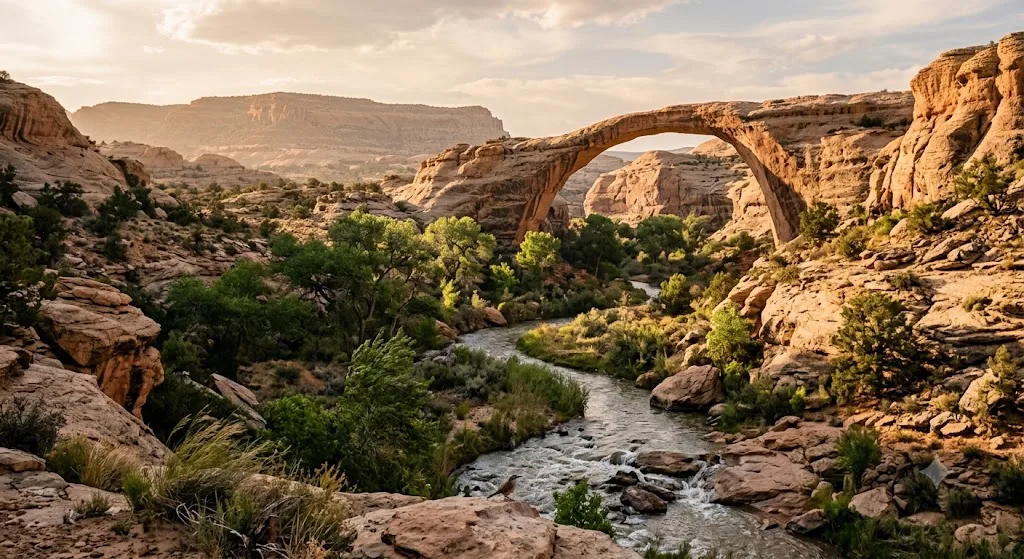
Welcome to our comprehensive guide for Natural Bridges National Monument Utah, your essential resource for exploring this remarkable corner of the American Southwest. Our team is dedicated to providing confident, specific, and up-to-date information to help you plan an unforgettable trip to the world's first International Dark Sky Park. We'll cover everything from how to get there and where to stay, to the top things to do and essential tips for making the most of your visit in 2026.
Why Visit Natural Bridges National Monument
Natural Bridges National Monument stands as a testament to the enduring power of water and time, showcasing three magnificent natural bridges carved from sandstone. These geological wonders—Sipapu, Kachina, and Owachomo—are not merely impressive formations; they are named in honor of the Ancestral Puebloans who once inhabited this land, offering a profound connection to both natural history and ancient cultures. Beyond the bridges themselves, the monument preserves Ancestral Puebloan cliff dwellings and rock art, providing a glimpse into the lives of those who called this rugged landscape home centuries ago.
What truly sets Natural Bridges apart, however, is its designation as the world's first International Dark Sky Park in 2007. We consider this a primary reason to visit. Far from urban light pollution, the monument offers some of the darkest night skies in the country, presenting unparalleled opportunities for stargazing and astrophotography. On a clear night, visitors can witness up to 15,000 stars, including the spectacular arch of the Milky Way. This commitment to preserving the night sky makes Natural Bridges a unique and awe-inspiring destination for anyone seeking to reconnect with the cosmos.
Who It's Best For
Natural Bridges National Monument caters to a diverse range of travelers, though it particularly shines for those seeking a blend of natural beauty, cultural immersion, and serene solitude. We believe it's an ideal destination for:
- Stargazers and Astrophotographers: Given its status as the world's first International Dark Sky Park, this is a prime location for anyone passionate about the night sky.
- Hikers and Outdoor Enthusiasts: With trails ranging from easy overlooks to strenuous canyon loops, there are options for various fitness levels to explore the natural bridges and ancient ruins up close.
- History and Archaeology Buffs: The Ancestral Puebloan cliff dwellings and rock art offer a fascinating look into the region's rich human history.
- Families with Older Children: While some trails involve ladders and steep descents, many overlooks are easily accessible, and the educational aspects of the monument can be engaging for curious young minds.
- Road Trippers: Its location in southeastern Utah makes it a perfect stop on a larger USA road trip through Utah's national parks, offering a quieter alternative to more crowded destinations like Arches National Park or Bryce Canyon National Park.
- Those Seeking Tranquility: Even during peak seasons, Natural Bridges tends to be less crowded than other national parks, allowing for a more peaceful experience.
If you're looking for a destination that combines stunning geological formations with a profound sense of history and an unparalleled celestial display, Natural Bridges National Monument Utah should be high on your list.
Getting There & Parking
Understanding how to get to Natural Bridges National Monument and where to park is crucial for a smooth visit. The monument is located in a remote part of southeastern Utah, approximately 35-42 miles west of Blanding, Utah, at the end of UT-275.
How to Get There
From Blanding, Utah, take US-191 South, then turn right onto UT-95 North, and finally a right onto UT-275 North, following signs to the monument. The drive from Blanding typically takes about 45 minutes.
If you're coming from the Moab area, expect a drive of about 75 miles south on US-191 before turning onto UT-95 and then UT-275. The nearest major airports are Canyonlands Field (CNY) near Moab, about 81 miles away, and Montezuma County Airport (CEZ) in Cortez, Colorado, about 78 miles away.
Keep in mind that cell service is generally unavailable within Natural Bridges National Monument, so we strongly recommend downloading maps and any essential information before you arrive.
Natural Bridges National Monument Parking
Parking is available throughout Natural Bridges National Monument at the visitor center and at designated overlooks and trailheads along the Bridge View Drive. The Bridge View Drive is a paved, nine-mile loop road that provides access to all three natural bridges and the Horsecollar Ruins Overlook. Each bridge can be viewed by walking a short distance from the parking areas to an overlook.
While the monument is generally less crowded than other national parks, parking lots at popular overlooks and trailheads can fill up during peak seasons (spring and fall) and on weekends. Arriving early in the morning is always a good strategy to secure a spot and avoid larger crowds.
Top Things to Do
Natural Bridges National Monument offers a range of activities that allow visitors to fully experience its unique geology and dark skies. Our team recommends focusing on these top things to do at Natural Bridges National Monument:
- Drive the Bridge View Drive: This paved, nine-mile scenic loop offers convenient access to overlooks for all three natural bridges—Sipapu, Kachina, and Owachomo—as well as the Horsecollar Ruins Overlook. It's an excellent way to get an overview of the monument's highlights, and short walks lead to each viewpoint.
- Hike to the Natural Bridges: For a more immersive experience, descend into the canyons to get up close with the bridges. The trails to Sipapu, Kachina, and Owachomo bridges vary in difficulty but offer stunning perspectives from below. The Sipapu Bridge Trail, for example, is about 0.8 to 1.4 miles round trip and involves a descent of 134 feet, utilizing stone steps, a steel staircase, and a vertical ladder. The Kachina Bridge Trail is a moderate 1.4-mile path that descends into the canyon. Owachomo Bridge is generally considered the easiest to access, with a trail of 0.1 to 0.6 miles round trip.
- Stargazing: As the world's first International Dark Sky Park, stargazing is a must-do activity. We recommend finding a spot at one of the overlooks, the visitor center parking lot, or even your campsite to marvel at the Milky Way and countless stars. Ranger-led astronomy programs are often offered during the summer months.
- Visit Horsecollar Ruins Overlook: This easily accessible viewpoint offers a fantastic perspective of a well-preserved Ancestral Puebloan cliff dwelling without requiring a strenuous hike. It's a great opportunity to connect with the ancient history of the region.
- Explore the Visitor Center: The visitor center provides valuable information, exhibits, and a park film, helping you understand the geology and cultural history of the monument. Flush toilets and water are available here year-round.
- Bird Watching: The diverse high desert environment supports a variety of bird species, making bird watching another enjoyable activity within the monument.
These things to do at Natural Bridges National Monument offer a comprehensive experience, from scenic vistas to deep canyon explorations and celestial wonders.
Natural Bridges National Monument Hiking Trails
The Natural Bridges National Monument hiking trails offer incredible opportunities to immerse yourself in the monument's stunning landscapes. We encourage visitors to descend into the canyons to experience the grandeur of the bridges from below. Always carry plenty of water, wear appropriate footwear, and check trail conditions at the visitor center before heading out.
Individual Bridge Trails:
- Sipapu Bridge Trail: This is a popular and rewarding hike, approximately 0.8 to 1.4 miles round trip, with a moderate to strenuous rating. The trail descends about 134 feet (41 meters) into the canyon and involves navigating sandy dirt, slickrock, stone steps, a steel staircase, and a vertical ladder. It offers panoramic views of White Canyon and culminates at the base of the colossal Sipapu Bridge. Starting this hike around sunrise is recommended for the best light.
- Kachina Bridge Trail: A moderate to strenuous 1.4-mile (2.3 km) round trip hike that descends to the base of the massive Kachina Bridge. Along the way, you might spot ancient rock art.
- Owachomo Bridge Trail: Considered the easiest of the three bridge hikes, this trail is about 0.1 to 0.6 miles round trip and is rated moderate. It leads down to and crosses under the delicate Owachomo Bridge, offering various photographic angles.
Loop Trails:
For those seeking a more extensive adventure, several loop trails connect the bridges:
- Full Loop Trail: This primitive and strenuous 12-mile (19.3 km) loop passes all three natural bridges, winding through the canyons and over the mesa top. It often takes a full day to complete. The full loop trail also passes just beneath Horsecollar Ruins, though the overlook provides a better view of the ruins themselves.
- Sipapu-Kachina Loop: A shorter, strenuous 5.7-mile (9.2 km) loop that connects Sipapu and Kachina Bridges, traversing canyons and mesa tops. This route takes about 2 hours 30 minutes to complete.
- Kachina-Owachomo Loop: This strenuous 6.5-mile (10.5 km) loop passes by Kachina and Owachomo Bridges, offering another challenging canyon and mesa top experience.
Pets are not allowed on any of the Natural Bridges National Monument hiking trails, with the exception of service animals. We advise checking with the visitor center for updated trail conditions, especially during the monsoon season (late July to early September) when flash floods are possible.
Best Time to Visit
Choosing the best time to visit Natural Bridges National Monument can significantly enhance your experience. We've assessed the seasons to help you plan:
- Spring (March to May) & Fall (September to October): These are widely considered the busiest and best times to visit. Moderate temperatures, wildflower blooms in spring, and vibrant leaf changes in fall make for pleasant hiking conditions and beautiful scenery. However, spring can be windy, and fall marks the end of monsoon season, so afternoon thunderstorms are possible. Temperatures can fluctuate by as much as 40 degrees between day and night, so layering is essential. Be aware that biting gnat season runs from mid-May to mid-June.
- Summer (June to August): Summers are hot and dry, with temperatures frequently reaching the high 90s°F and often exceeding 100°F (38°C). If visiting in summer, we strongly recommend hiking early in the morning and being off trails by noon to avoid extreme heat and potential afternoon monsoon rains and lightning. Despite the heat, mid-summer offers excellent opportunities for stargazing, as the Milky Way often arches overhead.
- Winter (November to February): For those seeking solitude, winter offers the quietest experience with significantly lower visitation. Daytime temperatures can be comfortable, but nights often drop below freezing. While the park is open year-round, the entrance road may close temporarily after winter storms. The visitor center hours are also reduced in late fall through early spring, typically open four days a week, Friday through Monday.
Overall, for comfortable hiking and scenic beauty, spring and fall are ideal. For unparalleled stargazing, late summer into early fall can be magical, provided you plan for the daytime heat.
Where to Stay Nearby
While Natural Bridges National Monument is relatively remote, there are several options for lodging and Natural Bridges National Monument camping both within the monument and in nearby towns. Our team has compiled the best choices for your stay:
Natural Bridges National Monument Camping
The monument offers a small, primitive campground, which is a fantastic option for those who want to stay close to the action and experience the dark skies. The Natural Bridges Campground is open year-round and operates on a first-come, first-served basis, though sites can be reserved via Recreation.gov.
- Sites: There are 13 campsites available. Each site includes a picnic table, a tent pad, and a fire grill.
- Vehicle Length Limit: Due to a tight loop road, RVs and trailers combined must not exceed 26 feet in length.
- Amenities: The campground does not have running water, electricity, or hookups. Vault toilets are available at the campground, and flush toilets and potable water (limited to 5 gallons per person per day) are available 24 hours a day at the visitor center, about a quarter-mile walk away.
- Fees: Camping fees are $16 per night, and valid federal lands passes are honored. As of April 2024, the monument only accepts mobile or electronic payments for camping fees.
- Reservations: While historically first-come, first-served, camping is now by reservation only through Recreation.gov. We recommend booking early, especially during busy periods like spring and fall.
Nearby Towns and Lodging
For those preferring traditional lodging, the closest towns with hotel options are Blanding and Mexican Hat, and Monticello, though they are still a drive away:
- Blanding, Utah: Located approximately 28-42 miles east of Natural Bridges, Blanding offers several hotel options such as Rodeway Inn & Suites, Super 8, and Blue Sage Inn and Suites. Blanding also has restaurants, gas stations, and a dump station.
- Mexican Hat, Utah: About 30 miles from Natural Bridges, Mexican Hat is another charming option, known for its iconic rock formation. You can find cabin rentals and other lodging here.
- Monticello, Utah: Roughly 40 miles from Natural Bridges, Monticello provides additional lodging choices like The Monticello Inn and Rodeway Inn and Suites Monticello.
We recommend booking accommodations in advance, especially if you plan to visit during peak seasons. You can explore options on sites like Expedia or Travelocity.
Sample 2-Day Itinerary
To help you make the most of your visit to Natural Bridges National Monument Utah, our team has crafted a sample 2-day itinerary. This plan balances exploration of the bridges with opportunities for stargazing and enjoying the surrounding area.
Day 1: Arrival and Bridge Exploration
- Morning (8:00 AM - 12:00 PM): Arrive at Natural Bridges National Monument. Stop at the Visitor Center to pay your entrance fee (currently $20 per private vehicle, valid for seven days, cashless payments only as of April 2024). Pick up a map and get current trail conditions. Begin your exploration with the Bridge View Drive, stopping at the overlooks for Sipapu, Kachina, and Owachomo Bridges. We recommend starting with the Sipapu Bridge Overlook.
- Late Morning/Early Afternoon (12:00 PM - 3:00 PM): Hike down to Sipapu Bridge. This moderate to strenuous trail involves ladders and stairs, offering an up-close perspective of the largest bridge. Pack a picnic lunch to enjoy at one of the picnic areas along the scenic drive.
- Afternoon (3:00 PM - 6:00 PM): Continue to Kachina Bridge. Hike the moderate 1.4-mile trail to its base, keeping an eye out for ancient rock art. Afterward, take the short walk to the Horsecollar Ruins Overlook to view the Ancestral Puebloan cliff dwelling.
- Evening (6:00 PM onwards): Set up camp at the Natural Bridges Campground (reservations recommended via Recreation.gov). Enjoy a campfire (if permitted, bring your own firewood as gathering is prohibited). As darkness falls, prepare for unparalleled stargazing. The visitor center parking lot or the Owachomo Bridge Overlook are excellent spots for night sky viewing.
Day 2: Further Exploration and Departure
- Morning (8:00 AM - 12:00 PM): After breakfast at your campsite, take the easy hike down to Owachomo Bridge, the most delicate of the three. If you're an avid hiker and conditions allow, consider tackling a portion of the strenuous full loop trail or the Sipapu-Kachina Loop for a more extensive canyon experience.
- Late Morning/Early Afternoon (12:00 PM - 2:00 PM): Revisit any favorite overlooks or spend more time at the visitor center. You might also consider a short drive to nearby Bears Ears National Monument for additional scenic views and cultural sites.
- Afternoon (2:00 PM onwards): Begin your journey to your next destination. If heading west, consider exploring Grand Staircase-Escalante National Monument. If heading east, Monument Valley Navajo Tribal Park is a spectacular option. Remember to grab any last-minute souvenirs at the park store.
Things to Do in Lake Powell
While Natural Bridges National Monument offers its own unique attractions, Lake Powell, located roughly 50 miles southeast of Hite, Utah, offers a completely different set of activities focused on water recreation. Visitors to Lake Powell can enjoy houseboating, kayaking, paddleboarding, and fishing in its vast waters. Popular spots include Rainbow Bridge National Monument, accessible by boat tours, and various canyons perfect for exploring by watercraft. Marinas like Bullfrog Marina and Hite Marina provide services and access points.
Natural Bridges National Monument with Kids
Visiting Natural Bridges National Monument with kids can be a rewarding experience for families who enjoy the outdoors. We recommend focusing on the scenic drive and the easily accessible overlooks, which provide impressive views without strenuous hiking. The short walk to the Owachomo Bridge Overlook is particularly suitable for younger children. For slightly older or more adventurous children, the hike down to Sipapu Bridge, with its ladders and stairs, can be an exciting adventure. The Horsecollar Ruins Overlook also offers an engaging history lesson. Remember to bring plenty of water, snacks, and sun protection, and always check trail conditions at the visitor center.
Natural Bridges National Monument Tips
To ensure a smooth and enjoyable trip to Natural Bridges National Monument, our team offers these essential tips: 1. **Go Cashless:** As of April 2024, the monument only accepts mobile or electronic payments for entrance and camping fees. 2. **Download Maps:** Cell service is limited or non-existent in the monument, so download offline maps and information before you arrive. 3. **Bring Water:** Carry at least one gallon of water per person per day, especially for hiking. Water is only available at the visitor center. 4. **Hike Early in Summer:** If visiting during the hot summer months, plan your hikes for early mornings to avoid extreme heat and afternoon monsoon thunderstorms. 5. **Layer Clothing:** Temperatures can vary dramatically between day and night, and seasons, so dress in layers. 6. **Protect Against Gnats:** From mid-May to mid-June, be prepared for biting gnats with long sleeves, pants, and bug spray. 7. **Leave No Trace:** Help preserve the fragile desert environment and archaeological sites by staying on marked trails and not collecting plants or artifacts. 8. **Pets:** Pets are allowed in the campground and paved overlooks but are prohibited on designated hiking trails.
Natural Bridges National Monument Parking
Parking at Natural Bridges National Monument is available at the visitor center and at designated pull-offs and trailheads along the nine-mile Bridge View Drive. All parking areas are paved and provide access to the scenic overlooks and trailheads for the three natural bridges and the Horsecollar Ruins Overlook. While the monument is generally less crowded than other national parks, parking lots can fill up during peak visitation periods in spring and fall, especially on weekends. Arriving early in the morning is recommended to ensure you find a spot.
Best Time to Visit Natural Bridges National Monument
The best time to visit Natural Bridges National Monument is during the spring (March to May) and fall (September to October). During these seasons, temperatures are moderate, making hiking more comfortable, and you can enjoy wildflowers in spring or fall foliage. While these are the busiest times, Natural Bridges remains quieter than many other national parks. Summers are hot, often exceeding 100°F, and feature monsoon season from late July to early September, bringing potential thunderstorms and flash floods. Winter offers solitude but with colder temperatures and possible road closures due to snow. For stargazing, mid-summer nights often provide clear views of the Milky Way, despite the daytime heat.
Natural Bridges National Monument Hours and Fees
Natural Bridges National Monument is open 24 hours a day, seven days a week, year-round. However, the visitor center has seasonal operating hours. From June to mid-October, it is open Thursday through Monday, from 9 AM to 4 PM. From November to June, it is open Thursday through Sunday, from 10 AM to 4 PM. The visitor center is closed on Thanksgiving, Christmas Day, and New Year's Day.
As of 2026, the entrance fees for Natural Bridges National Monument are $20 per private vehicle, $15 per motorcycle, and $10 per person for bicyclists, hikers, and pedestrians. Youth 15 and under are admitted free. This admission is valid for seven days. It's important to note that as of April 2024, Natural Bridges National Monument accepts only mobile or electronic payments for entrance and camping fees. Annual passes like the Southeast Utah Parks Pass ($55, valid for Arches, Canyonlands, and Natural Bridges) or the America the Beautiful Pass are also honored. Camping fees are $16 per night.
Natural Bridges National Monument is a truly exceptional destination that offers a unique blend of geological marvels, ancient history, and unparalleled celestial beauty. We believe that its status as the world's first International Dark Sky Park alone makes it a must-visit for any traveler seeking a profound connection with nature. Whether you're hiking into the canyons to stand beneath the massive bridges, exploring Ancestral Puebloan ruins, or simply gazing up at a sky ablaze with stars, this monument promises an experience far removed from the ordinary. While it requires a bit of planning due to its remote location and cashless payment system, the rewards of visiting this serene and stunning landscape are immeasurable. We wholeheartedly recommend adding Natural Bridges National Monument Utah to your travel itinerary.
Last updated: 2026-07-13 by the Roam States team.