Etowah Indian Mounds State Historic Site Travel Guide — Georgia
Our Etowah Indian Mounds State Historic Site guide covers practical planning for Etowah Indian Mounds State Historic Site Georgia — best time to visit, getting there, and what to do on the ground.
For those seeking a profound connection to North America's ancient past, the Etowah Indian Mounds State Historic Site Georgia stands as an essential pilgrimage. This 54-acre archaeological marvel preserves one of the most intact Mississippian culture sites in the southeastern United States, offering an unparalleled glimpse into a sophisticated civilization that thrived along the Etowah River between 1000 A.D. and 1550 A.D.. Our team has compiled this comprehensive guide to ensure your visit is as enriching and seamless as possible, from understanding the site's historical significance to navigating practical details like hours, fees, and nearby lodging.
Why Visit Etowah Indian Mounds State Historic Site
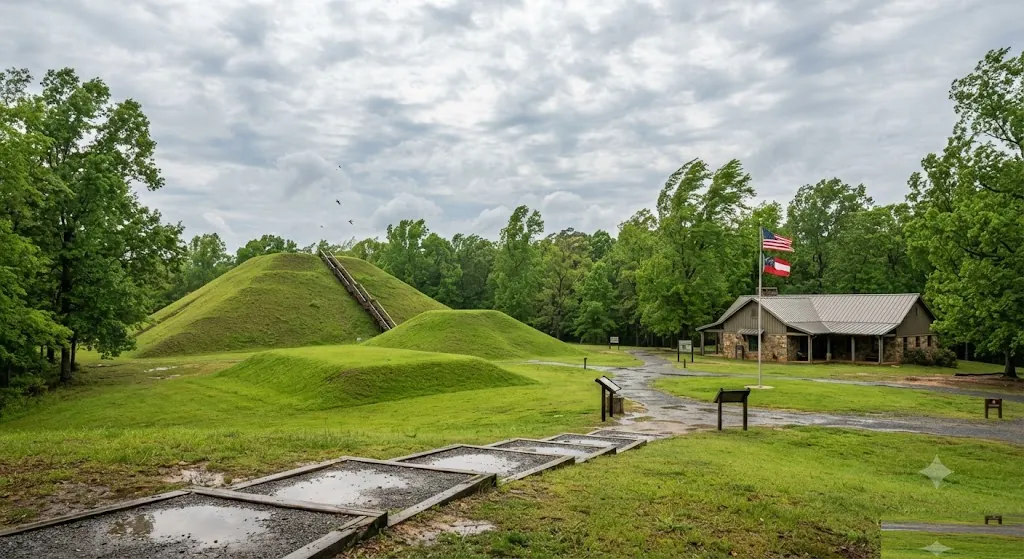
Visiting the Etowah Indian Mounds State Historic Site is an immersive journey into a complex pre-Columbian society. This isn't just a collection of dirt hills; it's the preserved heart of a thriving community that once commanded trade routes, practiced intricate rituals, and demonstrated remarkable architectural prowess. The site's six earthen mounds, including the impressive 63-foot-tall Mound A, served various purposes—from temple platforms for priest-chiefs to elaborate burial grounds for nobility. As you walk the grounds, you're treading where thousands lived, farmed, hunted, and engaged in a vibrant cultural life centuries before European contact.
The museum at Etowah Indian Mounds State Historic Site enhances this experience, housing artifacts that tell the story of the Mississippian people, their artistry, and their daily lives. While some artifacts have been part of ongoing repatriation efforts with culturally affiliated tribes, the museum's exhibits are designed to educate visitors about the Indigenous people who were stewards of this land. Our team believes that understanding these ancient civilizations is crucial to appreciating the rich tapestry of American history, and Etowah provides a powerful, tangible link to that past. It's a place for reflection, learning, and imagining the grandeur of a society that shaped this region.
Who It's Best For
The Etowah Indian Mounds State Historic Site appeals to a diverse range of visitors. History buffs, archaeologists, and cultural enthusiasts will find the site's well-preserved mounds and informative museum deeply rewarding. Educators and families with children will appreciate the opportunity for hands-on learning about Native American history and culture, making history come alive in a way textbooks cannot. The nature trail along the Etowah River also makes it an excellent destination for nature lovers and hikers seeking a peaceful outdoor experience combined with historical exploration.
We particularly recommend this site for those looking for a quieter, more reflective travel experience, distinct from bustling theme parks. It's ideal for anyone interested in pre-Columbian North America, the Mississippian culture, or simply a serene walk through a historically significant landscape. The site is accessible, with relatively level trails, making it suitable for most ages and mobility levels, though climbing the largest mound requires some physical exertion.
Getting There & Parking
Understanding how to get to Etowah Indian Mounds State Historic Site is straightforward, as it's conveniently located in Cartersville, Georgia, approximately 50 minutes northwest of Atlanta. From Interstate 75, take exit #288 and follow the brown directional signs for about 5 miles southwest. The address for your GPS is 813 Indian Mounds Road SE, Cartersville, GA 30120.
Regarding Etowah Indian Mounds State Historic Site parking, visitors will find ample free parking available at the visitor center. There is also designated bus parking, making it convenient for groups and school trips. We always recommend arriving a bit earlier on peak days to secure the best spots, though the site generally has sufficient capacity. The parking area is just a short walk from the museum and the beginning of the mound trails, ensuring easy access to the site's main attractions.
Top Things to Do
There are many things to do at Etowah Indian Mounds State Historic Site that offer a comprehensive experience of this significant historical landmark. Our team suggests allocating 1.5 to 2.5 hours to fully explore the museum and grounds.
- Explore the Mounds: The most prominent feature of the site is its six earthen mounds, built by the Mississippian culture. Mound A, the Great Temple Mound, stands 63 feet high and offers panoramic views of the entire complex and the Etowah River. Climbing to the top provides a powerful sense of the scale and significance of this ancient city. Mounds B and C also hold historical importance, with Mound C serving as a mortuary mound where nobility were buried.
- Visit the Museum: Start your visit at the interpretive museum, which provides context for the mounds and the civilization that built them. Here, you'll find artifacts recovered from the site, learn about the daily life, rituals, and trade networks of the Mississippian people, and watch an informative film. The museum's exhibits have been recently updated to reflect a focus on the Indigenous people who thrived here.
- Walk the Nature Trail: A mile-long nature trail winds along the Etowah River, offering serene views and insights into the natural environment that sustained the ancient inhabitants. Along the trail, you can observe a v-shaped fish trap, a testament to the ingenuity of the Mississippian people in utilizing river resources. The trail also highlights native trees and their traditional uses for food and medicine.
- Discover the Village Site and Plaza: Beyond the mounds, explore the remnants of the village site, plaza, borrow pits (where earth was excavated for mound construction), and a defensive ditch. These features help paint a complete picture of the organized community that once flourished here.
- Participate in Ranger Programs: Keep an eye on the Explore Georgia website or the official Georgia State Parks site for ranger-led programs. These can include guided hikes and special events like "Atlatl throwing," where visitors can learn to use this ancient projectile tool.
These things to do at Etowah Indian Mounds State Historic Site ensure a rich and educational experience for all visitors.
Best Time to Visit
The best time to visit Etowah Indian Mounds State Historic Site largely depends on your preference for weather and crowd levels. Our team generally recommends visiting during the spring and fall months. These seasons offer mild temperatures and often vibrant natural scenery, making outdoor exploration of the mounds and nature trails particularly pleasant.
Spring brings blooming wildflowers and comfortable hiking conditions, while fall showcases beautiful foliage, especially in late October through mid-November in northern Georgia. Summer can be quite warm and humid in Georgia, with intense sun, so if you visit during these months, we advise bringing hats, sunscreen, and plenty of water. Winter offers cooler temperatures, which can be ideal for walking, though some of the lush greenery will be absent.
Crowd-wise, weekdays typically see fewer visitors than weekends. The site is closed on Mondays, so plan your trip accordingly. Special events or school field trips might increase visitation, so checking the official Georgia State Parks website for any scheduled activities is a good idea. Overall, for comfortable exploration and fewer crowds, spring and fall weekdays are the prime window for experiencing the Etowah Indian Mounds State Historic Site.
Where to Stay Nearby
For those planning an extended visit to the Etowah Indian Mounds State Historic Site, finding comfortable and convenient lodging is key. Cartersville, Georgia, is the closest major town and offers a variety of accommodations to suit different preferences and budgets. When considering Etowah Indian Mounds State Historic Site lodging, you'll find several reputable hotel chains within a short drive of the site.
Our team recommends looking into options such as the Courtyard Cartersville, Tru by Hilton Cartersville, Home2 Suites by Hilton Cartersville, Fairfield Inn & Suites Cartersville, and Holiday Inn Express & Suites Cartersville. These hotels typically offer modern amenities, including complimentary breakfast, Wi-Fi, and sometimes pools or fitness centers, providing a comfortable base for your explorations. The Hilton Garden Inn Cartersville and Quality Inn & Suites also stand out as good choices for comfort and value. For budget-conscious travelers, options like Baymont by Wyndham Cartersville and Microtel Inn & Suites by Wyndham Cartersville are available.
Many of these Etowah Indian Mounds State Historic Site lodging options are located conveniently near I-75, offering easy access not only to the mounds but also to other attractions in Cartersville and the wider region. While there aren't accommodations directly on the historic site, the short drive from Cartersville ensures you're never far from comfort after a day of historical immersion.
Sample 2-Day Itinerary
To fully appreciate the Etowah Indian Mounds State Historic Site and the surrounding area, we recommend a two-day itinerary. This allows for a deep dive into the historical site itself, plus time to explore other local attractions in Cartersville.
Day 1: Immersion in Ancient History
- Morning (9:00 AM - 12:00 PM): Etowah Indian Mounds State Historic Site. Begin your day at the Etowah Indian Mounds State Historic Site. Head straight to the visitor center to watch the introductory film and explore the museum exhibits, which provide essential context for the site. After the museum, embark on the main trail to explore the six earthen mounds. We highly recommend climbing Mound A for its expansive views. Take your time to walk the perimeter nature trail along the Etowah River, observing the ancient fish trap and learning about native flora. Allow approximately 2-3 hours for a thorough visit.
- Lunch (12:00 PM - 1:30 PM): Picnic or Local Eatery. Pack a picnic to enjoy at one of the 20 picnic tables available at the historic site. Alternatively, head into Cartersville for a casual lunch.
- Afternoon (1:30 PM - 4:30 PM): Bartow History Museum and Downtown Cartersville. Immerse yourself in more recent history at the Bartow History Museum, housed in the 1869 Courthouse. Afterward, stroll through Historic Downtown Cartersville. Don't miss the world's first outdoor painted Coca-Cola wall advertisement, dating back to 1894. Explore the local shops and admire the historic architecture.
- Evening: Dinner in Cartersville. Enjoy dinner at one of Cartersville's local restaurants.
Day 2: Art, Science, and Nature
- Morning (9:30 AM - 12:30 PM): Booth Western Art Museum or Tellus Science Museum. Choose between two of Cartersville's highly-regarded museums. The Booth Western Art Museum is a Smithsonian Affiliate and the largest permanent exhibition space for Western art in the country. Alternatively, the Tellus Science Museum, also a Smithsonian Affiliate, offers engaging exhibits on geology, natural history, and technology, including a 40-foot Tyrannosaurus rex fossil.
- Lunch (12:30 PM - 2:00 PM): Cartersville. Grab lunch near your chosen museum.
- Afternoon (2:00 PM - 5:00 PM): Red Top Mountain State Park. Head to Red Top Mountain State Park, located on Lake Allatoona, for some outdoor recreation. Hike along its more than 15 miles of forested trails, enjoy the lake views, or simply relax by the water. This is a great way to experience Georgia's natural beauty and reflect on the historical sites you've visited.
- Late Afternoon/Evening: Departure or Additional Exploration. Depending on your travel plans, you can begin your journey home or explore other nearby Georgia destinations. For those interested in more of Georgia's natural beauty, consider a trip to Amicalola Falls State Park or the Atlanta Botanical Garden. If you're drawn to unique historical sites, Bonaventure Cemetery in Savannah offers a distinct experience.
This itinerary balances historical learning with cultural exploration and natural beauty, ensuring a memorable trip to the Etowah Indian Mounds State Historic Site and Cartersville.
Frequently Asked Questions About Etowah Indian Mounds State Historic Site
Etowah Indian Mounds State Historic Site with kids
The Etowah Indian Mounds State Historic Site is an excellent educational destination for families with kids. Children can marvel at the sheer size of the mounds, imagine ancient village life, and enjoy walking the nature trail. The museum offers engaging exhibits and an introductory film that helps bring the history to life. Ranger programs, such as atlatl throwing, can be particularly exciting for younger visitors. We recommend sturdy walking shoes, water, and snacks, as exploring the grounds involves a fair amount of walking, including the climb up Mound A. The site also has picnic tables for a family lunch.
Best hotels near Etowah Indian Mounds State Historic Site
For the best hotels near Etowah Indian Mounds State Historic Site, we recommend staying in Cartersville, which is just a short drive away. Top choices include Courtyard Cartersville, Tru by Hilton Cartersville, Home2 Suites by Hilton Cartersville, Fairfield Inn & Suites Cartersville, Holiday Inn Express & Suites Cartersville, and Hilton Garden Inn Cartersville. These hotels offer a range of amenities and comfort levels. For value, consider the Quality Inn & Suites Cartersville. Many are conveniently located near I-75, providing easy access to the historic site and other local attractions.
Etowah Indian Mounds State Historic Site tips
To make the most of your visit to Etowah Indian Mounds State Historic Site, our team offers a few key tips: arrive early, especially on weekends, to enjoy cooler temperatures and fewer crowds. Wear comfortable walking shoes, as you'll be exploring a 54-acre site with trails and mounds. Bring water, a hat, and sunscreen, particularly during warmer months, as much of the site is exposed. Start at the visitor center to watch the film and tour the museum first, as this provides crucial context. Allow 1.5 to 2.5 hours for a thorough visit. Leashed pets are permitted on the trails but not inside buildings.
Where to stay near Etowah Indian Mounds State Historic Site
When deciding where to stay near Etowah Indian Mounds State Historic Site, Cartersville is the most practical and convenient option. The town offers a variety of hotels, from budget-friendly to more upscale, all within a reasonable driving distance of the historic site. Popular choices include the Courtyard Cartersville, Tru by Hilton Cartersville, and Holiday Inn Express & Suites Cartersville. These establishments provide easy access to dining, other local attractions like the Booth Western Art Museum and Tellus Science Museum, and major roadways for continued travel.
Etowah Indian Mounds State Historic Site parking
Parking at Etowah Indian Mounds State Historic Site is straightforward and convenient. There is ample free parking available directly at the visitor center. This includes space for buses, making it accessible for groups. The parking lot is well-situated, providing a short and easy walk to the museum entrance and the trails leading to the mounds. You won't need to worry about shuttle services or long treks from your vehicle to begin your exploration.
Best time to visit Etowah Indian Mounds State Historic Site
The best time to visit Etowah Indian Mounds State Historic Site is during the spring (March-May) and fall (September-November) months. During these seasons, the weather is typically mild and pleasant, making it ideal for walking the outdoor trails and climbing the mounds. Spring offers blooming flora, while fall provides beautiful autumn colors. Summer can be hot and humid, and while still visitable, requires extra precautions like hydration and sun protection. The site is closed on Mondays, so plan your visit for Tuesday through Sunday.
The Etowah Indian Mounds State Historic Site Georgia is more than just an archaeological marvel; it's a testament to the enduring legacy of the Mississippian culture and a vital piece of American history. We encourage you to plan your visit and experience this incredible site firsthand.
Last updated: 2026-07-13 by the Roam States team.