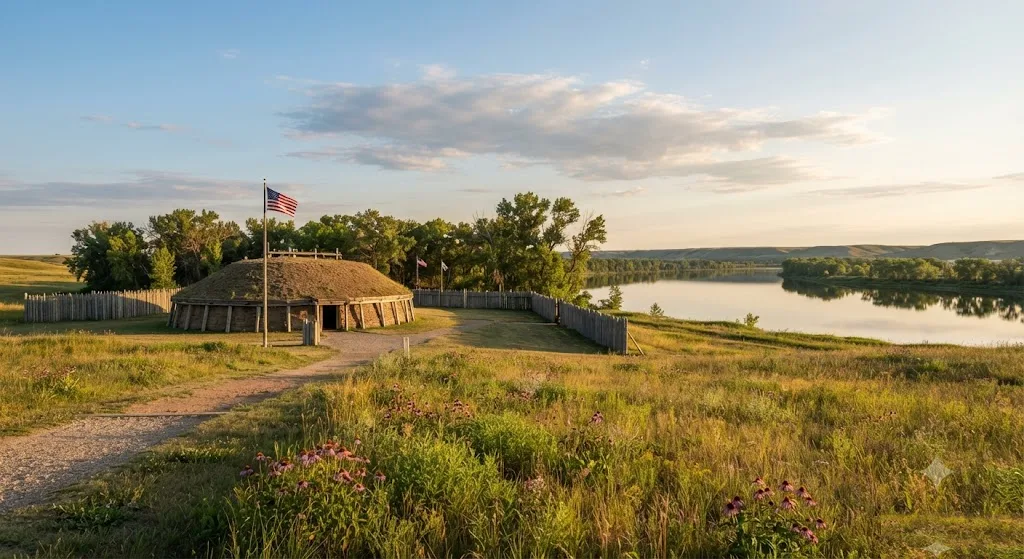
Fort Clark State Historic Site Travel Guide — North Dakota
Our Fort Clark State Historic Site guide covers practical planning for Fort Clark State Historic Site North Dakota — best time to visit, getting there, and what to do on the ground. We are the Roam States editorial team, and we pride ourselves on delivering confident, specific, and never generic travel advice for your adventures across the United States. North Dakota holds a special place in our hearts for its raw beauty and profound historical depth, and Fort Clark State Historic Site is a prime example of this rich heritage. This guide is your essential companion for exploring the archaeological remains of two significant 19th-century trading posts and a Mandan-Arikara village, offering unparalleled insights into early trade and Native American life on the Missouri River.
Why Visit Fort Clark State Historic Site
For those of us who seek genuine historical immersion and a quiet connection with the past, Fort Clark State Historic Site is an absolute must-visit. We believe that understanding the layers of history beneath our feet enriches any journey, and this site delivers that experience in spades. It’s one of the most important archaeological sites in North Dakota, preserving a vivid, albeit tragic, record of the fur trade era and the lives of the Mandan and Arikara people who thrived here for generations.
Imagine a bustling Mandan village, Mitu'tahakto's, established around 1822, home to approximately 1,000 people who cultivated a thriving riverfront trade center. This was not merely a settlement but a vibrant hub of culture, agriculture, and commerce on the Missouri River. The Mandan women diligently tended gardens of corn, beans, squash, pumpkins, and sunflowers, while the men focused on hunting bison and other game. This intricate society formed the backdrop for the arrival of European traders.
In 1830-1831, the American Fur Company built the Fort Clark Trading Post adjacent to the Mandan village, hoping to capitalize on and enhance the lucrative trade with Native Americans. Later, a competing establishment, Primeau's Post, was constructed nearby in 1850. These posts were centers of exchange, bringing together diverse cultures and goods, shaping the economic and social landscape of the northern Plains. The archaeological remains visible today—earthlodge depressions, the faint outlines of the trading posts, and an unmarked cemetery—offer tangible links to these stories.
The site also bears witness to profound tragedy. In 1837, the steamboat St. Peters docked at Fort Clark, inadvertently bringing smallpox to the Mandan village. The ensuing epidemic devastated the community, claiming the lives of about 90 percent of its inhabitants. A few months later, Arikara people moved into the abandoned Mandan homes, continuing the village's legacy until 1861, when both Primeau's Post and the Arikara village were abandoned following an attack by the Dakota. Walking these grounds, you can feel the echoes of both prosperity and immense loss. For history enthusiasts and those pondering, "is Fort Clark State Historic Site worth visiting?", our team unequivocally says yes. The sheer depth of history and the poignant stories embedded here make it an incredibly moving and educational experience, making it clear why Fort Clark State Historic Site is worth visiting.
Who It's Best For
Fort Clark State Historic Site is ideal for a specific kind of traveler, and we want to be clear about who will most appreciate its unique offerings. This isn't a theme park or a site with extensive reconstructed buildings; rather, it's an archaeological landscape that requires imagination and a keen interest in history to fully appreciate. We find it particularly appealing to:
- **History Buffs and Archaeologists:** Those with a deep interest in Native American history, the American fur trade, and archaeological interpretation will find this site incredibly rewarding. The well-preserved surface features—over 2,200 of them—provide a rare glimpse into 19th-century life on the Plains.
- **Quiet Contemplators:** If you prefer peaceful, reflective travel experiences over bustling attractions, Fort Clark offers ample space for quiet walks and contemplation. The interpretive signs guide you through the narratives, allowing for a personal journey through time.
- **Educational Travelers:** Families with older children or students studying American history will find the site to be an excellent outdoor classroom. The stories of cultural interaction, trade, and the devastating impact of disease are powerfully presented.
- **Nature Enthusiasts:** Situated on the bluffs of the Missouri River, the site offers scenic views and opportunities for birdwatching and enjoying the tranquil North Dakota landscape. While the focus is historical, the natural setting enhances the experience.
- **Budget-Conscious Explorers:** With free admission, Fort Clark State Historic Site is an accessible historical experience for everyone.
If you're asking yourself, "is Fort Clark State Historic Site worth visiting" for a deep dive into genuine historical and archaeological significance, then our answer is a resounding yes. It provides a unique opportunity to connect with the past on a profound level, far from the crowds of more commercialized destinations. This is a place where the landscape itself tells a story, and those willing to listen will be richly rewarded.
Getting There & Parking
Navigating to Fort Clark State Historic Site is straightforward, though we always recommend having a reliable GPS or map, as cell service can be spotty in some rural North Dakota areas. The site is located approximately 15 miles southwest of Washburn, ND, and about 7.5 miles southeast of Stanton, ND. If you're coming from a larger city like Bismarck, expect a drive of roughly an hour northwest.
For those wondering how to get to Fort Clark State Historic Site, the most common approach is by car. North Dakota's attractions are often spread out, and a personal vehicle offers the most flexibility for exploring the historic site and its surrounding areas. We recommend checking road conditions, especially if traveling during the shoulder seasons or winter, as snow removal is not provided on-site.
Upon arrival, you'll find ample parking available at the site. We’ve confirmed that there are no specific parking fees for Fort Clark State Historic Site in 2026; admission is free, and donations are welcome. The amenities include modern restrooms, a picnic area, and an observation deck, all easily accessible from the parking area. The parking facilities are designed to accommodate visitors comfortably, allowing for easy access to the interpretive trails and kiosks. Knowing how to get to Fort Clark State Historic Site and that parking is readily available simplifies your planning, allowing you to focus on the rich history awaiting you.
Top Things to Do
When you visit Fort Clark State Historic Site, you're stepping onto ground that whispers centuries of stories. Our team has explored these grounds and can confidently guide you through the most impactful experiences here. While it's an archaeological site, there are many things to do at Fort Clark State Historic Site that offer deep historical engagement.
The primary activity here is a **self-guided tour** of the archaeological remains. A detailed brochure is available at the Civilian Conservation Corps kiosk on-site, complementing the numerous interpretive signs that dot the landscape. These signs are incredibly informative, bringing to life the Mandan earthlodge village (Mitu'tahakto's), the later Arikara village, and the two fur trade posts—Fort Clark Trading Post and Primeau's Post. You'll walk among the depressions where earthlodges once stood, visualize the palisades of the trading posts, and understand the layout of a community that thrived on the Missouri River. The site boasts over 2,200 surface features, including house ruins, storage pits, and a poignant cemetery with approximately 800 graves, a stark reminder of the devastating smallpox epidemic of 1837.
Beyond the historical walk, here are some other things to do at Fort Clark State Historic Site:
- **Photography:** The expansive views of the Missouri River valley and the subtle archaeological features provide unique photographic opportunities, especially during sunrise or sunset.
- **Picnicking:** With a designated picnic area, it’s a perfect spot to enjoy a packed lunch amidst a historically significant and serene setting.
- **Wildlife Viewing:** The natural setting along the Missouri River means opportunities to spot local wildlife and birds, adding another layer to your visit.
- **Contemplation:** The site’s quiet atmosphere lends itself to reflection on the lives and events that shaped this land.
While the immediate area around the historic site is sparsely populated, there are things to do in Center, North Dakota, and the surrounding region that can complement your visit. Center, the county seat of Oliver County, is a small community that offers basic services and a glimpse into rural North Dakota life. For more extensive amenities and attractions, the cities of Mandan and Bismarck are approximately an hour's drive away. In Bismarck, you can explore the North Dakota State Capitol, the North Dakota Heritage Center & State Museum, and the Dakota Zoo. Mandan offers attractions like Fort Abraham Lincoln State Park, which provides further insights into military and Native American history on the Missouri River. These nearby towns offer a broader range of dining and shopping options, making them excellent bases for exploring Fort Clark and the wider region. When planning your trip, consider combining your visit to the historic site with exploring these nearby communities for a well-rounded North Dakota experience.
Best Time to Visit
Our team at Roam States has experienced North Dakota in all its seasons, and we can tell you that the best time to visit Fort Clark State Historic Site largely depends on your priorities. The site is open year-round, offering different perspectives with each changing season.
-
Summer (June-August): This is arguably the most popular time to visit. The weather is generally warm and pleasant, ideal for walking the extensive interpretive trails and enjoying the picnic areas. The landscape is lush, and the Missouri River is at its most inviting. However, summer can also bring hotter days, so we recommend visiting in the mornings or late afternoons to avoid the midday sun. It's also the peak tourist season in North Dakota, so while Fort Clark itself is rarely crowded, other attractions you might combine it with could be busier.
-
Spring (April-May) and Fall (September-October): These shoulder seasons are our personal favorites for visiting historic sites like Fort Clark. The temperatures are milder, making for very comfortable walking conditions. In spring, you'll witness the landscape coming back to life, while fall offers stunning displays of changing foliage, particularly along the river. Crowds are minimal, allowing for a more serene and reflective experience. Be prepared for potentially unpredictable weather, though, with cool mornings and evenings, and the possibility of rain or early snow in late fall.
-
Winter (November-March): Visiting in winter offers a starkly beautiful, solitary experience. The snow-covered plains and frozen river create a dramatic backdrop, emphasizing the isolation and harsh conditions faced by the Mandan, Arikara, and fur traders. However, it's crucial to note that while the site is open, there is no snow removal. This means trails may be difficult to navigate, and access to some areas could be limited. Temperatures can be extremely cold, with sub-zero real-feel temperatures not uncommon. We only recommend a winter visit for hardy travelers well-equipped for extreme cold and prepared for limited accessibility.
Considering the comfort for exploring the outdoor features and the clarity of the archaeological remains, we generally recommend late spring, summer, or early fall as the best time to visit Fort Clark State Historic Site. Always check the local weather forecast before your trip, regardless of the season, to ensure you're prepared for North Dakota's dynamic climate.
Where to Stay Nearby
Finding suitable Fort Clark State Historic Site lodging requires looking beyond the immediate vicinity, as the site itself is in a rural area. While Center, ND, is the closest town, its lodging options are limited. Our team recommends basing yourself in the larger cities of Mandan or Bismarck, which are approximately an hour's drive from Fort Clark State Historic Site. These cities offer a much wider range of accommodations, dining, and other amenities, making them ideal for exploring the historic site as a day trip.
In **Mandan** and **Bismarck**, you'll find a variety of hotels, from budget-friendly options to more upscale choices. For instance, recent searches for hotels near Center, ND, and in Central North Dakota for 2026 show several well-regarded establishments. In Mandan, options like the Baymont by Wyndham Mandan Bismarck Area and Comfort Inn & Suites Mandan - Bismarck are frequently mentioned, offering amenities like complimentary breakfast and indoor pools. Bismarck also provides numerous choices, including the Sleep Inn & Suites Bismarck I-94, EverSpring Suites, and Americas Best Value Inn & Suites Bismarck, many of which receive good reviews for comfort and convenience.
When considering Fort Clark State Historic Site lodging, we advise booking in advance, especially during the peak summer season, to secure your preferred accommodation. Many hotels in Mandan and Bismarck are located near major highways, providing easy access for your drive to Fort Clark. Beyond hotels, you might also find vacation rentals or campgrounds in the wider region, particularly if you're interested in a more rustic experience or traveling with a larger group. For those who enjoy camping, North Dakota State Parks like Fort Abraham Lincoln State Park, located near Mandan, offer various camping options.
Choosing Mandan or Bismarck as your base not only provides comfortable Fort Clark State Historic Site lodging but also positions you well to explore other fantastic North Dakota destinations. You can easily combine your historical explorations with visits to the Theodore Roosevelt National Park, or drive a section of the Enchanted Highway, making your overall North Dakota adventure truly memorable.
Sample 2-Day Itinerary
To truly appreciate Fort Clark State Historic Site and its surrounding historical landscape, we recommend dedicating at least two days to the area. This allows for a deep dive into the site's history and time to explore nearby attractions without feeling rushed. Here’s a sample 2-day itinerary crafted by our team:
Day 1: Immerse in Fort Clark's History
- **Morning (9:00 AM - 1:00 PM): Fort Clark State Historic Site Deep Dive**
Start your day early at Fort Clark State Historic Site North Dakota. Pick up a self-guided tour brochure from the Civilian Conservation Corps kiosk and spend a solid three to four hours exploring the archaeological remains. Take your time to read every interpretive sign, visualizing the Mandan earthlodge village, the fur trade posts, and the somber cemetery. Imagine the daily life, the bustling trade, and the tragic events that unfolded here. The quiet solitude of the site allows for deep reflection. We recommend comfortable walking shoes and dressing in layers, as the weather can change. Don't forget your camera for capturing the expansive views of the Missouri River.
- **Lunch (1:00 PM - 2:00 PM): Picnic at the Site or Local Eatery**
Enjoy a packed lunch at the picnic area at Fort Clark State Historic Site, taking in the historical ambiance. Alternatively, head to nearby Center, ND, for a quick bite at a local diner or cafe if available, experiencing the small-town charm.
- **Afternoon (2:00 PM - 5:00 PM): Lewis & Clark Interpretive Center & Fort Mandan**
Drive approximately 15 miles northeast to Washburn, ND, to visit the Lewis & Clark Interpretive Center. This excellent museum provides context for the famous expedition's time in North Dakota and their interactions with Native American tribes, including the Mandan. Nearby, you can also explore the reconstructed Fort Mandan, where the Corps of Discovery spent the winter of 1804-1805. This helps place Fort Clark's later history into a broader historical narrative of exploration and interaction.
- **Evening: Dinner & Relaxation in Bismarck/Mandan**
Head back to Bismarck or Mandan for dinner. There are numerous dining options ranging from casual to more upscale. After dinner, relax at your hotel, perhaps enjoying an indoor pool or simply unwinding after a day of historical exploration.
Day 2: Explore the Wider Region
- **Morning (9:00 AM - 12:00 PM): Fort Abraham Lincoln State Park**
Begin your second day with a visit to Fort Abraham Lincoln State Park, located just south of Mandan. This is another significant historical site on the Missouri River, home to the reconstructed Mandan On-A-Slant Indian Village and the military post of Fort Abraham Lincoln, which was once commanded by George Armstrong Custer. You can tour Custer's House and the barracks, offering a different perspective on 19th-century life and military presence on the frontier. The park also offers beautiful views and hiking trails.
- **Lunch (12:00 PM - 1:00 PM): Lunch in Mandan**
Grab lunch in Mandan before continuing your regional exploration.
- **Afternoon (1:00 PM - 5:00 PM): North Dakota Heritage Center & State Museum or Scenic Drive**
Choose your afternoon adventure:
- **Option A (History/Culture):** Head to Bismarck to the North Dakota Heritage Center & State Museum. This modern museum offers extensive exhibits on North Dakota's natural and cultural history, from prehistoric times to the present, providing excellent context for your Fort Clark visit. It’s one of the best museums in the state and a great way to deepen your understanding of the region.
- **Option B (Scenic Drive):** If you prefer more natural beauty or a road trip, consider a scenic drive along a portion of the Enchanted Highway, starting near Regent (about an hour and a half south of Mandan). While a full exploration requires more time, even a segment offers a unique experience with its giant metal sculptures. Alternatively, explore some of the beautiful landscapes along the Missouri River.
- **Evening: Farewell Dinner & Planning Your Next North Dakota Adventure**
Enjoy a final dinner in Bismarck or Mandan. Reflect on the rich history you've uncovered and perhaps start planning your next North Dakota adventure, which might include the stunning Theodore Roosevelt National Park in the Badlands, or the unique International Peace Garden. North Dakota has so much to offer beyond its well-known sites, and we at Roam States are always excited to help you discover more of its hidden gems. Remember to check out our main North Dakota travel guide for more ideas.
Last updated: 2026-07-08 by the Roam States team.