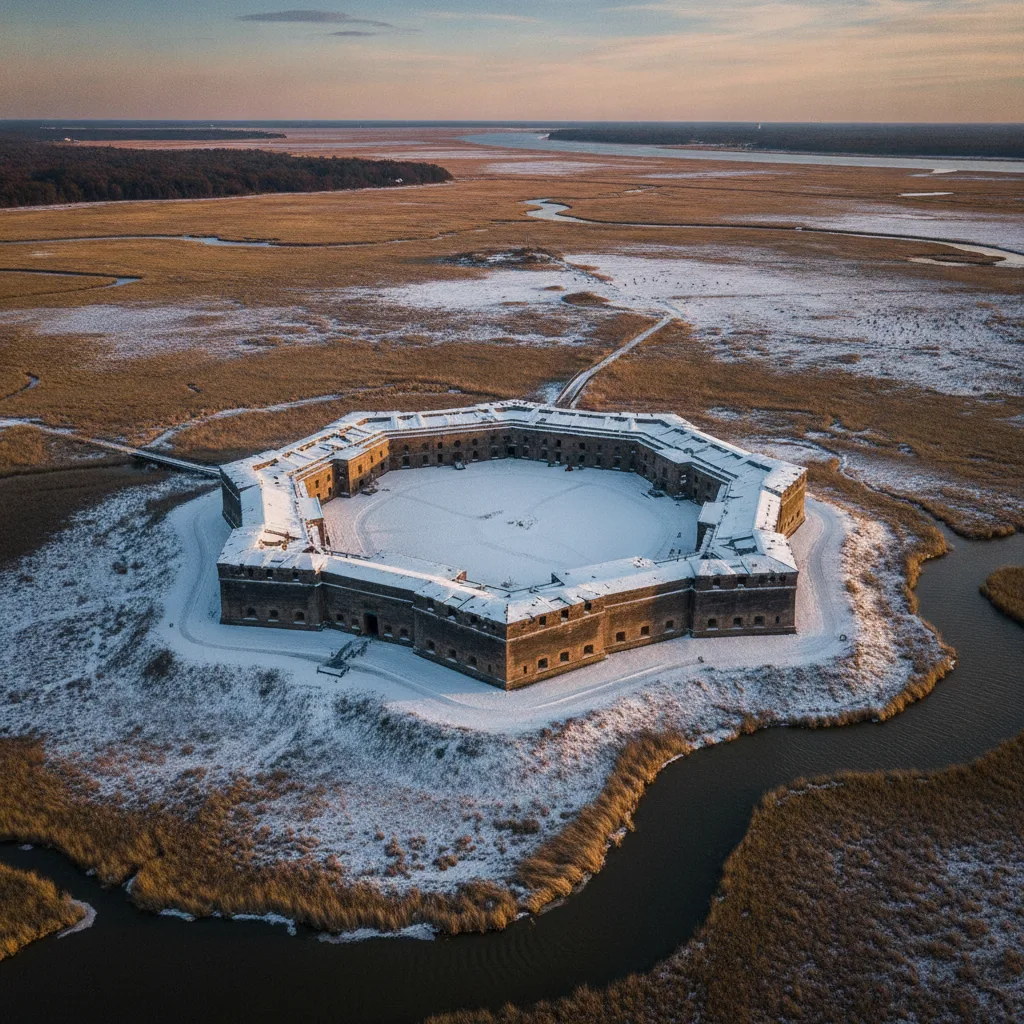
Our Fort Pulaski National Monument guide covers practical planning for Fort Pulaski National Monument Georgia — best time to visit, getting there, and what to do on the ground.
As independent US travel authorities, our team at Roam States believes some historical sites transcend mere sightseeing, offering a profound journey into the nation's past. Fort Pulaski National Monument Georgia is unequivocally one such destination. Standing sentinel on Cockspur Island, this remarkably preserved 19th-century fort played a pivotal role in the Civil War, forever altering military engineering. We’re here to help you navigate its rich history and stunning natural surroundings, ensuring your visit is as insightful as it is inspiring. From exploring its formidable brick walls to traversing scenic marshland trails, we’ve compiled everything you need to know for an unforgettable experience.
Why Visit Fort Pulaski National Monument
We often recommend Fort Pulaski National Monument for travelers seeking a tangible connection to American history, particularly the Civil War era. This isn't just another old fort; it's a testament to a pivotal moment when military technology rendered traditional masonry fortifications obsolete. The fort's strategic location at the mouth of the Savannah River made it crucial for coastal defense, and its capture by Union forces in 1862, using newly developed rifled cannons, was a landmark event.
Beyond its historical significance, the monument offers a unique blend of natural beauty and outdoor activities. We find the juxtaposition of the imposing brick fort against the serene marshlands and waterways to be particularly striking. Visitors can explore the fort's intricate architecture, walk its ramparts, and imagine the lives of soldiers stationed here. The surrounding landscape provides excellent opportunities for birdwatching, hiking, and enjoying the coastal environment. It’s a place where history buffs, nature enthusiasts, and families alike can find something to captivate their interest.
Who It's Best For
Our team believes Fort Pulaski National Monument caters to a diverse range of visitors. It’s an ideal destination for:
- History Enthusiasts: Those with a keen interest in the Civil War, military history, and 19th-century engineering will find the fort's story and preservation deeply engaging. The interpretive exhibits and ranger programs bring the past to life.
- Families with School-Aged Children: The fort offers an interactive learning environment where kids can explore tunnels, see cannons, and participate in Junior Ranger programs. It’s a fantastic way to make history tangible and exciting.
- Nature Lovers and Birdwatchers: The monument's location within the coastal marshlands provides a habitat for over 200 species of birds, making it a prime spot for birdwatching. The scenic trails offer a chance to observe local wildlife and enjoy the tranquility of the Georgia coast.
- Outdoor Adventurers: Hikers and bikers will appreciate the well-maintained trails, including the McQueens Island Rails to Trails, which offers a six-mile stretch through a unique coastal landscape. Kayaking and fishing are also popular activities in the surrounding waterways.
- Anyone Visiting Savannah or Tybee Island: Given its close proximity to both Savannah's Historic District and Tybee Island, Fort Pulaski makes for an excellent day trip or a half-day excursion, easily combinable with other coastal attractions.
If you appreciate a blend of historical depth, outdoor exploration, and scenic beauty, we are confident Fort Pulaski National Monument will exceed your expectations.
Getting There & Parking
Understanding how to get to Fort Pulaski National Monument is straightforward, whether you're coming from Savannah or further afield. The monument is situated on Cockspur Island, approximately 14 miles east of historic Savannah and just 6 kilometers west of Tybee Island's main beach strip.
By Car:
The most common way to reach Fort Pulaski National Monument is by car. From Interstate I-95, take Exit 99 onto Interstate I-16 East for about 7 miles. Then, take Exit 164A onto Interstate I-516 East towards US-80 East. From there, take Exit 3 (US-17 S/US-80 E) towards US-80 East. Turn left onto Ocean Highway (US-17 N, US-80 East), then bear right onto West Victory Drive (US-80 East). Continue on US-80 East for approximately 13 miles, and the entrance to Fort Pulaski National Monument will be on your left.
For those departing from Savannah, simply follow US-80 East directly towards Tybee Island. The fort is located just before you reach Tybee Island itself. The drive from downtown Savannah typically takes about 25-30 minutes, depending on traffic.
Parking at Fort Pulaski National Monument:
We've found that parking at Fort Pulaski National Monument is generally ample, with a dedicated visitor center parking lot. Parking is free for visitors. However, on peak days or during special events, the lot can fill up, so we always recommend arriving earlier in the day, especially if you plan to visit on a fee-free day or a holiday. Wheelchair-accessible parking is available at the visitor center.
There are no reservations required for general parking. If the main lot is full, consider exploring the nearby McQueen's Island Trail while you wait for spaces to open up.
Top Things to Do
When planning your visit, you'll find a wealth of activities that highlight both the history and natural beauty of this remarkable site. Here are our top recommendations for things to do at Fort Pulaski National Monument:
Explore the Historic Fort
The centerpiece of any visit is, of course, the fort itself. We encourage you to spend ample time exploring the massive brick fortifications, walking through its casemates, and ascending to the ramparts. The fort's design, including its thick walls and surrounding moat, was considered impenetrable before the advent of rifled cannons. Walking through the fort, you'll gain a deep appreciation for 19th-century military engineering. Don't miss the opportunity to see the battle damage from the 1862 siege, which dramatically illustrates the impact of new weaponry.
Participate in Ranger Programs and Demonstrations
To truly understand the fort's significance, we highly recommend joining a ranger-led program. These daily interpretive programs often include guided fort tours, fort orientations, and historic weapons demonstrations, such as cannon firings. For example, in 2026, cannon firings are scheduled for 11:00 AM, 1:00 PM, and 3:00 PM on certain dates, including during the Independence Day celebrations from July 3rd to July 5th. Ranger talks typically last about 30 minutes and cover topics ranging from the fort's construction to its role in the Civil War. Check the visitor center for the most up-to-date schedule, as programs are subject to change based on weather and staffing.
Hike the Nature Trails
Beyond the fort walls, the surrounding marshlands offer several scenic trails perfect for hiking and enjoying the coastal environment. The North Pier Trail, a quarter-mile loop, meanders through a wooded landscape, revealing remnants of the fort's original construction village and the historic North Pier. The Lighthouse Overlook Trail, a longer three-quarter-mile trek, offers breathtaking views of the Savannah River and, on clear days, the Tybee Island Lighthouse. For more extensive biking or walking, the six-mile McQueens Island Rails to Trails path follows a former rail line. These trails are excellent for birdwatching, with over 200 species recorded in the area.
Visit the Cockspur Island Lighthouse
While not directly accessible from the fort by foot at all times, the Cockspur Island Lighthouse is a picturesque landmark visible from the Lighthouse Overlook Trail. This small, historic lighthouse stands sentinel in the Savannah River, adding to the scenic beauty of the area. It's particularly stunning at sunrise or sunset. Access to the island where the lighthouse stands is typically only at low tide.
Explore the Visitor Center and Museum
The visitor center serves as your hub for starting your exploration. Here, you can watch a park film, view exhibits rich with artifacts, and learn more about the fort's history and natural surroundings. Park rangers are also available to answer questions and provide insights.
Best Time to Visit
Our experience suggests that timing your visit to Fort Pulaski National Monument can significantly enhance your experience. Savannah has a humid subtropical climate, with distinct seasons.
Spring (March to Mid-May) and Fall (October to Late November): Our Top Picks
We wholeheartedly recommend visiting during the spring and fall. These seasons offer the most pleasant weather, with temperatures typically ranging from the upper 50s to the 80s Fahrenheit. The humidity is lower, and the chances of afternoon thunderstorms are reduced, making it ideal for exploring the fort and its outdoor trails. The comfortable conditions allow for extended walks and comfortable participation in ranger programs. Plus, the crowds are generally smaller than in the peak summer months.
Winter (December to February): Fewer Crowds, Cooler Temps
If you prefer fewer crowds and don't mind cooler temperatures, winter can be a good option. Temperatures usually range from the upper 30s to the 60s Fahrenheit, though sudden cold snaps can occur. It can also be windy, especially near the water, so dressing in layers is crucial. The dry weather often provides clear skies, offering excellent visibility for photography.
Summer (May to September): Hot, Humid, and Crowded
While Fort Pulaski National Monument is open year-round, we generally advise caution when visiting in summer. Summers are typically hot, bright, and humid, with temperatures often ranging from the lower 70s to the mid-90s Fahrenheit. Heat indexes can exceed 105°F, and afternoon thunderstorms are common. If you must visit during this time, we recommend going early in the morning to beat the heat and crowds, bringing plenty of water, wearing light clothing, and using high-SPF sunscreen. Some interpretive programs may be limited due to high heat indexes.
Special Considerations:
- Hurricane Season: June 1 through November 30 is hurricane season, and the park may close if tropical storm or hurricane conditions are expected within 36 hours. Always check local weather forecasts before your visit.
- Fee-Free Days: The National Park Service offers several fee-free days throughout the year. For example, in 2026, Fort Pulaski will be free on June 14th (Flag Day), and from July 3rd to July 5th in celebration of Independence Day. Memorial Day is also typically a free entry day. These days can be very popular, so expect larger crowds and plan to arrive early for parking.
Where to Stay Nearby
When considering Fort Pulaski National Monument lodging, you essentially have two distinct choices: the historic charm of downtown Savannah or the relaxed, beachside atmosphere of Tybee Island. Our team has explored both options, and we can confidently say each offers a unique base for your visit.
Tybee Island: Closest to the Fort and Beach Access
For those prioritizing proximity to Fort Pulaski National Monument and direct access to the Georgia coast, Tybee Island is the logical choice. The monument is roughly 15 minutes by car from Tybee Island hotels via US-80. Staying on Tybee means quiet nights, easy morning access to the monument before crowds arrive, and a quintessential beach-town vibe.
Some of our recommended lodging options on Tybee Island include:
- DeSoto Beach Hotel: A welcoming 3-star hotel just 3.9 miles from Fort Pulaski, offering kitchenettes, connecting rooms, an outdoor pool, and complimentary breakfast. It's right on the beachfront.
- Desoto Beach Bed & Breakfast: A delightful 3.5-star option with stunning ocean views, a terrace, and free cooked breakfast daily. It's also 3.9 miles from the fort and offers direct beach access.
- Tybee Island Inn: A highly-rated 3-star hotel located just 3.6 miles from Fort Pulaski.
- Admiral's Inn on Tybee Island: Another excellent value stay, approximately 15 minutes from the monument by car, offering easy access to the beach and local restaurants.
- Beachview Inn and Spa: A 4-star bed and breakfast on Tybee Island within 300 meters of Tybee Island Beach and also about a 15-minute drive from Fort Pulaski.
While Tybee Island offers convenience to the fort and beaches, it has a slower rhythm, with most restaurants closing by 10 PM. If you're looking for vibrant nightlife or extensive walkable dining, it might feel a bit limiting.
Downtown Savannah: Historic Charm and Urban Amenities
If you prefer a more urban experience with a wider array of dining, shopping, and nightlife options, staying in Savannah's Historic District is an excellent choice. While it's about a 25-30 minute drive to Fort Pulaski National Monument, the historic district itself is a destination worth exploring.
Some highly-rated hotels in Savannah's Historic District include:
- River Street Inn: An upscale, smoke-free, full-service hotel right on the Savannah riverfront, known for its historic charm and excellent location for exploring the city.
- Homewood Suites by Hilton Historic District Savannah: An upscale, all-suite, extended-stay hotel with a heated outdoor rooftop pool and complimentary hot breakfast.
- Holiday Inn Express Savannah - Historic District: A well-kept, clean downtown hotel in a great location, offering free hot breakfast.
- Olde Harbour Inn: Another option right next to the river walk and historic district, perfect for exploring Savannah.
Parking in downtown Savannah can often incur additional fees, with many hotels offering valet services. However, the trade-off is the ability to walk to many attractions, restaurants, and bars within the historic district.
Ultimately, your choice of Fort Pulaski National Monument lodging depends on your travel style: a quiet beach retreat with easy fort access on Tybee Island, or a vibrant historic city experience in Savannah with a slightly longer drive to the monument.
Sample 2-Day Itinerary
To help you make the most of your visit to Fort Pulaski National Monument Georgia and the surrounding area, our team has crafted a sample 2-day itinerary. This plan balances historical exploration with the charm of coastal Georgia.
Day 1: Fort Pulaski Immersion & Tybee Island Charm
- Morning (9:00 AM - 1:00 PM): Fort Pulaski National Monument
- Arrive early at Fort Pulaski National Monument to secure good parking and beat any potential crowds.
- Start at the Visitor Center to watch the park film and explore the exhibits, gaining context for your visit.
- Embark on a self-guided tour of the fort, walking the ramparts, exploring the casemates, and observing the battle damage.
- Join a ranger-led program or historic weapons demonstration if available (check the schedule upon arrival).
- Walk the North Pier Trail to see remnants of the construction village and enjoy marsh views.
- Lunch (1:00 PM - 2:00 PM): Tybee Island Seafood
- Drive a short distance to Tybee Island. We recommend grabbing fresh seafood at a local spot like The Crab Shack for a unique coastal dining experience.
- Afternoon (2:00 PM - 5:00 PM): Tybee Island Exploration
- Visit the historic Tybee Island Light Station and Museum. Climb the 178 steps for panoramic views of the coast.
- Enjoy some relaxed beach time on Tybee Island, whether it's North Beach or South Beach.
- Evening: Dinner & Relaxation on Tybee
- Dine at one of Tybee Island's casual restaurants.
- Enjoy a quiet evening, perhaps catching a sunset over the marshlands.
Day 2: Historic Savannah Exploration
- Morning (9:00 AM - 1:00 PM): Savannah's Historic District
- Head into Savannah's Historic District. We suggest starting with a guided walking tour or a trolley tour to get an overview of the city's rich history and architecture.
- Explore iconic squares like Forsyth Park, with its famous fountain, and Chippewa Square.
- Visit the Cathedral Basilica of St. John the Baptist, a stunning architectural marvel.
- Lunch (1:00 PM - 2:00 PM): Savannah Dining
- Enjoy lunch at one of Savannah's many acclaimed restaurants, from casual cafes to upscale dining.
- Afternoon (2:00 PM - 5:00 PM): Museums or Riverfront
- Choose from one of Savannah's excellent museums, such as the Telfair Museums (Telfair Academy, Jepson Center for the Arts) or the American Prohibition Museum.
- Alternatively, stroll along River Street, browsing the shops and enjoying the riverfront atmosphere. Consider a Savannah Riverboat Cruise for a different perspective of the city.
- Evening: Ghost Tour & Dinner
- Savannah is famous for its haunted history. We recommend taking a ghost tour for a spooky and entertaining evening.
- Enjoy a farewell dinner in the historic district.
This itinerary provides a robust exploration of both Fort Pulaski National Monument Georgia and its vibrant surroundings. For more ideas on planning your trip to the region, check out our guide to Plan Your US Trip, or delve deeper into the best places in Georgia, including Martin Luther King Jr. NHP, Cumberland Island, Georgia Aquarium, Stone Mountain Park, and the Golden Isles.
Is It Worth Visiting?
Our team at Roam States unequivocally agrees: yes, is Fort Pulaski National Monument worth visiting. This site offers a compelling blend of significant American history, impressive engineering, and natural beauty that truly sets it apart. It’s not just a collection of old bricks; it’s a place where you can actively engage with a pivotal moment in the Civil War, understanding how technological advancements reshaped warfare and, by extension, the course of the nation.
The opportunity to walk through the massive walls of a fort once deemed impregnable, to see the scars of battle, and to hear the stories of those who served there, provides a powerful and educational experience. The ranger programs, including the cannon firing demonstrations, are particularly effective in bringing this history to life.
Beyond the historical aspects, the natural setting on Cockspur Island adds immense value. The serene marshlands, abundant birdlife, and scenic trails offer a peaceful contrast to the fort's military past. It’s a chance to connect with coastal Georgia's unique ecosystem and enjoy outdoor activities like hiking and birdwatching.
Considering its modest entrance fee (currently $10 for adults, with children under 16 free, and several fee-free days throughout 2026), and its proximity to popular destinations like Savannah and Tybee Island, we believe Fort Pulaski National Monument offers exceptional value. It's a destination that enriches your understanding of the past while providing a beautiful and engaging environment for visitors of all ages. If you're in the region, we strongly recommend carving out time for this impactful site.
Last updated: 2026-07-06 by the Roam States team.