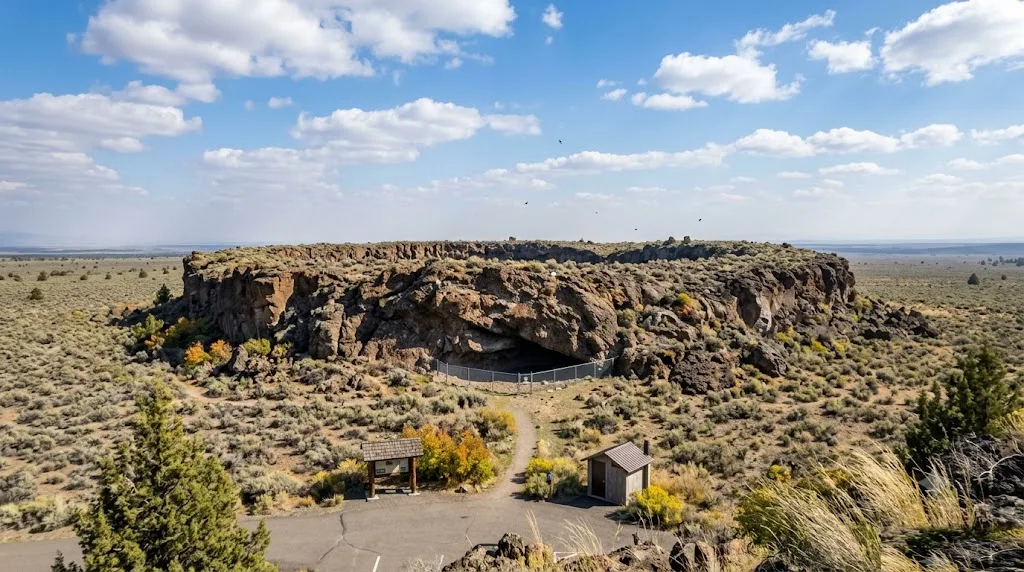
Our Fort Rock Cave guide covers practical planning for Fort Rock Cave Oregon — best time to visit, getting there, and what to do on the ground.
For those drawn to the whispers of ancient history and the stark beauty of the high desert, Fort Rock Cave Oregon is an essential destination. This isn't just another cave; it's a profound archaeological site that has reshaped our understanding of early human habitation in North America. Here, beneath layers of volcanic ash, archaeologists unearthed sagebrush sandals dating back 9,000 to 11,000 years, providing tangible links to the continent's earliest inhabitants. Our team at Roam States believes that experiencing this unique blend of geological wonder and deep human history offers a perspective unlike any other Oregon adventure.
Why Visit Fort Rock Cave
Visiting Fort Rock Cave is more than just a trip to a natural landmark; it's a journey back in time, offering a rare glimpse into the lives of the first Americans. The cave holds immense archaeological significance, primarily due to the discovery of dozens of intricately woven sagebrush bark sandals by archaeologist Luther Cressman in 1938. These artifacts, radiocarbon-dated to between 9,000 and 11,000 years old, were, for a long time, considered the oldest human artifacts found in North America. More recent research continues to explore the possibility of even earlier human presence in the region, with some evidence suggesting occupation as far back as 11,000 to 15,000 years ago.
The cave itself is a large rock shelter carved into a volcanic outcrop, formed by the erosive action of a massive prehistoric lake that once filled the Fort Rock Basin. Imagine an inland sea where today lies an arid landscape, and you begin to grasp the dramatic geological changes that shaped this region. The volcanic ash layer, deposited by the eruption of Mount Mazama (which created Crater Lake) approximately 6,900 to 7,600 years ago, helped preserve these ancient treasures, sealing them away for millennia. This unique preservation makes Fort Rock Cave a vital site for understanding the Paleoindian cultures of the Great Basin.
Beyond its scientific importance, the sheer remoteness and untouched beauty of the Fort Rock Valley provide a powerful sense of connection to the past. It’s a place where you can truly contemplate the vastness of human history and the resilience of those who adapted to this challenging, yet resource-rich, environment. The Oregon State Park system now protects and provides public access to the site, ensuring its preservation for future generations.
Who It's Best For
Fort Rock Cave is an ideal destination for history buffs, archaeology enthusiasts, and anyone with a deep appreciation for the natural world and its ancient secrets. If you're fascinated by early human migration and the stories preserved in the earth, this site will resonate deeply. It's particularly appealing to those who prefer immersive, educational experiences over bustling tourist attractions.
Families with older children who are interested in history and geology will find the guided tours engaging and thought-provoking. While the cave tour itself is an easy 0.3-mile hike, the overall experience requires a degree of patience and a willingness to engage with the interpretive aspects of the site. It's not a place for casual exploration, but rather for respectful observation and learning.
Photographers will appreciate the dramatic landscapes of the Fort Rock Valley and the unique geological formations of the Fort Rock State Natural Area. However, it's important to note that photos are not permitted at the cave site itself, preserving its delicate nature. Stargazers and nature lovers will also be drawn to the area's dark skies and opportunities for wildlife viewing, from raptors soaring above the tuff ring to pronghorn antelope grazing in the sagebrush plains.
This destination is less suited for those seeking adrenaline-fueled adventures or extensive amenities. The focus here is on quiet contemplation and historical discovery. We recommend it for travelers who are comfortable with a remote setting and who value a deeper connection to the land and its past.
Getting There & Parking
Reaching Fort Rock Cave requires some planning, as the cave itself is not publicly accessible without a guided tour. The location of Fort Rock Cave is not shared publicly and can only be visited through a state park guided tour, for which reservations are required. The tours are offered by Oregon State Parks annually from late April to mid/late June, subject to weather conditions.
The general area of Fort Rock is located in Lake County, approximately 50 to 64 miles southeast of Bend, Oregon. If you're driving from Bend, a common route involves heading south on Highway 97, then turning onto Highway 31 towards Silver Lake, and finally following signs for Fort Rock. The route to the Fort Rock State Natural Area is entirely paved.
For those taking a guided tour of Fort Rock Cave Oregon, the meeting point is typically the parking lot at Fort Rock State Natural Area. From there, a shuttle van is provided to transport visitors to the cave site. Parking at the Fort Rock State Natural Area itself is available, and you should aim to park at the far end of the picnic area's lot.
As of 2026, Fort Rock State Natural Area is open for day-use only from 8 am to 9 pm. There are no specific fees mentioned for parking at the Natural Area itself, but tour fees for the cave apply. It’s always a good idea to check the Oregon State Parks website or call La Pine State Park at 541-536-2428 for the most up-to-date information on tour schedules, fees, and any potential changes for 2026.
Be aware of seasonal restrictions. An open flame ban is in effect at all Day Use areas within Fort Rock Natural Area from May 12, 2026, through September 30, 2026, though propane grills may be allowed with park manager approval. Additionally, seasonal drone use is prohibited from February 15 to August 31, 2026, to protect nesting raptors. Two areas of the park are also closed to hiking and bouldering from February 21, 2026, to August 15, 2026, for the same reason, but designated trails remain open.
Top Things to Do
While the main draw is undoubtedly the archaeological marvel of Fort Rock Cave, there are many things to do at Fort Rock Cave and in the surrounding Fort Rock Valley that make a visit to this high desert region truly rewarding. Our team recommends focusing on a blend of historical exploration and natural beauty.
Fort Rock Cave Guided Tour
The primary thing to do at Fort Rock Cave is to take a guided tour. As a National Historic Landmark and National Heritage site, access to Fort Rock Cave is strictly limited to guided tours offered by Oregon State Parks. These tours typically run annually from late April to mid/late June, though some sources indicate tours may extend into July. Reservations are mandatory and are usually released in two rounds, starting in January for spring tours. We strongly advise booking well in advance, as tour groups are small (sometimes limited to 10 visitors) and fill up quickly. During the tour, an Oregon State Parks ranger will lead you on an easy 0.3-mile hike to the cave, sharing insights into the significant discoveries, including the ancient sagebrush sandals, and the geological history of the site. Remember, pets are not permitted on tours, and photography is prohibited at the cave site itself.
Explore Fort Rock State Natural Area
Adjacent to the cave, the Fort Rock State Natural Area offers stunning geological features and hiking opportunities. The most prominent feature is the impressive Fort Rock itself, a massive volcanic tuff ring that rises dramatically from the flat desert floor. We recommend hiking the Fort Rock Loop Trail, an easy 1.1-mile nature walk around the interior of the tuff ring. This trail provides incredible views of the rust and charcoal-hued formation, with its layered sediment telling a story of ancient volcanic activity and a prehistoric lake. Keep an eye out for local wildlife, including various raptors, coyotes, and pronghorn antelope.
Visit the Fort Rock Valley Historical Homestead Museum
Just two miles south of the Fort Rock formation, the Fort Rock Valley Historical Homestead Museum offers another captivating journey into the past, focusing on the early 20th-century pioneer life in the high desert. This "composite ghost town" features a dozen relocated and restored buildings, including a church, schoolhouse, general store, and doctor's office, all furnished with period artifacts. It's a fascinating self-guided tour that brings the challenges and triumphs of homesteading to life. The museum typically charges a small entrance fee (e.g., $6 for adults, $4 for youths 6-17, as of a 2022 source), and we find it to be an excellent complement to the ancient history of the cave.
Discover Hole-in-the-Ground and Crack-in-the-Ground
For those interested in the region's unique volcanic geology, a visit to Hole-in-the-Ground and Crack-in-the-Ground is a must. Hole-in-the-Ground, located about 7 miles from Fort Rock, is a large maar, a volcanic crater formed by a steam explosion. You can descend into its impressive 300-foot-deep, mile-wide crater. Crack-in-the-Ground is an ancient volcanic fissure, over 2 miles long and up to 70 feet deep, offering a unique hiking experience where temperatures can be significantly cooler at the bottom. These sites are geological marvels that further illustrate the dramatic volcanic history of the Oregon Outback.
Stargazing in the Oregon Outback
The Fort Rock area is renowned for its incredibly dark night skies, making it an exceptional spot for stargazing. Located on the edge of the Oregon Outback Dark Sky Sanctuary, light pollution is minimal, allowing for breathtaking views of the Milky Way and celestial events. Several tour operators offer guided stargazing tours, sometimes combined with sunset hikes, providing an unforgettable experience under a canopy of stars. We highly recommend checking out local tour companies like Wanderlust Tours for their 2026 stargazing events, which often include visits to Fort Rock.
These things to do in Fort Rock offer a comprehensive experience of the area's natural beauty and profound historical significance. Remember to plan ahead, especially for cave tours, and respect the natural and historical integrity of these sites.
Best Time to Visit
Choosing the best time to visit Fort Rock Cave and the surrounding high desert depends heavily on your priorities, particularly regarding cave access and weather conditions. Our team recommends late spring to early summer for the optimal experience.
The most crucial factor is that Fort Rock Cave is only accessible via guided tours offered by Oregon State Parks, and these tours occur annually from late April to mid/late June, with some sources mentioning May through July. Tour dates are typically posted in two rounds beginning in January for the respective months. Therefore, if visiting the cave itself is your primary goal, you must plan your trip within this narrow window and secure reservations well in advance.
During late spring (May) and early summer (June), the weather in Fort Rock is generally pleasant. June typically sees average daily high temperatures around 74°F (23°C) and lows around 44°F (6°C), with a 17% chance of light rain. July brings warmer averages, with highs around 88°F and lows around 47°F. August is also warm, with average highs of 84°F (29°C) and lows of 51°F (10°C), and is generally the driest and calmest month.
However, be aware that tours from mid-July through August are subject to cancellation during conditions of high fire danger. The high desert can experience very hot, dry summers, and fire restrictions, including open flame bans, are common. For 2026, an open flame ban is in effect at Fort Rock State Natural Area from May 12 to September 30.
We suggest aiming for May or early June. This period offers a good balance of comfortable temperatures, lower risk of fire-related tour cancellations, and the best chance to secure a coveted cave tour reservation. Spring wildflowers can also make the desert bloom, adding to the scenic beauty. While winter offers a stark beauty, icy winds and cold temperatures (December highs average 36°F, lows 22°F) make it less ideal for extensive outdoor exploration.
Where to Stay Nearby
When planning your visit to Fort Rock Cave Oregon, you'll find that lodging options are primarily centered in nearby small towns or vacation rentals, offering a taste of the high desert experience. The immediate vicinity of the cave is remote, so we recommend considering accommodations that provide a comfortable base for exploring the Fort Rock Valley and its unique attractions.
For dedicated Fort Rock Cave lodging, you'll want to look at the communities of Fort Rock, Silver Lake, Christmas Valley, and La Pine. These towns offer a mix of vacation rentals, small motels, and sometimes RV parks or campgrounds. Websites like Travelocity and Expedia list various options, including vacation homes with amenities like laundry facilities and kitchens, which can be ideal for longer stays or families.
- Fort Rock: The unincorporated community of Fort Rock itself offers limited but authentic lodging experiences, often in the form of vacation rentals. This puts you closest to the Fort Rock State Natural Area and the Homestead Village Museum.
- Silver Lake: A small community a bit further south, Silver Lake offers a tranquil setting. You might find vacation homes like "Central Oregon Outback Treasure" listed here, providing a comfortable base.
- Christmas Valley: Located to the east, Christmas Valley also provides vacation rental options, such as "Welcome Home!" It's a bit further from Fort Rock Cave but offers access to other high desert attractions.
- La Pine: Situated about an hour's drive northwest of Fort Rock, La Pine is a larger town with more amenities, including additional hotel and motel choices. It's also closer to the Deschutes National Forest, offering more recreational opportunities. Options like "La Pine Hideaway Near Deschutes National Forest!" are available. La Pine State Park is also a key contact point for Fort Rock Cave tours.
If you prefer a wider selection of hotels, restaurants, and services, Bend, Oregon, is approximately 50-64 miles northwest of Fort Rock. While it's a longer drive to the cave, Bend offers a vibrant city experience and serves as a popular hub for exploring Central Oregon, including destinations like Deschutes National Forest and Smith Rock State Park. For those planning a broader USA road trip, staying in Bend might be a convenient choice.
When searching for Fort Rock Cave lodging, we recommend booking vacation rentals or smaller, independent accommodations directly or through reputable travel sites. Always check recent reviews and confirm amenities, especially given the remote nature of the area. For a unique experience, consider properties that offer dark sky views for stargazing. Remember that during peak season (late spring/early summer for cave tours), availability can be limited, so early booking is advisable.
Sample 2-Day Itinerary
Our team has crafted a sample 2-day itinerary for exploring Fort Rock Cave and its captivating surroundings, designed to maximize your experience of this unique corner of Oregon. This plan assumes you have secured your Fort Rock Cave tour reservation in advance.
Day 1: Ancient History and Geological Wonders
- Morning (Pre-booked): Fort Rock Cave Tour. Start your day early with your pre-booked guided tour of Fort Rock Cave. Arrive at the Fort Rock State Natural Area parking lot at your designated time. The Oregon State Parks ranger will transport you to the cave and lead you through this historically significant site, where you'll learn about the ancient sagebrush sandals and the cave's archaeological importance. Remember, photography is not permitted at the cave.
- Late Morning: Explore Fort Rock State Natural Area. After the cave tour, spend some time exploring the Fort Rock State Natural Area. Hike the easy 1.1-mile Fort Rock Loop Trail around the interior of the dramatic volcanic tuff ring. Take in the unique geological formations and keep an eye out for local wildlife.
- Lunch: Picnic at Fort Rock. Pack a picnic lunch to enjoy at the Fort Rock State Natural Area picnic area. Be mindful of any fire restrictions; as of 2026, an open flame ban is in effect from May 12 to September 30, but propane grills may be allowed with approval.
- Afternoon: Fort Rock Valley Historical Homestead Museum. Drive two miles south to the Fort Rock Valley Historical Homestead Museum. Immerse yourself in the early 20th-century pioneer life by exploring the collection of restored buildings, including a school, church, and general store.
- Evening: Dinner and Stargazing. Enjoy dinner at your chosen Fort Rock Cave lodging or a nearby eatery. As night falls, find a spot away from any artificial light to experience the incredible dark skies of the Oregon Outback. Consider a guided stargazing tour if available, or simply enjoy the celestial show on your own.
Day 2: High Desert Exploration
- Morning: Hole-in-the-Ground and Crack-in-the-Ground. Dedicate your morning to exploring more of the region's fascinating volcanic geology. Drive to Hole-in-the-Ground, a large maar, and descend into its impressive crater. Afterwards, head to Crack-in-the-Ground, an ancient volcanic fissure, and hike along its cool, deep chasms.
- Lunch: On the Road or Local Eatery. Grab a bite at a local diner in one of the nearby small towns, or pack a lunch to enjoy amidst the high desert scenery.
- Afternoon: Scenic Drive and Photography. Take a scenic drive through the Fort Rock Valley and the broader Oregon Outback. This is an excellent opportunity for landscape photography, capturing the vast sagebrush plains, distant buttes, and unique rock formations. You might consider a drive towards Silver Lake or Christmas Valley to experience more of the remote desert beauty.
- Late Afternoon: Local Artisan Stops or Relaxation. Depending on your interests, you could seek out any local artisan shops or simply return to your Fort Rock Cave lodging for some relaxation before heading to your next destination.
This itinerary provides a solid framework, but feel free to adjust it based on your pace and specific interests. Remember to carry plenty of water, sunscreen, and appropriate clothing for varying desert temperatures and conditions. For more ideas on exploring the state, check out our guide to the Best Places in Oregon.
Is It Worth Visiting?
From the Roam States editorial team, we confidently assert that is Fort Rock Cave worth visiting. This isn't a destination for every traveler, but for those who seek a profound connection to North American history and a truly unique natural landscape, it offers an unparalleled experience. The archaeological significance alone, particularly the discovery of the 9,000 to 11,000-year-old sagebrush sandals, positions Fort Rock Cave as a cornerstone in understanding early human life on the continent.
What makes it particularly worthwhile is the opportunity for an intimate, guided exploration. Unlike many historical sites that can feel overcrowded or overly commercialized, access to Fort Rock Cave is carefully managed through Oregon State Parks tours, ensuring a respectful and educational experience. This allows visitors to truly absorb the stories of the past without distraction.
Beyond the cave itself, the surrounding Fort Rock Valley and State Natural Area present a striking high desert environment. The dramatic volcanic tuff ring, the vast sagebrush plains, and nearby geological wonders like Hole-in-the-Ground and Crack-in-the-Ground offer a stunning backdrop for outdoor exploration. The chance to experience some of the darkest night skies for stargazing further enhances the appeal.
We understand that the remote location and the requirement for pre-booked tours might deter some. However, for those willing to plan ahead and embrace the journey, the rewards are immense. It's a place that encourages reflection, sparks curiosity, and leaves a lasting impression of both ancient human ingenuity and the raw power of nature. So, if you're asking, is Fort Rock Cave worth visiting, our answer is a resounding yes—especially for those who value authentic historical discovery and breathtaking natural beauty over conventional tourist attractions. For more unique Oregon experiences, consider Crater Lake National Park or the Travel Oregon website for additional ideas.
Fort Rock Cave with kids
Fort Rock Cave can be a fascinating destination for kids, particularly those with an interest in history, archaeology, or geology. The concept of 9,000-year-old sandals and early human life can spark a child's imagination. The guided tour to the cave is an easy 0.3-mile hike, which is manageable for most children. However, pets are not allowed on tours, and photography is prohibited at the cave site. We recommend it for older children who can appreciate the historical context and follow tour guidelines, as it's a quiet, interpretive experience rather than an interactive one. The Fort Rock Valley Historical Homestead Museum nearby offers a more hands-on glimpse into pioneer life, which younger children might enjoy more. Additionally, the open spaces of Fort Rock State Natural Area and the unique formations of Hole-in-the-Ground and Crack-in-the-Ground provide opportunities for outdoor exploration that can appeal to various age groups.
Best hotels near Fort Rock Cave
The immediate vicinity of Fort Rock Cave is remote, so "best hotels" typically refers to lodging in nearby towns. For convenience and a local feel, we recommend looking for vacation rentals or small motels in Fort Rock, Silver Lake, or Christmas Valley. These offer a more direct connection to the high desert experience. For a wider selection of amenities and services, the town of La Pine, about an hour's drive away, has more traditional hotel and motel options. If you prefer a larger city base with extensive dining and lodging choices, Bend, Oregon, is approximately 50-64 miles away and offers numerous hotels, though it requires a longer commute to the cave. We suggest checking reputable travel sites like Travelocity or Expedia for current availability and reviews for best hotels near Fort Rock Cave for 2026.
Fort Rock Cave tips
To make the most of your visit to Fort Rock Cave, our team offers these essential tips: 1) **Book Tours Early:** Cave tours are by reservation only and fill up quickly, especially since they only run from late April to mid/late June. Check the Oregon State Parks website in January for tour date releases. 2) **Verify 2026 Details:** Always confirm current operating hours, fees, and any closures or restrictions directly with Oregon State Parks before your trip, as details can change. 3) **Dress Appropriately:** Wear comfortable hiking shoes and outdoor clothing suitable for high desert conditions, which can include significant temperature swings. 4) **Pack Essentials:** Bring plenty of water, sunscreen, hats, and snacks, as services are limited in the immediate area. 5) **No Photos at Cave:** Respect the rules; photography is not permitted at the cave site. 6) **Leave Pets at Home:** Pets are not allowed on the guided cave tours. 7) **Explore Beyond the Cave:** Allocate time to visit the Fort Rock State Natural Area, the Homestead Village Museum, and other geological wonders like Hole-in-the-Ground and Crack-in-the-Ground.
Where to stay near Fort Rock Cave
When considering where to stay near Fort Rock Cave, your options will be in the smaller, more remote communities surrounding the Fort Rock Valley. The most convenient choices for proximity are vacation rentals or small, independent accommodations in Fort Rock, Silver Lake, or Christmas Valley. These offer a genuine high desert experience. For a slightly broader range of services and more conventional lodging, the town of La Pine is a good option, located about an hour's drive away. If you're combining your visit with other Central Oregon attractions, staying in Bend (approximately an hour to an hour and a half drive) provides the most extensive selection of hotels, restaurants, and amenities. We recommend booking vacation rentals or hotels well in advance, especially if traveling during the cave tour season (late spring to early summer).
Fort Rock Cave parking
For visitors taking a guided tour of Fort Rock Cave, parking is available at the Fort Rock State Natural Area. The tour meeting place is typically the parking lot at the Natural Area, from which a shuttle van transports visitors to the cave itself. We advise parking at the far end of the picnic area's lot within the Fort Rock State Natural Area. As of 2026, the Fort Rock State Natural Area is open for day-use only from 8 am to 9 pm. There are no specific fees for parking mentioned for the Natural Area itself, but guided cave tours do have a cost. Always check the Oregon State Parks website or call La Pine State Park for the most current information regarding parking and tour logistics for 2026.
Best time to visit Fort Rock Cave
The best time to visit Fort Rock Cave is from late April to mid/late June. This period aligns with when Oregon State Parks conducts its mandatory guided tours of the cave. Tours are offered annually within this window, with dates released in two rounds starting in January, so early booking is crucial. During these months, the high desert weather is generally pleasant, with average highs in June around 74°F (23°C) and comfortable lows. While tours can extend into July, and August is the driest month, tours from mid-July through August are subject to cancellation due to high fire danger. Visiting in late spring or early summer also allows you to enjoy the surrounding Fort Rock State Natural Area and other outdoor attractions in comfortable conditions, before the peak heat of summer. For broader Oregon travel, consider other destinations like Cannon Beach & Haystack Rock or Ashland & Oregon Shakespeare Festival, each with their own ideal visiting seasons.
Fort Rock Cave, with its ancient sagebrush sandals and profound historical narrative, stands as a testament to the enduring human presence in North America. We encourage every intrepid traveler to consider this extraordinary destination for a truly unique and educational experience in the heart of Oregon's high desert. From the geological wonders of the tuff ring to the echoes of Paleoindian life, the Fort Rock Valley offers a journey unlike any other. For more inspiration on planning your travels across the country, explore our Plan Your US Trip resources.
Last updated: