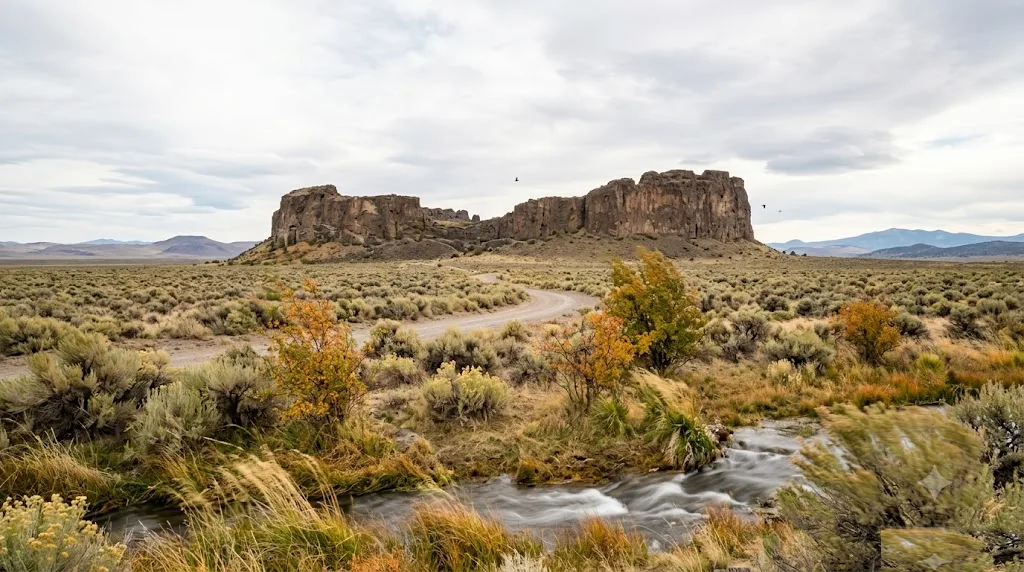
Our Fort Rock State Natural Area guide covers practical planning for Fort Rock State Natural Area Oregon — best time to visit, getting there, and what to do on the ground. We've compiled the latest 2026 information to ensure your trip to this geological marvel in Oregon's high desert is seamless and unforgettable.
Why Visit Fort Rock State Natural Area
Rising like a colossal fortress from the vast, flat expanse of Oregon's high desert, Fort Rock State Natural Area Oregon is a sight that truly captures the imagination. This National Natural Landmark is not merely a striking geological formation; it's a window into deep time, a place where ancient history, both geological and human, converges. We find ourselves drawn to its unique beauty, a monumental tuff ring that tells a dramatic story of volcanic eruptions beneath a prehistoric lake. Imagine this arid landscape once submerged, with waves lapping against the nascent volcanic island that would eventually become the crescent-shaped rock walls we see today.
Beyond its impressive visual appeal, Fort Rock holds immense archaeological significance. Nearby Fort Rock Cave, a National Historic Landmark, is where some of the oldest known American Indian footwear – sagebrush sandals dating back 9,350 to 10,500 years – were discovered. This tangible link to early human inhabitants makes a visit here more than just a scenic outing; it's a journey through millennia. Our team believes that experiencing Fort Rock is essential for anyone seeking to understand the raw, untamed beauty and profound history of the Pacific Northwest's high desert. It offers a stark contrast to Oregon's more verdant, coastal, or mountainous regions, providing a truly diverse travel experience across the state. For more incredible Oregon destinations, be sure to explore our guide to Best places in Oregon.
Who It's Best For
Fort Rock State Natural Area is an ideal destination for a diverse range of travelers, but it particularly resonates with those who appreciate natural history, geology, and a sense of quiet solitude. Our team highly recommends it for:
- **Geology Enthusiasts:** If you're fascinated by volcanic activity and the forces that shape our planet, the tuff ring's formation from an eruption under a prehistoric lake is a captivating study. The layers of sediment in the rock walls are remarkably visible, offering a tangible lesson in earth science.
- **History Buffs & Archaeologists:** The proximity to Fort Rock Cave and the discovery of ancient sagebrush sandals make this a pilgrimage site for those interested in early human migration and Native American history.
- **Hikers & Outdoor Adventurers:** With an easy 1.1-mile loop trail around the interior of the tuff ring, it's accessible for most fitness levels, offering intimate views of the towering walls. It's a fantastic spot for a unique desert hike, especially when combined with nearby geological wonders like Crack-in-the-Ground.
- **Photographers:** The dramatic rock formations, expansive high desert landscapes, and incredible dark skies for stargazing provide endless opportunities for stunning imagery, particularly during sunrise or sunset.
- **Families with Curious Kids:** While the main hike is easy, the sheer scale of Fort Rock and the stories of ancient lakes and early humans can spark wonder and curiosity in children. The picnic area and restrooms make it a comfortable stop.
- **Birdwatchers:** Raptors, including eagles and falcons, nest in the cliffs, offering opportunities for wildlife viewing.
- **Those Seeking Tranquility:** Compared to more crowded Oregon attractions, Fort Rock offers a peaceful, off-the-beaten-path experience where you're likely to encounter more lizards and birds than other people.
If you're looking for a destination that combines breathtaking natural beauty with a profound sense of history, Fort Rock State Natural Area is an exceptional choice.
Getting There & Parking
Reaching Fort Rock State Natural Area requires a bit of a drive into Oregon's high desert, but the journey itself is part of the adventure, showcasing the state's diverse landscapes. Our team emphasizes that while the area is remote, the roads are generally well-maintained, making how to get to Fort Rock State Natural Area straightforward for most vehicles.
Driving Directions:
- From Bend: The drive takes approximately one hour. Take Highway 97 South from Bend, then turn left onto OR-31 S. Follow OR-31 S for about 30 miles, then turn left onto County Road 5-10. Continue for 6.4 miles, then turn left onto Cabin Lake Road once you reach the small town of Fort Rock. After one mile, turn left onto County Road 5-11A. Fort Rock will be on your right after another mile.
- From Portland: Expect a drive of about 4.5 hours. We recommend planning this as part of a larger Central Oregon itinerary.
- From the South (Klamath Falls area): Head north on Highway 97 for about 47 miles until you reach Silver Lake Road. Turn right (east) towards Silver Lake. After 50 miles, turn left onto Highway 31 towards La Pine. You'll encounter Fort Rock Road after 17 miles on your right. Once on Fort Rock Road, continue for 6 miles towards the town of Fort Rock.
Parking at Fort Rock State Natural Area:
One of the best aspects of visiting Fort Rock State Natural Area is the ease of access. As of 2026, it is free to visit, and you do not need a pass to park your vehicle. There is a main parking lot located on the southeast side of the fort, adjacent to restrooms and picnic tables. The parking area is generally spacious, and accessible parking is available. While there's a small turnaround point for larger vehicles like camper trailers, there are no designated large vehicle parking spots. We always recommend arriving earlier in the day, especially during peak seasons, to ensure ample space and a peaceful start to your exploration. For those wondering how to get to Fort Rock State Natural Area, rest assured the journey is well-marked once you get closer to the town of Fort Rock.
Top Things to Do
Fort Rock State Natural Area offers a unique array of activities that allow visitors to fully immerse themselves in its geological grandeur and rich history. Our team has explored the area extensively, and we confidently recommend the following things to do at Fort Rock State Natural Area:
Hike the Fort Rock Loop Trail
The primary and most rewarding activity here is hiking the Fort Rock Loop Trail. This easy 1.1-mile loop winds around the interior of the massive tuff ring, bringing you up close to its towering, honeycombed cliffs. As you walk, you'll gain a profound sense of the structure's massive scale that photos simply can't convey. The trail is relatively flat with an elevation gain of about 100-190 feet, making it suitable for most visitors. Expect to spend about an hour and a half exploring the loop and taking in the views. While some smaller scramble trails might lead up the rock, certain areas are seasonally closed from February through August to protect nesting raptors, so always observe posted signs.
Explore the Fort Rock Cave (Guided Tours Only)
A short distance from the natural area is Fort Rock Cave, a National Historic Landmark famous for the discovery of ancient sagebrush sandals. This site is only accessible via guided tours offered by Oregon State Parks, and reservations are required. Tours typically last about two hours and cost $20. Securing a reservation can be challenging as tours are limited, primarily in spring and summer, so plan well in advance by checking the Oregon State Parks website or calling LaPine State Park. Dogs are not permitted on cave tours.
Visit the Fort Rock Valley Historical Homestead Museum
Just two miles south of the Fort Rock formation, the Fort Rock Valley Historical Homestead Museum offers a fascinating glimpse into pioneer life in the early 20th century. This "composite ghost town" features over a dozen original buildings from the region, carefully moved and restored to create an authentic village setting. Our team highly recommends a stroll through this open-air museum to appreciate the resilience of early settlers in this harsh high desert environment. You'll see furnished homes, a general store, a schoolhouse, and a church, all painting a vivid picture of a bygone era.
Stargazing
Fort Rock's remote location in the Oregon Outback makes it an exceptional spot for stargazing. The area lies just north of the newly designated Oregon Outback Dark Sky Sanctuary, which boasts some of the best stargazing in the world. The park is open from 8 AM to 9 PM for day-use, but you can stay up to two hours after closing with a free stargazing permit from Oregon State Parks. We encourage you to print, complete, and display the permit on your vehicle's dash if you plan to enjoy the celestial wonders after hours.
Discover Nearby Geological Wonders
For those seeking more unique things to do in Fort Rock's vicinity, the surrounding high desert is dotted with other intriguing volcanic formations:
- **Crack-in-the-Ground:** Located about 37 miles east, this ancient volcanic fissure stretches over two miles long and up to 70 feet deep. A two-mile trail along its bottom offers a unique hiking experience where temperatures can be significantly cooler than the surface.
- **Hole-in-the-Ground:** Approximately seven miles from Fort Rock, this large maar (a low-standing volcano formed by an explosion of hot lava and groundwater) offers paths descending into its crater.
These additional sites make a day trip to Fort Rock State Natural Area even more enriching. When considering things to do at Fort Rock State Natural Area, remember to factor in the remote nature of the region and plan accordingly for water and sun protection.
Best Time to Visit
Choosing the best time to visit Fort Rock State Natural Area can significantly enhance your experience. Our team generally recommends the shoulder seasons for optimal conditions.
- Spring (April to early June): This is arguably the best time to visit. Temperatures are typically mild and pleasant, making hiking comfortable. The high desert comes alive with wildflowers, with peak blooms usually occurring from early May through the end of June, sometimes extending from mid-April to mid-July. You'll also find fewer crowds than in the peak summer months.
- Fall (September to October): Similar to spring, fall offers cooler, more moderate temperatures, which are ideal for exploring the natural area. The desert light can be particularly beautiful during this time, creating stunning photographic opportunities.
- Summer (July to August): While Fort Rock is open year-round, summer can be very hot, with intense sun and no shade on the trails. If you visit during summer, we strongly advise starting your activities early in the morning or later in the afternoon to avoid the midday heat. Bring plenty of water and wear sunscreen. Also, be aware that some areas of the park are closed from February through August to protect nesting raptors, and seasonal drone use is prohibited from February 15 to August 31. An Open Flame Ban is also in effect from May 12, 2026, to September 30, 2026, though propane grills may be allowed with park manager approval.
- Winter (November to March): Fort Rock remains accessible in winter, and while snow can occur, it's generally less severe than in the Cascade mountains, making it a year-round destination. Winter offers a stark, quiet beauty, and can be excellent for solitude. However, temperatures can be extremely cold.
Ultimately, the best time to visit Fort Rock State Natural Area depends on your priorities, but for comfortable hiking and potential wildflower viewing, spring and fall are our top recommendations. For those interested in stargazing, any clear night outside of nesting season (Feb 15 - Aug 31 for drones, Feb - Aug for raptor closures) can be spectacular.
Where to Stay Nearby
While Fort Rock State Natural Area itself is a day-use park, finding suitable Fort Rock State Natural Area lodging nearby is essential for a multi-day exploration of the high desert. The immediate vicinity of Fort Rock is remote, meaning accommodation options are limited, but several choices cater to different preferences.
Camping and RV Parks
- Coyote Ridge Campground: Located on the edge of the Oregon Outback with views of Fort Rock, this campground is about an hour's drive from Bend. It offers a variety of sites, including full hookups, partial hookups, and dry camping, along with showers, bathrooms, and an onsite camp store. It's an excellent basecamp for hiking and exploring the desert.
- Dispersed Camping: For the adventurous, the vast Bureau of Land Management (BLM) lands surrounding Fort Rock offer opportunities for dispersed camping. Always follow Leave No Trace principles and check current fire restrictions before setting up camp.
Hotels and Motels
The small town of Fort Rock itself has very limited lodging, typically consisting of a few basic options. For a wider selection of hotels, we recommend looking at larger towns within a reasonable driving distance:
- La Pine: Approximately 45 minutes to an hour northwest of Fort Rock, La Pine offers a few chain hotels and motels, providing a comfortable and convenient base.
- Sunriver: About an hour's drive from Fort Rock, Sunriver is a popular resort community with a range of upscale lodging options, including Sunriver Resort, vacation rentals, and various hotels. This area provides more amenities, dining, and other recreational activities.
- Bend: As a major city in Central Oregon, Bend is about an hour and fifteen minutes to an hour and a half drive north of Fort Rock. Here, you'll find the widest array of Fort Rock State Natural Area lodging, from luxury resorts to boutique hotels, vacation rentals, and budget-friendly motels. Bend also serves as a hub for exploring other Central Oregon attractions like Crater Lake National Park (though Crater Lake is further south, Bend is a good central point for other regional activities), and the Columbia River Gorge (a longer drive but often part of a broader Oregon itinerary).
Vacation Rentals
For those preferring more space and amenities, vacation rentals are available in the Fort Rock area, as well as in nearby Silver Lake, Christmas Valley, and the larger communities of La Pine and Sunriver. Websites like Expedia list various private homes, apartments, and cabins that can be a great option for families or groups. When searching for Fort Rock State Natural Area lodging, consider what level of amenities and proximity to other attractions you desire.
Our team advises booking your accommodation well in advance, especially if you plan to visit during peak spring or fall seasons, or if you're targeting a specific event or holiday.
Sample 2-Day Itinerary
To fully experience the unique charm and geological wonders of Fort Rock State Natural Area and its surroundings, our team recommends a two-day itinerary. This allows for a deeper exploration without feeling rushed.
Day 1: Fort Rock's Ancient Heart
- Morning (8:00 AM - 12:00 PM): Arrival & Fort Rock State Natural Area Exploration
Begin your day by driving directly to Fort Rock State Natural Area. We suggest arriving early to enjoy the cooler temperatures and softer light for photography. Start with the easy 1.1-mile Fort Rock Loop Trail, which takes you into the heart of the tuff ring. Take your time to marvel at the towering rock walls, imagine the ancient lake that once surrounded it, and look for nesting raptors (remembering to keep a respectful distance from closed areas).
- Lunch (12:00 PM - 1:00 PM): Picnic at the Park
Utilize the picnic tables available near the parking lot for a packed lunch. This is a great opportunity to relax and take in the unique high desert scenery.
- Afternoon (1:00 PM - 3:00 PM): Step Back in Time at the Homestead Museum
Drive two miles south to the Fort Rock Valley Historical Homestead Museum. Spend a couple of hours exploring this fascinating "ghost town" of preserved early 20th-century buildings. It offers a tangible connection to the pioneers who settled this rugged land.
- Late Afternoon (3:00 PM - 5:00 PM): Fort Rock Cave Tour (if pre-booked)
If you were fortunate enough to secure reservations, head to the meeting point for your guided tour of Fort Rock Cave. This two-hour experience delves into the archaeological significance of the site and the discovery of the ancient sagebrush sandals.
- Evening: Dinner & Stargazing
Enjoy dinner at one of the limited local eateries in the town of Fort Rock or prepare a meal at your campsite/lodging. As night falls, return to Fort Rock State Natural Area for an unparalleled stargazing experience. Remember to obtain a free stargazing permit from Oregon State Parks if you plan to stay past 9 PM.
Day 2: High Desert Wonders & Departure
- Morning (9:00 AM - 1:00 PM): Explore Crack-in-the-Ground
After breakfast, embark on a scenic drive about 37 miles east to Crack-in-the-Ground. This impressive volcanic fissure offers a unique two-mile hiking trail along its cool, deep bottom. Allow ample time to explore this geological marvel, which feels like stepping into another world.
- Lunch (1:00 PM - 2:00 PM): On-the-Go or Return to Fort Rock Town
Pack a picnic to enjoy at Crack-in-the-Ground, or head back towards the town of Fort Rock for a simple meal.
- Afternoon (2:00 PM - 4:00 PM): Hole-in-the-Ground or Local Exploration
Depending on your interest and time, visit Hole-in-the-Ground, another nearby maar volcano, located about seven miles from Fort Rock. Alternatively, spend more time exploring the small community of Fort Rock, perhaps visiting a local shop or simply enjoying the quiet desert atmosphere.
- Late Afternoon: Departure
Begin your journey home or continue your Oregon adventure. If heading north, consider a stop in La Pine or Sunriver for additional amenities or a different scenic route.
This itinerary for Fort Rock State Natural Area Oregon balances historical insights with geological exploration, providing a comprehensive and memorable high desert experience.
Is It Worth Visiting?
Our team unequivocally believes that Fort Rock State Natural Area is worth visiting, especially for travelers seeking an authentic and distinctive Oregon experience away from the more frequented tourist paths. While it may not boast the dramatic waterfalls of the Columbia River Gorge or the iconic blue waters of Crater Lake National Park, Fort Rock offers a profound sense of place and history that is truly unparalleled.
The sheer geological spectacle of the tuff ring, rising abruptly from the flat high desert, is a powerful visual statement. It’s a testament to ancient volcanic forces and a reminder of Oregon’s diverse landscapes. For those who appreciate natural wonders, the opportunity to walk inside this ancient volcanic structure is a unique and humbling experience. Furthermore, the rich archaeological history, highlighted by the Fort Rock Cave and its 9,000-year-old sandals, adds a layer of cultural significance that enriches any visit. It’s a chance to connect with the earliest human inhabitants of North America. The peaceful solitude, abundant wildlife, and exceptional stargazing opportunities further solidify our recommendation. If you’re willing to venture off the main highways and embrace the quiet beauty of the high desert, then Fort Rock State Natural Area is absolutely worth visiting. It’s a destination that leaves a lasting impression, offering both natural grandeur and a deep dive into the past.
Fort Rock State Natural Area with kids
Fort Rock State Natural Area can be a great destination for families with kids, especially those who enjoy outdoor exploration and learning about history. The main Fort Rock Loop Trail is an easy, mostly flat 1.1-mile walk that's manageable for children of various ages. Kids will likely be fascinated by the towering rock walls and the idea of walking inside an ancient volcano. The picnic area and restrooms are convenient for families. While the Fort Rock Cave tours require reservations and might be better suited for older, more patient children due to the two-hour duration and uneven terrain, the Fort Rock Valley Historical Homestead Museum is a fantastic, interactive experience for all ages, allowing kids to imagine pioneer life. Remember to bring plenty of water, snacks, sunscreen, and hats, as there is no shade on the main trail.
best hotels near Fort Rock State Natural Area
For the best hotels near Fort Rock State Natural Area, we recommend looking at the towns of La Pine, Sunriver, or Bend. The immediate Fort Rock area has very limited options. La Pine, about 45 minutes to an hour away, offers a few standard hotels and motels. Sunriver, roughly an hour's drive, provides more upscale resort-style lodging and vacation rentals. Bend, about an hour and fifteen minutes away, has the widest selection of accommodations, from luxury to budget-friendly, along with numerous dining and entertainment choices. Booking in advance is always advised, especially during peak seasons.
Fort Rock State Natural Area tips
Our top tips for visiting Fort Rock State Natural Area include: 1. **Go in Spring or Fall:** These seasons offer the most comfortable temperatures for hiking and exploring. 2. **Bring Water & Sun Protection:** There is no shade on the trails, so carry ample water, wear sunscreen, and a hat. 3. **Check for Closures:** Small areas and rock scrambling are seasonally closed from February to August to protect nesting raptors; always obey signs. Drone use is also prohibited during raptor nesting season (Feb 15 – Aug 31). 4. **Consider Fort Rock Cave Tours:** If interested, book well in advance through Oregon State Parks, as reservations are limited. 5. **Explore Nearby Attractions:** Don't miss the Fort Rock Valley Historical Homestead Museum and other geological sites like Crack-in-the-Ground. 6. **Stargazing:** Obtain a free stargazing permit from Oregon State Parks if you plan to stay after hours to enjoy the dark skies.
where to stay near Fort Rock State Natural Area
When considering where to stay near Fort Rock State Natural Area, your best options are a combination of camping and hotels in nearby towns. Coyote Ridge Campground offers sites with hookups and amenities, located with views of Fort Rock. For hotels, look to La Pine (approximately 45-60 minutes away) for basic accommodations, or Sunriver (about an hour away) and Bend (about 1 hour 15 minutes to 1 hour 30 minutes away) for a wider range of hotels, resorts, and vacation rentals. Vacation rentals can also be found in the general Fort Rock area, offering more private lodging.
Fort Rock State Natural Area parking
Parking at Fort Rock State Natural Area is free and does not require a permit as of 2026. There is a main parking lot located on the southeast side of the fort, which also provides access to restrooms and picnic tables. Accessible parking spaces are available. While the parking area is generally sufficient, we recommend arriving earlier during peak seasons to ensure a spot and a more peaceful experience.
best time to visit Fort Rock State Natural Area
The best time to visit Fort Rock State Natural Area is during the spring (April to early June) or fall (September to October). These seasons offer milder temperatures, making hiking and outdoor activities much more comfortable. Spring also brings the possibility of seeing wildflowers in bloom. While open year-round, summer can be very hot with no shade, and winter can be quite cold, though both offer unique experiences for those prepared for the conditions.
Last updated: 2026-07-08 by the Roam States team.