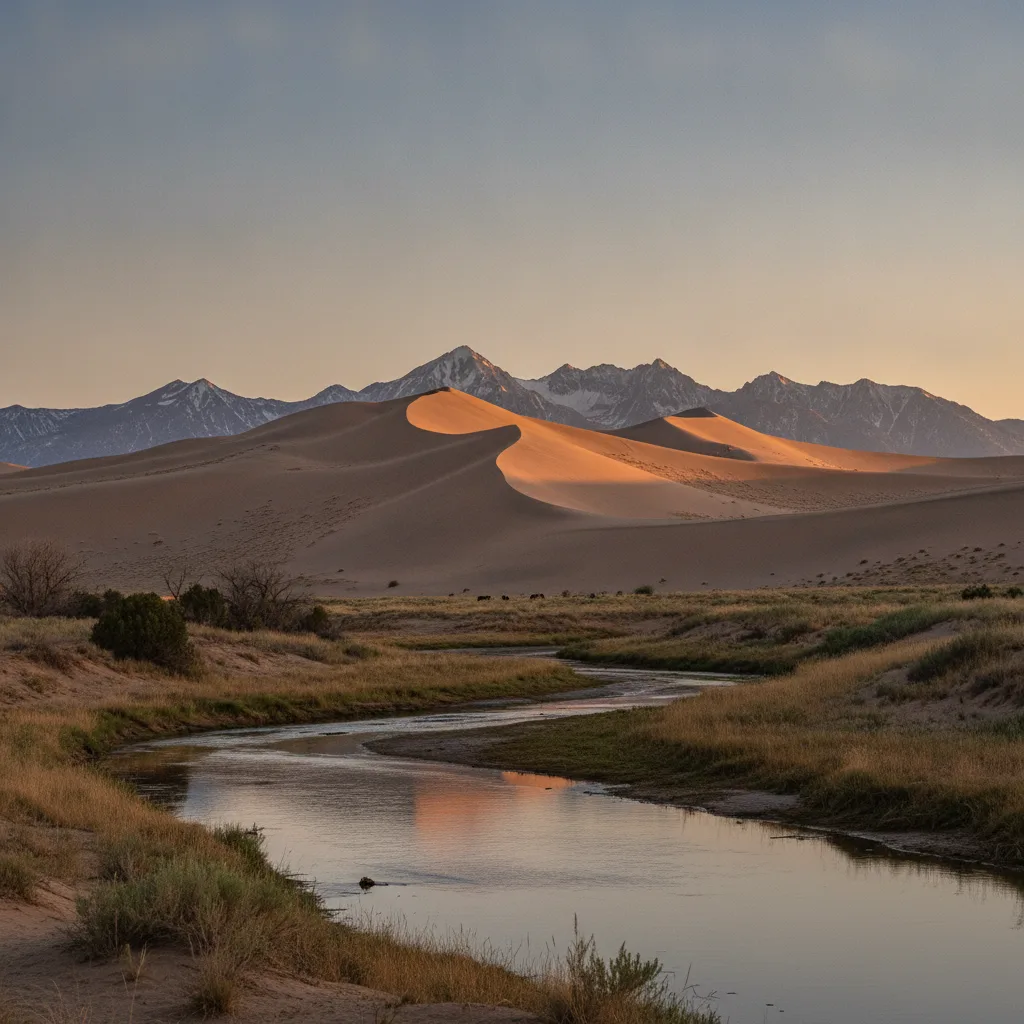
Great Sand Dunes Travel Guide — Colorado
As the Visit America editorial team, we’re here to tell you that few places in the United States captivate the imagination quite like Great Sand Dunes Colorado. This isn't just another national park; it's a geological marvel, a high-desert anomaly where North America's tallest dunes rise dramatically against the snow-capped Sangre de Cristo Mountains. Our guide cuts through the generic travel fluff to give you the specific, actionable advice you need for an unforgettable adventure in this truly unique corner of the Centennial State. We've compiled the latest 2026 facts on everything from fees and hours to parking and reservations, ensuring your trip planning is as smooth as the dunes themselves.
Why Visit Great Sand Dunes
Imagine a landscape so surreal it feels like stepping onto another planet, yet it's right here in Colorado. That's the allure of Great Sand Dunes National Park & Preserve. We believe the primary draw is the sheer scale and dynamic nature of the dunefield. These aren't static mounds; they're living, shifting giants, constantly sculpted by wind and water, offering a playground unlike any other. Beyond the dunes, the park encompasses diverse ecosystems, from alpine tundras to wetlands, making it a microcosm of Colorado's incredible natural beauty. It's also an International Dark Sky Park, promising unparalleled stargazing opportunities on clear, moonless nights.
For us, the experience goes beyond just admiring the scenery. It's about active engagement: scrambling up a 750-foot dune, sledding down its face, or wading in the seasonal Medano Creek at its base. The juxtaposition of desert dunes with a flowing creek and towering mountains is a spectacle that photographs can barely capture. It’s a place that demands to be experienced firsthand, offering both exhilarating adventure and profound solitude. Whether you're seeking a unique outdoor challenge or a peaceful encounter with nature, Great Sand Dunes Colorado delivers on all fronts.
Who It's Best For
Great Sand Dunes National Park & Preserve is a destination with broad appeal, but it particularly shines for certain types of travelers. Our team finds it ideal for:
- Adventure Seekers: If you thrive on unique outdoor activities, this is your spot. Sandboarding and sand sledding offer a thrill unlike any other, and the challenge of hiking up the steep dunes is a rewarding workout.
- Families with Children: The dunes provide an immense natural playground. Kids (and adults!) love sliding down the sandy slopes, and when Medano Creek is flowing, it transforms into a natural beach, perfect for splashing and wading. Ranger programs, especially Junior Ranger Day, also offer engaging educational experiences for younger visitors.
- Photographers: From the dramatic light and shadows at sunrise and sunset to the stark contrast of sand against mountains, the photographic opportunities are endless. The clear night skies also make it a prime location for astrophotography.
- Nature Lovers & Stargazers: Beyond the dunes, the park's diverse ecosystems support unique flora and fauna. As an International Dark Sky Park, it offers some of the best stargazing in the country, with the Milky Way often visible to the naked eye.
- Those Seeking Solitude: While the main parking and creek areas can get busy, especially on weekends, the vastness of the dunefield and the park's backcountry offer plenty of opportunities for quiet contemplation and a true wilderness experience.
However, it might be less suitable for those with significant mobility issues, as exploring the dunes involves walking on soft, uneven sand, which can be challenging. Also, if you’re looking for extensive paved trails or traditional mountain hiking with clear paths, this park offers a different kind of terrain to navigate.
How to Get There & Parking
Reaching Great Sand Dunes Colorado requires a bit of driving, as it’s nestled in the remote San Luis Valley. However, the journey itself is part of the adventure, offering stunning views of the Colorado landscape. We recommend planning your route carefully, as the park is a few hours from major Colorado cities.
Driving Directions to Great Sand Dunes
- From the North (e.g., Denver, Colorado Springs): Take I-25 South to Walsenburg, then head west on US-160. Turn north onto CO-150, which leads directly to the park entrance.
- From the South (e.g., Santa Fe, Albuquerque): Take US-285 North into Colorado, then turn east onto US-160. Continue to CO-150 North, which will take you to the park.
- From the West (e.g., Durango, Mesa Verde National Park): Take US-160 East. After passing Alamosa, turn north onto CO-150.
The main park area, including the Dunes Parking Lot, Visitor Center, and Piñon Flats Campground, is accessed via CO-150. These roads are paved. Be aware that much of the surrounding area, especially the Medano Pass Primitive Road, requires a high-clearance, four-wheel-drive vehicle. Two-wheel drive and all-wheel drive vehicles are prohibited on the Medano Pass Primitive Road due to challenging creek crossings and narrow sections.
Parking at Great Sand Dunes
Parking is available at several key locations within the park. The primary access point for the dunes is the **Dunes Parking Lot**, which also offers restrooms and showers. This area can become very crowded, especially on weekends in late May and early June, with traffic lines potentially reaching up to three miles long and parking lots overflowing. We advise arriving early in the morning or later in the evening to secure a spot and avoid peak crowds.
Overnight parking (excluding registered campers in Piñon Flats Campground) is permitted only in specific locations, provided you have obtained a Backcountry Use Permit and an associated trailhead parking pass. These designated overnight parking areas include the Amphitheater Parking Lot, Horse Trailer Parking Lot, Dunes Parking Lot, Dunes Overlook Trailhead, Point of No Return Trailhead, Montville Trailhead, Sand Ramp Trailhead, Sand Pit Picnic Area, and Castle Creek. When parking lots are full, visitors often park along roadways; however, ensure all four tires are outside the white line to allow safe passage for other vehicles, including emergency services.
For those utilizing the Piñon Flats Campground, dedicated parking spaces are available for each campsite. If you have an RV or trailer, you can also park it at the campground and explore the rest of the park on foot.
Top Things to Do
When you visit Great Sand Dunes Colorado, you'll discover a wealth of activities that go far beyond simply admiring the view. Our team has identified the absolute top things to do at Great Sand Dunes, ensuring you make the most of your time in this extraordinary national park.
Sandboarding and Sand Sledding
This is arguably the signature activity at Great Sand Dunes. Sliding down the towering dunes on a sandboard or sand sled is an exhilarating experience for all ages. We emphasize that standard snow sleds, cardboard, or plastic saucers will not work on the dry sand; you need specially designed equipment with slick bases and wax.
You cannot rent sand sleds or sandboards inside the park. Plan to rent your gear before arriving. Several retailers in the San Luis Valley offer rentals:
- **Great Dunes Oasis Store:** Located just four miles from the Visitor Center near the park entrance, it's open from spring through early fall. They will not rent sleds when the sand is wet to protect the equipment.
- **Kristi Mountain Sports in Alamosa:** Approximately 36 miles from the park, they rent sandboards and sand sleds year-round. We appreciate their flexible return options, allowing for overnight rentals to catch early morning or late evening dune experiences. It's advisable to call ahead to reserve equipment, especially from May through September.
- **Spin Drift Sandboards in Blanca:** Located about 25 miles southeast of the Visitor Center, they rent equipment from spring through early fall.
- **Sand Dunes Recreation near Hooper:** About 32 miles west of the Visitor Center, this location rents sandboards and sand sleds year-round.
You can sandboard or sled anywhere on the dunes, provided you stay away from vegetation. Remember to wear closed-toed shoes, as sand temperatures can reach extreme levels during the day, causing burns.
Wading in Medano Creek
The seasonal Medano Creek, which flows at the base of the dunes, is a unique phenomenon. Fed by snowmelt from the Sangre de Cristo Mountains, it typically appears in spring, creating a wide, shallow "beach" at the edge of the dunefield. However, for 2026, due to near-record low snowpack, creek flows are minimal and are unlikely to reach the main Dunes Parking Lot area. As of May 15, 2026, the creek had not made it to the parking lot. Park officials stated it's unlikely to reach its typical area this year. If you still wish to wade, you may need to hike about a half-mile to the Sand Pit and Castle Creek Picnic areas, or access these areas with a high-clearance 4x4 vehicle via the Medano Pass Primitive Road. Non-4x4 vehicles can park at the Horse Trailer Parking at the beginning of Medano Pass Road and hike one mile upstream to reach water. Even with low water, the area around the creek bed remains a popular spot, so expect crowds on weekends.
Hiking the Dunes
Unlike most national parks, there are no marked trails on the dunefield itself; you create your own path. The most popular objective is **High Dune**, offering panoramic views of the entire dunefield and surrounding mountains. Reaching the top is challenging, as each step up is often followed by a slide back down, but the reward is immense. For a more extended adventure, consider backpacking into the **Dunes Backcountry** (more on that in the camping section).
Stargazing
As an International Dark Sky Park, Great Sand Dunes offers spectacular opportunities for stargazing. We highly recommend staying after sunset to witness the Milky Way stretch across the night sky. Ranger programs often include evening astronomy talks and dark sky viewing sessions, especially in summer and fall. The park is open 24 hours a day, 7 days a week, year-round, allowing for late-night sky observation.
Exploring Medano Pass Primitive Road
For those with a high-clearance, four-wheel-drive vehicle (with a low-range 4L transfer case setting), the 12-mile Medano Pass Primitive Road offers an adventurous drive through varied terrain, including several creek crossings. This road leads to trailheads for alpine hikes and primitive campsites in the Great Sand Dunes National Preserve. Be aware that two-wheel-drive and all-wheel-drive vehicles are prohibited due to the challenging conditions. The road is typically open from late spring through fall, depending on conditions.
Ranger Programs
One of the best ways to deepen your understanding of the park is through free ranger-led programs. These programs offer insights into the unique geology, ecology, and cultural history of Great Sand Dunes and are primarily offered in summer and fall. They take place at the visitor center, amphitheater, and occasionally at trailheads. Check the park's calendar for schedules and locations during your visit.
Great Sand Dunes Hiking Trails
While the dunefield itself is a choose-your-own-adventure for hikers, the Great Sand Dunes National Park & Preserve also offers a variety of established Great Sand Dunes hiking trails that explore its diverse ecosystems, from forested mountainsides to wetlands. Our team loves the contrast these trails provide to the open expanse of the dunes.
Dune Hiking (Off-Trail)
The most iconic "hiking" experience is traversing the dunefield. There are no marked Great Sand Dunes hiking trails here, allowing you the freedom to explore. The most popular objective is **High Dune**, which, at 699 feet from its base, is a challenging climb. The round trip can take 2-4 hours, depending on your fitness and how often you stop to admire the views. Another popular, though more strenuous, goal is **Star Dune**, the tallest dune in North America, rising 750 feet from its base. Reaching Star Dune is an all-day commitment, often involving hiking over several ridges. We recommend starting early to avoid the heat, carrying plenty of water, and wearing closed-toed shoes to protect against hot sand.
Montville Nature Trail
Located near the campground, this easy 0.5-mile loop trail offers a pleasant walk through a piñon-juniper forest, providing shade and a different perspective of the park's ecology. It's a great option for families or those seeking a less strenuous walk. The trail offers interpretive signs about the local flora and fauna, and occasionally, ranger-led programs are held here.
Medano Lake Trail & Little Medano Trail
These trails are accessed via the Medano Pass Primitive Road, requiring a high-clearance 4WD vehicle to reach the trailheads. The **Medano Lake Trail** is a strenuous 8-mile roundtrip hike that climbs into the Sangre de Cristo Mountains, leading to a beautiful alpine lake. The **Little Medano Trail** is a shorter, moderate hike that also offers mountain scenery.
Sand Ramp Trail
This 11-mile (one-way) trail runs along the eastern edge of the dunefield, connecting the main visitor area to various backcountry campsites and offering access to the more remote parts of the dunes. It provides a different perspective of the dunes, often with views of the Sangre de Cristo Mountains. Backpacking permits are required for overnight stays at the designated campsites along this trail.
When planning your Great Sand Dunes hiking trails adventure, always check the weather forecast. High winds can make dune hiking unpleasant, and thunderstorms, particularly lightning, pose a significant danger on the exposed dunefield.
Is It Worth Visiting?
The question "is Great Sand Dunes worth visiting?" is one we get often, and our answer is an unequivocal yes. This national park offers an experience that is truly unlike any other in the United States, blending the stark beauty of a desert with the majesty of towering mountains and unique hydrological features.
What makes Great Sand Dunes worth visiting is its extraordinary geological phenomenon: the tallest sand dunes in North America, rising dramatically against the backdrop of the Sangre de Cristo Mountains. This creates a landscape of unparalleled photographic opportunities and a sense of wonder that stays with you long after you leave. The ability to actively engage with this landscape—sandboarding, sledding, or simply hiking up the shifting slopes—provides a hands-on adventure that many other national parks don't offer.
Beyond the dunes, the park's diverse ecosystems, from wetlands to alpine forests, contribute to its unique character. It's a place where you can witness incredible biodiversity and experience profound solitude, especially if you venture beyond the main day-use areas. The designation as an International Dark Sky Park further solidifies its value, offering some of the most spectacular stargazing opportunities available.
While some might question if Great Sand Dunes is worth visiting if Medano Creek isn't flowing at its peak, we assure you that the dunes themselves offer more than enough to fill your time. The creek is an added bonus, but the core experience of the massive dunefield, the mountain views, and the unique activities remain compelling. Even in 2026, with minimal creek flows at the main parking area, the park is expected to be busy, a testament to its enduring appeal. We believe that for those seeking adventure, natural beauty, and a truly distinctive national park experience, Great Sand Dunes is absolutely worth visiting.
Best Time to Visit
Choosing the best time to visit Great Sand Dunes Colorado significantly impacts your experience, as conditions vary dramatically throughout the year. Our team has a clear recommendation based on the activities you prioritize.
Spring (April-May)
We consider late spring (late April to early June) to be one of the best times to visit. This is typically when Medano Creek is flowing at its peak, fed by snowmelt from the Sangre de Cristo Mountains, creating a natural beach for wading and playing. However, for 2026, due to near-record low snowpack, the creek flows are minimal and unlikely to reach the main Dunes Parking Lot area. Visitors will need to hike or use a 4x4 vehicle to access water further upstream. Daytime temperatures are pleasant for dune activities, but the sand can still get hot, so closed-toed shoes are essential. Nights are cool, perfect for stargazing. Expect crowds, especially on weekends and holidays.
Summer (June-August)
Summer offers warm to hot days, with sand temperatures potentially reaching scorching levels by midday (up to 150°F / 65°C). We strongly advise early morning or late afternoon visits to the dunes during these months. Thunderstorms are common in the afternoons, bringing lightning which makes the exposed dunefield dangerous. Despite the heat, summer is popular for stargazing and ranger programs. If you visit in July 2026, note that Aphelion (when Earth is farthest from the sun) occurs on July 6th, which is an interesting astronomical tidbit, though it won't significantly alter your experience.
Fall (September-October)
Fall is another excellent time to visit. Temperatures are cooler and more comfortable for hiking, and the crowds begin to thin. The cottonwood trees along Medano Creek and in the surrounding areas display beautiful fall foliage. The night skies remain incredibly clear, offering superb stargazing opportunities. Medano Pass Primitive Road is usually still open, allowing for 4WD adventures and access to mountain hiking.
Winter (November-March)
Winter offers a unique, serene experience with snow often dusting the dunes, creating stunning photographic contrasts. Temperatures are cold, and strong winds can occur. While sand activities are still possible, you might need snow sleds if the sand is wet or frozen. The park is open 24/7, but the visitor center has limited hours (closed Thanksgiving, Christmas, and New Year's Day). Piñon Flats Campground is closed, but backcountry camping is available for experienced winter campers. This is the time for solitude and dramatic, snowy landscapes.
Our Expert Verdict: For the classic Great Sand Dunes experience with Medano Creek and comfortable temperatures for dune activities, aim for late April to early June, but be prepared for crowds and check current creek conditions for 2026. For fewer crowds, pleasant hiking weather, and excellent stargazing, early fall (September-October) is ideal.
Where to Stay Nearby
While the Great Sand Dunes National Park & Preserve offers incredible camping opportunities, our team understands that not everyone prefers to rough it. Fortunately, there are several options for lodging and camping both within and just outside the park, as well as in the nearby town of Alamosa.
Great Sand Dunes Camping
For an immersive experience, Great Sand Dunes camping is highly recommended. The park offers both developed and backcountry options:
- Piñon Flats Campground: This is the park's main developed campground, open from April 1st through October 31st each year (closed November through March). It offers individual and group campsites with amenities like sinks, toilets, and potable water. Reservations are required and can be made online via Recreation.gov. For 2026, sites can be reserved three months in advance due to planned improvements. We strongly advise booking well in advance, especially for peak season visits.
- Dunes Backcountry Camping: For the ultimate wilderness experience, you can backpack into the dunes and camp overnight. A backcountry use permit, available online via Recreation.gov, is required for camping in the Great Sand Dunes Wilderness portion of the park. Camping is allowed only beyond the day-use area, past the first high ridgeline of dunes (a minimum 1.5-mile hike). There are 20 non-designated sites, limited to six people per permit, and permits are free but first-come, first-served for 20 parties per night. No permits are required for backpacking in the Great Sand Dunes National Preserve, which includes areas like upper Sand Creek and Medano Lake.
- Medano Pass Primitive Road Camping: This offers high-clearance 4WD vehicle-based camping at up to 21 first-come, first-served sites within the Great Sand Dunes National Preserve, when the road is open. No changes will be made to this backcountry vehicle camping; these sites remain first-come, first-served.
Remember that sleeping in vehicles or camping outside designated areas is prohibited in Great Sand Dunes National Park.
Lodging Near the Park
There are limited lodging options immediately outside the park entrance. The **Great Sand Dunes Lodge** is a popular choice, offering convenient access. However, for a wider range of accommodations, including hotels, motels, and vacation rentals, the town of **Alamosa, Colorado**, is your best bet.
Alamosa is located about 34 miles (54.7 kilometers) from the park entrance. While it requires a 30-45 minute drive each way, it provides more amenities, including restaurants, grocery stores, and various lodging types. Consider places like the Hampton Inn Alamosa, Fairfield Inn & Suites by Marriott Alamosa, or local independent hotels. Some private campgrounds and glamping sites, such as Ramble at Great Sand Dunes, are also located within a 30-minute drive of the park, offering a balance of amenities and proximity.
Sample 2-Day Itinerary
To truly experience the magic of Great Sand Dunes Colorado, our team recommends at least two full days. This allows you to explore the dunes at different times of day, venture into the surrounding ecosystems, and enjoy the unique activities without feeling rushed. Here’s a sample itinerary:
Day 1: Dune Exploration & Stargazing
- Morning (Sunrise to Mid-morning): Arrive at Great Sand Dunes National Park early, ideally just before sunrise. Head straight to the Dunes Parking Lot. Watch the sunrise paint the dunes in incredible colors, then embark on your first dune hike. We suggest aiming for **High Dune** for a challenging and rewarding climb. The sand is cooler and less crowded in the morning.
- Late Morning/Early Afternoon: After descending from the dunes, enjoy a picnic lunch at the Sand Pit Picnic Area or return to your accommodation for a break. If Medano Creek has water (check current 2026 conditions, as flows are minimal at the main parking area), head to the Horse Trailer Parking and hike upstream about a mile to find flowing water for wading.
- Afternoon: Rent sandboards or sand sleds from one of the nearby outfitters (e.g., Great Dunes Oasis Store or Kristi Mountain Sports in Alamosa). Spend the late afternoon enjoying the thrill of sliding down the dunes. This is one of the most popular things to do at Great Sand Dunes.
- Evening: Enjoy dinner. As twilight approaches, return to the dunes or a designated stargazing spot. As an International Dark Sky Park, the night sky here is phenomenal. Consider attending a ranger-led astronomy program if available.
Day 2: Mountain & Backcountry Adventure
- Morning: Start your day with an exploration of the park's diverse landscapes beyond the main dunefield. If you have a high-clearance 4WD vehicle, drive the **Medano Pass Primitive Road**. This challenging road offers scenic views, creek crossings, and access to trailheads for mountain hikes. Alternatively, if you prefer a less strenuous hike, explore the **Montville Nature Trail** near the visitor center for a walk through the piñon-juniper forest.
- Late Morning/Early Afternoon: For those on the Medano Pass Primitive Road, consider a hike on the **Medano Lake Trail** (strenuous, 8-mile roundtrip) to an alpine lake, or a shorter hike on the Little Medano Trail. If you don't have 4WD, explore the **Sand Ramp Trail** for a different perspective of the dunes and surrounding wetlands.
- Afternoon: Visit the Great Sand Dunes Visitor Center to learn more about the park's geology, ecology, and history. They have exhibits and a short film. You can also pick up a Junior Ranger booklet for kids.
- Late Afternoon/Evening: Depending on your travel plans, you can enjoy one last sunset over the dunes, or head back to Alamosa for a meal and to explore some of the local attractions, such as the Rio Grande River Walk or the San Luis Valley Museum.
FAQ
Things to do in Alamosa
Alamosa, Colorado, serves as the primary gateway to Great Sand Dunes National Park and offers a variety of attractions itself. Our team recommends exploring the **Rio Grande River Walk**, an easy footpath along the river perfect for a stroll, run, or bike ride. You can also visit the **Alamosa National Wildlife Refuge** for wildlife viewing, especially migratory birds. Other unique attractions include the **UFO Watchtower** outside Hooper, nearby hot springs like Sand Dunes Recreation Hot Springs Pool, and the **Colorado Gators Reptile Park**. The historic downtown Alamosa features local shops, breweries, and restaurants.
Great Sand Dunes with kids
Great Sand Dunes is an excellent destination for families with kids. The primary activity is **sand sledding and sandboarding**, which children absolutely love. Remember to rent specialized equipment outside the park. When Medano Creek is flowing (check 2026 conditions, as flows are minimal at the main parking area), it becomes a natural playground for splashing and wading. Kids can also participate in the **Junior Ranger program** to earn badges, and the park offers free ranger programs designed to engage younger visitors. We advise bringing plenty of water, sunscreen, hats, and closed-toed shoes to protect against hot sand.
Great Sand Dunes tips
Our top Great Sand Dunes tips for a successful visit include: 1) **Arrive early or late** to avoid crowds and the hottest sand temperatures, especially in summer. 2) **Rent sand sleds/boards before arriving** at the park, as they are not available inside. 3) **Wear closed-toed shoes** to protect your feet from hot sand. 4) **Bring plenty of water, sunscreen, and snacks**. 5) **Check Medano Creek conditions** for 2026, as flows are minimal at the main parking area. 6) **Be prepared for strong winds** and potential thunderstorms, especially in the afternoons. 7) For backcountry or Medano Pass Primitive Road access, **a high-clearance 4WD vehicle is essential**. 8) Consider staying for **stargazing**; the park is an International Dark Sky Park.
Great Sand Dunes parking
Parking at Great Sand Dunes is available at the **Dunes Parking Lot**, the main access point for the dunefield. This lot can fill up quickly, especially on busy weekends, leading to long lines and overflow parking along roadways. When parking along roadways, ensure all four tires are outside the white line for safety. Overnight parking (outside of Piñon Flats Campground) requires a backcountry use permit and an associated trailhead parking pass, and is only allowed in specific designated areas. Piñon Flats Campground also has dedicated parking for registered campers.
Best time to visit Great Sand Dunes
The best time to visit Great Sand Dunes depends on your priorities. For the classic Medano Creek experience and comfortable temperatures for dune activities, **late April to early June** is generally ideal, though for 2026, Medano Creek flows are minimal at the main parking area. **Early fall (September-October)** offers cooler temperatures, fewer crowds, and excellent stargazing. Summer (June-August) can be very hot with afternoon thunderstorms, requiring early morning or late evening dune visits. Winter (November-March) provides solitude and unique snowy landscapes but with cold temperatures and potential high winds.
Great Sand Dunes hours and fees
Great Sand Dunes National Park and Preserve is open **24 hours a day, 7 days a week, year-round**. There are no timed entries or reservations required to enter the park itself. The **Visitor Center** is open daily from 9:00 AM to 4:30 PM throughout the year, except Thanksgiving, Christmas, and New Year's Day.
The entrance fee for Great Sand Dunes National Park is **$25 per vehicle** for a 7-day pass. A 7-day motorcycle pass costs $20, and a 7-day per-person pass (for pedestrians and bicyclists) is $15. An annual Great Sand Dunes park pass is available for $45. The America the Beautiful National Parks and Federal Recreational Lands Annual Pass ($80) is also accepted and covers entrance fees. Fees are typically charged when the entrance station or visitor center is open.
From the Visit America editorial team, we hope this guide equips you with the confidence and specific details needed to plan an extraordinary trip to Great Sand Dunes Colorado. This national park is a testament to the diverse and awe-inspiring beauty of the American landscape, offering adventures and memories that will last a lifetime. Go forth and explore North America's tallest dunes!
Last updated: 2026-07-05 by the Visit America team.