John Day Fossil Beds National Monument (Painted Hills Unit) Travel Guide — Oregon
Our John Day Fossil Beds National Monument (Painted Hills Unit) guide covers practical planning for John Day Fossil Beds National Monument (Painted Hills Unit) Oregon — best time to visit, getting there, and what to do on the ground.
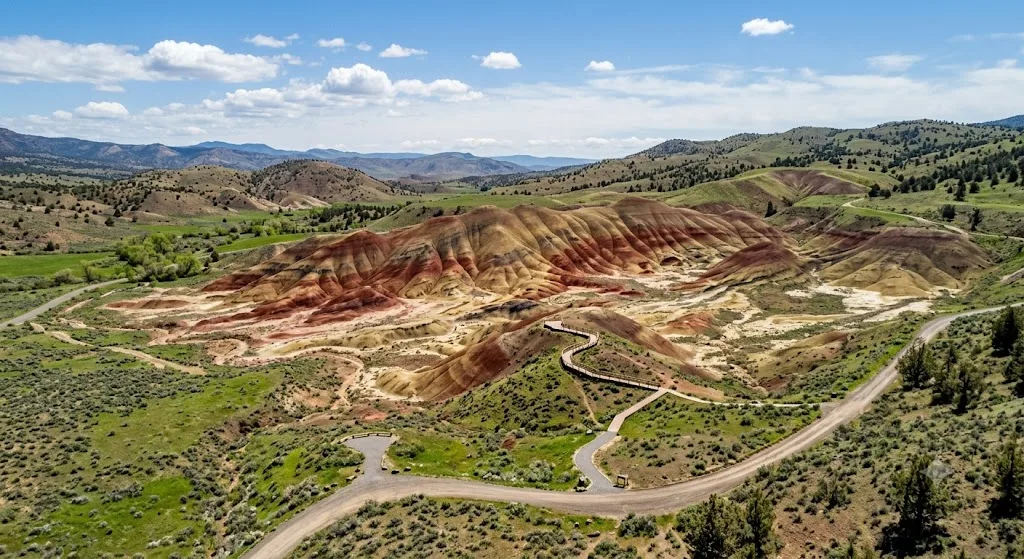
Nestled in the high desert of Central Oregon, the John Day Fossil Beds National Monument (Painted Hills Unit) Oregon is a geological marvel that transports visitors millions of years back in time. We, the Roam States editorial team, consider this unit a true gem, showcasing vibrant, stratified hills in shades of red, gold, and black, representing millions of years of geological history. It’s a place where the earth itself tells a story, etched in layers of ancient volcanic ash and soil. As one of the Seven Wonders of Oregon, the Painted Hills are an essential stop for anyone exploring the state's diverse landscapes.
Why Visit John Day Fossil Beds National Monument (Painted Hills Unit)
The primary draw to the John Day Fossil Beds National Monument (Painted Hills Unit) is, without a doubt, its breathtaking visual spectacle. The hills, with their distinct bands of color, are a photographer's dream, especially in the late afternoon light when the hues become most vivid. Beyond the aesthetic appeal, this unit offers a unique window into Earth's prehistoric past. It preserves a world-class record of plant and animal evolution, changing climates, and ancient ecosystems spanning over 40 million years.
While you won't find dinosaur fossils here, the monument is renowned for its mammal and flora fossils, providing insight into the Age of Mammals that followed the dinosaurs. The educational value is immense, with interpretive signs along the trails explaining the geological processes and fossil discoveries. It's an accessible adventure, with most trails being short and relatively easy, making it suitable for a wide range of visitors.
Who It's Best For
The John Day Fossil Beds National Monument (Painted Hills Unit) is an ideal destination for a diverse group of travelers. It's perfect for:
- Photographers: The ever-changing light and moisture levels drastically affect the tones and hues of the hills, offering endless photographic opportunities.
- Nature Lovers: Those who appreciate unique geological formations and stunning natural beauty will be captivated by the Painted Hills.
- Families with Kids: With mostly short, family-friendly hikes and opportunities to learn about geology and paleontology, it's an engaging outdoor adventure for all ages. Kids can even participate in a Junior Ranger program at the Thomas Condon Paleontology Center in the Sheep Rock Unit.
- Road Trippers: The Painted Hills are a fantastic stop on a larger Oregon road trip, easily combined with other natural wonders like the Crater Lake National Park or the Columbia River Gorge.
- Geology and Paleontology Enthusiasts: The rich fossil history and visible geological layers provide a fascinating educational experience.
Getting There & Parking
The John Day Fossil Beds National Monument (Painted Hills Unit) is located about 9 miles northwest of Mitchell, Oregon. The closest major city is Bend, approximately a two-hour drive away. From Bend, you'll take US-26 east, and then turn right at the signs for John Day Fossil Beds – Painted Hills Unit. If you're coming from Portland, expect a drive of about five hours.
To get to John Day Fossil Beds National Monument (Painted Hills Unit), you'll turn onto Burnt Ranch Road from Highway 26, then travel about six miles before turning left onto Bear Creek Road to enter the monument. The roads are paved, making for easy access. We recommend filling up your gas tank before heading out, as gas stations in this rural area can be scarce and often close overnight.
There is no entrance fee to access any of the units of John Day Fossil Beds National Monument, including the Painted Hills Unit. Parking is available at the trailheads for each of the five short hikes within the unit. The Painted Hills Overlook Trail and Carroll Rim Trail share a parking lot, while the Painted Cove Trail has its own lot further down the road. There are restrooms and picnic areas available at the entrance to the Painted Hills Unit.
It's important to note that cell service is limited or non-existent in most places around the monument, including within the units themselves, so don't rely on cellular-dependent GPS. We advise downloading maps offline before your visit.
Top Things to Do
Exploring the John Day Fossil Beds National Monument (Painted Hills Unit) primarily involves short, scenic hikes that offer incredible views of the colorful landscape. Here are the top things to do at John Day Fossil Beds National Monument (Painted Hills Unit):
- Hike the Carroll Rim Trail: This is arguably the best hike in the Painted Hills Unit, offering a panoramic, 360-degree view of the entire basin. The 1.6-mile round trip trail has a gradual elevation gain of about 400 feet, making it moderately challenging but incredibly rewarding. We recommend doing this hike in the late afternoon for the best lighting on the hills.
- Wander the Painted Cove Trail: This iconic 0.25-mile loop trail features a boardwalk that winds directly through the vibrant red and gold hills, allowing for an incredibly close-up view of the stratified colors. It's a short walk, but we encourage you to take your time to appreciate the intricate details and textures of the soil.
- Visit the Painted Hills Overlook: A short, easy 0.5-mile out-and-back trail leads to a spectacular viewpoint of the most iconic painted hills. This is a must-do for capturing those classic Painted Hills photographs.
- Explore the Red Scar Knoll Trail: Sometimes called Red Hill Trail, this 0.25-mile trail brings you close to a pyramidal-shaped red hill, showcasing deep colors and unique shapes.
- Walk the Leaf Hill Trail: This short 0.25-mile loop is the only true fossil bed within the Painted Hills Unit, featuring interpretive signs about the Bridge Creek Flora, a diverse assemblage of leaf fossils.
- Photography: The yellows, golds, blacks, and reds of the Painted Hills are beautiful at all times of the day, but are best lit for photography in the late afternoon. Changing light and moisture levels drastically affect the tones and hues visible in the hills.
Remember to stay on designated trails to protect the fragile geological formations. Collecting fossils or other natural items is strictly prohibited.
Best Time to Visit
The John Day Fossil Beds National Monument (Painted Hills Unit) is accessible year-round, and each season offers a unique experience. However, we generally recommend visiting during the spring and fall for the most comfortable temperatures and vibrant colors.
- Spring (March-May): Wildflowers often bloom in the open areas, adding another layer of color to the landscape. Temperatures are mild, making hiking enjoyable.
- Summer (June-August): While the hills are stunning, summer temperatures can be very hot, often ranging from 80-90°F during the day. We advise early morning or late afternoon visits to avoid the midday heat and to catch the best light for photography. The unit is usually most crowded on weekends towards the evening.
- Fall (September-November): Cooler temperatures and clear skies make for excellent hiking conditions. The autumn light can bring out rich, deep colors in the hills.
- Winter (December-February): Winter can blanket the hills in snow, creating a dramatic, contrasting landscape, though the vibrant hues might be concealed until the snow melts. Some roads might be affected by snow or ice, so check conditions before you go.
For the most vibrant colors in photographs, plan to be at the Painted Hills an hour or two before sunset.
Where to Stay Nearby
There is no lodging or camping allowed directly within any of the three units of John Day Fossil Beds National Monument, including the Painted Hills Unit. However, several charming towns nearby offer a range of accommodations, from hotels and motels to vacation rentals and campgrounds. We strongly recommend booking accommodations in advance, especially during peak season, as options can be limited.
For John Day Fossil Beds National Monument (Painted Hills Unit) lodging, here are our top recommendations:
- Mitchell, Oregon: Located just 9 miles from the Painted Hills, Mitchell is the most convenient town for accessing the unit. It offers a few lodging options, including the historic Oregon Hotel, the Little Pine Lodge, and vacation cottages. Mitchell also has a city park with RV hookups and camping.
- Dayville, Oregon: About 45 miles (1 hour drive) from the Painted Hills Unit, Dayville is closer to the Sheep Rock Unit but still a viable option. Here you can find the Fish House Inn and RV Park, which offers motel rooms, RV sites, and tent camping. Vacation rentals are also available in Dayville.
- Fossil, Oregon: Located about 75 miles (1.5 hours drive) from the Painted Hills Unit, Fossil is near the Clarno Unit. It offers some camping options and vacation rentals.
- Prineville, Oregon: As a larger town about 49 miles (approx. 1 hour drive) west of the Painted Hills, Prineville offers more extensive lodging and dining choices.
Many locally owned businesses in these towns may not be available on aggregate booking websites, so we suggest calling them directly for reservations.
Sample 2-Day Itinerary
To truly experience the John Day Fossil Beds National Monument (Painted Hills Unit) and its surroundings without feeling rushed, we recommend a two-day itinerary:
Day 1: Painted Hills Immersion
- Morning (Arrival & Exploration): Arrive in Mitchell, check into your accommodation, and then head directly to the John Day Fossil Beds National Monument (Painted Hills Unit). Start with the shorter trails: the Leaf Hill Trail, Red Scar Knoll Trail, and Painted Cove Trail. These will give you an intimate perspective of the colors and geology.
- Lunch: Enjoy a picnic at the shaded picnic area within the Painted Hills Unit.
- Afternoon (Panoramic Views): Hike the Carroll Rim Trail. This is where you'll get the most expansive and iconic views of the Painted Hills. Plan your ascent to be at the top about an hour or two before sunset for the best photographic light.
- Evening: Return to Mitchell for dinner at one of the local eateries like Tiger Town Brewing or Bridge Creek Cafe. Enjoy the dark skies and stargazing opportunities.
Day 2: Beyond the Painted Hills – Fossils & Scenic Drives
- Morning (Sheep Rock Unit): Drive east on Highway 26 to the Sheep Rock Unit, approximately a one-hour drive from the Painted Hills. Visit the Thomas Condon Paleontology Center, which features a working lab and extensive fossil exhibits. Explore the exhibits and learn about the region's rich paleontological history. Afterwards, take a short hike in the Blue Basin area, such as the Island in Time Trail (1.3 miles round trip) or the more challenging Blue Basin Overlook Trail (3.25 miles).
- Lunch: Grab a meal in Dayville, located near the Sheep Rock Unit.
- Afternoon (Cant Ranch & Scenic Byway): Visit the historic Cant Ranch Museum in the Sheep Rock Unit to learn about early ranch life. Consider driving a portion of the Journey Through Time Scenic Byway, which offers stunning views and showcases the diverse landscapes of Eastern Oregon.
- Late Afternoon/Evening: Depending on your onward journey, you can head back towards Mitchell or continue exploring other parts of Oregon. If you have time, the Clarno Unit, though further north (about 1.5 hours from Painted Hills), offers unique palisades and a "Trail of Fossils" where you can see fossils in the rocks.
Last updated: 2026-07-09 by the Roam States team.