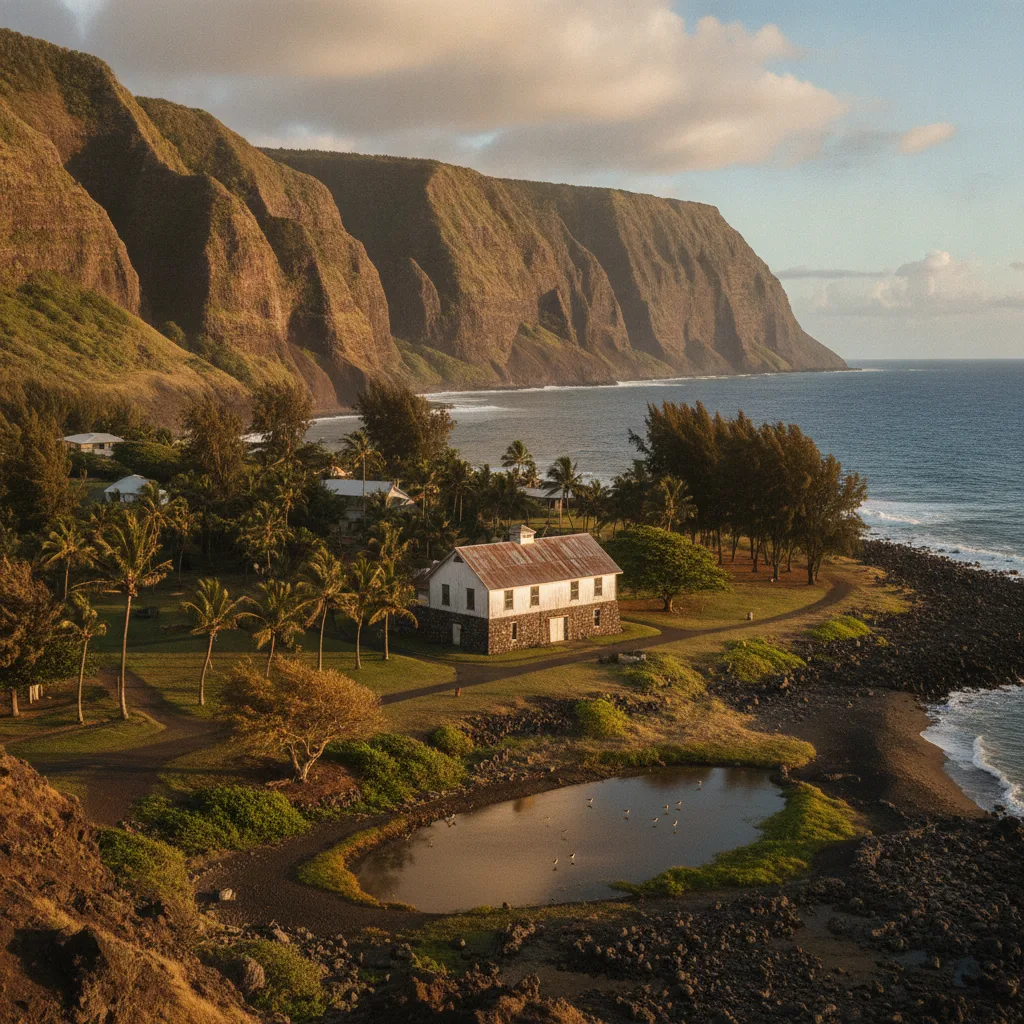
Our Kalaupapa National Historical Park guide covers practical planning for Kalaupapa National Historical Park Hawaii — best time to visit, getting there, and what to do on the ground.
The Kalaupapa Peninsula on Molokaʻi is a place of profound beauty and poignant history, where the stories of thousands exiled with Hansen's disease (leprosy) are preserved. Kalaupapa National Historical Park Hawaii is not a casual stop on your island-hopping itinerary; it demands respect, preparation, and a deep appreciation for its sacred past and present. Our team approaches this destination with the reverence it deserves, offering you the confident, specific guidance you need to plan a truly impactful visit. We've gathered the most current 2026 information to ensure your journey is as smooth and meaningful as possible.
Why Visit Kalaupapa National Historical Park
Visiting Kalaupapa National Historical Park is an experience unlike any other in the Hawaiian Islands. It's a journey into a chapter of human history marked by isolation, resilience, and extraordinary compassion. From 1866 until 1969, this remote and rugged peninsula served as a place of forced exile for those afflicted with Hansen's disease, a policy that separated families and left an indelible mark on Hawaii's cultural landscape.
Today, the park stands as a living memorial, preserving the settlement where patients, including the revered Saint Damien and Saint Marianne Cope, found community and care. Our team believes that a visit here offers a unique opportunity for reflection, education, and a deeper understanding of the human spirit in the face of adversity. You'll witness the preserved buildings and landscapes that tell the stories of those who lived and died here, gaining insights into a challenging past and the enduring legacy of hope and aloha.
Beyond its historical significance, Kalaupapa is also a place of breathtaking natural beauty, framed by some of the world's tallest sea cliffs and the vast expanse of the Pacific Ocean. While the primary purpose of a visit is historical and educational, the dramatic scenery adds another layer to this powerful destination.
Who It's Best For
Kalaupapa National Historical Park is best suited for mature, physically fit, and reflective travelers who are genuinely interested in history, cultural preservation, and a deeply moving experience. This is not a destination for casual tourists seeking a quick photo opportunity or a beach day. We recommend it for:
- History Enthusiasts: Those with a keen interest in Hawaiian history, medical history, and stories of human resilience will find Kalaupapa profoundly impactful. The narratives of the patients, Father Damien, and Mother Marianne are central to the visit.
- Physically Prepared Hikers: As of July 2026, the primary public access is via a strenuous, ranger-led hiking tour. Participants must be prepared to hike up to 8 miles in hot, humid conditions, including a significant elevation change on the Pali Trail.
- Respectful and Reflective Individuals: Kalaupapa remains a living community for a few surviving patient-residents. Visitors must approach the site with utmost respect for their privacy and the solemnity of the history. It's a place for quiet contemplation, not boisterous tourism.
- Travelers Seeking Unique, Off-the-Beaten-Path Experiences: Kalaupapa is one of the most remote and restricted national parks in the U.S. system. Its limited access ensures a unique and intimate encounter with its history and landscape.
It is crucial to note that visitors must be at least 16 years old to enter Kalaupapa National Historical Park, a state statute that remains in effect.
Getting There & Parking
Access to Kalaupapa National Historical Park is highly restricted, and our team cannot stress enough the importance of understanding these limitations before you plan your trip. As of July 9, 2026, the only way for general visitors to access the park is by participating in an authorized, ranger-led hiking tour.
Gone are the days of the mule ride; this iconic mode of transport is no longer offered. While air travel to Kalaupapa Airport (LUP) exists for residents and authorized personnel, public tours currently provide trail-only access.
Here's how to navigate the journey:
- Reservations are Mandatory: You must book your spot on a ranger-led hiking tour through Recreation.gov. Reservations open 30 days in advance of the tour date and close 24 hours prior to the tour start time. There are no walk-up tickets available.
- Tour Schedule: Tours are offered twice a week, specifically on Thursdays and Saturdays.
- Fees: The reservation ticket costs $20 per person, plus a $1 non-refundable ticket fee. While the National Park Service does not charge an entrance fee for Kalaupapa itself, this tour fee covers the guided experience and the necessary permits.
- Permits: A Hawaii Department of Health permit is still required to visit the park. However, for tour participants, this permit is issued to the National Park Service, meaning you do not need to arrange it separately.
- Getting to the Trailhead: You will need your own transportation to reach the trailhead, which is located approximately 9 miles from the Molokaʻi Airport. Parking is available and will be marked with a sandwich board near the entrance to Palaʻau State Park. Renting a car on Molokaʻi is the most reliable option, as public transit is limited and rideshare services are not available. We strongly recommend arriving on Molokaʻi the night before your tour, as the hike starts promptly at 7:30 AM at the trailhead.
Remember, Kalaupapa National Historical Park is a restricted access site, and unauthorized entry can result in arrest and/or fines.
Top Things to Do
The primary and virtually exclusive way for general visitors to experience Kalaupapa National Historical Park is through the official ranger-led hiking tour. This all-day excursion is designed to immerse you in the history and natural beauty of the peninsula. When considering things to do at Kalaupapa National Historical Park, understand that the experience is curated to protect the privacy of the remaining residents and preserve the sacred sites.
Here’s what you can expect from the guided Kalaupapa National Historical Park experience:
- The Strenuous Pali Trail Hike: This is not just a walk in the park; it's a demanding 8-mile round trip. You'll descend approximately 1,600 to 1,700 feet over 3 miles via 26 switchbacks to reach the settlement, and then climb back up at the end of the day. The trail is rugged, narrow, and can be hot and humid with minimal shade. Proper physical conditioning is essential.
- Explore Kalaupapa Settlement: Once you reach the settlement, your ranger will guide you through the historic grounds. You'll visit significant sites such as St. Philomena Church, built by Father Damien, and the gravesites of those who lived and died here. The tour provides a profound insight into the daily lives of the patients and the dedicated caregivers.
- Learn the History of Hansen's Disease: The tour offers a comprehensive narrative of Hansen's disease, its impact on the Hawaiian people, and the stories of resilience and community that flourished despite the isolation. This is a powerful educational experience.
- Visit the Pacific Historic Park Store: This is one of the few amenities available in the settlement, offering a chance to purchase souvenirs and support the park's preservation efforts.
- Photography: While photography is generally allowed, always be mindful and respectful of the privacy of the remaining residents and the solemnity of certain sites. Your guide will provide specific instructions.
Beyond the Kalaupapa peninsula itself, you can gain a perspective of the area from the accessible Kalaupapa Overlook, located at Palaʻau State Park on topside Molokaʻi. This offers stunning panoramic views of the dramatic sea cliffs and the isolated settlement below without requiring the strenuous hike.
Best Time to Visit
Choosing the best time to visit Kalaupapa National Historical Park largely depends on your tolerance for heat and humidity, given the strenuous nature of the required hiking tour. Our team generally recommends the drier months for a more comfortable experience on the Pali Trail.
- Late Spring to Early Fall (May to October): These months typically offer drier conditions on Molokaʻi, which can make the challenging 8-mile hike more manageable. While temperatures will still be warm and humidity present, you might encounter less mud and fewer rainy days. This period is often cited as the best for hiking the Kalaupapa Trail.
- Winter Months (November to April): This is Molokaʻi's wetter season. While the lush greenery is at its peak, the Kalaupapa Pali Trail can become muddy and slippery, significantly increasing the difficulty and potential hazards of the hike. If you visit during these months, be extra prepared for wet conditions.
Regardless of the season, tours are only offered on Thursdays and Saturdays as of July 2026. Since the number of visitors is capped at 100 per day, and reservations open 30 days in advance, securing your spot well ahead of time is paramount, especially if you have specific dates in mind. Always check the weather forecast for Molokaʻi before your trip and prepare for hot, humid conditions with appropriate clothing, sun protection, and plenty of water.
Where to Stay Nearby
When planning your visit to Kalaupapa National Historical Park, it's essential to understand that there are no overnight accommodations available within the Kalaupapa settlement for visitors. All Kalaupapa National Historical Park lodging options will be on other parts of Molokaʻi, or even on neighboring islands if you opt for a very early flight to Molokaʻi on the day of your tour.
Our team strongly recommends staying on Molokaʻi the night before your Kalaupapa tour, as the trailhead meeting time is early (7:30 AM).
Here are your Kalaupapa National Historical Park lodging options on Molokaʻi:
- Hotel Molokaʻi: This is often cited as the primary hotel option on the island, located in Kaunakakai. It offers a restaurant and an outdoor pool. Many travelers find it a convenient base for exploring Molokaʻi.
- Vacation Rentals: Molokaʻi offers a selection of vacation rentals, including condos and houses, often found through platforms like Vrbo or local rental companies. These can provide a more private and home-like experience, especially for families or longer stays. Look for rentals in or near Kaunakakai, which is the main town and offers the most services.
- Camping: While camping is prohibited within Kalaupapa National Historical Park itself, Palaʻau State Park, located on topside Molokaʻi near the Kalaupapa Overlook, offers tent camping. Palaʻau State Park campground is scheduled to reopen on May 4, 2026, after renovations. Reservations are required through Explore Outdoor Hawaii and can be made up to 90 days in advance. This can be a budget-friendly option for those who enjoy the outdoors, but remember to bring your own drinking water as it's not available in the park.
Keep in mind that Molokaʻi is known as the "Friendly Isle" for its laid-back atmosphere and lack of large resorts. Accommodation options are more limited than on islands like Maui or Oahu, so booking well in advance is advisable, especially during peak travel seasons. For more comprehensive planning, consider our guide to Best places in Hawaii.
Sample 2-Day Itinerary
A visit to Kalaupapa National Historical Park is a profound experience that requires a dedicated day. Our team has crafted a sample 2-day itinerary for Molokaʻi, focusing on the Kalaupapa tour and allowing time to appreciate the rest of the "Friendly Isle."
Day 1: Arrival on Molokaʻi & Island Exploration
- Morning/Afternoon: Arrive on Molokaʻi & Settle In
- Fly into Molokaʻi Airport (MKK) and pick up your rental car. Remember, public transport is limited.
- Check into your accommodation, ideally in or near Kaunakakai, to be well-positioned for tomorrow's early start.
- Afternoon: Explore Kaunakakai & South Shore
- Wander through Kaunakakai, Molokaʻi's largest town. Visit local shops and grab a bite.
- See the historic Kapuaiwa Coconut Grove, one of Hawaii's last royal coconut groves.
- Drive along the south shore, stopping at various points of interest like Church Row.
- Evening: Relax & Prepare
- Enjoy a quiet dinner.
- Pack your day bag for Kalaupapa: plenty of water (at least 1 quart), snacks/lunch (no food available in the park), sturdy hiking shoes, sunscreen, hat, and rain gear. Get an early night's sleep.
Day 2: Kalaupapa National Historical Park
- Early Morning: Head to Kalaupapa Trailhead
- Depart early to reach the Kalaupapa trailhead near Palaʻau State Park by 7:15 AM for the 7:30 AM tour start. Parking will be marked.
- Morning/Afternoon: Kalaupapa Ranger-Led Hike & Tour
- Embark on the strenuous 8-mile round-trip hike down the Kalaupapa Pali Trail to the settlement.
- Participate in the ranger-led tour of Kalaupapa National Historical Park, visiting historical sites like St. Philomena Church and learning about the settlement's profound history. Expect to spend several hours exploring the settlement.
- Have your packed lunch and snacks during the tour.
- Late Afternoon: Ascent & Departure
- Begin the challenging climb back up the Pali Trail.
- After completing the hike, you'll likely be tired but deeply moved.
- Depending on your flight schedule, you can depart from Molokaʻi Airport (MKK) or spend another night on the island.
For those interested in other Hawaiian experiences, consider exploring our guides to Hawaii Volcanoes National Park or Pearl Harbor & USS Arizona Memorial.
Is It Worth Visiting?
Our team unequivocally believes that Kalaupapa National Historical Park is worth visiting, but with significant caveats. This is not a destination for everyone, nor is it meant to be. For the right traveler, however, it offers one of the most profound and impactful experiences in the entire National Park system.
The value of visiting Kalaupapa National Historical Park lies in its unique ability to transport you to a pivotal, often heartbreaking, yet ultimately inspiring chapter of Hawaiian and human history. You will walk in the footsteps of those who endured unimaginable isolation, witness the sites where Father Damien and Mother Marianne Cope dedicated their lives, and gain a deep appreciation for the resilience of the human spirit. The raw beauty of the remote peninsula, framed by towering sea cliffs, only amplifies the power of the narrative.
However, the "worth" of the visit is directly tied to your preparation and expectations. The current access via a strenuous, ranger-led hiking tour means you must be physically capable and mentally prepared for a challenging, all-day excursion. There are no casual sightseeing options. If you are seeking a relaxing vacation activity, Kalaupapa is not it. But if you are a respectful, history-minded individual with the physical stamina for a demanding hike, the emotional capacity for a sobering story, and a desire for a truly meaningful travel experience, then we are confident you will find Kalaupapa National Historical Park to be immensely rewarding and deeply worth visiting.
FAQ
Kalaupapa National Historical Park camping
Camping is strictly prohibited within Kalaupapa National Historical Park itself. There are no overnight accommodations for visitors within the settlement. However, the nearest camping facility is located at Palaʻau State Park, which is situated on topside Molokaʻi, approximately 1,600 feet above the Kalaupapa Peninsula. Palaʻau State Park campground is scheduled to reopen on May 4, 2026, after renovations. When open, reservations are required through Explore Outdoor Hawaii and can be made up to 90 days in advance. The maximum stay is 5 consecutive nights, and park hours are 7:00 AM to 7:00 PM. Campers must bring their own drinking water.
things to do in Molokai
Beyond Kalaupapa National Historical Park, Molokaʻi offers a more relaxed, authentic Hawaiian experience compared to its bustling neighbors. Our team recommends exploring the island's natural beauty and cultural sites. You can visit the Molokaʻi Museum & Cultural Center to delve into the island's history, explore the sacred Ili ili opae Heiau, or stroll through the historic Kapuaiwa Coconut Grove. Papohaku Beach, one of Hawaii's largest white sand beaches, is perfect for a quiet day. For outdoor enthusiasts, the Hālawa Valley on the east side offers stunning waterfalls and cultural tours. Remember, Molokaʻi is known for its tranquil atmosphere, so embrace the slower pace.
Kalaupapa National Historical Park with kids
Kalaupapa National Historical Park is not suitable for children. By Hawaii State Law, persons under 16 years of age are not permitted to visit Kalaupapa. This restriction is in place to protect the privacy of the remaining patient-residents and to maintain the solemnity of the historical site. The ranger-led hiking tour is also extremely strenuous, requiring participants to hike up to 8 miles with significant elevation changes, which would be challenging for most children. For families traveling with children, we suggest exploring other Hawaiian destinations like Haleakala National Park or the Na Pali Coast (from a distance).
best hotels near Kalaupapa National Historical Park
There are no hotels directly within Kalaupapa National Historical Park. The closest and most recommended hotel on Molokaʻi is Hotel Molokaʻi, located in Kaunakakai, approximately 7.6 miles (12.2 km) from the park's general area. This hotel offers a restaurant and an outdoor pool. Other options include various vacation rentals and condos available across Molokaʻi, particularly around Kaunakakai. While some search results might show hotels on Maui, our team advises staying on Molokaʻi the night before your Kalaupapa tour due to the early start time and limited inter-island flight options. For broader travel planning, consider our Plan Your US Trip guide.
Kalaupapa National Historical Park tips
Our team has compiled essential Kalaupapa National Historical Park tips for a smooth and respectful visit: 1) **Book Early:** Tours are limited to 100 visitors per day and run only on Thursdays and Saturdays; reservations on Recreation.gov open 30 days in advance. 2) **Prepare Physically:** The 8-mile round-trip hike on the Pali Trail is strenuous, with a 1,600-1,700 ft elevation change. Train for it! 3) **Pack Essentials:** Bring at least one quart of water, all your food/snacks, sunscreen, a hat, sturdy hiking shoes, and rain gear. There are no amenities in the settlement. 4) **Arrive Early:** Be at the trailhead near Palaʻau State Park by 7:15 AM for the 7:30 AM tour start. 5) **Respect Privacy:** Remember Kalaupapa is a living community. Follow your ranger's guidance on photography and behavior. 6) **No Kids:** Visitors must be 16 years or older.
where to stay near Kalaupapa National Historical Park
Given the strict access and early start time for tours, our team recommends staying on Molokaʻi the night before your visit to Kalaupapa National Historical Park. The most convenient option is Hotel Molokaʻi in Kaunakakai. Alternatively, you can find various vacation rentals, including condos and houses, particularly around the main town of Kaunakakai. For those seeking a more rustic experience, Palaʻau State Park offers tent camping on topside Molokaʻi, though reservations are required and facilities are basic. There are no lodging facilities within the park itself. For more detailed information on accommodations across the islands, explore our guides such as Iolani Palace or the Road to Hana.
Kalaupapa National Historical Park stands as a powerful testament to a difficult past and the enduring human spirit. Our team hopes this guide has provided you with the clear, actionable information needed to plan a respectful and truly unforgettable journey to this sacred Hawaiian site. Remember, preparation is key to fully appreciating the profound experience that awaits you.
Last updated: 2026-07-06 by the Roam States team.