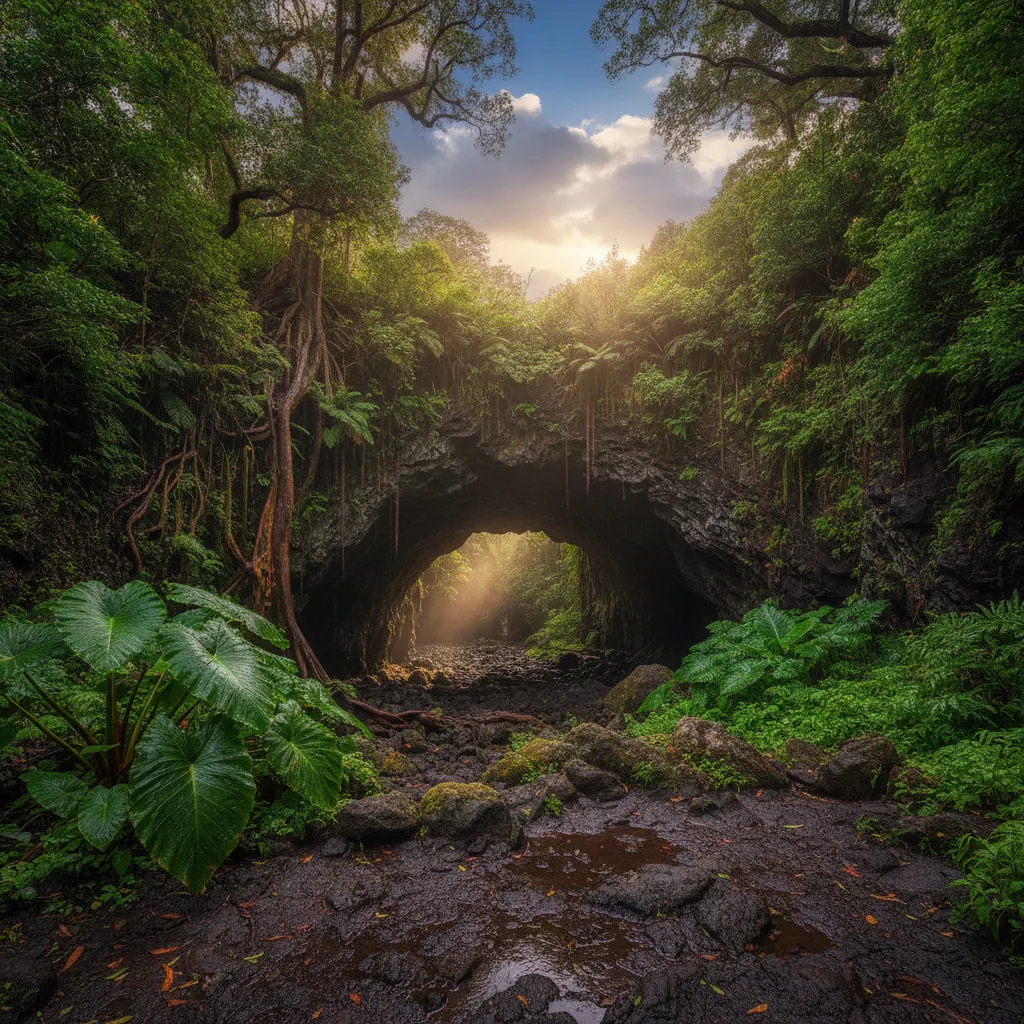
Our Kaumana Caves guide covers practical planning for Kaumana Caves Hawaii — best time to visit, getting there, and what to do on the ground. We've compiled the essential 2026 facts on hours, fees, closures, parking, and reservations to ensure your subterranean adventure is seamless and unforgettable.
Why Visit Kaumana Caves
For those seeking an authentic, unmediated encounter with Hawaii's raw geological power, Kaumana Caves offers an experience unlike any other. Formed by the 1881 eruption of Mauna Loa, these lava tubes provide a tangible link to the Big Island's volcanic past, allowing you to walk through the very channels molten rock once carved.
Unlike the more developed Nāhuku (Thurston Lava Tube) in Hawaii Volcanoes National Park, Kaumana Caves presents a rugged, unaltered environment. There are no paved paths, no artificial lighting, and no guided tours, offering a true sense of exploration and discovery. It's a place where you can truly immerse yourself in the cool, dark silence of the earth, marveling at the unique lava formations that line the walls and ceilings.
The entrance itself is a dramatic collapsed skylight, leading down a steep concrete staircase into a lush, fern-draped amphitheater before splitting into two distinct cave openings. This natural wonder is completely free to enter, making it an accessible adventure for many travelers.
Is It Worth Visiting?
Our team unequivocally believes that Kaumana Caves is worth visiting, especially for those with an adventurous spirit and a desire for a unique, off-the-beaten-path experience. Visitors consistently rave about it as an "unexpected and awesome adventure," often exceeding expectations.
While the initial descent is steep and the terrain inside is uneven and often slippery, the reward is a captivating journey into Hawaii's volcanic heart. The sheer scale of the lava tubes and the intricate geological formations are frequently praised. If you're looking for an unfiltered glimpse into how lava shapes this island, a visit to Kaumana Caves provides a profound understanding that complements surface-level observations at places like Hawaii Volcanoes National Park.
However, it's crucial to manage expectations: this is not a manicured attraction. Preparedness with proper gear, especially reliable lighting and sturdy footwear, is key to a safe and enjoyable visit. For those who embrace the ruggedness, the sense of discovery and the raw beauty of Kaumana Caves makes it a highly rewarding stop on your Big Island itinerary.
Who It's Best For
Kaumana Caves is ideal for adventurous travelers, geology enthusiasts, and those seeking a self-guided exploration away from typical tourist crowds. It appeals to individuals and groups who are comfortable with uneven terrain, dark spaces, and taking responsibility for their own safety.
The first few hundred feet of the caves are relatively easy to navigate, with good footing and reasonable ceiling heights, making it accessible for most visitors. However, the farther you venture, the more challenging it becomes, with lower ceilings, wetter conditions, and rougher terrain.
For families, Kaumana Caves with kids is generally recommended for older children, typically ages 8 and up, who can manage steep stairs, uneven surfaces, and navigate in near-total darkness with headlamps. Teenagers, in particular, tend to love the genuine adventure and the unguided nature of the exploration. Those with limited mobility may find the steep steps and rugged cave floor difficult.
If you prefer well-lit, paved paths and guided tours, this might not be the best fit. But if you're prepared for a hands-on, subterranean journey into a natural wonder, Kaumana Caves will deliver an unforgettable experience.
How to Get There
To get to Kaumana Caves, you'll head just outside of Hilo on the Big Island. The caves are located within Kaumana Caves State Park, approximately three to four miles west of downtown Hilo.
From Hilo, take Highway 200 (also known as Kaumana Drive or Saddle Road by locals) uphill. The entrance to Kaumana Caves State Park is situated between the 4 and 5-mile markers.
Parking
Parking for Kaumana Caves is available in a small lot on the south side of Kaumana Drive, directly across the road from the cave entrance. Exercise caution when crossing the highway, as it can be busy. Once you've parked, you'll cross the road to find the steep metal staircase leading down into the collapsed skylight of the lava tube.
There are no reservations required for Kaumana Caves, and it is free to enter and park.
Top Things to Do
Exploring Kaumana Caves is all about a hands-on, self-guided adventure into a natural lava tube. Here are the top things to do at Kaumana Caves:
- Descend into the Lava Tube: The initial descent down the concrete staircase into the collapsed skylight is an experience in itself, leading you into a lush, fern-filled grotto before the cave openings.
- Explore the Right Tube: This is generally considered the larger and longer of the two accessible sections. You can walk for a couple hundred yards before it gets extremely dark and the terrain becomes more challenging with large volcanic boulders. The right section is open to the public for almost two miles.
- Venture into the Left Tube: While it appears smaller at the entrance, the left tube offers a long, dark passage that snakes underground, requiring some scrambling. It eventually leads to another collapsed section where natural light streams in, and roots reach down, creating an eerie, tropical setting. This tube is quite large and easy to stand up in for much of its length.
- Marvel at Lava Formations: Inside both tubes, you'll encounter diverse lava formations, from smooth, ropy pāhoehoe lava to walls with corrugated ridges and sharp, needle-like textures. These are a testament to the powerful lava flows that shaped this unique landscape.
- Experience Complete Darkness: Beyond the natural light of the entrance, the caves are pitch black. This offers a unique opportunity to experience true subterranean darkness, relying solely on your headlamp or flashlight.
- Practice Responsible Exploration: Adhere to leave-no-trace principles, avoid disturbing rocks or formations, and respect the delicate cave ecosystem. The caves are unmonitored, so your safety and the preservation of the site are your responsibility.
Remember, the public area extends only a short distance into the cave before it enters private property, so be mindful of your exploration limits.
Kaumana Caves Hiking Trails
While not traditional hiking trails in the open-air sense, the Kaumana Caves offer a unique subterranean hiking experience. The "trails" here are the lava tubes themselves, which present varying levels of difficulty and require specific gear and caution.
The Kaumana Caves are essentially two main passages accessible from the collapsed skylight entrance. The right tube is generally considered longer, extending for nearly two miles of accessible underground tunnel. This path involves navigating over jagged rocks, uneven surfaces, and occasional low ceilings, requiring ducking and sometimes crawling.
The left tube, while appearing smaller initially, also offers a significant length of exploration, winding underground and requiring some scrambling over rocks. Both sections of the Kaumana Caves hiking trails demand sturdy, closed-toe shoes with good traction, as the floor is often wet, slippery, and uneven due to moisture seeping through the rock.
A powerful flashlight or headlamp is absolutely essential for navigating the complete darkness beyond the entrance. Long pants and a light jacket are also recommended for protection against scrapes and the cooler, damp cave air. While getting lost is unlikely due to the relatively straight nature of lava tubes, knowing your limits and turning back when uncomfortable is crucial.
Best Time to Visit
Kaumana Caves can be visited year-round, thanks to its stable underground climate, which offers a cool escape from Hawaii's tropical heat and frequent Hilo rainfall.
Our team recommends visiting during the early morning or late afternoon to avoid potential crowds. Weekdays are generally quieter than weekends. This allows for a more peaceful and immersive experience as you explore the lava tubes. While the cave itself is consistently cool, the surrounding area can be humid, so these times offer a more comfortable approach and exit.
It is important to check weather conditions, especially avoiding visits during heavy rain, as the cave floor can become even more slippery and difficult to navigate, and some sections have been known to flood during dramatic weather events.
Kaumana Caves State Park is open daily and nightly 24 hours. There are no specific hours of operation as it's an undeveloped site. There are no closures currently reported for 2026.
Where to Stay Nearby
For Kaumana Caves lodging, the best options are found in and around Hilo, which serves as an excellent base for exploring the east side of the Big Island. Hilo offers a range of accommodations, from hotels to charming guesthouses and vacation rentals.
Several hotels in Hilo provide convenient access to the caves and other attractions. The Grand Naniloa Hotel Hilo - a Doubletree by Hilton and SCP Hilo Hotel are popular choices, offering amenities and proximity to Hilo Bay. The Hilo Hawaiian Hotel, Trademark Collection by Wyndham, also provides a contemporary option overlooking Coconut Island.
For those seeking a more local feel or extended stay, vacation rentals near Kaumana Caves County Park, including private homes and apartments, are plentiful. Options like Ocean View Ranch, Tropical Retreat Guesthouse, and Hilo Hale Kaumana Home offer privacy and space. Budget-friendly properties can start around $135 per night, while luxury options with amenities like pools and ocean views are also available.
Many of these lodging options are just a short drive from Kaumana Caves, typically within 10-15 minutes, allowing for easy access to your subterranean adventure.
Sample 2-Day Itinerary
Our team has crafted a sample 2-day itinerary for an unforgettable Big Island adventure, with Kaumana Caves as a highlight:
Day 1: Hilo & Lava Tubes
- Morning (8:00 AM - 12:00 PM): Kaumana Caves Exploration
Start your day early at Kaumana Caves Hawaii. Dedicate 1-2 hours to exploring both the left and right sections of the lava tube. Be sure to bring your headlamps, sturdy shoes, and a sense of adventure. After your subterranean journey, head back towards Hilo.
- Lunch (12:00 PM - 1:30 PM): Downtown Hilo Delights
Enjoy lunch at a local eatery in downtown Hilo. We recommend exploring the Hilo Farmers Market for fresh produce and crafts, or grabbing a bite at a local favorite like Café Pesto.
- Afternoon (1:30 PM - 5:00 PM): Waterfalls & Gardens
Visit Rainbow Falls, a stunning waterfall just minutes from downtown. Continue to Wailuku River State Park to see the Boiling Pots, unique lava rock formations. For a change of pace, stroll through the serene Liliʻuokalani Park and Gardens.
- Evening (5:00 PM onwards): Hilo Charm & Dinner
Explore historic downtown Hilo, browsing its unique shops and galleries. Enjoy dinner at one of Hilo's many restaurants, savoring local Hawaiian cuisine. Consider a relaxing evening at your Hawaii lodging.
Day 2: Volcanoes & Coastal Beauty
- Morning (8:00 AM - 1:00 PM): Hawaii Volcanoes National Park
Drive south to Hawaii Volcanoes National Park (approx. 45-minute drive from Hilo). Spend your morning exploring Kilauea Crater, hiking the Kilauea Iki Trail, and walking through the Nāhuku (Thurston Lava Tube), a more developed lava tube experience within the park.
- Lunch (1:00 PM - 2:00 PM): Park Eateries or Picnic
Grab a quick bite at one of the park's cafes or enjoy a picnic lunch amidst the volcanic landscape.
- Afternoon (2:00 PM - 5:00 PM): Black Sand Beaches & Scenic Drives
Head to Punaluʻu Black Sand Beach, famous for its black sand and often frequented by Hawaiian green sea turtles. Alternatively, take a scenic drive along the coast, such as the Pepeekeo Scenic Drive, north of Hilo.
- Evening (5:00 PM onwards): Sunset & Reflection
Enjoy a final Hawaiian sunset, perhaps from a coastal viewpoint. Reflect on the incredible geological wonders and natural beauty you've experienced on the Big Island. For those interested in other historical sites, consider a future trip to Pearl Harbor & USS Arizona on Oahu.
Last updated: 2026-07-06 by the Roam States team.