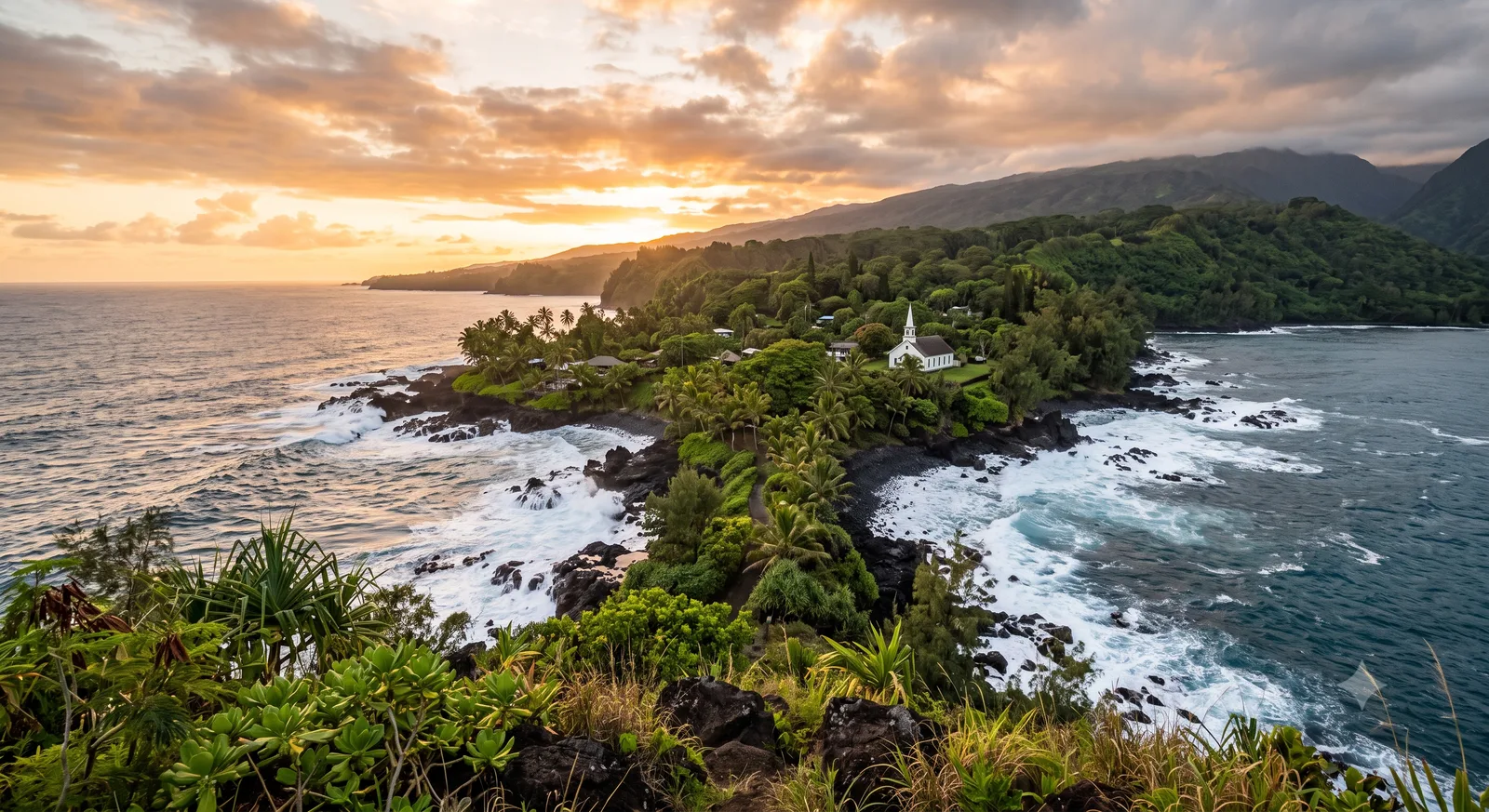
Ke'anae Peninsula, HawaiiHidden Gems & Scenic Wonders

Ke'anae Peninsula Travel Guide

Maui, Hawaii

By Roam States Team · Updated July 2026 · 37 min read

Jump to section

Ke'anae Peninsula Travel Guide — Hawaii

Our Ke'anae Peninsula guide covers practical planning for Ke'anae Peninsula Hawaii — best time to visit, getting there, and what to do on the ground. As independent US travel authorities, we've compiled the essential details for your trip to this iconic Maui destination.

The Ke'anae Peninsula, a breathtaking finger of lava rock jutting into the Pacific, is an essential stop along Maui's legendary Road to Hana. This picturesque area is renowned for its rugged coastline, vibrant green taro fields, and the historic Ke'anae Congregational Church. It offers stunning ocean views and a profound glimpse into traditional Hawaiian farming and a way of life that has largely remained unchanged for centuries. Our team has explored this unique destination to bring you the most confident and specific advice, free from generic fluff, ensuring your visit is truly unforgettable.

Why Visit Ke'anae Peninsula

Visiting the Ke'anae Peninsula offers a rare opportunity to step back in time and experience a piece of "Old Hawaii" that feels genuinely authentic, not staged for tourists. This isn't just another scenic overlook; it's a living, breathing community where Native Hawaiian families have cultivated taro for generations. The peninsula's dramatic landscape, where jagged black lava rocks meet the powerful turquoise ocean, creates a visually stunning contrast that is a photographer's dream.

Beyond the natural beauty, the Ke'anae Peninsula is steeped in history and culture. The resilience of its community is embodied by landmarks like the Ke'anae Congregational Church, a lava rock and coral structure that has stood since 1860, famously surviving the devastating 1946 tsunami. While the church is currently undergoing repairs from 2021 storm damage and is closed to the public, its presence remains a powerful testament to the area's enduring spirit.

For those seeking a deeper connection to Maui beyond its resort towns, Ke'anae provides a vital cultural touchstone. It's a place to observe traditional farming practices, appreciate the raw power of the Pacific, and savor the slow pace of island life. We consider it a must-do stop on the Road to Hana, offering both profound beauty and historical significance that enriches any Hawaiian adventure.

Who It's Best For

The Ke'anae Peninsula is ideally suited for travelers who appreciate raw natural beauty, cultural immersion, and a slower pace of exploration. It's perfect for:

  • **Road Trippers and Adventurers:** As a key stop on the Road to Hana, it caters to those embarking on this iconic drive. It serves as an excellent midpoint to stretch your legs and soak in the scenery before continuing your journey further into East Maui.
  • **Culture Enthusiasts:** Visitors keen to understand traditional Hawaiian life and history will find the taro fields and the story of the Ke'anae Congregational Church deeply rewarding. It offers a tangible link to the island's past.
  • **Photographers:** The dramatic coastline, crashing waves, and vibrant green taro patches provide endless opportunities for stunning landscape and cultural photography. The contrast of black lava rock against the blue ocean is particularly striking.
  • **Families with Older Children:** While swimming is not advised due to dangerous currents, the easy half-mile loop through the Ke'anae Arboretum is stroller-friendly, and older children can appreciate the unique landscape and history. Supervise kids on rocky outcrops.
  • **Foodies:** Those seeking authentic local flavors will delight in a stop at Aunty Sandy's Banana Bread, a local institution known for its fresh-baked goods.

This destination is less suited for those primarily seeking beach lounging or swimming, as the coastline here is rugged and unsafe for ocean entry. It's also not a place for those in a rush; the true magic of Ke'anae lies in taking your time to observe and absorb its unique atmosphere.

Getting There & Parking

Understanding how to get to Ke'anae Peninsula is straightforward, as it's a prominent stop on the famous Road to Hana (Highway 360) on Maui's northeast coast. The peninsula is located around Mile Marker 16-17.

Driving Instructions

From Kahului, head east on Highway 360, which becomes the Hana Highway. The scenic drive is approximately 30 miles and can take about an hour and a half without stops, but we highly recommend allowing much more time for the numerous pull-offs and attractions along the way. Keep a keen eye out for the turn onto Ke'anae Road, which leads directly down to the peninsula, just past Mile Marker 16. The road is winding, so drive carefully and take your time. Cell service can be spotty along the Road to Hana, so we always advise downloading offline Google Maps before you depart.

For those wondering how to get to Ke'anae Peninsula without the stress of driving, consider a guided tour. Many reputable companies offer small-group Road to Hana tours that handle all the navigation, allowing you to relax and fully appreciate the scenery. These tours often include stops at Ke'anae and other key attractions, removing the hassle of parking and timing.

Parking at Ke'anae Peninsula

Parking on the Ke'anae Peninsula is available but can be limited, especially during peak season and busy times of day. We strongly recommend arriving before midday to secure a good parking spot. There are designated gravel areas for parking, particularly near the Ke'anae Congregational Church. When exploring, always pull fully off the paved shoulder into marked parking areas and respect all private property signs. The Ke'anae Lookout, located at Kaumahina State Wayside (Mile Marker 12), offers free parking and excellent panoramic views of the peninsula from above, which is a great spot to pause before descending into the village itself.

There are no fees specifically for parking on the Ke'anae Peninsula itself, unlike some other popular Road to Hana stops like Wai'anapanapa State Park, which requires a reservation and fee for both parking and entry in 2026.

Top Things to Do

The Ke'anae Peninsula offers a distinct set of experiences that set it apart from other stops along the Road to Hana. Our team's top recommendations for things to do at Ke'anae Peninsula focus on its unique cultural and natural highlights.

  • Savor Aunty Sandy's Famous Banana Bread: No visit to Ke'anae is complete without stopping at Aunty Sandy's Banana Bread stand. Located on the road down to the peninsula, her fresh-baked banana bread is legendary and often sells out by noon on busy days. They also offer smoothies, local snacks, and lunch plates like chili and rice or pulled pork BBQ sandwiches. Remember to bring cash, as it's often a cash-only establishment.
  • Explore the Ke'anae Arboretum: Just before you turn off for the peninsula (around Mile Marker 16), you'll find the Ke'anae Arboretum. This fantastic spot offers an easy, paved half-mile loop through over 150 varieties of tropical plants, including hibiscus, papaya, ginger, and native and non-native Hawaiian trees. It's a great place to stretch your legs and learn about Hawaii's diverse flora.
  • Visit the Ke'anae Congregational Church: This historic lava rock and coral church, built in 1860, is a powerful symbol of the community's resilience. While it is currently closed to the public for repairs following storm damage in March 2021, its exterior and the surrounding grounds are still worth a respectful visit. Always check for current accessibility and be mindful of any services if it reopens.
  • Admire the Rugged Coastline: The Ke'anae Peninsula is famous for its dramatic, untamed coastline where powerful waves crash against black lava rocks. There is no swimming here due to strong currents and dangerous conditions, but the views are spectacular for photography and contemplation. Respect posted signs and private property, and be cautious on slippery rocks.
  • Observe the Taro Fields: The expansive, vibrant green taro (kalo) fields are a defining feature of the Ke'anae Valley and a testament to traditional Hawaiian agriculture. These fields are vital to the local community, so it's crucial to view them respectfully from a distance and never walk onto private property or taro patches.

Beyond things to do at Ke'anae Peninsula, your journey along the Road to Hana opens up a world of other incredible things to do in Maui. Consider continuing to Wai'anapanapa State Park for its iconic black sand beach (reservations required for 2026), or explore the Pipiwai Trail and 'Ohe'o Gulch (Seven Sacred Pools) further past Hana, which is part of Haleakala National Park (entry fee applies). For a broader perspective on things to do in Maui, don't miss opportunities for whale watching from Ma'alaea Harbor, snorkeling at Molokini Crater, or witnessing a sunrise from the summit of Haleakala National Park.

Best Time to Visit

Choosing the best time to visit the Ke'anae Peninsula, and the Road to Hana in general, can significantly impact your experience. Our team recommends considering both weather patterns and crowd levels for an optimal trip.

Weather Considerations

The Ke'anae Peninsula is located on Maui's windward (northeastern) coast, which is known for its lush, green landscape due to frequent rainfall year-round.

  • Dry Season (April to October): This period generally offers the most consistent sunny weather and less rainfall, making it ideal for exploring the peninsula and other outdoor activities along the Road to Hana. Temperatures in July 2026, for example, are expected to range from 78-84°F during the day and 68-72°F at night, with high heat and humidity. While still prone to scattered showers, especially in rainforest sections, mornings tend to offer the clearest skies.
  • Wet Season (November to March): While still warm, this period sees heavier rainfall. This can lead to more dramatic waterfalls but also slicker roads and a higher chance of flash flooding, which can sometimes limit access to certain areas. If you visit during these months, be prepared for rain with appropriate gear.

Regardless of the season, light rain gear or a compact umbrella is a must when visiting this side of Maui.

Crowd Considerations

The Road to Hana, including the Ke'anae Peninsula, can get very busy. To avoid the heaviest crowds and tour vans:

  • Early Morning: We strongly advise starting your Road to Hana journey no later than 7:00 AM from Paia. This allows you to reach popular stops like Ke'anae before the majority of visitors arrive, giving you a more peaceful experience and better opportunities for parking and photography.
  • Mid-week vs. Weekends: Weekdays are generally less crowded than weekends. Saturdays and Sundays, especially during peak travel seasons, can see significant traffic.
  • Mid-morning/Late Afternoon: Mid-morning is often cited as a good time for fewer crowds and better light for photos at Ke'anae. Late afternoon also offers dramatic light for photography, though you'll need to be mindful of returning before dark, as driving the Road to Hana at night is genuinely unpleasant due to narrow, unlit, and unfamiliar roads.

In summary, the best time to visit Ke'anae Peninsula is during the dry season (April-October), starting your drive early in the morning on a weekday to minimize crowds and maximize your enjoyment of this special place.

Where to Stay Nearby

While there are no large resorts directly on the Ke'anae Peninsula, several excellent Ke'anae Peninsula lodging options and accommodations are available in the surrounding East Maui region, particularly in Hana and the upcountry areas. These provide convenient bases for exploring the Road to Hana and the peninsula itself.

Hana Town

The town of Hana, located further along the Road to Hana, is the primary hub for Ke'anae Peninsula lodging. Staying here allows you to break up the long drive and explore East Maui more thoroughly.

  • Hana-Maui Resort, a Destination by Hyatt Residence: This is the most prominent accommodation in Hana, offering a luxurious experience overlooking the Pacific. It features outdoor pools and a full-service spa. It's an excellent choice for those seeking comfort and amenities after a day of exploring.
  • Fisher's Hana Bay Hale: Available as a vacation home, this lodging option in Hana Town is highly rated and offers a more private, home-like experience, often across from Hana Bay.

Upcountry and North Shore Maui

For those who prefer to stay closer to the start of the Road to Hana or want a different vibe, several Ke'anae Peninsula lodging options can be found in the upcountry (Makawao, Haiku) and North Shore (Paia) areas. These are typically an hour to an hour and a half drive from the Ke'anae Peninsula.

  • Hale Akua Garden Farm & Eco-Retreat: Located in Haiku, this eco-retreat offers a unique experience focused on nature and sustainability. It's ideal for travelers seeking a peaceful and environmentally conscious stay.
  • Gods Peace Of Maui: Situated in Makawao, this bed & breakfast offers a tranquil spa-like setting with complimentary breakfast and WiFi.
  • Lumeria Maui Educational Retreat Center: Also in Makawao, this boutique hotel provides a serene escape with an outdoor pool and hot tub, often including complimentary breakfast.
  • Paia Inn: For those who want to be right in the charming surf town of Paia, the Paia Inn offers a beautiful property directly on the beach, with easy access to shops and restaurants.

Unique Local Stays

For a truly unique Ke'anae Peninsula lodging experience, consider:

  • Ke'anae Uka (formerly Camp Ke'anae): This community campground and events facility, nestled atop the peninsula, now offers camper van bookings and overnight accommodations in a duplex cottage that sleeps up to six. It provides panoramic views of the kalo patches and coastlines. Bookings are made via an online request form.

Prices for hotels in the Ke'anae area can vary, with options starting from around $198 per night, and guest houses from $413, as of June 2026. We always recommend booking your accommodations well in advance, especially during peak travel seasons, as stricter regulations on short-term rentals in Maui may affect availability.

Sample 2-Day Itinerary

To truly appreciate the Ke'anae Peninsula and the surrounding beauty of East Maui, we recommend more than just a quick drive-through. Our team has crafted a sample 2-day itinerary that allows for a deeper, more relaxed exploration.

Day 1: The Road to Ke'anae & Peninsula Immersion

  • Morning (7:00 AM - 12:00 PM): The Journey Begins
    • Early Start from Paia: Fuel up in Paia (Highway 360, Mile Marker 0) and grab coffee and breakfast. This early start (by 7:00 AM) is crucial to beat the crowds and enjoy the scenic drive.
    • Twin Falls (Mile Marker 2): Your first stop. Enjoy an easy 10-minute walk to the lower falls and grab a fresh smoothie from the fruit stand.
    • Waikamoi Ridge Trail (Mile Marker 9.5): A short, peaceful 45-minute loop through eucalyptus and bamboo. Look for the "Quiet Trees" sign.
    • Ke'anae Arboretum (Mile Marker 16): Stretch your legs on the paved half-mile loop, exploring tropical plants and taro fields.
    • Arrival at Ke'anae Peninsula (Mile Marker 16-17): Turn left onto Ke'anae Road. Aim to arrive before midday for the best chance at parking.
  • Afternoon (12:00 PM - 5:00 PM): Exploring Ke'anae
    • Aunty Sandy's Banana Bread: Your first stop on the peninsula. Grab some of the famous banana bread and perhaps a lunch plate. Remember cash!
    • Ke'anae Congregational Church: Visit the exterior of this historic lava rock church and learn about its resilience.
    • Coastal Exploration: Walk along the rugged coastline, marveling at the powerful waves crashing against the black lava rocks. Remember, no swimming here. Observe the traditional taro fields from a respectful distance.
    • Check-in to Accommodation: Head to your chosen lodging in Hana or a nearby upcountry retreat.
  • Evening: Relax in Hana
    • Enjoy dinner at a local establishment in Hana.
    • Relax and prepare for another day of East Maui exploration.

Day 2: Beyond Ke'anae & Return

  • Morning (8:00 AM - 1:00 PM): Further East Maui Exploration
    • Wai'anapanapa State Park (just before Hana): A must-see black sand beach. Remember, reservations are required for 2026 ($10 parking, $5 per person entry) and should be booked in advance. Allow 1-1.5 hours to explore the volcanic shoreline, sea caves, and coastal trails.
    • Hana Town: Spend some time exploring Hana. Visit the Hasegawa General Store, Hana Cultural Center, or just soak in the slow pace of this isolated community.
    • 'Ohe'o Gulch (Seven Sacred Pools) & Pipiwai Trail (11 miles past Hana): Part of Haleakala National Park. Hike the Pipiwai Trail through a bamboo forest to Waimoku Falls. Entry is covered by the Haleakala NP pass ($35/vehicle).
  • Afternoon (1:00 PM - 6:00 PM): The Scenic Return
    • Lunch: Grab lunch in Hana or pack a picnic to enjoy at one of the scenic stops.
    • Return Drive: Begin your return journey on the Road to Hana, stopping at any points you missed or wish to revisit. We advise leaving Hana by 3:00 PM to ensure you're back before dark.

This itinerary provides a comprehensive yet unhurried way to experience the Ke'anae Peninsula and the highlights of the Road to Hana. Remember to check current conditions and reservation requirements for all stops, especially for state and national parks.

Is It Worth Visiting?

From our perspective as independent US travel authorities, the question "is Ke'anae Peninsula worth visiting" can be answered with a resounding yes, but with a crucial caveat: it depends on your travel style and expectations. For the right traveler, it is an absolutely essential stop on any Maui itinerary.

The Ke'anae Peninsula offers a unique blend of raw natural beauty, profound cultural significance, and a tangible connection to "Old Hawaii" that few other places on the island can match. The dramatic black lava rock coastline, with powerful waves crashing against it, is a sight to behold, providing stunning photographic opportunities. The vibrant green taro fields, meticulously cultivated by generations of Native Hawaiian families, offer a glimpse into a traditional agricultural practice that is both beautiful and historically rich.

Beyond the scenery, the presence of the historic Ke'anae Congregational Church, even while undergoing repairs in 2026, speaks volumes about the resilience and enduring spirit of the community. And, of course, the chance to taste Aunty Sandy's legendary banana bread is a delightful experience that has become synonymous with the Road to Hana journey.

However, if you're looking for a typical sandy beach for swimming or a place with extensive tourist amenities, you might find the Ke'anae Peninsula less appealing. The ocean here is treacherous for swimming due to strong currents, and the focus is on natural and cultural appreciation rather than commercial entertainment. Therefore, when asking "is Ke'anae Peninsula worth visiting," we emphasize that it is incredibly rewarding for those who seek authentic experiences, appreciate dramatic landscapes, and are willing to embrace a respectful, unhurried pace of travel. It's a highlight of the Road to Hana, and for many, a true soul-stirring moment on Maui.

FAQ Longtails

Ke'anae Peninsula with kids

Visiting the Ke'anae Peninsula with kids is certainly doable, especially if they are accustomed to car rides and enjoy nature. The Ke'anae Arboretum offers an easy, paved half-mile loop that is stroller-friendly and allows children to explore tropical plants. While swimming is not advised due to dangerous currents, kids can enjoy watching the powerful waves crash against the lava rocks from a safe distance. Be sure to supervise them closely on rocky outcrops. A stop at Aunty Sandy's for banana bread is usually a hit with all ages. We recommend bringing plenty of snacks, water, and motion sickness medication if needed, as the Road to Hana is winding.

Best hotels near Ke'anae Peninsula

The best hotels near Ke'anae Peninsula are primarily found further along the Road to Hana in Hana Town or in the upcountry/North Shore areas like Makawao, Haiku, and Paia. In Hana, the Hana-Maui Resort, a Destination by Hyatt Residence, is a top choice for a luxurious stay. For more unique or eco-friendly options, consider Hale Akua Garden Farm & Eco-Retreat in Haiku or Gods Peace Of Maui in Makawao. For a truly local experience, Ke'anae Uka on the peninsula offers camper van bookings and a duplex cottage. Prices for these accommodations vary, with hotels starting around $198 and guest houses from $413 as of June 2026.

Ke'anae Peninsula tips

Our top Ke'anae Peninsula tips for a fantastic visit include: 1) **Start Early:** Depart from Paia by 7:00 AM to avoid crowds and secure parking. 2) **Bring Cash:** Aunty Sandy's Banana Bread often operates on a cash-only basis. 3) **Respect Private Property:** The taro fields are part of a living community; view them from a distance and do not trespass. 4) **No Swimming:** The coastline is rugged with strong, dangerous currents. 5) **Download Offline Maps:** Cell service is spotty along the Road to Hana. 6) **Pack Rain Gear:** Showers are common on this side of Maui. 7) **Consider a Guided Tour:** For a stress-free experience, especially for first-timers, a guided tour handles driving and logistics.

where to stay near Ke'anae Peninsula

When deciding where to stay near Ke'anae Peninsula, your options range from the remote charm of Hana Town to the vibrant North Shore. Hana offers the closest traditional hotel experience with the Hana-Maui Resort. For a more rustic or community-focused stay directly on the peninsula, Ke'anae Uka provides camper van spots and a duplex cottage. Further west, towns like Paia, Haiku, and Makawao offer a variety of bed & breakfasts, vacation rentals, and eco-retreats, such as Hale Akua Garden Farm & Eco-Retreat or Gods Peace Of Maui [cite: 17, 1

Ke'anae Peninsula Travel Guide — Hawaii

Our Ke'anae Peninsula guide covers practical planning for Ke'anae Peninsula Hawaii — best time to visit, getting there, and what to do on the ground. As independent US travel authorities, we've compiled the essential details for your trip to this iconic Maui destination.

The Ke'anae Peninsula, a breathtaking finger of lava rock jutting into the Pacific, is an essential stop along Maui's legendary Road to Hana. This picturesque area is renowned for its rugged coastline, vibrant green taro fields, and the historic Ke'anae Congregational Church. It offers stunning ocean views and a profound glimpse into traditional Hawaiian farming and a way of life that has largely remained unchanged for centuries. Our team has explored this unique destination to bring you the most confident and specific advice, free from generic fluff, ensuring your visit is truly unforgettable.

Why Visit Ke'anae Peninsula

Visiting the Ke'anae Peninsula offers a rare opportunity to step back in time and experience a piece of "Old Hawaii" that feels genuinely authentic, not staged for tourists [cite: 16]. This isn't just another scenic overlook; it's a living, breathing community where Native Hawaiian families have cultivated taro for generations [cite: 16, 29]. The peninsula's dramatic landscape, where jagged black lava rocks meet the powerful turquoise ocean, creates a visually stunning contrast that is a photographer's dream [cite: 12, 33].

Beyond the natural beauty, the Ke'anae Peninsula is steeped in history and culture. The resilience of its community is embodied by landmarks like the Ke'anae Congregational Church, a lava rock and coral structure that has stood since 1860, famously surviving the devastating 1946 tsunami [cite: 12, 37, 38]. While the church is currently undergoing repairs from 2021 storm damage and is closed to the public, its presence remains a powerful testament to the area's enduring spirit [cite: 37].

For those seeking a deeper connection to Maui beyond its resort towns, Ke'anae provides a vital cultural touchstone. It's a place to observe traditional farming practices, appreciate the raw power of the Pacific, and savor the slow pace of island life. We consider it a must-do stop on the Road to Hana, offering both profound beauty and historical significance that enriches any Hawaiian adventure.

Who It's Best For

The Ke'anae Peninsula is ideally suited for travelers who appreciate raw natural beauty, cultural immersion, and a slower pace of exploration. It's perfect for:

  • **Road Trippers and Adventurers:** As a key stop on the Road to Hana, it caters to those embarking on this iconic drive. It serves as an excellent midpoint to stretch your legs and soak in the scenery before continuing your journey further into East Maui.
  • **Culture Enthusiasts:** Visitors keen to understand traditional Hawaiian life and history will find the taro fields and the story of the Ke'anae Congregational Church deeply rewarding. It offers a tangible link to the island's past.
  • **Photographers:** The dramatic coastline, crashing waves, and vibrant green taro patches provide endless opportunities for stunning landscape and cultural photography. The contrast of black lava rock against the blue ocean is particularly striking.
  • **Families with Older Children:** While swimming is not advised due to dangerous currents, the easy half-mile loop through the Ke'anae Arboretum is stroller-friendly, and older children can appreciate the unique landscape and history. Supervise kids on rocky outcrops [cite: 8, 12].
  • **Foodies:** Those seeking authentic local flavors will delight in a stop at Aunty Sandy's Banana Bread, a local institution known for its fresh-baked goods [cite: 4, 8, 12].

This destination is less suited for those primarily seeking beach lounging or swimming, as the coastline here is rugged and unsafe for ocean entry [cite: 12, 15]. It's also not a place for those in a rush; the true magic of Ke'anae lies in taking your time to observe and absorb its unique atmosphere.

Getting There & Parking

Understanding how to get to Ke'anae Peninsula is straightforward, as it's a prominent stop on the famous Road to Hana (Highway 360) on Maui's northeast coast. The peninsula is located around Mile Marker 16-17 [cite: 4, 8, 11, 29].

Driving Instructions

From Kahului, head east on Highway 360, which becomes the Hana Highway. The scenic drive is approximately 30 miles and can take about an hour and a half without stops, but we highly recommend allowing much more time for the numerous pull-offs and attractions along the way [cite: 12]. Keep a keen eye out for the turn onto Ke'anae Road, which leads directly down to the peninsula, just past Mile Marker 16 [cite: 4, 8, 12]. The road is winding, so drive carefully and take your time. Cell service can be spotty along the Road to Hana, so we always advise downloading offline Google Maps before you depart [cite: 11, 29].

For those wondering how to get to Ke'anae Peninsula without the stress of driving, consider a guided tour. Many reputable companies offer small-group Road to Hana tours that handle all the navigation, allowing you to relax and fully appreciate the scenery [cite: 7, 10, 30]. These tours often include stops at Ke'anae and other key attractions, removing the hassle of parking and timing.

Parking at Ke'anae Peninsula

Parking on the Ke'anae Peninsula is available but can be limited, especially during peak season and busy times of day. We strongly recommend arriving before midday to secure a good parking spot [cite: 15]. There are designated gravel areas for parking, particularly near the Ke'anae Congregational Church [cite: 4, 8]. When exploring, always pull fully off the paved shoulder into marked parking areas and respect all private property signs [cite: 8]. The Ke'anae Lookout, located at Kaumahina State Wayside (Mile Marker 12), offers free parking and excellent panoramic views of the peninsula from above, which is a great spot to pause before descending into the village itself [cite: 16, 29].

There are no fees specifically for parking on the Ke'anae Peninsula itself, unlike some other popular Road to Hana stops like Wai'anapanapa State Park, which requires a reservation and fee for both parking and entry in 2026 [cite: 9, 16].

Top Things to Do

The Ke'anae Peninsula offers a distinct set of experiences that set it apart from other stops along the Road to Hana. Our team's top recommendations for things to do at Ke'anae Peninsula focus on its unique cultural and natural highlights.

  • Savor Aunty Sandy's Famous Banana Bread: No visit to Ke'anae is complete without stopping at Aunty Sandy's Banana Bread stand. Located on the road down to the peninsula, her fresh-baked banana bread is legendary and often sells out by noon on busy days [cite: 4, 8, 12, 16, 29]. They also offer smoothies, local snacks, and lunch plates like chili and rice or pulled pork BBQ sandwiches [cite: 8]. Remember to bring cash, as it's often a cash-only establishment [cite: 16].
  • Explore the Ke'anae Arboretum: Just before you turn off for the peninsula (around Mile Marker 16), you'll find the Ke'anae Arboretum. This fantastic spot offers an easy, paved half-mile loop through over 150 varieties of tropical plants, including hibiscus, papaya, ginger, and native and non-native Hawaiian trees [cite: 4, 8, 12]. It's a great place to stretch your legs and learn about Hawaii's diverse flora.
  • Visit the Ke'anae Congregational Church: This historic lava rock and coral church, built in 1860, is a powerful symbol of the community's resilience [cite: 4, 8, 12, 36, 38]. While it is currently closed to the public for repairs following storm damage in March 2021, its exterior and the surrounding grounds are still worth a respectful visit [cite: 37]. Always check for current accessibility and be mindful of any services if it reopens [cite: 24].
  • Admire the Rugged Coastline: The Ke'anae Peninsula is famous for its dramatic, untamed coastline where powerful waves crash against black lava rocks [cite: 4, 8, 12, 15]. There is no swimming here due to strong currents and dangerous conditions, but the views are spectacular for photography and contemplation [cite: 12, 15, 33]. Respect posted signs and private property, and be cautious on slippery rocks [cite: 8, 15].
  • Observe the Taro Fields: The expansive, vibrant green taro (kalo) fields are a defining feature of the Ke'anae Valley and a testament to traditional Hawaiian agriculture [cite: 4, 8, 12, 16, 29]. These fields are vital to the local community, so it's crucial to view them respectfully from a distance and never walk onto private property or taro patches [cite: 33].

Beyond things to do at Ke'anae Peninsula, your journey along the Road to Hana opens up a world of other incredible things to do in Maui. Consider continuing to Wai'anapanapa State Park for its iconic black sand beach (reservations required for 2026) [cite: 9, 11, 16], or explore the Pipiwai Trail and 'Ohe'o Gulch (Seven Sacred Pools) further past Hana, which is part of Haleakala National Park (entry fee applies) [cite: 11, 16]. For a broader perspective on things to do in Maui, don't miss opportunities for whale watching from Ma'alaea Harbor [cite: 2, 3], snorkeling at Molokini Crater [cite: 2, 5, 7], or witnessing a sunrise from the summit of Haleakala National Park [cite: 2, 5].

Best Time to Visit

Choosing the best time to visit the Ke'anae Peninsula, and the Road to Hana in general, can significantly impact your experience. Our team recommends considering both weather patterns and crowd levels for an optimal trip.

Weather Considerations

The Ke'anae Peninsula is located on Maui's windward (northeastern) coast, which is known for its lush, green landscape due to frequent rainfall year-round [cite: 11].

  • Dry Season (April to October): This period generally offers the most consistent sunny weather and less rainfall, making it ideal for exploring the peninsula and other outdoor activities along the Road to Hana [cite: 17]. Temperatures in July 2026, for example, are expected to range from 78-84°F during the day and 68-72°F at night, with high heat and humidity [cite: 39, 40]. While still prone to scattered showers, especially in rainforest sections, mornings tend to offer the clearest skies [cite: 11].
  • Wet Season (November to March): While still warm, this period sees heavier rainfall. This can lead to more dramatic waterfalls but also slicker roads and a higher chance of flash flooding, which can sometimes limit access to certain areas [cite: 11, 19]. If you visit during these months, be prepared for rain with appropriate gear.

Regardless of the season, light rain gear or a compact umbrella is a must when visiting this side of Maui [cite: 11].

Crowd Considerations

The Road to Hana, including the Ke'anae Peninsula, can get very busy. To avoid the heaviest crowds and tour vans:

  • Early Morning: We strongly advise starting your Road to Hana journey no later than 7:00 AM from Paia [cite: 11, 29]. This allows you to reach popular stops like Ke'anae before the majority of visitors arrive, giving you a more peaceful experience and better opportunities for parking and photography [cite: 11, 15, 29].
  • Mid-week vs. Weekends: Weekdays are generally less crowded than weekends. Saturdays and Sundays, especially during peak travel seasons, can see significant traffic.
  • Mid-morning/Late Afternoon: Mid-morning is often cited as a good time for fewer crowds and better light for photos at Ke'anae [cite: 15]. Late afternoon also offers dramatic light for photography, though you'll need to be mindful of returning before dark, as driving the Road to Hana at night is genuinely unpleasant due to narrow, unlit, and unfamiliar roads [cite: 11, 15].

In summary, the best time to visit Ke'anae Peninsula is during the dry season (April-October), starting your drive early in the morning on a weekday to minimize crowds and maximize your enjoyment of this special place.

Where to Stay Nearby

While there are no large resorts directly on the Ke'anae Peninsula, several excellent Ke'anae Peninsula lodging options and accommodations are available in the surrounding East Maui region, particularly in Hana and the upcountry areas. These provide convenient bases for exploring the Road to Hana and the peninsula itself.

Hana Town

The town of Hana, located further along the Road to Hana, is the primary hub for Ke'anae Peninsula lodging. Staying here allows you to break up the long drive and explore East Maui more thoroughly.

  • Hana-Maui Resort, a Destination by Hyatt Residence: This is the most prominent accommodation in Hana, offering a luxurious experience overlooking the Pacific. It features outdoor pools and a full-service spa [cite: 17, 21, 23]. It's an excellent choice for those seeking comfort and amenities after a day of exploring.
  • Fisher's Hana Bay Hale: Available as a vacation home, this lodging option in Hana Town is highly rated and offers a more private, home-like experience, often across from Hana Bay [cite: 17, 18].

Upcountry and North Shore Maui

For those who prefer to stay closer to the start of the Road to Hana or want a different vibe, several Ke'anae Peninsula lodging options can be found in the upcountry (Makawao, Haiku) and North Shore (Paia) areas. These are typically an hour to an hour and a half drive from the Ke'anae Peninsula.

  • Hale Akua Garden Farm & Eco-Retreat: Located in Haiku, this eco-retreat offers a unique experience focused on nature and sustainability [cite: 17, 18, 23]. It's ideal for travelers seeking a peaceful and environmentally conscious stay.
  • Gods Peace Of Maui: Situated in Makawao, this bed & breakfast offers a tranquil spa-like setting with complimentary breakfast and WiFi [cite: 17, 18, 21, 23].
  • Lumeria Maui Educational Retreat Center: Also in Makawao, this boutique hotel provides a serene escape with an outdoor pool and hot tub, often including complimentary breakfast [cite: 21, 23].
  • Paia Inn: For those who want to be right in the charming surf town of Paia, the Paia Inn offers a beautiful property directly on the beach, with easy access to shops and restaurants [cite: 18, 23].

Unique Local Stays

For a truly unique Ke'anae Peninsula lodging experience, consider:

  • Ke'anae Uka (formerly Camp Ke'anae): This community campground and events facility, nestled atop the peninsula, now offers camper van bookings and overnight accommodations in a duplex cottage that sleeps up to six. It provides panoramic views of the kalo patches and coastlines [cite: 25]. Bookings are made via an online request form [cite: 25].

Prices for hotels in the Ke'anae area can vary, with options starting from around $198 per night, and guest houses from $413, as of June 2026 [cite: 17, 18]. We always recommend booking your accommodations well in advance, especially during peak travel seasons, as stricter regulations on short-term rentals in Maui may affect availability [cite: 20].

Sample 2-Day Itinerary

To truly appreciate the Ke'anae Peninsula and the surrounding beauty of East Maui, we recommend more than just a quick drive-through. Our team has crafted a sample 2-day itinerary that allows for a deeper, more relaxed exploration.

Day 1: The Road to Ke'anae & Peninsula Immersion

  • Morning (7:00 AM - 12:00 PM): The Journey Begins
    • Early Start from Paia: Fuel up in Paia (Highway 360, Mile Marker 0) and grab coffee and breakfast. This early start (by 7:00 AM) is crucial to beat the crowds and enjoy the scenic drive [cite: 11, 29].
    • Twin Falls (Mile Marker 2): Your first stop. Enjoy an easy 10-minute walk to the lower falls and grab a fresh smoothie from the fruit stand [cite: 11, 29].
    • Waikamoi Ridge Trail (Mile Marker 9.5): A short, peaceful 45-minute loop through eucalyptus and bamboo. Look for the "Quiet Trees" sign [cite: 29].
    • Ke'anae Arboretum (Mile Marker 16): Stretch your legs on the paved half-mile loop, exploring tropical plants and taro fields [cite: 4, 8, 12].
    • Arrival at Ke'anae Peninsula (Mile Marker 16-17): Turn left onto Ke'anae Road. Aim to arrive before midday for the best chance at parking [cite: 15].
  • Afternoon (12:00 PM - 5:00 PM): Exploring Ke'anae
    • Aunty Sandy's Banana Bread: Your first stop on the peninsula. Grab some of the famous banana bread and perhaps a lunch plate [cite: 4, 8, 12]. Remember cash!
    • Ke'anae Congregational Church: Visit the exterior of this historic lava rock church and learn about its resilience [cite: 37].
    • Coastal Exploration: Walk along the rugged coastline, marveling at the powerful waves crashing against the black lava rocks. Remember, no swimming here [cite: 12, 15]. Observe the traditional taro fields from a respectful distance.
    • Check-in to Accommodation: Head to your chosen lodging in Hana or a nearby upcountry retreat.
  • Evening: Relax in Hana
    • Enjoy dinner at a local establishment in Hana.
    • Relax and prepare for another day of East Maui exploration.

Day 2: Beyond Ke'anae & Return

  • Morning (8:00 AM - 1:00 PM): Further East Maui Exploration
    • Wai'anapanapa State Park (just before Hana): A must-see black sand beach. Remember, reservations are required for 2026 ($10 parking, $5 per person entry) and should be booked in advance [cite: 9, 11, 16]. Allow 1-1.5 hours to explore the volcanic shoreline, sea caves, and coastal trails [cite: 34].
    • Hana Town: Spend some time exploring Hana. Visit the Hasegawa General Store, Hana Cultural Center, or just soak in the slow pace of this isolated community [cite: 11].
    • 'Ohe'o Gulch (Seven Sacred Pools) & Pipiwai Trail (11 miles past Hana): Part of Haleakala National Park. Hike the Pipiwai Trail through a bamboo forest to Waimoku Falls. Entry is covered by the Haleakala NP pass ($35/vehicle) [cite: 11, 16].
  • Afternoon (1:00 PM - 6:00 PM): The Scenic Return
    • Lunch: Grab lunch in Hana or pack a picnic to enjoy at one of the scenic stops.
    • Return Drive: Begin your return journey on the Road to Hana, stopping at any points you missed or wish to revisit. We advise leaving Hana by 3:00 PM to ensure you're back before dark [cite: 11].

This itinerary provides a comprehensive yet unhurried way to experience the Ke'anae Peninsula and the highlights of the Road to Hana. Remember to check current conditions and reservation requirements for all stops, especially for state and national parks.

Is It Worth Visiting?

From our perspective as independent US travel authorities, the question "is Ke'anae Peninsula worth visiting" can be answered with a resounding yes, but with a crucial caveat: it depends on your travel style and expectations. For the right traveler, it is an absolutely essential stop on any Maui itinerary.

The Ke'anae Peninsula offers a unique blend of raw natural beauty, profound cultural significance, and a tangible connection to "Old Hawaii" that few other places on the island can match [cite: 4, 8, 16]. The dramatic black lava rock coastline, with powerful waves crashing against it, is a sight to behold, providing stunning photographic opportunities [cite: 12, 15]. The vibrant green taro fields, meticulously cultivated by generations of Native Hawaiian families, offer a glimpse into a traditional agricultural practice that is both beautiful and historically rich [cite: 4, 8, 16].

Beyond the scenery, the presence of the historic Ke'anae Congregational Church, even while undergoing repairs in 2026, speaks volumes about the resilience and enduring spirit of the community [cite: 37]. And, of course, the chance to taste Aunty Sandy's legendary banana bread is a delightful experience that has become synonymous with the Road to Hana journey [cite: 4, 8, 12].

However, if you're looking for a typical sandy beach for swimming or a place with extensive tourist amenities, you might find the Ke'anae Peninsula less appealing. The ocean here is treacherous for swimming due to strong currents [cite: 12, 15], and the focus is on natural and cultural appreciation rather than commercial entertainment. Therefore, when asking "is Ke'anae Peninsula worth visiting," we emphasize that it is incredibly rewarding for those who seek authentic experiences, appreciate dramatic landscapes, and are willing to embrace a respectful, unhurried pace of travel. It's a highlight of the Road to Hana, and for many, a true soul-stirring moment on Maui.

FAQ Longtails

Ke'anae Peninsula with kids

Visiting the Ke'anae Peninsula with kids is certainly doable, especially if they are accustomed to car rides and enjoy nature. The Ke'anae Arboretum offers an easy, paved half-mile loop that is stroller-friendly and allows children to explore tropical plants [cite: 8]. While swimming is not advised due to dangerous currents, kids can enjoy watching the powerful waves crash against the lava rocks from a safe distance. Be sure to supervise them closely on rocky outcrops [cite: 8, 15]. A stop at Aunty Sandy's for banana bread is usually a hit with all ages [cite: 4, 8]. We recommend bringing plenty of snacks, water, and motion sickness medication if needed, as the Road to Hana is winding [cite: 11].

Best hotels near Ke'anae Peninsula

The best hotels near Ke'anae Peninsula are primarily found further along the Road to Hana in Hana Town or in the upcountry/North Shore areas like Makawao, Haiku, and Paia. In Hana, the Hana-Maui Resort, a Destination by Hyatt Residence, is a top choice for a luxurious stay [cite: 17, 21, 23]. For more unique or eco-friendly options, consider Hale Akua Garden Farm & Eco-Retreat in Haiku or Gods Peace Of Maui in Makawao [cite: 17, 18, 23]. For a truly local experience, Ke'anae Uka on the peninsula offers camper van bookings and a duplex cottage [cite: 25]. Prices for these accommodations vary, with hotels starting around $198 and guest houses from $413 as of June 2026 [cite: 17, 18].

Ke'anae Peninsula tips

Our top Ke'anae Peninsula tips for a fantastic visit include: 1) **Start Early:** Depart from Paia by 7:00 AM to avoid crowds and secure parking [cite: 11, 29]. 2) **Bring Cash:** Aunty Sandy's Banana Bread often operates on a cash-only basis [cite: 16]. 3) **Respect Private Property:** The taro fields are part of a living community; view them from a distance and do not trespass [cite: 33]. 4) **No Swimming:** The coastline is rugged with strong, dangerous currents [cite: 12, 15]. 5) **Download Offline Maps:** Cell service is spotty along the Road to Hana [cite: 11]. 6) **Pack Rain Gear:** Showers are common on this side of Maui [cite: 11]. 7) **Consider a Guided Tour:** For a stress-free experience, especially for first-timers, a guided tour handles driving and logistics [cite: 7, 10, 30].

where to stay near Ke'anae Peninsula

When deciding where to stay near Ke'anae Peninsula, your options range from the remote charm of Hana Town to the vibrant North Shore. Hana offers the closest traditional hotel experience with the Hana-Maui Resort [cite: 17, 21, 23]. For a more rustic or community-focused stay directly on the peninsula, Ke'anae Uka provides camper van spots and a duplex cottage [cite: 25]. Further west, towns like Paia, Haiku, and Makawao offer a variety of bed & breakfasts, vacation rentals, and eco-retreats, such as Hale Akua Garden Farm & Eco-Retreat or Gods Peace Of Maui [cite: 17, 1

Build your trip

Planning a Hawaii road trip?

Use our interactive planner for stop-by-stop routes, 2026 fuel and lodging budgets, and a printable before-you-go checklist.

Plan your visit

Book stays, tours, and road-trip essentials for Ke'anae Peninsula.

Some links on this page are affiliate links. If you book through them, we may earn a commission at no extra cost to you.

More in Hawaii

Browse all Hidden Gems & Scenic Wonders guides →