Maah Daah Hey Trail Travel Guide — North Dakota
For those seeking an unparalleled adventure through some of America's most striking badlands, the Maah Daah Hey Trail North Dakota offers an experience unlike any other. Our team at Roam States has extensively explored this rugged landscape, and we’re here to provide you with the definitive guide to planning your journey along this legendary trail. From its challenging terrain to its serene solitude, we've got the insights you need to make your North Dakota Badlands adventure unforgettable.
Why Visit Maah Daah Hey Trail
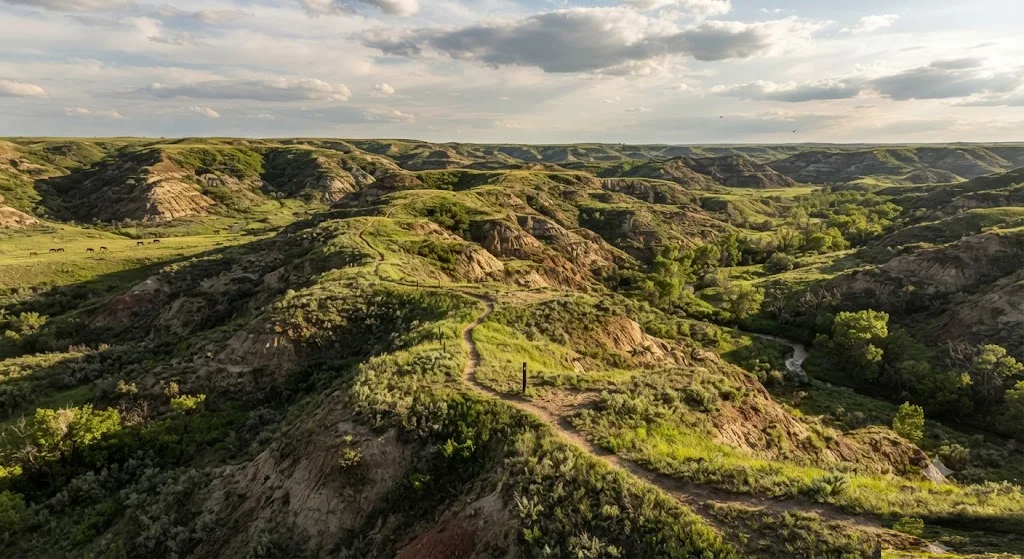
The Maah Daah Hey Trail, whose name comes from the Mandan people and means "an area that has been or will be around for a long time," is a testament to the enduring beauty of North Dakota's badlands. Spanning 144 miles, this continuous single-track trail winds through a spectacular landscape of majestic plateaus, jagged peaks and valleys, vast expanses of rolling prairie, and the meandering Little Missouri River. It's a place where the raw power of nature is on full display, offering panoramic vistas and clay-sculpted terrain that you won't find anywhere else in the Midwest.
Visiting the Maah Daah Hey Trail is an opportunity to disconnect from the ordinary and immerse yourself in true wilderness. Here, you'll find solitude and a profound connection to the land that shaped President Theodore Roosevelt's conservation ethic. The trail links the North and South Units of Theodore Roosevelt National Park, allowing adventurers to explore some of the park's most scenic and untouched landscapes. It's an epic journey through a diverse ecosystem, rich in geological wonders and teeming with wildlife, providing a unique backdrop for hiking, biking, and horseback riding.
Is It Worth Visiting?
Absolutely. Our team unequivocally agrees: the Maah Daah Hey Trail is worth visiting. While it demands preparation and respect for its remote nature, the rewards are immense. This isn't your average stroll in the park; it's an immersive, challenging, and deeply rewarding experience that will stay with you long after you've left the badlands. The trail's designation as an "Epic" trail by the International Mountain Biking Association (IMBA) speaks volumes about its quality and the unique challenge it presents. The Maah Daah Hey Trail offers a rugged and remote experience, attracting a relatively small number of visitors, which means you're likely to find the solitude and wild beauty you seek. For those willing to embrace its challenges, the Maah Daah Hey Trail North Dakota offers an unforgettable adventure.
Who It's Best For
The Maah Daah Hey Trail is ideal for experienced outdoor enthusiasts seeking a challenging multi-day adventure. It's particularly renowned among:
- Mountain Bikers: With 94% singletrack, the trail is a world-class destination for bikepacking and mountain biking, rated intermediate to advanced in technical difficulty.
- Thru-Hikers and Backpackers: Those looking for a long-distance trek through varied and remote terrain will find the Maah Daah Hey Trail offers solitude and stunning scenery.
- Equestrians: Horseback riding is another popular way to experience the trail, offering a unique perspective of the badlands.
- Wildlife Enthusiasts and Photographers: The diverse ecosystem provides ample opportunities to spot mule deer, pronghorn antelope, golden eagles, bison, and prairie dogs against a dramatic backdrop.
While sections can be enjoyed as day trips, the full 144-mile length is designed for multi-day travel, requiring good physical fitness, preparation, and experience in remote environments.
Getting There & Parking
Understanding how to get to Maah Daah Hey Trail is crucial for planning your adventure. The trail is located in western North Dakota, primarily winding through the Little Missouri National Grassland and connecting the North and South Units of Theodore Roosevelt National Park. The nearest major towns are Medora (South Unit) and Watford City (North Unit).
Access Points & Trailheads
The Maah Daah Hey Trail is a point-to-point route with numerous access points, making it flexible for both short outings and long thru-trips. The official termini are:
- Southern Terminus: Burning Coal Vein Campground, approximately 49 miles south of Medora on East River Road.
- Northern Terminus: CCC Campground, about 16-20 miles south of Watford City off Highway 85.
Other popular trailheads include Bennett Campground, Buffalo Gap Campground (near I-94), Wannagan Campground, Coal Creek, Elkhorn, Magpie, Plumely Draw, and Sully Creek. These access points are typically reached via gravel roads, which are generally suitable for standard vehicles, though high-clearance vehicles can be beneficial, especially after rain.
Parking
Parking is available at the various campgrounds and designated trailheads along the route. For point-to-point trips, arranging a shuttle service is highly recommended. Dakota Cycling Adventures (formerly Dakota Cyclery) in Medora offers shuttle services for riders and bikes to various trailheads, including the CCC Campground at the northernmost point. If you're planning a multi-day trip, consider leaving a vehicle at one end and arranging a shuttle for the other, or utilizing a supported tour. Be aware that parking along East River Road south of Medora can be dangerous, and signs indicate no-parking, no-loitering, and no-unloading zones.
For those traveling to the area, Bismarck is a common starting point, with shuttle services available from there to Medora. We recommend checking current trail conditions and access alerts on the Maah Daah Hey Trail Association website before your trip.
Top Things to Do
The Maah Daah Hey Trail North Dakota offers a wealth of activities for outdoor adventurers. Here's what our team recommends for making the most of your visit:
Hiking and Backpacking
The entire 144-mile trail is open to hikers, offering an immersive experience through the badlands. You can embark on a challenging thru-hike, which typically takes 10 to 15 days, or opt for shorter day hikes from various trailheads. Popular sections for day hikes include the stretch from Buffalo Gap to Wannagan, known for its open prairie and badlands terrain, or the technical and rugged southern sections near Coal Creek Campground. Remember that while many sections are rideable for experienced mountain bikers, hikers should still expect strenuous segments and dynamic weather. Prepare for significant sun exposure and carry plenty of water.
Mountain Biking
The Maah Daah Hey Trail is world-renowned for its mountain biking, often rated as an IMBA "Epic" trail. Its 94% singletrack offers a challenging and exhilarating ride through diverse terrain, including steep climbs, twisting descents, and long, flat stretches. Medora is a prime hub for mountain biking, with Dakota Cycling Adventures offering high-quality bike rentals and shuttle services to various trailheads. The annual Maah Daah Hey 100 MTB Race, held each August, draws riders from across the country to test their endurance on the rugged singletrack. For a taste of the trail's technical ruggedness, consider the 14-mile section from Plumely Draw to Bully Pulpit, often referred to as "The Deuce."
Horseback Riding
Equestrians are welcome on the Maah Daah Hey Trail, and it offers an incredible opportunity to explore the badlands on horseback. The wide-open spaces and varied terrain make for a memorable riding experience. Be sure to be aware of other trail users and follow Leave No Trace principles.
Wildlife Viewing and Photography
The badlands are a haven for wildlife. Keep an eye out for iconic North Dakota species such as bison, wild horses, mule deer, pronghorn antelope, and golden eagles. Prairie dog towns are common sights, and if you're lucky, you might even spot an elk or coyote. The dramatic landscapes, especially at sunrise and sunset, provide endless opportunities for stunning photography. Remember to maintain a respectful distance from all wildlife.
Exploring Theodore Roosevelt National Park
The Maah Daah Hey Trail connects to both the North and South Units of Theodore Roosevelt National Park. While the trail itself bypasses some wilderness areas within the park, it allows access to its outer reaches. The South Unit, near Medora, offers scenic drives, visitor centers, and the Maltese Cross Cabin. The North Unit, near Watford City, provides a different perspective of the badlands. Entrance to Theodore Roosevelt National Park requires a fee: $30 for a 7-day vehicle pass, or an annual pass for $55. As of May 1, 2026, the park will only accept credit cards, debit cards, or digital payments for entrance and campground fees.
Maah Daah Hey Trail Hiking Trails
When it comes to Maah Daah Hey Trail hiking trails, you have a spectrum of options, from challenging multi-day treks to shorter, scenic day hikes. The entire 144-mile Maah Daah Hey Trail is open for hiking, providing a continuous path through the diverse badlands. For those aiming to conquer the full distance, expect a strenuous journey with varied terrain, including steep climbs and descents over bentonite clay soil, rolling prairies, and canyon rims. Water planning is paramount for thru-hikers, as reliable sources are limited to developed campgrounds and designated water caches, which can be 18 to 25 miles apart.
For shorter excursions, many of the 17 trailheads along the Maah Daah Hey Trail system offer excellent day hiking opportunities. For instance, the section from Buffalo Gap Campground to Wannagan Campground provides open and rolling terrain through prairie and badlands. The Coal Creek Campground area offers access to technical, rugged, and remote sections of the trail, perfect for a challenging day hike. Additionally, the Maah Daah Hey Trail Association provides an interactive map that details trail units of varying size and difficulty, such as the Wolf (8.8 miles), Long X (5.8 miles), and Buffalo Gap (18.9 miles) trails, all part of the larger system. These interconnected trails ensure that whether you're seeking a quick scenic walk or a multi-day backpacking adventure, the Maah Daah Hey Trail hiking trails deliver.
Maah Daah Hey Trail Camping
Camping is an integral part of experiencing the Maah Daah Hey Trail, offering a chance to truly immerse yourself in the badlands wilderness. When planning your Maah Daah Hey Trail camping, you have several options, from developed campgrounds with basic amenities to dispersed backcountry sites.
Developed Campgrounds
There are eleven developed campgrounds located along the Maah Daah Hey Trail system, managed by the USDA Forest Service. These include CCC, Bennett, Buffalo Gap, Burning Coal Vein, Coal Creek, Cottonwood, Elkhorn, Magpie, Rough Rider State Park, Summit, and Wannagan. These campgrounds are typically rustic, offering hand-pumped potable water (seasonally, usually May through October), vault toilets, and fire rings. The distance between these campgrounds can be 18 miles or more, so planning your water and overnight stops is essential. Fees for primitive camping at Forest Service campgrounds are usually around $6, while state park campgrounds may be around $12. Three of these campgrounds—Buffalo Gap, Cottonwood, and Sully Creek—have a limited number of reservable sites. For Theodore Roosevelt National Park campgrounds (like Cottonwood Campground, Juniper Campground, and Roundup Group Horse Camp), reservations are required as of May 1, 2026, and must be made through Recreation.gov; cash and check payments will no longer be accepted.
Dispersed Camping
Outside of Theodore Roosevelt National Park boundaries, dispersed camping is allowed on Forest Service lands, offering a true backcountry experience. When dispersed camping, remember to follow Leave No Trace principles: camp at least 100 feet from water sources and trail corridors, and avoid private or state lands where camping is prohibited. Within Theodore Roosevelt National Park, backcountry camping is permitted, but you will need to obtain a permit from a visitor center.
Water Caches
Water is the biggest logistical challenge for Maah Daah Hey Trail camping. In addition to the seasonal hand pumps at campgrounds, the Maah Daah Hey Trail Association provides eight strategically placed water caches along the trail. These are located at Bear Creek, Beicegel Creek Road, Long X, Magpie Road, Plumely Draw, Roosevelt, Third Creek, and Tom's Wash. While these caches are a valuable resource, they should not be treated as guaranteed year-round sources, and you may need to cache your own water in advance, especially during dry periods. Always carry a water filtration system and extra capacity, as long dry stretches are common.
Best Time to Visit
Choosing the best time to visit Maah Daah Hey Trail significantly impacts your experience. The North Dakota badlands experience extreme weather, from scorching summers to harsh, snowy winters. Our team strongly recommends visiting during the shoulder seasons for the most enjoyable conditions:
- Spring (Late April to Early June): This is often considered the ideal time. Temperatures are milder, wildflowers begin to bloom, and the landscape is vibrant green. The seasonal water pumps at campgrounds are typically turned on by May. However, be prepared for unpredictable spring weather, including sudden temperature changes and potential muddy conditions after rain, as the bentonite clay soil becomes extremely slick and unrideable when wet.
- Fall (September to Early November): Another excellent window, offering cooler temperatures, fewer bugs, and stunning autumn colors in the draws. Similar to spring, fall weather can be unpredictable, so pack layers.
- Summer (Late June to August): While popular, summer can be very hot, with high exposure to sun and little shade. Water sources can be scarce, making proper hydration and planning even more critical. Thunderstorms are common, which can quickly turn trails into muddy hazards. If you visit in summer, plan for early morning or late afternoon activities.
- Winter (Late November to March): The trail becomes quiet and still, covered in snow, offering breathtaking solitude for those prepared for extreme cold and difficult travel. However, many services, including water pumps at campgrounds, are shut off, and Medora largely closes down in the off-season. Portions of scenic drives in Theodore Roosevelt National Park may also close due to snow and ice.
Ultimately, late spring and early fall provide the best balance of mild weather, accessible water, and fewer challenges, making them the best time to visit Maah Daah Hey Trail for most adventurers.
Where to Stay Nearby
While the Maah Daah Hey Trail offers ample camping opportunities, you might prefer a comfortable bed and amenities before or after your adventure. The charming town of Medora, located near the South Unit of Theodore Roosevelt National Park, is the primary hub for trail users.
Medora
Medora offers a range of lodging options, from motels and hotels to cabins and guesthouses. It's home to outfitters like Dakota Cycling Adventures, where you can rent bikes, arrange shuttles, and get up-to-date trail information. Medora also provides dining options and is famous for the Medora Musical, which runs seasonally.
Watford City
Located near the North Unit of Theodore Roosevelt National Park and the northern terminus of the Maah Daah Hey Trail (CCC Campground), Watford City offers additional lodging and services, though it's a bit further from the main trail attractions for many visitors.
Campgrounds
As detailed in our "Maah Daah Hey Trail Camping" section, numerous developed campgrounds are available along the trail, including:
- USDA Forest Service Campgrounds: CCC, Bennett, Buffalo Gap, Burning Coal Vein, Coal Creek, Elkhorn, Magpie, Summit, and Wannagan offer rustic sites with seasonal water. Some, like Buffalo Gap, Cottonwood, and Sully Creek, have reservable sites.
- Theodore Roosevelt National Park Campgrounds: Cottonwood Campground, Juniper Campground, and Roundup Group Horse Camp require reservations via Recreation.gov as of May 1, 2026, and only accept cashless payments. Backcountry permits are required for camping within the park.
For a comprehensive look at the best places to explore in the state, consult our guide to Best places in North Dakota. Also, consider extending your trip to nearby attractions like Theodore Roosevelt National Park or the quirky Enchanted Highway for more unique North Dakota experiences.
Sample 2-Day Itinerary
For those with limited time but a desire to experience the Maah Daah Hey Trail, our team has crafted a sample 2-day itinerary focusing on the accessible and scenic sections around Medora and Theodore Roosevelt National Park.
Day 1: Southern Badlands Immersion
Start your day in Medora, the charming gateway to the badlands. We recommend stopping at Dakota Cycling Adventures (formerly Dakota Cyclery) to pick up any last-minute gear, get current trail conditions, or arrange a bike rental and shuttle. From Medora, head south to the Plumely Draw Trailhead, a popular starting point for a fantastic day ride or hike on "The Deuce" section of the Maah Daah Hey Trail. This 11-mile segment to Bully Pulpit offers technical, rugged singletrack and stunning views of the Little Missouri River. Whether on foot or bike, you'll traverse diverse terrain and experience the raw beauty of the badlands.
After your trail adventure, return to Medora. Spend the late afternoon exploring the town's historic sites or visiting the South Unit Visitor Center of Theodore Roosevelt National Park. As of May 1, 2026, entrance to Theodore Roosevelt National Park is $30 for a 7-day vehicle pass, payable only by credit card, debit card, or digital payment. Consider a scenic drive along the park's loop road for wildlife viewing, especially at dusk when bison and wild horses are often active. Enjoy dinner in Medora, and if it's the right season, catch the Medora Musical for a taste of local entertainment.
Day 2: Northern Badlands & Iconic Views
On your second day, venture north to explore a different facet of the Maah Daah Hey Trail. Drive towards the northern sections, perhaps aiming for the Elkhorn Trailhead or Magpie Campground. The section between Elkhorn and Magpie is particularly scenic, featuring a crossing of the Little Missouri River and views from Devil's Pass. This area offers a mix of challenging terrain and breathtaking vistas, perfect for an invigorating morning hike or ride. Remember to check water levels before attempting river crossings.
Alternatively, for a less strenuous but equally rewarding experience, explore the North Unit of Theodore Roosevelt National Park, accessible near Watford City. The North Unit offers its own scenic drive and hiking trails, showcasing different geological formations and wildlife. Remember that the North Unit operates on Central Time, while the South Unit is on Mountain Time. Conclude your trip with a final appreciation of the vast North Dakota landscape, perhaps reflecting on the solitude and natural beauty that defines the Maah Daah Hey Trail.
Frequently Asked Questions
What are things to do in Western ND?
Beyond the Maah Daah Hey Trail, Western North Dakota offers a wealth of outdoor and cultural experiences. Our team highly recommends exploring Theodore Roosevelt National Park, with its scenic drives, hiking, and abundant wildlife viewing opportunities. You can also drive the quirky Enchanted Highway to see its giant scrap metal sculptures, visit the historic town of Medora for its Western charm and the Medora Musical, or delve into the region's rich history at places like the Maltese Cross Cabin. For more ideas, check out our comprehensive guide to Best places in North Dakota.
Can you do the Maah Daah Hey Trail with kids?
While the full 144-mile Maah Daah Hey Trail is generally considered intermediate to advanced and quite remote, certain sections are suitable for families with older, active children. Day hikes from easily accessible trailheads like Buffalo Gap or short rides on less technical segments can be enjoyable. However, due to limited shade, long distances between reliable water, and challenging terrain, younger children or those unaccustomed to strenuous activity may find it difficult. We recommend thorough preparation, including carrying plenty of water and snacks, and choosing shorter, well-marked sections for family outings. Always check current trail conditions and weather forecasts.
What are some Maah Daah Hey Trail tips?
Our top tips for navigating the Maah Daah Hey Trail include: 1. **Water is Paramount:** Plan your water strategy meticulously. Utilize hand pumps at campgrounds (seasonal) and designated water caches, or cache your own. Carry a filter and extra capacity. 2. **Check Conditions:** The bentonite clay soil becomes extremely slick and unrideable when wet; check trail conditions before heading out, especially after rain. 3. **Navigation:** While well-marked with "turtle" posts, carrying a detailed map (available from the Maah Daah Hey Trail Association) and a GPS device is highly recommended due to the trail's remote nature and numerous intersections. 4. **Sun Protection:** There is very little shade; bring sunscreen, a wide-brimmed hat, and protective clothing. 5. **Wildlife Awareness:** Be prepared for encounters with wildlife and maintain a respectful distance. 6. **Shuttle Services:** For point-to-point trips, consider using a shuttle service like Dakota Cycling Adventures in Medora. 7. **Leave No Trace:** Practice Leave No Trace principles to preserve this pristine environment.
Where is Maah Daah Hey Trail parking?
Parking for the Maah Daah Hey Trail is available at its numerous trailheads and developed campgrounds along the route. Key parking areas include the southern terminus at Burning Coal Vein Campground and the northern terminus at CCC Campground. Other popular access points with parking include Bennett, Buffalo Gap, Wannagan, Coal Creek, Elkhorn, and Magpie campgrounds. These parking areas are generally accessible via gravel roads. For multi-day trips, many visitors arrange shuttle services with local outfitters like Dakota Cycling Adventures in Medora to transport vehicles or drop off at one end of their chosen segment. Always ensure your vehicle is securely parked and be aware of any specific parking regulations at individual trailheads.
What is the best time to visit Maah Daah Hey Trail?
The best time to visit the Maah Daah Hey Trail is during the shoulder seasons: late spring (late April to early June) and early fall (September to early November). During these periods, you'll generally find milder temperatures, which are more comfortable for hiking, biking, and horseback riding, and fewer insects. Summer can be excessively hot with minimal shade, and water sources can be more scarce. Winters are harsh and snowy, making travel difficult, and many services, including campground water pumps, are closed. Visiting in spring or fall helps you avoid the challenges of extreme heat or impassable muddy trails caused by wet bentonite clay.
What are the Maah Daah Hey Trail hours and fees?
The Maah Daah Hey Trail itself is open year-round, 24/7, and there are no permits or fees required to access the trail. However, if you plan to camp at developed USDA Forest Service campgrounds along the trail, there are typically small fees, around $6 per night for primitive sites. For camping within Theodore Roosevelt National Park, a permit is required, and reservations for developed campgrounds (Cottonwood, Juniper, Roundup Group Horse Camp) are mandatory as of May 1, 2026, and must be made through Recreation.gov using cashless payments. Additionally, entering Theodore Roosevelt National Park incurs an entrance fee of $30 for a 7-day vehicle pass, or $55 for an annual pass. As of May 1, 2026, the park will only accept credit cards, debit cards, or digital payments for these fees.
We hope this guide inspires you to explore the incredible Maah Daah Hey Trail. It's a journey into the heart of North Dakota's wild beauty, promising challenges and unforgettable memories. Prepare well, respect the land, and embrace the solitude of this truly epic trail.
Last updated: 2026-07-08 by the Roam States team.