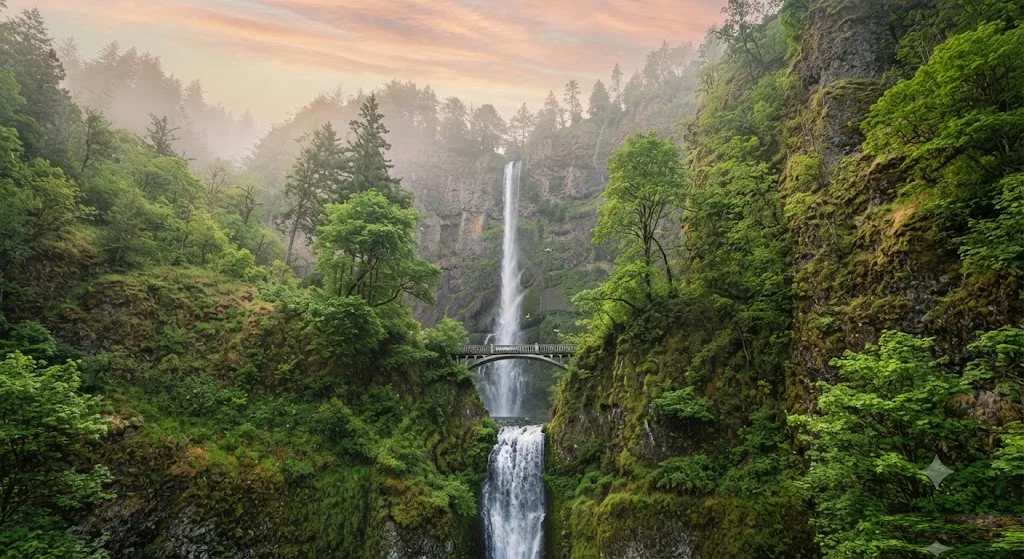
As the Roam States editorial team, we’ve explored the length and breadth of the United States, and few natural wonders captivate us quite like Multnomah Falls Oregon. This iconic, two-tiered waterfall, plunging 620 feet into the Columbia River Gorge, is not just a sight to behold; it's an experience that embodies the raw beauty of the Pacific Northwest. Our guide cuts through the generic fluff to provide you with confident, specific, and essential information for planning your unforgettable visit in 2026.
Why Visit Multnomah Falls
Multnomah Falls isn't merely Oregon's tallest waterfall; it's a geological marvel and a testament to the powerful forces that shaped the Columbia River Gorge. Fed by underground springs from Larch Mountain, its flow remains impressive year-round, peaking in winter and spring. The sheer scale of the falls, combined with the lush, moss-draped basalt cliffs, creates a truly breathtaking spectacle that draws over two million visitors annually, making it one of the most visited natural recreation sites in the Pacific Northwest.
Beyond its natural grandeur, Multnomah Falls offers a unique blend of accessibility and adventure. The paved path to the lower viewing platform and the historic Benson Bridge provides an easy way for nearly everyone to get up close to the thundering water. For those seeking more challenge, trails lead higher up, offering different perspectives and a deeper immersion into the surrounding forest. The historic Multnomah Falls Lodge, built in 1925, adds a touch of rustic charm, housing a restaurant, gift shop, and interpretive center.
Visiting Multnomah Falls is more than just seeing a waterfall; it’s about connecting with nature, experiencing a piece of Oregon’s natural heritage, and creating lasting memories in one of America's most stunning landscapes. It's a cornerstone of any trip through the Columbia River Gorge, an area we highly recommend exploring further.
Who It's Best For
Multnomah Falls genuinely offers something for everyone, making it an ideal destination for a diverse range of travelers.
- Families with Young Children: The paved path to the lower viewing platform and Benson Bridge is easily accessible for strollers and little legs, allowing families to enjoy the majestic views without extensive hiking. The sheer power of the falls is sure to captivate children of all ages.
- Accessibility Travelers: There is accessible parking available, and a paved path leads from the main I-84 parking lot to the Visitor Center. While there are some slight inclines, the primary viewing areas are designed to be accessible. Wheelchair-friendly options are also offered at sites with less accessible hikes if you opt for a guided tour.
- Casual Sightseers: If you're looking for a quick, impactful natural wonder without breaking a sweat, Multnomah Falls delivers. The immediate viewing areas provide incredible photo opportunities and a powerful sensory experience.
- Hikers of All Levels: From a short stroll to the bridge to more challenging treks up to the top of the falls and beyond, there are Multnomah Falls hiking trails to suit various fitness levels.
- Nature Photographers: The dramatic cascade, the historic bridge, and the lush gorge environment provide endless photographic possibilities, especially during different seasons and times of day.
- Road Trippers: Conveniently located directly off I-84, it's an easy and rewarding stop for anyone exploring the best places in Oregon.
While Multnomah Falls is incredibly popular, especially during peak season, the timed-entry permit system in place during summer 2026 helps manage crowds, ensuring a more enjoyable experience for all.
Getting There & Parking
Understanding how to get to Multnomah Falls and navigate its parking situation is crucial for a smooth visit. The falls are located in the Columbia River Gorge, just a short drive east of Portland, Oregon.
Driving to Multnomah Falls
The primary way to reach Multnomah Falls by car is via Interstate 84. Take Exit 31, which leads directly to a large, free parking lot. During peak season (typically late May through early September), a timed-use permit is required for private vehicles parking in the I-84 Exit 31 lot between 9:00 AM and 6:00 PM daily. This permit costs $2 and must be reserved in advance through Recreation.gov. Permits are released in two waves: 14 days in advance and then again 2 days in advance, both at 7:00 AM PT. It's important to note that a permit does not guarantee a parking space, so checking real-time capacity on the Oregon Department of Transportation's TripCheck webpage is advisable.
There is also a smaller, privately operated parking lot located along the Historic Columbia River Highway, directly across from Multnomah Falls Lodge. This lot does not require an advance permit, but it does charge a fee, which can be up to $20 during peak season. This lot is also significantly smaller and fills up quickly.
If you have a restaurant reservation at Multnomah Falls Lodge, you do not need a timed-entry permit for the I-84 parking lot; your reservation confirmation serves as your entry pass.
Public Transportation and Shuttles
For those who prefer not to drive or deal with parking and permits, several excellent public transportation and shuttle options are available to help you get to Multnomah Falls:
- Columbia Gorge Express (CAT Bus): This public bus service runs seven days a week, connecting Portland (Gateway Transit Center) to Troutdale, Multnomah Falls, Cascade Locks, and Hood River. A day pass is $15. Be aware that due to extreme congestion, CAT buses may occasionally bypass the Multnomah Falls stop if the parking lot is full and traffic is backed up onto I-84.
- Sasquatch Shuttle: The Multnomah Falls Express shuttle departs from the Columbia Gorge Outlet Mall in Troutdale, where parking is free. The shuttle fee is $5 per person for a round trip, and pets are welcome. This shuttle service runs hourly from 9:00 AM to 4:00 PM, with the last return at 6:10 PM, from May 23 through September 7, 2026. Sasquatch Shuttle also offers a narrated Waterfall Loop Tour.
- Gray Line Trolley: New for 2026, the Gray Line offers a narrated hop-on, hop-off tour/shuttle with a full-day pass that stops at Multnomah Falls and other iconic sites in the Columbia River Gorge. There's also a new Gray Line route from Hood River to Multnomah Falls in 2026. Tickets are $35 per rider ($18 for children).
- Waterfall Shuttle (from Portland): New for 2026, a Waterfall Shuttle service from downtown Portland (meeting at Director Park) offers a direct ride to Multnomah Falls. The round-trip tickets are under $30 for adults and under $20 for children, and it includes a 3-hour window to explore the falls.
Cyclists arriving at Multnomah Falls do not need an advance permit during the summer season, though bicycle parking is limited.
Important Construction Updates for 2026: Travelers should be aware of ongoing construction projects in the Columbia River Gorge that may cause delays. The Historic Columbia River Highway east of Multnomah Falls has reopened after viaduct repairs, but intermittent lane closures on I-84 near McCord Creek are expected through late summer 2026. Always check TripCheck.com for real-time traffic impacts and closures.
Top Things to Do
Beyond simply gazing at its immense beauty, there are many things to do at Multnomah Falls that will enrich your visit. Our team highly recommends exploring the various perspectives and experiences the area offers.
- Walk to Benson Bridge: This iconic stone bridge, built in 1914, spans the lower cascade of Multnomah Falls, offering a fantastic close-up view of the upper falls and the roaring water below. It's a relatively easy, paved walk from the lodge, making it accessible for most visitors.
- Hike to the Top of the Falls: For those seeking a more strenuous adventure, the paved trail continues past Benson Bridge, winding its way up 11 switchbacks to a viewing platform at the very top of Multnomah Falls. This 2.2-mile moderate hike offers incredible panoramic views of the Columbia River Gorge.
- Explore Multnomah Falls Lodge: The historic Multnomah Falls Lodge, completed in 1925, is a destination in itself. Inside, you'll find the Multnomah Falls Lodge Restaurant, a gift shop, snack bar, and espresso bar. The restaurant offers upscale Northwest cuisine with views of the falls, and reservations are encouraged. Note that restrooms at the lodge are undergoing renovations through November 2026, with limited portable toilets available on-site.
- Visit the Interpretive Center: Located within the lodge, the U.S. Forest Service Visitor Center provides trail maps and brochures in multiple languages, offering insights into the geology and history of Multnomah Falls and the Columbia River Gorge.
- Photography: The falls are incredibly photogenic from various angles, from the base to Benson Bridge and the upper viewpoint. Don't forget to capture the historic lodge and the surrounding lush forest.
- Birdwatching and Wildlife Spotting: Keep an eye out for local wildlife along Multnomah Creek and in the surrounding forest. The diverse ecosystem of the Columbia River Gorge supports a variety of bird species and other animals.
- Combine with Other Waterfall Corridor Gems: Multnomah Falls is just one of many spectacular waterfalls along the Historic Columbia River Highway. Consider visiting nearby Wahkeena Falls, Latourell Falls, Horsetail Falls, and Bridal Veil Falls to make the most of your trip to the Columbia River Gorge. Many shuttle services offer tours that include multiple waterfall stops.
These things to do at Multnomah Falls ensure a comprehensive and memorable experience for every visitor.
Best Time to Visit
Choosing the best time to visit Multnomah Falls can significantly impact your experience. Each season offers a unique perspective on this natural wonder.
- Spring (March - May): We consider spring one of the best times to visit. The falls are typically at their most powerful due to snowmelt and spring rains, creating a truly thundering spectacle. The surrounding forest is vibrant with new growth, and wildflowers begin to bloom. Crowds are generally manageable before the peak summer season.
- Summer (June - Early September): Summer is the most popular time to visit, offering warm weather and long daylight hours. However, this is also when the timed-use permit system is in effect for vehicles parking at the I-84 Exit 31 lot (May 22 to September 7, 2026, from 9:00 AM to 6:00 PM). While permits help manage crowds, expect more people and potential traffic delays on I-84 due to ongoing construction. Shuttles are an excellent option during this period to avoid parking hassles.
- Fall (Mid-September - November): Fall brings stunning foliage to the Columbia River Gorge, with vibrant reds, oranges, and yellows painting the landscape around Multnomah Falls. The weather is often crisp and pleasant, and the summer crowds have thinned. The falls still maintain a good flow.
- Winter (December - February): For a truly magical experience, consider a winter visit. When temperatures drop, the falls can partially freeze, creating spectacular ice formations. The crowds are minimal, offering a more serene and intimate experience. Be prepared for colder, potentially icy conditions on trails, and check for any weather-related closures. The flow of the falls is usually highest during winter.
Overall, our team recommends visiting in the spring or fall for the best balance of powerful falls, pleasant weather, and fewer crowds. If you must visit in summer, plan meticulously, secure your timed-use permit well in advance, or utilize one of the many shuttle services to navigate how to get to Multnomah Falls.
Where to Stay Nearby
While there isn't lodging directly at Multnomah Falls itself, the surrounding Columbia River Gorge offers a variety of accommodations, from charming historic lodges to modern hotels and unique vacation rentals. Here are some of our top recommendations:
- Historic Multnomah Falls Lodge: While it doesn't offer overnight stays, the lodge itself is a central hub for dining and amenities. Its restaurant is open daily.
- Hood River: Approximately 30-40 minutes east of Multnomah Falls, Hood River is a vibrant town known for its windsurfing, breweries, and wineries. It offers a range of hotels, B&Bs, and vacation rentals, making it an excellent base for exploring the eastern Gorge.
- Cascade Locks: Located about 15-20 minutes east of Multnomah Falls, Cascade Locks offers a more laid-back atmosphere with a few motel and hotel options, including the Best Western Plus Columbia River Inn. It's also a hub for some shuttle services.
- Troutdale: As the "Gateway to the Gorge," Troutdale is just 10-15 minutes west of Multnomah Falls. It provides convenient access to I-84 and offers a selection of chain hotels and the Columbia Gorge Premium Outlets, which is a departure point for some shuttles.
- Gresham: A larger city just outside the Gorge, about 20-25 minutes from Multnomah Falls, Gresham offers a wider array of lodging options, including many budget-friendly hotels. Some shuttle services also originate here.
- Portland: If you prefer a city base with more dining, entertainment, and cultural attractions, Portland is about a 30-45 minute drive west. Many shuttle services depart directly from downtown Portland, offering a convenient car-free option for visiting Multnomah Falls.
For a truly immersive experience within the Columbia River Gorge, consider staying at one of the many charming inns or vacation rentals scattered along the Historic Columbia River Highway or in the smaller towns like Stevenson (across the river in Washington) or Corbett.
Sample 2-Day Itinerary
To truly experience the magic of Multnomah Falls and its stunning surroundings, we recommend dedicating at least two days. This allows for a deeper exploration without feeling rushed.
Day 1: Multnomah Falls & Western Gorge Wonders
- Morning (9:00 AM - 1:00 PM): Multnomah Falls Immersion
- Arrive early at Multnomah Falls. If visiting between May 22 and September 7, 2026, ensure you have your timed-use permit for the I-84 parking lot or plan to take a shuttle.
- Begin with a walk to the lower viewing platform and then across the iconic Benson Bridge for up-close views of the falls.
- If you're up for it, continue the hike up the paved trail to the top of Multnomah Falls, enjoying the switchbacks and stunning vistas of the Gorge.
- Explore the Historic Multnomah Falls Lodge, grab a coffee or snack, and browse the gift shop.
- Lunch (1:00 PM - 2:00 PM): Lodge Dining or Picnic
- Enjoy lunch at the Multnomah Falls Lodge Restaurant (reservations encouraged) or pack a picnic to enjoy at one of the designated areas.
- Afternoon (2:00 PM - 5:00 PM): Waterfall Corridor Exploration
- Head west on the Historic Columbia River Highway (or take a shuttle) to explore other nearby waterfalls. We suggest Latourell Falls (known for its unique columnar basalt), Wahkeena Falls (with its accessible loop trail), and Horsetail Falls.
- Stop at Crown Point and Vista House for unparalleled panoramic views of the Columbia River Gorge.
- Evening: Dinner & Relaxation
- Drive to Troutdale or Gresham for dinner and check into your accommodation.
- Enjoy a relaxed evening, perhaps reflecting on the day's natural beauty.
Day 2: Eastern Gorge Adventures & Beyond
- Morning (9:00 AM - 1:00 PM): Hood River Valley or Hiking
- Option A (Scenic Drive & Foodie Delights): Drive east towards Hood River. Explore the charming town, known for its breweries, cideries, and fruit orchards. Consider a scenic drive through the Hood River Fruit Loop.
- Option B (Hiking Adventure): For more hiking, explore trails further east in the Gorge, such as those near Cascade Locks or the eastern sections of the Historic Columbia River Highway. Remember to check for any required permits for specific trailheads.
- Lunch (1:00 PM - 2:00 PM): Local Flavors
- Enjoy lunch in Hood River, Cascade Locks, or a local eatery along your chosen route.
- Afternoon (2:00 PM - 5:00 PM): Mount Hood or State Park Exploration
- Option A (Mountain Views): Head south towards Mount Hood National Forest. Drive up to Timberline Lodge for stunning mountain views and a taste of history.
- Option B (State Park Serenity): Visit a nearby state park like Ainsworth State Park, which offers camping and access to hiking trails. Or, if you're interested in more waterfalls, consider a trip to Silver Falls State Park, though it's a longer drive south.
- Evening: Departure or Extended Stay
- Depending on your travel plans, you can begin your journey home or extend your stay to explore more of Oregon, perhaps heading south to Crater Lake National Park or west to the coast and Cannon Beach & Haystack Rock. Alternatively, delve into Portland's cultural scene, including a visit to Powell's City of Books.
Multnomah Falls Hiking Trails
The Multnomah Falls hiking trails offer a range of experiences, from a leisurely stroll to a challenging ascent. Our team believes that exploring these trails is the best way to truly appreciate the falls' grandeur and the surrounding Columbia River Gorge.
- Paved Path to Benson Bridge: This is the most accessible and popular option. From Multnomah Falls Lodge, a paved path leads directly to the iconic Benson Bridge, which crosses the lower falls. It's a short, easy walk that provides magnificent views of both the upper and lower cascades.
- Larch Mountain Trail to the Top of the Falls: For a more strenuous hike, continue past Benson Bridge on the paved Larch Mountain Trail. This trail features 11 switchbacks as it climbs 700 feet in 1.1 miles to the top of Multnomah Falls, where a viewing platform offers a unique perspective looking down on the falls and out across the Gorge. The round trip to the top and back is approximately 2.2 miles.
- Upper Larch Mountain Trail (Beyond the Falls Viewpoint): For experienced hikers, the Larch Mountain Trail continues beyond the top of Multnomah Falls, eventually leading to the summit of Larch Mountain. This is a much longer and more challenging hike (around 14 miles round trip from the lodge to Larch Mountain summit), offering solitude and different forest environments.
- Connecting Trails (Wahkeena Loop): Multnomah Falls is part of a larger network of Multnomah Falls hiking trails in the Waterfall Corridor. A popular option is the 2.5-mile loop connecting Multnomah Falls to Wahkeena Falls. This trail offers diverse scenery, including several smaller waterfalls and lush forest. You can access the base of Wahkeena Falls from Multnomah Falls, which is about 0.5 miles each way.
Important Hiking Notes for 2026:
- Trail Conditions: Always check current trail conditions before heading out, especially during winter or after heavy rains, as sections can be slippery or subject to closures.
- Permits: While a timed-entry permit is required for parking at the I-84 lot during peak season, hikers arriving by foot, bike, or shuttle do not need a permit.
- Safety: Stay on marked trails, respect closures, and keep pets on a leash. Pack out all trash.
- Construction: The Historic Columbia River Highway State Trail between Eagle Creek and Cascade Locks remains closed for safety due to a December landslide. Also, there are construction projects on I-84 and parts of the Historic Highway that may affect trail access or require shuttles for trail users.
Multnomah Falls Camping
While you can't pitch a tent directly at the base of the falls, there are several excellent Multnomah Falls camping options nearby, ranging from developed campgrounds to dispersed camping in the surrounding national forests. Our team recommends planning your camping reservations well in advance, especially for peak season.
Developed Campgrounds:
- Ainsworth State Park Campground: Located just minutes (about 4 miles) east of Multnomah Falls on the Historic Columbia River Highway, Ainsworth State Park offers full-hookup RV sites and walk-in tent sites. It's a popular choice due to its proximity and access to other waterfall trails like Horsetail Falls.
- Eagle Creek Campground: Situated about 10 miles from Multnomah Falls, Eagle Creek Campground is a historic Forest Service campground offering more rustic settings for tent and RV campers.
- Oxbow Regional Park: Approximately 10 miles from Multnomah Falls, Oxbow offers a variety of accommodations including tent, RV, cabin, and yurt sites along the Sandy River.
- Wyeth Campground: Located in a beautiful setting surrounded by Douglas-fir and bigleaf maple trees, Wyeth Campground offers individual and group sites. Reservations are required.
- Cascade Locks KOA: About 14 miles east in Cascade Locks, this KOA offers a full range of RV, tent, and cabin options with typical KOA amenities.
Most developed campgrounds in the Columbia River Gorge operate seasonally, typically from May through September, with some variations. Reservations are highly recommended and can often be made through Recreation.gov or Oregon State Parks.
Dispersed Camping:
For those seeking a more primitive and secluded experience, Multnomah Falls camping also includes dispersed (free) camping options in the surrounding national forests, primarily Gifford Pinchot National Forest (across the Columbia River in Washington) and Mount Hood National Forest to the south.
- Gifford Pinchot National Forest: Offers primitive sites, though navigation on forest service roads can be challenging.
- Mount Hood National Forest: Provides additional dispersed camping options.
Important Dispersed Camping Notes:
- Dispersed camping means no amenities (water, restrooms, trash service), so you must be entirely self-sufficient and practice Leave No Trace principles.
- Look for established pull-offs with existing fire rings.
- Check for fire restrictions, especially during dry summer months.
- Train and highway noise can affect many camping locations near the falls, with sites further from I-84 generally offering quieter experiences.
Whether you prefer the convenience of a developed campground or the solitude of dispersed camping, there are plenty of options to extend your stay and explore the natural beauty surrounding Multnomah Falls.
Is It Worth Visiting?
As the Roam States team, we can confidently say: yes, is Multnomah Falls worth visiting? Absolutely. This magnificent waterfall is a jewel of the Pacific Northwest and a highlight of any trip to Oregon. Its sheer size, stunning beauty, and accessibility make it a must-see destination.
While the popularity of Multnomah Falls means you won't have it to yourself, especially during peak season, the measures in place for 2026, such as the timed-entry permit system and extensive shuttle services, are designed to enhance the visitor experience by managing crowds and traffic. This means a more organized and enjoyable visit, even during busy times.
The experience of standing at the base, feeling the mist, and hearing the roar of 620 feet of cascading water is truly awe-inspiring. The short, paved walk to Benson Bridge allows nearly everyone to get an intimate view, while more adventurous souls can hike to the top for a different perspective of the falls and the expansive Columbia River Gorge. The historic lodge adds a charming touch, offering amenities and a place to relax.
Consider the practical aspects: there's no admission fee to see the falls themselves. The main costs come from transportation and parking during peak times, which can be mitigated by utilizing shuttles or planning your visit during the off-season.
Ultimately, the question is Multnomah Falls worth visiting boils down to what you seek in a travel experience. If you appreciate dramatic natural landscapes, accessible outdoor activities, and a touch of history, then Multnomah Falls will undoubtedly exceed your expectations. It's a world-class natural attraction that consistently ranks among Oregon's top destinations for a reason.
FAQ Longtails
What are things to do in Columbia Gorge?
Beyond Multnomah Falls, the Columbia River Gorge offers a wealth of activities. You can explore numerous other waterfalls like Wahkeena Falls, Latourell Falls, and Horsetail Falls, many accessible via the Historic Columbia River Highway. Outdoor enthusiasts can enjoy hiking, cycling the Historic Columbia River Highway State Trail, windsurfing and kiteboarding in Hood River, or kayaking on the Columbia River. The Gorge also features scenic viewpoints like Crown Point and Vista House, historic sites, wineries, breweries, and charming towns like Hood River and Cascade Locks. Don't forget to check out the Columbia River Gorge hub for more ideas.
Is Multnomah Falls with kids a good idea?
Yes, visiting Multnomah Falls with kids is an excellent idea! The paved path to the lower viewing platform and Benson Bridge is very kid-friendly and accessible for strollers, allowing even the youngest visitors to experience the falls up close. Older children will enjoy the moderate hike to the top of the falls. Shuttles, like the Sasquatch Shuttle, welcome children under 5 for free, making transportation easier for families. Just be mindful of crowds, especially during peak summer months, and ensure children stay on marked trails for safety.
What are some Multnomah Falls tips for visitors?
Our top Multnomah Falls tips include: visit during the spring or fall for fewer crowds and powerful water flow; if visiting between May 22 and September 7, 2026, reserve your $2 timed-use permit for the I-84 parking lot well in advance via Recreation.gov, or plan to use a shuttle service to avoid parking hassles. Arrive early in the morning or late in the afternoon for a more serene experience. Wear comfortable shoes for walking and hiking, and bring layers of clothing as weather in the Gorge can change quickly. Check TripCheck.com for real-time traffic and construction updates before you go.
What's the situation with Multnomah Falls parking?
Multnomah Falls parking varies depending on the season and location. From May 22 to September 7, 2026, a $2 timed-use permit is required for private vehicles parking in the I-84 Exit 31 lot between 9:00 AM and 6:00 PM. These permits must be reserved in advance through Recreation.gov. A smaller, privately operated lot on the Historic Columbia River Highway charges a fee (up to $20) and does not require a permit but fills quickly. Shuttles are highly recommended to avoid parking stress; options include the Columbia Gorge Express, Sasquatch Shuttle ($5 round trip), and new for 2026, a Waterfall Shuttle from Portland (under $30 round trip).
What is the best time to visit Multnomah Falls?
The best time to visit Multnomah Falls for a balance of powerful water flow, pleasant weather, and manageable crowds is during the spring (March-May) or fall (mid-September-November). In spring, snowmelt and rains make the falls exceptionally robust. In fall, the Gorge bursts with vibrant autumn colors. Summer offers warm weather but requires timed-entry permits for parking and can be very crowded. Winter provides a magical, often icy, landscape with minimal crowds, and the falls are usually at their highest flow, but be prepared for cold and potential ice on trails.
What are Multnomah Falls hours and fees?
Multnomah Falls itself is accessible year-round, day-use only. There is no admission fee to view the falls. However, for private vehicles using the I-84 Exit 31 parking lot, a timed-use permit is required between 9:00 AM and 6:00 PM daily from May 22 to September 7, 2026. This permit costs $2 and must be reserved in advance online. The Multnomah Falls Lodge generally operates from 9:00 AM to 6:00 PM on weekdays and 8:00 AM to 6:00 PM on weekends. Restrooms at the lodge are under renovation through November 2026, with limited portable toilets available.
Our team at Roam States hopes this comprehensive guide empowers you to plan an exceptional visit to Multnomah Falls. This natural wonder, nestled in the heart of the Columbia River Gorge, truly represents the untamed beauty of Oregon. Whether you're a seasoned hiker or a casual sightseer, Multnomah Falls promises an unforgettable experience. Come prepared, embrace the majesty, and let the roar of the falls inspire your next adventure in the Pacific Northwest.
Last updated: 2026-07-08 by the Roam States team.