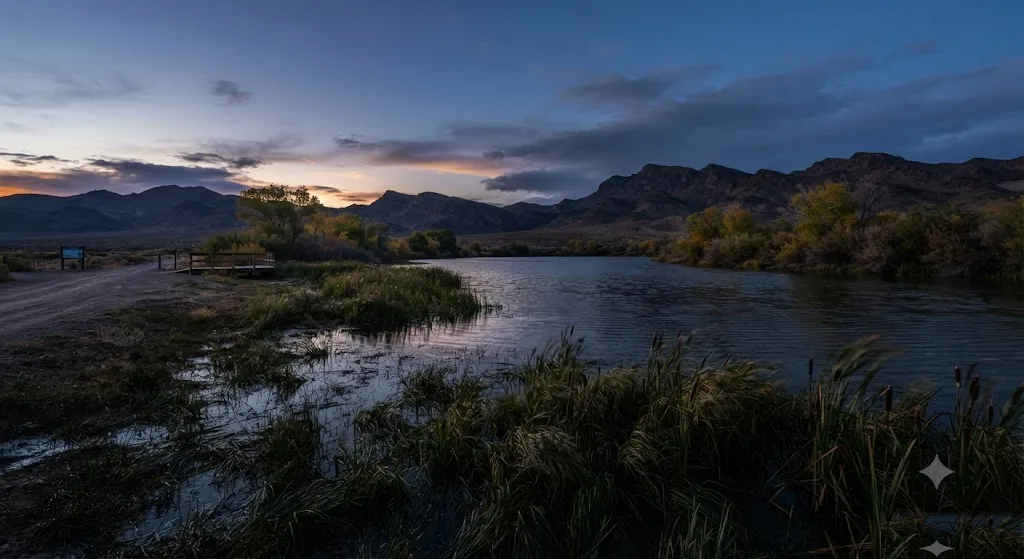
Our Pahranagat National Wildlife Refuge guide covers practical planning for Pahranagat National Wildlife Refuge Nevada — best time to visit, getting there, and what to do on the ground.
The vast, arid landscapes of Nevada hold a secret: a vibrant, life-sustaining oasis known as Pahranagat National Wildlife Refuge Nevada. This vital wetland, nestled in the desert, provides essential habitat for countless migratory birds and other wildlife, making it a premier destination for birdwatching, fishing, and photography. Our team at Roam States is here to guide you through planning an unforgettable trip to this remarkable natural sanctuary.
Why Visit Pahranagat National Wildlife Refuge
Pahranagat National Wildlife Refuge is a testament to nature's resilience, a lush haven carved out of the Mojave Desert. Established in 1963, this 5,382-acre refuge is a critical stopover along the Pacific Flyway, offering a sanctuary for thousands of waterfowl and songbirds as they journey north and south each year.
What truly sets Pahranagat apart is its dramatic contrast: acres of shimmering lakes, marshes, and wet meadows are cradled by arid desert uplands, fed by the life-giving waters of Crystal and Ash Springs. This unique ecosystem supports an incredible diversity of flora and fauna, including over 260 recorded bird species—more than half of all birds found in Nevada. Beyond the avian spectacle, you might spot desert tortoises, mule deer, coyotes, and even the critically endangered southwestern willow flycatcher.
A visit here is an opportunity to unplug and reconnect with the natural world, to witness the rhythms of life in a truly unique setting. The refuge offers a peaceful escape where the honking commotion of thousands of waterfowl during migration can be heard, and the quiet rustle of cottonwood and willow trees provides a backdrop to your explorations.
Who It's Best For
Pahranagat National Wildlife Refuge caters to a diverse range of visitors seeking an authentic outdoor experience away from the bustling lights of Las Vegas. We find it's particularly ideal for:
- Birdwatchers and Wildlife Enthusiasts: With over 260 bird species, including bald eagles in winter and thousands of migratory waterfowl, this refuge is a paradise for birders. Early mornings and late evenings offer the best opportunities for wildlife viewing.
- Photographers: The stark contrast between the desert and wetlands, combined with abundant wildlife, provides endless photographic opportunities. Photography blinds are available for those looking to capture intimate shots of the refuge's inhabitants.
- Anglers: Fishing for bass, crappie, and catfish is permitted in designated areas, making it a great spot for a peaceful day by the water.
- Families and Nature Lovers: The refuge offers easy, accessible trails, picnic areas with fire rings, and free camping, making it perfect for family outings. Children will enjoy the interactive exhibits at the visitor center and the chance to see diverse wildlife.
- Campers and RVers: Free, first-come, first-served primitive campsites are available along Upper Pahranagat Lake, offering a serene overnight experience under the stars.
- Road Trippers: Located about 90 miles north of Las Vegas on US-93, it's an excellent stop for those exploring Nevada's scenic byways or traveling between national parks. You can find more ideas for your journey on our USA Road Trip Planner.
While swimming is not allowed, the refuge encourages fishing and offers beautiful hiking trails and picnic areas.
Getting There & Parking
Understanding how to get to Pahranagat National Wildlife Refuge is straightforward, as it's conveniently located off a major highway. The refuge is situated in Lincoln County, Nevada, approximately 90 miles (about 1.5 hours) north of Las Vegas.
- From Las Vegas: Travel north on I-15 for 26 miles, then take Exit 64 for US-93 (Great Basin Highway). Continue north for approximately 64 miles.
- From Great Basin National Park: Take US-50 west for 30 miles, then turn left onto US-93 south for 169 miles, passing through Pioche, Caliente, and Alamo.
- From St. George, Utah: Travel south on I-15 for 68 miles, take Exit 91, turn left onto Glendale Blvd for 0.5 miles, then turn right onto Hwy 168 and continue for 24 miles. Turn right onto US-93 and travel north for 33 miles.
The refuge headquarters and visitor center are located near the center of the refuge, easily accessible with clear signage and a paved entrance road just off Highway 93.
Parking
Ample parking is available at the visitor center, providing a convenient starting point for your visit. Throughout the refuge, various parking lots offer access to different trails and areas, including the Upper Pahranagat Lake day-use and picnic area. All parking at the refuge is free. Our team recommends stopping at the visitor center first to gather maps and information.
It's important to note that the small farming community of Alamo, Nevada, is about 8 miles from the refuge and is the closest place to refuel your vehicle, as other gas stations are 40 or more miles away in all directions.
Top Things to Do
The things to do at Pahranagat National Wildlife Refuge are centered around its natural beauty and diverse wildlife. Our team recommends a variety of activities to fully experience this desert oasis:
- Visit the Visitor Center: Start your adventure here. The visitor center offers a short film about the refuge, interactive exhibits on local flora, fauna, and human history, and knowledgeable staff and volunteers who can provide information and guidance. Restrooms are available and are open sunrise to sunset daily, even when the visitor center is closed.
- Birdwatching: This is arguably the primary draw. With over 260 bird species, including thousands of migratory waterfowl during spring and fall, Pahranagat is a birder's paradise. Keep an eye out for bald eagles in the winter. Wildlife may be visible throughout the day, but the best times are early morning and late evening.
- Fishing: Anglers can enjoy fishing for bass, crappie, and catfish in designated areas. Note that a permit is required for fishing.
- Hiking: Explore approximately 7 miles of hiking trails, ranging from easy, ADA-accessible loops near the visitor center to more challenging routes. We detail specific trails below.
- Photography: Capture the stunning landscapes and abundant wildlife. Photography blinds are available for close-up shots.
- Picnicking: Enjoy a meal outdoors at the Upper Pahranagat Lake day-use and picnic area, which offers fire rings and vault toilets.
- Boating: Non-motorized boats or those with electric motors are permitted on Upper Lake from February 1 through September 30. The refuge is closed to all watercraft from October 1 to February 1, except for waterfowl hunting in designated zones.
- Camping: Experience the desert night sky at the free, first-come, first-served primitive campsites along Upper Pahranagat Lake.
- Ranger-Led Programs: Check the refuge's Facebook page for schedules of free guided programs, such as birding or night hikes, which offer deeper insights into the refuge's ecosystem.
- Hunting: During prescribed seasons, hunting for migratory game birds, geese, ducks, coots, snipe, and mourning doves is permitted in designated areas. Permits are required.
Whether you have an hour or a full day, there are plenty of things to do at Pahranagat National Wildlife Refuge to suit your interests.
Pahranagat National Wildlife Refuge Hiking Trails
The refuge offers around 7 miles of diverse hiking opportunities, perfect for experiencing the unique blend of wetlands and desert. Here are some of the notable Pahranagat National Wildlife Refuge hiking trails we recommend:
- Upper Lake Trail: This easy, 1.4-mile trail (or 3-mile loop if you include the campground road) encircles Upper Pahranagat Lake, providing excellent opportunities to observe waterfowl year-round.
- Davenport Trail: A 1.7-mile, moderately challenging trail that climbs from the visitor center parking lot into the upland desert, offering spectacular views before ending at Upper Pahranagat Lake. It's about 1.5 miles between the visitor center and the Upper Lake Trail.
- Cabin Trail: An easy, 0.4-mile (each way), ADA-accessible trail starting behind the visitor center. It winds along a stream bed through cottonwood groves and meadows, leading to two historic cabins built by early settlers.
- Pahranagat Loop Trail: Another easy, 0.4-mile ADA-accessible loop starting behind the visitor center. This trail features interactive interpretive signs about local flora and fauna, making it great for families.
- Black Canyon Trail: A 1.42-mile loop located east of Highway 93, across from the visitor center turnoff.
- Middle Marsh Dike: This easy, 0.2-mile route allows hikers to observe many wildlife species enjoying the shallow water and tall willow trees. Note that this trail is in a seasonal hunting area and may have active hunters on Tuesdays, Thursdays, and Saturdays during hunt season.
- Medsger Pass: For the adventurous, this is a difficult, unmaintained 22-mile one-way backcountry gravel and dirt road requiring a high-clearance/4WD vehicle. It leads to the base of Tikaboo Peak, the closest legally accessible vantage point to Area 51.
Remember to always follow posted maps and signs, as some trails and roads may be temporarily or seasonally closed due to refuge management activities or sensitive nesting birds. Our team recommends visiting the visitor center for the most up-to-date trail information and conditions.
Best Time to Visit
The best time to visit Pahranagat National Wildlife Refuge largely depends on your interests, but generally, the spring and fall offer the most comfortable weather and abundant wildlife viewing opportunities.
- Spring (March to May): The weather is mild and pleasant, making it ideal for hiking and birdwatching as migratory birds return north. The desert flora also begins to bloom, adding vibrant colors to the landscape.
- Fall (September to November): Similar to spring, fall brings comfortable temperatures and the spectacular sight of thousands of migratory birds heading south along the Pacific Flyway. The free Scorpion Hunt and Night Hike in September is a unique experience to consider.
- Winter (December to February): While cooler, winter offers excellent opportunities to spot raptors, including bald eagles, and other waterfowl that winter at the refuge. The campground is less likely to fill up as quickly during weekdays in winter.
- Summer (June to August): Summers can be extremely hot, with temperatures often exceeding 100°F. If visiting during summer, our team strongly advises going in the early morning, drinking plenty of water, using sunscreen, wearing a hat, and limiting time outdoors to avoid heat-related problems. Never leave pets or children in the car.
The refuge is generally less busy on weekdays (Monday-Thursday) compared to weekends (Friday-Sunday).
Visitor Center Hours:
The visitor center hours vary seasonally, so it's always best to check before your visit.
- September to May: Thursday – Monday, 9:00 AM – 4:30 PM (closed Tuesday and Wednesday).
- June to August: Friday – Sunday, 9:00 AM – 4:30 PM (closed Monday – Thursday).
Other visitor facilities, such as trails and restrooms, are open daily from sunrise to sunset.
Where to Stay Nearby
While the refuge offers free camping, many visitors prefer the comfort of a hotel or RV park. When considering Pahranagat National Wildlife Refuge lodging, the nearby town of Alamo, Nevada, is your primary option.
Alamo is a small farming community located about 8 miles from the refuge. While it doesn't boast a wide array of luxury accommodations, it provides essential services and a few lodging choices. Our team recommends these options for Pahranagat National Wildlife Refuge lodging:
- Hotels in Alamo: There are a couple of hotels available in Alamo. While specific names aren't always widely advertised, these provide a convenient base for exploring the refuge.
- RV Parks: Alamo and the surrounding areas offer several RV parks.
- Picketts RV Park: Located just 8.8 miles from Pahranagat National Wildlife Refuge, Picketts RV Park in Alamo is praised for its prime location off the Great Basin Highway and proximity to natural landscapes. It offers spacious sites, complimentary WiFi, and access to walking paths and UTV/ATV trails. It's also pet-friendly.
- Green Valley Grocery RV Park: About 16 miles from the refuge in Ash Springs and Hiko, this park offers a serene desert escape with spacious, private sites and convenient access to an on-site grocery store.
- Young's RV Park: Approximately 40 miles from the refuge, Young's RV Park has been operating for over 40 years, focusing on a clean and safe environment with friendly staff. It also offers complimentary WiFi and access to various outdoor trails.
- Refuge Camping: For those seeking a more immersive experience, the refuge itself offers 15 free, first-come, first-served primitive campsites along Upper Pahranagat Lake. These sites include seating, fire rings, grills, and vault toilets. Tents, trailers, and RVs are welcome, though there are no hookups. Stays are limited to 14 days within a 31-day period. Quiet hours are from 10 PM to 7 AM.
Given the limited options, especially for traditional hotels, we advise booking accommodations in advance, particularly during peak seasons or weekends. For a broader selection of lodging, you would need to look towards larger towns further afield, such as Caliente or even back towards Las Vegas.
Sample 2-Day Itinerary
To help you make the most of your visit to Pahranagat National Wildlife Refuge Nevada, our team has crafted a sample 2-day itinerary, balancing wildlife viewing, outdoor activities, and relaxation.
Day 1: Arrival, Visitor Center & Upper Lake Exploration
- Morning (10:00 AM - 12:00 PM): Arrival and Visitor Center. Arrive at Pahranagat National Wildlife Refuge. Head straight to the visitor center (check seasonal hours) to pick up maps, learn about current conditions, and watch the introductory film. Spend some time exploring the interactive exhibits.
- Lunch (12:00 PM - 1:00 PM): Picnic by the Lake. Enjoy a packed lunch at the Upper Pahranagat Lake day-use and picnic area.
- Afternoon (1:00 PM - 4:00 PM): Upper Lake Trail & Birdwatching. Embark on the easy 3-mile Upper Lake Trail loop. This is an excellent opportunity for birdwatching, especially for waterfowl and migratory birds. Bring your binoculars and camera.
- Late Afternoon (4:00 PM - 6:00 PM): Set Up Camp or Check into Lodging. If camping, find a first-come, first-served spot at the Upper Pahranagat Lake campground. If staying in Alamo, check into your chosen accommodation.
- Evening (6:00 PM onwards): Sunset & Stargazing. Enjoy dinner. As dusk settles, return to the refuge for a stunning desert sunset over the lake. Pahranagat offers incredible dark skies, perfect for stargazing.
Day 2: Hiking, History & Departure
- Morning (7:00 AM - 10:00 AM): Early Morning Hike & Wildlife Viewing. Start your day early for prime wildlife viewing. Choose between the ADA-accessible Cabin Trail (0.8 miles round trip) to see historic cabins and riparian habitats, or the Davenport Trail (1.7 miles one way) for upland desert views.
- Late Morning (10:00 AM - 12:00 PM): Fishing or Photography. Spend some time fishing at a designated spot on the lake (remember your permit!) or utilize one of the photography blinds for more intimate wildlife shots.
- Lunch (12:00 PM - 1:00 PM): Local Eats in Alamo. Head into Alamo for lunch. While dining options are limited, you can find a local spot or grab supplies from the grocery store.
- Afternoon (1:00 PM - 3:00 PM): Explore Alamo or Nearby Attractions. Depending on your interest, you might explore the small town of Alamo, or consider a scenic drive along a portion of the Extraterrestrial Highway.
- Departure (3:00 PM onwards): Begin your journey home or to your next Nevada adventure. Consider extending your trip to other incredible Nevada destinations like Cathedral Gorge State Park or Valley of Fire State Park. For more ideas across the state, see our guide to the Best Places in Nevada.
Last updated: 2026-07-13 by the Roam States team.