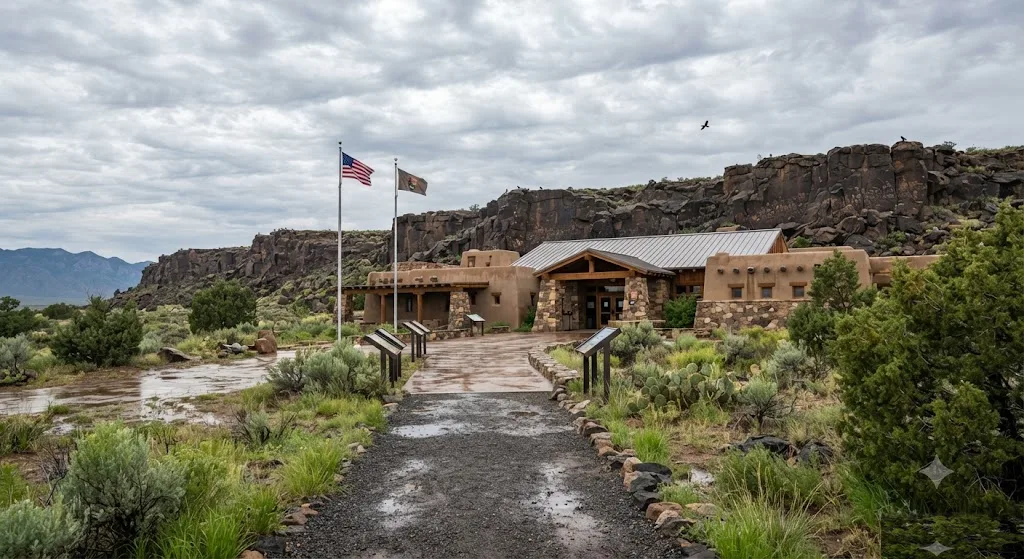
Petroglyph National Monument New Mexico, protecting one of the largest continuous petroglyph sites in North America, adjacent to a major urban zone. Our team at Roam States has meticulously explored this unique cultural landscape to bring you an independent and confident guide, ensuring you experience the very best of this extraordinary destination.
Why Visit Petroglyph National Monument
For those seeking a profound connection to ancient history and a glimpse into the spiritual lives of early inhabitants, Petroglyph National Monument offers an unparalleled experience. We believe it's an essential stop for anyone traveling through the Land of Enchantment, providing a tangible link to the past that few other sites can match. This monument preserves an estimated 24,000 images carved into volcanic rocks by both Native Americans and early Spanish settlers, some dating back as far as 3,000 years, with the majority created between the 14th and 17th centuries.
The sheer volume and variety of petroglyphs here are astounding. Imagine walking among boulders etched with human-like figures, animal forms, crosses, and enigmatic symbols, all offering silent testimony to the cultures that thrived in the Rio Grande Valley centuries ago. These aren't just drawings; they are a valuable record of cultural expression and hold deep spiritual significance. The monument's unique geology, characterized by a 17-mile volcanic escarpment formed by eruptions over 100,000 years ago, provides a dramatic backdrop to these ancient artworks. It's a place where history, art, and nature converge, inviting visitors to ponder the mysteries of human creativity and belief.
Who It's Best For
Petroglyph National Monument is a remarkably versatile destination, catering to a wide array of travelers. Our team finds it particularly appealing to history buffs, art enthusiasts, and anyone with a keen interest in Native American and early Spanish cultures. Families with children will discover engaging activities, especially with the Junior Ranger program that encourages exploration and learning.
Hikers of all skill levels will find trails ranging from easy, paved paths to moderately strenuous routes, offering opportunities to get up close with the petroglyphs while enjoying the high desert landscape. Photographers will appreciate the unique light and textures, especially during the softer hours of morning and late afternoon when the etchings are most visible. Even those seeking a peaceful outdoor escape will find solace in the monument's quiet canyons and expansive views of the Sandia Mountains.
Is It Worth Visiting?
Absolutely. Our team unequivocally states that Petroglyph National Monument is worth visiting. Despite its proximity to a major urban center, it offers an incredibly immersive and authentic historical experience. We were genuinely impressed by the accessibility and sheer number of petroglyphs visible along the trails.
Unlike some historical sites where remnants are sparse, here you'll find yourself surrounded by hundreds, even thousands, of carvings. The monument provides an easy and direct way to connect with ancient rock art, making it a truly rewarding stop. It's a testament to the enduring human desire to leave a mark and communicate across generations. We found the trails family-friendly and well-marked, making the exploration enjoyable and educational for everyone.
How to Get There
Navigating to Petroglyph National Monument is straightforward, as it's located on the west side of Albuquerque, New Mexico. The monument is spread across several distinct sites, with the Visitor Information Center serving as an excellent starting point for your visit.
The Visitor Information Center is located at 6510 Western Trail, Albuquerque, NM 87120. From Interstate 40, take exit 154 (Unser Blvd.) and proceed north for approximately 3 miles to Western Trail, then turn left (west) and follow the road to the Visitor Information Center parking lot. If coming from Interstate 25, take the Paseo del Norte exit (232) and head west to Coors Road South, then turn right (west) onto Western Trail to reach the Visitor Information Center. Be aware that some mapping applications might misdirect you, so using the official address or GPS coordinates (Lat: 35.139, Long: -106.711) is recommended.
Once at the Visitor Information Center, you can pick up maps and brochures before driving to the various petroglyph viewing areas, which are a short drive (1 to 6.5 miles) away. Parking is available at each trailhead. For Boca Negra Canyon, the City of Albuquerque charges a nominal parking fee of $1 Monday-Friday and $2 on Saturday & Sunday per vehicle. Other areas like Rinconada Canyon and Piedras Marcadas Canyon generally offer free parking.
Top Things to Do
When planning your visit, you'll find a variety of engaging things to do at Petroglyph National Monument. Our primary recommendation is to begin at the Visitor Information Center. While there are no petroglyphs directly at the center, it's invaluable for gathering information, picking up trail guides, and watching the 20-minute informational film.
From there, the core experience revolves around exploring the three main petroglyph viewing canyons: Boca Negra Canyon, Rinconada Canyon, and Piedras Marcadas Canyon. These are the top things to do at Petroglyph National Monument:
- Boca Negra Canyon: This is the most developed area, offering three short, paved trails that lead to over 100 petroglyphs. It's an excellent choice for a quicker visit, with amenities like restrooms, water, and picnic tables. The Mesa Point Trail here, though labeled strenuous by the NPS, offers a rewarding climb with great views of Albuquerque and a large petroglyph at the trailhead.
- Rinconada Canyon: For a more extended hike, the 2.2-mile round-trip loop trail in Rinconada Canyon allows you to discover approximately 300 petroglyphs. This trail is noted for its sandy paths, and we recommend binoculars for viewing some of the more distant carvings. Vault restrooms are available at the trailhead, but there is no water.
- Piedras Marcadas Canyon: This canyon boasts the highest concentration of petroglyphs, with over 400 along its 1.8-mile round-trip trail. It's a less developed area with no restrooms or water, but offers stunning views and a chance for evening hikes as it's open sunrise to sunset.
- Volcanoes Day Use Area: While it doesn't offer petroglyph viewing, this area provides trails around five dormant cinder cone volcanoes and sweeping panoramic views of Albuquerque.
- Junior Ranger Program: For younger visitors, picking up a free Junior Ranger activity booklet at the Visitor Information Center is a must. Completing the activities earns them an official Junior Ranger badge, making the exploration even more interactive.
Visiting With Kids
Petroglyph National Monument with kids is a fantastic and educational experience. Our team has found that the monument's accessible trails and engaging history make it an ideal family destination. The visual nature of the petroglyphs captures children's imaginations, sparking curiosity about ancient cultures and symbols.
The Junior Ranger program is a highlight for families. Kids can pick up free activity booklets at the Visitor Information Center and work through them as they explore the trails. This transforms a hike into a scavenger hunt for historical clues, culminating in earning an official badge. Boca Negra Canyon, with its shorter, paved trails and amenities like restrooms and picnic tables, is particularly well-suited for families with younger children. The Macaw Trail, for instance, is a very short walk with easily spotted petroglyphs.
We recommend bringing plenty of water, snacks, and sun protection, as the desert environment can be harsh. Sturdy shoes are also a must, as even paved trails can have uneven sections. Encourage kids to look closely at the rocks and try to decipher the meanings of the carvings, fostering a sense of discovery and wonder. Remember to teach them the importance of not touching the petroglyphs to preserve them for future generations.
Best Time to Visit
To truly enjoy Petroglyph National Monument, timing your visit is key. Our team recommends visiting during the spring (March to May) or fall (September to November) months. During these seasons, the temperatures are milder, typically ranging from 50–80°F, making for more comfortable hiking and exploration.
Summer months (June to August) can be extremely hot, with daily highs often exceeding 84°F. If you must visit in summer, we advise planning your hikes for early mornings or evenings to avoid the scorching sun. Winters (November to February) bring cooler temperatures, sometimes dropping below 56°F, but the desert landscape remains beautiful and the trails are open year-round.
For photography, mornings and afternoons are ideal for clearly spotting the petroglyphs, as the angle of the sun helps to highlight the etchings. Additionally, if you're interested in combining your visit with a larger New Mexico experience, consider early October when the famous Albuquerque International Balloon Fiesta takes place, adding a spectacular aerial display to your trip.
Top Things to Do
While Petroglyph National Monument is a captivating destination, the surrounding city of Albuquerque offers a wealth of attractions and activities that our team highly recommends. As the largest city in New Mexico, Albuquerque is a vibrant hub of culture, history, and outdoor adventure, especially in 2026, which marks the centennial of Route 66.
Here are some of the top things to do in Albuquerque:
- Ride the Sandia Peak Tramway: Ascend to the top of the Sandia Mountains for breathtaking panoramic views of the city and surrounding landscape. It's an unforgettable experience, especially at sunset.
- Explore Old Town Albuquerque: Wander through historic adobe buildings, browse unique shops and galleries, and dine at authentic New Mexican restaurants. Old Town is the cultural heart of the city and a great place to soak in its rich heritage.
- Visit the Indian Pueblo Cultural Center: Learn about the history, art, and culture of New Mexico's 19 Pueblos through engaging exhibits, traditional dances, and native cuisine.
- Discover the ABQ BioPark: This multi-attraction complex includes a zoo, aquarium, botanical garden, and Tingley Beach, offering a full day of family-friendly exploration.
- Experience Route 66: Albuquerque boasts the longest continuous urban stretch of the Mother Road. Explore its iconic diners, motels, and neon signs, especially with the ongoing centennial celebrations in 2026.
- Hot Air Balloon Rides: Beyond the Balloon Fiesta, year-round hot air balloon rides offer a serene and stunning perspective of the New Mexico landscape.
- New Mexico Museum of Natural History & Science: Home to dinosaur exhibits and fascinating displays on the state's natural history.
These activities provide a diverse range of experiences, ensuring there are plenty of things to do in Albuquerque to complement your visit to the monument.
Where to Stay Nearby
While there is no lodging directly within Petroglyph National Monument, the adjacent city of Albuquerque offers a wide variety of accommodation options to suit every budget and preference. Our team recommends staying in Albuquerque for convenient access to the monument and other city attractions.
For those seeking proximity to the monument, several hotels are located on Albuquerque's Westside, within a short driving distance. Options like the Hampton Inn & Suites Albuquerque-Coors Road and La Quinta Inn & Suites by Wyndham Albuquerque West are often cited as being close and well-regarded.
If you prefer a more upscale experience or want to be closer to Albuquerque's historic and cultural sites, consider hotels in or near Old Town, such as Hotel Albuquerque at Old Town. Other highly-rated options in the city include Hotel Andaluz Albuquerque, Curio Collection by Hilton, and The Clyde Hotel.
Many hotels in Albuquerque offer amenities like pools, free Wi-Fi, and pet-friendly options, catering to diverse traveler needs. For budget-conscious travelers, there are also numerous motels and economy hotels throughout the city. Vacation rentals, such as Casa Herradura or Casa Chiliwood, also provide a home-away-from-home experience, some within walking distance to parts of the monument.
Sample 2-Day Itinerary
To help you make the most of your trip, our team has crafted a sample 2-day itinerary for exploring Petroglyph National Monument and the best of Albuquerque:
Day 1: Ancient Art & Desert Vistas
- Morning (9:00 AM - 12:00 PM): Petroglyph National Monument Visitor Information Center & Boca Negra Canyon
- Start your day at the Visitor Information Center (6510 Western Trail NW). Pick up maps, brochures, and the Junior Ranger booklet for kids. Watch the introductory film to get an overview of the monument's history and significance.
- Drive to Boca Negra Canyon (6900 Atrisco Drive NW). Explore the three short, paved trails to view over 100 petroglyphs up close. This area is family-friendly with restrooms and picnic tables. Allow 1-2 hours. Remember the small parking fee.
- Lunch (12:00 PM - 1:00 PM): Picnic or Local Eatery
- Enjoy a picnic lunch at Boca Negra Canyon or head to a nearby casual restaurant on Albuquerque's Westside.
- Afternoon (1:00 PM - 4:00 PM): Rinconada Canyon or Piedras Marcadas Canyon
- Choose between Rinconada Canyon (3701 Unser Blvd. NW) for a 2.2-mile loop trail with about 300 petroglyphs, or Piedras Marcadas Canyon (open sunrise to sunset) for a 1.8-mile trail featuring over 400 petroglyphs. Rinconada has vault toilets; Piedras Marcadas does not have facilities.
- Late Afternoon/Evening: Sandia Peak Tramway & Dinner
- Head east to take the Sandia Peak Tramway for a stunning ride up the Sandia Mountains. Enjoy panoramic views of the city as the sun sets.
- Have dinner at one of the restaurants at the top of the tramway or return to Albuquerque for a meal in the Northeast Heights or Nob Hill areas.
Day 2: Albuquerque Exploration & Cultural Immersion
- Morning (9:00 AM - 12:00 PM): Old Town Albuquerque & Indian Pueblo Cultural Center
- Begin your day exploring historic Old Town Albuquerque. Wander the charming streets, visit the San Felipe de Neri Church, and browse the local shops.
- Next, immerse yourselves in Native American heritage at the Indian Pueblo Cultural Center, featuring exhibits, a museum, and traditional dances.
- Lunch (12:00 PM - 1:00 PM): New Mexican Cuisine
- Savor authentic New Mexican dishes in Old Town or at the Indian Pueblo Cultural Center's restaurant.
- Afternoon (1:00 PM - 4:00 PM): ABQ BioPark or Route 66 Exploration
- Families might enjoy the ABQ BioPark (Zoo, Aquarium, Botanic Garden).
- Alternatively, explore Albuquerque's iconic Route 66. Drive along Central Avenue, stopping at classic diners and neon-lit landmarks. Consider visiting the National Museum of Nuclear Science & History or the New Mexico Museum of Natural History & Science.
- Evening: Dinner & Relaxation
- Enjoy a final dinner in Albuquerque, perhaps sampling one of its award-winning breweries or eclectic restaurants.
This itinerary offers a balanced blend of natural beauty, ancient history, and vibrant city culture. For more extensive travel ideas in the region, be sure to check out our guide to the Best Places in New Mexico, including destinations like Carlsbad Caverns National Park and White Sands National Park.
Last updated: 2026-07-08 by the Roam States team.