Pinckney Island National Wildlife Refuge Travel Guide — South Carolina
Our Pinckney Island National Wildlife Refuge guide covers practical planning for Pinckney Island National Wildlife Refuge South Carolina — best time to visit, getting there, and what to do on the ground.
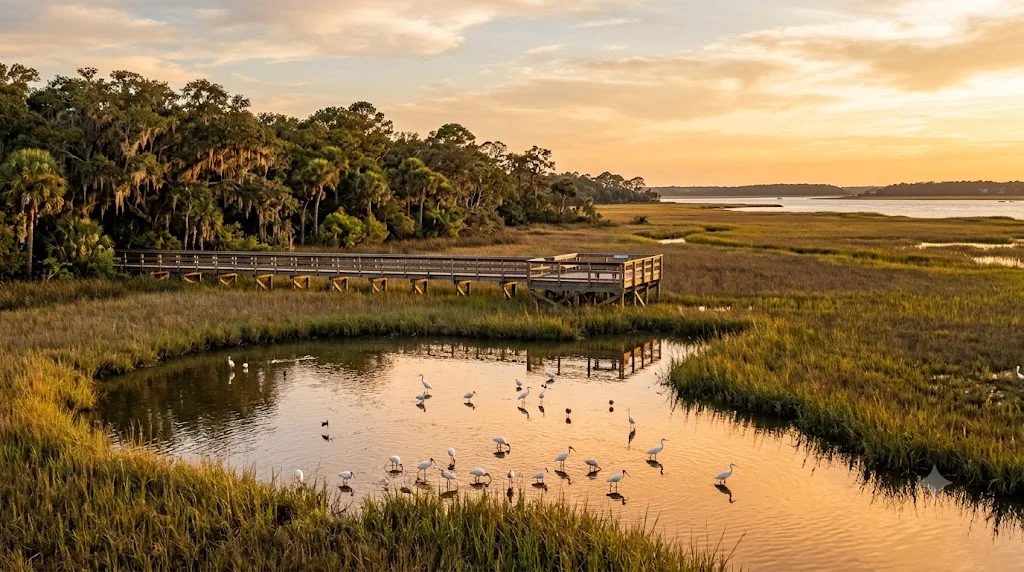
For those seeking an authentic Lowcountry experience, Pinckney Island National Wildlife Refuge South Carolina offers a pristine escape into a protected natural world. This refuge provides critical habitat for migratory birds and other wildlife, and our team considers it an essential stop for anyone looking to connect with nature on foot or by bicycle. It’s a haven for birdwatching, photography, and peaceful nature walks, far removed from the bustling pace of nearby tourist hubs. Established in 1975, the refuge spans over 4,000 acres, encompassing Pinckney Island itself, along with Corn Island, Big Harry Island, Little Harry Island, Buzzard Island, and numerous smaller hammocks.
Why Visit Pinckney Island National Wildlife Refuge
If you're wondering, "is Pinckney Island National Wildlife Refuge worth visiting?", our answer is an unequivocal yes. This isn't just another park; it's a vital link in the Atlantic Flyway, attracting thousands of migratory birds annually and serving as a crucial nesting ground for colonial wading birds like ibis, egrets, and herons. The diverse ecosystems—including salt marsh, tidal creeks, maritime forest, freshwater ponds, and open fields—create a dynamic environment where wildlife thrives and visitors can observe it up close. We believe the opportunity to witness such a rich variety of species in their natural habitat, all while enjoying serene landscapes, makes Pinckney Island National Wildlife Refuge an indispensable part of any South Carolina itinerary. The refuge offers a peaceful respite from the hustle and bustle, a place to truly unwind and appreciate the outdoors.
Our team finds the sheer abundance and accessibility of wildlife at Pinckney Island National Wildlife Refuge to be unparalleled in the region. It's a place where you can truly feel immersed in the Lowcountry's natural beauty, making it profoundly worth visiting for nature lovers and photographers alike.
Who It's Best For
Pinckney Island National Wildlife Refuge is ideal for nature enthusiasts, birdwatchers, photographers, and anyone seeking a tranquil outdoor experience. Its flat, well-maintained trails make it accessible for hikers and cyclists of all skill levels, including families. The refuge is a fantastic spot for birding, with over 250 species recorded, including the colorful painted bunting during summer and various warblers during migration. American alligators are a common sight, particularly around the freshwater ponds, as are white-tailed deer. While it's a superb destination for adults, Pinckney Island National Wildlife Refuge with kids can also be a rewarding experience. The easy trails and abundant wildlife sightings, such as turtles, birds, butterflies, and fiddler crabs, can captivate younger visitors. However, visitors should be aware that there are no public amenities like restrooms or drinking water on the island, and pets are not permitted (except service animals).
Getting There & Parking
Understanding how to get to Pinckney Island National Wildlife Refuge is straightforward. The refuge is conveniently located between Hilton Head Island and the mainland town of Bluffton, South Carolina, making it easily accessible from both areas. From I-95, take Exit 8 east towards Hilton Head Island for approximately 16 miles; the entrance gate will be on your left. If you're coming from Hilton Head Island, exit via US 278 West, and the refuge entrance will be on your right in about half a mile.
Parking at Pinckney Island National Wildlife Refuge is available in a designated lot located about half a mile from the refuge entrance. It's important to note that no vehicles are permitted beyond this parking area; all exploration within the refuge is by foot or bicycle. We recommend arriving early, especially during peak seasons, as the parking lot can fill up. While there is a bulletin board and display near the parking lot where you can pick up a refuge map and bird checklist, remember there are no on-site staff, restrooms, or drinking water facilities. Always bring plenty of water, especially during warmer months.
Top Things to Do
Pinckney Island National Wildlife Refuge offers a variety of activities centered around its natural beauty and abundant wildlife. Our team consistently recommends prioritizing wildlife observation, hiking, and biking to truly experience the refuge. For those wondering about things to do at Pinckney Island National Wildlife Refuge, here are our top recommendations:
Hiking and Biking the Pinckney Island National Wildlife Refuge Hiking Trails
With over 14 miles of trails, Pinckney Island National Wildlife Refuge is a paradise for hikers and cyclists. The trails consist of wide grass paths and gravel roads, making them generally easy to navigate and suitable for most fitness levels. The Main Trail, a 3.5-mile one-way path, traverses the island from north to south, providing access to many of the refuge's best areas. Suggested hiking and biking trips range from short loops to longer excursions, allowing you to tailor your visit. For instance, the round-trip to Ibis Pond is about 1.2 miles and takes roughly an hour and a half at a leisurely pace, with plenty of stops for wildlife viewing. Other trails lead to Shell Point (4.6 miles round-trip), Starr Pond (2.0 miles round-trip), and White Point (7.8 miles round-trip), where you can even find a small, secluded beach. When exploring the Pinckney Island National Wildlife Refuge hiking trails, be sure to pick up a map at the kiosk near the parking lot.
Birdwatching & Wildlife Photography
Pinckney Island is renowned for its exceptional birdwatching opportunities. As a crucial stop on the Atlantic Flyway, the refuge hosts over 250 bird species throughout the year. Ibis Pond, located less than a mile from the parking lot, is a major heronry and an excellent spot to observe nesting wading birds like snowy egrets, cattle egrets, tricolored herons, little blue herons, and black-crowned night-herons, especially in late spring and early summer. You might also spot white ibis, wood storks, and a variety of waterfowl and shorebirds. Beyond birds, keep an eye out for American alligators basking near the ponds, white-tailed deer, and even red foxes and bobcats. The diverse landscapes, from live oaks draped in Spanish moss to expansive salt marshes, provide endless subjects for wildlife photography.
Saltwater Fishing
While freshwater fishing in refuge ponds is prohibited, saltwater fishing is permitted year-round in the estuarine waters adjacent to the refuge. This offers another way to enjoy the natural surroundings, with opportunities to catch redfish in the tidal creeks and marsh flats. Several independent tour operators in the Hilton Head area offer fishing charters that can take you into these waters.
Guided Tours & Eco-Adventures
For a more structured experience, consider joining a guided tour. Local operators offer dolphin watching boat tours that often circumnavigate Pinckney Island, providing unique perspectives of the refuge and its marine life. Kayak tours are also available, allowing for a quieter, more intimate exploration of the tidal creeks and marshes. These tours can be particularly insightful, with naturalists pointing out species and sharing ecological information. The Coastal Discovery Museum occasionally hosts birdwatching programs at Pinckney Island, led by experienced birdwatchers.
Best Time to Visit
The best time to visit Pinckney Island National Wildlife Refuge largely depends on your interests, but generally, spring and fall offer the most pleasant weather and prime wildlife viewing opportunities. During these seasons, temperatures are mild, and humidity is lower, making hiking and biking more comfortable.
- Spring (March-May): This is an excellent time for birdwatching, as migratory birds are passing through, and many species begin nesting. The heronry at Ibis Pond becomes active with breeding egrets and herons. Wildflowers also bloom, adding vibrant colors to the landscape.
- Summer (June-August): While temperatures can be hot and humid, summer is still a good time to see nesting wading birds, yellow-crowned night-herons, and the colorful painted buntings. Alligators are also very active. Early mornings or late afternoons are best to avoid the midday heat.
- Fall (September-November): Similar to spring, fall brings another wave of migratory birds, and the weather is typically very agreeable for outdoor activities. The changing foliage, while not as dramatic as in other regions, adds a subtle beauty to the maritime forest.
- Winter (December-February): Winter offers cooler temperatures and fewer insects, making it comfortable for hiking and biking. While some migratory birds may have moved on, you can still spot various waterfowl and resident species.
The refuge is open daily from sunrise to sunset, year-round, and admission is free. We always recommend checking the weather forecast before your visit and bringing plenty of water, as there are no public facilities on the island.
Where to Stay Nearby
While Pinckney Island National Wildlife Refuge itself does not offer lodging or camping, its proximity to Hilton Head Island and Bluffton means you have a wide array of excellent accommodation options. When considering Pinckney Island National Wildlife Refuge lodging, we suggest focusing on these nearby areas for convenience and access to other amenities.
Hilton Head Island
Just a short drive across the bridge, Hilton Head Island provides a vast selection of hotels, resorts, and vacation rentals. It's a popular vacation destination known for its beaches, golf courses, and dining. Some of the closest and highly-rated options near the refuge include Marriott's Heritage Club, The Inn & Club at the Sea Pines Resort, and Marriott's Harbour Club. Other notable hotels include the Hilton Garden Inn Hilton Head, which overlooks the Intracoastal Waterway, and larger resorts like the Omni Hilton Head Oceanfront Resort, The Westin Hilton Head Island Resort & Spa, and Sonesta Resort Hilton Head Island. For those seeking a luxurious stay, Montage Palmetto Bluff is a top-tier option.
Vacation rentals are also abundant on Hilton Head, ranging from cozy apartments to large homes with private pools, catering to families and groups of all sizes. Many properties offer amenities like fully equipped kitchens and outdoor spaces, perfect for relaxing after a day of exploring the refuge.
Bluffton
The charming town of Bluffton, located on the mainland side, also offers a selection of accommodations, often at a slightly more relaxed pace than Hilton Head. It provides easy access to the refuge and a quaint downtown area with shops and restaurants. Options here might include boutique inns or vacation rentals. The Montage Palmetto Bluff, while a luxury resort, is technically located in Bluffton and offers an exquisite experience.
Sample 2-Day Itinerary
To help you make the most of your visit to Pinckney Island National Wildlife Refuge, we've crafted a sample 2-day itinerary that balances immersive nature experiences with local charm.
Day 1: Immersion in the Refuge
- Morning (Sunrise - 12:00 PM): Arrive at Pinckney Island National Wildlife Refuge right at sunrise to catch the most active wildlife and beautiful light for photography. Park your car and head out on the Main Road (closed to vehicles). We recommend a leisurely bike ride or a long hike to Ibis Pond, a prime birdwatching spot. Continue on towards Shell Point or Starr Pond, enjoying the diverse habitats and keeping an eye out for alligators, deer, and various bird species. Bring plenty of water and snacks, as there are no facilities on the island.
- Lunch (12:00 PM - 1:30 PM): Head off the island to nearby Bluffton for lunch. Enjoy a casual meal at one of the local eateries, savoring Lowcountry flavors.
- Afternoon (1:30 PM - 5:00 PM): Return to the refuge for a different perspective. Explore some of the shorter grass trails you might have missed in the morning, focusing on areas like Osprey Pond or Nini Chapin Pond. Alternatively, consider a guided kayak tour of the tidal creeks surrounding Pinckney Island to spot dolphins and other marine life.
- Evening: Check into your accommodation on Hilton Head Island. Enjoy dinner at one of the island's many acclaimed restaurants. Consider a leisurely stroll along one of Hilton Head's public beaches to cap off your day.
Day 2: Coastal Exploration & Culture
- Morning (8:00 AM - 12:00 PM): Start your day with a visit to the Coastal Discovery Museum on Hilton Head Island. This 70-acre historic plantation offers free admission, nature trails, and exhibits on Gullah history and the Lowcountry ecosystem. They also offer excellent guided nature programs.
- Lunch (12:00 PM - 1:30 PM): Have lunch at a casual spot on Hilton Head.
- Afternoon (1:30 PM - 5:00 PM): Explore more of Hilton Head Island. You could climb the iconic Harbour Town Lighthouse for panoramic views, stroll through the charming Harbour Town Marina, or relax at Coligny Beach Park. For history buffs, consider a visit to the Charleston Historic District (a longer drive, but worthwhile for those extending their trip) or explore other nearby plantations like Magnolia Plantation and Gardens.
- Evening: Enjoy a sunset dolphin cruise from Shelter Cove Harbour & Marina. Many local operators offer these tours, providing a beautiful end to your Lowcountry adventure.
Frequently Asked Questions
Pinckney Island National Wildlife Refuge camping
Camping is not permitted at Pinckney Island National Wildlife Refuge. The refuge is open for day use only, from sunrise to sunset, and no overnight stays are allowed. Visitors looking for overnight accommodations should explore hotels, resorts, or vacation rentals on nearby Hilton Head Island or in Bluffton.
Things to do in Hilton Head Island
Hilton Head Island offers a wealth of activities beyond the refuge. Our team recommends exploring its award-winning beaches, enjoying world-class golf courses, and indulging in fresh Lowcountry seafood. Popular attractions include climbing the Harbour Town Lighthouse, visiting Coligny Beach Park, and exploring Shelter Cove Harbour and Marina, which often hosts live music and fireworks during summer. You can also take dolphin watching boat tours, go kayaking through salt marshes, visit the Coastal Discovery Museum, or explore the Sea Pines Forest Preserve. For families, there are mini-golf courses, interactive children's museums like The Sandbox, and pirate cruises.
Pinckney Island National Wildlife Refuge with kids
Pinckney Island National Wildlife Refuge can be a wonderful destination for families with children. The flat, easy trails are suitable for younger walkers and cyclists, and the abundance of wildlife provides constant engagement. Kids will enjoy spotting alligators, various bird species, turtles, and fiddler crabs in the mud flats. The Ibis Pond Loop, a 1.2-mile trail, is particularly recommended for families due to its manageable length and high potential for wildlife sightings. Remember to bring plenty of water and snacks, as there are no restrooms or drinking fountains. Pets are not allowed, so leave furry friends at home.
Best hotels near Pinckney Island National Wildlife Refuge
For the best hotels near Pinckney Island National Wildlife Refuge, we recommend looking at options on Hilton Head Island. Some of the closest and most highly-rated properties include Marriott's Heritage Club, The Inn & Club at the Sea Pines Resort, and Marriott's Harbour Club. Other excellent choices include the Hilton Garden Inn Hilton Head, Omni Hilton Head Oceanfront Resort, The Westin Hilton Head Island Resort & Spa, and Sonesta Resort Hilton Head Island. For those seeking luxury, Montage Palmetto Bluff in nearby Bluffton is a superb option. Many of these hotels offer amenities like pools, spas, and dining, providing a comfortable base for your Lowcountry adventures.
Pinckney Island National Wildlife Refuge tips
To ensure a fantastic visit to Pinckney Island National Wildlife Refuge, our team offers these key tips:
- Go Early or Late: Wildlife is most active during sunrise and sunset, and you'll avoid the midday heat, especially in summer.
- Bring Water & Snacks: There are no facilities for drinking water or food on the refuge.
- Wear Appropriate Footwear & Clothing: Comfortable closed-toe shoes are a must for hiking and biking. Long pants can help protect against insects and vegetation.
- Pack Binoculars & Camera: The refuge is a prime spot for birdwatching and photography, so you'll want to capture those moments.
- No Pets: With the exception of service animals, pets are not allowed on the refuge to protect wildlife.
- Stay on Trails: This protects both you (from potential wildlife encounters like snakes and alligators) and the delicate ecosystem.
- Check for Events: Pinckney Island National Wildlife Refuge is celebrating its 50th anniversary on April 11, 2026, with a free public event featuring historical tours, bike tours, guided walks, and live bird demonstrations.
Where to stay near Pinckney Island National Wildlife Refuge
When planning where to stay near Pinckney Island National Wildlife Refuge, your primary options will be Hilton Head Island and the town of Bluffton. Hilton Head offers a broad spectrum of accommodations, from budget-friendly hotels to luxury resorts and extensive vacation rental communities. Areas like Sea Pines Resort, Palmetto Dunes, and Shelter Cove provide a resort-style experience with access to beaches, dining, and other activities. Bluffton provides a quieter, more historic charm with boutique lodging options. For those seeking vacation rentals, Travelocity lists properties in the Pinckney Island National Wildlife Refuge area, with options ranging from apartments to large homes, some with private pools, starting from around $270 per night. Consider your preferred style of travel and proximity to other attractions when making your choice. For more ideas on planning your trip, visit our Plan Your US Trip guide, or explore more of the Best places in South Carolina.
Whether you're an avid birdwatcher, a dedicated photographer, or simply seeking a peaceful retreat into nature, Pinckney Island National Wildlife Refuge South Carolina offers an unforgettable experience. We encourage you to plan your visit, embrace the tranquility, and discover the rich biodiversity that makes this Lowcountry gem so special.
Last updated: 2026-07-08 by the Roam States team.