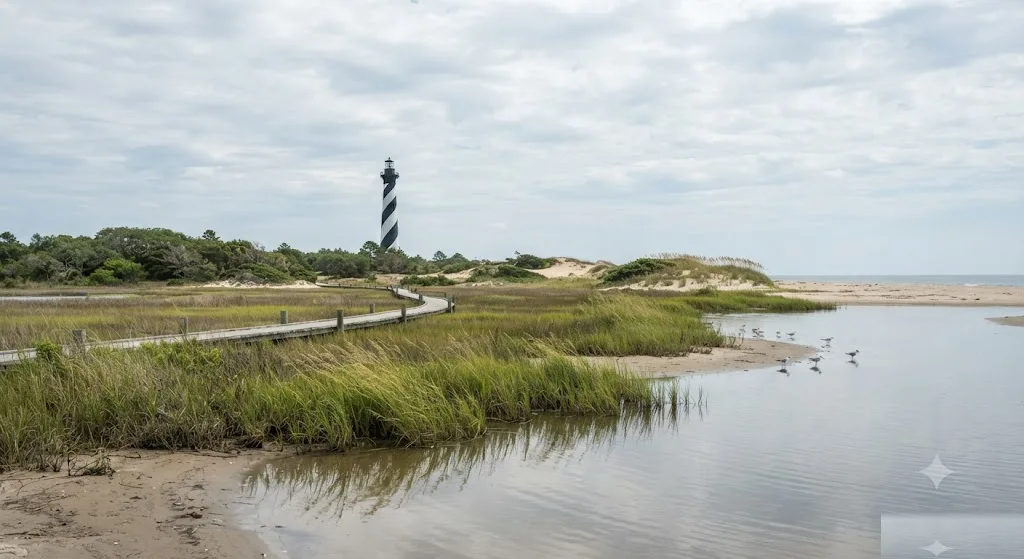
Welcome to our comprehensive guide to North Carolina's coastal gem, the Cape Hatteras National Seashore. This stretch of barrier islands is a testament to natural beauty and historical resilience, offering an unparalleled escape for those seeking wild beaches, iconic lighthouses, and a deep connection to the Outer Banks' unique ecosystem.
Why Visit Cape Hatteras National Seashore
For those of us at Roam States, Cape Hatteras National Seashore North Carolina represents the quintessential Outer Banks experience. It's a place where the raw power of the Atlantic meets the serene beauty of protected coastal ecosystems, creating a landscape unlike any other. This national seashore protects crucial coastal ecosystems, from expansive salt marshes teeming with birdlife to the dynamic dune systems that constantly reshape the coastline. Beyond its ecological significance, the seashore is home to the iconic, relocated Cape Hatteras Lighthouse, a towering symbol of maritime history that has guided countless sailors through the treacherous Diamond Shoals.
Visiting Cape Hatteras National Seashore offers a chance to step away from the everyday and immerse yourself in a world of natural wonder and rich history. Whether you're drawn to the thrill of surf fishing, the tranquility of a beach walk, or the awe-inspiring stories of shipwrecks and lighthouse keepers, this destination delivers. It's a place where every sunrise over the Atlantic is a masterpiece and every sunset over the Pamlico Sound paints the sky with vibrant hues. The sheer scale of the protected coastline, stretching approximately 70 miles, ensures a sense of wildness and solitude that is increasingly rare.
Beyond the natural allure, the cultural heritage of the Outer Banks is palpable here. From the historic villages that dot the islands to the Graveyard of the Atlantic Museum, visitors can delve into centuries of maritime lore. The preservation efforts here ensure that these ecosystems and historical landmarks remain intact for generations to come, making it a truly worthwhile destination for any traveler.
Who It's Best For
Our team believes Cape Hatteras National Seashore caters to a diverse range of travelers, but it particularly shines for those who appreciate nature, history, and outdoor adventure. If you're a family looking for expansive, uncrowded beaches where children can safely play and explore, this is your spot. The calm waters of the Pamlico Sound offer ideal conditions for kayaking and paddleboarding, while the ocean side provides endless opportunities for swimming, sunbathing, and shell collecting.
Anglers will find themselves in paradise, with abundant opportunities for surf fishing, pier fishing, and even offshore charters. Birdwatchers, photographers, and wildlife enthusiasts will be captivated by the diverse avian populations, nesting sea turtles, and occasional seal sightings. History buffs will revel in the stories of the lighthouses, shipwrecks, and the brave souls who navigated these waters. Even those simply seeking a peaceful retreat will find solace in the vast, unspoiled landscapes and the rhythmic sound of the waves.
However, if you're looking for bustling boardwalks, extensive nightlife, or a highly commercialized beach experience, Cape Hatteras National Seashore might not be your ideal destination. Its charm lies in its untouched beauty and the focus on natural recreation. It's perfect for independent travelers, couples, and families who value authenticity and a deeper connection with their surroundings.
Getting There & Parking
Understanding how to get to Cape Hatteras National Seashore is straightforward, though planning is key, especially for specific activities. The seashore spans a significant portion of the Outer Banks, accessible via NC Highway 12. From the north, you'll typically follow US 158 to Nags Head, then turn onto NC-12. From the south, you can take a North Carolina Department of Transportation ferry from Swan Quarter or Cedar Island to Ocracoke Island, which is part of the national seashore.
Once you arrive, parking at Cape Hatteras National Seashore is generally free at designated public beach access points, often referred to as "ramps." Many of these access points offer convenient amenities like bathrooms and outdoor showers.
For those interested in off-road vehicle (ORV) access, a specific permit is mandatory to drive on the beaches of Cape Hatteras National Seashore. These permits are required year-round and can be obtained online via Recreation.gov or at designated permit offices on the island. A 10-day ORV permit costs approximately $50, while an annual permit is about $120. It's crucial to watch the ORV Safety Video and complete an online application. Always remember to lower your tire pressure to at least 20 psi for driving on soft sand and to re-inflate them upon returning to paved roads. Beach areas in front of villages like Rodanthe, Avon, Buxton, Frisco, and Hatteras are typically closed to vehicles from May through September to ensure pedestrian safety.
Be aware that beach access can be subject to temporary closures due to weather events or wildlife nesting, particularly for shorebirds and sea turtles. We highly recommend checking the current beach access information on the National Park Service website or signing up for text alerts by texting CAHAORV to 333111 before heading out. The Buxton Beach Access parking lot and beach walkover were closed as of May 21, 2026, due to storm damage and remediation efforts, though the adjacent beach was reopened. This highlights the dynamic nature of the Outer Banks and the importance of checking current conditions. Understanding how to get to Cape Hatteras National Seashore and its parking regulations ensures a smooth visit.
Top Things to Do
There are countless things to do at Cape Hatteras National Seashore, offering something for every interest. Our team has explored every corner of this remarkable destination, and we're excited to share our top recommendations:
- Climb a Lighthouse: While the iconic Cape Hatteras Lighthouse is currently closed for climbing in 2026 due to extensive restoration efforts, its grounds remain open 24/7 for visitors to explore and photograph. However, you can still climb the Bodie Island Lighthouse, which is open seasonally from late April through mid-October 2026. Tickets for Bodie Island Lighthouse climbs are $10 for adults and $5 for seniors (62+), children (11 and under, at least 42" tall), and disabled individuals. Tickets are sold on Recreation.gov at 7 AM for same-day climbs.
- Beach Activities: The 70 miles of shoreline offer endless opportunities for relaxation and recreation. Enjoy swimming, sunbathing, shell collecting, flying kites, or simply walking along the vast stretches of sand. Lifeguarded beaches are available seasonally, typically from Memorial Day through Labor Day, at Coquina Beach.
- Off-Road Vehicle (ORV) Driving: With a valid ORV permit, you can drive on designated beach sections, perfect for surf fishing or simply exploring the remote coastline. Remember to check for seasonal closures due to wildlife nesting.
- Fishing: Cape Hatteras National Seashore is a premier fishing destination. Anglers can enjoy surf fishing, pier fishing (such as at the Bonner Bridge Pier or Avon Fishing Pier), and boat fishing in the inlets, sound, and offshore. A North Carolina Coastal Recreational Fishing License is required for anyone aged 16 and older. For recreational black sea bass fishing north of Cape Hatteras, the season opens May 1, 2026, with a minimum size limit of 13 inches and a bag limit of 15 fish per person per day.
- Wildlife Viewing: The seashore is a haven for wildlife. Keep an eye out for diverse bird species, including migratory birds in spring and fall, nesting sea turtles (May through September), and even seals during cooler months. Pea Island National Wildlife Refuge, within the seashore, is an excellent spot for birdwatching.
- Water Sports: The calmer waters of the Pamlico Sound are ideal for kayaking, paddleboarding, and windsurfing. The ocean side offers opportunities for surfing, though conditions can vary.
- Explore Historic Villages: Discover the charm of the seven villages on Hatteras Island, each with its own unique character and history.
- Stargazing: With minimal light pollution, Cape Hatteras National Seashore offers incredible opportunities for stargazing on clear nights.
Cape Hatteras National Seashore Hiking Trails
For those who prefer to explore on foot, Cape Hatteras National Seashore hiking trails offer a chance to experience the diverse landscapes up close. While extensive backcountry hiking isn't the primary focus here, several excellent trails provide unique perspectives:
- Bodie Island Dike Trail: Located near the Bodie Island Lighthouse, this approximately 2-mile trail offers fantastic birdwatching opportunities along the soundside dike.
- Buxton Woods Trail: Near the Cape Hatteras Lighthouse, this trail winds through maritime forest, offering a shaded escape and a glimpse into a different coastal ecosystem. It's a great option for cooler temperatures and birdwatching.
- Hammock Hills Trail (Ocracoke Island): On Ocracoke Island, this short, scenic trail leads through salt marshes and offers beautiful views of Pamlico Sound.
- Baseline Trail: Starting at the Whalebone Junction Information Center, this 1-mile trail provides an easy walk near the northern entrance of the seashore.
When exploring Cape Hatteras National Seashore hiking trails, always be prepared for changing weather conditions, bring water, and wear appropriate footwear. Some trails may be sandy, while others traverse wooded areas. These trails provide an intimate way to connect with the natural beauty of the Outer Banks.
Cape Hatteras National Seashore Camping
Experiencing Cape Hatteras National Seashore camping is one of the most immersive ways to enjoy the Outer Banks. The National Park Service operates four developed campgrounds within the seashore: Oregon Inlet, Cape Point, Frisco, and Ocracoke. All campgrounds accommodate tents, trailers, and RVs.
Reservations are highly recommended, especially during peak season, and can be made online through Recreation.gov. Sites at popular campgrounds like Cape Point and Ocracoke can book up within minutes when the six-month advance window opens, so plan accordingly. Walk-up reservations are permitted but require online payment via smartphone or by calling a Recreation.gov representative.
- Oregon Inlet Campground (Nags Head): Open year-round, this is the northernmost and most easily accessible campground. It offers 107 sites, with 47 having electric hookups. Standard sites are $28/night, and electric sites are $35/night. It's excellent for first-timers and anglers.
- Cape Point Campground (Buxton): Open from April 3 to November 29, 2026, this campground is near the Cape Hatteras Lighthouse. It has 202 sites, but no electric hookups, and costs $20/night. It's considered iconic for its raw, exposed feel and proximity to the surf.
- Frisco Campground (Frisco): Open from April 3 to November 29, 2026, Frisco offers 117 sites (10 RV-only, 3 tent-only) at $28/night. There are no electric hookups.
- Ocracoke Campground (Ocracoke Island): Open year-round, Ocracoke offers 135 sites at $28/night, with no electric hookups. It's the most remote and offers a unique, tranquil experience.
All NPS campgrounds provide bathhouses with flush toilets, potable water, and outdoor unheated showers seasonally. Each campsite typically includes a paved parking pad, picnic table, and charcoal grill. Senior/Access passholders receive a 50% discount on campsite fees (excluding group sites). Beach fires are generally permitted below the high tide line and 100 feet from vegetation, but a statewide burn ban was in effect as of April 1, 2026, prohibiting beach fires due to dry conditions. Always check current regulations.
Best Time to Visit
The best time to visit Cape Hatteras National Seashore largely depends on what you're hoping to experience. Our team finds that each season offers a distinct charm:
- Spring (March-May): This is a wonderful time for pleasant weather, blooming wildflowers, and excellent birdwatching as migratory birds pass through. Anglers will find good opportunities for bluefish, drum, and cobia. Crowds are generally lighter than in summer.
- Summer (June-August): Peak season brings the warmest weather, ideal for swimming, sunbathing, and watersports. Lifeguarded beaches are active, and many events take place. However, it's also the busiest time, with higher prices and larger crowds. Hurricane season also runs from June to November, so monitoring weather forecasts is essential.
- Fall (September-November): Often considered the "magic window" by locals, fall offers cooler temperatures, fewer crowds, and excellent surf fishing. Water temperatures remain warm enough for comfortable swimming into October, and bird migrations continue. Many restaurants and accommodations, however, may begin to close from November to March.
- Winter (December-February): For those seeking solitude and tranquility, winter is ideal. Crowds are minimal, and the island offers a serene escape. While colder, temperatures are milder than in much of the East Coast, averaging lows of 38°F and highs of 56°F (3°-13°C). It's a great time for quiet beach walks, visiting museums, and observing wintering waterfowl at Pea Island National Wildlife Refuge.
Overall, for the best balance of good weather, fewer crowds, and value, our team recommends visiting in the shoulder seasons of May-June or September-October.
Where to Stay Nearby
While Cape Hatteras National Seashore itself doesn't offer hotels, the surrounding Outer Banks communities provide a wide range of lodging options to suit every preference and budget. Our team often recommends staying in one of the charming villages that dot Hatteras Island or nearby towns.
- Buxton: Centrally located on Hatteras Island, Buxton is home to the Cape Hatteras Lighthouse and offers convenient access to many attractions within the national seashore. You'll find a variety of vacation rentals, motels, and local eateries here.
- Frisco and Hatteras Village: South of Buxton, these villages offer a more laid-back atmosphere, with plenty of vacation homes, fishing charters, and access to quieter beaches. Hatteras Village is also where the Ocracoke ferry departs.
- Avon, Waves, Salvo, and Rodanthe: These northern Hatteras Island villages provide a mix of vacation rentals, some hotels, and easy access to the sound for watersports.
- Ocracoke Island: Accessible by ferry, Ocracoke offers a unique, remote island experience with a charming village, a historic lighthouse, and fewer crowds. Accommodations include inns, motels, and vacation rentals. Remember to book ferry reservations in advance, especially during peak season.
- Nags Head and Southern Shores: Located just north of the national seashore, these towns offer more commercial amenities, larger hotels, and a wider selection of restaurants and shops. They serve as a good base for exploring the northern reaches of the Outer Banks, including the Wright Brothers National Memorial.
For those looking for a more traditional camping experience, the National Park Service campgrounds within the seashore are excellent options, as detailed in the "Cape Hatteras National Seashore Camping" section. Additionally, private campgrounds like Camp Hatteras in Rodanthe offer full hookups and amenities, with 2026 rates ranging from $47 for tent sites in the off-season to $199 for oceanfront RV sites during peak summer.
No matter where you choose to stay, booking accommodations well in advance, especially for summer and fall, is highly advisable. The Outer Banks is a popular destination, and the best spots fill up quickly.
Sample 2-Day Itinerary
To help you make the most of your visit to Cape Hatteras National Seashore, our team has crafted a sample 2-day itinerary, balancing iconic sights with opportunities for relaxation and exploration.
Day 1: Hatteras Island Exploration
- Morning (9:00 AM - 12:00 PM): Start your day at the Cape Hatteras Lighthouse grounds in Buxton. While climbing is closed in 2026, you can still admire its impressive stature, learn about its history, and explore the surrounding area. Afterwards, head to the nearby Hatteras Island Visitor Center and Museum of the Sea, open daily from 9 AM to 5 PM (extended to 6 PM in tourist season), to delve into the rich maritime history of the Outer Banks.
- Lunch (12:00 PM - 1:00 PM): Enjoy a casual lunch at a local eatery in Buxton or Frisco, savoring fresh seafood.
- Afternoon (1:00 PM - 5:00 PM): Experience the natural beauty of the seashore. Consider a leisurely drive along NC-12, stopping at one of the public beach access points for a walk, shell collecting, or a refreshing dip in the ocean. If you have an ORV permit, take to the designated beach ramps for a unique driving experience. Alternatively, explore the Buxton Woods Trail for a shaded hike through the maritime forest.
- Evening (5:00 PM onwards): Head to Cape Point for sunset views over the ocean. If you're camping, set up your site at Cape Point Campground. For dinner, enjoy another local meal or, if camping, prepare a campfire dinner (checking for current burn bans, as one was in effect as of April 1, 2026).
Day 2: Northern Seashore & Soundside Adventures
- Morning (9:00 AM - 12:00 PM): Drive north towards the Bodie Island Lighthouse. Climb the lighthouse for panoramic views of the Atlantic, Pamlico Sound, and the surrounding marshlands (remember to purchase tickets online at 7 AM for same-day climbs). Afterwards, explore the Bodie Island Dike Trail for excellent birdwatching.
- Lunch (12:00 PM - 1:00 PM): Grab a bite in Nags Head or at a casual spot near Oregon Inlet.
- Afternoon (1:00 PM - 5:00 PM): Embrace the soundside. Visit the Oregon Inlet Fishing Center, a hub for charter fishing and boating. Consider renting a kayak or paddleboard to explore the calmer waters of the Pamlico Sound. Alternatively, spend time at Coquina Beach, a vehicle-free beach perfect for families, with lifeguards present from Memorial Day through Labor Day.
- Evening (5:00 PM onwards): Enjoy a final Outer Banks dinner. Depending on your interests, you might try pier fishing at the Bonner Bridge Pier, which is open 24 hours. Reflect on your adventures and perhaps catch one last stunning sunset over the sound.
Last updated: 2026-07-08 by the Roam States team.