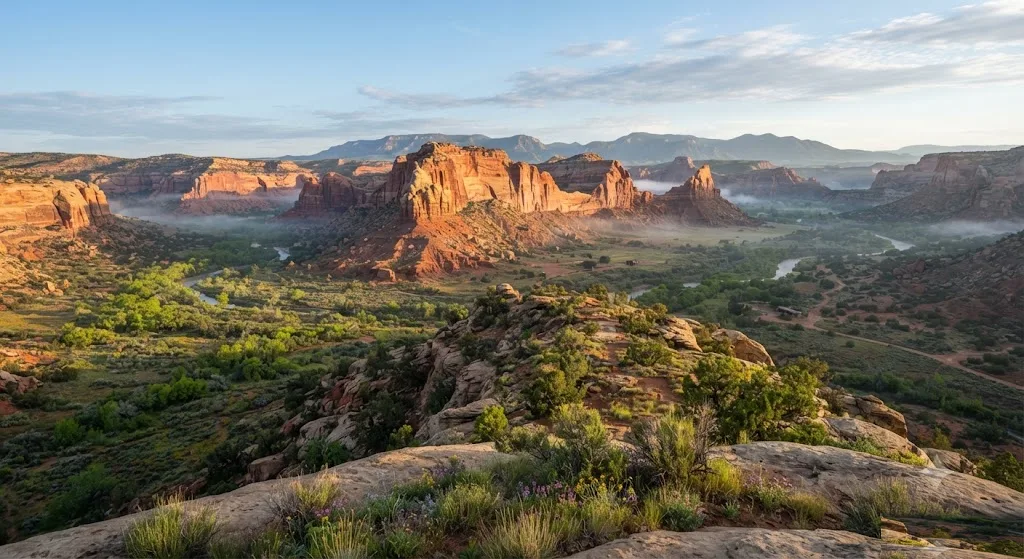
Our Red Cliffs National Conservation Area guide covers practical planning for Red Cliffs National Conservation Area Utah — best time to visit, getting there, and what to do on the ground.
As the Roam States editorial team, we've explored countless corners of the American West, and few places capture the raw, untamed beauty of Utah quite like the Red Cliffs National Conservation Area. This vast expanse of protected land, located just north of St. George, offers a truly authentic desert experience, far removed from the crowds you might find in more heavily trafficked national parks. Here, the vibrant crimson cliffs, ancient petroglyphs, and vital wildlife habitats tell a story millions of years in the making, inviting visitors to step back in time and reconnect with nature.
Why Visit Red Cliffs National Conservation Area
The allure of Red Cliffs National Conservation Area Utah lies in its unique blend of ecological significance and recreational opportunity. Spanning approximately 45,600 acres, this area is a critical habitat for the threatened Mojave desert tortoise, a species we are committed to helping protect. Beyond its conservation efforts, the landscape itself is a masterpiece of geological forces. You'll find towering red sandstone cliffs, intricate slot canyons carved by water, and verdant riparian zones along Quail and Leeds Creeks that offer a stark contrast to the arid desert.
What truly sets Red Cliffs apart is its accessibility to a diverse range of outdoor activities. Whether you're an avid hiker, a keen mountain biker, or simply seeking a tranquil spot for photography, this conservation area delivers. Our team particularly appreciates the opportunity to explore ancient archaeological sites, including Ancestral Puebloan pit houses and impressive dinosaur tracks dating back to the Jurassic period. It’s a place where history and natural wonder converge, offering a profound sense of discovery with every trail you traverse.
Who It's Best For
Red Cliffs National Conservation Area is ideally suited for a wide array of travelers, particularly those who cherish outdoor adventure and a deeper connection with nature. It's perfect for:
- Hikers of all levels: With over 130 miles of designated trails, from easy strolls to challenging scrambles, there's a path for everyone.
- Mountain bikers and equestrians: Many trails are multi-use, offering fantastic opportunities to explore the diverse terrain on two wheels or horseback.
- Families: The area features accessible trails, picnic spots, and engaging historical sites like the dinosaur tracks, making it an educational and fun outing for all ages.
- Nature photographers: The dramatic red rock formations, unique desert flora, and diverse wildlife provide endless photographic opportunities, especially during sunrise and sunset.
- Wildlife enthusiasts: Keep an eye out for the Mojave desert tortoise, various bird species, and other desert inhabitants in their natural habitat.
- Those seeking solitude: While popular, Red Cliffs generally offers a more serene experience than some of Utah's more crowded national parks, particularly in its wilderness areas.
If you're looking for an active escape into a stunning desert landscape that combines adventure with ecological appreciation, Red Cliffs National Conservation Area is undoubtedly for you.
Getting There & Parking
Understanding how to get to Red Cliffs National Conservation Area is key to a smooth visit. The area is conveniently located just north of St. George, Utah, making it an easy day trip from the city or a stop on a larger Utah road trip.
Driving Directions
From St. George, the Red Cliffs Recreation Area, a popular entry point, is typically a short 15-20 minute drive. If you're coming from The Ledges St. George, you'll head east on Ledges Parkway, then right onto N Ledges Drive, and a left onto Winchester Hills Drive. Continue on UT-18 N, which will lead you directly to the entrance of the Red Cliffs National Conservation Area.
For those accessing the Red Cliffs Recreation Area specifically, be aware of vehicle restrictions: vehicles must be under 11 feet 9 inches in height and 12 feet in width to pass through two narrow tunnels beneath the I-15 freeway. These tunnels have gravel and dirt surfaces that can affect clearance, so plan accordingly, especially if you're driving an RV.
Parking
Parking at Red Cliffs National Conservation Area, particularly at the Red Cliffs Recreation Area day-use spots, is extremely limited. There are only 52 parking spaces available for day use, and they fill up quickly, especially on weekends, holidays, and during the peak spring and fall seasons. We strongly recommend arriving as early as possible to secure a spot. Parking on vegetation or along the road is strictly prohibited and can result in citations or towing. If you're visiting with a trailer, you must park at the White Reef Trailhead.
Alternatively, if you've secured a campsite at the Red Cliffs Campground, you'll have a dedicated parking spot, which can alleviate day-use parking stress.
Public Transportation
While driving is the most common way to access the area, there are limited public transportation options from St. George. The SunTran bus service offers routes, such as Route 3 West Side Connector or Route 5 Ivins, that can get you to stops relatively close to the Red Cliffs National Conservation Area, though further walking or a taxi may be required to reach specific trailheads.
Top Things to Do
The Red Cliffs National Conservation Area is an outdoor enthusiast's dream, offering a wealth of activities against a backdrop of stunning red rock scenery. Our team has explored many of these options and can confidently say there are plenty of things to do at Red Cliffs National Conservation Area to fill your itinerary.
Hiking & Backpacking
With over 130 miles of designated trails, hiking is undoubtedly one of the top things to do at Red Cliffs National Conservation Area. The trails here range from easy, family-friendly strolls to strenuous, multi-mile treks into rugged wilderness. Some of our favorite Red Cliffs National Conservation Area hiking trails include:
- Red Reef Trail: This popular 0.8-mile trail is perfect for beginners and families, winding through a scenic desert oasis with natural springs, lush vegetation, and ancient petroglyphs. During spring snowmelt, you can enjoy short cascades and slickrock swimming holes. For the more adventurous, the trail continues into Cottonwood Canyon Wilderness, becoming more strenuous and requiring scrambling over an 8-foot sandstone wall with an anchored rope.
- Anasazi Trail: An easy half-mile (one-way) dirt trail that leads to the Red Cliffs Archaeological Site, where you can explore interpreted prehistoric Ancestral Puebloan pit houses and other archaeological finds.
- Dino Cliffs Trail (Silver Reef Trail): A must-see, especially for families! This trail leads to the Red Cliffs Dinosaur Tracksite, featuring 17 visible fossilized dinosaur tracks from the Jurassic period, discovered in 1998. The full trail is 3.5 miles round trip, but the tracks are accessible within about half a mile.
- Prospector Trail: A moderate 3.4-mile trail that guides you through a narrow slot canyon, offering mesmerizing views of the red rock formations.
- Cottonwood Canyon Trail: A more thrilling 2.3-mile option for intrepid explorers, leading to a hidden canyon with towering cliffs and unique rock formations.
- Yellow Knolls Trail: This 3.9-mile out-and-back trail exposes you to petrified sands and offers views of blooming wildflowers in spring.
- Babylon Arch Trail: A family-friendly one-mile (one-way) hike that traverses a fascinating rock arch on its way to the Virgin River.
When planning your hikes, remember to carry plenty of water, especially during warmer months, and practice Leave No Trace principles to preserve this pristine environment.
Mountain Biking & Horseback Riding
Beyond hiking, the Red Cliffs National Conservation Area offers excellent opportunities for mountain biking and horseback riding on its designated multi-use trails. Cyclists can explore most trails, with the exception of those within the Cottonwood Canyon and Red Mountain Wilderness Areas, where bicycles are prohibited. The varied terrain, from sandy washes to slickrock, provides a thrilling ride for all skill levels. Horseback riding allows for a unique perspective of the landscape, offering a classic Western experience.
Photography & Wildlife Viewing
The dramatic landscapes and diverse ecosystems make Red Cliffs a photographer's paradise. Capture the vibrant hues of the sandstone cliffs, the delicate desert flora, and the serene riparian areas. Keep your eyes peeled for wildlife, including the elusive Mojave desert tortoise, kit foxes, desert bighorn sheep, and a variety of native and migratory birds.
Exploring Archaeological & Paleontological Sites
As mentioned, the dinosaur tracks and Ancestral Puebloan sites are significant attractions. The interpretive signs along the Anasazi Trail and Silver Reef Trail provide fascinating insights into the ancient history of the region, from Jurassic giants to early human inhabitants.
Best Time to Visit
To truly savor the Red Cliffs National Conservation Area, timing your visit is crucial. Our team highly recommends visiting during the **spring (March to May)** and **fall (September to November)**. During these seasons, the weather is typically mild and pleasant, with comfortable temperatures ideal for hiking, biking, and extended outdoor exploration.
Spring brings blooming wildflowers, adding splashes of color to the red rock landscape, while fall offers crisp air and often vibrant foliage along the riparian corridors. These shoulder seasons also tend to have more moderate temperatures, making daytime activities enjoyable.
Summer (June to August) can be intensely hot, with temperatures often soaring. If you must visit during summer, plan your activities for early mornings or late evenings to avoid the midday heat. Always carry ample water and be aware of the signs of heat exhaustion. Winter (December to February) brings cooler temperatures, and while the scenery can be beautiful, some trails may be icy, and facilities might have reduced services.
Keep in mind that spring and fall are also the most popular times to visit, which means parking can be even more challenging. Arriving early in the day is always a good strategy during these peak times.
Where to Stay Nearby
When planning your trip to Red Cliffs National Conservation Area, finding the right accommodation is essential for a comfortable and convenient base. While the conservation area itself offers limited camping, the nearby city of St. George and surrounding towns provide a wide range of Red Cliffs National Conservation Area lodging options.
Camping
For those who prefer to stay immersed in nature, the Red Cliffs Campground within the Red Cliffs Recreation Area is an excellent choice. This small, seasonal campground, managed by the Bureau of Land Management (BLM), features 11 campsites with shade shelters, picnic tables, potable water, and grills. Sites 8 and 11 are accessible, and some offer pull-through parking. Camping fees are $15 per night, and reservations are required and can be made via recreation.gov or by calling 1-877-444-6777. First-come, first-served camping is not permitted. Be aware of the 11-foot 9-inch vehicle height restriction for accessing the campground due to tunnels.
Other nearby camping options include Snow Canyon State Park, Gunlock State Park, and various private RV resorts like Gateway Luxury RV Resort or Zion Wright Ranch Eco-Camp.
Hotels & Vacation Rentals
St. George, just a short drive away, offers a comprehensive selection of Red Cliffs National Conservation Area lodging, from budget-friendly motels to luxury resorts and vacation rentals. Our team often recommends staying in St. George for its amenities, dining options, and proximity to other attractions.
Some highly-rated hotels and resorts near the area include:
- Comfort Inn & Suites Zion Park Area: Located about 4 miles from Red Cliffs Recreation Area, offering comfortable stays.
- Best Western Plus Settlers Point: Approximately 6.6 miles away, known for good service.
- Sleep Inn & Suites Hurricane Zion Park Area: Around 4.4 miles from Red Cliffs, a solid choice for families and business travelers.
- Holiday Inn Express & Suites St. George North - Zion by IHG: Another convenient option for exploring the region.
- La Quinta Inn & Suites by Wyndham La Verkin-Gateway to Zion: About 7 miles from the recreation area, pet-friendly and good for business travelers.
For those seeking more space or a home-away-from-home experience, numerous vacation rentals are available, including luxury tiny houses, condos, and homes with private pools. Resorts like Escondido at Sienna Hills and Encanto offer resort-style amenities and scenic views, often backing right up to the conservation area. These can be particularly appealing for families or larger groups. When searching for Red Cliffs National Conservation Area lodging, consider options in Hurricane or La Verkin as well, especially if you plan to combine your visit with trips to Zion National Park or Bryce Canyon National Park.
Sample 2-Day Itinerary
To help you make the most of your visit, our team has crafted a sample 2-day itinerary for Red Cliffs National Conservation Area and its surroundings. This plan balances active exploration with opportunities for relaxation and local discovery.
Day 1: Red Cliffs Immersion
- Morning (7:00 AM - 12:00 PM): Hiking & Dinosaur Tracks
- Start your day early to beat the heat and secure parking at the Red Cliffs Recreation Area.
- Embark on the Red Reef Trail. Enjoy the initial easy section with its natural springs and lush vegetation. If you're up for a challenge, continue into the Cottonwood Canyon Wilderness, navigating the rope-assisted scramble for more dramatic canyon views.
- Afterward, take a short, family-friendly hike on the Dino Cliffs Trail (Silver Reef Trail) to witness the impressive Jurassic-era dinosaur footprints. This is a fascinating paleontological site that captivates all ages.
- Lunch (12:00 PM - 1:00 PM): Picnic by Quail Creek
- Enjoy a packed lunch at one of the shaded picnic areas near Quail Creek within the Red Cliffs Recreation Area.
- Afternoon (1:00 PM - 5:00 PM): Anasazi History & Scenic Views
- Hike the easy Anasazi Trail to the Red Cliffs Archaeological Site to explore the ancient Ancestral Puebloan pit houses and learn about the region's early inhabitants.
- For more panoramic views, consider a moderate hike on the Prospector Trail, which offers glimpses into narrow slot canyons and expansive red rock vistas.
- Evening (5:00 PM onwards): St. George Dining & Relaxation
- Head back to St. George for dinner. Explore the diverse culinary scene, from casual eateries to upscale restaurants.
- Relax at your hotel or campsite, perhaps enjoying some stargazing, as the Red Cliffs area offers low light pollution.
Day 2: Beyond the Cliffs & Local Culture
- Morning (8:00 AM - 12:00 PM): Snow Canyon State Park or Mountain Biking
- Choose your adventure:
- Option A (Hiking/Rock Climbing): Drive to nearby Snow Canyon State Park, which is almost entirely within the Red Cliffs Desert Reserve. Here, you can hike through petrified sand dunes, explore lava tubes, or try some established rock climbing routes. Popular hikes include Petrified Dunes Trail, Jenny's Canyon Trail, and Lava Flow Trail.
- Option B (Mountain Biking): If you brought your bike, explore more of the designated mountain biking trails within the Red Cliffs National Conservation Area, such as the Yellow Knolls Trail for its unique petrified sands and spring wildflowers.
- Choose your adventure:
- Lunch (12:00 PM - 1:00 PM): St. George or Picnic
- Grab lunch in St. George or pack a picnic to enjoy at Snow Canyon State Park.
- Afternoon (1:00 PM - 5:00 PM): St. George Cultural & Leisure Activities
- Explore the cultural side of St. George. Visit the St. George Tabernacle for its historic architecture and serene atmosphere, or the Brigham Young Winter Home for a step back in time.
- For families, the St. George Dinosaur Discovery Site at Johnson Farm offers more prehistoric fun, built directly over 200-million-year-old dinosaur tracks.
- Alternatively, unwind at a local park like Pioneer Park, known for its red rock formations, short hikes, and panoramic city views.
- Evening (5:00 PM onwards): Tuacahn Amphitheatre or Sunset Views
- Consider catching a world-class Broadway-style musical or concert at the spectacular outdoor Tuacahn Amphitheatre, set against dramatic red rock cliffs.
- If a show isn't on the agenda, find a scenic spot for a final sunset view over the red cliffs, reflecting on the natural beauty you've experienced.
Is It Worth Visiting?
Our unequivocal answer is yes, Red Cliffs National Conservation Area is absolutely worth visiting. In an era where many of Utah's iconic national parks, such as Zion National Park, are grappling with ever-increasing crowds and even high fees for international tourists, Red Cliffs offers a refreshing alternative. It provides similar breathtaking red rock scenery, diverse recreational opportunities, and a profound sense of natural wonder, often with fewer crowds.
The conservation area protects critical habitat for the threatened Mojave desert tortoise and other unique desert species, making your visit contribute to vital conservation efforts. The opportunity to walk among ancient dinosaur tracks, explore Ancestral Puebloan archaeological sites, and hike through stunning slot canyons provides an immersive experience that is both educational and exhilarating.
For those who appreciate the raw beauty of the desert, the thrill of discovery, and the peace that comes with uncrowded trails, Red Cliffs National Conservation Area is a hidden gem that truly marches to the beat of its own drum. It's a testament to Utah's diverse landscapes and a destination we wholeheartedly recommend for any traveler seeking an authentic Southwestern adventure.
FAQ
Red Cliffs National Conservation Area camping
Yes, camping is available at the Red Cliffs Campground within the Red Cliffs Recreation Area. It offers 11 campsites with amenities like shade shelters, picnic tables, potable water, and grills. Reservations are required and can be made through recreation.gov or by calling 1-877-444-6777. Camping fees are $15 per night. Be aware of vehicle height and width restrictions (under 11' 9" high and 12' wide) to access the campground due to tunnels. Stays are limited to 14 days.
things to do in St. George
St. George offers a wealth of activities beyond the conservation area. You can explore Pioneer Park for short hikes and city views, visit Snow Canyon State Park for hiking through petrified sand dunes and lava tubes, or enjoy water activities at Sand Hollow State Park. Cultural attractions include the St. George Tabernacle, Brigham Young Winter Home, and the St. George Dinosaur Discovery Site at Johnson Farm. For entertainment, catch a show at the Tuacahn Amphitheatre. The city also boasts golf courses, shopping, and a variety of dining options.
Red Cliffs National Conservation Area with kids
Red Cliffs National Conservation Area is fantastic for kids! The highlight is undoubtedly the Dino Cliffs Trail (Silver Reef Trail), where children can see real Jurassic-era dinosaur footprints. The Red Reef Trail offers an easy walk to natural springs and potential swimming holes, while the Anasazi Trail leads to ancient Ancestral Puebloan pit houses, providing an engaging history lesson. The campground is family-friendly, and the relatively short, well-maintained trails make it accessible for younger adventurers.
best hotels near Red Cliffs National Conservation Area
Some of the best hotels near Red Cliffs National Conservation Area are located in St. George and nearby towns like Hurricane and La Verkin. Top-rated options include Comfort Inn & Suites Zion Park Area, Best Western Plus Settlers Point, Sleep Inn & Suites Hurricane Zion Park Area, and Holiday Inn Express & Suites St. George North - Zion by IHG. Many offer amenities like pools and are often pet-friendly. For a more spacious stay, consider vacation rentals or resorts like Escondido at Sienna Hills, which offer resort-style amenities and are close to the conservation area.
Red Cliffs National Conservation Area tips
Our top tips for visiting Red Cliffs National Conservation Area include:
- Arrive Early: Parking is extremely limited, especially on weekends and during peak seasons (spring and fall).
- Hydrate: Carry plenty of water, as the desert climate can be dehydrating, particularly in summer.
- Check Vehicle Restrictions: If accessing the Red Cliffs Recreation Area, ensure your vehicle is under 11 feet 9 inches high and 12 feet wide due to tunnel clearances.
- Stay on Trails: Protect the fragile desert ecosystem and cryptobiotic crust by sticking to designated trails.
- Reservations for Camping: Campground sites require advance reservations via recreation.gov.
- Leave No Trace: Pack out everything you pack in to preserve the natural beauty.
- Be Wildlife Aware: Keep an eye out for desert tortoises and other wildlife, and maintain a respectful distance.
where to stay near Red Cliffs National Conservation Area
The primary options for where to stay near Red Cliffs National Conservation Area include the Red Cliffs Campground for an immersive experience, or hotels and vacation rentals in the nearby cities of St. George, Hurricane, and La Verkin. St. George offers the widest range of choices, from budget to luxury, with many hotels providing easy access to the conservation area and other regional attractions. Vacation rentals and resorts are also popular for those seeking more space and amenities.
Our team at Roam States believes that Red Cliffs National Conservation Area is a truly special place, offering a blend of natural beauty, historical intrigue, and outdoor adventure that stands out even in a state as spectacular as Utah. It's an essential stop for anyone looking to experience the authentic red rock landscapes of the American Southwest without the overwhelming crowds. We encourage you to plan your visit, embrace the desert's magic, and discover why this conservation area holds such a significant place in our hearts.
Last updated: 2026-07-08 by the Roam States team.