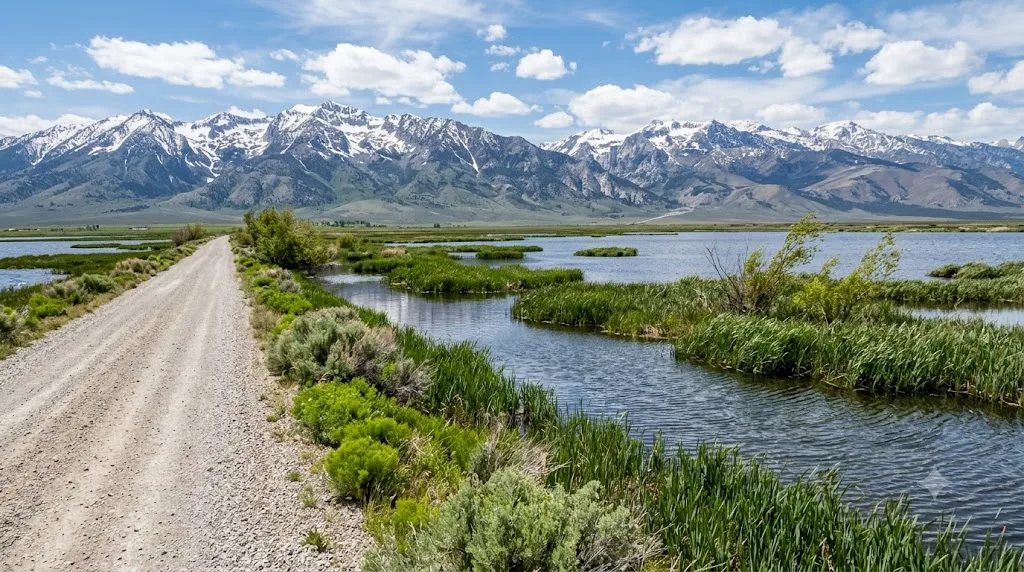
Our Ruby Lake National Wildlife Refuge Scenic Drive guide covers practical planning for Ruby Lake National Wildlife Refuge Scenic Drive Nevada — best time to visit, getting there, and what to do on the ground. This remote gem, nestled against the stunning Ruby Mountains, offers an unparalleled opportunity for wildlife observation and a true escape into Nevada's high desert landscape.
Ruby Lake National Wildlife Refuge Scenic Drive Travel Guide — Nevada
For those seeking an authentic encounter with Nevada's wild side, the Ruby Lake National Wildlife Refuge Scenic Drive Nevada presents an extraordinary journey. Our team at Roam States has compiled this comprehensive guide to help you navigate this unique destination, ensuring you make the most of its natural splendor and abundant wildlife. This refuge, established in 1938, is a critical wetland oasis in the Great Basin, serving as a vital stopover for migratory birds and home to diverse resident wildlife.
Why Visit Ruby Lake National Wildlife Refuge Scenic Drive
The Ruby Lake National Wildlife Refuge is not just another scenic drive; it's an immersion into a vibrant ecosystem set against the dramatic backdrop of the Ruby Mountains. We recommend this destination for its exceptional opportunities to witness nature largely undisturbed. The refuge encompasses over 40,000 acres of marsh, meadows, grasslands, and brush-covered uplands, fed by more than 200 springs from the Ruby Mountain snowpack. This creates a lush wetland environment in the heart of the high desert, a rarity in this arid state.
Birdwatchers, in particular, will find Ruby Lake NWR to be a paradise. Over 220 species of birds have been officially spotted here, making it one of the most important waterfowl nesting areas in the Great Basin and Intermountain West. The refuge boasts the largest population of nesting Canvasback ducks west of the Mississippi River (outside of Alaska) and is home to Nevada's only resident population of trumpeter swans. Beyond waterfowl, visitors can spot sandhill cranes, American avocets, yellow-headed blackbirds, and various raptors like bald and golden eagles.
Beyond the avian spectacle, the refuge offers a chance to see mule deer, pronghorn antelope, and sage grouse. The scenic drive itself, often referred to as the Ruby Valley Scenic Drive, stretches for 87 miles, providing continuous views of the marshlands juxtaposed with the towering, often snow-capped peaks of the Ruby Mountains. It's a place where solitude and natural beauty reign, far from the bustling crowds of more urban Nevada destinations like the Las Vegas Strip or the Reno Riverwalk District. For a truly unique Nevada experience, Ruby Lake National Wildlife Refuge is a top-tier choice.
Who It's Best For
The Ruby Lake National Wildlife Refuge Scenic Drive is ideally suited for a specific type of traveler. We find it perfect for:
- Birdwatchers and Wildlife Photographers: With over 220 bird species, including significant populations of Canvasbacks and Trumpeter Swans, this refuge is a premier destination for those with binoculars and telephoto lenses. Photography blinds are even available, and you can call the refuge to reserve a spot.
- Nature Enthusiasts Seeking Solitude: If you're looking to escape the hustle and bustle and immerse yourself in a tranquil natural environment, Ruby Lake delivers. Its remote location ensures a peaceful experience.
- Anglers: The refuge's waters are popular for fishing, offering rainbow, tiger, brook, cutthroat, and brown trout, as well as largemouth bass. Special regulations apply, including artificial lures only in some areas and a prohibition on cleaning fish within refuge boundaries.
- Road Trippers and Adventurers: The journey to Ruby Lake often involves driving on well-maintained gravel roads for 13 to 30 miles, making it an adventure in itself. It's a fantastic addition to a broader Nevada road trip, perhaps connecting with destinations like Great Basin National Park or Lamoille Canyon.
- Families with an Interest in Nature: While remote, the refuge offers engaging activities like wildlife viewing and fishing that can captivate children. The auto tour allows for comfortable viewing from a vehicle, and short walks along dikes provide closer access to the marsh.
This destination is less suited for those seeking luxury accommodations, extensive dining options, or paved, easily accessible routes. It's an experience for those who appreciate raw, untamed nature and are prepared for a more self-reliant trip.
Getting There & Parking
Reaching Ruby Lake National Wildlife Refuge requires some planning, as it's truly off the beaten path. We strongly advise checking road conditions with the Refuge headquarters, especially between November and May, as some routes can become impassable due to mud or snow.
How to Get There
The Ruby Lake National Wildlife Refuge is situated at the southern end of Ruby Valley in northeast Nevada, flanked by the Ruby Mountains to the west. Visitors should be prepared to travel 13 to 30 miles on gravel roads to reach the refuge from any direction.
- From Elko via Secret Pass: Travel 17 miles east on I-80 to exit 321. Turn right onto State Route 767/State Route 229 (Ruby Valley Road) towards Halleck/Ruby Valley. Continue south for 37 miles until the pavement ends. Follow the well-maintained dirt and gravel road for another 30 miles south to the Refuge headquarters. This route is generally a better choice in inclement weather than Harrison Pass.
- From Elko via Harrison Pass: Take State Route 227/Lamoille Highway south for 7 miles to State Route 228 in Spring Creek. Turn right onto Route 228 and drive 39 miles south until it becomes a dirt road leading to Harrison Pass. Continue 4.2 miles over Harrison Pass until it dead ends at Ruby Valley Road. Turn right and head approximately 8 miles south to the Refuge headquarters. Be aware that the 4.2 miles over Harrison Pass is not maintained in winter and may be impassable from October to May.
- From Wells: Travel south on Highway 93 for 27 miles. Turn right onto State Route 229 and follow it for 14 miles to the intersection with State Route 767/Ruby Valley Road. Turn left. After two miles, the pavement ends, but continue on the well-maintained dirt and gravel road for 30 miles south to the refuge headquarters.
- From Ely: Travel west on U.S. 50 for 29 miles. Take Ruby Valley Road (County Route 3) north for 50 miles to the south end of the refuge. This route from U.S. 50 is mostly unpaved, often rutted, potholed, and rocky. It is not recommended in wet, snowy, or snowmelt weather, even with all-wheel drive.
For GPS navigation, "Ruby Lake National Wildlife Refuge, NV" or "Ruby Valley, NV" are often more reliable than "Ruby Valley Road," as the road name varies on maps.
Parking
Parking is generally available at various pull-offs and designated areas along the scenic drive within the refuge. There are no specific fees for parking at Ruby Lake National Wildlife Refuge. The refuge is a day-use area, and overnight parking is prohibited.
Top Things to Do
The Ruby Lake National Wildlife Refuge Scenic Drive offers a variety of activities centered around its unique wetland environment. Our team recommends focusing on these key experiences to fully appreciate the refuge.
- Wildlife Viewing & Photography: This is arguably the primary draw for many visitors to the Ruby Lake National Wildlife Refuge Scenic Drive. The refuge is a haven for migratory birds, with over 220 species recorded. Look for Canvasbacks, Trumpeter Swans, Sandhill Cranes, and a variety of ducks and geese. Beyond birds, keep an eye out for mule deer, pronghorn antelope, and even sage grouse. Photography blinds are available, and reserving one in advance can enhance your experience.
- Auto Touring: The scenic drive itself is a major activity. The well-maintained but narrow tour road follows a system of dikes through the northern part of the refuge, offering continuous views of the marsh and the Ruby Mountains. While a portion of the Auto Tour Route (Long Dike Road between Unit 13 and Unit 20) is currently closed to vehicles to protect breeding waterfowl, other sections remain open. This allows for comfortable wildlife viewing from your vehicle.
- Boating: Exploring the marsh by canoe or kayak is a popular way to get closer to the wildlife. Boating regulations vary by season:
- January 1 – June 14: No boats are permitted.
- June 15 – July 31: Non-motorized boats and boats with battery-powered electric motors are permitted in South Marsh. Gas motors must be removed from all boats.
- August 1 – December 31: In the South Marsh, non-motorized boats and boats propelled by motors of 10 hp or less are permitted.
- Fishing: Ruby Lake is a popular spot for anglers, with species including rainbow, tiger, brook, cutthroat, and brown trout, as well as largemouth bass. The fishing season is year-round. Special regulations apply: the Collection Ditch, open to fishing, requires artificial lures only and prohibits wading. The possession or use of live or dead bait fish (including crayfish and amphibians) is prohibited anywhere on the refuge. It is also unlawful to clean or fillet fish within the refuge boundaries. A Nevada State Fishing license is required.
- Visiting Gallagher State Fish Hatchery: Located near the refuge headquarters, the Gallagher State Fish Hatchery is another point of interest, offering a glimpse into fish conservation efforts and sometimes providing additional birding opportunities.
- Short Walks and Hiking: While extensive, marked hiking trails are not the refuge's primary focus, the tour road along the dikes provides opportunities for short, easy walks. These dikes offer access to drainage and collection ditches, perfect for stretching your legs and getting closer to the marsh. The nearby South Ruby Campground also features an interpretive trail at the historic Fort Ruby site, offering insights into local history and views of the Ruby Mountains.
Best Time to Visit
Timing your visit to the Ruby Lake National Wildlife Refuge Scenic Drive can significantly enhance your experience, particularly if you have specific interests.
- Spring (March-May): We consider spring an excellent time for birding, as massive numbers of migratory birds arrive. The wetlands are vibrant with new life, and the temperatures are generally pleasant. However, be aware that road conditions can still be challenging in early spring due to snowmelt or wet weather.
- Summer (June-August): Summer offers the warmest and driest conditions, making road travel generally easier. This is a great time for fishing, especially for bass in the South Marsh, and for family trips. While bird migration slows, many resident species are active, and you might spot large groups of white pelicans and blue herons. However, temperatures can be high, and some biological work with airboats may occur during new moon nights.
- Fall (September-November): Fall is another prime season for bird migration, offering a different array of species as birds head south. The cooler temperatures are ideal for outdoor activities, and the changing colors of the surrounding high desert vegetation can add to the scenic beauty. Waterfowl hunting is also permitted during a short season in the fall.
- Winter (December-February): Winter visits can be challenging due to cold temperatures and potentially impassable roads, especially Harrison Pass. However, for dedicated birders, winter offers a chance to see tundra swans and overwintering raptors like rough-legged hawks. Travelers should be prepared for remote conditions and always check with the refuge headquarters about road access.
Ultimately, the Ruby Lake National Wildlife Refuge is open year-round from one hour before sunrise to one hour after sunset, so interesting wildlife viewing is possible at any time.
Where to Stay Nearby
Given the refuge's remote location, lodging options directly adjacent to the Ruby Lake National Wildlife Refuge Scenic Drive are limited, emphasizing a rustic and immersive experience. Our team has identified the best options for overnight stays.
Ruby Lake National Wildlife Refuge Scenic Drive lodging
For those seeking to stay as close as possible to the refuge, the primary option is camping. Dispersed camping is explicitly *not* permitted within the boundaries of the Ruby Lake National Wildlife Refuge itself.
- South Ruby Campground: This U.S. Forest Service-managed campground is located approximately 1.5 miles south of the refuge headquarters, near the Ruby Marsh Visitor Center and Gallagher Fish Hatchery. It sits at an elevation of 6,000 feet at the base of the Ruby Mountains. South Ruby Campground offers 33 single sites, one double, and one accessible site, each equipped with a picnic table and fire ring. Vault toilets and drinking water are provided during the main summer season (typically early May to late September), and garbage service is available. Sites are generally available on a first-come, first-served basis, though reservations can be made via Recreation.gov. The lower loop of the campground may remain open in winter, but conditions can vary, so calling the local office is advised.
- Primitive Camping on Public Lands: Outside the refuge boundaries, primitive camping is allowed on Forest Service land (at least 300 feet west of SR-767) and on BLM land east of the refuge. These "unofficial" sites offer a true boondocking experience for self-sufficient travelers.
Best hotels near Ruby Lake National Wildlife Refuge Scenic Drive
For those preferring more creature comforts, the nearest towns with traditional hotel accommodations are Elko and Wells. Both are significant drives from the refuge, typically an hour and a half or more, depending on the route and road conditions.
- Elko, Nevada: As a larger hub in northeastern Nevada, Elko offers a wider selection of hotels, motels, and dining options. It serves as a good base for exploring the wider region, including Lamoille Canyon.
- Wells, Nevada: Located along I-80, Wells provides more basic lodging and services, making it a convenient stop for travelers coming from the east or west.
We recommend booking accommodations in Elko or Wells in advance, especially during peak travel seasons, as options can be limited in this remote part of Nevada.
Sample 2-Day Itinerary
To help you plan an unforgettable visit to the Ruby Lake National Wildlife Refuge Scenic Drive, our team has crafted a sample two-day itinerary focused on maximizing wildlife encounters and appreciating the serene landscape.
Day 1: Arrival, Auto Tour, and Sunset Views
- Morning (Travel & Arrival): Depart from Elko or Wells early, allowing ample time for the scenic drive to the refuge. Remember to account for the gravel road sections. Aim to arrive at the Ruby Lake National Wildlife Refuge headquarters around mid-morning.
- Late Morning (Visitor Center & Orientation): Stop at the visitor center (open Monday-Friday, 7 AM-4 PM) to pick up brochures, maps, and get the latest information on road conditions and wildlife sightings.
- Lunch (Picnic): Pack a picnic lunch to enjoy at one of the scenic pull-offs along the auto tour route. There are no dining facilities within the refuge.
- Afternoon (Ruby Lake National Wildlife Refuge Scenic Drive Exploration): Embark on the main auto tour route, driving slowly along the dikes that traverse the marsh. Keep your binoculars and camera ready for birdwatching – look for Canvasbacks, Trumpeter Swans, and various shorebirds. Stop at designated viewing areas and take short walks along the dikes to observe the wetlands more closely. Note that part of the Long Dike Road may be closed, so follow all posted signs.
- Late Afternoon (Gallagher Fish Hatchery): Visit the Gallagher State Fish Hatchery, located near the refuge headquarters, for another perspective on the refuge's ecosystem.
- Evening (Sunset & Camping): Head to the South Ruby Campground, 1.5 miles south of the headquarters, to set up your campsite. Enjoy the stunning sunset over the Ruby Mountains, a truly spectacular sight in this remote valley. Prepare a campfire dinner and listen to the sounds of the marsh as night falls.
Day 2: Birding, Boating, and Departure
- Early Morning (Sunrise Birding): Wake up before dawn to experience the refuge as it awakens. The hours around sunrise are often the most active for wildlife. Head back to a favorite viewing spot along the scenic drive for prime birdwatching and photography opportunities.
- Mid-Morning (Boating or Fishing): If conditions and regulations permit (check seasonal boating rules), launch a canoe or kayak into the South Marsh for an intimate exploration of the waterways. Alternatively, find a spot along the Collection Ditch or Spring Ponds for some trout or bass fishing. Remember to use artificial lures in the Collection Ditch and have your Nevada fishing license.
- Late Morning (Historic Fort Ruby): Take a short walk on the interpretive trail at the Fort Ruby historic site, near the South Ruby Campground, to learn about the area's past as a Pony Express and Overland Mail route station.
- Lunch (Picnic): Enjoy another packed lunch amidst the natural beauty.
- Afternoon (Final Wildlife Spotting & Departure): Take one last drive through the refuge, revisiting areas where you had good sightings or exploring new sections. Begin your journey out of the refuge, heading towards your next destination. Consider extending your trip to explore other USA road trip planner destinations like Cathedral Gorge State Park or even the Bellagio Fountains if you're heading towards Las Vegas.
This itinerary provides a solid framework, but we encourage flexibility to allow for unexpected wildlife encounters or changes in weather. Remember to pack all essentials, as services are extremely limited within and immediately around the refuge. For more ideas on how to plan your trip, visit Plan Your US Trip.
Last updated: 2026-07-13 by the Roam States team.