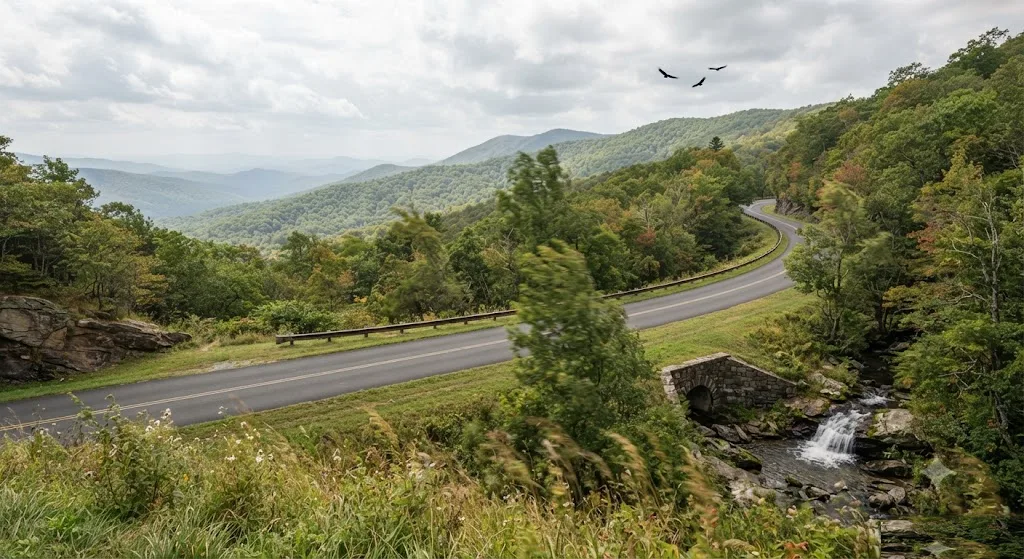
Blue Ridge Parkway Travel Guide — Virginia
Our team at Roam States has extensively explored the Blue Ridge Parkway Virginia, confirming its status as "America's Favorite Drive." This iconic route intricately connects Shenandoah National Park with the Great Smoky Mountains through scenic routing, offering an unparalleled journey through the Appalachian Highlands. We've compiled this guide to help you navigate its winding roads, discover hidden gems, and plan an unforgettable trip through Virginia's portion of this national treasure.
Why Visit Blue Ridge Parkway
The Blue Ridge Parkway is more than just a road; it's an experience, a journey through time and nature. We believe it offers a unique blend of stunning natural beauty, rich cultural heritage, and endless opportunities for outdoor adventure. Imagine driving through tunnels carved into mountainsides, pulling over at countless overlooks to gaze upon sweeping vistas, and immersing yourself in the serene quiet of ancient forests. The Virginia section, in particular, showcases rolling farmlands, historic mills, and vibrant communities, all framed by the majestic Blue Ridge Mountains. It's a place where every turn reveals a new panorama, inviting you to slow down and savor the moment. Whether you're seeking solitude, a romantic getaway, or a family adventure, the Parkway delivers with its diverse landscapes and tranquil atmosphere.
Who It's Best For
The Blue Ridge Parkway caters to a wide array of travelers, but we find it particularly ideal for:
- **Scenic Drivers & Road Trippers:** With its gentle curves and breathtaking views, it's a dream for anyone who loves a leisurely drive. The speed limit is mostly 45 mph, sometimes dropping to 35 or 25 mph, encouraging a relaxed pace.
- **Hikers & Nature Enthusiasts:** The Parkway is a gateway to hundreds of miles of trails, from easy strolls to challenging climbs, offering access to waterfalls, panoramic summits, and diverse ecosystems.
- **Photographers:** Every overlook and vista provides a postcard-perfect shot, especially during sunrise, sunset, and the vibrant fall foliage season.
- **History Buffs & Culture Seekers:** From historic farmsteads like Mabry Mill to the Blue Ridge Music Center, the Parkway is dotted with sites preserving Appalachian culture and history.
- **Families:** Many overlooks offer picnic areas, and numerous short, accessible trails make it enjoyable for all ages.
If you're looking for a fast-paced journey or urban excitement, this might not be your primary destination. However, for those who appreciate natural beauty and a slower pace of travel, the Blue Ridge Parkway is an absolute must-see.
How to Get There
Understanding how to get to Blue Ridge Parkway is straightforward, as it connects two major national parks. The northern terminus of the Blue Ridge Parkway in Virginia begins at Rockfish Gap (Milepost 0), where it seamlessly connects with the southern end of Shenandoah National Park's Skyline Drive. This makes it incredibly convenient to combine a visit to both scenic routes. If you're approaching from other parts of Virginia, there are numerous access points from major U.S. and state highways. For instance, you can access the Parkway at US 250 (MP 0), US 60 (MP 45.6), US 501 (MP 63.7), or US 220 (MP 121.4).
For those flying in, the closest major airports include Charlottesville Albemarle Airport (CHO), Roanoke-Blacksburg Regional Airport (ROA), and Richmond International Airport (RIC). From these hubs, you can rent a car and easily reach an access point. We always recommend checking current road conditions on the National Park Service website before you depart, as sections of the Parkway can close due to weather (especially in winter) or ongoing construction.
Parking on the Blue Ridge Parkway
Parking on the Blue Ridge Parkway is generally limited to designated overlooks and parking lots. With 382 overlooks scattered along its entire length, you’ll find ample opportunities to pull over and soak in the views. However, our team strongly advises against parking on road shoulders, as this can damage park resources and pose a safety hazard. Always ensure your vehicle is fully off the road and not blocking any gates. During peak seasons, particularly in the fall, popular overlooks can fill up quickly, so plan to visit early or during weekdays for the best experience.
Top Things to Do
The Virginia section of the Blue Ridge Parkway offers an incredible array of activities, ensuring there are plenty of things to do at Blue Ridge Parkway for every interest. Here are some of our team's top recommendations:
- **Humpback Rocks (MP 5.8):** This is one of the most popular initial stops in Virginia, featuring a historic farm museum that offers a glimpse into 19th-century Appalachian life. A short, but steep, hike leads to the iconic Humpback Rocks formation, offering rewarding views. The visitor center here is typically open May through October.
- **Peaks of Otter (MP 85.6):** A true highlight, Peaks of Otter offers a lake, lodge, restaurant, campground, and several hiking trails. You can hike to Sharp Top, Flat Top, or explore the easier loop around Abbott Lake. The Peaks of Otter Restaurant is a great place to stop for a meal.
- **James River Visitor Center (MP 63.6):** This is the lowest elevation on the Parkway (649 feet) and features a restored canal lock. It’s a great spot for a picnic or a short walk along the river. Note that as of July 2026, a portion of the James River Visitor Center parking lot remains open for portable toilets, but walking trails, including the footbridge, are closed due to critical repairs to the James River Bridge at MP 63.5-63.9.
- **Mabry Mill (MP 176.1):** Perhaps the most photographed spot on the entire Parkway, Mabry Mill is a historic gristmill, sawmill, and blacksmith shop. Living history demonstrations are often held here, and the Mabry Mill Restaurant and Gift Shop is a fantastic place to enjoy traditional Appalachian fare.
- **Blue Ridge Music Center (MP 213):** Celebrate the region's rich musical heritage with live performances of traditional Appalachian music. The visitor center and outdoor amphitheater are typically open seasonally.
- **Explore Park (MP 115):** Located near Roanoke, Virginia's Explore Park offers a Blue Ridge Parkway Visitor Center, trails for walking and mountain biking, and various programs. The visitor center is open Friday through Sunday from 11 AM to 5 PM during winter operating months.
- **Scenic Overlooks:** With 219 miles of the Parkway in Virginia, there are countless overlooks. Our team recommends stopping at some of the less crowded ones for serene moments.
When planning your things to do at Blue Ridge Parkway, remember that many facilities operate seasonally, generally from May through October. Always check the NPS website for the most current operating hours and any temporary closures due to weather or ongoing maintenance projects.
Blue Ridge Parkway Hiking Trails
For those who love to stretch their legs and explore on foot, the Blue Ridge Parkway hiking trails offer an incredible diversity of experiences. From gentle strolls to challenging ascents, the Virginia section boasts a trail for every skill level. We encourage you to lace up your boots and discover the natural beauty beyond the overlooks.
- **Humpback Rocks Loop (MP 5.8):** As mentioned, the trail to Humpback Rocks is a popular, strenuous 1-mile climb to a unique rock outcrop with expansive views. An easier loop trail explores the farm museum area.
- **Peaks of Otter Trails (MP 85.6):** This area is a hiker's paradise. The Johnson Farm Trail is an easy loop showcasing a historic farm. For more challenge, tackle the trails up Sharp Top or Flat Top Mountain for panoramic vistas.
- **Apple Orchard Falls Trail (MP 78.4):** A moderate to strenuous 2.6-mile loop (or longer if combined with other trails) leading to a beautiful 200-foot waterfall.
- **Roanoke Mountain Loop Trail (MP 120.4):** This 3.7-mile loop circles Roanoke Mountain, offering forest views and a good workout.
- **Rocky Knob Recreation Area Trails (MP 167):** This area provides several options, including the moderately strenuous Rock Castle Gorge Trail, a 10.8-mile loop descending into a scenic gorge, and shorter, easier loops around the campground.
- **Smart View Loop Trail (MP 154.5):** An easy 2.6-mile loop that passes through open fields and woodlands, offering pleasant views and access to a historic cabin.
When embarking on Blue Ridge Parkway hiking trails, always carry water, wear appropriate footwear, and be aware of wildlife. Cell service can be spotty, so download maps beforehand or carry a physical map. Dobie Mountain Trail at Humpback Rocks (MP 6) has been permanently closed, so always check for current trail conditions and closures on the NPS website.
Blue Ridge Parkway Camping
For those who wish to extend their stay and fully immerse themselves in the tranquility of the mountains, Blue Ridge Parkway camping offers a fantastic option. The National Park Service operates several campgrounds along the Parkway, providing a rustic yet comfortable experience. We find that waking up to the crisp mountain air and the sounds of nature is an unparalleled way to enjoy this scenic drive.
In the Virginia section, you'll find:
- **Otter Creek Campground (MP 60.8):** Located near the James River, this campground is typically open from early May to early November.
- **Peaks of Otter Campground (MP 85.9):** A popular choice due to its proximity to Abbott Lake, the Peaks of Otter Lodge, and various trails. It also operates from early May to early November.
- **Rocky Knob Campground (MP 167.1):** Situated in the Rocky Knob Recreation Area, offering access to the Rock Castle Gorge Trail. This campground is also open from early May to early November.
- **Roanoke Mountain Campground (MP 120.4):** Another option in the Roanoke area, typically open during the same May to November season.
Reservations for Blue Ridge Parkway camping can be made through Recreation.gov and are highly recommended, especially during peak season (fall foliage) and on weekends. While some sites are available on a first-come, first-served basis, booking ahead ensures you have a spot, particularly if you have a larger RV. Note that Parkway campgrounds do not offer water, electrical, or sewage hookups, but centralized water and restrooms are available at open campgrounds. Linville Falls Campground and Crabtree Falls Campground (both in NC) are expected to remain closed throughout the 2026 camping season due to long-term infrastructure and safety upgrades.
Best Time to Visit
The Blue Ridge Parkway offers a unique charm in every season, but our team has definite recommendations for the best time to visit:
- **Spring (April-May):** Witness the awakening of the mountains with vibrant wildflowers, dogwoods, and redbuds in bloom. Temperatures are mild, making it ideal for hiking. However, spring can also bring unpredictable weather, with warm days quickly followed by cold fronts and even late-season snow.
- **Summer (June-August):** Lush greenery, comfortable temperatures (especially at higher elevations, rarely exceeding the upper 70s), and frequent cooling thunderstorms characterize summer. All facilities are typically open, and ranger-led programs are in full swing. This is a popular time for families.
- **Fall (September-October):** Without a doubt, autumn is the most popular and arguably the best time to visit the Blue Ridge Parkway, especially for seeing the spectacular fall foliage. The mountains explode in a riot of reds, oranges, and yellows. However, this also means larger crowds and fully booked accommodations and campgrounds, so plan and reserve far in advance. Traffic can slow considerably during this peak season.
- **Winter (November-March):** While beautiful with snow-dusted peaks, many sections of the Parkway, particularly at higher elevations, are closed due to ice and snow. Most visitor centers and facilities are closed. If you choose to visit in winter, check road conditions constantly and be prepared for closures.
Our team generally recommends **late spring through fall** for the most accessible and enjoyable experience, with early to mid-October being prime for fall colors in Virginia.
Where to Stay Nearby
While the Blue Ridge Parkway offers camping, many visitors prefer the comfort of a lodge or hotel. The Parkway itself has limited lodging options, but numerous charming towns and cities just off the route provide excellent choices. Here are some of our top picks in Virginia:
- **Waynesboro (near MP 0):** As the northern gateway to the Parkway, Waynesboro offers a range of hotels, B&Bs, and dining options. It's a convenient base for exploring the northernmost sections and Shenandoah National Park.
- **Roanoke (near MP 120):** Known as Virginia's Blue Ridge, Roanoke is a larger city with a wide selection of accommodations, from boutique hotels to chain options. It provides easy access to the central part of the Parkway and offers a vibrant dining scene and attractions like the Taubman Museum of Art and the Roanoke Star.
- **Floyd (near MP 165):** This small, artsy town is famous for its lively music scene, particularly the Friday Night Jamboree at the Floyd Country Store. It offers unique guesthouses, cabins, and a taste of authentic Appalachian culture.
- **Bedford (near MP 86):** Home to the National D-Day Memorial and close to the Peaks of Otter, Bedford offers a quieter stay with local inns and vacation rentals.
- **Galax (near MP 213):** Near the Blue Ridge Music Center, Galax is another hub for traditional Appalachian music and offers a friendly, small-town atmosphere with various lodging choices.
For a unique stay directly on the Parkway, consider the **Peaks of Otter Lodge** at MP 85.6, which offers stunning lake and mountain views. Reservations for the Peaks of Otter Lodge must be made directly through its website. Many private campgrounds with full hookups are also available just off the Parkway for RV travelers seeking more amenities than the National Park Service campgrounds provide.
Sample 2-Day Itinerary
To help you make the most of your adventure along the Blue Ridge Parkway Virginia, our team has crafted a sample 2-day itinerary focusing on key highlights and experiences:
Day 1: Northern Virginia Charm & Mountain Views
- **Morning (MP 0 - 60):** Begin your journey at Rockfish Gap (MP 0), the northern entrance to the Blue Ridge Parkway, connecting from Shenandoah National Park. Your first stop should be the **Humpback Rocks Visitor Center** (MP 5.8) to explore the historic farm and take the invigorating hike to Humpback Rocks. Continue south, stopping at scenic overlooks like Ravens Roost (MP 10.7) for expansive views.
- **Lunch:** Pack a picnic to enjoy at one of the many overlooks, or detour into nearby Waynesboro for a local bite.
- **Afternoon (MP 60 - 100):** Visit the **James River Visitor Center** (MP 63.6) to see the historic canal lock and enjoy the river scenery (note current trail closures near the bridge at MP 63.5-63.9 due to rehabilitation work). Continue to the **Peaks of Otter** (MP 85.6). Spend the afternoon hiking around Abbott Lake, visiting the Peaks of Otter Visitor Center, or taking a more challenging hike up Sharp Top Mountain.
- **Evening:** Check into the Peaks of Otter Lodge for a convenient and scenic stay, or find accommodation in nearby Bedford. Enjoy dinner at the Peaks of Otter Restaurant.
Day 2: Roanoke Valley & Appalachian Culture
- **Morning (MP 100 - 170):** Drive south towards Roanoke. Consider a stop at **Virginia's Explore Park** (MP 115), where you can visit the Blue Ridge Parkway Visitor Center and explore some short trails. Continue past Roanoke, enjoying the views from overlooks like the Roanoke Mountain Overlook (MP 120.3).
- **Lunch:** Head into Roanoke for lunch, where you'll find a diverse culinary scene. Try the famous peanut soup at the Hotel Roanoke.
- **Afternoon (MP 170 - 217):** Continue your drive to **Mabry Mill** (MP 176.1), a truly iconic stop. Explore the mill, blacksmith shop, and enjoy a slice of their famous buckwheat cakes at the Mabry Mill Restaurant. Further south, immerse yourself in Appalachian music at the **Blue Ridge Music Center** (MP 213), which often hosts live performances.
- **Evening:** Conclude your Virginia Parkway journey in the charming town of Galax or Floyd, known for its vibrant music scene. Enjoy a traditional Appalachian dinner and perhaps catch some live music.
This itinerary provides a taste of the diverse offerings along the Blue Ridge Parkway. Remember to factor in extra time for spontaneous stops, wildlife viewing, and potential road closures. Always check the official NPS road status page for the latest updates before and during your trip.
Is It Worth Visiting?
We unequivocally say, "Yes, the Blue Ridge Parkway is absolutely worth visiting!" For travelers seeking unparalleled scenic beauty, a connection to nature, and a glimpse into Appalachian culture, this drive is a national treasure. The winding roads, the endless mountain vistas, and the serene atmosphere provide a much-needed escape from the hustle and bustle of everyday life. Every season paints a different masterpiece, from the blooming wildflowers of spring to the fiery hues of autumn, making it a destination that calls for repeat visits.
While there are no direct fees to drive the Parkway, the value you receive in terms of natural splendor and cultural immersion is immeasurable. We often hear visitors express how the Blue Ridge Parkway exceeded their expectations, offering a truly unique and memorable experience. If you appreciate slow travel, stunning landscapes, and opportunities for outdoor adventure, then the question "is Blue Ridge Parkway worth visiting?" will be answered with a resounding yes the moment you set tires on its pavement.
Things to Do in Western VA
Beyond the immediate Parkway, Western Virginia is rich with attractions. Our team suggests exploring cities like Roanoke for its vibrant arts scene and outdoor recreation, or Lynchburg for its historical sites. You can also visit charming small towns like Lexington and Staunton, known for their historic architecture and unique shops. For history buffs, consider a trip to Monticello, Thomas Jefferson's estate, or Colonial Williamsburg for a deep dive into early American history. Nature lovers might enjoy exploring national forests or visiting local vineyards and breweries.
Blue Ridge Parkway with Kids
Traveling the Blue Ridge Parkway with kids can be a fantastic family adventure. We recommend focusing on shorter hikes, such as the trails around Peaks of Otter or Humpback Rocks (the easier farm trail). Many overlooks offer picnic tables, perfect for a meal with a view. Visitor centers often have exhibits and ranger programs that engage younger audiences, and kids can even become Junior Rangers. Look for opportunities to spot wildlife like deer and various bird species. The Blue Ridge Music Center can be a fun stop for introducing children to traditional music. Remember to pack snacks, drinks, and entertainment for the car, as the drive is meant to be leisurely.
Blue Ridge Parkway Tips
Our essential Blue Ridge Parkway tips for a smooth trip include: **Plan Ahead:** Check the NPS website for current road closures and weather conditions before you go. **Fuel Up:** There are no gas stations directly on the Parkway, so fill your tank in towns just off the route. **Take Your Time:** The speed limit is 45 mph or less; it's a scenic drive, not a highway. **Pack Essentials:** Bring water, snacks, layers of clothing (mountain weather can change quickly), and a physical map as cell service is unreliable. **Respect Nature:** Stay on marked trails, dispose of waste properly, and observe wildlife from a distance.
Blue Ridge Parkway Parking
Blue Ridge Parkway parking is available at designated overlooks and visitor centers along the entire route. With hundreds of overlooks, you'll find plenty of spots to pull off and enjoy the scenery. However, our team stresses the importance of only parking in these marked areas. Parking on road shoulders is prohibited and can lead to resource damage and safety issues. During peak seasons, especially in the fall, popular overlooks can fill up, so consider visiting early in the day or on weekdays to secure a spot. Always ensure your vehicle is completely off the main road and not obstructing any gates or emergency access points.
Best Time to Visit Blue Ridge Parkway
The best time to visit Blue Ridge Parkway truly depends on your preferences. For vibrant fall foliage, we highly recommend October, though it's also the busiest time with significant traffic. Spring (April-May) offers beautiful wildflowers and fewer crowds, while summer (June-August) provides lush greenery and comfortable temperatures for outdoor activities. Winter brings snow and ice, leading to frequent road closures, so it's best avoided for a full Parkway experience. Our team finds late spring and early fall to strike the best balance of pleasant weather, open facilities, and manageable crowds.
Blue Ridge Parkway Hours and Fees
The Blue Ridge Parkway itself is open 24 hours a day, 365 days a year, with no entrance fee to drive the scenic route. However, sections of the Parkway frequently close due to adverse weather conditions (snow, ice, fog) or ongoing maintenance and construction projects. Visitor centers, campgrounds, and other facilities operate seasonally, typically from May through October, with hours usually from 9 AM to 5 PM, though these are subject to change. There is a fee for camping in National Park Service campgrounds, but visitors with Senior or Access Passes receive a reduced rate. Special Use Permits for events like weddings or commercial filming also incur fees. Always check the official NPS website for the most up-to-date Blue Ridge Parkway hours and fees, as well as current road statuses.
Our team's verdict: The Blue Ridge Parkway in Virginia offers an unparalleled journey through the heart of the Appalachian Mountains. Its winding roads, stunning overlooks, and rich cultural sites create an unforgettable travel experience. We encourage every traveler to embrace the slow pace, soak in the natural beauty, and discover the unique charm of "America's Favorite Drive." Whether you're a seasoned road-tripper or a first-time visitor, the Parkway promises a refreshing escape and a deeper connection to the American landscape. For more adventures in the state, be sure to check out our guide to the Best Places in Virginia.
Last updated: 2026-07-08 by the Roam States team.