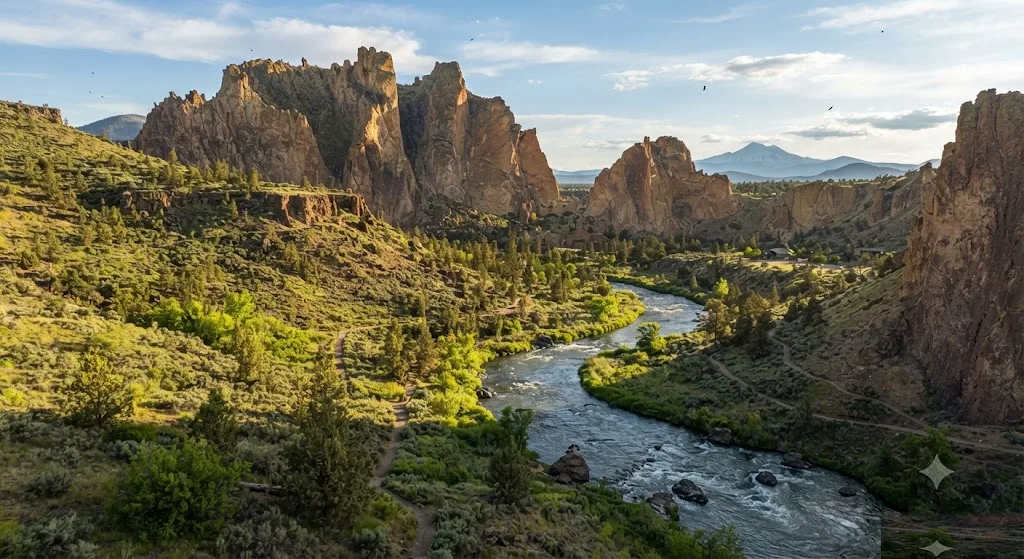
Smith Rock State Park Travel Guide — Oregon
Our team at Roam States has compiled this essential guide to help you navigate the dramatic landscapes of Smith Rock State Park Oregon. This iconic destination, often hailed as the birthplace of modern American sport climbing, beckons adventurers with its sheer tuff and basalt cliffs rising majestically above the winding Crooked River. We’re here to provide the confident, specific details you need to plan an unforgettable trip to this Central Oregon gem.
Why Visit Smith Rock State Park
Smith Rock State Park isn't just another scenic stop; it's a world-renowned outdoor mecca that offers a truly unique experience. The park's towering rhyolite cliffs, carved by millions of years of volcanic activity and erosion, create a breathtaking backdrop for a wide array of activities. We find its raw, high-desert beauty to be incredibly compelling, offering a stark contrast to Oregon's lush coastal and forest landscapes. Beyond the visual splendor, Smith Rock holds significant historical importance in the climbing community, having been the site of groundbreaking sport climbing achievements. It’s also a haven for wildlife, where you might spot golden eagles, prairie falcons, mule deer, river otters, and beavers along the Crooked River.
Who It's Best For
Smith Rock State Park caters to a diverse range of outdoor enthusiasts. It’s undeniably a paradise for rock climbers of all skill levels, with thousands of routes, including over a thousand bolted options. Whether you're a seasoned pro looking to tackle the iconic Monkey Face or a beginner seeking an introductory climb, you'll find ample opportunities here.
However, you don't need to be a climber to appreciate Smith Rock. Our team highly recommends it for hikers and trail runners, with miles of trails ranging from easy riverside strolls to challenging ascents. Photographers will be captivated by the dramatic light and shadows playing across the rock formations, especially during sunrise and sunset. Nature lovers and wildlife watchers will also find plenty to observe in this high-desert ecosystem. Families can enjoy the easier trails and the sheer wonder of the landscape, making it a great day trip destination. Even those seeking a peaceful escape will find tranquility along the Crooked River, though we advise visiting on weekdays to avoid peak crowds.
Getting There & Parking
Smith Rock State Park is conveniently located in Central Oregon, approximately nine miles north of Redmond and about 26 miles northeast of Bend. From Bend, you can follow US Highway 97 north for about 22 miles, then turn east at the sign for Smith Rock State Park and follow the signs for another 3.2 miles to the main day-use area. The small town of Terrebonne is also just a few miles away.
Parking at Smith Rock State Park requires a day-use permit, which can be purchased for $10 for Oregon residents or $12.50 for out-of-state residents at pay kiosks in the parking areas. These kiosks accept credit cards. The park operates three main parking areas along NE Crooked River Drive, within a one-mile stretch. On exceptionally busy days, a gravel overflow lot is also available. For RVs, buses, or trailers, specific parking is designated in the large central lot. We strongly recommend arriving early, especially on weekends and during peak seasons, as parking can fill up quickly.
The park is a day-use only area, open from dawn to dusk.
Top Things to Do
When you visit Smith Rock State Park, you'll discover a wealth of activities that showcase its unique environment. Our team has identified the essential experiences:
- Rock Climbing: As the "birthplace of American sport climbing," this is a premier activity. With over 1,800 climbing routes, ranging from 5.5 to 5.14d difficulty, there's a challenge for every skill level. Iconic formations like Monkey Face and the Monument Area offer hundreds of bolted routes. We recommend checking for seasonal closures, as some climbing areas, including the Smith Rock Group (above 100ft) and First Kiss areas, are closed from approximately January 10 to August 1 to protect nesting raptors.
- Hiking and Trail Running: Explore miles of Smith Rock State Park hiking trails that offer stunning vistas. The park boasts several major trails, including the challenging Misery Ridge Trail, the scenic River Trail, and the longer Summit Trail. We'll delve deeper into the Smith Rock State Park hiking trails in a dedicated section below.
- Mountain Biking: For those who prefer two wheels, the park offers challenging mountain biking trails with rocky terrain, steep climbs, and sharp drop-offs. The Summit Loop, a 7+ mile ride, provides an exhilarating journey along ridges and past iconic rock formations.
- Wildlife Viewing: Keep an eye out for the diverse wildlife that calls Smith Rock home. Golden eagles, bald eagles, peregrine and prairie falcons, mule deer, river otters, and beavers are frequently spotted. Remember that pets must be on a leash, and all visitors are required to stay on designated trails to protect the fragile ecosystem.
- Photography: The dramatic cliffs, winding river, and distant Cascade peaks provide endless photographic opportunities. Sunrise and sunset offer particularly magical light for capturing the park's beauty.
- Kayaking the Crooked River: When water levels permit, kayaking the Crooked River can be an electrifying adventure, featuring class III-IV rapids and unique views of the canyon walls. However, river releases are rare, so planning is crucial.
Best Time to Visit
The best time to visit Smith Rock State Park largely depends on your planned activities. Our team finds that the shoulder seasons—spring (April to May) and fall (September to October)—offer the most comfortable conditions for both hiking and climbing. During these months, daytime temperatures are mild, typically ranging from 55°F to 75°F, and the crowds are more manageable than in summer. Spring also brings wildflowers, adding vibrant color to the rugged landscape. Fall provides crisp, clear skies and excellent visibility.
Summer (June to August) can be intensely hot, with temperatures often exceeding 90°F, and there is very little shade on the exposed rock. If you plan a summer visit, we strongly advise starting your activities at dawn and carrying double the amount of water you think you'll need. Rattlesnakes are also more active in warmer months, so vigilance is key.
Winter (December to February) brings colder temperatures, often dropping to 30-45°F during the day, and can include snow and ice, making some trails, like Misery Ridge, dangerous. However, on mild, clear winter days, south-facing walls can still be climbable, and the snow-dusted red rock offers a unique photographic experience with fewer crowds. Be prepared for significant temperature swings between day and night year-round.
Where to Stay Nearby
While Smith Rock State Park offers limited on-site camping, several excellent lodging options are available in nearby towns, providing a comfortable base for your adventures.
Smith Rock State Park Camping: The park features a walk-in bivouac area exclusively for tent camping. This first-come, first-served campground is open from early spring through late fall, weather permitting. The fee is $12 per person per night. Amenities include shared cooking zones, clean showers (for overnight guests only), and flush toilets. RV camping, sleeping in vehicles, and open fires are not allowed in the bivouac area. Quiet hours in the campground are from 10 p.m. to 7 a.m..
For those seeking alternative Smith Rock State Park camping options or RV accommodations, consider these nearby campgrounds:
- Skull Hollow Campground: Located in Ochoco National Forest, about 20 minutes from Smith Rock, this campground offers 70 first-come, first-served sites on juniper-dotted sagebrush flats. It's a popular choice for climbers and hikers, though it lacks running water. Fees range from $15-$30 per night.
- Chimney Rock Campground: Situated along the Crooked Wild and Scenic River near Prineville, this BLM-managed site provides additional options for camping.
Beyond camping, the towns of Terrebonne, Redmond, and Bend offer a variety of hotels, motels, and vacation rentals:
- Terrebonne: This small community is the closest to the park and offers a few lodging options and dining establishments. You might find charming local stays or vacation rentals like those at Crooked River Ranch.
- Redmond: A larger town just a short drive away, Redmond provides more extensive choices for accommodations, restaurants, breweries, and services. It's a convenient hub with easy access to the park.
- Bend: Approximately 30 minutes south of Smith Rock, Bend is a vibrant city known for its outdoor recreation scene and craft breweries. It serves as an excellent base camp for exploring Central Oregon, with a wide range of hotels, vacation rentals, and dining experiences. From Bend, you can also easily access other Oregon destinations like Crater Lake National Park or explore the Deschutes National Forest.
Sample 2-Day Itinerary
To help you make the most of your visit to Smith Rock State Park Oregon, our team has crafted a sample two-day itinerary focused on experiencing its diverse offerings.
Day 1: Iconic Hikes and Riverside Views
- Morning (Sunrise to Mid-morning): Misery Ridge & River Trail Loop.
Start your day early to beat the heat and crowds, especially if you're visiting during peak season. Begin with the iconic Misery Ridge Trail, a challenging 3.7-mile loop that gains about 800-1,100 feet in elevation. This strenuous climb rewards you with unparalleled panoramic views of the canyon, the Crooked River, and the distant Cascade Mountains. The trail is well-known for its steep switchbacks, so bring plenty of water and wear appropriate footwear. After reaching the summit, descend towards the Crooked River and connect with the River Trail. This easy, mostly flat 2-mile path meanders along the picturesque river, offering stunning reflections of the rock formations and opportunities for wildlife spotting. This combined loop is approximately 3.5-3.7 miles and takes 2-3 hours.
- Late Morning/Lunch: Picnic by the River or Terrebonne Eats.
After your hike, find a scenic spot along the Crooked River for a well-deserved picnic. Alternatively, head into Terrebonne (just a 10-minute drive) for a casual lunch at a local eatery.
- Afternoon: Rim Rock Trail & Photography.
For a less strenuous afternoon, explore the Rim Rock Trail. This short, easy 1-mile hike offers sweeping views from above the river with minimal elevation gain. It's perfect for a leisurely stroll and provides excellent vantage points for photography. We recommend bringing a good camera to capture the dramatic landscape.
- Evening: Sunset Views.
As the day winds down, find a spot along the rim to witness a spectacular Central Oregon sunset over the rock formations. The changing light paints the cliffs in vibrant hues of orange and red.
Day 2: Climbing, Biking, or Deeper Exploration
- Morning: Rock Climbing or Mountain Biking.
If you're a climber, dedicate your morning to scaling some of Smith Rock's famous routes. Whether you opt for a guided experience for beginners or tackle a challenging sport climb, the park offers an unparalleled climbing experience. Alternatively, if mountain biking is your passion, hit one of the park's challenging trails, such as a portion of the Summit Loop.
- Late Morning/Lunch: Explore Terrebonne or Redmond.
Take some time to explore the charming town of Terrebonne itself, perhaps visiting a local vineyard like Faith Hope & Charity Vineyards. Or, venture further to Redmond for more dining and shopping options.
- Afternoon: Steelhead Falls or Peter Skene Ogden State Park.
For a change of scenery, take a short drive (about 10 miles northwest of Terrebonne) to Steelhead Falls. A one-mile round-trip trail leads to a viewpoint overlooking this beautiful waterfall on the Deschutes River, offering a refreshing contrast to Smith Rock's arid landscape. Another excellent option is Peter Skene Ogden State Park, which offers stunning canyon views and a historic bridge.
- Evening: Relax in Bend.
Conclude your trip with an evening in Bend. Enjoy a craft beer at one of the city's many breweries or a delicious meal, reflecting on your adventures at Smith Rock. Bend is also a great jumping-off point for other Oregon adventures, such as a road trip along the Oregon Coast to Cannon Beach or exploring the Columbia River Gorge.
Is It Worth Visiting?
Our team unequivocally believes that Smith Rock State Park is worth visiting. It stands as one of the Seven Wonders of Oregon, a testament to its dramatic natural beauty and unique geological formations. Even if you're not a rock climber, the sheer scale of the tuff and basalt cliffs rising from the Crooked River is awe-inspiring.
The park offers exceptional hiking opportunities for all levels, from the challenging Misery Ridge Trail with its rewarding panoramic views to the tranquil River Trail that winds along the water's edge. Beyond the trails, the chance to observe diverse wildlife, including nesting golden eagles and falcons, adds another layer of appeal. We consistently recommend Smith Rock State Park for its stunning landscapes, its pivotal role in American climbing history, and the sheer variety of outdoor activities available. It's a destination that truly captures the spirit of Oregon's high desert and provides an unforgettable experience for every visitor.
How to Get There
Reaching Smith Rock State Park is straightforward, whether you're coming from within Oregon or further afield. The park is situated in Central Oregon, near the small town of Terrebonne.
- From Bend: Smith Rock State Park is approximately 26 miles northeast of Bend. Take US Highway 97 North for about 22 miles. Look for the sign directing you to Smith Rock State Park, then turn east and follow the signs for another 3.2 miles to the main day-use area.
- From Redmond: The park is about nine miles north of Redmond. You'll head north on US-97, then turn east onto Smith Rock Way in Terrebonne, following signs to the park.
- From Portland: The drive from Portland typically takes around 2.5 to 3 hours, heading southeast on US-26 E and then connecting to US-97 S.
- Nearest Airport: The closest major airport is Redmond Municipal Airport (RDM), which is just a short drive from Smith Rock State Park. This makes it a convenient destination for travelers flying in.
Once you arrive, follow the signs for parking. As mentioned, there are three main parking areas along NE Crooked River Drive, and a day-use parking permit is required. Our team advises using GPS navigation to "Smith Rock State Park" for the most direct route, and always double-checking current road conditions, especially during winter months.
Smith Rock State Park Hiking Trails
The Smith Rock State Park hiking trails are a primary draw for visitors, offering routes that cater to all fitness levels and provide unparalleled views of the park's dramatic geology. Our team has explored the options and highlights the best ways to experience the Smith Rock State Park hiking trails:
- Misery Ridge Trail: This is arguably the most famous and challenging of the Smith Rock State Park hiking trails. It's a 2.0 to 3.7-mile loop with a significant elevation gain of 800-1100 feet via steep switchbacks. While strenuous, the panoramic views from the summit, including the iconic Monkey Face rock formation and the distant Cascade peaks, make the effort incredibly rewarding. Most hikers complete this trail in 2-3 hours. We recommend starting early, carrying plenty of water (at least 2 liters per person), and wearing sturdy trail shoes.
- River Trail: For a more leisurely experience, the River Trail is an excellent choice. This easy, mostly flat trail stretches 2.0 to 4.2 miles along the Crooked River, offering serene views of the water and the towering cliffs above. It's ideal for families, casual hikers, and wildlife spotting, with opportunities to see mule deer, beavers, and golden eagles. The River Trail also connects to other paths, allowing for customized loop experiences.
- Canyon Trail: This 2.7-mile trail provides a more shaded and cooler experience, perfect for hotter days. It can be combined with other trails for a longer loop. Note that the Canyon Trail is restricted to groups of four or less, and noise should be kept to a minimum, especially during raptor nesting season (January 10 to August 1).
- Rim Rock Trail: A short and sweet 1-mile hike that snakes above the river, offering sweeping views with far less elevation gain than Misery Ridge. It's a great option for those seeking impressive vistas without a strenuous climb.
- Wolf Tree Trail: This moderately challenging 3.5-mile loop takes you through the park's unique juniper forests, offering diverse landscapes and opportunities to spot wildlife.
- Summit Trail: A longer and more challenging route (7.3 miles, 1600 feet elevation gain) that traverses various landscapes, including forests, grasslands, and rocky terrain, providing an immersive high-desert experience.
Many of these trails interlink, allowing you to create custom loops and tailor your hiking experience to your desired difficulty and length. Always stay on marked trails to protect the fragile desert environment and its wildlife.
FAQ Longtails
things to do in Terrebonne
Beyond the breathtaking Smith Rock State Park, Terrebonne offers a variety of activities for visitors. Our team recommends horseback riding adventures from outfitters like Smith Rock Trail Rides, which lead along the Crooked River with views of the park's formations and distant Cascade peaks. You can also visit Steelhead Falls, a beautiful waterfall on the Deschutes River accessible via an easy one-mile trail. For those interested in local flavors, Faith Hope & Charity Vineyards and Maragas Winery offer tastings and scenic views. Terrebonne also hosts seasonal events and provides access to other outdoor activities like golf at Crooked River Ranch Golf Course or hot air balloon rides.
Smith Rock State Park with kids
Smith Rock State Park is a fantastic destination for families with children. Our team suggests focusing on the easier trails like the River Trail, which is mostly flat and follows the Crooked River, offering beautiful scenery and opportunities to spot wildlife like deer and otters. The Rim Rock Trail also provides impressive views with minimal effort. Children often enjoy watching the rock climbers scale the cliffs. While the park is generally considered safe and easy to navigate with clear trails, remember to bring plenty of water, sunscreen, and hats, as shade is limited, especially in warmer months. Always keep children close and on trails, and be aware of potential wildlife like rattlesnakes during summer.
Smith Rock State Park tips
To ensure a smooth and enjoyable visit to Smith Rock State Park, our team offers these essential tips:
Arrive Early: Parking fills up quickly, especially on weekends and during peak seasons. Arriving at dawn or early morning will help you secure a spot and experience more solitude.
Hydrate: Smith Rock is high desert with relentless sun and little shade. Carry significantly more water than you think you'll need – at least 2 liters per person for strenuous hikes like Misery Ridge.
Dress Appropriately: Wear layers, as temperatures can fluctuate dramatically between day and night. Sturdy hiking shoes are a must, and sun protection (hat, sunglasses, high SPF sunscreen) is crucial.
Respect Closures: Be aware of seasonal climbing and trail restrictions (typically January 10 to August 1) put in place to protect nesting raptors. Drones are also prohibited during this period.
Stay on Trails: To protect the fragile high-desert ecosystem and its wildlife, always stay on marked trails. Pets must be on a leash at all times.
Be Wildlife Aware: Keep an eye out for rattlesnakes, especially in warmer months. Give them space if encountered.
Smith Rock State Park parking
Parking at Smith Rock State Park is available in three main areas along NE Crooked River Drive. A day-use parking permit is required and costs $10 for Oregon residents or $12.50 for out-of-state residents. These permits can be purchased with a credit card at kiosks located in the parking lots. On particularly busy days, an overflow gravel lot may be open. For RVs, buses, or trailers, a large central lot is designated. Our team strongly advises arriving early in the day, especially on weekends and during peak seasons, as parking lots can fill up quickly.
best time to visit Smith Rock State Park
The best time to visit Smith Rock State Park is during the spring (April to May) and fall (September to October). During these shoulder seasons, temperatures are mild and comfortable, typically ranging from 55°F to 75°F, making them ideal for hiking and climbing. Crowds are also generally thinner than in the summer. Spring offers the added beauty of wildflowers, while fall provides crisp air and excellent visibility. Summer can be extremely hot with little shade, requiring very early starts and ample water. Winter offers unique snowy landscapes and fewer crowds but can be cold and icy on some trails.
Smith Rock State Park hours and fees
Smith Rock State Park operates as a day-use only area, open from dawn to dusk year-round. The park requires a day-use parking permit. As of 2026, the fee is $10 per vehicle for Oregon residents and $12.50 for out-of-state residents. These permits can be purchased via credit card at kiosks in the parking areas. Annual 12-month parking permits are available for $60 for Oregon residents and $75 for out-of-state residents. For camping, the walk-in bivouac area costs $12 per person per night. Our team always recommends checking the official Oregon State Parks website or calling the park directly at 541-548-7501 for the most current information on hours, fees, and any seasonal closures.
We hope this comprehensive guide inspires your trip to Smith Rock State Park Oregon. From its world-class climbing to its stunning hiking trails, this destination truly embodies the adventurous spirit of the American West. Remember to plan ahead, respect the natural environment, and prepare for an unforgettable experience in one of Oregon's most iconic landscapes.
Last updated: 2026-07-12 by the Roam States team.