Our Theodore Roosevelt National Park - South Unit guide covers practical planning for Theodore Roosevelt National Park - South Unit North Dakota — best time to visit, getting there, and what to do on the ground.
As the Roam States editorial team, we are dedicated to bringing you the most authentic and actionable travel advice for America's wild spaces. When it comes to experiencing the rugged badlands, scenic drives, and abundant wildlife, the Theodore Roosevelt National Park - South Unit North Dakota stands as an unparalleled destination. This iconic national park unit offers visitors the chance to hike, horseback ride, and observe magnificent bison and wild horses roaming free across a dramatic landscape shaped by millions of years of erosion. We've compiled this comprehensive guide to ensure your visit is as enriching and seamless as possible.
Why Visit Theodore Roosevelt National Park - South Unit
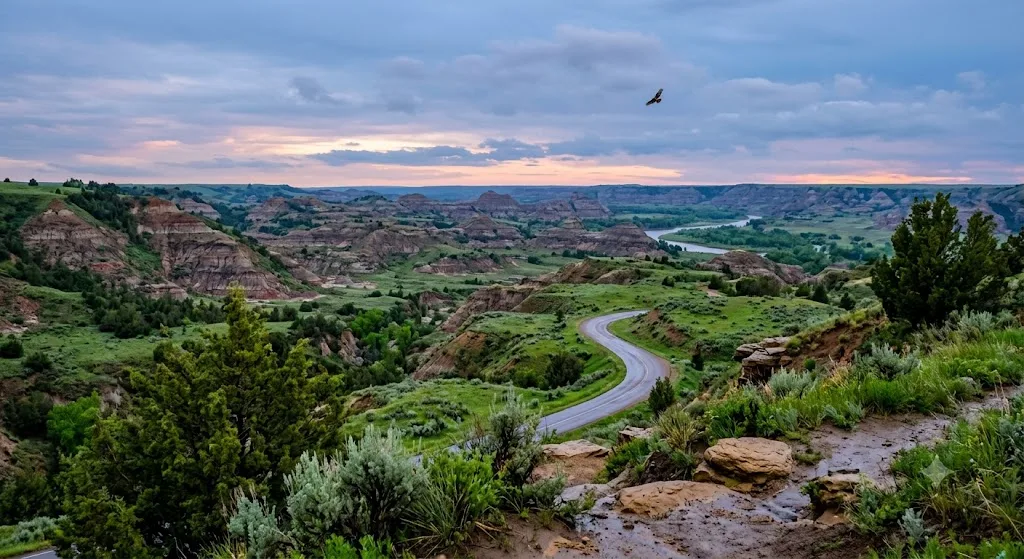
Theodore Roosevelt National Park's South Unit is more than just a national park; it's a living testament to the wild spirit that captured the heart of its namesake president. We recommend a visit to immerse yourself in the dramatic beauty of the North Dakota Badlands, a landscape of sculpted buttes, colorful canyons, and expansive prairies. Here, the raw power of nature is on full display, offering breathtaking vistas at every turn. Beyond the scenery, the park is a haven for wildlife, providing unparalleled opportunities to witness bison herds, wild horses, mule deer, prairie dogs, and a diverse array of birdlife in their natural habitat.
The South Unit also holds significant historical value. It's where Theodore Roosevelt sought solace and found inspiration after personal tragedy, shaping his conservation ethos. Visitors can explore the Maltese Cross Cabin, Roosevelt's original ranch home, located just behind the South Unit Visitor Center. This connection to a pivotal figure in American conservation adds a profound layer to the natural beauty, making it a truly unique destination among national parks.
Who It's Best For
Theodore Roosevelt National Park - South Unit caters to a wide array of travelers, but it particularly shines for:
- Wildlife Enthusiasts: With abundant bison, wild horses, prairie dogs, mule deer, and various bird species, the park is a prime location for wildlife viewing and photography.
- Hikers of All Levels: From short, accessible nature trails to challenging backcountry excursions, there are hiking trails for every ability.
- Road Trippers: The 36-mile Scenic Loop Drive offers numerous overlooks and trailheads, making it perfect for those who prefer to explore by car.
- History Buffs: The park's connection to Theodore Roosevelt and the presence of his Maltese Cross Cabin provide a rich historical context.
- Families: The park offers a Junior Ranger program, easy trails, and fascinating wildlife, making it an engaging destination for children. The nearby town of Medora also offers family-friendly activities.
- Photographers: The dramatic badlands, diverse wildlife, and stunning sunrises and sunsets offer endless photographic opportunities.
If you're looking for a destination that combines natural splendor with a touch of American history and abundant opportunities for outdoor adventure, then the Theodore Roosevelt National Park - South Unit is an excellent choice. It's a key highlight of any North Dakota trip.
Getting There & Parking
Understanding how to get to Theodore Roosevelt National Park - South Unit is crucial for a smooth journey. The South Unit is conveniently located in western North Dakota, directly accessible from Interstate 94. The park entrance is situated in the charming town of Medora, North Dakota.
By Car:
The most common way to reach the South Unit is by car. If you're traveling on Interstate 94, take Exit 24 or 27 to reach Medora. The South Unit Visitor Center is just inside the park entrance in Medora. For GPS, you can use the address: 201 East River Road North, Medora, ND 58645.
- From Bismarck, North Dakota: The South Unit is approximately 135 miles (2 hours) west.
- From Billings, Montana: It's about 280 miles (4 hours) east.
- From the North Unit of Theodore Roosevelt National Park: The North Unit is about 68 miles (1 hour) north via US Highway 85. Keep in mind that the South Unit operates on Mountain Time, while the North Unit operates on Central Time, which can be an important distinction if you plan to visit both units.
Another important access point is the Painted Canyon Visitor Center, located 7 miles east of Medora at Exit 32 off Interstate 94. This offers a panoramic view of the badlands and is a great initial stop, though it is not a park entrance.
Airports:
The nearest airport with a variety of airlines (United, Delta, American, Allegiant) is Bismarck Municipal Airport (BIS). From Bismarck, you would rent a car and drive west to Medora.
Parking:
Parking is available at the South Unit Visitor Center and at numerous pull-offs and trailheads along the Scenic Loop Drive. Accessible parking is provided at most paved parking lots and pull-outs. There are no specific reservation requirements for general parking within the park. However, it's always wise to arrive early during peak season to secure spots at popular overlooks and trailheads. Pets are allowed in parking areas but must be on a leash no longer than 6 feet.
Top Things to Do
The Theodore Roosevelt National Park - South Unit offers a wealth of activities that allow visitors to fully experience its unique badlands ecosystem and rich history. Our team highly recommends dedicating ample time to explore the many things to do at Theodore Roosevelt National Park - South Unit.
Scenic Loop Drive
The 36-mile (though sometimes an out-and-back of 24 miles due to road closures for repairs, as of late 2025 the loop road fully reopened) Scenic Loop Drive is the primary way to explore the South Unit. This paved two-way road winds through the jumbled badlands, offering continuous stunning scenery, numerous scenic overlooks, and access to trailheads. Plan at least two hours to complete the drive without stops, but we suggest allowing much more time for wildlife viewing and short hikes. Along the way, you're likely to encounter bison, wild horses, and prairie dog towns.
Wildlife Watching
The South Unit is a premier destination for wildlife viewing. Keep your eyes peeled for bison, mule deer, prairie dogs, and wild horses, which are frequently seen along the scenic drive. You might also spot coyotes, pronghorn, bald and golden eagles, white-tailed deer, turkeys, and elk. Remember to always maintain a safe distance from all animals, especially bison and wild horses, as they are wild and unpredictable. Driving is often the best way to view wildlife, as it allows you to cover more ground.
Explore the Maltese Cross Cabin
Located just behind the South Unit Visitor Center, the Maltese Cross Cabin was Theodore Roosevelt's first ranch home in North Dakota. This small, historic cabin offers a glimpse into the president's "strenuous life" in the badlands. It's open for self-guided tours year-round, with ranger-led tours available in the summer.
Ranger Programs & Visitor Centers
Stop at the South Unit Visitor Center for maps, current conditions, and to speak with park rangers. The visitor center also features a museum with artifacts from Roosevelt's time and shows a park film. The Painted Canyon Visitor Center, located off I-94, offers another magnificent overlook and is a great first stop for those approaching from the east. Be aware that as of June 6, 2026, the gift shops in the visitor centers will be closed, and merchandise displays removed, due to the termination of an agreement with the Theodore Roosevelt Nature and History Association.
Horseback Riding
For a truly immersive badlands experience, consider exploring the park on horseback. Backcountry trails throughout the park are open to horseback riding. Medora Riding Stables offers trail rides, allowing you to experience the landscape as Roosevelt once did.
Theodore Roosevelt National Park - South Unit Hiking Trails
Exploring the Theodore Roosevelt National Park - South Unit hiking trails is one of the most rewarding ways to connect with this unique landscape. Our team recommends a variety of trails, from easy interpretive walks to more strenuous backcountry adventures. Always check current conditions at the visitor center before embarking on a hike, as trail closures can occur, especially due to weather or road issues.
Easy Trails:
- Wind Canyon Trail: A popular short loop trail (0.4 miles) that leads to an excellent overlook of the Little Missouri River. It starts moderately but can become steep at the top.
- Coal Vein Trail: This trail offers a 0.6-mile inner loop and a 0.8-mile outer loop, providing insights into the badlands' geology and ecology, including a former burning coal vein. It features stairs and is a great spot to see wildflowers in spring.
- Buck Hill Trail: A very short (0.1-0.2 mile) trail that leads to one of the highest points in the South Unit, offering expansive views of the park and surrounding national grasslands.
- Skyline Vista Trail: A very easy 0.1-mile nature trail that leads to Johnson's Plateau.
- Boicourt Overlook Trail: An easy 0.2-mile nature trail leading to one of the most beautiful overlooks in the South Unit, particularly recommended for sunsets.
Moderate to Strenuous Trails:
- Petrified Forest Loop: Located in the remote northwest corner of the South Unit, this 10.3-mile loop takes you through ancient petrified forests and badlands wilderness. It combines the North and South Petrified Forest Trails and a section of the Maah Daah Hey Trail. This hike involves several short but steep climbs and can be slick when wet; there is no shade, so carry water and wear sun protection.
- Lone Tree Loop: A 9.6-mile trail that can be accessed from Peaceful Valley Ranch via the Ekblom Trail or via the Maah Daah Hey Trail to avoid a river crossing, though be aware of difficult stream crossings.
- Old East Entrance Station Trail: A 0.8-mile round-trip hike for history buffs, leading to the park's old East Entrance Station.
- Painted Canyon Trail: A moderate 0.9-mile nature trail with a steep incline, offering close-up views of wildlife and the colorful badlands rocks.
For those seeking longer adventures, backcountry trails span the entire South Unit and are suitable for day or overnight hikes (a free permit is required for overnight stays). The Maah Daah Hey Trail, a 144-mile long-distance route, also passes through the South Unit for 7.1 miles, though bicycles are only permitted on roads within park boundaries, not on trails.
Best Time to Visit
The best time to visit Theodore Roosevelt National Park - South Unit largely depends on your priorities, but we generally recommend spring and fall for the most pleasant experience.
- Spring (April-May): The badlands come alive with wildflowers, and temperatures are generally mild, ranging from 50-70 degrees Fahrenheit during the day and 25-40 degrees at night. Wildlife is active, and crowds are typically lighter than in summer. However, spring can also bring muddy trails and unpredictable weather, so check conditions before heading out.
- Summer (June-August): This is the most popular time to visit, with warm days (80-90°F) and mild nights (50-60°F). All park facilities and activities, including ranger programs and the Medora Musical, are in full swing. Expect larger crowds, especially in July and August, and be prepared for hot temperatures and potential thunderstorms. Cottonwood Campground fills to capacity nightly during this season.
- Fall (September-October): Many consider fall the ideal time to visit, particularly for the spectacular foliage and crisp, clear weather. Daytime temperatures are pleasant (50-70°F), and nights are cool (25-40°F). Crowds begin to thin after Labor Day, offering a more serene experience for wildlife viewing and hiking.
- Winter (November-March): While less crowded, winter visits can be challenging due to cold temperatures (days 20-30°F, nights 0-10°F, with subzero cold snaps) and snow/ice. Portions of the Scenic Loop Drive may close due to conditions. However, the stark, snow-dusted badlands offer a unique and beautiful solitude for those prepared for the cold.
Overall, for comfortable hiking, active wildlife, and fewer crowds, aim for late spring or early fall. If you're keen on experiencing all the local attractions, including the Medora Musical, then summer is your best bet, but be prepared for higher temperatures and more visitors.
Where to Stay Nearby
When planning your trip to Theodore Roosevelt National Park - South Unit, finding suitable Theodore Roosevelt National Park - South Unit lodging is essential. The gateway town of Medora, located right at the park's entrance, offers the most convenient options, ranging from campgrounds to hotels and cabins. For those seeking more amenities or if Medora options are fully booked, nearby towns like Dickinson also provide choices.
Camping Inside the Park:
Cottonwood Campground: This is the only campground within the South Unit, located about 5 miles from Medora. It's a primitive campground with no RV hookups, but most sites are suitable for tents and RVs. Cottonwood is open year-round, but it fills to capacity every night from mid-May through mid-September. Beginning May 1, 2026, all sites at Cottonwood Campground require a reservation via Recreation.gov, and cash payments are no longer accepted. Reservations can be made up to six months in advance. Standard sites cost $20 per night during peak season (May 15 - September 30) and $10 per night off-season (October 1 - May 14). Note that Cottonwood Campground is scheduled to close from June 28 through July 10, 2026, to accommodate the Theodore Roosevelt Presidential Library grand opening event.
Roundup Group Horse Campground: A separate campground for groups camping with horses, also requiring reservations.
Backcountry Camping: Permitted with a free permit obtained from the visitor center.
Hotels in Medora:
Medora offers several hotel and cabin options, many within walking distance or a short drive of the park entrance and town attractions. The AmericInn by Wyndham Medora is a highly-rated option, located just a 10-minute walk from the South Unit Visitor Center, featuring an indoor pool, hot tub, and fitness center. Other popular choices include various cabins and suites like 'Maltese Ranch Cabin,' 'Roosevelt Suite,' and 'Badlands Suite,' which are often less than a mile from the park. The Rough Riders Hotel is another historic lodging option in Medora.
Dispersed Camping:
The Little Missouri National Grassland, which surrounds the park, offers free dispersed camping just outside park boundaries, with no permit required. This can be a great alternative if park campgrounds are full or if you prefer a more primitive experience.
Hotels in Nearby Towns:
If Medora is fully booked or you prefer a larger town with more amenities, Dickinson, North Dakota, is about a 30-minute drive east on I-94. Dickinson offers a wider selection of hotels, including brands like Holiday Inn Express & Suites, TownePlace Suites by Marriott, and Baymont by Wyndham.
Sample 2-Day Itinerary
To truly appreciate the Theodore Roosevelt National Park - South Unit, we recommend at least two full days. This allows for a balance of scenic drives, hiking, and exploring the charming town of Medora.
Day 1: Badlands Immersion & Wildlife Wonders
Morning: Arrival & Scenic Drive
- Arrive in Medora and head directly to the South Unit Visitor Center. Pick up a park map, check current conditions, and explore the Maltese Cross Cabin.
- Embark on the 36-mile Scenic Loop Drive. Allow at least 3-4 hours for this, including stops. Drive slowly, keeping an eye out for bison, wild horses, and prairie dog towns.
- Stop at popular overlooks like Medora Overlook and Skyline Vista for panoramic badlands views.
Afternoon: Short Hikes & Photography
- Choose one or two short Theodore Roosevelt National Park - South Unit hiking trails. We suggest the Wind Canyon Trail (0.4 miles) for stunning views of the Little Missouri River, or the Coal Vein Trail (0.8 miles) to learn about the park's geology.
- Enjoy a picnic lunch at one of the designated picnic areas along the scenic drive.
- Spend time photographing the unique badlands formations and any wildlife you encounter.
Evening: Medora Exploration & Entertainment
- Return to Medora to check into your Theodore Roosevelt National Park - South Unit lodging.
- Dine at one of Medora's local restaurants.
- Experience the Medora Musical at the Burning Hills Amphitheatre, a vibrant outdoor show celebrating Western heritage (seasonal, June-September). Consider the Pitchfork Steak Fondue for dinner beforehand.
Day 2: Deeper Exploration & Local Culture
Morning: Petrified Forest & Backcountry Feel
- Head to the Petrified Forest area in the remote northwest corner of the South Unit. This requires driving on a gravel road, but the reward is seeing ancient petrified logs and excellent wildlife viewing.
- Hike a portion of the Petrified Forest Loop (can be a 3-mile round trip to see the fossilized trees) or the Lone Tree Loop for a more challenging experience.
- Alternatively, for a different perspective, consider a horseback ride from Medora Riding Stables.
Afternoon: Medora History & Departure
- Explore more of Medora's attractions, such as the North Dakota Cowboy Hall of Fame, which preserves the state's Western heritage.
- Visit the Chateau de Mores State Historic Site, a historic hunting lodge built by the Marquis de Mores in 1883, offering tours during summer months.
- Enjoy lunch in Medora and perhaps some last-minute souvenir shopping.
- Depart from Theodore Roosevelt National Park - South Unit, carrying memories of the badlands.
Is It Worth Visiting?
Absolutely, Theodore Roosevelt National Park - South Unit is worth visiting. Our team wholeheartedly believes this park offers a truly unique and enriching experience that stands out among national parks. It's a place where the dramatic beauty of the North Dakota Badlands converges with a profound piece of American history, creating an unforgettable destination.
The opportunity to drive through a landscape teeming with wild bison and horses, hike trails that offer breathtaking vistas of eroded canyons, and connect with the very environment that shaped a president's conservation vision makes Theodore Roosevelt National Park - South Unit an exceptional travel choice. The accessibility of the South Unit, combined with the charming gateway town of Medora, provides a comfortable yet adventurous experience for all types of travelers, from families to serious hikers.
While some national parks might boast towering mountains or vast forests, the Theodore Roosevelt National Park - South Unit offers a distinct kind of rugged beauty and a palpable sense of the American frontier. The ever-changing light on the badlands, the unexpected encounters with wildlife, and the quiet contemplation of Roosevelt's legacy all contribute to a visit that is both inspiring and deeply satisfying. We are confident that your journey here will be a highlight of your US trip planning.
Last updated: 2026-07-13 by the Roam States team.