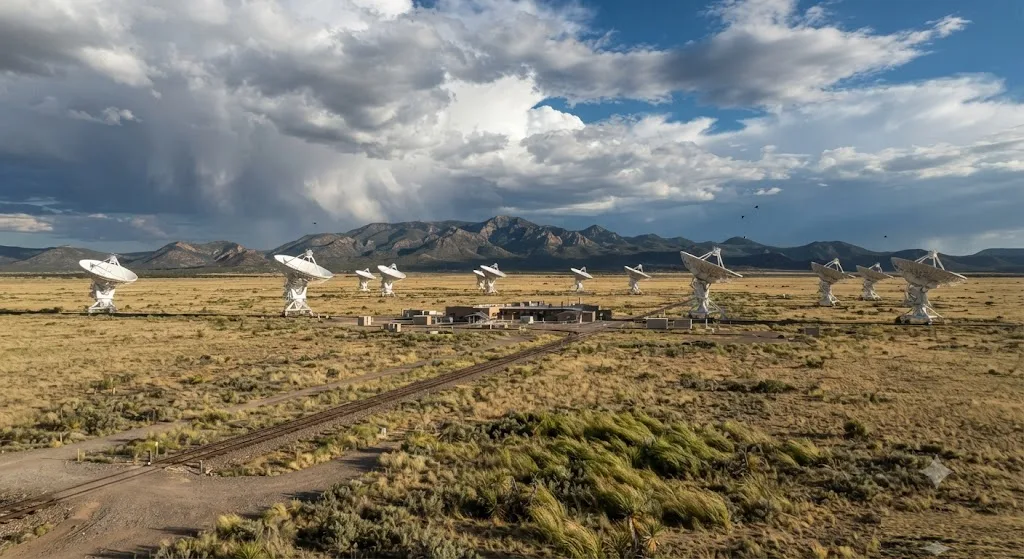
For those who seek the truly extraordinary, a journey to the Karl G. Jansky Very Large Array (VLA) in New Mexico is an absolute imperative. Our comprehensive guide to the Very Large Array (VLA) New Mexico is designed to cut through the noise, providing you with all the verified 2026 facts you need to plan an unforgettable visit to one of the world's premier radio astronomy observatories. Forget generic travel advice; our team has meticulously gathered the specifics on hours, fees, parking, and unique experiences, ensuring your expedition into the cosmos is as smooth as it is awe-inspiring.
Why Visit Very Large Array (VLA)
Stepping onto the Plains of San Agustin and witnessing the monumental scale of the Very Large Array (VLA) is an experience unlike any other. We find ourselves drawn to places that push the boundaries of human endeavor, and the VLA stands as a testament to our insatiable curiosity about the universe. Imagine 27 colossal dish antennas, each 82 feet in diameter and weighing 230 tons, spread across a vast, silent landscape, working in unison to capture whispers from the farthest reaches of space. It's a place where science meets the sublime, offering a profound sense of perspective on our place in the cosmos.
Beyond the sheer visual impact, the VLA offers a unique opportunity to engage with cutting-edge astronomy. This isn't just a collection of impressive dishes; it's a functioning observatory that has made pivotal discoveries about black holes, young stars, and the very structure of our Milky Way galaxy. For anyone with an interest in science, engineering, or simply the wonder of discovery, a visit here transcends typical sightseeing, offering a tangible connection to humanity's quest for knowledge.
Who It's Best For
The Very Large Array (VLA) appeals to a diverse range of travelers, though its remote location and specialized focus mean it's not for everyone. We wholeheartedly recommend it for:
- **Science Enthusiasts & Aspiring Astronomers:** This is hallowed ground for anyone fascinated by space, physics, or the mechanics of scientific discovery. The exhibits and the sheer scale of the instruments are deeply engaging.
- **Photographers:** The stark beauty of the high desert combined with the futuristic architecture of the antennas creates unparalleled photographic opportunities, especially at sunrise or sunset.
- **Road Trippers & Adventurers:** The VLA is an iconic stop on any New Mexico road trip, offering a unique destination that breaks up longer drives with a dose of wonder. It's a journey into solitude and vast landscapes.
- **Families with Curious Kids:** While it might seem niche, the VLA can be incredibly stimulating for children, especially those interested in how things work or the mysteries of space. We've seen firsthand how captivated young minds become by the massive dishes and the idea of listening to the universe.
- **Those Seeking Solitude:** The remote setting means fewer crowds than many major attractions, allowing for a more contemplative and personal experience with the landscape and the science.
If you prefer bustling cities, constant entertainment, or extensive dining options on-site, the VLA might not be your primary destination. However, for those who appreciate unique, educational, and visually stunning experiences, it's an absolute must-see.
Getting There & Parking
Reaching the Very Large Array (VLA) is part of the adventure, as it's situated in a beautifully remote part of New Mexico. The observatory is approximately a two-hour drive southwest of Albuquerque and about 50 miles west of Socorro.
Driving Directions:
We recommend approaching from Socorro. Take I-25 South to Exit 150 for US-60 West. Follow US-60 West through the small town of Magdalena. Just west of mile marker 93, turn left onto NM-52. Drive approximately 2.5 miles, then turn right onto NM-166 (Old Highway 60). The VLA Visitor Center will be on your right after about 1.6 miles. All roads leading to the VLA are paved, so if you find yourself on a dirt road, you've likely taken a wrong turn. Be aware that cellular or data reception can be limited for several miles around the VLA, so we advise downloading directions beforehand.
Parking:
Ample and accessible parking is available directly in front of the Visitor Center. If you're arriving by bus, pull into the first parking lot on the right at the building marked "Very Large Array". Parking is free for all visitors.
Top Things to Do
When you visit the Very Large Array (VLA), you're not just observing; you're immersing yourself in a world of scientific discovery. Our team has explored the best ways to experience this incredible site, ensuring you make the most of your time among the giant dishes.
At the Very Large Array (VLA):
- Visitor Center & Documentary: Start your visit at the VLA Visitor Center, which houses engaging exhibits about radio astronomy and the VLA's history and function. Don't miss the award-winning 23-minute documentary, narrated by Jodie Foster, which provides an excellent overview of the observatory's work and the science behind it.
- Self-Guided Walking Tour: This is one of the top things to do at Very Large Array (VLA). Pick up a tour map at the Visitor Center and embark on the outdoor self-guided walking tour. This approximately 0.5-mile path, with both paved and unpaved sections, takes you past informative signs, the Radio Sundial, the Whisper Dish Gallery, and culminates at the base of one of the massive 230-ton antennas. You'll get an up-close perspective of these incredible machines and can even climb to an observation deck for panoramic views of the entire array. It's a truly immersive way to understand the scale of the operation.
- Witness an Antenna Move: If you're lucky, you might witness one of the antennas being moved along its railroad tracks. This impressive feat of engineering is a highlight for many visitors, especially kids.
- Guided Tours (Select Dates): While daily visits are self-guided, the VLA offers special guided tours on Sundays (as needed) and during their Spring and Fall Open House events. These tours, often led by NRAO scientists and engineers, provide deeper insights and behind-the-scenes glimpses. In 2026, the Spring Open House is on Saturday, April 18, and the Fall Open House is on Saturday, October 10, both from 9 AM to 4 PM, and require advance tickets.
- Gift Shop: Before you leave, browse the VLA Gift Shop for astronomy-themed apparel, books, and unique souvenirs. It's open daily from 9 AM to 4 PM, with a lunch break from 12 PM to 12:30 PM, though specific closures may occur, such as May 12-13, 2026.
Things to Do in Magdalena and Nearby:
The journey to the VLA often involves passing through or staying in nearby towns. Here are some of our top things to do in Magdalena and the surrounding area:
- Explore Magdalena: Known as the "Gateway to the Stars" and "Trail's End," Magdalena is a small, historic ranching town about a third of the way from Socorro to the VLA. It offers art and antique galleries, rock and mineral shops, and a handful of local cafes. It's a great spot to grab a bite before or after your VLA visit, as there are no food options on-site at the observatory.
- Visit the Ghost Town of Kelly: Just minutes from Magdalena, the abandoned mining community of Kelly offers a glimpse into New Mexico's past with old mining buildings and adobe ruins.
- Pie Town: Located about 36 miles west of the VLA on Highway 60, Pie Town is famous for its delicious pies and hosts a popular Pie Festival on the second Saturday of September each year. It's a quirky and delightful stop for a meal or a sweet treat.
- Bosque del Apache National Wildlife Refuge: If you're heading from or to Socorro, consider a detour to this world-class birding destination. It's a fantastic spot for wildlife viewing, particularly during migration seasons.
- Datil Well Recreation Area: A short 15-20 minute drive west of the VLA, this Bureau of Land Management site offers scenic views, hiking trails, and is suitable for dry camping.
Best Time to Visit
Choosing the best time to visit the Very Large Array (VLA) can significantly enhance your experience. We consider several factors, from weather to special events, to help you plan your trip:
- **Spring and Fall (April-May & September-October):** These seasons generally offer the most pleasant weather, with mild temperatures and clear skies, ideal for outdoor exploration. Keep in mind that the VLA is at an elevation of 7,000 feet, so even in spring and fall, temperatures can vary, and it's wise to dress in layers.
- **Open House Events:** For a truly unique experience, plan your visit around one of the VLA's Open House events. In 2026, the Spring Open House is on Saturday, April 18, and the Fall Open House, celebrating 70 years of the National Radio Astronomy Observatory, is on Saturday, October 10. These free, family-friendly events offer guided tours, expert talks, and hands-on activities, but require advance timed-entry tickets for parking.
- **Summer (June-August):** While warm, summer afternoons can bring thunderstorms and lightning, which may impact outdoor activities. The Visitor Center remains open, but staff will post notices about lightning in the area.
- **Winter (November-February):** This is the coldest period, with temperatures dropping as low as 15°F (-9°C) and chances of snow and ice, which could lead to site closures. If you brave the cold, you might be rewarded with stunning snowy landscapes, but check conditions before you go.
Regardless of the season, we always recommend checking the official VLA website for the latest weather conditions and any potential closures before heading out. Bringing water, sunscreen, and comfortable walking shoes is advisable year-round.
Where to Stay Nearby
Given the remote location of the Very Large Array (VLA), planning your overnight accommodations is crucial. On-site lodging or camping is not available at the VLA. Our team suggests the following options:
- **Magdalena, New Mexico:** This small village is the closest option with basic amenities. You'll find a few local cafes and potentially a motel or two. It's a convenient base for exploring the VLA and the immediate surroundings like the Ghost Town of Kelly.
- **Socorro, New Mexico:** Located about 50 miles east of the VLA, Socorro offers a wider range of hotels, motels, and dining options. It's a larger town and a good hub if you plan to explore other New Mexico attractions like the Bosque del Apache National Wildlife Refuge or even make a day trip to White Sands National Park.
- **Datil, New Mexico:** Further west of the VLA, Datil has limited options, including the Eagle Guest Ranch, which offers RV sites and motel rooms.
- **Camping:** For those who prefer to sleep under the stars, Datil Well Recreation Area (Bureau of Land Management) is the closest dry camping option, open year-round with scenic views and hiking trails. Water Canyon Recreation Area (U.S. Forest Service) also offers dry camping. Remember to bring all necessary supplies as these are primitive sites.
We advise booking accommodations in advance, especially during peak travel seasons or special VLA events, as options are limited in this region.
Sample 2-Day Itinerary
To truly appreciate the Very Large Array (VLA) and its unique surroundings, we suggest a two-day itinerary, allowing for exploration at a comfortable pace.
Day 1: Journey to the Stars & VLA Immersion
- **Morning (Travel & Arrival):** Depart from Albuquerque or your starting point, heading south on I-25 to Socorro, then west on US-60. Enjoy the scenic drive through the high desert. We recommend topping off your gas tank in Socorro, as options become scarce further west.
- **Late Morning (Magdalena Stop):** Make a brief stop in Magdalena, the "Gateway to the Stars." Grab a coffee or a light snack at one of the local cafes and perhaps browse an antique shop.
- **Lunch (Picnic at VLA):** Since there are no food options on-site at the VLA, pack a picnic lunch to enjoy upon arrival.
- **Afternoon (VLA Exploration):** Arrive at the Very Large Array (VLA) Visitor Center. Watch the documentary, explore the indoor exhibits, and then embark on the self-guided walking tour. Spend 2-3 hours walking among the giant dishes, taking photos, and absorbing the awe-inspiring scale of the observatory. If your visit aligns with a Sunday, consider joining a guided tour.
- **Late Afternoon (Scenic Drive):** After your VLA visit, take a leisurely drive along the surrounding roads, enjoying the vastness of the Plains of San Agustin.
- **Evening (Dinner & Stargazing):** Head back to Magdalena or Socorro for dinner. If staying in Magdalena or camping nearby, take advantage of the incredibly dark skies for some unparalleled stargazing. The VLA's remote location means minimal light pollution.
Day 2: Local Exploration & Departure
- **Morning (Bosque del Apache or Pie Town):**
- **Option A (Nature):** If you're a nature lover, drive south from Socorro to the Bosque del Apache National Wildlife Refuge for world-class birdwatching and wildlife photography.
- **Option B (Quirky Charm):** For a unique cultural experience, head west on US-60 from the VLA to Pie Town. Enjoy a slice of pie and soak in the small-town charm.
- **Late Morning/Early Afternoon (Socorro Exploration):** Return to Socorro. Explore the historic Socorro Plaza (Kittrel Park), which often hosts community events. You might also visit the New Mexico Tech Mineral Museum.
- **Afternoon (Departure):** Begin your journey back to your next destination, perhaps continuing your exploration of New Mexico's diverse landscapes, from the natural wonders of Carlsbad Caverns National Park to the stunning gypsum dunes of White Sands National Park.
Is It Worth Visiting?
We often get asked, "is Very Large Array (VLA) worth visiting?" Our answer is an unequivocal yes, especially for those seeking a truly unique and thought-provoking travel experience. While its remote location requires a dedicated effort, the rewards are immense.
The VLA offers a rare blend of scientific marvel and natural beauty. Standing amidst the giant antennas on the vast, quiet plains evokes a profound sense of wonder and perspective. It's a place where you can tangibly connect with humanity's pursuit of understanding the universe, a stark contrast to the everyday hustle. The self-guided tour is informative and accessible, allowing you to learn at your own pace and get up close to these engineering marvels. For us, the opportunity to witness such a significant scientific instrument in action, against the backdrop of New Mexico's stunning high desert, makes the journey entirely worthwhile. If you're looking for an experience that is both educational and deeply inspiring, then yes, the Very Large Array (VLA) is absolutely worth visiting.
How to Get There
Understanding how to get to Very Large Array (VLA) is key to a smooth trip, as it's located in a relatively isolated area of central New Mexico. We've outlined the primary routes and important considerations for your journey.
The VLA is situated on the Plains of San Agustin, approximately 50 miles west of Socorro, New Mexico. The most common and recommended approach is by car.
From Albuquerque (approx. 2 hours):
Take I-25 South from Albuquerque. At Exit 150, take US-60 West. Continue on US-60 West, passing through the town of Magdalena. Just past mile marker 93, turn left (south) onto NM-52. Drive for about 2.5 miles, then turn right (west) onto NM-166 (also known as Old Highway 60). The VLA Visitor Center will be on your right after another 1.6 miles.
From the Arizona Border (US-60 East):
If you're approaching from the west, drive through Datil on US-60 East. Just past mile marker 90, you'll cross railroad tracks marking the North arm of the array. Continue past mile marker 92 and turn right onto NM-52. Drive 2.5 miles, then turn right onto NM-166. The VLA Visitor Center will be on your right after 1.6 miles.
Important Notes on How to Get There:
- **Paved Roads:** All roads leading directly to the VLA Visitor Center are paved. If you find yourself on a dirt road, you're likely off course.
- **GPS Coordinates:** For precise navigation, the GPS coordinates for the VLA Visitor Center are 34°04′24.636″N 107°37′20.640″W.
- **Cell Service:** Be aware that cellular and data reception can be spotty or non-existent for several miles around the VLA. Download offline maps and directions before you lose service.
- **Fuel:** We strongly advise filling your gas tank in Socorro, as gas stations are scarce and more expensive further west.
Planning your route in advance and being prepared for limited connectivity will ensure a smooth journey to this remarkable destination.
Visiting With Kids
Bringing the family to the Very Large Array (VLA) can be an incredibly enriching experience, especially for children who are curious about science and the universe. Our team has found several aspects that make visiting with kids both enjoyable and educational.
- **Engaging Exhibits:** The VLA Visitor Center offers exhibits that explain radio astronomy in an accessible way. The documentary, narrated by Jodie Foster, is a great starting point and captures attention.
- **The Wow Factor:** The sheer size of the antennas is often the biggest draw for children. Seeing these massive dishes up close on the self-guided walking tour is truly impressive. Kids often get excited if they witness an antenna moving, a rare but thrilling sight.
- **Accessible Walking Tour:** The self-guided walking tour is approximately 0.5 miles long and is relatively flat, with both paved and unpaved sections, making it manageable for most children and strollers. It allows kids to explore at their own pace.
- **Hands-on Learning (Open Houses):** If your visit coincides with a Spring (April 18, 2026) or Fall (October 10, 2026) Open House, you'll find family-friendly activities, hands-on science demos, and opportunities to interact with scientists and engineers. These events are free but require advance tickets for parking.
- **No Food On-Site:** Remember that there are no food options available at the VLA, so pack plenty of snacks and drinks for the whole family. This is especially important when visiting with kids, who often need frequent refueling.
- **Weather Preparedness:** The VLA is at 7,000 feet elevation, and weather can change quickly. Dress children in layers, bring hats, sunscreen, and plenty of water, regardless of the season.
Visiting with kids at the Very Large Array (VLA) offers a unique opportunity to spark an interest in science and space, creating lasting memories of a truly "very large" adventure.
FAQ Longtails
Very Large Array (VLA) tips
Our top tips for visiting the Very Large Array (VLA) include downloading offline maps due to limited cell service, bringing your own food and drinks as there are no on-site options, dressing in layers for variable high-desert weather, and checking the official website for any 2026 closures or special event information before you go. Consider visiting during a Spring (April 18, 2026) or Fall (October 10, 2026) Open House for enhanced experiences, but remember these require advance tickets.
Very Large Array (VLA) parking
Parking at the Very Large Array (VLA) is free and readily available in front of the Visitor Center. For buses, there's a designated parking lot to the right of the main building upon arrival. No reservations are required for standard parking.
Best time to visit Very Large Array (VLA)
The best time to visit the Very Large Array (VLA) is during the spring (April-May) or fall (September-October) for mild weather and clear skies. These seasons also coincide with special Open House events in 2026 (April 18 and October 10), which offer unique guided tours and activities.
Very Large Array (VLA) hours and fees
In 2026, the Very Large Array (VLA) is open to the public 7 days a week, from 9 AM to 4 PM. It is closed on Thanksgiving Day and Christmas Day (December 25). Admission fees are $10.00 for adults (13-64), $8.00 for seniors (65+), military personnel, and AAA members, and free for ages 12 and under. Residents of Socorro and Catron County also receive free admission with a paying guest.
Very Large Array (VLA) itinerary
A typical Very Large Array (VLA) itinerary involves a two-hour drive from Albuquerque, a stop in Magdalena, then 2-3 hours at the VLA Visitor Center for exhibits and the self-guided walking tour, followed by an evening of stargazing if staying nearby. Consider adding a visit to Bosque del Apache National Wildlife Refuge or Pie Town on a second day.
Very Large Array (VLA) travel guide
Our Very Large Array (VLA) travel guide emphasizes planning for its remote location by bringing food, water, and downloaded directions. We recommend exploring the Visitor Center, taking the self-guided walking tour to see the giant antennas up close, and considering a visit during a 2026 Open House for special tours and activities. Nearby towns like Magdalena and Socorro offer accommodation and dining options.
Our team at Roam States stands by the assertion that the Very Large Array (VLA) is a truly unparalleled destination. It's a place that humbles and inspires, offering a tangible connection to the vastness of the universe and the ingenuity of human scientific endeavor. We encourage every curious traveler to make the journey, to stand among these silent giants, and to listen to the cosmos.
Last updated: 2026-07-08 by the Roam States team.