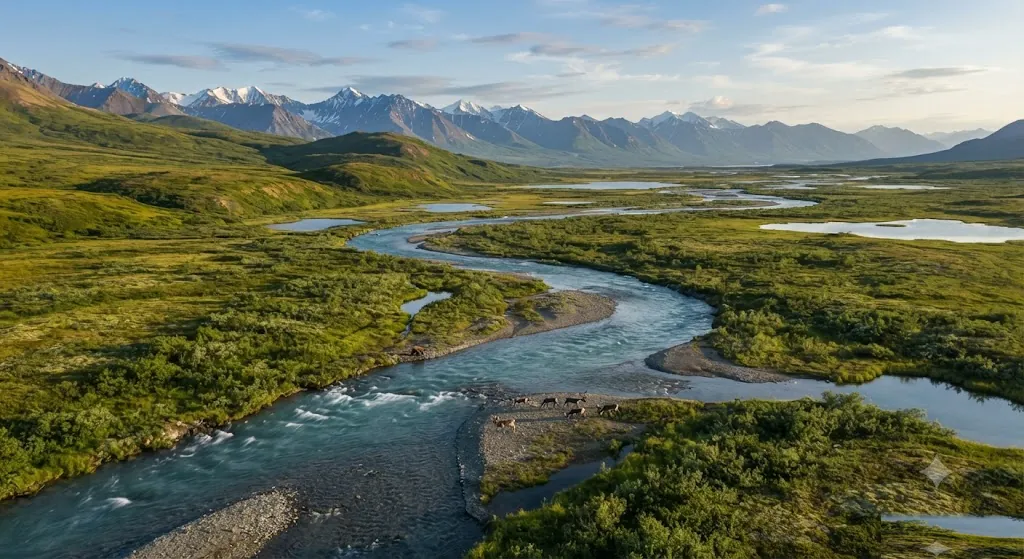
Our Arctic National Wildlife Refuge guide covers practical planning for Arctic National Wildlife Refuge Alaska — best time to visit, getting there, and what to do on the ground.
For intrepid travelers seeking an unparalleled remote wilderness experience in 2026, the Arctic National Wildlife Refuge Alaska (ANWR) stands as a monumental destination. Established in 1960 and later expanded, this vast wilderness area is a critical habitat for caribou, polar bears, and migratory birds, encompassing nearly 20 million acres in remote northeastern Alaska. It stretches from the treeless Arctic Coast over the Brooks Range to the taiga of the Porcupine River Valley, offering a truly untamed frontier.
Why Visit Arctic National Wildlife Refuge
Is Arctic National Wildlife Refuge worth visiting? Our team unequivocally says yes, for those prepared for a true wilderness immersion. This refuge, often called America's last great wilderness, offers an extraordinary opportunity to witness a thriving Arctic ecosystem largely untouched by human development.
Visitors are drawn to the Arctic National Wildlife Refuge for its immense scale, diverse wildlife, and the profound sense of solitude it provides. It's a place where the Porcupine Caribou Herd, numbering around 143,000 to 200,000 animals, undertakes one of the longest land migrations on Earth, calving on the coastal plain. Beyond caribou, you might spot grizzly bears, muskoxen, Dall sheep, wolves, and a spectacular array of over 200 bird species that migrate here from four continents to breed.
The refuge's unique ecology has placed it at the center of conservation debates, making a visit here not just a trip but an opportunity to form your own informed opinions about this critical landscape. Unlike many other Alaskan destinations, much of the northern Arctic Refuge is relatively free of dense shrubbery, making foot travel surprisingly pleasant for hikers and backpackers.
Who It's Best For
The Arctic National Wildlife Refuge is best suited for experienced, self-reliant adventurers who are comfortable with remote, unsupported travel. This is not a destination for casual tourism; there are no roads, established trails, or facilities within the refuge's 19 million acres. Visitors must be prepared to bring all their own food and gear and be capable of navigating challenging terrain.
It's ideal for backpackers, rafters, wildlife photographers, birdwatchers, and those seeking deep solitude and a profound connection with nature. First-time visitors, or even experienced ones, often opt for guided trips to navigate the complexities of Arctic travel safely. If you thrive on logistical challenges, embrace the unexpected, and dream of vast, silent landscapes teeming with wildlife, then the Arctic National Wildlife Refuge is for you.
Getting There & Parking
How to get to Arctic National Wildlife Refuge is a primary planning consideration, as direct access is limited and requires significant preparation. There are no roads or facilities within the refuge itself.
Most visitors begin their journey in Fairbanks, a major hub in Interior Alaska. From Fairbanks, you have a few options for reaching the vicinity of the refuge:
- Scheduled Air Service: Fly commercially from Fairbanks to nearby communities like Fort Yukon, Kaktovik, Coldfoot, or Deadhorse. From these communities, you would then charter a bush plane (air taxi) to fly directly into the refuge. Airlines like Wright Air and Everts Air Cargo offer flights to these remote locations in 2026.
- Charter Air Taxi: Many visitors opt to charter a bush plane directly from Fairbanks or other northern hubs. These small planes, typically seating 3 to 5 passengers, can land on gravel bars or tundra strips within the refuge. A same-day round trip charter can cost in the range of $5,000–$6,000 per aircraft in 2026, with multi-day drop-offs and pickups essentially costing for two flight legs.
- Driving the Dalton Highway: The Dalton Highway briefly touches the westernmost edge of the Arctic National Wildlife Refuge just north of Atigun Pass. Some visitors choose to hike into the refuge from this road. However, this is a very small section, and the vast majority of the refuge remains inaccessible by road.
There is no designated parking within the Arctic National Wildlife Refuge itself, as there are no roads. If you are driving the Dalton Highway and hiking in, you would need to arrange for parking outside the refuge boundaries, likely with a local outfitter or at a designated spot along the highway, keeping in mind the extreme remoteness and lack of services. For those flying in, parking is typically handled at your departure airport (e.g., Fairbanks) or the staging community.
We recommend contacting the Arctic Interagency Visitor Center in Coldfoot or the Alaska Public Land Information Center in Fairbanks for up-to-date information and guidance on planning your access.
Top Things to Do
The Arctic National Wildlife Refuge offers a profound array of wilderness activities for those seeking true adventure. There are no established trails, so visitors plan their own routes, making self-reliance paramount.
- Backpacking and Hiking: With no designated Arctic National Wildlife Refuge hiking trails, the refuge offers unlimited options for route-finding across varied terrain, from soft tundra to gravel bars and rocky slopes. Backpacking trips often involve crossing the Continental Divide, exploring limestone canyons, and traversing broad tundra valleys. Travelers can expect to cover around 30-40 miles over an 8-day trip.
- Rafting and Packrafting: Floating one of the many wild rivers is arguably the most immersive way to experience the refuge. Rivers like the Kongakut, Hulahula, Canning, and Sheenjek flow from the Brooks Range towards the Arctic Ocean, offering everything from flat Class I sections to challenging Class IV whitewater. Packrafting combines hiking with lightweight boating, allowing access to areas and river sections inaccessible to larger rafts.
- Wildlife Viewing and Photography: This is a primary draw to the Arctic National Wildlife Refuge. Keep an eye out for the Porcupine Caribou Herd, grizzly bears, polar bears (especially near Kaktovik on Barter Island), muskoxen, Dall sheep, and wolves. The refuge is also a world-class birding destination, with over 200 species recorded. The coastal plain is a critical denning area for polar bears and calving ground for caribou.
- Hunting and Fishing: Following Alaska state regulations, hunting for species like Dall's Sheep, Caribou, Moose, and Brown and Black Bear is permitted. Fishing for Arctic Grayling and Dolly Varden is popular among rafters and hikers.
- Basecamp Hiking: For those who prefer not to carry a heavy pack daily, basecamp hiking involves flying into a suitable location and taking day hikes from a central camp.
Remember, there are no facilities or established Arctic National Wildlife Refuge hiking trails, so thorough preparation, including navigation skills and bear safety protocols, is essential.
Best Time to Visit
The practical window for visiting the Arctic National Wildlife Refuge is relatively short, typically from late June through early September. However, the "best" time depends on your desired experience.
- Early Season (Mid-June to Early July): This period offers nearly continuous daylight (midnight sun) and active caribou movement, especially near major river corridors and the coastal plain. The tundra begins to green, though higher elevations may still have snow. Bugs can be present but are generally limited.
- Peak Summer (Late July to Mid-August): This is generally the warmest period, with rivers at their peak water levels for rafting, and the best display of wildflowers. Wildlife diversity is high, with polar bears, walruses, Arctic foxes, and various whale species active. However, bugs, particularly mosquitoes, can be intense during warm, still periods.
- Late Season (Mid-August through Early September): Many experienced Arctic travelers prefer this time. The tundra transforms into spectacular reds, golds, and purples, and cooler temperatures make hiking and camping more comfortable. Mosquito populations typically decline after the first hard frost. Nights begin to lengthen, increasing the chance of viewing the Northern Lights late in the season, though continuous daylight in July and August prevents aurora viewing.
For specific wildlife viewing, polar bear families are best seen in April-May, while peak wildlife diversity is in July and August.
Where to Stay Nearby
When considering Arctic National Wildlife Refuge lodging, it's crucial to understand that there are no hotels, lodges, or established campgrounds within the refuge itself. The only "lodging" within the refuge is primitive backcountry camping.
Most visitors seeking Arctic National Wildlife Refuge lodging will stay in gateway communities before or after their wilderness expedition. The closest communities with some services include:
- Fairbanks: As the primary jumping-off point for most ANWR trips, Fairbanks offers a wide range of hotel options, from budget-friendly motels to more upscale lodges. Many air taxi services operate from here. Hotels like Puffin Inn of Anchorage, The Lakefront Anchorage, and Alyeska Resort are listed as top-rated options, though these are further south. Fairbanks itself has hotels like Hampton Inn & Suites Fairbanks, SpringHill Suites by Marriott Fairbanks, and Chena Hot Springs Resort.
- Coldfoot: Located along the Dalton Highway, Coldfoot has limited lodging options, typically catering to truckers and those traveling the highway. It also hosts the Arctic Interagency Visitor Center.
- Kaktovik (Barter Island): This Inupiat village on the Arctic Coast is a common access point for polar bear viewing trips. It has very limited guesthouse or lodge options, which should be booked far in advance.
- Arctic Village: Located on the southern edge of the refuge, this Gwich'in community has minimal visitor services.
For those undertaking a multi-day trip into the refuge, your Arctic National Wildlife Refuge lodging will be entirely self-supported camping. Guided trips will typically provide tents and other necessary camping gear. You can also find vacation rentals in the broader Arctic National Wildlife Refuge area, starting from around $112 per night, though these are often in more populated areas like Anchorage or Fairbanks.
Sample 2-Day Itinerary
A true Arctic National Wildlife Refuge experience typically requires more than two days due to the remote access and vastness of the area. Most guided trips are 6-10 days. However, for a condensed experience focusing on the periphery or a brief immersion, here's a sample:
Day 1: Journey to the Edge of the Wild
- Morning: Fly from Fairbanks to a gateway community like Kaktovik or Coldfoot. If heading to Kaktovik, this flight offers incredible aerial views of the Arctic landscape.
- Afternoon (Kaktovik Option): Upon arrival in Kaktovik, check into your pre-arranged guesthouse (book well in advance for 2026). Embark on a boat-based polar bear viewing tour on the waters around Barter Island. These tours offer a chance to see polar bears in their natural habitat.
- Afternoon (Coldfoot/Dalton Highway Option): If flying to Coldfoot, visit the Arctic Interagency Visitor Center for orientation and information about the refuge. Consider a scenic flightseeing tour over a portion of the refuge to grasp its immense scale and spot wildlife from above. Some air taxi operators offer one-day flightseeing trips.
- Evening: Enjoy a simple meal in your gateway community. Reflect on the vastness of the Arctic.
Day 2: Brief Wilderness Immersion or Flightseeing
- Morning (Kaktovik Option): Enjoy a final walk around Kaktovik, observing local life and the unique Arctic environment. Perhaps another short wildlife viewing excursion if time permits.
- Morning (Coldfoot/Dalton Highway Option): For a taste of Arctic National Wildlife Refuge hiking trails, if conditions allow and you are properly equipped and experienced, hike a short distance into the refuge from the Dalton Highway near Atigun Pass. Remember, there are no marked trails, so careful navigation and bear safety are critical. Alternatively, take a longer flightseeing tour further into the refuge's interior.
- Afternoon: Begin your journey back, flying from Kaktovik or Coldfoot to Fairbanks.
- Evening: Arrive back in Fairbanks, carrying memories of one of the world's last great wildernesses.
This itinerary is a mere glimpse. To truly experience the Arctic National Wildlife Refuge, we highly recommend planning a multi-day backpacking, rafting, or guided expedition, which allows for deeper immersion into this extraordinary landscape. For more extensive planning, explore Plan Your US Trip resources.
FAQ Longtails
Arctic National Wildlife Refuge camping
Arctic National Wildlife Refuge camping is exclusively backcountry, as there are no established campgrounds or facilities within the refuge's 19 million acres. Visitors must be entirely self-sufficient, carrying all their gear, food, and waste. When camping, we advise choosing durable surfaces like rock, gravel, sand, snow, or annually-flooded riverbars to minimize impact. It's also recommended to move your camp every few days to prevent vegetation wear. Be aware that polar bear use of coastal areas increases from mid-July through October, so planning coastal trips during these months may no longer be advisable due to potential encounters. Always use approved bear-resistant containers for food and trash.
things to do in Northeast Alaska
Beyond the Arctic National Wildlife Refuge, Northeast Alaska offers a range of remote wilderness activities. These primarily revolve around flightseeing, exploring small Arctic communities, and engaging in self-sufficient outdoor pursuits. You can embark on multi-day river expeditions, such as rafting the Kongakut or Hulahula Rivers, which flow through dramatic mountain valleys and open tundra. Wildlife viewing opportunities abound, with chances to see caribou, muskox, and diverse birdlife. For those interested in cultural experiences, visiting communities like Kaktovik or Arctic Village provides a glimpse into the lives of the Iñupiat and Gwich'in peoples. Remember that infrastructure is minimal, and most activities require careful planning, often involving air charters from Fairbanks. For more Alaska adventures, consider exploring Best places in Alaska.
Arctic National Wildlife Refuge with kids
Visiting the Arctic National Wildlife Refuge with kids is generally not recommended for young children due to its extreme remoteness, lack of facilities, and the inherent dangers of unsupported wilderness travel in bear country. This is a destination for experienced adventurers. However, older, adventurous teenagers with significant backcountry experience and a strong understanding of self-reliance might find it a transformative experience, especially as part of a guided expedition. For family-friendly Alaskan adventures, we suggest destinations with more established infrastructure, such as the Alaska Wildlife Center or Chugach State Park, which offer accessible wildlife viewing and hiking opportunities. The Anchorage Coastal Trail also provides easy access to scenic views and wildlife in a more controlled environment.
best hotels near Arctic National Wildlife Refuge
There are no hotels directly within or immediately adjacent to the Arctic National Wildlife Refuge. The "best hotels near Arctic National Wildlife Refuge" are found in gateway cities like Fairbanks, which serves as the primary base for most visitors. In Fairbanks, you can find various lodging options, including the Hampton Inn & Suites Fairbanks, SpringHill Suites by Marriott Fairbanks, and Chena Hot Springs Resort. For those flying into Kaktovik, very limited guesthouse accommodations are available but require advance booking. When planning your trip, consider that any hotel stay will likely be before or after your wilderness excursion into the refuge itself.
Arctic National Wildlife Refuge tips
Our top Arctic National Wildlife Refuge tips emphasize thorough preparation and a deep respect for the wilderness. First, plan your trip for the short summer season (late June to early September) to maximize daylight and manageable temperatures. Second, embrace self-sufficiency; you must carry all your food, gear, and be prepared for all weather conditions, as there are no facilities. Third, consider a guided trip, especially for first-time visitors, as experienced outfitters provide crucial logistical support and safety expertise. Fourth, prioritize bear safety by carrying bear spray, knowing how to use it, and storing food in bear-resistant containers. Finally, practice Leave No Trace principles diligently to preserve this pristine environment for future generations.
where to stay near Arctic National Wildlife Refuge
As there is no developed lodging within the refuge, where to stay near Arctic National Wildlife Refuge typically means finding accommodations in the nearest towns that serve as access points. Fairbanks is the most common starting point and offers numerous hotels. Other options include very limited guesthouses in remote communities like Kaktovik on Barter Island or Arctic Village, or basic accommodations in Coldfoot along the Dalton Highway. These remote options are often booked far in advance, particularly for the peak summer season in 2026, and should be secured as part of your overall air charter and expedition planning. Remember, for the duration of your time within the refuge, your lodging will be primitive backcountry camping.
The Arctic National Wildlife Refuge is a testament to untamed Alaska, a place that demands respect, preparation, and a spirit of adventure. Our team believes that for those ready to answer its call, it offers an experience found nowhere else on Earth. It's a journey into the heart of the wild, where nature reigns supreme and the scale of the landscape humbles and inspires in equal measure. We encourage you to plan carefully, travel responsibly, and immerse yourself in the profound beauty of this irreplaceable national treasure. You can find more comprehensive travel planning resources at Travel Alaska.
Last updated: 2026-07-13 by the Roam States team.