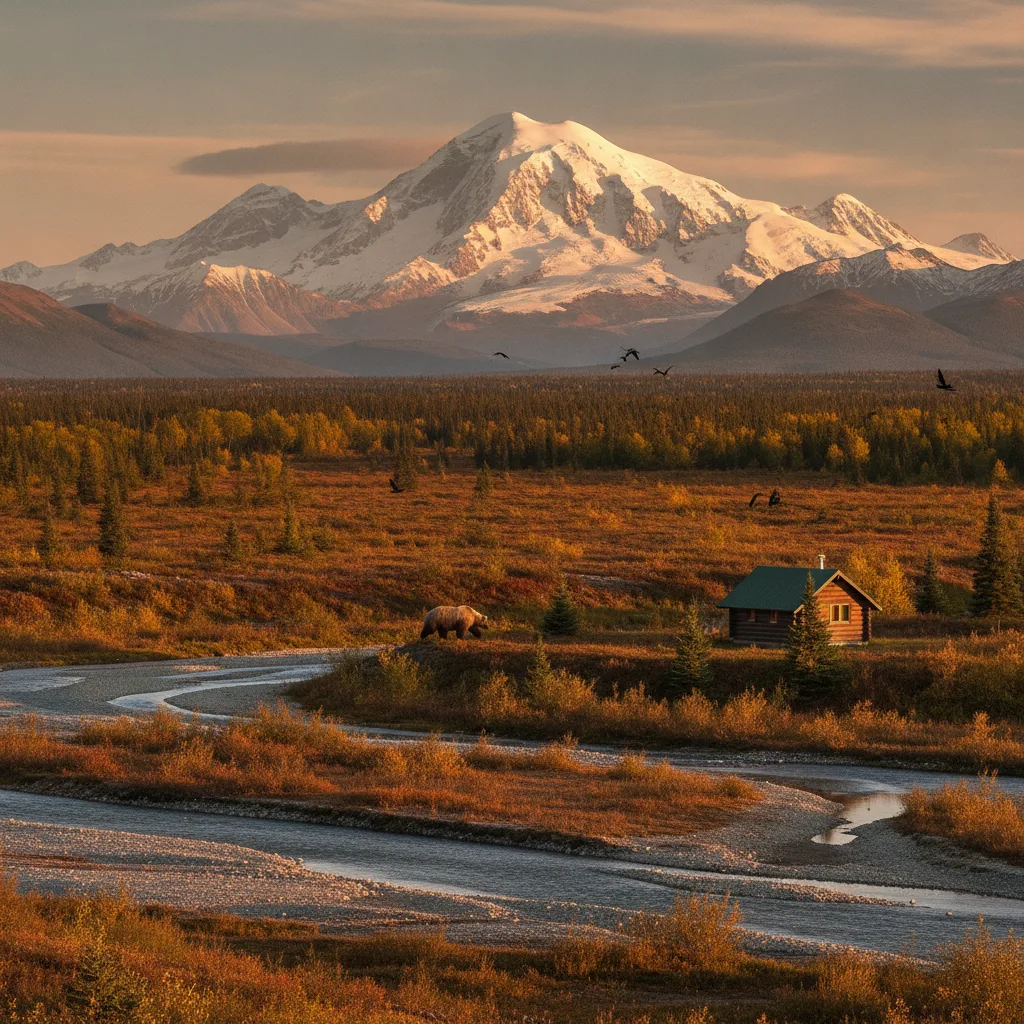
Denali National Park & Preserve Travel Guide — Alaska
As the independent US travel authority, our team has curated this comprehensive guide to Denali National Park & Preserve Alaska, a destination that consistently ranks among the most awe-inspiring wilderness experiences on the continent. We cut through the generic fluff to bring you specific, actionable advice for planning an unforgettable trip to this iconic Alaskan gem.
Why Visit Denali National Park & Preserve
Visiting Denali National Park & Preserve is an immersion into six million acres of raw, untamed wilderness, dominated by North America's tallest peak. We believe it's a quintessential Alaskan experience, offering unparalleled opportunities for wildlife viewing, breathtaking landscapes, and a profound connection with nature. Imagine spotting grizzly bears, moose, caribou, and wolves roaming freely in their natural habitat, or witnessing the sheer scale of Denali (formerly Mount McKinley) piercing the sky. The park's commitment to preserving its wild character means limited human impact, providing a truly authentic wilderness encounter that is increasingly rare in our modern world. It's a place where the grandeur of the landscape humbles you, and the silence speaks volumes.
Is It Worth Visiting?
Absolutely, Denali National Park & Preserve is worth visiting, even with the ongoing road closures in 2026. While the Denali Park Road is closed past Mile 43 due to the Pretty Rocks landslide, limiting access to the deeper park, the experience remains profoundly impactful. Visitors can still access the first 43 miles of the park road via transit and tour buses, which offer incredible opportunities for wildlife viewing and stunning vistas. The entrance area alone provides ample hiking, ranger programs, and the chance to witness the park's famous sled dog demonstrations. For those seeking an authentic Alaskan wilderness adventure, even a partial exploration of Denali National Park & Preserve offers a unique and rewarding journey that we wholeheartedly recommend. Is Denali National Park & Preserve worth visiting? Without a doubt, its raw beauty and abundant wildlife continue to captivate, making it a bucket-list destination.
Who It's Best For
Denali National Park & Preserve is ideal for adventurous travelers, wildlife enthusiasts, and those seeking an escape into true wilderness. It's perfect for hikers of all skill levels, from those looking for easy, maintained trails near the entrance to experienced backpackers venturing into the backcountry. Families with children will find engaging ranger programs and accessible activities, particularly in the front country. Photographers will be captivated by the dramatic landscapes and abundant wildlife. While the park’s rugged nature means it’s not for everyone, those who appreciate solitude, natural beauty, and the thrill of spotting animals in the wild will find Denali to be an unparalleled destination. It's less suited for those seeking luxury resorts or extensive paved road access, as the park prioritizes wilderness preservation.
How to Get There & Parking
Reaching Denali National Park & Preserve requires some planning, but the journey itself is part of the Alaskan adventure. The park is located in Interior Alaska, approximately 240 miles north of Anchorage and 125 miles south of Fairbanks.
By Air
The closest major airports are Fairbanks International Airport (FAI) and Ted Stevens Anchorage International Airport (ANC). From there, you can rent a car, take the train, or a motorcoach to the park entrance.
By Road
Driving to Denali is a popular option, offering flexibility to explore at your own pace. The park entrance is located at approximately Milepost 238 of the George Parks Highway (Alaska 3). Rental cars and RVs are available in Anchorage and Fairbanks. However, private vehicles are only permitted on the first 15 miles of the Denali Park Road, up to the Savage River Bridge, from mid-May to early September. Beyond this point, you must utilize the park's bus system to access the interior. For those wondering how to get to Denali National Park & Preserve and still drive, remember your personal vehicle access is limited.
By Train or Motorcoach
The Alaska Railroad offers daily trips from Anchorage and Fairbanks to Denali during the summer months, providing a scenic and relaxing journey. The Alaska Park Connection Motorcoach is another private motorcoach company offering daily luxury coach service between Seward, Whittier, Anchorage, and Denali. We recommend booking these services well in advance, especially during peak season.
Parking
Parking is available at the Denali Visitor Center and other designated areas within the first 15 miles of the park road. The Savage River parking area is the farthest point private vehicles can reach. Free shuttle buses operate frequently within the entrance area, connecting major visitor facilities and trailheads, including the Denali Bus Depot, Denali Visitor Center, and Savage River. This makes it easy to park your car and explore the front country without needing to move your vehicle.
Top Things to Do
Even with the 2026 road closure at Mile 43, there are still an incredible array of things to do at Denali National Park & Preserve that will fill your days with wonder and adventure. Our team focuses on experiences that truly capture the essence of this Alaskan wilderness.
Bus Tours into the Park
The primary way to experience the vastness of Denali is by bus. Since private vehicles are restricted beyond Mile 15, the park's bus system is essential for deeper exploration. In 2026, both narrated tour buses and non-narrated transit buses will travel no further than the East Fork Bridge at Mile 43 due to the Pretty Rocks landslide. Despite this, these bus trips offer exceptional opportunities for wildlife viewing, with naturalists often pointing out bears, moose, caribou, and more. Transit buses provide a "hop on/hop off" service, allowing you to explore various areas and hiking trails along the accessible portion of the road.
Wildlife Viewing
Denali is a wildlife mecca. Keep your eyes peeled for the "Big Five": grizzly bears, moose, caribou, Dall sheep, and wolves. The buses are excellent for spotting wildlife, but you can also see animals while hiking in the front country. Remember to always maintain a safe distance from all wildlife.
Sled Dog Demonstrations
A highlight for many visitors, the Denali National Park sled dog kennels offer daily demonstrations during the summer season. These free programs provide insight into the park's unique history and the vital role sled dogs play in winter patrols. Check the visitor center for the 2026 schedule.
Ranger Programs
Engage with park rangers through various interpretive programs offered daily during the summer. These can include guided walks, talks on local ecology, and evening presentations, enriching your understanding of the park.
Biking the Park Road
For the adventurous, biking the Denali Park Road offers a unique perspective. The road is unpaved and challenging, but rewards with stunning views. Cyclists share the road with park buses and must be aware of their surroundings. You can bring your own bike, and some transit buses have racks for up to two bikes.
Denali National Park & Preserve Hiking Trails
For many, the true heart of Denali National Park & Preserve lies in its hiking opportunities. Unlike many national parks, Denali encourages off-trail hiking in many areas, offering a true wilderness experience. However, there are also a number of established Denali National Park & Preserve hiking trails for all skill levels.
Front Country Trails (Miles 0-15)
Within the easily accessible first 15 miles of the park road, you'll find several well-maintained trails. These are excellent for day hikes and offer beautiful scenery and opportunities for wildlife viewing. Popular options include:
- Horseshoe Lake Trail: A moderate loop trail leading to a picturesque lake, often frequented by moose and beavers.
- Savage River Loop Trail: An easy, relatively flat loop along the Savage River, offering stunning mountain views and good chances to spot Dall sheep on the surrounding ridges.
- Mountain Vista Loop Trail: Another accessible loop trail near the Mountain Vista area.
- McKinley Station Trail: Connects the Denali Visitor Center with the Alaska Railroad depot and Riley Creek Campground.
Backcountry Hiking (Beyond Mile 15)
For experienced hikers, Denali offers unparalleled opportunities for off-trail exploration. With a backcountry permit (obtained in person at the Backcountry Information Center), you can venture into designated units, choosing your own route through the tundra. This is a truly immersive wilderness experience, demanding self-sufficiency and strong navigation skills. Remember, the road closure at Mile 43 means that access to some traditional backcountry areas will be via bus to that point. When planning your Denali National Park & Preserve hiking trails adventure, always check current conditions and bear safety guidelines.
Denali National Park & Preserve Camping
Immersing yourself in the Alaskan wilderness means spending a night (or several) under the vast Denali sky. Denali National Park & Preserve camping offers a range of experiences, from accessible campgrounds near the park entrance to more remote, bus-accessible sites. We strongly recommend making reservations well in advance, as spots fill up quickly.
Campgrounds in 2026
There are six campgrounds within Denali National Park & Preserve, though some are affected by the 2026 road closure.
- Riley Creek Campground (Mile 0.25): The most accessible and largest campground, open year-round with fees charged during summer. It accommodates both RVs (up to 40 feet) and tents, with flush toilets, potable water, and laundry facilities seasonally.
- Savage River Campground (Mile 13): Open from May 20 to September 20, 2026, this campground offers 32 sites for tents and RVs (up to 40 feet). It provides easy access to hiking trails and views.
- Sanctuary River Campground (Mile 23): Open May 20 to September 16, 2026, these 7 tent-only sites are accessible only by camper bus.
- Teklanika River Campground (Mile 29): Open May 20 to September 17, 2026, Teklanika is the second-largest campground. Vehicles staying here are an exception to the Mile 15 private vehicle restriction, but a 3-night minimum stay is typically required.
- Igloo Creek Campground (Mile 35): Open May 20 to September 16, 2026, this offers 7 tent-only sites, accessible by camper bus.
- Wonder Lake Campground (Mile 85): Unfortunately, Wonder Lake Campground is closed for summer 2026 due to the road closure at Mile 43. Full access is not expected until 2027.
Reservations for Denali National Park & Preserve camping can be made through the park's concessioner (Doyon/ARAMARK Joint Venture) online or by phone (1-800-622-7275). Senior/Access pass holders receive a 50% discount on summer camping fees, and winter camping is free.
Best Time to Visit
The best time to visit Denali National Park & Preserve largely depends on what you hope to experience. The main visitor season runs from mid-May through mid-September, when park buses and amenities are fully operational, and wildlife viewing opportunities are at their peak.
- Late May to Early June: The park is just waking up from winter. You'll find fewer crowds, lush green landscapes, and excellent chances to see young wildlife. However, some higher elevation trails might still have snow.
- Mid-June to Mid-August: This is peak season, offering the warmest weather, longest daylight hours, and the highest frequency of bus services. Expect larger crowds and higher prices for accommodations. This is also when wildflowers are in full bloom.
- Late August to Mid-September: Our team considers this the optimal window. The tundra transforms into a vibrant tapestry of autumn colors, mosquitoes begin to vanish, and shuttle buses are still running the park road (up to Mile 43 in 2026). Wildlife can be very active as they prepare for winter.
- Winter (October to April): For those prepared for extreme sub-arctic conditions, winter offers a unique, serene beauty. Most visitor facilities are closed, and road access is limited to the first few miles, but cross-country skiing, snowshoeing, and dog mushing are possible. The Murie Science & Learning Center serves as the Winter Visitor Center.
Given the 2026 road closure, visiting during the shoulder seasons (late May/early June or late August/early September) might offer a more intimate experience with fewer crowds while still providing access to the available park features.
Where to Stay Nearby
While Denali National Park & Preserve offers limited lodging within its boundaries (primarily campgrounds and a few fly-in wilderness lodges), the areas just outside the park entrance provide a wide range of accommodation options. We recommend booking well in advance, especially for summer travel.
Glitter Gulch (Park Entrance Area)
This area, just north of the park entrance, is often referred to as "Glitter Gulch" due to its concentration of hotels, restaurants, gift shops, and tour operators. You'll find everything from large resort-style hotels to smaller, independently owned lodges. This is the most convenient option for accessing the Denali Visitor Center, Bus Depot, and the start of the park road. Many hotels here offer complimentary shuttle services to the park entrance facilities.
Healy
Located about 11 miles north of the park entrance, Healy offers a more local and often more affordable alternative to Glitter Gulch. You'll find a mix of hotels, cabins, and guesthouses, along with a few restaurants and services. It's a good choice if you prefer a slightly quieter atmosphere and don't mind a short drive to the park entrance.
Talkeetna
South of the park, about 2.5 hours by car, lies the charming town of Talkeetna. Known as the staging ground for Denali mountaineering expeditions, it offers a distinct small-town Alaskan vibe with unique lodging, restaurants, and activities like flightseeing tours. While not directly adjacent to the park entrance, it's a popular base for those combining a Denali visit with other Interior Alaska explorations, or for those arriving via the Alaska Railroad from Anchorage.
Wilderness Lodges (Fly-in)
For a truly exclusive and immersive experience, several wilderness lodges are located deep within the park, such as Camp Denali, North Face Lodge, and Kantishna Roadhouse. In 2026, due to the road closure, these lodges are primarily accessible via fly-in service. These are typically all-inclusive and offer guided activities, providing an unparalleled deep-wilderness experience, albeit at a premium price.
Sample 2-Day Itinerary
Our team has crafted this sample 2-day itinerary for Denali National Park & Preserve, keeping in mind the 2026 road closure at Mile 43. This plan prioritizes wildlife viewing, scenic beauty, and key park experiences.
Day 1: Park Entrance & Savage River Exploration
- Morning: Arrive at Denali National Park & Preserve. Head to the Denali Visitor Center to get oriented, check for current conditions, and explore exhibits. Pay your park entrance fee ($15 per person 16+ for 7 days, or use your America the Beautiful Pass).
- Late Morning: Take the free Savage River Shuttle from the Denali Visitor Center or Bus Depot. This shuttle travels to trailheads at Mountain Vista and Savage River (Mile 15), the farthest point private vehicles can reach.
- Afternoon: Hike the Savage River Loop Trail (easy, 2 miles) for stunning views and potential Dall sheep sightings. Alternatively, explore the Horseshoe Lake Trail (moderate, 3 miles) for moose and beaver viewing.
- Late Afternoon: Attend a ranger program or the popular Sled Dog Demonstration at the park kennels. Check the schedule upon arrival.
- Evening: Enjoy dinner at one of the restaurants near the park entrance.
Day 2: Bus Journey into the Wilderness
- Morning: Board a non-narrated Transit Bus or a narrated Tour Bus from the Denali Bus Depot. Remember, reservations are highly recommended and can be made as early as December 1 of the prior year. In 2026, buses will travel no further than the East Fork Bridge at Mile 43.
- Throughout the Day: Enjoy the incredible scenery and keep a sharp eye out for wildlife. The bus drivers are skilled at spotting animals. If you're on a transit bus, utilize the "hop on/hop off" system to take short hikes into the tundra or explore different viewpoints along the road. Pack a lunch, snacks, and plenty of water, as services are limited once you're on the bus.
- Late Afternoon: Return to the Denali Bus Depot.
- Evening: Reflect on your wilderness adventure. Consider a final meal or souvenir shopping.
Last updated: 2026-07-05 by the Visit America team.