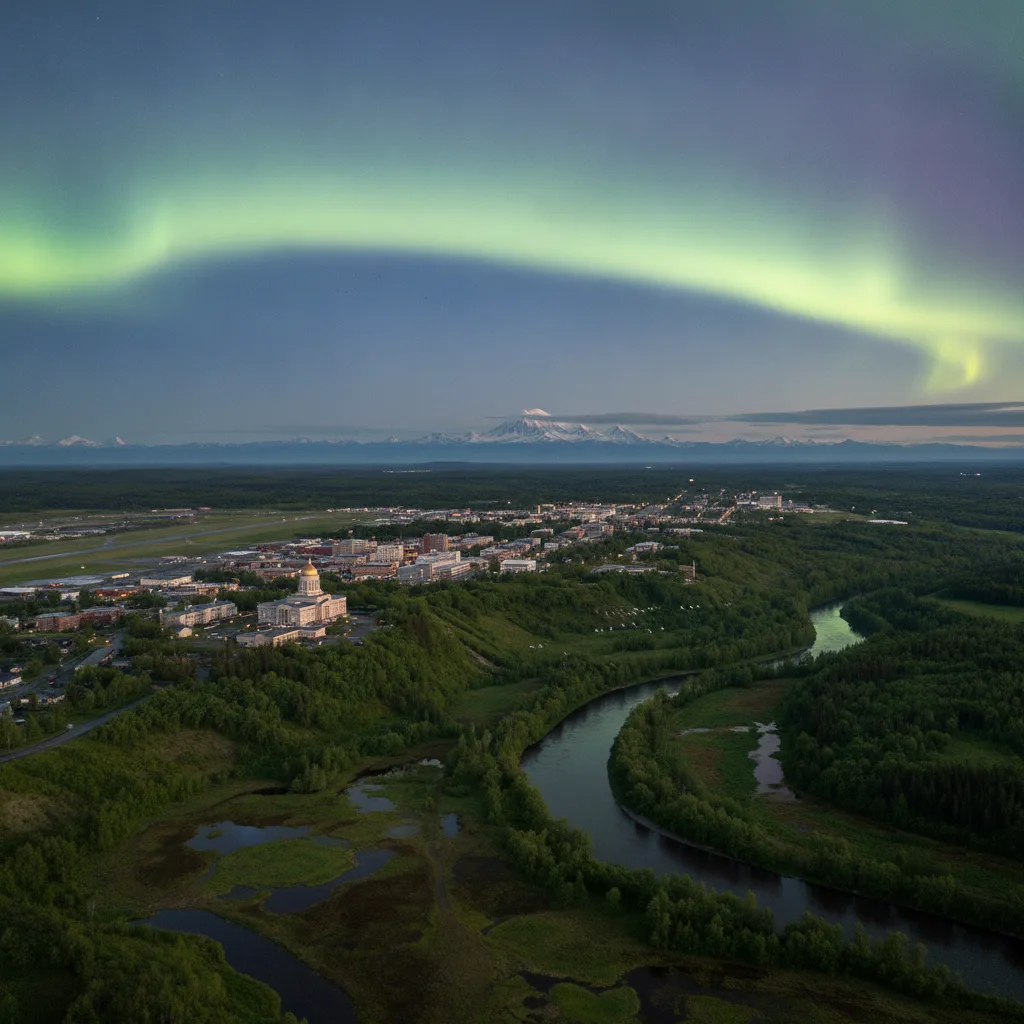
Fairbanks & Northern Lights Travel Guide — Alaska
We've meticulously crafted this guide to be your definitive resource for experiencing the magic of the aurora borealis and the unique charm of Interior Alaska. Our team has compiled the essential facts and insider tips to ensure your trip to Fairbanks is nothing short of spectacular.
Why Visit Fairbanks & Northern Lights
Fairbanks stands as the undisputed capital for Northern Lights viewing in North America. Its prime location directly beneath the auroral oval, coupled with its relatively clear winter skies and minimal light pollution, creates an unparalleled opportunity to witness the aurora borealis in all its glory. But Fairbanks & Northern Lights Alaska offers more than just celestial wonders; it's a gateway to authentic Alaskan experiences, from dog sledding and ice sculpting to exploring rich cultural history and relaxing in natural hot springs. We believe that a trip here isn't just a vacation; it's an immersion into a vibrant, resilient community nestled within a breathtaking wilderness.
Who It's Best For
Fairbanks & Northern Lights is ideal for adventurers, photographers, and anyone seeking a truly unique winter wonderland experience. Couples will find romantic opportunities under the dancing lights, while families can engage in a variety of snow-filled activities. Science enthusiasts and stargazers will appreciate the astronomical significance and the educational opportunities at local museums. Solo travelers will discover a welcoming community and ample chances for introspection amidst the vast Alaskan landscape. Essentially, if you're drawn to the allure of the Arctic, the thrill of the aurora, and a destination that offers both serene beauty and exciting activities, Fairbanks is for you.
Getting There & Parking
How to Get There
Reaching Fairbanks, Alaska, is straightforward, primarily via air or road. Fairbanks International Airport (FAI) serves as the main hub, with connections from major US cities and some international routes, including seasonal charter flights from Japan and Taiwan.
For those preferring a scenic journey, the Alaska Railroad offers daily summer service and weekend winter service (biweekly from late February through March) connecting Fairbanks to Anchorage, a picturesque twelve-hour train ride that includes a stop in Denali National Park & Preserve during the summer months.
Driving to Fairbanks is also an option, with several highways leading into the city. Keep in mind that winter driving in Alaska requires preparation and a suitable vehicle. For inter-city bus service, the Interior Alaska Bus Line provides affordable, year-round connections between Anchorage, Tok, and Fairbanks on Mondays, Wednesdays, and Fridays. This service is particularly useful for those who prefer not to drive the long distances of Interior Alaska.
Fairbanks & Northern Lights Parking
At Fairbanks International Airport (FAI), parking options are available for both short-term and long-term stays. As of July 1, 2026, short-term public parking at the Domestic Terminal is free for the first 30 minutes, then costs $3 for 31 minutes to 1 hour, $6 for 1-2 hours, $10 for 2-3 hours, $13 for 3-4 hours, $14 for 4-5 hours, $16 for 5-6 hours, $18 for 6-7 hours, and $22 for 7-24 hours, with a maximum stay of 30 days. Long-term public parking at the Domestic Terminal, effective July 1, 2026, is also free for the first 30 minutes, then $2 for 31 minutes to 1 hour, $5 for 1-2 hours, $9 for 2-3 hours, $11 for 3-4 hours, $13 for 4-5 hours, and $17 for 5-24 hours, with a weekly rate of $102 and a maximum stay of 90 days. Handicapped parking is available in the short-term area. Additionally, public parking is available at a lot along University Avenue South on the East Ramp, with a daily rate of $5, though it does not offer electrical plug-in service.
For getting around town, rental cars are highly recommended, especially if you plan to explore outside the city limits or chase the aurora independently. Major rental car companies like Enterprise, Alamo, Budget, Hertz, and Avis operate in Fairbanks, including at FAI. We advise booking an all-wheel-drive vehicle in winter, as well as one with seat warmers, given the sub-zero temperatures.
Fairbanks also has the MACS Transit Bus System, which operates fixed-route bus services throughout the Fairbanks North Star Borough, including North Pole, Farmers Loop, and Fairbanks International Airport. This can be an inexpensive way to get around town. Taxis and shuttles are also available.
Top Things to Do
Fairbanks offers an impressive array of activities, especially when considering things to do at Fairbanks & Northern Lights. Beyond the celestial spectacle, the city and its surroundings provide ample opportunities for adventure and cultural immersion. Here are some of our top recommendations for things to do in Fairbanks:
- Chase the Northern Lights: This is, undoubtedly, the primary draw for many visitors. Fairbanks is directly under the auroral oval, making it one of the best places on Earth to see the aurora borealis. Numerous tour operators offer guided aurora viewing experiences, often including warm lodges, hot drinks, and photography assistance. Some tours even offer mobile chasing to find clear skies, covering up to 100 miles if needed. Small group tours can range from $199 to $325 per person, with private tours starting around $565 for a group of up to six. Many tours run for about 5 hours, typically from 10 PM to 2 AM, which is considered the best time for aurora viewing.
- Visit Chena Hot Springs Resort: Located 56 miles northeast of Fairbanks, Chena Hot Springs Resort is a full-service geothermal retreat. Here, you can soak in the mineral-rich outdoor Rock Lake (18+ only) or enjoy the indoor family swimming pool and hot tubs. The resort is open year-round, with day passes available for $20 for adults, $18 for seniors (60+), and $17 for children (6-17). It's a fantastic place to relax and even view the Northern Lights from the steaming waters on a clear winter night.
- Explore the Aurora Ice Museum: Situated at Chena Hot Springs Resort, this unique museum is built entirely from ice and remains at a constant 25°F (-7°C) year-round. Admission for 2026 is $20 for visitors aged 12 and above, and $15 for children aged 6-11, which includes a 45-minute guided tour. You'll marvel at hand-carved ice sculptures, chandeliers, and even an ice bar.
- Discover the University of Alaska Museum of the North: This impressive museum on the University of Alaska Fairbanks campus offers a comprehensive look at Alaska's natural and cultural history. It's an authoritative institution for studying the Northern Lights and features diverse exhibitions on landscapes, wildlife, and Native Alaskan cultures. As of 2026, admission is $23 for adults (18-64), $20 for seniors (65+), and $15 for youth (6-17), with Alaska residents and military personnel receiving discounted rates. The museum is open daily from 9 AM to 5:30 PM from September 16 to May 16 (winter hours), and generally open daily in summer.
- Step into Christmas at Santa Claus House: Just a short drive from Fairbanks in North Pole, Alaska, this iconic attraction offers a year-round festive experience. You can shop for Christmas decor, unique Alaskan gifts, and even send a letter from Santa with an official North Pole postmark. The Santa Claus House is open daily from 10 AM to 6 PM from September 14 to December 31, and 10 AM to 7 PM from May 25 to September 13, with some exceptions for holidays. Next door, Silver Bell Square offers additional dining, shopping, and reindeer tours at Antler Academy during the summer season (May 25 - September 13).
- Experience Dog Sledding: Embrace an authentic Alaskan tradition by going on a dog sledding adventure. Many local operators offer tours, from short rides to multi-day excursions, providing an exhilarating way to experience the winter landscape.
- Visit the Fairbanks Ice Museum: Located in downtown Fairbanks, this museum offers a different take on ice art, featuring large ice displays, an ice slide, and live demonstrations by local ice artists. It's open seasonally, typically from May to September, from 9 AM to 9 PM, with tours running from 10 AM to 8 PM. Admission is $15 for adults and $10 for children ages 6-14. Combo tickets including an Aurora Show are available for $22 for adults and $18 for kids.
- Explore Pioneer Park: This 44-acre historical theme park offers a glimpse into Fairbanks' past with historic buildings, museums, and shops. It's a great spot for a leisurely stroll and a family-friendly outing, especially during the summer months.
- See the Trans-Alaska Pipeline Viewpoint: Witness a marvel of modern engineering at a designated viewpoint along the Trans-Alaska Pipeline. It's an impressive sight and offers a good photo opportunity.
When planning things to do at Fairbanks & Northern Lights, remember to factor in travel time between attractions, especially in winter, and to book popular tours and accommodations in advance.
Best Time to Visit
The best time to visit Fairbanks & Northern Lights largely depends on your primary goal: seeing the aurora borealis. The aurora season in Fairbanks runs from late August through mid-April, when the nights are long and dark enough for viewing.
- Peak Aurora Season (September to March): This period offers the highest chances of witnessing the Northern Lights. Statistically, March and September/October (around the equinoxes) are often considered optimal due to increased geomagnetic activity. December through February also brings favorable conditions with extended hours of darkness and often clear, cold weather. For the best odds, our team recommends booking 5-7 nights during this peak season, as a single night offers only 50-60% odds, while five nights pushes that past 90%. The best viewing hours are typically between 10 PM and 2 AM, with activity peaking around magnetic midnight (roughly 1:30 AM in Fairbanks).
- Shoulder Seasons (Late August - October and March - Mid-April): These periods offer a good balance. In late August and September, temperatures are milder, and you might experience fall colors alongside the aurora. March offers dark nights with potentially more stable weather and less cloud cover.
- Midnight Sun Season (Late April - Mid-August): During this time, Fairbanks experiences 24 hours of daylight for roughly 70 days from May 17 to July 27. While beautiful for other outdoor activities like hiking, fishing, and exploring Denali National Park & Preserve, this is not the time to visit for Northern Lights viewing due to the continuous daylight.
Given the ongoing Solar Maximum, 2024, 2025, and potentially into 2026 are predicted to be exceptionally good years for aurora displays. So, if seeing the Northern Lights is your priority, aim for the colder, darker months, and plan for multiple nights to maximize your chances.
Where to Stay Nearby
Fairbanks offers a range of accommodation options to suit various preferences and budgets, from cozy hotels in the city center to more secluded lodges perfect for aurora viewing. Our team recommends considering the following:
- Downtown Fairbanks Hotels: For convenience and access to restaurants, shops, and cultural attractions like the Morris Thompson Cultural & Visitors Center, staying in downtown Fairbanks is a solid choice. Many hotels here offer "Aurora Wake-up Calls" where staff will notify you if the Northern Lights become visible from the property.
- Hotels Near the Airport: If you're arriving late or departing early, several hotels near Fairbanks International Airport (FAI) provide comfortable stays and easy access to rental car services.
- Aurora Viewing Lodges: For a dedicated Northern Lights experience, consider lodges located outside the city, away from light pollution. These often provide comfortable viewing areas, warm facilities, and sometimes even guided tours directly from the property. Examples include the Aurora Borealis Lodge, which offers evening aurora tours with hotel pickup from Fairbanks.
- Chena Hot Springs Resort: As mentioned, this resort offers lodging in rooms, cabins, and yurts, providing a unique opportunity to combine hot springs relaxation with aurora viewing, all within a short walk of your accommodation.
- Vacation Rentals: For families or longer stays, vacation rentals can offer more space and amenities, including kitchens, which can be beneficial for managing meal costs.
Regardless of where you choose to stay, especially during the peak aurora season, we strongly advise booking your accommodations well in advance, as popular options fill up quickly.
Sample 2-Day Itinerary
This sample itinerary focuses on maximizing your chances for Northern Lights viewing while also experiencing the unique daytime attractions of Fairbanks & Northern Lights Alaska.
Day 1: Arrival, City Exploration, and First Aurora Hunt
- Morning (Arrival & Check-in): Arrive at Fairbanks International Airport (FAI), pick up your rental car (we recommend an AWD in winter), and check into your chosen accommodation in Fairbanks.
- Afternoon (Fairbanks City Highlights): Begin your exploration of Fairbanks. Visit the University of Alaska Museum of the North to gain insight into Alaska's natural and cultural history, including its fascinating aurora exhibits. Enjoy lunch at a local Fairbanks eatery. Afterward, head to Pioneer Park for a stroll through historical buildings and shops, or visit the Fairbanks Ice Museum (seasonal) for a dose of icy artistry.
- Evening (Dinner & Northern Lights Tour): Enjoy an early dinner in Fairbanks. As darkness falls, prepare for your first Northern Lights viewing experience. Join a guided Fairbanks & Northern Lights tour that takes you to a prime viewing location away from city lights, such as a heated lodge or a mountaintop cabin. Many tours offer hot drinks, snacks, and photography assistance. Expect to return to your hotel in the early morning hours, typically around 2:30-3:00 AM.
Day 2: Hot Springs, Ice Sculptures, and Another Aurora Chance
- Morning (Relaxation & Scenic Drive): After a late night of aurora hunting, enjoy a leisurely morning. Around midday, embark on a scenic 1-hour drive northeast of Fairbanks to Chena Hot Springs Resort.
- Afternoon (Chena Hot Springs & Aurora Ice Museum): Spend the afternoon at Chena Hot Springs. Relax and rejuvenate by soaking in the famous outdoor Rock Lake (18+ only) or the indoor family pools and hot tubs. Then, take a guided tour of the incredible Aurora Ice Museum, where you can admire ice sculptures and even have a drink at the ice bar.
- Evening (Dinner & Second Aurora Hunt or Local Fun): Enjoy dinner at Chena Hot Springs Resort's restaurant. You have two options for the evening:
- Option A (Dedicated Aurora Hunt): Stay at Chena Hot Springs Resort for another chance to see the Northern Lights, as it's a known viewing spot away from light pollution.
- Option B (Local Fairbanks Experience): Drive back to Fairbanks. If the aurora forecast isn't strong, consider a cozy evening at a local brewery or enjoy a quiet dinner. If the forecast is promising, you could try another independent aurora chase from a nearby viewpoint, or if you didn't book a tour on Day 1, consider one now.
Expert Verdict
Fairbanks & Northern Lights Alaska delivers on its promise as a premier aurora viewing destination, but it's the depth of its winter activities and cultural experiences that truly sets it apart. We've found that visitors who embrace the cold and plan for multiple nights have the most rewarding experiences. Don't underestimate the charm of its unique attractions, from ice museums to hot springs, which provide a perfect complement to the nightly aurora chase. This isn't just a place to tick off a bucket list item; it's a destination that invites you to truly live an Alaskan winter.
Frequently Asked Questions
Fairbanks & Northern Lights tips
Our top tips for visiting Fairbanks & Northern Lights include dressing in layers for extreme cold, booking accommodations and aurora tours well in advance, and planning for at least 3-5 nights to maximize your chances of seeing the Northern Lights. Consider renting an all-wheel-drive vehicle, especially in winter, and be prepared for changing weather conditions. Don't forget a camera capable of low-light photography and a tripod!
Fairbanks & Northern Lights parking
For parking at Fairbanks International Airport (FAI) in 2026, short-term public parking is $22 for 7-24 hours, and long-term public parking is $17 for 5-24 hours, with a weekly rate of $102. Both offer free parking for the first 30 minutes. Handicapped parking is available in the short-term area. Many attractions in Fairbanks offer their own parking, but always check ahead for specific details and potential fees.
best time to visit Fairbanks & Northern Lights
The best time to visit Fairbanks & Northern Lights for aurora viewing is during the aurora season, which runs from late August through mid-April. The peak months for consistent activity and clear skies are typically September through March, with March and September/October around the equinoxes often seeing increased geomagnetic activity. Aim for at least 5-7 nights to significantly increase your viewing odds.
Fairbanks & Northern Lights hours and fees
Hours and fees vary by attraction in Fairbanks. For example, the University of Alaska Museum of the North is open daily from 9 AM to 5:30 PM (winter hours) with adult admission at $23. Chena Hot Springs Resort's pools are open daily from 7 AM to 11:45 PM, with day passes at $20 for adults. The Aurora Ice Museum, located at Chena Hot Springs, is open daily from 11 AM to 7 PM, with admission at $20 for adults. Santa Claus House in North Pole is generally open daily from 10 AM to 6 PM or 7 PM, depending on the season. Northern Lights tours typically cost between $199 and $325 per person for small groups. Always verify current hours and fees directly with each attraction or tour operator for 2026, as they can be subject to change.
Fairbanks & Northern Lights travel guide
Our comprehensive Fairbanks & Northern Lights travel guide emphasizes planning for aurora viewing during the dark months (August to April), securing warm winter clothing, and booking tours and accommodations in advance. We recommend exploring local attractions like the University of Alaska Museum of the North, Chena Hot Springs, and the Santa Claus House, alongside your nightly aurora hunts. Consider exploring other parts of Alaska, such as Best places in Alaska, Denali National Park & Preserve, and Kenai Fjords National Park, to fully experience the state's diverse offerings.
Fairbanks & Northern Lights itinerary
A recommended Fairbanks & Northern Lights itinerary includes arriving in Fairbanks and exploring city highlights like the University of Alaska Museum of the North and Pioneer Park on Day 1, followed by an evening Northern Lights tour. Day 2 could involve a trip to Chena Hot Springs Resort for soaking and a visit to the Aurora Ice Museum, culminating in another aurora viewing opportunity. We suggest allocating 3-5 days to allow for flexibility with weather and aurora visibility.
Last updated: 2026-07-05 by the Visit America team.