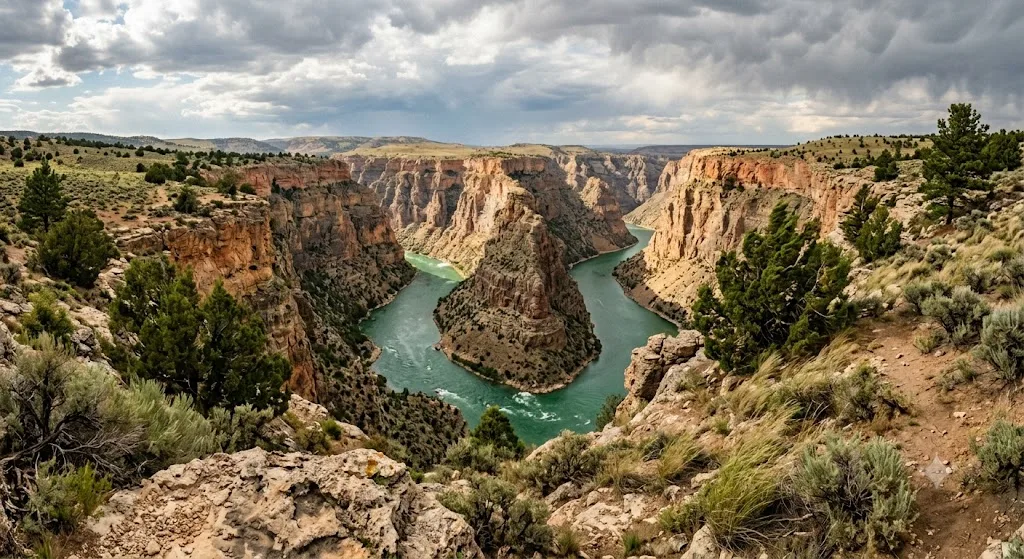
Welcome to our comprehensive guide to Bighorn Canyon National Recreation Wyoming, a truly spectacular and often overlooked gem straddling the Wyoming-Montana border. Our team at Roam States believes that while the big-name national parks draw the crowds, places like Bighorn Canyon offer a profound connection to nature, isolation, and geological wonder that is increasingly rare. Here, the sheer-walled canyon, carved by the mighty Bighorn River, offers a unique blend of land and water-based adventures, rich history, and abundant wildlife. We've compiled this guide to help you navigate its vast 120,000 acres, ensuring your visit is as rewarding as it is unforgettable.
Why Visit Bighorn Canyon National Recreation
For those seeking an authentic Western experience without the overwhelming crowds, Bighorn Canyon National Recreation Area is an unparalleled choice. This is a place where the landscape tells a story millions of years in the making, with canyon walls soaring 1,000 to 2,500 feet above Bighorn Lake. We are consistently drawn to its dramatic vistas and the palpable sense of solitude it offers. Unlike many popular destinations, Bighorn Canyon allows for genuine immersion in the wilderness, where you can explore ancient paths, witness diverse ecosystems, and observe wildlife in their natural habitats.
The recreation area, established in 1966 following the construction of the Yellowtail Dam, transformed a wild river into a serene, 71-mile long lake, providing exceptional opportunities for boating, fishing, and kayaking amidst stunning geological formations. It’s a haven for outdoor enthusiasts, offering everything from challenging hikes to tranquil boat tours. The blend of desert, mountain, and aquatic environments creates a unique microclimate supporting a wide array of flora and fauna, including the iconic wild horses of the Pryor Mountains.
Who It's Best For
Bighorn Canyon National Recreation Area caters to a diverse range of travelers, though it particularly appeals to those who appreciate a more rugged and self-reliant adventure. We recommend it for:
- Outdoor Enthusiasts: With extensive hiking trails, world-class fishing, and ample boating opportunities, active travelers will find plenty to keep them engaged.
- Nature Photographers: The dramatic canyon walls, vibrant sunsets, diverse wildlife (including wild horses and bighorn sheep), and expansive landscapes provide endless photographic subjects.
- Families Seeking Adventure: While some trails are challenging, many are accessible for families, and the opportunities for boating, wildlife viewing, and camping offer memorable experiences for all ages.
- Those Seeking Solitude: Compared to more popular national parks, Bighorn Canyon offers a remarkable sense of peace and quiet, allowing for a deeper connection with nature.
- History Buffs: The area is rich in human history, from ancient Native American sites to historic ranches, offering a glimpse into the lives of early settlers.
If you're looking for paved paths and crowded gift shops, this might not be your ideal destination. But if you crave raw beauty and genuine exploration, Bighorn Canyon National Recreation Wyoming delivers.
Getting There & Parking
Bighorn Canyon National Recreation Area is unique in that it has two distinct districts, North and South, which are not connected by a through-road within the park. This means you'll need to plan your access carefully, as driving between the two can take approximately three hours. Our focus here is primarily on the Wyoming (South) District, accessible from Lovell.
How to Get There
The South District of Bighorn Canyon National Recreation Wyoming is best accessed from Lovell, Wyoming.
- From Cody, Wyoming: Take US Alt 14 East for about 44 miles, then turn right on US 310 East for 3 miles into Lovell. Once in Lovell, continue through town, then take a left onto US 14 East. The Bighorn Canyon Visitor Center will be 0.2 miles on your right.
- From Sheridan, Wyoming: Take I-90 North for 12 miles. Turn off at Exit 9 for Ranchester-Dayton/Greybull-Lovell. Take a left onto US 14 West and follow for 33 miles. At Burgess Junction, turn right at US 14 West and follow for 52 miles. The Bighorn Canyon Visitor Center is on your left on the outskirts of Lovell.
- From Billings, Montana (to South District): Take Interstate 90 West. Turn at Exit 434 at Laurel, MT, then onto US 310 East/US 212 South. Continue on US 310 East to Lovell. The visitor center is on the east side of Lovell.
Important Note on Roads: If you are traveling between November and May, Highway 14A (which is part of the route from Sheridan) is closed for the winter. You will need to take Highway 14 to Greybull, and then Highway 310 North to Lovell. If you're traveling with an RV, be aware that US 14A involves significant steep grades (10 miles of 10% grade followed by 4 miles of 8% grade) which can be challenging.
Parking
Parking within Bighorn Canyon National Recreation Area is generally available at visitor centers, trailheads, and marinas. The Cal S. Taggart Bighorn Canyon Visitor Center in Lovell, Wyoming, has ample parking. At popular overlooks like Devil's Canyon Overlook, you'll find designated parking areas. For trailheads, parking is usually clearly marked, though some remote spots may require parking along the road. There are no specific fees for parking, as entrance to the recreation area is free.
Top Things to Do
Bighorn Canyon National Recreation Wyoming offers a wealth of activities for every type of adventurer. Our team consistently finds new reasons to explore this dynamic landscape, from its deep waters to its soaring cliffs. Here are some of the top things to do at Bighorn Canyon National Recreation:
Boating and Water Sports
Bighorn Lake is the heart of the recreation area, stretching 71 miles through the canyon and offering exceptional opportunities for boating, kayaking, and fishing. The South District features two marinas: Horseshoe Bend Marina and Barry's Landing. Horseshoe Bend Marina offers paddleboat rentals and scenic boat excursions during the summer season. Park rangers also lead free half-day kayaking tours on Saturdays between June and early September, providing a unique perspective from the water. If you bring your own watercraft, be sure to check the Aquatic Invasive Species (AIS) permit requirements; you'll need to purchase a permit and have your watercraft inspected prior to launch.
Fishing
Both Bighorn Lake and the Bighorn River are renowned for world-class fishing. The Bighorn River, particularly below the Yellowtail Dam, is a prime trout fishing location. Anglers can find up to 38 species of fish, including trout, crappie, smallmouth bass, and walleye. Remember that fishing licenses are required from the state in which you are fishing (Wyoming or Montana).
Wildlife Viewing
Bighorn Canyon is a fantastic place for wildlife. Keep an eye out for the bighorn sheep that give the canyon its name, often seen navigating the steep cliffs. The Pryor Mountain Wild Horse Range, America's first public wild horse range, lies partly within the recreation area, offering chances to spot wild mustangs roaming freely, especially along Highway 37. Other wildlife includes mule deer, coyotes, elk, mountain lions, and a variety of birds, including golden eagles and great horned owls.
Historic Ranches
Step back in time by visiting the four preserved historic ranches in the southern district: Ewing-Snell, Lockhart, Hillsboro, and Cedarvale. These ranches offer a glimpse into the lives of 19th and early 20th-century settlers who farmed, ranched, and even searched for gold in this remote region. The Hillsboro Trail, for example, takes hikers through the historic guest ranch of Dr. Barry.
Scenic Drives and Overlooks
Driving Highway 37 through the Wyoming side offers breathtaking views. Don't miss the Devil's Canyon Overlook, one of the most iconic viewpoints, offering a spectacular panorama of the canyon's geological formations. A short, unmarked path from the Devil's Canyon parking lot leads to a view of an arch framing the canyon. These overlooks provide excellent opportunities for photography and simply appreciating the grandeur of the landscape.
Bighorn Canyon National Recreation Hiking Trails
For those who prefer to explore on foot, Bighorn Canyon National Recreation Area offers approximately 17 miles across 15 designated hiking trails, ranging from easy strolls to more strenuous climbs. Our team always recommends carrying plenty of water, wearing sturdy, closed-toe shoes, and being aware of potential hazards like rattlesnakes and poison ivy. Here are some notable Bighorn Canyon National Recreation hiking trails:
- Sullivan's Knob Trail: A moderate 0.75-mile round trip hike that offers one of the best views of the canyon's grandeur. It's known for its "triple echo" effect.
- Sykes Mountain Trail: A more rugged 4.6-mile round trip hike in the South District that ascends a desert mountain, providing overlooks of Bighorn Canyon and Horseshoe Bend.
- Mouth of the Canyon Trail: A moderate 1.8-mile round trip trail offering serene views of Bighorn Canyon.
- State Line Trail: An easy to moderate 1.52-mile round trip trail that leads to the canyon rim through juniper scrubland, offering breathtaking views of the river-carved canyon.
- Two Eagles Interpretive Trail: An easy, accessible 0.25-mile round trip trail in the South District, offering insights into the human history of the canyon through interpretive signs.
- Visitor Center Pond Trail: A very easy, accessible 0.26-mile concrete loop located behind the Bighorn Canyon Visitor Center in Lovell, perfect for a short walk and birdwatching.
- Hillsboro Trail: This trail takes hikers through a historic ranch, showcasing the area's past.
Maps and current trail conditions are available at the visitor centers. Always be mindful of unstable overhangs near canyon rims and strong winds.
Best Time to Visit
The Bighorn Canyon National Recreation Area is open year-round, 24 hours a day, though access and available services can vary by season. Our team generally recommends visiting between late spring and early fall for the most pleasant weather and access to all recreational opportunities.
- Late Spring (May-June): This is often considered a "sweet spot." Temperatures are comfortable (22-28°C / 72-82°F), wildflowers bloom on the plateau, and bighorn sheep lambs are visible. Wild horse herds are also more active in the cooler mornings. Morning hiking is excellent, though canyon bottoms can get hot by June afternoons.
- Summer (July-August): Peak season for water activities. Bighorn Lake is full, and water temperatures are ideal for boating and fishing (22-24°C / 72-75°F). However, canyon temperatures can reach extreme highs (38-40°C / 100-104°F). We advise being on the water early, seeking air conditioning in the mid-afternoon, and enjoying overlooks in the golden evening light.
- Early Fall (September-October): Arguably the best overall time to visit. Cooler temperatures (18-26°C / 64-79°F), changing cottonwood leaves, and wildlife like pronghorn and mule deer moving to lower elevations. Crowds are significantly reduced, and fishing remains good.
- Winter (November-March): While the park remains open, services are limited, and cold temperatures (-10 to 2°C / 14-36°F) and snow are common. The lake often freezes, offering opportunities for ice fishing. Some roads, like Highway 14A, close during winter.
Regardless of when you visit, the weather can change rapidly, so we always advise packing layers and being prepared for varying conditions.
Where to Stay Nearby
While Bighorn Canyon National Recreation Area offers ample camping, you'll find hotels and motels in the nearby gateway communities, primarily Lovell, Wyoming.
Lovell, Wyoming
Lovell is the closest town to the South District entrance and serves as an excellent base for exploring Bighorn Canyon. You'll find a selection of local shops, restaurants, and lodging options here. While specific hotel names aren't always consistent year-to-year, we recommend checking local listings for current availability. Lovell also offers access to other attractions like the Pryor Mountain Wild Mustang Center and is a gateway to the Bighorn National Forest.
Other Nearby Towns
For more options, consider larger towns within a reasonable driving distance:
- Cody, Wyoming: Approximately an hour's drive from Lovell, Cody offers a wider range of accommodations, dining, and attractions, including the Buffalo Bill Center of the West.
- Greybull, Wyoming: A smaller town to the south, offering some lodging and dining.
- Billings, Montana: If you plan to explore the North District of Bighorn Canyon, Billings is the closest major city with extensive services.
Bighorn Canyon National Recreation Camping
Camping is a fantastic way to experience the isolation and profound geological observation that defines Bighorn Canyon National Recreation. We find that the park offers diverse camping experiences, from developed campgrounds to primitive backcountry sites. Most camping in Bighorn Canyon is free and available on a first-come, first-served basis.
Developed Campgrounds (South District - Wyoming)
The South District has several drive-in campgrounds, many of which are pet-friendly and open year-round.
- Horseshoe Bend Campground: The largest campground in the South District, located 14 miles north of Lovell, Wyoming. It offers 68 sites, many overlooking Bighorn Lake. While most sites are first-come, first-served, a small number are reservable online through the Horseshoe Bend Marina. It can accommodate RVs and tents.
- Trail Creek / Barry's Landing Campground: Also in the South District, near Barry's Landing, offering 30 sites. These are typically first-come, first-served.
- Medicine Creek Campground: This campground has six sites and is accessible by boating or hiking in.
Developed Campgrounds (North District - Montana)
- Afterbay Campground: Located near Fort Smith, Montana, this campground has 40 sites and can accommodate RVs and tents. It offers vault toilets, a trailer dump station, drinking water, and food storage lockers. No RV hookups are available, and the RV length limit is 35 feet. All sites are first-come, first-served.
- Black Canyon Campground: Accessible only by boat (docks are seasonal, Memorial Day to Labor Day). It offers 17 tent sites with vault toilets in a secluded setting. Note that temporary closures can occur due to bear activity.
- Dayboard 9 Campground: Another boat-in-only campground in the North District with five sites.
Dispersed/Backcountry Camping
Dispersed camping is permitted along Bighorn Lake below the high-water mark (3,640 feet elevation) in undeveloped areas. This is a free, first-come, first-served option and does not require a permit. Fires are allowed below the high-water mark, but always check for current fire restrictions. Remember to pack out everything you pack in to preserve the wilderness.
Some RV campsites in the park may offer electric and water hookups, but many are primitive. Quiet hours are typically from 10 PM to 6 AM, with generator use permitted from 8 AM to 8 PM. You can generally stay for up to 14 days at a time.
Sample 2-Day Itinerary
To help you make the most of your visit to Bighorn Canyon National Recreation Wyoming, our team has crafted a sample two-day itinerary focusing on the South District's highlights:
Day 1: Canyon Views & Water Adventures
- Morning (8:00 AM - 12:00 PM): Start your day at the Cal S. Taggart Bighorn Canyon Visitor Center in Lovell. Gather maps, check current conditions, and watch the introductory films. Then, drive Highway 37 into the park. Your first stop should be the iconic Devil's Canyon Overlook for breathtaking panoramic views. Consider the short, unmarked scramble to the arch for an even more dramatic perspective.
- Lunch (12:00 PM - 1:00 PM): Enjoy a picnic lunch at one of the scenic spots, or head back towards Horseshoe Bend Marina for a snack.
- Afternoon (1:00 PM - 5:00 PM): Head to Horseshoe Bend Marina. Rent a paddleboat or, if available and pre-booked, join a scenic boat tour to experience the canyon from the water. Alternatively, if you have your own kayak or canoe, launch it here and explore the lake's serene coves. Remember your AIS permit!
- Evening (5:00 PM onwards): Enjoy dinner in Lovell. If camping, set up at Horseshoe Bend Campground and enjoy the evening light over the canyon.
Day 2: Hiking, History & Wild Horses
- Morning (8:00 AM - 12:00 PM): Embark on a hike. We recommend the Sullivan's Knob Trail (0.75 miles, moderate) for its incredible views, or the Sykes Mountain Trail (4.6 miles, rugged) for a more challenging trek and expansive vistas. For an easier, accessible option, explore the Two Eagles Interpretive Trail.
- Lunch (12:00 PM - 1:00 PM): Pack a lunch to enjoy on the trail or at a scenic overlook.
- Afternoon (1:00 PM - 4:00 PM): Explore the historic ranches. Drive to the Lockhart Ranch or Hillsboro Ranch areas to walk through these preserved sites and imagine life as an early settler. Keep an eye out for the Pryor Mountain wild horses along Highway 37.
- Late Afternoon (4:00 PM onwards): Before departing, consider a final stop at the Pryor Mountain Wild Mustang Center near Lovell for more information on the wild horse herds. For those continuing their Wyoming adventure, consider heading towards Yellowstone National Park or Grand Teton National Park.
Is It Worth Visiting?
Absolutely. Our team unequivocally believes that Bighorn Canyon National Recreation Wyoming is worth visiting. In an era where many of America's most stunning natural attractions are grappling with over-tourism, Bighorn Canyon offers a refreshing alternative: vast, wild, and relatively uncrowded beauty.
The sheer scale of the canyon, with its vibrant, layered rock formations rising dramatically from Bighorn Lake, is truly awe-inspiring and rivals some of the nation's more famous canyons. The opportunities for outdoor recreation are extensive and diverse, from serene boat tours and world-class fishing to challenging hikes and wildlife spotting, including the iconic wild horses. Its rich human history, preserved in the historic ranches and ancient trails, adds another layer of depth to the experience. For those who value solitude, profound natural beauty, and a genuine sense of exploration, Bighorn Canyon National Recreation delivers in spades. It’s a destination that rewards the curious and the adventurous, promising memories that will last long after you’ve left its dramatic landscapes.
FAQ
Things to Do in Lovell
Beyond its role as a gateway to Bighorn Canyon National Recreation Area, Lovell, Wyoming, offers several local attractions. You can visit the Pryor Mountain Wild Mustang Center for more information on the wild horse herds, explore the historic Hyart Theatre, or enjoy a round of golf at Foster Gulch Golf Course. The town is also known as "The Rose Town of Wyoming," with local parks and gardens blooming in spring and summer. For those interested in local crafts, Queen Bee Gardens specializes in honey products.
Bighorn Canyon National Recreation with Kids
Bighorn Canyon National Recreation Area can be a fantastic destination for families with children. Many activities are kid-friendly, such as easy hikes like the Visitor Center Pond Trail or the Two Eagles Interpretive Trail, which are both accessible. Kids will love spotting wild horses and other wildlife, and a boat tour on Bighorn Lake offers a unique perspective. Camping at developed campgrounds like Horseshoe Bend provides a great outdoor experience. Always ensure you carry plenty of water, snacks, and practice sun safety.
Bighorn Canyon National Recreation Tips
Our top tips for visiting Bighorn Canyon National Recreation include:
- Plan for Two Districts: Remember the North (Montana) and South (Wyoming) districts are a three-hour drive apart. Focus on one per visit unless you have ample time.
- Visitor Center First: Always start at the Cal S. Taggart Bighorn Canyon Visitor Center in Lovell for maps, current conditions, and ranger advice.
- Hydrate & Protect: It's a desert environment; carry plenty of water, wear sunscreen, a broad-brimmed hat, and sunglasses, especially during summer.
- Sturdy Footwear: Trails can be rocky with spiny vegetation. Closed-toe, sturdy shoes are essential.
- Wildlife Awareness: Be aware of rattlesnakes and bears, and maintain a safe distance from all wildlife, especially wild horses (at least 100 feet).
- Check for AIS Permits: If bringing your own boat, ensure you have an Aquatic Invasive Species permit and inspection.
- Limited Services: The park has no gas stations, hotels, or motels within its boundaries, so plan accordingly for fuel and supplies.
Bighorn Canyon National Recreation Parking
Parking at Bighorn Canyon National Recreation Area is generally straightforward and free. You'll find designated parking lots at the Cal S. Taggart Bighorn Canyon Visitor Center in Lovell, at popular overlooks like Devil's Canyon, and at various trailheads and marinas such as Horseshoe Bend and Barry's Landing. There are no specific parking fees for the recreation area.
Best Time to Visit Bighorn Canyon National Recreation
The best time to visit Bighorn Canyon National Recreation is typically from late spring (May-June) through early fall (September-October). May and June offer pleasant temperatures, wildflowers, and active wildlife. July and August are ideal for water sports but can be extremely hot in the canyon. September and October bring cooler weather, fall foliage, fewer crowds, and excellent fishing. While open year-round, winter access can be limited by snow and road closures.
Bighorn Canyon National Recreation Hours and Fees
Bighorn Canyon National Recreation Area itself is open 24 hours a day, year-round, with no gates or locks. The entrance to the recreation area is free. The Cal S. Taggart Bighorn Canyon Visitor Center in Lovell, Wyoming, operates on summer hours (Memorial Day Weekend to Labor Day Weekend) daily from 8:30 AM to 4:30 PM, and on winter hours (Tuesday through Saturday) from 8:30 AM to 4:30 PM. It is closed on Thanksgiving Day, Christmas Day, and New Year's Day. The Yellowtail Dam Visitor Center in Montana is open seasonally.
We hope this guide inspires you to explore the profound beauty and isolation of Bighorn Canyon National Recreation. It’s a place that truly captures the wild spirit of Wyoming, offering a retreat into nature that few other destinations can match. Whether you're drawn by the call of the wild horses, the serene waters of Bighorn Lake, or the sheer majesty of its towering cliffs, we're confident you'll find an adventure here unlike any other. For more incredible Western adventures, consider exploring Yellowstone National Park and Grand Teton National Park.
Last updated: 2026-07-08 by the Roam States team.