Yellowstone National Park Travel Guide — Wyoming
Welcome to our comprehensive guide for exploring Yellowstone National Park Wyoming, the world's first national park and a true American icon. Our team has meticulously compiled the latest information and insider tips to ensure your visit to this breathtaking wilderness is unforgettable. From its mesmerizing geothermal features to its abundant wildlife, Yellowstone offers an unparalleled adventure for every traveler. We cut through the generic fluff to bring you confident, specific advice, helping you navigate the park's vast landscapes and plan a trip that exceeds expectations.
Why Visit Yellowstone National Park
For those wondering, "is Yellowstone National Park worth visiting?", our resounding answer is an emphatic yes. Yellowstone is a geological marvel, home to over half of the world's active geysers, including the iconic Old Faithful, and countless hot springs, mud pots, and fumaroles. Beyond its hydrothermal wonders, the park boasts a diverse ecosystem teeming with wildlife. Imagine spotting bison herds grazing in Hayden Valley, elk bugling in the fall, or even a grizzly bear or wolf in the Lamar Valley. The sheer scale of its natural beauty, from the Grand Canyon of the Yellowstone with its vibrant hues and powerful waterfalls to the serene Yellowstone Lake, makes it a destination unlike any other. It's a place where the raw power of nature is on full display, offering profound experiences and photographic opportunities around every bend.
The park's immense popularity, with over 4 million visitors annually, speaks volumes about its allure. In 2024, Yellowstone welcomed 4.74 million recreational visits, making it the fourth most popular national park in the country. We believe that experiencing Yellowstone's unique blend of geothermal activity, vast wilderness, and abundant wildlife is an essential American travel experience, making it unequivocally worth visiting.
Who It's Best For
Yellowstone National Park caters to a remarkably broad spectrum of visitors. It's an ideal destination for families, with boardwalks and accessible trails making many of the major attractions enjoyable for all ages, including those traveling with young children. The park offers numerous ranger programs that engage and educate, fostering a deeper appreciation for nature and conservation. Wildlife enthusiasts will find themselves in paradise, with opportunities for spotting bison, elk, moose, bears, and wolves, particularly in the Lamar and Hayden Valleys. Photographers are drawn to the dramatic landscapes, vibrant thermal features, and diverse animal life, which provide endless subjects for stunning shots. Adventurers seeking more rugged experiences will discover a wealth of backcountry hiking and camping opportunities.
Even those who prefer a more relaxed pace will find plenty to enjoy, with scenic drives offering panoramic views and easy access to many of the park's highlights. Whether you're a seasoned outdoor enthusiast or a first-time national park visitor, Yellowstone provides an unforgettable journey into the heart of America's wild heritage. For those asking "is Yellowstone National Park worth visiting" for specific interests, we can confidently say yes, it offers something for everyone, from the casual sightseer to the dedicated explorer.
Getting There & Parking
Understanding how to get to Yellowstone National Park is key to a smooth trip. Yellowstone is primarily accessed by vehicle, as there is little to no public transportation within the park itself. We highly recommend renting a car for the most flexible and convenient exploration. There are five entrances to Yellowstone National Park, each offering a unique approach to the park's vastness.
- North Entrance (Gardiner, Montana): This is the only entrance open year-round to wheeled vehicles. It provides direct access to Mammoth Hot Springs.
- West Entrance (West Yellowstone, Montana): Typically the busiest entrance, it's closest to Old Faithful and the Upper Geyser Basin. In 2026, the West Entrance is scheduled to open to motor vehicle traffic on April 17th.
- South Entrance (near Jackson, Wyoming): This entrance connects Yellowstone to Grand Teton National Park, making it ideal for a combined trip. The South Entrance is projected to open on May 8, 2026.
- East Entrance (near Cody, Wyoming): Offering a scenic drive through Wapiti Valley, the East Entrance to Fishing Bridge and from Fishing Bridge to both Bridge Bay and Canyon Village is scheduled to open on May 1, 2026.
- Northeast Entrance (Cooke City/Silver Gate, Montana): Accessible via the scenic Beartooth Highway (seasonal opening, typically late May – early June), this entrance leads to the Lamar Valley.
For air travel, several airports serve the Yellowstone area. Bozeman Yellowstone International Airport (BZN) in Montana is a popular year-round option, approximately 90 miles from the West Entrance and 88 miles from the North Entrance. The Yellowstone Regional Airport (COD) in Cody, Wyoming, is about 50 miles from the East Entrance. Jackson Hole Airport (JAC) in Wyoming is the closest to the South Entrance, about 49.2 miles away, and is an excellent choice if you plan to visit Grand Teton National Park as well. While the West Yellowstone Airport (WYS) is just five minutes from the park entrance, it's a smaller airport with seasonal service (mid-May to mid-October).
Regarding parking, while there are designated parking areas at major attractions, they can fill up quickly, especially during peak summer months (June-August). We advise arriving at popular spots like Old Faithful or Grand Prismatic Spring before 9:00 AM or after 6:00 PM to avoid the heaviest congestion. There are no specific parking fees beyond the park entrance fee. Road construction projects, such as those on the Gardner River High Bridge, may cause delays of up to 15 minutes in 2026, so always check current road conditions before heading out. You can call (307) 344-2117 for recorded information or text "82190" to 888-777 for mobile alerts.
Top Things to Do
When planning your trip to Yellowstone National Park, the sheer volume of attractions can be overwhelming. Our team recommends focusing on key areas that showcase the park's diverse wonders. Here are our top things to do at Yellowstone National Park:
- Witness Old Faithful and the Upper Geyser Basin: No visit to Yellowstone is complete without seeing Old Faithful erupt. This iconic geyser erupts approximately every 90 minutes, a spectacle that never ceases to amaze. Explore the surrounding Upper Geyser Basin via boardwalks, where you'll discover other remarkable thermal features like Grand, Riverside, and Castle Geysers.
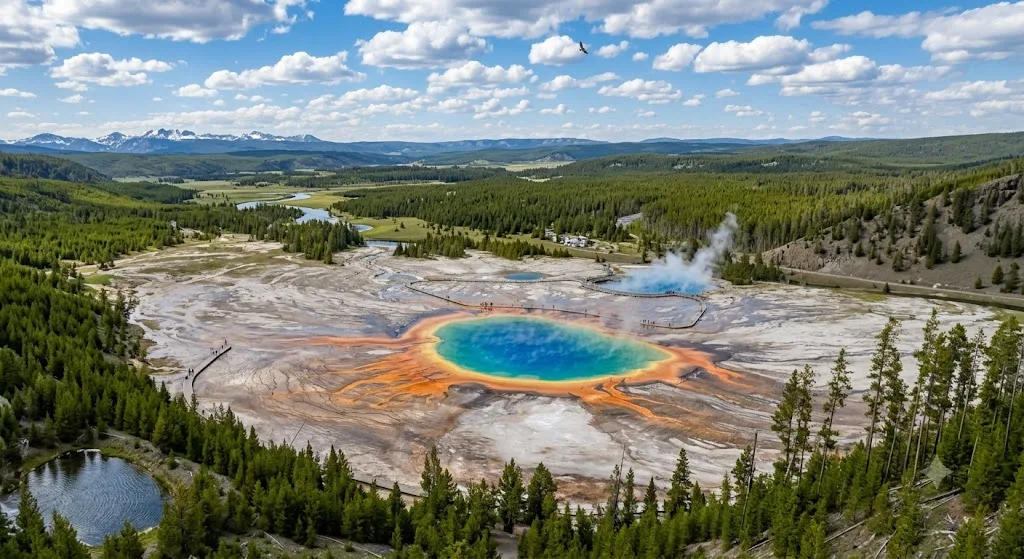
- Marvel at Grand Prismatic Spring: Located in the Midway Geyser Basin, this is Yellowstone's largest hot spring and arguably its most visually stunning. Its vibrant rings of blue, green, yellow, and orange are best viewed from the Grand Prismatic Spring Overlook, a short 1.6-mile roundtrip hike off the Fairy Falls Trail.
- Explore the Grand Canyon of the Yellowstone: This immense canyon, carved by the Yellowstone River, features two magnificent waterfalls – the Upper and Lower Falls – and dramatic, colorful cliffs. Artist Point offers one of the most famous views of the Lower Falls.
- Discover Mammoth Hot Springs: On the park's northern side, Mammoth Hot Springs presents a unique landscape of travertine terraces formed by mineral-rich hot water. Extensive boardwalks allow for close-up exploration of these ever-changing formations.
- Spot Wildlife in Lamar Valley: Known as America's Serengeti, Lamar Valley in the park's northeast is one of the best places for wildlife watching, especially at dawn and dusk. Keep an eye out for bison, elk, pronghorn, bears, and even wolves.
- Drive the Scenic Loops: The Grand Loop Road forms a figure-eight, connecting many of Yellowstone's major attractions. Driving the entire loop takes about 7-8 hours without stops, so we recommend splitting it over two days: one for the Lower Loop (Old Faithful, Grand Prismatic, Grand Canyon) and one for the Upper Loop (Mammoth Hot Springs, Lamar Valley).
- Experience Yellowstone National Park Hiking Trails: The park offers over 900 miles of trails for all skill levels. Popular Yellowstone National Park hiking trails include the boardwalks around the geyser basins, the short hike to the Grand Prismatic Spring Overlook, and more strenuous options like the Bunsen Peak Trail near Mammoth Hot Springs, which offers panoramic views of Lamar Valley. Backcountry camping and hiking require permits, which can be obtained via an early access lottery on Recreation.gov for peak season (May 15-October 31).
- Enjoy Yellowstone Lake: The largest high-altitude lake in North America, Yellowstone Lake offers opportunities for boating, fishing, and scenic drives along its shores.
These are just a few of the many things to do at Yellowstone National Park, ensuring a memorable visit for every traveler.
Best Time to Visit
The best time to visit Yellowstone National Park largely depends on your priorities, as each season offers a unique experience. We've broken it down to help you decide:
- Summer (Mid-June to Mid-September): This is by far the most popular time to visit Yellowstone, and for good reason. All park roads, facilities, and services are typically open, and the weather is warm and pleasant. Long days are perfect for exploring, and wildflowers are in bloom. However, expect significant crowds, especially around major attractions like Old Faithful and Grand Prismatic Spring. If you visit in summer, we recommend arriving at popular spots before 9 AM or after 6 PM to avoid peak congestion.
- Fall (Mid-September to Early October): For many seasoned travelers, early fall is the best time to visit Yellowstone National Park. Crowds begin to thin out after Labor Day, temperatures are still comfortable, and the changing leaves create stunning photographic opportunities. Wildlife is particularly active during the mating season, with elk bugling echoing through the valleys. Most roads remain open until mid-October.
- Spring (Late April to Early June): Spring is an excellent time for wildlife watching, as animals emerge from winter and babies are born. The park is quieter, and you can experience a still-snowy landscape at higher elevations. However, many roads open in phases between mid-April and late May, so access can be limited early in the season. Expect variable weather and be prepared for potential temporary road closures due to snow.
- Winter (December to February): For a truly unique and quiet escape, winter offers a magical, snow-covered Yellowstone. Most roads are closed to wheeled vehicles, with access primarily by guided snowmobile or snowcoach tours. Wildlife viewing can be excellent against the white backdrop.
Ultimately, the best time to visit Yellowstone National Park depends on your preferences for crowds, accessibility, and activities. We often suggest the shoulder seasons of late spring (June) and early fall (September) for a balance of good weather, accessibility, and fewer people.
Where to Stay Nearby
Choosing where to stay is a crucial part of planning your Yellowstone National Park Wyoming adventure. You have options both inside the park and in the surrounding gateway towns. We generally recommend a combination, or at least staying in different areas of the park, to minimize driving time given Yellowstone’s vast size.
In-Park Lodging & Yellowstone National Park Camping
Staying inside the park offers unparalleled access to attractions and wildlife viewing, especially during early mornings and late evenings. Yellowstone National Park Lodges operates nine lodges and several campgrounds. For 2026, lodging reservations can be made up to 13 months in advance, and we strongly advise booking as early as possible due to high demand. Popular lodges include the Old Faithful Inn, Canyon Lodge, and Lake Yellowstone Hotel. Note that the Old Faithful Snow Lodge will undergo window replacement construction from April through November 2026, which may result in noise during the day.
For those interested in Yellowstone National Park camping, the park offers 11 developed campgrounds with over 2,000 campsites. For the 2026 season, all campsites require advanced reservations online or by phone through either recreation.gov or Yellowstone National Park Lodges, with the exception of Mammoth Campground, which offers first-come, first-served sites from October 15 - April 1. Most campsites are reserved far in advance, so early booking is highly recommended. Pebble Creek and Norris campgrounds will be closed for the 2026 season. Fishing Bridge RV Park is the only campground with full hookups and is for hard-sided vehicles only. Group campsites are available at Bridge Bay, Grant Village, and Madison campgrounds.
Gateway Towns
Staying in gateway towns offers more diverse lodging and dining options, often at a lower cost, though it requires more driving into the park each day. Consider these options:
- West Yellowstone, Montana: Located at the West Entrance, this town is bustling with hotels, restaurants, and shops. It’s a convenient base for exploring Old Faithful and the Upper Geyser Basin.
- Gardiner, Montana: Situated at the North Entrance, Gardiner offers year-round access to the park and is a great base for Mammoth Hot Springs and Lamar Valley.
- Cody, Wyoming: About 50 miles east of the East Entrance, Cody provides a taste of the Old West with attractions like the Buffalo Bill Center of the West.
- Jackson, Wyoming: South of the South Entrance and near Grand Teton National Park, Jackson Hole is a vibrant town with upscale amenities and stunning mountain views. It's a great choice for combining both parks. You can also explore Jackson Hole Town Square.
- Cooke City/Silver Gate, Montana: These small towns near the Northeast Entrance offer a remote feel and excellent access to Lamar Valley.
When planning your stay, remember that lodging is often the biggest variable in your Yellowstone budget, and a poorly located hotel can mean significant driving time within the park.
Sample 2-Day Itinerary
To help you make the most of your visit to Yellowstone National Park Wyoming, our team has crafted a sample 2-day itinerary focusing on key highlights. This itinerary assumes you are entering via the West Entrance and have a rental car.
Day 1: Geysers, Hot Springs & The Grand Canyon
- Morning (West Entrance & Lower Geyser Basin): Enter through the West Entrance (open April 17, 2026). Head directly to the Lower Geyser Basin to explore Fountain Paint Pot and the various mud pots and fumaroles.
- Late Morning (Midway Geyser Basin): Continue to the Midway Geyser Basin to witness the breathtaking Grand Prismatic Spring. Be sure to take the short hike to the Grand Prismatic Spring Overlook for the best panoramic views.
- Lunch: Grab a quick bite at the Old Faithful area.
- Afternoon (Upper Geyser Basin & Old Faithful): Spend the afternoon exploring the Upper Geyser Basin, walking the boardwalks past numerous geysers and hot springs. Plan to be at Old Faithful for an eruption, which occurs approximately every 90 minutes.
- Late Afternoon (Grand Canyon of the Yellowstone): Drive east to Canyon Village and visit the Grand Canyon of the Yellowstone. Take in the views from Artist Point and Inspiration Point, marveling at the Lower Falls.
- Evening: Check into your lodging in Canyon Village or a nearby gateway town like West Yellowstone.
Day 2: Wildlife, Terraces & Lake Views
- Early Morning (Lamar Valley): Get an early start and drive north to Lamar Valley. This is prime time for wildlife viewing, with excellent chances to spot bison, elk, and potentially wolves or bears.
- Late Morning (Mammoth Hot Springs): Head to Mammoth Hot Springs. Walk the boardwalks to explore the unique travertine terraces, both the Upper and Lower Terraces. You can also visit the Albright Visitor Center here.
- Lunch: Enjoy lunch at Mammoth Hot Springs or Gardiner.
- Afternoon (Yellowstone Lake & West Thumb Geyser Basin): Drive south towards Yellowstone Lake. Stop at the West Thumb Geyser Basin, located right on the lakeshore, for unique thermal features with a scenic backdrop.
- Late Afternoon: Enjoy a scenic drive along the lake or consider a short, easy hike.
- Evening: Depart the park or return to your lodging.
This itinerary is a suggestion, and we encourage you to tailor it to your interests and pace. Remember to factor in driving times, as distances in Yellowstone are significant, and wildlife jams can add unexpected delays.
FAQ
things to do in Northwest Corner
The Northwest Corner of Yellowstone National Park is primarily home to Mammoth Hot Springs and the Lamar Valley. Things to do here include exploring the fascinating travertine terraces of Mammoth Hot Springs via boardwalks, visiting the historic Fort Yellowstone, and driving through the Lamar Valley for exceptional wildlife viewing, especially at dawn and dusk. The North Entrance, located in Gardiner, Montana, is the only park entrance open year-round, providing consistent access to this region. You can also find various best places in Wyoming nearby, like Devils Tower National Monument, though it's a longer drive.
Yellowstone National Park with kids
Yellowstone National Park is an excellent destination for families with kids. We recommend focusing on accessible boardwalk trails around major thermal features like Old Faithful, Grand Prismatic Spring, and Mammoth Hot Springs. Many visitor centers offer Junior Ranger programs, which are a fun way for children to learn about the park. Wildlife watching in Lamar Valley and Hayden Valley is always a hit with kids. Consider splitting your driving into manageable sections, as the park is vast. Packing plenty of snacks and planning for early starts or late evenings can help avoid crowds and keep children engaged.
Yellowstone National Park tips
Our top tips for visiting Yellowstone National Park include booking accommodations and campsites well in advance, especially for the popular summer season. Arrive at popular attractions early in the morning (before 9 AM) or late in the afternoon (after 6 PM) to avoid peak crowds. Always stay on designated boardwalks and trails to protect yourself and the delicate thermal features. Maintain a safe distance from wildlife – at least 25 yards from bison and elk, and 100 yards from bears and wolves. Be prepared for rapidly changing weather conditions, even in summer. Carry bear spray if hiking in the backcountry. Download the NPS app and check road conditions daily, as closures can occur due to weather or construction.
Yellowstone National Park parking
Parking at Yellowstone National Park can be challenging during peak season, particularly at popular spots like Old Faithful, Grand Prismatic Spring, and Artist Point. While there are no specific parking fees, lots can fill up quickly. We advise arriving early in the morning or late in the afternoon to secure a spot. Consider utilizing less-known pull-offs for scenic views and short walks to avoid the busiest areas. Always park in designated areas and never block traffic, especially during wildlife jams. No vehicle reservations are required for entry in 2026, so you only need a standard entrance pass.
best time to visit Yellowstone National Park
The best time to visit Yellowstone National Park depends on your preferences. For full access to roads and facilities, warm weather, and a vibrant atmosphere, summer (mid-June to mid-September) is ideal, though it brings the largest crowds. For fewer crowds, pleasant temperatures, and active wildlife (especially elk rutting season), early fall (mid-September to early October) is often considered the best. Spring (late April to early June) offers excellent wildlife viewing and fewer people but with more limited road access and variable weather. Winter provides a serene, snowy landscape best explored by snowmobile or snowcoach.
Yellowstone National Park hours and fees
Yellowstone National Park is open 24 hours a day, 365 days a year. However, most interior roads are closed to wheeled vehicles from early November to late April due to snow, with only the North Entrance to Northeast Entrance road remaining open year-round for vehicles. For 2026, the standard entrance fee for a private, non-commercial vehicle is $35, valid for seven days and covering all passengers. A motorcycle or snowmobile pass is $30, and an individual (foot/bicycle) pass is $20. A significant change for 2026 is an additional $100 surcharge per person (aged 16 and over) for non-U.S. residents, unless admitted with an Annual or America the Beautiful Pass. An annual Yellowstone Pass is $70, and the America the Beautiful Annual Pass (covering all U.S. national parks) is $80. There are also several fee-free days in 2026, including Presidents Day (February 16), Memorial Day (May 25), and the 110th Birthday of the National Park Service (August 25).
We hope this comprehensive guide assists you in planning an extraordinary journey to Yellowstone National Park Wyoming. It's a destination that truly captures the spirit of the American wilderness, and we are confident you'll create lasting memories amidst its unparalleled beauty. Remember to respect wildlife, stay on marked trails, and leave no trace to help preserve this national treasure for future generations. For more travel inspiration, explore our guide to Plan Your US Trip.
Last updated: 2026-07-08 by the Roam States team.