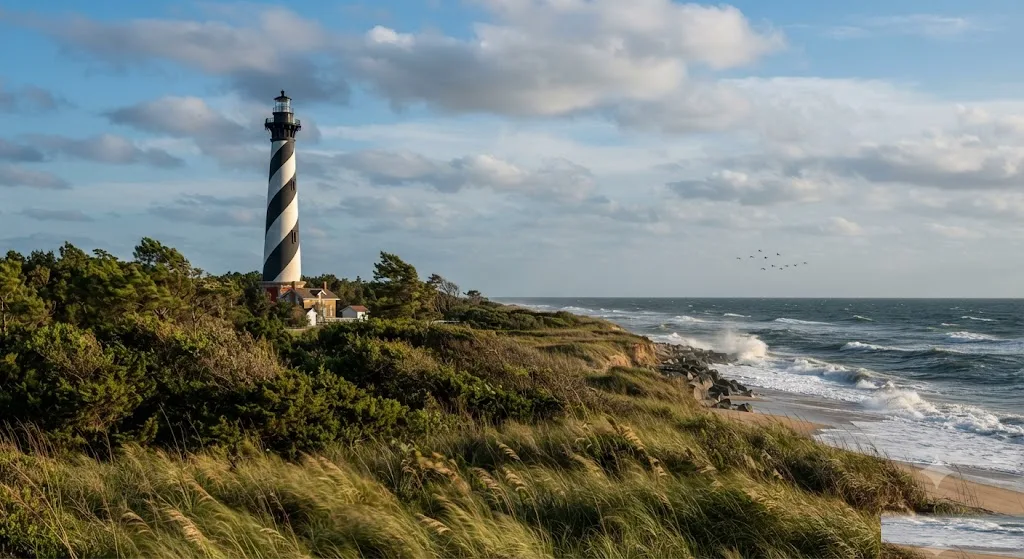
Welcome to the Outer Banks, North Carolina! As your independent US travel authority, our team at Roam States has meticulously crafted this guide to help you navigate this fragile string of barrier islands. Known for historic lighthouses, shipwrecks, and pristine beaches, the Outer Banks North Carolina offers a unique coastal experience unlike any other. Forget generic travel advice; we're here to provide confident, specific insights to ensure your trip is unforgettable.
Why Visit Outer Banks
The allure of the Outer Banks lies in its wild, untamed beauty and rich history. This isn't a destination for those seeking high-rise hotels and bustling boardwalks; instead, we find its charm in the expansive, uncrowded beaches, the whisper of maritime forests, and the dramatic tales of pirates and pioneers. From the iconic lighthouses standing sentinel against the Atlantic to the mysterious wild horses roaming the northern beaches, the Outer Banks offers a genuine escape. It's a place where history comes alive, nature thrives, and the rhythm of the ocean dictates your pace. Our team believes it's a quintessential American road trip destination, offering both relaxation and adventure in equal measure.
Who It's Best For
The Outer Banks truly caters to a diverse range of travelers, but it particularly shines for those who appreciate nature, history, and a slower pace of vacation. Families with children will find endless opportunities for beach play, wildlife spotting, and educational experiences, making it a fantastic destination for "Outer Banks with kids". Couples seeking a romantic getaway will appreciate the stunning sunrises and sunsets, charming coastal towns, and opportunities for quiet strolls on the beach. Adventure seekers can indulge in watersports, fishing, and exploring the undeveloped stretches of coastline. History buffs will be captivated by the tales of the Wright Brothers, colonial settlements, and countless shipwrecks. It's also ideal for those who prefer renting a beach house and establishing a home base for their vacation, rather than hopping between hotels.
Getting There & Parking
Understanding "how to get to Outer Banks" is crucial for a smooth journey. The Outer Banks is a series of barrier islands, primarily accessed by bridges from mainland North Carolina. Most visitors arrive via US-158 or US-64, which connect to the northern and central islands. There are no bridge tolls for accessing the main islands. For those heading to Ocracoke Island, ferry service is essential. The Hatteras-Ocracoke Ferry is free and operates on a first-come, first-served basis, with crossings taking 60-75 minutes. During peak summer months, departures can be as frequent as every 15 minutes. For a mainland connection to Ocracoke, the Cedar Island-Ocracoke and Swan Quarter-Ocracoke ferries require reservations and have a fee ranging from $10 to $45 per vehicle, depending on length, and take approximately 2 hours 15 minutes to 2 hours 40 minutes. A passenger-only ferry, the Ocracoke Express, also runs from Hatteras to Ocracoke Village from mid-May to early September, costing $15 round-trip per person (children 3 and under are free), and $1 for a bicycle. Reservations are recommended for the Ocracoke Express.
Outer Banks Parking
Parking varies significantly across the Outer Banks. In developed areas like Kitty Hawk, Kill Devil Hills, and Nags Head, public parking lots are available, though they can fill up quickly during peak season. For driving on the beach, permits are often required. In the Corolla/Carova 4x4 area, a beach parking permit is required from the second Saturday of May through the last Saturday in September (May 9 to September 26 for 2026). These permits cost $50 and are limited to 300 per week, available online starting April 1. Parking is prohibited for the first 1.5 miles north of the 4x4 ramp in Currituck County. For Cape Hatteras National Seashore, an Off-Road Vehicle (ORV) permit is required year-round to drive on the sand, available through Recreation.gov. A 10-day permit is around $50, and an annual permit is $120. Some sections of the Seashore may close seasonally for wildlife protection, so always check the live ORV ramp status. Many towns, including Kill Devil Hills and Nags Head, allow off-season beach driving from October 1st through April 30th, often requiring a town-specific permit (e.g., Nags Head's permit is $25). Kitty Hawk and Southern Shores generally prohibit driving on the beach at any time.
Top Things to Do
When considering "things to do at Outer Banks," the options are as varied as the coastline itself. Our team has curated a list that highlights the best of this unique destination, ensuring you experience its iconic landmarks and hidden gems.
- Climb Historic Lighthouses: The Outer Banks is synonymous with its towering lighthouses. The Currituck Beach Lighthouse in Corolla is open for climbing from March 21 to November 30, 2026, daily from 9 a.m. to 5 p.m., with extended hours until 8 p.m. on Wednesdays and Thursdays in June, July, and August. Admission is $13 for ages 4 and up, paid at the lighthouse entrance. The Bodie Island Lighthouse is open for climbing from late April through mid-October 2026. Tickets are $10 for adults and $5 for seniors (62+), children (11 and under), and disabled individuals, and must be purchased on Recreation.gov on the same day of your climb, starting at 7 a.m. Note that the Cape Hatteras Lighthouse is currently closed for climbing in 2026 due to restoration efforts, though outdoor areas remain open.
- Explore the Wright Brothers National Memorial: In Kill Devil Hills, visit the site of the first successful flight. The memorial includes a museum and the reconstructed camp buildings. While the field outside is free, the visitor center has a small fee.
- Discover Cape Hatteras National Seashore: This vast protected area stretches for 70 miles, offering pristine beaches, fishing, and birdwatching. There is no entrance fee to the Seashore itself, but permits are required for camping and ORV use.
- Spot Wild Horses in Corolla: Head to the 4x4-only beaches north of Corolla to see the wild Spanish Mustangs. You can take a guided tour, with prices starting around $65 per person for a 2-hour tour. Some tours use open-air Hummers for an enhanced experience. Alternatively, if you have a 4-wheel drive vehicle, you can attempt to spot them independently, but remember the parking permit requirements during peak season.
- Experience Jockey's Ridge State Park: Located in Nags Head, this park boasts the tallest active natural sand dune system in the Eastern United States. It's a fantastic spot for flying kites, hang gliding, or simply climbing the dunes for panoramic views. Entry is free.
- Visit Roanoke Island: Immerse yourself in history at Roanoke Island Festival Park and the North Carolina Aquarium on Roanoke Island. The aquarium offers touch tanks and shark feedings, making it a great rainy-day activity. You can also step back in time at Island Farm in Manteo.
- Go Fishing: The Outer Banks is a premier fishing destination. You can fish from piers (many require a small fee or blanket license), the surf, or charter a boat. Offshore fishing charters can range from $1,900 to $3,500+ for a full-day trip for up to 6 people, with many including bait, tackle, and licenses. Half-day inshore trips are also available, often starting around $550 for up to 4 people. Anyone over 16 needs a Coastal Recreational Fishing License (CRFL) unless fishing from a pier with a blanket license. Ten-day non-resident licenses are $10.
- Enjoy Watersports: The calm waters of the Pamlico Sound are perfect for kayaking, paddleboarding, and kiteboarding, while the ocean offers surfing and parasailing. Many rental companies operate throughout the islands.
These "things to do in Atlantic Coast" are just a starting point; the Outer Banks encourages exploration and discovery at every turn.
Best Time to Visit
Choosing the "best time to visit Outer Banks" depends on your priorities, but our team generally recommends the shoulder seasons for the ideal balance of pleasant weather, fewer crowds, and better value.
- Spring (March-May): Spring brings mild temperatures, with April averaging 69°F. Shops and restaurants begin to open, and vacation rentals are more affordable. The ocean water is still brisk (around 60°F in April), but it's excellent for fishing, birdwatching, and outdoor activities like biking and golfing. Crowds are lighter than summer.
- Summer (June-August): This is peak season, with the warmest weather and most events. Average high temperatures are in the mid-80s°F (July averages 86°F), and ocean temperatures are refreshing in the upper 70s°F, making it ideal for swimming and water sports. Expect higher prices and larger crowds, and book accommodations well in advance.
- Fall (September-October): Many locals consider fall the best time to visit. Crowds significantly decrease after Labor Day, but the ocean remains warm enough for swimming into October. Temperatures are comfortable, hovering in the mid-70s°F in September and mid-60s°F in October. This is a popular time for wind sports and fishing. However, it's also the peak of hurricane season, so trip insurance and flexibility are advisable.
- Winter (November-February): For solitude and quiet, winter offers the lowest prices and fewest crowds. Expect cooler, windy weather with average highs in the 50s-60s°F. While some seasonal attractions may be closed, core amenities remain open, especially in central towns like Kitty Hawk, Kill Devil Hills, and Nags Head.
The Outer Banks experiences a humid subtropical climate, with the temperature typically varying from 37°F to 87°F throughout the year. The wettest months are typically July and August.
Where to Stay Nearby
The Outer Banks offers a diverse array of accommodations, from sprawling vacation rentals to cozy hotels and campgrounds. Our team recommends considering what type of experience you're seeking when choosing your base.
- Northern Outer Banks (Corolla, Duck, Southern Shores): Known for luxurious rental homes and a more upscale, quieter atmosphere. Corolla is famous for its wild horses, while Duck offers a charming village atmosphere with a soundside boardwalk. These areas are ideal for families and those seeking a relaxed, amenity-rich experience.
- Central Outer Banks (Kitty Hawk, Kill Devil Hills, Nags Head): These towns are the most developed and offer the widest range of hotels, vacation rentals, restaurants, and attractions. They are centrally located to many historical sites like the Wright Brothers National Memorial and Jockey's Ridge State Park. This area is best for first-time visitors or those who want easy access to amenities and activities.
- Hatteras Island (Rodanthe, Waves, Salvo, Avon, Buxton, Frisco, Hatteras Village): Stretching south from Nags Head, Hatteras Island is part of the Cape Hatteras National Seashore and offers a more natural, laid-back vibe. It's a haven for watersports enthusiasts, anglers, and nature lovers. Accommodation here is primarily vacation rentals, with some smaller inns and campgrounds. Cell service can be spotty further south.
- Ocracoke Island: Accessible only by ferry, Ocracoke offers a truly secluded and charming experience. The village is walkable, with unique shops and restaurants. It's perfect for those seeking a tranquil escape and a taste of traditional Outer Banks life.
- Camping: The Outer Banks is a fantastic destination for camping, offering both National Park Service campgrounds and private RV parks. The NPS runs four campgrounds along Cape Hatteras National Seashore (Oregon Inlet, Cape Point, Frisco, and Ocracoke), which are typically dry camping with no hookups (except Oregon Inlet for showers). Reservations for NPS campgrounds open on a rolling 6-month window and can sell out quickly for peak summer. Private campgrounds like Cape Hatteras KOA, Frisco Woods Campground, and Camp Hatteras RV Resort & Campground offer more amenities, including hookups, pools, and planned activities. Camping on the beach is generally not allowed outside of designated campgrounds.
For more inspiration on North Carolina travel, explore our guides to Best places in North Carolina, including the majestic Biltmore Estate and the serene Great Smoky Mountains National Park.
Sample 2-Day Itinerary
To help you maximize your time, our team has crafted a sample 2-day itinerary for the Outer Banks, focusing on a blend of history, nature, and relaxation.
Day 1: Northern & Central Outer Banks Exploration
- Morning (9:00 AM - 12:00 PM): Start your day in Corolla with a wild horse tour. Book a 2-hour guided 4x4 tour to increase your chances of spotting the Corolla wild horses. Prices start around $65 per person.
- Lunch (12:00 PM - 1:30 PM): Enjoy lunch at a casual eatery in Corolla or Duck.
- Afternoon (1:30 PM - 4:00 PM): Head south to the Currituck Beach Lighthouse in Historic Corolla. Climb the 220 steps for panoramic views of the ocean and sound. Admission is $13 for ages 4 and up, and the lighthouse is open until 5 p.m. (or 8 p.m. on Wednesdays/Thursdays in summer). Afterwards, explore the Whalehead in Historic Corolla and the Outer Banks Center for Wildlife Education in Historic Corolla Park.
- Late Afternoon (4:00 PM - 6:00 PM): Continue south to Kill Devil Hills and visit the Wright Brothers National Memorial. Explore the museum and the actual site of the first flight. The visitor center has a small fee.
- Evening: Dinner in Kill Devil Hills or Nags Head, followed by a relaxing evening.
Day 2: Nags Head & Hatteras Island Adventures
- Morning (9:00 AM - 12:00 PM): Begin at Jockey's Ridge State Park in Nags Head. Climb the massive sand dunes, fly a kite, or simply enjoy the unique landscape. Entry is free.
- Lunch (12:00 PM - 1:30 PM): Grab a bite in Nags Head before heading south.
- Afternoon (1:30 PM - 5:00 PM): Drive down to Hatteras Island, part of the Cape Hatteras National Seashore. Stop at Bodie Island Lighthouse for a climb (if open for climbing and tickets secured in advance). Explore some of the beach access points along the Seashore. Remember, an ORV permit is required for beach driving.
- Late Afternoon (5:00 PM - Sunset): Enjoy a scenic drive further south on Hatteras Island, perhaps to the village of Buxton or Frisco. Consider watching the sunset over the Pamlico Sound.
- Evening: Dinner at a local seafood restaurant on Hatteras Island, savoring fresh catches.
Frequently Asked Questions
Outer Banks tips
To make the most of your Outer Banks trip, we advise planning ahead, especially for popular attractions and accommodations during peak season. Always check ferry schedules and reservation requirements for Ocracoke. Pack layers, as coastal weather can change quickly, and bring insect repellent, especially for evenings near the sound. Embrace the slower pace of island life and be prepared for potential traffic on the two-lane Highway 12 during busy times. Consider visiting during the shoulder seasons (May, September, October) for fewer crowds and pleasant weather.
Outer Banks parking
Parking regulations vary by location. In the Corolla 4x4 area, a beach parking permit is required from the second Saturday of May through the last Saturday in September, costing $50 and limited to 300 per week. For Cape Hatteras National Seashore, an ORV permit is needed year-round for beach driving, available through Recreation.gov for around $50 (10-day) or $120 (annual). Many northern towns allow off-season beach driving (Oct 1 - April 30) with town-specific permits, such as Nags Head's $25 permit. Always check local town websites for the most current rules, as some towns like Kitty Hawk and Southern Shores prohibit beach driving entirely.
best time to visit Outer Banks
The best time to visit the Outer Banks depends on your preferences. For warm beach weather and a lively atmosphere, June through August is peak season, though it comes with higher prices and crowds. For a balance of good weather, fewer crowds, and better value, the shoulder seasons of May and September-October are highly recommended. If solitude and lower costs are your priority, the winter months offer a quiet escape, with many local businesses still open.
Outer Banks hours and fees
Hours and fees for attractions vary. The Currituck Beach Lighthouse is open March 21 – November 30, 2026, daily 9 a.m. – 5 p.m. (extended to 8 p.m. on Wed/Thurs in June-Aug), with a $13 climbing fee for ages 4+. The Bodie Island Lighthouse is open for climbing late April - mid October 2026; tickets are $10 for adults, $5 for seniors/children/disabled, and must be purchased same-day online via Recreation.gov starting 7 a.m. Cape Hatteras National Seashore has no entrance fee, but charges for camping, ORV permits, and lighthouse climbs (when open). Wild horse tours typically cost around $65 per person for a 2-hour tour. Ferry fees to Ocracoke from the mainland range from $10-$45 per vehicle, while the Hatteras-Ocracoke ferry is free. The Ocracoke Express passenger ferry is $15 round-trip. Always verify specific hours and fees for 2026 directly with the attraction or service provider before your visit.
Outer Banks itinerary
A good Outer Banks itinerary balances iconic sights with time for relaxation. For a 2-day trip, consider dedicating one day to the northern and central islands (Corolla wild horses, Currituck Beach Lighthouse, Wright Brothers National Memorial) and another to Nags Head and Hatteras Island (Jockey's Ridge State Park, Bodie Island Lighthouse, Cape Hatteras National Seashore). For longer stays, incorporate a day trip to Ocracoke Island via ferry, or spend more time enjoying the beaches, fishing, or watersports. Always build in flexibility for weather changes and spontaneous discoveries.
Outer Banks travel guide
This Outer Banks travel guide from the Roam States team aims to provide you with all the essential information for planning your trip to this captivating North Carolina destination. From navigating the islands and understanding parking regulations to discovering top attractions and choosing the best time to visit, we've covered the practicalities. We've also highlighted the unique character of each region, ensuring you can tailor your experience to your interests, whether you're seeking history, adventure, or simply a tranquil beach escape.
Our team's verdict: The Outer Banks is a truly special destination that rewards those who seek authentic coastal experiences. Its blend of natural beauty, rich history, and laid-back atmosphere makes it a standout on the Atlantic Coast. We encourage you to embrace its unique charm and explore beyond the obvious for a truly memorable trip.
Last updated: 2026-07-08 by the Roam States team.