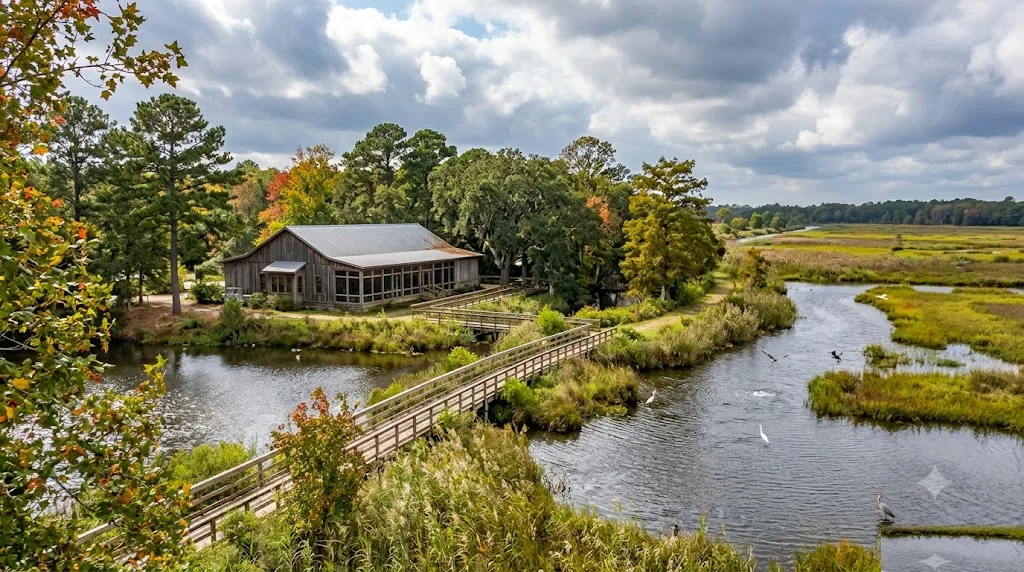
Our Caw Caw Interpretive Center guide covers practical planning for Caw Caw Interpretive Center South Carolina — best time to visit, getting there, and what to do on the ground.
The Lowcountry of South Carolina is a region steeped in natural beauty and rich history, and at its heart lies the Caw Caw Interpretive Center South Carolina. This 654-acre preserve, once a series of rice plantations, offers a unique blend of diverse ecosystems and historical significance. Our team at Roam States has compiled this comprehensive guide to help you plan an unforgettable visit to this remarkable destination.
Why Visit Caw Caw Interpretive Center
Caw Caw Interpretive Center stands as a testament to both the enduring power of nature and the profound impact of human history in the South Carolina Lowcountry. We recommend a visit to this center for its unparalleled opportunities to immerse yourself in a vibrant ecosystem and connect with a pivotal past. The preserve boasts a remarkable diversity of habitats, including cypress swamps, marshlands, and forests, providing sanctuary for a wide array of wildlife. Guests may encounter American alligators, swallow-tailed kites, bald eagles, various songbirds, deer, and otters during their visit.
Beyond its natural allure, Caw Caw Interpretive Center holds significant historical weight. It was once part of several rice plantations, where enslaved Africans applied their agricultural skills to transform cypress swamps into productive rice fields. The remnants of these 18th and 19th-century rice fields, along with earthen dikes, canals, and water control devices, are still visible today, offering a tangible link to this complex history. The site is also recognized as a member of the National Underground Railroad Network to Freedom Program, highlighting its connection to the history of freedom seekers. Furthermore, the grounds are home to thousands of naturalized tea plants, a legacy of a 20th-century tea farm that once operated on the property. This blend of natural and cultural heritage makes Caw Caw Interpretive Center a truly unique and enriching destination in South Carolina.
Who It's Best For
Our team believes Caw Caw Interpretive Center is an ideal destination for a wide range of visitors. It's particularly well-suited for nature enthusiasts and birdwatchers, as it's considered a "birding hotspot" with over 270 bird species recorded on the property, including bald eagles, osprey, painted buntings, and swallow-tailed kites. The diverse habitats, from freshwater and brackish marshes to cypress-tupelo swamps and various forests, attract a wide variety of avian life throughout the year.
History buffs will find the center equally compelling, with its preserved rice fields and interpretive exhibits detailing the lives of enslaved Africans and the Stono Rebellion, one of the most significant slave uprisings in colonial America. Educational groups, from preschool through college, can also benefit from the environmental and social studies programs offered, making it a valuable outdoor classroom. Families with children will appreciate the engaging Kids in Parks TRACK Trail activities, designed to connect families to the outdoors through hands-on exploration. While pets and bicycles are not permitted to protect the sensitive environment, the accessible portions of the trails and available amenities like restrooms and drinking water make it accommodating for many.
Getting There & Parking
For those wondering how to get to Caw Caw Interpretive Center, we can confirm it's conveniently located approximately 14 miles south of Charleston, South Carolina, directly off Highway 17 (Savannah Highway) in Ravenel. The drive from downtown Charleston typically takes about 25 minutes. Look for the single sign for the park on the highway; if you reach Ravenel proper, you've gone a bit too far.
Once you turn off Highway 17, a well-maintained gravel road meanders for about half a mile through the forest to the Interpretive Center buildings and parking lots. The speed limit on this road is 15 MPH, encouraging visitors to slow down and begin their observation of the surrounding nature.
Regarding parking, ample designated parking areas are available at the Interpretive Center. There is a fee for parking, which is $2 per person, or free if you possess a Charleston County Parks Gold Pass. Accessible parking is also available. Our team always recommends locking your vehicle and removing any valuables from sight, as is good practice at any natural area.
Top Things to Do
When planning your visit to Caw Caw Interpretive Center, our team recommends focusing on a few key activities to fully appreciate this unique preserve. The primary draw for many visitors are the extensive trails and boardwalks that wind through the diverse ecosystems. With over six miles of walking trails, including elevated boardwalks through swampy terrain, there are endless opportunities for exploration. These trails allow you to experience preserved wetlands, swamps, and forests, providing habitat for a wide variety of wildlife.
One of the top things to do at Caw Caw Interpretive Center is birdwatching. The center is renowned as a "birding hotspot" in South Carolina, with over 270 bird species identified. We highly recommend bringing binoculars to spot migratory waterfowl, wading birds, songbirds, swallow-tailed kites, wood storks, and bald eagles. Guided bird walks led by a Caw Caw naturalist are offered every Wednesday and Saturday morning at 8:30 AM for a fee of $5, providing an excellent opportunity for guided observation. These walks often last around 3.5 hours, but you are welcome to leave early if needed. Binoculars are also available for those who don't have their own.
Another essential experience at Caw Caw Interpretive Center is engaging with its rich history. The trails lead you through the remnants of 18th and 19th-century rice fields, earthen dikes, canals, and water control devices constructed by enslaved Africans. Trailside exhibits provide context to the area's cultural and natural heritage, including its connection to the Stono Rebellion. The center also features naturalized tea bushes, a nod to its past as a tea farm. While the main Exhibit Center is currently closed for renovation, the outdoor interpretive signs still offer valuable insights.
For families, the Kids in Parks TRACK Trail offers self-guided activities and smartphone e-Adventures that make exploring the outdoors fun and educational. These activities are designed to help children discover local plants and animals through hands-on engagement. Remember to wear insect repellent, especially during warmer months, and note that pets and bicycles are not permitted on the trails to protect the wildlife. Restrooms and drinking water are available at the Interpretive Center.
Best Time to Visit
Our team understands that timing is crucial for an optimal travel experience, and the Caw Caw Interpretive Center is no exception. The cooler months, typically fall, winter, and spring, are generally considered the best time to visit. During these seasons, the weather is more comfortable for hiking and wildlife viewing, and insect activity is typically lower.
For birdwatchers, the seasons offer different highlights. Winter is excellent for observing wading birds and shorebirds like Ring-Neck Ducks, Hooded Mergansers, and Black-Bellied Whistling Ducks, as well as migratory birds such as Yellow-Rumped Warblers and American Goldfinches. Spring brings a variety of migratory warblers and other songbirds, making it a prime time to spot elusive species like the Swainson's Warbler. Fall is also highlighted by migration, with many warblers and songbirds passing through, alongside occasional Sandhill Cranes and White Pelicans. While summer can be hot, it's the best time to observe birds during their breeding process, including Orchard Orioles and Painted Buntings, and it's when you're most likely to see Least Bitterns and Roseate Spoonbills.
The park is open Tuesday through Sunday from 9 a.m. to 5 p.m., remaining closed on Mondays, except for Memorial Day and Labor Day. We recommend checking the Charleston County Parks website for any specific event closures or changes to hours before your visit.
Where to Stay Nearby
When considering Caw Caw Interpretive Center lodging, visitors have several excellent options, primarily in the surrounding areas of Ravenel, Johns Island, and Charleston. While there is no overnight camping permitted directly at Caw Caw Interpretive Center, the proximity to Charleston means a wide range of accommodation choices are available.
For those seeking a more secluded experience, Johns Island, located east of Ravenel, offers a blend of charming inns and vacation rentals. The Residence Inn by Marriott Charleston Kiawah Island/Andell Inn on Kiawah Island is a highly-rated option with amenities like a pool and free parking. Other nearby options on Kiawah and Seabrook Islands offer villas and vacation homes, providing more space and privacy.
Many visitors choose to stay in Charleston, which is about a 25-30 minute drive from Caw Caw Interpretive Center. Charleston offers a vast selection of hotels, from budget-friendly options to luxurious boutique stays. Hotels in West Ashley, such as the La Quinta Inn & Suites by Wyndham Charleston Riverview or the Comfort Suites Charleston West Ashley, are generally closer to Ravenel than downtown Charleston and often provide good value. The Inn at Middleton Place, located on the historic Middleton Place Plantation, is another excellent choice that combines historical ambiance with convenient access to the natural beauty of the Lowcountry.
For those who prefer recognized brands, options like the Drury Plaza Hotel North Charleston or Tru by Hilton Charleston Ashley Phosphate are well-regarded and offer comfortable stays. Many hotels in Charleston and the surrounding areas offer amenities like free breakfast, Wi-Fi, and parking. Our team recommends booking your Caw Caw Interpretive Center lodging in advance, especially during peak travel seasons in the Lowcountry, to secure the best rates and availability.
Sample 2-Day Itinerary
To help you make the most of your trip to the Caw Caw Interpretive Center and the surrounding Lowcountry, we've crafted a sample 2-day itinerary:
Day 1: Immersion in Nature and History at Caw Caw
- Morning (9:00 AM - 1:00 PM): Explore Caw Caw Interpretive Center South Carolina
Arrive at Caw Caw Interpretive Center early to take advantage of the cooler morning temperatures and prime wildlife viewing. Start at the Interpretive Center (though the exhibit center is currently closed for renovation, the staff can provide maps and information). Embark on a self-guided exploration of the extensive trail system. We recommend focusing on the Rice Fields Trail and Waterfowl Trail for historical insights and birdwatching opportunities. Keep an eye out for alligators, various bird species, and other wildlife. Consider joining a guided bird walk if visiting on a Wednesday or Saturday morning (reservations not typically required, but check the Charleston County Parks website for 2026 schedules). - Lunch (1:00 PM - 2:00 PM): Picnic Amidst Nature
Pack a picnic lunch to enjoy at one of the designated picnic areas at Caw Caw Interpretive Center. Remember that only water is permitted on the trails. - Afternoon (2:00 PM - 4:00 PM): Deeper Exploration or Educational Program
Continue exploring more of the Caw Caw Interpretive Center hiking trails, such as the Swamp Sanctuary Trail with its boardwalk sections, or the Maritime Forest Trail. Alternatively, check the Charleston County Parks website for any scheduled educational programs or special events that might align with your interests, such as "Signals in the Dark: A Firefly Story" if visiting in March. - Late Afternoon/Evening: Head to Charleston
Drive back towards Charleston for dinner and to check into your accommodation. Enjoy dinner at one of Charleston's renowned restaurants.
Day 2: Lowcountry Culture and History
- Morning (9:00 AM - 12:00 PM): Historic Plantation Visit
Begin your day with a visit to one of the Lowcountry's iconic plantations. We recommend Boone Hall Plantation & Gardens, one of America's oldest working plantations, where you can tour the historic mansion and explore the beautiful gardens. Alternatively, explore Magnolia Plantation and Gardens or Middleton Place for their stunning landscapes and historical significance. - Lunch (12:00 PM - 1:00 PM): Charleston Dining
Enjoy lunch in downtown Charleston, perhaps near the Charleston City Market or in the Charleston Historic District. - Afternoon (1:00 PM - 5:00 PM): Explore Downtown Charleston
Spend the afternoon exploring the charm of downtown Charleston. Take a horse-drawn carriage tour, stroll along Rainbow Row, visit the South Carolina Aquarium, or delve into maritime history at Patriots Point Naval & Maritime Museum. For more ideas, consult our guide to Best Places in South Carolina. - Evening: Waterfront Views or Cultural Experience
Enjoy dinner with waterfront views at Charleston Waterfront Park or catch a performance at one of the city's theaters.
Is It Worth Visiting?
Our team confidently asserts that Caw Caw Interpretive Center is absolutely worth visiting for anyone traveling through the South Carolina Lowcountry. For a modest admission fee of $2 per person (free for Gold Pass members and children aged 2 and under), visitors gain access to a remarkably preserved natural and historical landscape that offers exceptional value.
The center's extensive network of over six miles of trails and boardwalks provides unparalleled opportunities for wildlife observation, particularly birdwatching, making it a prime destination for nature lovers. The chance to see bald eagles, alligators, and a multitude of migratory birds in their natural habitats is a significant draw.
Beyond its ecological importance, the historical narrative woven into the landscape makes Caw Caw Interpretive Center a powerful educational experience. Walking through the remnants of 18th and 19th-century rice fields, and learning about the profound impact of enslaved Africans on this land, offers a unique perspective on South Carolina's past. This blend of natural beauty and profound history distinguishes it from more generic attractions. So, is Caw Caw Interpretive Center worth visiting? Without a doubt, we believe it offers a rich, engaging, and educational experience that will leave a lasting impression.
Caw Caw Interpretive Center Hiking Trails
The Caw Caw Interpretive Center hiking trails are undoubtedly one of the preserve's greatest assets, offering visitors over six miles of diverse paths through its varied ecosystems. Our team recommends allocating ample time to explore these well-maintained trails, which range from broad, grassy roadbeds to narrow, winding dirt paths and elevated boardwalks.
The trail system is designed with interconnecting loops, allowing visitors to customize their hiking experience. Here's a closer look at some of the prominent Caw Caw Interpretive Center hiking trails:
- Habitat Loop (3.6 miles): For the adventurous, this loop links several shorter trails and passes through all major habitats, including forested wetlands and areas with naturalized tea bushes.
- Bottomland Hardwood Forest Trail (1.4 miles): This trail follows the edge of Caw Caw Swamp, offering opportunities to hear owls, warblers, and calling frogs.
- Swamp Sanctuary Trail (1.2 miles): Featuring shaded paths and boardwalk sections, this trail crosses maple-willow and cypress-tupelo swamps, providing excellent chances to spot alligators and colorful birds. It also leads to the Laurel Hill Slave Settlement site.
- Upland Forest Loop (0.4 mile): This shorter, accessible loop trail winds through mixed oak forest and offers overlooks of the former rice fields. It's ideal for visitors with disabilities.
- Rice Fields Trail (1.1 miles): A historically significant path, this trail allows you to walk on top of an earthen dike overlooking the areas where enslaved Africans cultivated rice in the 18th and 19th centuries. This is also a popular trail for spotting alligators and wading birds.
- Waterfowl Trail (1.4 miles): This scenic loop follows former rice dikes through wetlands managed for ducks, wading birds, and shorebirds. It's an excellent spot for watching hawks and other birds of prey.
- Marshland Trail (1.1 miles): Stroll along the colorful tidal marsh, a managed wading bird sanctuary, and through oak-hickory forest.
- Maritime Forest Trail (0.4 mile, connector): This trail winds through woods along a stream, connecting the Marshland and Bottomland/Hardwood Forest Trails. It's known for seasonal wildflowers and songbirds, and features remnants of the property's "Tea Farm" era.
Portions of the trails are ADA accessible, and restrooms and drinking water are available at the Interpretive Center. We remind visitors that pets and bicycles are not permitted on any of the Caw Caw Interpretive Center hiking trails to protect the sensitive wildlife and environment. Always stay on marked trails and paths for your safety and to preserve the natural habitat.
Last updated: 2026-07-13 by the Roam States team.