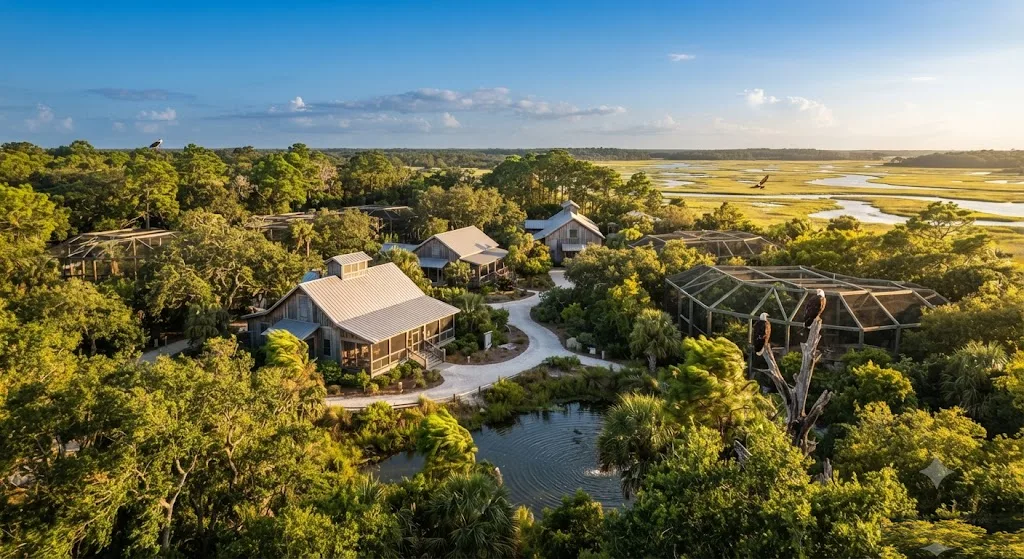
Welcome to our comprehensive guide to the Center for Birds of Prey South Carolina, an essential stop for any nature enthusiast traveling through the Lowcountry. Our team has carefully curated this information to ensure you have all the specifics you need for an unforgettable visit, from operating hours and admission fees to the best ways to experience the incredible raptors that call this conservation center home. We cut through the generic travel fluff to bring you confident, specific advice for planning your trip.
Why Visit Center for Birds of Prey
The Center for Birds of Prey in Awendaw, South Carolina, is far more than just an attraction; it's a vital hub for avian conservation, rehabilitation, and education. Located on 153 acres of diverse land near the Francis Marion National Forest, the Center houses approximately 120 birds, including a stunning array of hawks, kites, eagles, vultures, and owls. Our team believes that a visit here offers a unique opportunity to connect with magnificent raptors up close, learn about their critical role in our ecosystem, and witness their incredible natural behaviors during captivating flight demonstrations.
The Avian Conservation Center, which operates the Center for Birds of Prey, rescues and rehabilitates hundreds of injured and threatened birds each year. Many of the birds you'll see on exhibit are permanent residents, unable to be released back into the wild, serving as "educational diplomats" to raise awareness about conservation. By visiting, you directly support their crucial veterinary and rescue work, including the East Coast's only permanent oil spill treatment center. It's an experience that fosters a deep appreciation for wildlife and the dedicated efforts to protect it.
Who It's Best For
The Center for Birds of Prey South Carolina caters to a wide audience, making it an excellent destination for various types of travelers. Families with children will find the educational programs and flight demonstrations particularly engaging, sparking curiosity about science and wildlife. The interactive nature of the exhibits and the thrill of seeing birds of prey soar overhead create lasting memories for young adventurers. We've seen firsthand how children are captivated by the sheer size and grace of these birds.
Beyond families, the Center is ideal for birdwatchers, photographers, and anyone with a keen interest in nature and conservation. The opportunity to observe nearly 50 species of raptors from around the world, many in natural settings, is unparalleled. Photographers, in particular, will appreciate the dedicated "Photography Days" that allow for unfettered access to capture stunning images of birds in static perching shots and untethered free flight. Educators and students will also find immense value in the Center's research and conservation initiatives, offering a tangible connection to environmental science.
Getting There & Parking
Understanding how to get to Center for Birds of Prey is straightforward, though a car is essential for reaching this somewhat secluded location. The Center is conveniently located at 4719 Highway 17N, Awendaw, SC 29429. It's situated north of Charleston, making it an easy day trip from the historic city. If you're driving from downtown Charleston, expect a scenic journey of approximately 28-30 miles (45-48 km), taking around 39 minutes in normal traffic. From Mount Pleasant, it's an even shorter drive, about 8 miles north of the Highway 526 and Highway 17 intersection. Our team recommends plugging the address directly into your GPS for the most accurate directions.
Upon arrival, you'll find the entrance designated by a large metal gate featuring the Center's eagle logo. Parking at the Center for Birds of Prey is ample and, based on our research, free of charge. There are no specific parking fees mentioned, and motorcoach parking is available, indicating good capacity for visitors. We advise arriving a little before the scheduled program times to allow for easy parking and check-in, especially during peak season.
Top Things to Do
When planning your visit, you'll discover numerous things to do at Center for Birds of Prey that will fill your day with wonder and learning. The highlight for many visitors is undoubtedly the live flight demonstrations. These awe-inspiring shows feature hawks, falcons, owls, eagles, kites, and vultures soaring, gliding, and diving in close proximity to the audience, showcasing their natural hunting techniques and unique evolutionary adaptations. Our team finds these demonstrations to be incredibly powerful and a true testament to the birds' majesty. Flight demonstrations are currently offered every Thursday, Friday, and Saturday at 10:30 AM.
Following the flight demonstration, a staff-guided tour at 1:30 PM offers a deeper dive into the Center's mission and the individual stories of the resident birds. You'll walk through natural paths, exploring attractive aviaries that house nearly 50 species from around the world. Don't miss the Countess Alicia Paolozzi Owl Wood, a two-acre area dedicated to the Center's international collection of owls, allowing for a tranquil experience with these nocturnal raptors. Another unique program is "Owls in Flight" at 2:00 PM on operating days, offering a special focus on these silent hunters. Beyond these structured programs, simply exploring the grounds and observing the birds in their enclosures is one of the most rewarding things to do at Center for Birds of Prey.
Center for Birds of Prey Hiking Trails & Nature Exploration
While the Center for Birds of Prey itself features accessible, level pathways of pea gravel that allow visitors to navigate the aviaries and demonstration areas comfortably, it's important to clarify the distinction between these walking paths and more extensive Center for Birds of Prey hiking trails. The grounds of the Center are designed for viewing and learning about the raptors on exhibit, offering a leisurely stroll rather than strenuous hiking. You'll enjoy meandering through the campus, discovering the various bird enclosures and the Owl Wood, but these are not traditional hiking trails in the wilderness sense.
For those seeking true Center for Birds of Prey hiking trails and a more immersive outdoor experience, the adjacent Francis Marion National Forest is your destination. The Center's 153-acre property is contiguous with five tracts protected by The Nature Conservancy, which link directly to the Francis Marion National Forest. Here, you can find numerous trails, including sections of the Palmetto Trail, which offers easy, flat sections winding through the national forest and along the marsh. The Awendaw Passage of the Palmetto Trail, for example, is a 7.1-mile path intertwining forest and salt marsh, perfect for hiking or biking, with scenic overlooks. We highly recommend exploring these nearby options for a more robust hiking adventure, but remember to bring bug spray, especially in warmer months.
Center for Birds of Prey Camping & Nearby Stays
For those hoping for Center for Birds of Prey camping, it's important to note that camping facilities are not available directly on the Center's grounds. The focus of the Center is on conservation, education, and the care of its resident birds. However, the good news is that the area surrounding Awendaw and the Center offers fantastic opportunities for camping and other accommodations, particularly within the vast Francis Marion National Forest.
The Francis Marion National Forest, which borders the Center's property, provides several options for Center for Birds of Prey camping, ranging from developed campgrounds to more primitive sites. These offer a chance to extend your nature immersion beyond a day visit. For specific campground details, reservations, and regulations within the national forest, we always recommend checking the official USDA Forest Service website. Beyond camping, if you prefer more traditional lodging, Mount Pleasant and Charleston offer a wide array of hotels, motels, and vacation rentals, just a short drive away. We'll delve into those options in the "Where to Stay Nearby" section.
Best Time to Visit
To make the most of your trip to the Center for Birds of Prey South Carolina, timing is key. The Center is open year-round on Thursdays, Fridays, and Saturdays. Our team finds that spring (March-May) and fall (September-November) offer the most pleasant weather conditions for outdoor activities and comfortable viewing of the flight demonstrations. Temperatures are milder, and humidity is lower, making for a more enjoyable experience. Summer months can be hot and humid, and programs may be postponed or canceled if the heat index exceeds 110 degrees for visitor and bird safety. In such cases, rain checks are offered.
If you're looking to avoid larger crowds, consider visiting during the shoulder seasons or on a Thursday. Mornings are generally a good time to visit, especially for the 10:30 AM flight demonstration. The Center also hosts special events like "Owls by Moonlight" in the evenings on select dates, offering a unique perspective on nocturnal raptors. Always check the Center's official website for their most current schedule, special event dates, and any potential weather-related closures before your visit. We also suggest bringing water, comfortable walking shoes, and sunglasses, regardless of the season.
Where to Stay Nearby
While there's no Center for Birds of Prey camping directly on site, the surrounding Lowcountry offers a diverse range of accommodations to suit every preference and budget. Given its location in Awendaw, the closest major towns with extensive lodging options are Mount Pleasant and Charleston. Mount Pleasant, being closer, offers a variety of hotels, from budget-friendly options to more upscale resorts. Some highly-rated hotels in Mount Pleasant include Cambria Hotel Mount Pleasant – Charleston, Tru by Hilton Mt Pleasant Charleston, and Holiday Inn Express & Suites Charleston NE Mt Pleasant US17. These are typically within a 20-30 minute drive of the Center.
For those who prefer a wider selection of dining, shopping, and historical attractions, staying in Charleston is an excellent choice. Charleston is about 28-30 miles southwest of Awendaw, and the drive is manageable for a day trip to the Center. In Charleston, you'll find everything from charming boutique inns in the Charleston Historic District to luxury hotels. Popular choices include Emeline, The Francis Marion Hotel, and The Charleston Place. Many hotels in the area are also pet-friendly, such as the Red Roof Inn PLUS+ Mt Pleasant - Patriots Point, if you're traveling with furry companions. We recommend booking accommodations in advance, especially during peak tourist seasons, to secure the best rates and availability.
Sample 2-Day Itinerary
Our team has crafted a sample 2-day itinerary to help you maximize your visit to the Center for Birds of Prey South Carolina and explore the surrounding Lowcountry:
Day 1: Raptor Immersion & Awendaw Charm
- **Morning (10:00 AM - 1:00 PM):** Arrive at the Center for Birds of Prey. Aim to be there for the 10:30 AM Flight Demonstration, followed by a self-guided exploration of the aviaries and the Countess Alicia Paolozzi Owl Wood. This is the core of your visit and provides an unparalleled opportunity to witness these magnificent creatures up close.
- **Lunch (1:00 PM - 2:00 PM):** Enjoy a packed lunch at the Center (they encourage bringing snacks due to distance from local eateries) or head to the nearby Sewee Outpost for a casual bite and to browse local goods.
- **Afternoon (2:00 PM - 4:00 PM):** Attend the 2:00 PM "Owls in Flight" program for another unique perspective on specific raptors. Alternatively, if you missed the morning guided tour, catch the 1:30 PM staff-guided tour.
- **Late Afternoon (4:00 PM - 6:00 PM):** Explore the natural beauty of the Francis Marion National Forest. Consider a short, easy hike on a section of the Palmetto Trail near the Awendaw Canoe Launch for beautiful marsh views.
- **Evening:** Head to Mount Pleasant for dinner. If it's a Wednesday, you might catch the live music at Awendaw Green, located next to Sewee Outpost, offering a relaxed Lowcountry evening.
Day 2: Charleston History & Lowcountry Delights
- **Morning (9:00 AM - 1:00 PM):** Drive into Charleston and immerse yourself in its rich history. Explore the Charleston Historic District, stroll along the Battery, and visit historic sites.
- **Lunch (1:00 PM - 2:00 PM):** Enjoy lunch at one of Charleston's renowned restaurants, savoring the local culinary scene.
- **Afternoon (2:00 PM - 5:00 PM):** Choose from several iconic Lowcountry experiences. Visit Magnolia Plantation and Gardens for its stunning landscapes and rich history, or explore the historic grounds of Middleton Place. Alternatively, delve into more history at Fort Sumter National Monument.
- **Late Afternoon/Evening:** Enjoy a sunset cruise in Charleston Harbor or explore the vibrant King Street for shopping and dining.
This itinerary provides a blend of wildlife education, outdoor adventure, and historical exploration, giving you a well-rounded taste of what the Best places in South Carolina have to offer. Remember to check specific operating hours and make any necessary reservations for attractions in Charleston.
Last updated: 2026-07-08 by the Roam States team.