Our Congaree River Blue Trail guide covers practical planning for Congaree River Blue Trail South Carolina — best time to visit, getting there, and what to do on the ground.
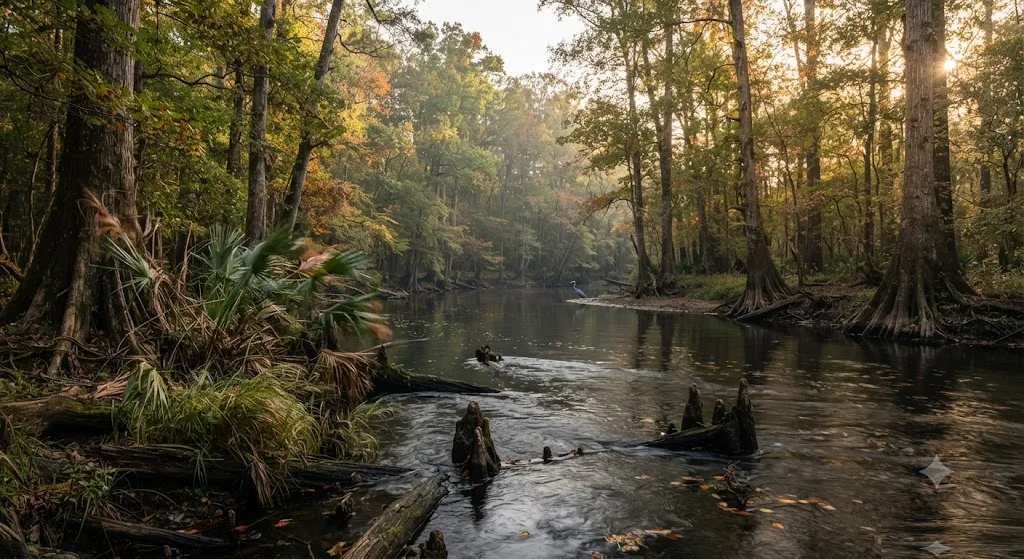
The Congaree River Blue Trail South Carolina offers an unparalleled opportunity to immerse ourselves in the heart of South Carolina's natural beauty. This 50-mile designated recreational paddling trail extends from the vibrant state capital of Columbia, downstream to the serene wilderness of Congaree National Park. Along this route, paddlers gain unique perspectives of the natural landscape, transitioning from urban riverfronts to vast floodplains and ancient forests. It’s a journey that highlights the rich biodiversity and historical significance of the Congaree River corridor, making it a truly distinctive travel experience in the Southeast.
Why Visit Congaree River Blue Trail
We believe the Congaree River Blue Trail stands out as a premier destination for those seeking a genuine connection with nature and a unique paddling adventure. This blue trail isn't just about getting on the water; it's about experiencing one of the most biodiverse ecosystems in the United States. The trail guides us through the largest contiguous tract of old-growth bottomland hardwood forest remaining in the southeastern U.S., a truly majestic and increasingly rare sight.
The journey itself is diverse, starting with urban views near Columbia and gradually transitioning into a wilder, more remote setting as we approach Congaree National Park. This offers a fascinating contrast and a chance to observe how the river shapes both urban and wilderness environments. Paddling along the Congaree, we encounter countless sandbars perfect for a secluded picnic, high bluffs, and extensive floodplain habitats.
Beyond the scenic beauty, the Congaree River Blue Trail provides a chance for quiet contemplation and wildlife observation. The river corridor is home to a rich array of wildlife, including river otters, deer, wild pigs, bobcats, coyotes, armadillos, turkeys, various bird species, turtles, snakes, and even alligators. It's a globally important birding area, making it a must-visit for bird enthusiasts. The health of this unique forest ecosystem is intrinsically linked to the periodic seasonal flooding of the Congaree River, offering a dynamic and ever-changing landscape to explore.
Who It's Best For
The Congaree River Blue Trail is ideally suited for a diverse range of outdoor enthusiasts, from experienced paddlers to families looking for a unique natural escape. Our team recommends it particularly for:
- Paddling Enthusiasts: With 50 miles of designated recreational water trail, it's a dream destination for kayakers and canoeists. Whether you're seeking a multi-day expedition or a shorter day trip, the river offers varied experiences, from the swift currents near Columbia to the meandering stretches within the national park.
- Nature Lovers and Wildlife Observers: The trail provides exceptional opportunities for birding, wildlife viewing, and nature study. The old-growth bottomland hardwood forest and the river's diverse habitats are home to a wide array of species, offering a chance to see everything from river otters to bald eagles and alligators.
- Campers and Backpackers: For those who enjoy primitive camping, numerous sandbars along the river provide excellent spots for overnight stays. Backcountry camping within Congaree National Park is also available with a free permit, offering a truly immersive wilderness experience.
- Families with Older Children: While younger children might enjoy shorter sections, the longer paddling trips and backcountry experiences are best suited for families with older, more adventurous kids who appreciate the outdoors and can handle the physical demands.
- History Buffs: The trail also offers opportunities to learn about the historic significance of the area, including prehistoric Native American sites along its tributaries.
It's important to note that while the park itself is generally accessible, the blue trail itself can present challenges. River conditions can vary, and paddlers should always be aware of water levels before embarking on a trip.
Getting There & Parking
Accessing the Congaree River Blue Trail is relatively straightforward, with several key points along its 50-mile stretch. The trail begins near downtown Columbia, South Carolina, and extends downstream to Congaree National Park.
How to Get There
The closest major city and the primary gateway for how to get to Congaree River Blue Trail is Columbia, South Carolina. We recommend flying into Columbia Metropolitan Airport (CAE) if you're coming from a distance. From Columbia, Congaree National Park, which forms a significant portion of the blue trail, is approximately a 20-30 minute drive southeast.
Key access points for the Congaree River Blue Trail include:
- Gervais Street Bridge (Mile 0): Located in downtown Columbia, this is the starting point of the blue trail. You can drive west on Gervais Street to the river.
- Jordan Landing (Mile 2.2): From the Fairgrounds, drive south on Rosewood Drive and turn left onto River Ramp Road. The landing is on the right.
- Newman Landing (Mile 3.5): From Exit 2 on I-77, drive north on 12th Street Extension for 2.2 miles and turn right onto Godley Street. Turn left onto New State Road and turn right at the fork onto Old State Road. Drive approximately one mile, and the entrance to the landing is on the left, just before the water treatment plant.
- Cedar Creek Canoe Access: Located within Congaree National Park, this is a popular put-in for exploring the Cedar Creek Canoe Trail, which connects to the Congaree River.
- Bates Bridge Landing (near Highway 601): This marks the approximate end of the 50-mile trail.
Parking
Parking availability varies by access point. For those visiting Congaree National Park, the Harry Hampton Visitor Center offers ample parking. The park itself does not charge an entrance fee in 2026. However, for specific launch points along the Congaree River Blue Trail outside the park, parking may be limited, and we advise checking local regulations or outfitter information if you are renting equipment. For instance, Jordan Landing has a large parking area with boat ramps and a dock.
If you plan to camp in the park's Longleaf Campground, you must park in the gravel parking lot and walk to your site, with the furthest sites being about 100 yards away. For Bluff Campground, campers must hike approximately 1 mile from either the Longleaf Campground or the Harry Hampton Visitor Center.
Top Things to Do
The Congaree River Blue Trail offers a wealth of activities, primarily centered around its namesake river and the stunning Congaree National Park. Our team recommends focusing on these top things to do at Congaree River Blue Trail to fully experience the area's unique charm.
Paddling and Kayaking
The primary draw of the Congaree River Blue Trail is, of course, paddling. This 50-mile recreational trail allows us to explore the scenic Congaree River, transitioning from the urban backdrop of Columbia to the wild, old-growth forests of Congaree National Park. We can embark on multi-day trips, utilizing the numerous sandbars for primitive camping, or opt for shorter day paddles. The river is wide and generally free of obstructions, offering a moderate skill level paddle for the main blue trail.
Within Congaree National Park, the Cedar Creek Canoe Trail provides a more intimate blackwater paddling experience. This approximately 15-mile trail winds through the old-growth forest, shaded by a canopy of bald cypress and tupelo trees. It's an excellent spot for wildlife viewing, where we might spot river otters, deer, and various wading birds. Ranger-guided canoe tours are occasionally offered, providing an educational and safe way to explore for those new to paddling in the area.
Our expert verdict: Always check current water levels and conditions with park staff before heading out on the water, as low water or flooding can impact paddling plans.
Congaree River Blue Trail Hiking Trails
While paddling is central, the Congaree River Blue Trail hiking trails, particularly those within Congaree National Park, offer exceptional opportunities to explore the floodplain forest on foot. The park boasts over 20 miles of hiking trails. Keep in mind that as the park is located in a floodplain, many trails are prone to flooding, especially in the backcountry, which typically occurs about 10 times a year.
- Boardwalk Loop Trail: This 2.4-mile elevated boardwalk is our top recommendation for all visitors, especially families and those seeking an easy, accessible walk. It leads through the old-growth bottomland hardwood forest, allowing us to observe bald cypress, tupelo, loblolly pines, oaks, maples, and holly trees. The boardwalk is wheelchair and stroller accessible and features benches along the way. Self-guided tour brochures are available at the visitor center.
- Bluff Trail: A 1.7-mile round trip, this upland trail loops north of the Visitor Center and connects to the elevated boardwalk. It passes through a younger forest of loblolly and longleaf pines.
- Kingsnake Trail & River Trail: For more adventurous hikers, these longer trails (11.7 miles and 10.4 miles respectively) offer deeper exploration into the park's backcountry. The River Trail leads directly to the Congaree River, the park's lifeblood. These trails can be difficult to navigate and often flood, so they are best suited for experienced backcountry navigators.
- Oakridge Trail: This 7.0-mile trail passes through a rich stretch of old-growth forest and traverses a subtle ridge where a variety of large oak trees grow. The low-lying sloughs along this trail are excellent for viewing wildlife like deer and wild turkey.
Leashed dogs are welcome on all park trails, a welcome feature for pet owners. However, we advise checking for ticks after any hike, as they are common in thickly vegetated areas.
Other Activities
- Fishing: With a valid South Carolina fishing license, we can try our luck at catching species like bluegill, sunfish, and bass. Congaree National Park encourages catch-and-release practices.
- Wildlife Viewing: Beyond paddling and hiking, simply observing the diverse wildlife is a rewarding experience. The park is a haven for birds, and we recommend bringing binoculars for birdwatching. Keep an eye out for alligators, especially in the calmer waters.
- Synchronous Fireflies: If our visit aligns with late spring (typically mid-May to mid-June), we might witness the magical synchronous firefly display, one of the few places in the world where this phenomenon occurs. Access during this period is via a lottery system, and specific rules apply to protect the fireflies.
- Ranger Programs: Check the Harry Hampton Visitor Center for schedules of ranger-led walks, talks, and canoe tours, which offer valuable insights into the park's ecology and history.
Best Time to Visit
Choosing the best time to visit the Congaree River Blue Trail and Congaree National Park significantly impacts the experience. Our team recommends considering these factors for your 2026 trip:
- Fall (October to November): This is arguably the best season for a visit. The weather is mild, humidity is lower, and, crucially, mosquito activity is significantly reduced. The changing foliage adds another layer of beauty to the landscape.
- Spring (March to May): Spring also offers mild weather and fewer mosquitoes, making it a pleasant time for paddling and hiking. A major highlight of late spring (typically May 13-20 in 2026) is the synchronous firefly display, though this requires a lottery application for access.
- Winter (December to February): While cooler, winter can be a good time to avoid crowds and mosquitoes. The bare trees offer different perspectives of the forest, and wildlife viewing can be excellent. The Harry Hampton Visitor Center operates with reduced winter hours.
- Summer (June to September): We generally advise caution when planning a summer visit. Humidity is brutal, and the mosquito meter often hits "war zone" or "ruthless." While paddling is still possible, the heat and insects can detract from the experience. If visiting in summer, plan early morning activities and be prepared with strong insect repellent.
It's important to remember that Congaree National Park is located in a floodplain, and trails are prone to flooding, especially in the backcountry, occurring approximately 10 times a year. Always check current conditions and river levels before your visit, particularly if you plan to paddle. The park itself is open 24 hours a day, year-round, but the Harry Hampton Visitor Center is open daily from 9 AM to 5 PM, except on federal holidays.
Where to Stay Nearby
When planning your adventure along the Congaree River Blue Trail, finding suitable Congaree River Blue Trail lodging is key to a comfortable trip. While there are no hotels directly within Congaree National Park, the nearby city of Columbia offers the widest range of accommodations, being approximately 20-30 minutes away. Our team has identified various options to suit different preferences.
Hotels in Columbia, SC
Columbia, as the state capital, provides numerous hotel choices, from budget-friendly to upscale. We recommend considering hotels in downtown Columbia or the Vista district for their proximity to dining, cultural attractions, and relatively easy access to the river trail's starting points.
- Boutique Hotels: Hotel Trundle is a well-positioned boutique option in downtown Columbia, offering industrial-chic rooms with original features.
- Chain Hotels: You'll find a wide selection of familiar brands, including Holiday Inn Express, Hampton Inn, Fairfield Inn & Suites, SpringHill Suites, and DoubleTree by Hilton. Many offer amenities like free WiFi and complimentary breakfast. Some are located near the University of South Carolina or the Vista district, providing good access to city attractions.
Camping Options
For those seeking a more immersive experience, camping is available both within Congaree National Park and in nearby areas.
- Frontcountry Campgrounds (Congaree National Park):
- Longleaf Campground: Offers regular tent sites for $15 and group sites for $25. These are walk-in sites, meaning you park and walk a short distance (up to 100 yards) to your site. Each site has a picnic table and fire ring, with two vault toilets nearby. Reservations are required via Recreation.gov.
- Bluff Campground: A more secluded option, this campground is about a one-mile hike from Longleaf Campground or the Harry Hampton Visitor Center. It has 6 individual tent sites, each with a fire ring and picnic table, but no restroom facilities or running water. Reservations are required via Recreation.gov, and the fee is $10 per site.
Neither Longleaf nor Bluff campgrounds accommodate RVs or trailers; only tents and hammocks are allowed.
- Backcountry Camping (Congaree National Park): Primitive backcountry camping is free but requires a permit, which must be requested via email at least 72 hours in advance. Campfires are prohibited in the backcountry.
- Sandbar Camping: Along the Congaree River Blue Trail, primitive camping is allowed on sandbars. We advise checking river conditions for exposed sandbars and respecting private property by staying below the ordinary high water line.
- Nearby RV Parks and State Parks: For RV travelers, private campgrounds and several South Carolina state parks within a 30-45 minute drive can accommodate RVs with full or partial hookups.
Other Nearby Towns
While Columbia offers the most amenities, other towns like Santee, Sumter, and Orangeburg are about an hour's drive away and may offer additional lodging, particularly if you are approaching the park from a different direction.
Sample 2-Day Itinerary
To help you make the most of your trip along the Congaree River Blue Trail South Carolina, our team has crafted a sample 2-day itinerary. This plan balances paddling adventures with opportunities to explore the unique floodplain forest.
Day 1: Paddling the Congaree River and Exploring the Park's Heart
- Morning (8:00 AM - 12:00 PM): Congaree River Blue Trail Paddle (Columbia to Park Boundary)
Begin your adventure by putting in at Jordan Landing (Mile 2.2) near Columbia. This section of the Congaree River Blue Trail offers a moderate paddle, quickly transitioning from urban views to a more natural setting. You'll float past large trees lining the banks and begin to appreciate the scale of the river. We recommend renting kayaks or canoes from an outfitter in Columbia if you don't bring your own. Remember to check river conditions and water levels before launching.
- Lunch (12:00 PM - 1:00 PM): Riverside Picnic
Look for one of the many exposed sandbars along the river for a tranquil riverside picnic. Pack a hearty lunch and plenty of water, as drinking river water is not recommended even after treatment.
- Afternoon (1:00 PM - 5:00 PM): Congaree National Park - Boardwalk Loop Trail
After your paddle, take out at the Cedar Creek Canoe Access within Congaree National Park. Head to the Harry Hampton Visitor Center (open until 5 PM in 2026) to pick up a map and embark on the 2.4-mile Boardwalk Loop Trail. This elevated walkway is an absolute must-do, offering an easy and accessible way to experience the old-growth bottomland hardwood forest. Keep an eye out for diverse tree species and listen for the sounds of the swamp.
- Evening: Dinner and Relaxation in Columbia
Drive back to Columbia for dinner. The Vista district offers a variety of restaurants. Afterwards, check into your hotel and relax after a day of paddling and exploring. Consider an early night if you plan for an early start tomorrow.
Day 2: Cedar Creek Immersion and Deeper Exploration
- Morning (8:00 AM - 12:00 PM): Cedar Creek Canoe Trail Paddle
Dedicate your morning to exploring the serene Cedar Creek Canoe Trail, a blackwater gem within Congaree National Park. Put in at the Cedar Creek Canoe Access and paddle upstream or downstream. This 15-mile trail is shaded by bald cypress and tupelo trees, offering excellent opportunities for birdwatching and spotting river otters. For a shorter outing, paddle a mile upstream or downstream from South Cedar Creek Landing.
- Lunch (12:00 PM - 1:00 PM): Visitor Center Area or Packed Lunch
Return to the Harry Hampton Visitor Center area for a packed lunch at the picnic shelter (reservations may be needed for groups) or enjoy snacks you brought. There are no restaurants inside the park.
- Afternoon (1:00 PM - 4:00 PM): Hiking the Backcountry Trails or Ranger Program
Choose your afternoon activity based on energy levels and interests:
- Option A (Moderate to Strenuous Hiking): For experienced hikers, tackle a portion of the Kingsnake Trail (11.7 miles) or the River Trail (10.4 miles) to delve deeper into the backcountry and reach the Congaree River. Be prepared for potential flooding and challenging navigation.
- Option B (Easier Hiking/Nature Study): Explore the Oakridge Trail (7.0 miles) for more wildlife viewing opportunities, particularly deer and wild turkey, or the Sims Trail for views of Cedar Creek.
- Option C (Ranger Program): Check the visitor center schedule for any ranger-led walks or talks that might be available, offering expert insights into the park's ecology.
- Late Afternoon/Evening: Departure or Further Exploration of South Carolina
Depending on your travel plans, you can begin your journey home or extend your South Carolina adventure. Consider visiting other notable places in South Carolina like Charleston Historic District for its rich history, or Myrtle Beach Boardwalk for a coastal experience. For a taste of Southern charm, Boone Hall Plantation is a short drive away, and for family fun, Broadway at the Beach or Brookgreen Gardens offer diverse attractions. Alternatively, for more trip planning resources, explore our Plan Your US Trip or USA Road Trip Planner.
Frequently Asked Questions About the Congaree River Blue Trail
Congaree River Blue Trail camping
Camping along the Congaree River Blue Trail offers diverse options. Within Congaree National Park, we can reserve sites at Longleaf Campground ($15/night for regular tent sites, $25 for group sites) or Bluff Campground ($10/night for tent sites), both requiring reservations via Recreation.gov. These are walk-in tent-only sites. For a more primitive experience, free backcountry camping is available with a permit obtained by emailing the park at least 72 hours in advance. Additionally, primitive camping is allowed on sandbars along the Congaree River, though we must always be aware of river conditions and respect private property. Campfires are prohibited in the park's backcountry.
Things to do in Columbia
Columbia, South Carolina, offers a vibrant array of things to do. We recommend visiting the South Carolina State House, exploring the Riverbanks Zoo and Garden, or strolling along the Three Rivers Greenway and Riverwalk trails. For history and culture, the South Carolina State Museum and the Historic Robert Mills House and Park are excellent choices. The city also boasts a lively craft brewery scene and events like the Soda City Market. Guided ghost tours and open-air minibus history tours are also available.
Congaree River Blue Trail with kids
Visiting the Congaree River Blue Trail with kids can be a rewarding experience, especially if we focus on accessible activities. The Boardwalk Loop Trail in Congaree National Park is perfect for all ages, being stroller and wheelchair accessible. Shorter paddling trips on the calmer sections of Cedar Creek are also suitable for families. The Harry Hampton Visitor Center provides educational resources, and ranger programs can be engaging for children. We advise bringing plenty of insect repellent, especially outside of cooler months, and checking the "mosquito meter" at the visitor center.
Best hotels near Congaree River Blue Trail
The best hotels near Congaree River Blue Trail are primarily located in Columbia, South Carolina, about 20-30 minutes away. Options range from boutique hotels like Hotel Trundle in downtown Columbia to well-known chains such as Holiday Inn Express, Hampton Inn, Fairfield Inn & Suites, and SpringHill Suites. These hotels offer amenities like free WiFi, breakfast, and convenient access to dining and city attractions. For those seeking accommodation closer to the park's general vicinity, towns like Santee, Sumter, and Orangeburg are about an hour's drive away, though Columbia provides the most comprehensive selection.
Congaree River Blue Trail tips
Our top Congaree River Blue Trail tips include: always check current river conditions and water levels before paddling, as the river is prone to flooding. Pack plenty of water, as river water is not safe to drink even after treatment. Bring strong insect repellent, especially during warmer months, and consider lightweight long sleeves to protect against mosquitoes. If planning to camp in the backcountry or on sandbars, secure necessary permits or be aware of private property boundaries. Finally, download maps before arriving, as cell service can be limited within the park.
Where to stay near Congaree River Blue Trail
For where to stay near Congaree River Blue Trail, Columbia, SC, is our recommended base, offering the most comprehensive selection of hotels, restaurants, and amenities. Within Congaree National Park, tent-only campgrounds (Longleaf and Bluff) are available by reservation, and free backcountry camping requires a permit. Additionally, primitive camping on sandbars along the river is permitted. For RV travelers, private campgrounds and state parks within a 30-45 minute drive of the national park offer suitable options.
We hope this guide provides you with the confidence and information needed to plan an unforgettable journey along the Congaree River Blue Trail South Carolina. From serene paddling through ancient forests to wildlife encounters and accessible boardwalk strolls, this unique destination promises a profound connection with nature. We encourage you to explore this remarkable river and its surrounding wilderness, contributing to its appreciation and conservation. For more information on South Carolina's natural treasures, we recommend visiting Discover South Carolina, and for broader national park planning, the National Park Service website is an invaluable resource.
Last updated: 2026-07-13 by the Roam States team.