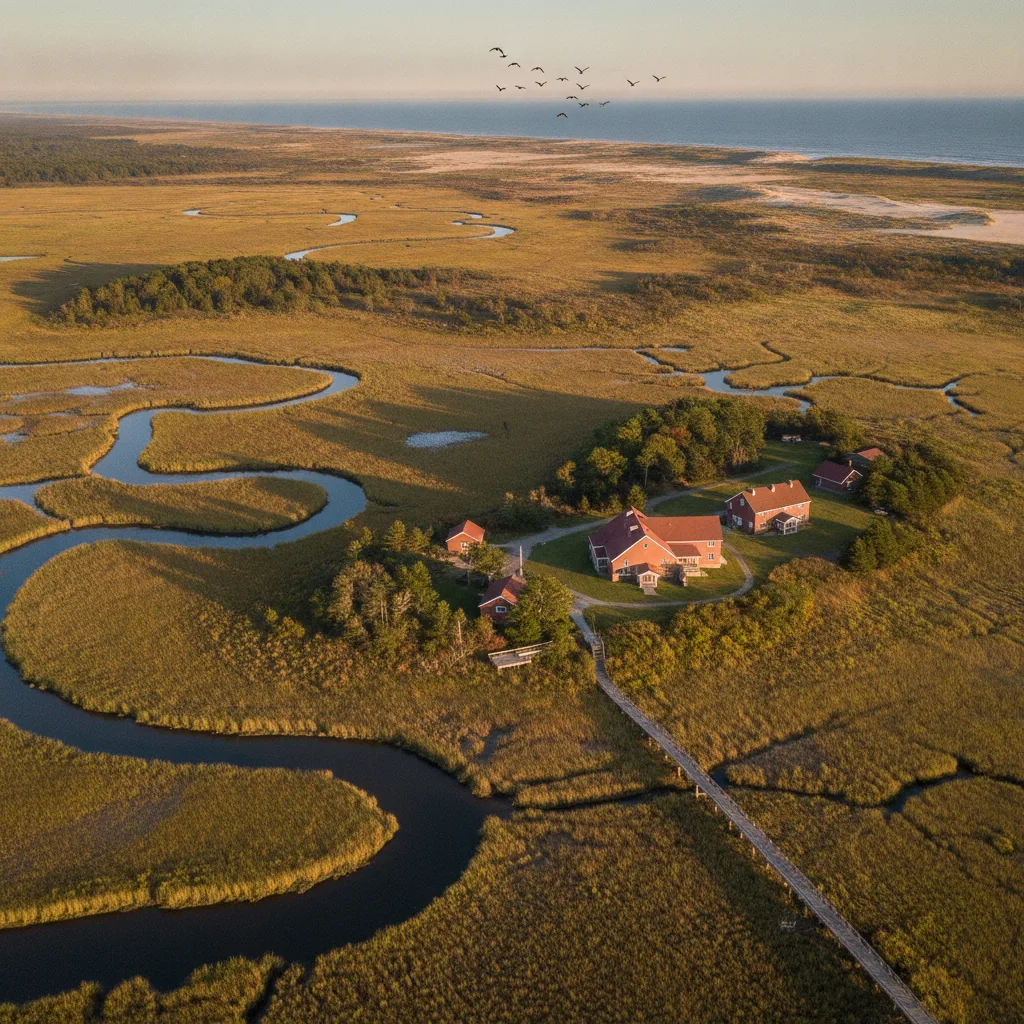
Delaware National Estuarine Research Reserve Travel Guide — Delaware
Our Delaware National Estuarine Research Reserve guide covers practical planning for the Delaware National Estuarine Research Reserve Delaware — best time to visit, getting there, and what to do on the ground.
For those seeking an authentic encounter with the Mid-Atlantic's coastal ecosystems, the Delaware National Estuarine Research Reserve Delaware (DNERR) stands as an unparalleled destination. We, the Roam States editorial team, recognize this protected area as a critical hub for research, education, and stewardship of the Delaware Bay estuary. Our team consistently recommends it for travelers keen to observe nature in its rawest form and engage with vital environmental learning opportunities. This expansive reserve, encompassing both the St. Jones Reserve and the Blackbird Creek Reserve, offers a window into the dynamic interplay of freshwater and saltwater habitats that define the region. It's a place where the rhythms of the tides orchestrate a spectacular display of wildlife and a testament to dedicated conservation efforts.
Why Visit Delaware National Estuarine Research Reserve
Visiting the Delaware National Estuarine Research Reserve offers a uniquely rewarding experience for travelers drawn to the natural world. Our team considers it a genuinely world-class destination, not for dramatic mountain vistas or bustling cityscapes, but for its profound ecological significance. This reserve protects and studies estuarine systems, representing a vital partnership between the State of Delaware and the National Oceanic and Atmospheric Administration (NOAA).
One of the primary draws is the reserve's role as a critical habitat for an astonishing array of wildlife. It boasts the largest spawning population of horseshoe crabs in the world, a truly unmatched spectacle visible from the shores of Delaware Bay each spring. This natural phenomenon, typically peaking in late May, also fuels the second-largest concentration of migrating shorebirds in the Western Hemisphere, as countless species stop to refuel on the horseshoe crab eggs during their arduous journey to the Arctic. Birders and wildlife photographers will find this period particularly captivating, offering unparalleled opportunities for observation.
Beyond the seasonal migrations, the Delaware National Estuarine Research Reserve serves as a living laboratory. Its mission is deeply rooted in preserving and managing natural resources through coastal stewardship, providing a crucial site for ongoing research, education, and outreach programs. Visitors can engage with hands-on interactive exhibits at the St. Jones Center for Estuarine Studies, gaining scientific context for the complex estuarine ecosystem. The reserve's commitment to understanding and adapting to environmental changes, such as sea level rise and wetland restoration, makes a visit here not only scenic but also profoundly educational. We believe that by experiencing places like the DNERR, travelers gain a deeper appreciation for the delicate balance of our coastal environments and the importance of their protection.
Who It's Best For
The Delaware National Estuarine Research Reserve caters to a specific type of traveler, and our team is confident in identifying its ideal visitors. This is not a destination for those seeking high-octane thrills, resort-style amenities, or dramatic, rugged landscapes. Instead, it is perfectly suited for individuals and families with a genuine interest in nature, ecology, and environmental education.
**Wildlife Watchers and Birders:** Without a doubt, this reserve is a top-tier destination for birding and wildlife observation. During the spring shorebird migration, particularly in late May, the sheer volume of birds and spawning horseshoe crabs is a globally significant event. If you arrive with binoculars and a telephoto lens, you'll be rewarded with incredible sights of species like red knots, sanderlings, and ruddy turnstones feeding along the mudflats and salt marshes.
**Nature Enthusiasts and Photographers:** Those who appreciate serene landscapes, tidal creeks, and the subtle beauty of marsh environments will find endless opportunities for quiet contemplation and stunning photography. The boardwalks and trails provide accessible vantage points to capture the unique flora and fauna of the estuary.
**Families with Curious Children:** The St. Jones Center for Estuarine Studies offers engaging, hands-on exhibits and interactive activities designed to educate and entertain children of all ages. Programs often include fish tanks showcasing local aquatic life and demonstrations of water testing machinery, making learning about estuaries fun and accessible. Many of the reserve's public programs are free and require pre-registration, offering excellent educational outings.
**Paddlers and Kayakers:** With its network of tidal creeks and open water habitats, the reserve provides excellent opportunities for paddling and boating, allowing for an intimate exploration of the salt marsh and mudflats. The Blackbird Creek Reserve, in particular, features a canoe and kayak launch.
**Environmental Learners and Citizen Scientists:** For those interested in the scientific and stewardship aspects of estuaries, the DNERR's focus on research and monitoring offers a unique educational component. Visitors can learn about ongoing studies and even participate in citizen monitoring programs.
Conversely, if your travel priorities lean towards challenging hikes with significant elevation changes, swimming at ocean beaches, or seeking a bustling resort atmosphere, we would recommend exploring other areas of Delaware, such as Cape Henlopen State Park or the lively Rehoboth Beach Boardwalk.
Getting There & Parking
Navigating to the Delaware National Estuarine Research Reserve is straightforward, though a personal vehicle is essential as direct public transportation options are limited. The reserve comprises two main components: the St. Jones Reserve, located near Dover, and the Blackbird Creek Reserve, situated in southern New Castle County near Townsend.
How to Get There
For the St. Jones Reserve, which houses the primary visitor center, we recommend following these directions: from either the north or south, take Delaware Route 1/113 to Exit 91 for Route 9, just south of Dover Air Force Base. Turn onto Route 9, heading towards Kitts Hummock/Little Creek. Then, take a right onto Kitts Hummock Road and follow it to the St. Jones Reserve entrance, which will be on your right, past the John Dickinson Mansion. Continue on the lane for approximately one mile to reach the St. Jones Reserve Center.
To reach the Blackbird Creek Reserve, located upstream from Delaware Route 9 at Taylors Bridge in Townsend, the directions vary slightly depending on your starting point. From the north, take Delaware State Route 1 South (portions toll) to Exit 142 towards Mt. Pleasant/St. Georges. Merge onto Pole Bridge Road, then turn left onto DuPont Parkway South/US-13 South for about 6.5 miles. Turn left onto Blackbird Landing Road (at a traffic light) and travel approximately two miles; the Blackbird Creek Reserve parking area will be on your left. From the south, take Delaware State Route 1 North (portions toll) from Dover to Exit 119 towards North Smyrna/Townsend. At the end of the ramp, turn left onto Route 13 North for about 1.9 miles, then bear right onto Anchor Inn Road (behind the former gas station). Take the first right onto Gum Bush Road, then bear left onto Blackbird Landing Road and follow for approximately 1.5 miles. The Blackbird Creek Reserve parking area will be on your right.
Parking
Ample parking is available at both components of the Delaware National Estuarine Research Reserve. At the St. Jones Reserve, visitors will find a dedicated parking area at the St. Jones Center for Estuarine Studies, which serves as the main access point for the trails and exhibits. Similarly, the Blackbird Creek Reserve offers a designated parking area to accommodate visitors accessing its trails and canoe/kayak launch. Both locations are free to enter, and parking is complimentary. We always advise arriving earlier in the day, especially during peak seasons or for special events, to ensure the best parking availability and to enjoy the tranquility of the reserve before potential crowds.
Top Things to Do
The Delaware National Estuarine Research Reserve offers a diverse range of activities centered around nature observation, education, and peaceful exploration. Our team has curated the top things to do at Delaware National Estuarine Research Reserve to help you make the most of your visit.
One of the most rewarding experiences at the Delaware National Estuarine Research Reserve is immersing yourself in the rich estuarine environment. Begin your visit at the **St. Jones Center for Estuarine Studies**, the reserve's visitor center. Here, you'll find engaging, hands-on interactive exhibits that delve into the local wildlife, the science of estuaries, and the critical work of water testing and restoration. It's an excellent starting point for all ages, providing valuable context before venturing out onto the trails. The center is open Monday through Friday from 8:00 a.m. to 4:30 p.m., though it is closed on official State holidays.
**Explore the Trails:** Both the St. Jones Reserve and the Blackbird Creek Reserve offer excellent opportunities for hiking and nature walks. At the St. Jones Reserve, a scenic two-mile nature trail, part of the St. Jones Greenway, awaits. This trail includes a picturesque quarter-mile boardwalk that extends over the salt marsh, offering stunning views and connecting to the adjacent Ted Harvey Wildlife Management Area. The trail is largely boardwalk, making it accessible, though comfortable footwear and bug spray are highly recommended, especially during warmer months. The Blackbird Creek Reserve, located further north, boasts several miles of trails that wind through uplands and along the marsh, providing a different perspective on the estuarine landscape. These trails are open from dawn to dusk, seven days a week, and are free of charge.
**Wildlife Observation and Photography:** The Delaware National Estuarine Research Reserve is a haven for wildlife. Keep an eye out for diverse bird species, especially during the spring and fall migrations when thousands of shorebirds and waterfowl pass through. The reserve is particularly famous for its horseshoe crab spawning event in late May, which attracts a massive congregation of migratory birds. You might also spot various finfish, blue crabs, and other estuarine creatures. Paddling through the tidal creeks offers a unique, up-close perspective for wildlife viewing.
**Participate in Educational Programs:** The DNERR education team regularly hosts a variety of free public programs for all ages, focusing on the wonders of the estuary. These can include story times, boat trips on the St. Jones River, estuary-themed bingo nights, tree identification workshops, and even events like meteor shower watch parties. Pre-registration is typically required, so we advise checking the reserve's calendar of events on the Delaware DNREC website (www.de.gov/dnerrprograms) in advance of your visit.
**Paddling and Kayaking:** For a more active exploration, consider bringing your canoe or kayak. The Blackbird Creek Reserve offers a convenient launch point, allowing you to paddle through the serene tidal creeks and experience the estuary from the water. This is an exceptional way to observe the salt marsh and mudflats, offering a peaceful and immersive experience. If you are interested in coastal ecology and wish to delve deeper into the region's natural history, we also recommend exploring other areas of the state, such as Cape Henlopen State Park, which offers additional paddling opportunities.
These things to do at Delaware National Estuarine Research Reserve provide a comprehensive way to engage with this vital and beautiful protected area.
Best Time to Visit
Timing your visit to the Delaware National Estuarine Research Reserve can significantly enhance your experience, depending on your primary interests. Our team has identified key periods that offer distinct advantages for different types of travelers.
**Late Spring (Mid-May to Early June):** This is arguably the most spectacular time to visit, especially for wildlife enthusiasts and photographers. The Delaware Bay hosts the world's largest horseshoe crab spawning event during this period, typically peaking from May 12-30. This incredible natural phenomenon attracts tens of thousands of migratory shorebirds, making it the second-largest concentration in the Western Hemisphere. Witnessing these birds feast on horseshoe crab eggs is a truly unforgettable sight. We highly recommend timing your visit for late May if possible, and checking the reserve's interpretive program schedule, as ranger-led programs can add significant depth to the experience. Keep in mind that high tides during the full and new moons are the best times to observe horseshoe crab spawning.
**Spring (March to May) and Fall (September to November):** These shoulder seasons offer mild temperatures, fewer crowds, and beautiful scenery, making them ideal for general sightseeing, hiking, and enjoying the tranquility of the reserve. In spring, you'll witness the landscape awakening with new growth, while fall brings stunning foliage and continued opportunities for bird migration. The comfortable weather is perfect for extended walks on the trails and exploring the visitor center without the intensity of summer heat or the chill of winter. For broader travel in the state, these periods are also excellent for visiting other natural areas like Bombay Hook National Wildlife Refuge for birding.
**Summer (June to August):** While warmer and potentially more humid, summer still offers opportunities for exploration. The trails are open, and the estuary is vibrant with life. However, be prepared for higher temperatures and more insects, and remember to bring bug spray. This season is excellent for water-based activities like kayaking and for families enjoying the educational programs, though pre-registration is often required. If you plan to visit the Delaware beaches during this time, consider combining your trip with a quieter nature escape to the reserve.
**Winter (December to February):** Winter at the reserve is generally quieter, with fewer visitors. While some migratory birds may still be present, the overall wildlife activity might be less pronounced than in spring or fall. It can be a peaceful time for solitary walks, but be prepared for colder temperatures. The St. Jones Center for Estuarine Studies remains open on weekdays during state business hours.
Ultimately, the best time to visit depends on what you hope to experience. For peak wildlife spectacles, late spring is unmatched. For comfortable exploration and fewer crowds, spring and fall are excellent choices.
Where to Stay Nearby
While the Delaware National Estuarine Research Reserve offers a profound connection to nature, it does not provide on-site lodging or camping facilities directly within its protected boundaries. Therefore, our team recommends looking for accommodations in the nearby city of Dover, which serves as a convenient base for exploring the reserve and other attractions in central Delaware.
Dover, being the state capital, offers a wide array of lodging options to suit various preferences and budgets. Many hotels in Dover are located near major highways, cultural venues, and shopping centers, providing easy access to the St. Jones Reserve, which is only about six miles southeast of the city. When considering Delaware National Estuarine Research Reserve lodging, you'll find a selection of reputable brands:
- **Hilton Garden Inn Dover:** This hotel consistently receives high guest ratings and offers amenities such as a bar and free parking. It's a solid choice for those seeking comfort and reliability.
- **Home2 Suites by Hilton Dover:** Ideal for extended stays or families, Home2 Suites offers modern studios with kitchenettes and pull-out couches. It also features a gym, a games room, and an indoor pool.
- **Hampton Inn Dover:** A popular choice for both business and leisure travelers, the Hampton Inn offers complimentary breakfast, free WiFi, and free parking.
- **Comfort Inn & Suites Dover near Speedway:** With a strong guest rating, this budget-friendly option is family-friendly, offering amenities like free cribs and an indoor heated pool. It's conveniently located near the Dover Motor Speedway.
- **Microtel Inn & Suites by Wyndham Dover:** Another budget-friendly choice, the Microtel Inn & Suites provides a clean and comfortable environment, often with complimentary breakfast and free parking.
- **Bally's Dover Casino Resort:** For those seeking entertainment and a full-service experience, Bally's Dover offers a casino, multiple restaurants, and various amenities, including a spa and indoor pool. It's located within the grounds of the Dover International Speedway.
- **Fairfield Inn & Suites by Marriott Dover:** This hotel provides budget-friendly comfort with free breakfast and convenient in-room amenities, located near the Delaware Agricultural Museum.
Many of these hotels offer accessible parking and ADA-compliant rooms, and amenities can vary, so we always recommend confirming details directly before booking your stay. For those interested in camping, while not available directly at the reserve, several excellent state parks in Delaware offer RV and tent camping, cabins, and cottages. Options include Delaware Seashore State Park, Cape Henlopen State Park, Killens Pond State Park, Lums Pond State Park, and Trap Pond State Park, all within a reasonable drive and offering their own unique natural attractions.
Sample 2-Day Itinerary
To help you maximize your visit to the Delaware National Estuarine Research Reserve and the surrounding area, our team has crafted a sample 2-day itinerary. This plan balances immersive nature experiences with nearby cultural and historical attractions, ensuring a comprehensive trip to central Delaware.
Day 1: Estuarine Immersion at St. Jones Reserve
**Morning (9:00 AM - 12:00 PM):** Begin your day at the **St. Jones Center for Estuarine Studies** (818 Kitts Hummock Rd, Dover, DE 19901). The visitor center opens at 8:00 a.m. on weekdays, providing an excellent opportunity to explore the interactive exhibits and learn about the Delaware Bay estuary before the trails. Engage with the hands-on displays, observe the fish tanks, and gain a foundational understanding of the reserve's research and stewardship efforts.
**Lunch (12:00 PM - 1:00 PM):** Pack a picnic to enjoy at one of the designated areas at the St. Jones Reserve, or head back towards Dover for a casual meal. There are various local eateries in Dover offering quick and easy options.
**Afternoon (1:00 PM - 4:00 PM):** Lace up your comfortable shoes and hit the **St. Jones Reserve nature trail**. This two-mile roundtrip path features a picturesque quarter-mile boardwalk winding over the salt marsh. Take your time to observe the unique flora and fauna, listen for the calls of marsh birds, and appreciate the serene estuarine landscape. Remember to bring bug spray, especially during warmer months.
**Late Afternoon (4:00 PM - 6:00 PM):** Depending on the season, consider a short drive to the nearby Ted Harvey Wildlife Management Area, which connects with the St. Jones Reserve trail. Alternatively, if you're interested in more birding, Bombay Hook National Wildlife Refuge is a short drive north and offers additional observation opportunities, though it would require more time. Head back to your lodging in Dover to refresh.
**Evening:** Enjoy dinner at one of Dover's many restaurants. For entertainment, consider an evening at Bally's Dover Casino Resort, which offers gaming, dining, and live entertainment options.
Day 2: Blackbird Creek & Dover's Heritage
**Morning (9:00 AM - 12:00 PM):** Drive north to the **Blackbird Creek Reserve** in Townsend. This component of the DNERR offers a different estuarine experience, with several miles of trails winding through freshwater wetlands, ponds, and forested uplands. If you have a canoe or kayak, this is an excellent spot to launch and explore the tranquil waters of Blackbird Creek. The grounds are open from dawn to dusk and are free to enter.
**Lunch (12:00 PM - 1:00 PM):** Grab lunch in Townsend or return towards Dover, perhaps stopping at a local deli or cafe.
**Afternoon (1:00 PM - 4:30 PM):** Immerse yourself in Dover's rich history and culture. Visit the **First State Heritage Park**, which connects several historic sites by a walking loop. Explore the Old State House, built in 1792, and the John Dickinson Plantation, home to one of the American Revolution's founding fathers. The Air Mobility Command Museum, located at Dover Air Force Base, is another fascinating stop for aviation enthusiasts, offering a chance to explore historic aircraft.
**Late Afternoon (4:30 PM - 6:00 PM):** If time permits, visit the **Biggs Museum of American Art** to appreciate a collection spanning folk art to modern abstraction, housed in a restored du Pont mansion. Alternatively, enjoy a leisurely stroll around Silver Lake Park in downtown Dover.
**Evening:** Conclude your trip with a final dinner in Dover, perhaps trying a different local favorite. For those interested in planning future trips to the region, remember to explore our Plan Your US Trip guide and consider a USA Road Trip Planner for extended adventures.
Last updated: 2026-07-13 by the Roam States team.