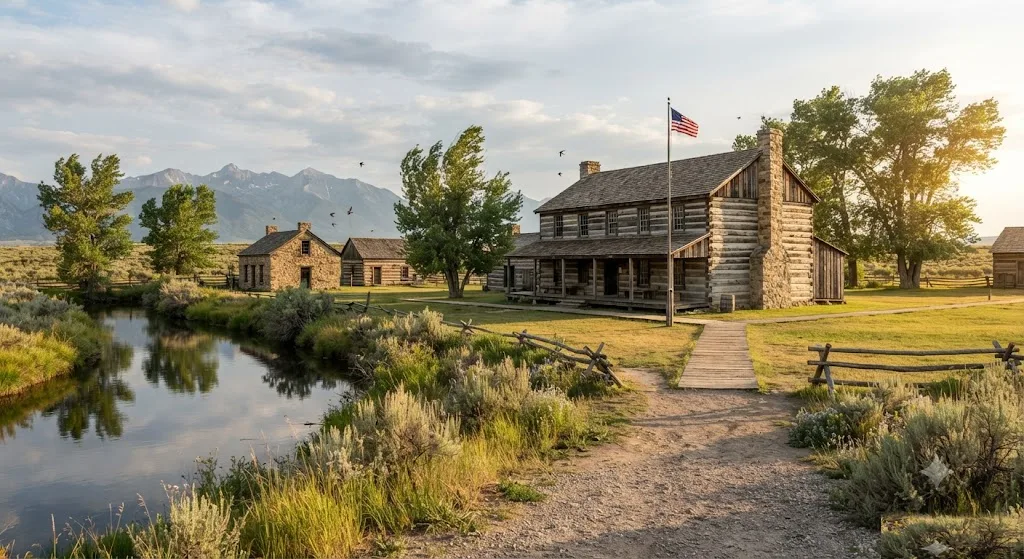
Fort Bridger State Historic Site Travel Guide — Wyoming
Our Fort Bridger State Historic Site guide covers practical planning for Fort Bridger State Historic Site Wyoming — best time to visit, getting there, and what to do on the ground. We’re here to cut through the generic travel advice and give you the definitive Roam States take on this fascinating corner of Wyoming history.
For those of us at Roam States, few places encapsulate the rugged spirit and complex history of the American West quite like the Fort Bridger State Historic Site Wyoming. This isn't just another stop on a road trip; it's a living, breathing testament to the frontiersmen, trappers, soldiers, and pioneers who shaped this land. From its origins as a bustling fur trading post established by the legendary Jim Bridger and Louis Vasquez in 1843, through its pivotal role as a military outpost guarding the Overland Trail, and now as a vibrant historic site, Fort Bridger offers a rich tapestry of stories. Our team has explored every corner, dug into its past, and gathered the most current 2026 information to ensure your visit is as enriching and seamless as possible.
Why Visit Fort Bridger State Historic Site
Visiting Fort Bridger State Historic Site isn't just about ticking another landmark off a list; it's about stepping directly into the currents of American history. We believe it offers a unique, tangible connection to the past that few other sites can match. Here, you can walk the same ground as mountain men, emigrants on the Oregon, California, and Mormon Trails, and soldiers who once garrisoned the fort. The meticulously reconstructed and preserved buildings, from the trading post to the barracks, provide an immersive experience that transports you back to the 19th century. It’s a place where the echoes of wagon trains and the bartering of furs still resonate.
Beyond the historical immersion, the site offers a serene and picturesque setting in southwestern Wyoming. It's a chance to slow down, explore at your own pace, and reflect on the immense challenges and triumphs of those who came before. For history buffs, families, or anyone with a curiosity about the frontier, Fort Bridger provides an unparalleled educational and inspiring journey.
Is It Worth Visiting?
Without a doubt, our team confidently asserts that Fort Bridger State Historic Site is worth visiting. While it might not have the dramatic landscapes of Yellowstone National Park or Grand Teton National Park, its value lies in its profound historical significance and the quality of its interpretive experiences. If you're pondering, "is Fort Bridger State Historic Site worth visiting?", consider what you gain: a deep dive into a crucial period of westward expansion, presented through authentic structures, artifacts, and engaging exhibits.
We find that the site offers a compelling narrative that fills in the gaps left by more generalized history lessons. It provides context for the broader story of Wyoming and the American West, making it an essential stop for anyone truly interested in understanding the region. The annual Mountain Man Rendezvous alone makes it a destination-worthy event, drawing thousands each year to celebrate the fur trade era. For those seeking genuine historical insight rather than just scenic views, the answer to "is Fort Bridger State Historic Site worth visiting" is a resounding yes.
Who It's Best For
Our team finds that Fort Bridger State Historic Site appeals to a broad spectrum of travelers, though some will undoubtedly find it more captivating than others. It's an absolute must for **history enthusiasts**, particularly those with an interest in the American fur trade, westward expansion, military history, and the various emigrant trails. The depth of historical detail and the authenticity of the reconstructions will be a true delight.
**Families with school-aged children** will also find Fort Bridger highly engaging. The open spaces, the ability to explore different buildings, and the interactive elements (especially during special events) make history come alive in a way that textbooks rarely can. It’s a fantastic educational outing. **Road trippers** traversing I-80 across Wyoming will find it a perfect, enriching break from the highway, offering a fascinating glimpse into the past just a short detour away. Finally, **anyone seeking a quieter, more reflective historical experience** away from larger crowds will appreciate the serene atmosphere and the opportunity for unhurried exploration.
Getting There & Parking
Navigating to Fort Bridger State Historic Site is straightforward, as it's conveniently located just off Interstate 80 in southwestern Wyoming. Our team recommends taking Exit 34 from I-80, which leads directly to the site. The signage is clear, ensuring an easy approach whether you're coming from the east (e.g., Cheyenne, Laramie) or the west (e.g., Salt Lake City). For those wondering how to get to Fort Bridger State Historic Site, it's approximately 40 miles east of Evanston, Wyoming, and about 90 miles west of Rock Springs, Wyoming.
Once you arrive, you'll find ample free parking available on-site. There are designated parking areas for cars, RVs, and even buses, making it accessible for all types of vehicles. We’ve never encountered issues with overcrowding in the parking lots, even during busier periods, so you can rest assured your vehicle will be safely accommodated while you explore. The site is well-maintained, and the short drive from the interstate makes the question of how to get to Fort Bridger State Historic Site a simple one.
Top Things to Do
When planning your visit, you'll find a wealth of things to do at Fort Bridger State Historic Site, offering a comprehensive look into its multifaceted past. Our team always recommends starting at the **Visitor Center and Museum**, which houses an impressive collection of artifacts, interpretive displays, and a short film that provides crucial context for the entire site. It’s the best way to orient yourself before venturing out.
From there, immerse yourself in the **reconstructed 1840s fur trading post**. You can explore the trading house, blacksmith shop, and living quarters, imagining the bustling activity of mountain men bartering for supplies. This area truly brings the site's origins to life. Next, wander through the **buildings of the military post era**, including the barracks, officers' quarters, commissary, and guardhouse. Each structure offers insights into the daily lives of soldiers stationed here during the mid-to-late 19th century.
Don't miss the **Mormon Battalion Winter Quarters**, a poignant reminder of the Latter-day Saints' westward migration. The site also features several **historic cemeteries**, offering a quiet moment of reflection on those who lived and died at Fort Bridger. For those visiting over Labor Day Weekend, the **annual Fort Bridger Mountain Man Rendezvous** (September 4-7, 2026) is an absolute highlight, transforming the grounds into a vibrant encampment with re-enactors, period crafts, and demonstrations. This event is one of the premier things to do in Fort Bridger and draws visitors from across the country. Throughout the year, the expansive grounds are perfect for a leisurely stroll, allowing you to appreciate the serene beauty of the Bear River Valley. There are so many engaging things to do at Fort Bridger State Historic Site that you can easily fill a full day or more.
Best Time to Visit
Our team has found that the best time to visit Fort Bridger State Historic Site largely depends on your interests, but generally, the **late spring through early fall (May to September)** offers the most favorable conditions and access. During these months, all the historic buildings, including the museum, are typically open daily from 9 AM to 5 PM. The weather is usually pleasant, making it ideal for exploring the outdoor grounds and walking between the various structures.
If your primary goal is to experience the vibrant **Mountain Man Rendezvous**, then Labor Day Weekend (September 4-7, 2026) is the undisputed best time to visit. This event is truly spectacular, but be prepared for larger crowds and plan your accommodation well in advance. For those seeking a quieter experience without missing out on full access, we recommend visiting in May, early June, or late September, when the weather is still agreeable but the peak summer crowds have not yet arrived or have dispersed. While the grounds remain accessible year-round, the museum and many buildings are closed from October 1 to May 14, limiting the interpretive experience during the colder months.
Where to Stay Nearby
When considering Fort Bridger State Historic Site lodging, you'll find a range of options in the surrounding communities, catering to different preferences and budgets. While there isn't lodging directly on the historic site itself (beyond a seasonal campground, which we'll discuss), several nearby towns offer convenient access. Our team recommends looking at **Lyman, Mountain View, and Evanston** for the closest amenities.
In **Lyman and Mountain View**, located just a few miles from Fort Bridger, you'll find a selection of budget-friendly motels and a few locally owned establishments. These are excellent choices for practical, no-frills Fort Bridger State Historic Site lodging. For a wider array of choices, including chain hotels and more dining options, **Evanston**, about 40 miles west on I-80, is your best bet. Evanston offers several well-known hotel brands, making it a reliable base camp, especially if you plan to explore other attractions in the region.
For those who prefer camping, the Fort Bridger State Historic Site does offer **seasonal campsites** with basic amenities, providing a unique opportunity to stay right on the historic grounds. Additionally, nearby state parks and national forests offer more rustic camping experiences. We always advise booking Fort Bridger State Historic Site lodging, especially during the Mountain Man Rendezvous, as accommodations fill up quickly in the area.
Sample 2-Day Itinerary
To truly immerse yourselves in the history and atmosphere of Fort Bridger State Historic Site and its surroundings, our team recommends a two-day itinerary. This allows for a comprehensive exploration without feeling rushed.
Day 1: Fort Bridger's Past Unveiled
- **Morning (9:00 AM - 1:00 PM):** Arrive at Fort Bridger State Historic Site. Head directly to the Visitor Center and Museum to watch the introductory film and explore the exhibits. This will provide essential context. Afterwards, dedicate your time to the 1840s Fur Trading Post area, exploring the reconstructed buildings and imagining life during the mountain man era.
- **Lunch (1:00 PM - 2:00 PM):** Pack a picnic to enjoy on the grounds, or grab a quick bite in nearby Mountain View or Lyman.
- **Afternoon (2:00 PM - 5:00 PM):** Focus on the military post era. Explore the barracks, officers' quarters, commissary, and guardhouse. Visit the Mormon Battalion Winter Quarters and the historic cemeteries. Take your time to read all the interpretive signs and truly absorb the history.
- **Evening:** Check into your Fort Bridger State Historic Site lodging in Lyman, Mountain View, or Evanston. Enjoy dinner at a local restaurant.
Day 2: Local Exploration & Scenic Drives
- **Morning (9:00 AM - 12:00 PM):** If you didn't get to everything yesterday, revisit your favorite parts of the Fort Bridger State Historic Site or explore any areas you missed. Alternatively, consider a scenic drive. Head north towards the Uinta Mountains for beautiful views and potential wildlife spotting.
- **Lunch (12:00 PM - 1:00 PM):** Enjoy lunch in one of the local towns.
- **Afternoon (1:00 PM - 5:00 PM):** Depending on your onward journey, you could:
- Head west to explore **Evanston**, a charming railroad town with historic architecture.
- For a longer drive, consider starting your journey towards Yellowstone National Park or Grand Teton National Park, both roughly 3-4 hours away, making Fort Bridger a good first or last historical stop on a Wyoming adventure.
- Explore some of the smaller state parks or recreation areas in the vicinity for outdoor activities like fishing or hiking.
- **Evening:** Depart or enjoy a final evening in the area.
Last updated: 2026-07-08 by the Roam States team.