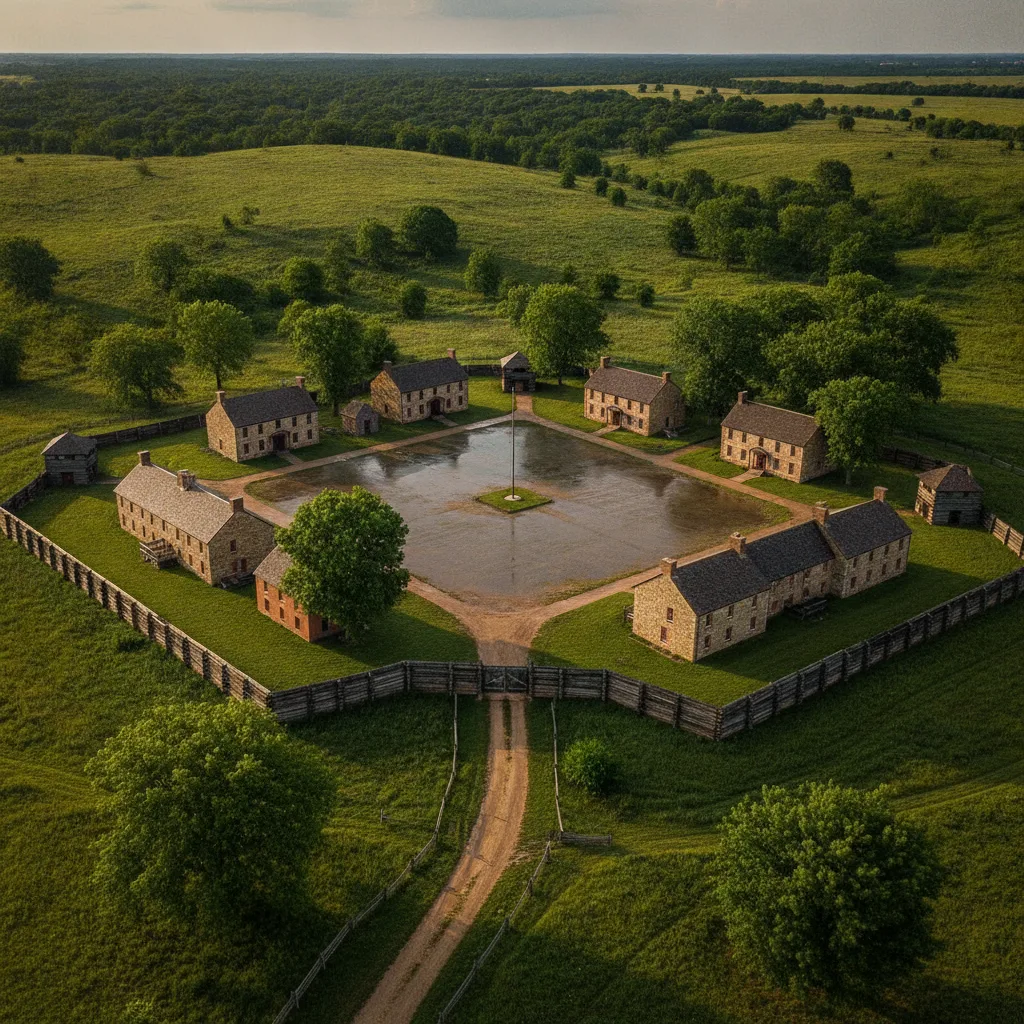
Fort Scott National Historic Site Travel Guide — Kansas
Welcome to our comprehensive guide for planning your visit to Fort Scott National Historic Site Kansas. Our team has meticulously compiled practical information, covering everything from the best time to visit and how to get there, to what to do on the ground. This preserved 19th-century military post in Fort Scott played a major role in 'Bleeding Kansas' and the early Civil War, including being one of the first places where Black soldiers served in the Union Army. Visitors can explore the historic buildings and parade grounds, immersing themselves in a pivotal era of American history.
Our Expert Verdict
As independent US travel authorities, we consider Fort Scott National Historic Site a truly essential stop for anyone interested in American history, particularly the tumultuous years leading up to and during the Civil War. Unlike many sites that offer only glimpses, Fort Scott provides a remarkably complete picture of a frontier military post and its evolving role in national events. The restored buildings, living history programs, and the sheer depth of the stories told here—from westward expansion to the struggle for freedom—are genuinely compelling. We especially appreciate the focus on the site's role in 'Bleeding Kansas' and the early integration of Black soldiers into the Union Army, offering a nuanced and vital perspective often overlooked. It's not just a collection of old buildings; it's a living classroom that resonates with the echoes of a nation in transition.
Why Visit Fort Scott National Historic Site
Visiting Fort Scott National Historic Site offers a profound journey into a critical period of American history. We believe it's a must-see for its unique preservation of a 19th-century military post that witnessed the raw struggles of westward expansion, the intense ideological battles of 'Bleeding Kansas,' and the early days of the Civil War. This site stands as a testament to the complex forces that shaped the nation, providing an unparalleled opportunity to walk through history. The fort's role as one of the first places where Black soldiers served in the Union Army adds another layer of profound historical significance, highlighting the enduring struggle for freedom and equality. We find the combination of restored structures, period furnishings, and engaging interpretive exhibits brings the past to life in a way few other places can. You're not just reading about history here; you're experiencing it firsthand.
Who It's Best For
Fort Scott National Historic Site is ideal for history buffs, Civil War enthusiasts, and anyone with an interest in the socio-political landscape of 19th-century America. Families with school-aged children will find the living history programs and Junior Ranger activities particularly engaging, making complex historical topics accessible and exciting. Educators looking for immersive field trip opportunities will appreciate the detailed exhibits and educational programs offered. We also recommend it for travelers seeking a deeper understanding of Kansas's unique role in shaping the nation, especially its connection to the "Bleeding Kansas" era and the Frontier Military Historic Byway. It’s a destination that rewards curious minds, offering layers of discovery for those who take the time to explore.
Getting There & Parking
Fort Scott National Historic Site is conveniently located in downtown Fort Scott, Kansas, at 199 Old Fort Blvd, Fort Scott, KS 66701. The city is situated at the intersection of U.S. Highways 69 and 54, making it easily accessible by car. For those traveling from major metropolitan areas, Fort Scott is approximately 90 miles south of Kansas City and about 60 miles northwest of Joplin, Missouri. Signs directing visitors to Fort Scott are posted on US-69 for those approaching from the north and south, and on US-54 for those coming from the east and west.
When it comes to Fort Scott National Historic Site parking, visitors will find a main parking lot at the south entrance of the historic site. This lot includes designated parking spaces for guests with disabilities conveniently located near the Visitor Center. We recommend arriving early, especially during peak season or special event weekends, to secure the best parking spots. The site itself is largely pedestrian-friendly, so once you've parked, you'll be able to explore most of the fort on foot. There are no specific reservation requirements for general admission or parking at Fort Scott National Historic Site.
For those wondering how to get to Fort Scott National Historic Site using GPS, the coordinates are 37.843588, -94.704292. The Visitor Center, located within the Post Hospital building, serves as the entry point where you can orient yourself, gather information, and pick up a park brochure.
Top Things to Do
There are numerous things to do at Fort Scott National Historic Site, ensuring a rich and engaging experience for every visitor. Our team always recommends starting at the Visitor Center, housed in the historic Post Hospital. Here, you can watch a 23-minute orientation film that provides an excellent introduction to the site's history, from its establishment in 1842 to its pivotal role in the Civil War.
Once oriented, immerse yourself in the past by taking a self-guided tour through the 20 preserved historic structures, including eleven original buildings and several reconstructions built on original foundations. Explore officers' quarters, barracks, and the hospital to experience daily life at the fort. Don't miss the guardhouse, quartermaster storehouse, and the unique architecture of the remaining fort buildings. An audio-visual program and exterior and interior exhibits further guide your journey, telling the stories of soldiers, settlers, and abolitionists.
To truly bring the history to life, attend a living history program or demonstration. Rangers and reenactors frequently conduct musket drills, blacksmithing demonstrations, and period storytelling, especially during special events like the Annual Civil War Encampment in April or the Independence Day Celebration in July. These programs offer invaluable insights into the daily routines and challenges faced by those who lived and served at Fort Scott.
Walk the expansive parade ground, the central space where military drills and ceremonies once took place, offering a tangible sense of the fort's historical significance. Beyond the fort's buildings, explore the five acres of restored tallgrass prairie, a short walking trail that takes you through a portion of the landscape that surrounded the original fort.
For families, the Junior Ranger program is an excellent way to engage children with the site's history. Booklets can be picked up at the Visitor Center, offering activities that make learning fun and interactive.
Beyond the historic site itself, there are many things to do in Fort Scott. The city boasts a charming historic downtown, perfect for a leisurely stroll. Consider taking a Historic Self-Guided Driving Tour focusing on the Victorian homes built between 1842 and 1919, with brochures available at the Fort Scott Visitor's Center. The Fort Scott Farmer's Market, held on Saturdays and Tuesdays from April through October, offers a taste of local produce and goods. Other local attractions include the Museum of Creativity and the Gordon Parks History Museum.
For those looking to extend their exploration of Kansas, consider a trip to the Tallgrass Prairie National Preserve, a vital ecosystem preserving a remnant of the vast tallgrass prairie that once covered much of North America. Another fascinating stop is the Hutchinson Cosmosphere, a world-renowned space museum and STEM education center. Both are excellent complements to a visit to Fort Scott National Historic Site.
Best Time to Visit
The best time to visit Fort Scott National Historic Site largely depends on your preferences for weather and crowd levels, as well as interest in special events. We find that spring and autumn offer the most pleasant weather, with mild temperatures that are ideal for exploring the outdoor parade grounds and walking between buildings. Summers can be hot and humid, with a higher chance of thunderstorms, some severe. However, summer also brings more frequent ranger-led programs and living history demonstrations.
For those seeking a quieter experience with fewer crowds, visiting during the shoulder seasons (late spring, early fall) or on weekdays can be beneficial. Winter months are generally mild but can experience periods of cold weather, snowfall, and ice storms.
Special events are a major draw. The Annual Civil War Encampment, typically held in April, features cavalry, infantry, and artillery drills, bringing the fort to life with reenactors. The Independence Day Celebration in July includes artillery demonstrations and guided tours. The 45th Annual Candlelight Tour, scheduled for December 4 and 5, 2026, offers a unique evening experience with reenactors and the fort lit by candle lanterns, though tickets typically go on sale November 1st and reservations are required for this specific event. Always check the official Fort Scott National Historic Site website for the most up-to-date event calendar and operating hours before planning your trip. The park grounds are open daily from a half-hour before sunrise until a half-hour after sunset, while the Visitor Center and exhibit areas generally operate from 8:30 AM to 4:30 PM, Friday through Tuesday.
Where to Stay Nearby
When planning your trip to Fort Scott National Historic Site, securing comfortable and convenient Fort Scott National Historic Site lodging is key. Thankfully, the city of Fort Scott offers several excellent options, ranging from historic charm to modern amenities, all within a short distance of the historic site.
For a unique and highly-rated experience, we recommend The Courtland Hotel & Spa. Guests consistently rate it highly for its wonderful ambiance in a historic building, offering a comfortable and cozy stay. Another strong contender for Fort Scott National Historic Site lodging is the Sleep Inn & Suites Fort Scott, praised for its clean rooms, friendly staff, and great breakfast.
Other reliable options in Fort Scott include the Travelodge by Wyndham Fort Scott and the Super 8 by Wyndham Fort Scott, both offering free breakfast, WiFi, and parking. The Super 8 is also pet-friendly. The Budgetel Inn & Suites Fort Scott provides affordable lodging with amenities like free Wi-Fi, a continental breakfast, and in-room microwaves and refrigerators, and is just a 5-minute drive from the historic site.
While Fort Scott itself doesn't have camping directly at the historic site, nearby Gunn Park offers camping facilities for those who prefer an outdoor experience. For a truly unique stay, consider Happy Ass Farm, which receives excellent guest ratings and provides a different kind of lodging experience.
No matter where you choose to stay near Fort Scott National Historic Site, we advise booking your accommodations in advance, especially if your visit coincides with one of the fort's popular special events or during peak travel seasons, to ensure the best availability and rates.
Sample 2-Day Itinerary
Our team has crafted a sample 2-day itinerary to help you make the most of your visit to Fort Scott National Historic Site and the surrounding area. This plan balances immersive historical exploration with local charm and regional highlights.
Day 1: Immerse in Fort Scott's History
- Morning (8:30 AM - 12:00 PM): Fort Scott National Historic Site Deep Dive
- Begin your day promptly at the Fort Scott National Historic Site Visitor Center. Watch the introductory film to set the historical context.
- Pick up a park brochure and, if traveling with children, the Junior Ranger booklet.
- Embark on a self-guided tour of the fort's 20 historic buildings. Take your time exploring the officers' quarters, barracks, hospital, guardhouse, and quartermaster storehouse. Pay attention to the interpretive exhibits that detail the fort's role in westward expansion, "Bleeding Kansas," and the Civil War.
- If available, join a ranger-led tour for deeper insights and stories.
- Lunch (12:00 PM - 1:00 PM): Local Fare in Downtown Fort Scott
- Head to downtown Fort Scott for lunch at one of the local eateries. Many options are just a short drive from the historic site.
- Afternoon (1:00 PM - 4:30 PM): Living History and Prairie Exploration
- Return to the Fort Scott National Historic Site. Check the daily schedule for any living history demonstrations or special programs. Witnessing a musket drill or blacksmithing demonstration truly brings the fort to life.
- Walk the parade ground, imagining the soldiers who once drilled there.
- Take a leisurely stroll along the short walking trail through the five acres of restored tallgrass prairie, experiencing a glimpse of the frontier landscape.
- Evening: Historic Downtown and Dinner
- Explore the charming historic downtown Fort Scott. Consider a self-guided walk to admire the Victorian architecture.
- Enjoy dinner at a local restaurant.
Day 2: Regional Exploration & Kansas Highlights
- Morning (9:00 AM - 12:00 PM): Fort Scott Local Attractions or Nearby Byway
- Choose between further local exploration or a short drive along the Frontier Military Historic Byway.
- Option A (Local): Visit the Gordon Parks History Museum or the Museum of Creativity in Fort Scott. If it's a market day (Tuesday or Saturday, April-October), check out the Fort Scott Farmer's Market.
- Option B (Byway): Drive a portion of the Frontier Military Historic Byway, which connects Fort Scott with other historical gems like Fort Leavenworth and the John Brown Museum.
- Lunch (12:00 PM - 1:00 PM): On the Road or Back in Fort Scott
- Grab lunch on your way to your next destination or return to Fort Scott for another local meal.
- Afternoon (1:00 PM - 5:00 PM): Iconic Kansas Destinations
- Option 1: Tallgrass Prairie Immersion: Drive west to the Tallgrass Prairie National Preserve. Hike one of the trails and witness the vastness of this unique ecosystem.
- Option 2: Space Exploration: Head to Hutchinson to experience the Hutchinson Cosmosphere, a world-class space museum with artifacts from the US and Russian space programs.
- Option 3: Rock Formations: Venture further west to witness the striking natural beauty of Monument Rocks or Little Jerusalem Badlands State Park.
- Evening: Departure or Extended Stay
- Depending on your chosen afternoon activity, you can either begin your journey home or find lodging in a new location to continue exploring the diverse attractions of Kansas.
FAQ
Fort Scott National Historic Site with kids
Fort Scott National Historic Site is an excellent destination for families with kids. We highly recommend engaging them with the Junior Ranger program, which provides interactive booklets and activities to make learning about history fun. The living history demonstrations, featuring musket drills, blacksmithing, and period storytelling, are particularly captivating for younger visitors, bringing the 19th century to life. Kids can also enjoy exploring the various historic buildings and walking the parade ground, offering ample space to stretch their legs and imagine life as a soldier or settler.
best hotels near Fort Scott National Historic Site
For the best hotels near Fort Scott National Historic Site, our team recommends The Courtland Hotel & Spa for its unique historic charm and high guest ratings. The Sleep Inn & Suites Fort Scott is another top choice, consistently praised for its cleanliness, friendly service, and complimentary breakfast. Other reliable and well-regarded options include the Travelodge by Wyndham Fort Scott and the Super 8 by Wyndham Fort Scott, both offering good value and essential amenities like free WiFi and breakfast.
Fort Scott National Historic Site tips
Our top Fort Scott National Historic Site tips include starting your visit at the Visitor Center to watch the orientation film and pick up a park map and brochure. Allow at least 3-4 hours to fully explore the 20 historic structures and exhibits, especially if you plan to read all the displays. Check the park's official website or call ahead for the schedule of ranger-led tours and living history programs, as these greatly enhance the experience. Wear comfortable walking shoes, as you'll be on your feet exploring the grounds. Lastly, consider visiting during spring or fall for the most pleasant weather.
where to stay near Fort Scott National Historic Site
When deciding where to stay near Fort Scott National Historic Site, you have several convenient choices within Fort Scott itself. The Courtland Hotel & Spa offers a unique and highly-rated experience in a historic setting. For modern comfort, the Sleep Inn & Suites Fort Scott is a popular choice known for its amenities. Budget-friendly options like the Super 8 by Wyndham Fort Scott and Budgetel Inn & Suites are also available, providing essential services like free breakfast and Wi-Fi, and are just a short drive from the fort.
Fort Scott National Historic Site parking
Fort Scott National Historic Site parking is readily available in a main parking lot located at the south entrance of the historic site. This lot includes designated spaces for visitors with disabilities, conveniently close to the Visitor Center. Parking is free, and no reservations are required for general parking. We advise arriving earlier in the day, particularly during weekends or special events, to ensure easy access to parking.
best time to visit Fort Scott National Historic Site
The best time to visit Fort Scott National Historic Site is during the spring (April-May) and autumn (September-October) months. These seasons offer mild temperatures and comfortable conditions for exploring the outdoor areas and walking between buildings. While summer can be hot and humid, it often features more frequent living history programs and special events. Winter visits are generally quieter but can bring cold weather. Always check the park's event calendar for specific dates of interest, such as the Civil War Encampment in April or the Candlelight Tour in December.
Last updated: 2026-07-05 by the Roam States team.