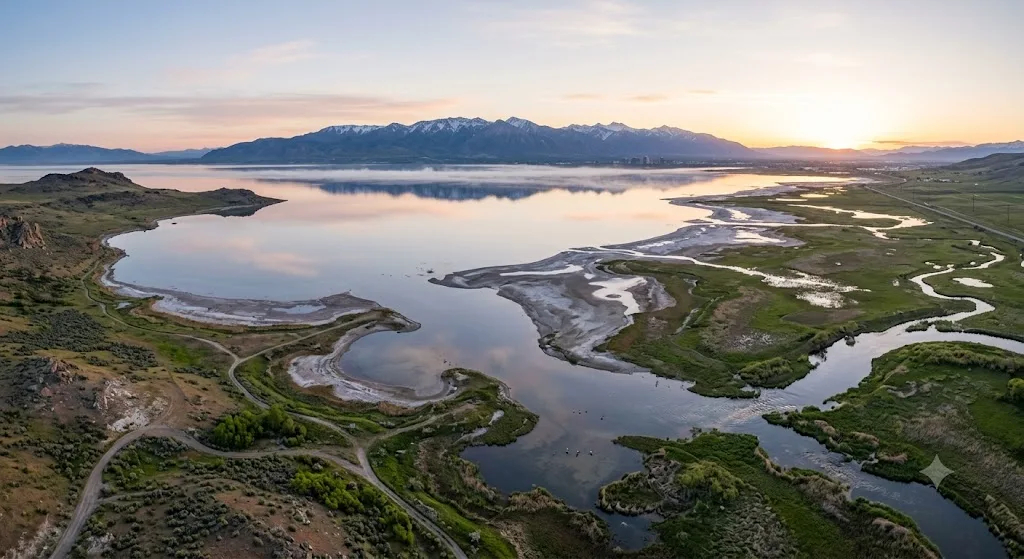
Great Salt Lake Travel Guide — Utah
Welcome to our comprehensive guide to the Great Salt Lake Utah, the largest saltwater lake in the Western Hemisphere. Our team at Roam States has compiled everything you need to know about this unique natural wonder, from its remarkable buoyancy that makes floating effortless to its critical role as a vital migratory bird habitat. Forget generic travel advice; we’re here to provide specific, actionable insights for your visit to one of Utah's most distinctive destinations. Whether you're planning a quick stop or a longer exploration, we’ll help you navigate the Great Salt Lake with confidence, ensuring you experience its unique charm and ecological significance.
Why Visit Great Salt Lake
Is it worth visiting the Great Salt Lake? Our resounding answer is yes, absolutely. This isn't just another body of water; it's a geological marvel and an ecological hotspot unlike any other in the United States. Its hypersaline waters create an unparalleled experience for swimmers, allowing for effortless buoyancy that must be felt to be believed. Beyond the unique swimming, the Great Salt Lake is a globally significant ecosystem, supporting millions of migratory birds that flock to its shores and islands. For nature enthusiasts, photographers, and those seeking a truly distinct natural phenomenon, the Great Salt Lake offers an experience that transcends the ordinary. We believe the opportunity to witness its vast, shimmering expanse and vibrant wildlife makes it an essential stop on any Utah itinerary. It’s a place where the landscape feels almost alien, yet profoundly beautiful, offering a quiet grandeur that captivates all who visit. The sheer scale of the lake, combined with its unique chemistry and biodiversity, makes it a destination that truly stands apart.
Who It's Best For
The Great Salt Lake appeals to a diverse range of travelers, though it particularly shines for those with specific interests. Birdwatchers will find themselves in paradise, especially during migration seasons, as the lake is a crucial stopover for millions of birds. Nature photographers will be captivated by the dramatic skies, reflective waters, and unique salt-crusted landscapes, particularly at sunrise or sunset. Adventurers looking for an unusual experience will relish the chance to float effortlessly in the highly saline water. Families can enjoy the novelty of the lake, though younger children might find the strong smell of the lake (especially on warmer days) and the sticky salt residue a bit challenging. History buffs and those interested in geology will appreciate the stories of the lake's ancient past and its ever-changing present. It’s also an excellent destination for those seeking a peaceful escape from the bustling city, offering vast open spaces and serene vistas. While not a typical "beach vacation" spot, its unique offerings make it an unforgettable destination for those open to its distinct charms.
Getting There & Parking
Understanding how to get to the Great Salt Lake is straightforward, as it’s conveniently located just a short drive from Salt Lake City. The most accessible points are along its eastern and southern shores. For most visitors, the main entry points are the Great Salt Lake State Park and Antelope Island State Park. The drive from downtown Salt Lake City to Great Salt Lake State Park takes approximately 20-30 minutes, heading west on I-80. To reach Antelope Island State Park, you’ll drive north on I-15 from Salt Lake City, then west on Antelope Drive (exit 335), which leads to the causeway connecting to the island. This causeway has its own entrance fee.
Regarding parking, options vary by location. At Great Salt Lake State Park, ample parking is available near the marina and visitor center. For those heading to Antelope Island State Park, parking lots are available at various trailheads and points of interest across the island, including Buffalo Point and Fielding Garr Ranch. We recommend arriving earlier in the day, especially on weekends or holidays, to secure the best spots, particularly at popular trailheads on Antelope Island.
Entry fees are typically charged per vehicle at both state parks. For 2026, the entrance fee for Great Salt Lake State Park is $10 per vehicle for up to 8 people, or $5 for Utah senior citizens. Bicycles and pedestrians are charged $2 per person. Antelope Island State Park, a must-visit for a more immersive experience, has an entrance fee of $15 per vehicle for up to 8 people for day use in 2026, with a reduced rate of $10 for seniors (65 years of age) and $3 for bicycles and pedestrians. These fees contribute to the maintenance and preservation of these unique natural areas. We advise checking the official Utah State Parks website or Visit Utah for the most current information on fees and any potential reservation requirements before your visit, as these can change seasonally or due to special events.
Top Things to Do
When planning your visit, you'll find a surprising array of things to do at Great Salt Lake, catering to various interests. From unique recreational activities to unparalleled wildlife viewing, the lake offers more than just a scenic backdrop.
Float in the Hypersaline Water
One of the most iconic things to do at Great Salt Lake is to experience its extraordinary buoyancy. Due to its high salt content, which can be many times saltier than the ocean, floating effortlessly is a given. The Great Salt Lake State Park offers designated swimming areas, though facilities are rustic. We recommend wearing water shoes to protect your feet from the salt crystals and bringing fresh water for rinsing off afterward, as the salt residue can be quite sticky. This unique sensation is a highlight for many visitors and a truly memorable experience.
Birdwatching
The Great Salt Lake is a critical stopover for millions of migratory birds, earning it the designation as a Western Hemisphere Shorebird Reserve Network site. Birdwatching here is world-class, with over 250 species documented. Antelope Island State Park, specifically, provides excellent opportunities to observe avocets, stilts, pelicans, and various duck species. Bring binoculars and a field guide, and prepare to be amazed by the sheer numbers and diversity of avian life. The Bear River Migratory Bird Refuge, though further north, is also part of the greater Great Salt Lake ecosystem and offers exceptional birding experiences. This is one of the best things to do at Great Salt Lake for nature lovers.
Explore Antelope Island State Park
A visit to the Antelope Island State Park is arguably the most rewarding way to experience the Great Salt Lake Utah. Connected to the mainland by a seven-mile causeway, the island is home to free-roaming bison, pronghorn antelope, bighorn sheep, and a variety of other wildlife. The park offers stunning panoramic views of the lake and surrounding mountains. You can drive around the island, stop at scenic overlooks, and explore historical sites like the Fielding Garr Ranch. It's an ideal place for wildlife photography and getting closer to the lake's natural beauty. There are many things to do at Great Salt Lake here, from scenic drives to wildlife spotting.
Great Salt Lake Hiking Trails
For those eager to stretch their legs and immerse themselves in the unique landscape, the Great Salt Lake hiking trails offer opportunities for all skill levels. Antelope Island State Park is the premier destination for hiking, boasting numerous trails with incredible views. The Buffalo Point Trail is a popular, relatively easy option, offering expansive vistas of the lake and the island's bison herds. For a more challenging trek, consider the Frary Peak Trail, the highest point on the island, which rewards hikers with breathtaking 360-degree panoramas. Remember to bring plenty of water, wear appropriate footwear, and be aware of wildlife. The Great Salt Lake hiking trails are generally well-maintained, but the sun can be intense, and shade is limited. Exploring these trails allows for a deeper connection with this extraordinary environment.
Photography
The Great Salt Lake provides an endlessly fascinating subject for photographers. The vast, reflective surface, often mirroring dramatic skies, creates stunning compositions. The salt flats, particularly on the western side of the lake (though less accessible than the eastern shore), offer stark, minimalist landscapes. Sunrise and sunset are particularly magical, casting vibrant hues across the water and sky. Don't forget to capture the unique textures of the salt crystals along the shore and the diverse wildlife.
Sailing and Kayaking
The Great Salt Lake Marina, located at Great Salt Lake State Park, serves as a hub for recreational boating. While the lake's shallow depths and fluctuating water levels can present challenges, sailing and kayaking are popular activities, offering a unique perspective of the vast expanse. Gonzo Boat Rentals and Tours operates at both Great Salt Lake State Park Marina and Antelope Island State Park, offering rentals and tours, though availability at Antelope Island varies with lake elevation. We recommend checking with local outfitters for 2026 availability and conditions. The calm, buoyant waters can make for a serene paddling experience, especially on a clear day.
Best Time to Visit
The best time to visit the Great Salt Lake largely depends on your priorities. Each season offers a different experience:
- Spring (April-May): This is an excellent time for birdwatching, as migratory birds are abundant. Temperatures are pleasant, making it ideal for hiking and exploring. The lake's smell is generally less pronounced than in summer.
- Summer (June-August): Summer offers the warmest temperatures, perfect for floating in the lake. However, this is also when the "lake smell" (due to decaying brine shrimp and algae) can be most noticeable, especially on hot, still days. Crowds will be larger, particularly on Antelope Island.
- Fall (September-October): Similar to spring, fall brings comfortable temperatures and fantastic birdwatching opportunities as birds migrate south. The autumn light can be particularly beautiful for photography, and the crowds begin to thin.
- Winter (November-March): While cold, winter offers a stark, serene beauty. The lake can partially freeze, and the landscape takes on a quiet, ethereal quality. Wildlife viewing, especially for wintering birds, can still be rewarding. Many facilities may have reduced hours or be closed.
Overall, for a balance of pleasant weather, fewer crowds, and excellent wildlife viewing, we generally recommend visiting in the spring or fall. If floating in the lake is your top priority, summer is the time, but be prepared for the potential smell and higher temperatures.
Where to Stay Nearby
While there are no direct accommodations on the Great Salt Lake itself, numerous options are available in the surrounding areas, catering to different preferences and budgets. Most visitors choose to stay in Salt Lake City, which offers the widest range of hotels, restaurants, and amenities, and is just a short drive from the lake's eastern shore. From luxury hotels downtown to more budget-friendly motels, Salt Lake City provides a convenient base for exploring the region, including other Utah gems like Park City Mountain Resort or Temple Square.
Great Salt Lake Camping
For those who prefer a more immersive outdoor experience, Great Salt Lake camping offers a unique opportunity to stay close to nature. The primary location for camping directly associated with the lake is within Antelope Island State Park. The park offers several campgrounds, including Bridger Bay Campground and White Rock Bay Campground. Bridger Bay Campground has 64 sites, with options for no hookups ($30 per night) or water/electrical hookups ($40 per night). White Rock Bay Campground has 20 sites and costs $40 per night, covering two vehicles. These sites typically provide basic amenities such as restrooms, and some may have water. Ladyfinger Campground offers 5 primitive sites for $20 per night, where no fires are allowed. Great Salt Lake State Park also offers five campsites, open year-round, with sites costing $20-$35 per night, including options for RVs, tents, and dry camping, with water, electric, and sewer hookups available at some sites. Reservations for Antelope Island State Park campgrounds are highly recommended, especially during peak season (spring through fall), and can be made online through the Utah State Parks reservation site on a four-month rolling basis. We advise booking well in advance for 2026, as spots fill up quickly. Camping on Antelope Island allows for early morning wildlife viewing and unparalleled stargazing away from city lights. While rustic, the experience of Great Salt Lake camping under the vast Utah sky is truly memorable.
Sample 2-Day Itinerary
To help you make the most of your visit, our team has crafted a sample 2-day itinerary for exploring the Great Salt Lake Utah and its immediate surroundings:
Day 1: Antelope Island Immersion
- Morning: Drive to Antelope Island State Park (approx. 1 hour from Salt Lake City). Pay the entrance fee at the causeway. The park is generally open from 6 AM to 10 PM from March to October.
- Late Morning: Begin with a scenic drive around the island, stopping at overlooks like Buffalo Point for panoramic views. Keep an eye out for bison and antelope.
- Lunch: Pack a picnic to enjoy at one of the park’s designated picnic areas, or visit the Island Buffalo Grill at Bridger Bay Beach. The grill is open seasonally from March 1 to November 1.
- Afternoon: Embark on one of the Great Salt Lake hiking trails, such as the Buffalo Point Trail for an easy walk or the Frary Peak Trail for a challenging ascent and incredible views. Alternatively, visit the historic Fielding Garr Ranch, open daily from 10 AM to 5 PM, to learn about the island's pioneer past.
- Late Afternoon: Head to Bridger Bay Beach for a unique floating experience in the Great Salt Lake. Remember to bring fresh water for rinsing.
- Evening: If camping, set up your site at Bridger Bay or White Rock Bay Campground. Otherwise, return to Salt Lake City for dinner and overnight stay.
Day 2: East Shore Exploration & Salt Lake City Highlights
- Morning: Visit the Great Salt Lake State Park (approx. 20-30 minutes from Salt Lake City). The park is open from 8 AM to sunset from April to September. Explore the visitor center, which is open Mon-Thurs from 11 AM to 7 PM and Fri-Sun from 9 AM to 8 PM during summer, to learn about the lake's ecology and history.
- Late Morning: Take a walk along the marina, observe the unique landscape, and perhaps try some birdwatching from the shore.
- Lunch: Enjoy lunch in Salt Lake City.
- Afternoon: Explore some of Salt Lake City’s other attractions. We recommend a visit to Temple Square for its impressive architecture and gardens, or perhaps the Natural History Museum of Utah for insights into the state's natural heritage.
- Late Afternoon: Consider a scenic drive towards the west to catch a glimpse of the vast Bonneville Salt Flats, though this is a longer excursion (approx. 1.5-2 hours one-way from Salt Lake City) and might be better suited for a dedicated day trip if time allows.
- Evening: Enjoy a final dinner in Salt Lake City, reflecting on the unique experiences offered by the Great Salt Lake and its surroundings.
Last updated: 2026-07-13 by the Roam States team.