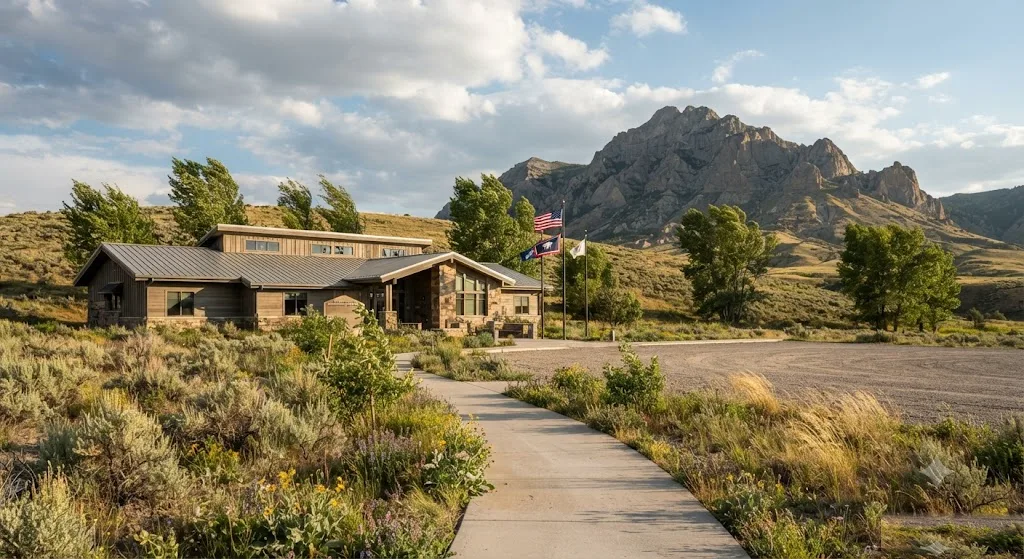
Our Heart Mountain Interpretive Center guide covers practical planning for Heart Mountain Interpretive Center Wyoming — best time to visit, getting there, and what to do on the ground. We've compiled the essential details for your 2026 visit, ensuring you have all the facts on hours, fees, parking, and how to make the most of your time at this pivotal historic site.
Why Visit Heart Mountain Interpretive Center
Visiting the Heart Mountain Interpretive Center Wyoming is more than just a trip to a museum; it's a profoundly moving journey into a critical, often overlooked, chapter of American history. Our team believes that understanding the past is essential for shaping a more just future, and this center offers an unparalleled opportunity to do just that. Here, between August 1942 and November 1945, over 14,000 Japanese Americans were unjustly incarcerated, making it Wyoming's third-largest community at its peak. They were American citizens, forcibly removed from their homes and livelihoods simply because of their Japanese heritage.
The Interpretive Center, a Smithsonian Affiliate and National Historic Site, stands as a testament to the resilience of those who endured confinement and a stark reminder of the fragility of civil liberties. We are committed to preserving the legacy of the Heart Mountain War Relocation Center and engaging the public in discussions about Japanese American incarceration during World War II, as well as broader issues of social justice and civil rights. Through powerful exhibits, original artifacts, and poignant oral histories, visitors gain a first-hand glimpse into the daily lives, struggles, and triumphs of the incarcerees. It's a sobering experience that fosters empathy and a deeper understanding of the constitutional issues and violations of civil liberties that occurred. We highly recommend this site for anyone seeking a meaningful and educational travel experience in Wyoming.
Who It's Best For
The Heart Mountain Interpretive Center offers a powerful experience for a diverse range of visitors. We find it's particularly impactful for history enthusiasts, educators, and students who wish to delve deeper into World War II history and civil rights in America. The center's focus on personal narratives, through photographs, artifacts, and oral histories, makes the abstract concepts of injustice and resilience tangible for all ages.
Families with older children will find the exhibits thought-provoking and educational, offering a unique opportunity for discussion about difficult historical topics. While younger children might not grasp the full gravity of the history, the outdoor walking trails and the augmented reality app can provide engaging elements (more on this in the "Top Things to Do" section). We also welcome those interested in cultural studies and social justice, as the center directly addresses issues of race, prejudice, and the importance of preserving democratic principles. It's a vital stop for anyone traveling through northwest Wyoming, especially those en route to or from Yellowstone National Park, seeking to enrich their journey with a significant cultural and historical experience.
Getting There & Parking
Knowing how to get to Heart Mountain Interpretive Center is straightforward, as the site is conveniently located between two major towns in northwest Wyoming. We recommend planning your route to ensure a smooth arrival.
The Heart Mountain Interpretive Center is situated approximately 13 miles northeast of Cody and 11 miles southwest of Powell, Wyoming. If you're driving from Cody, take US Highway 14A east. From Powell, head southwest on US Highway 14A. Visitors will spot the iconic red brick chimney of the original hospital structure on a hill, which serves as a landmark when approaching the turn onto Road 19. This intersection is also marked by two large trees. Once on Road 19, turn right onto the interpretive center road, which circles around to the parking lot.
For those integrating a visit with a larger Wyoming adventure, the center is about an hour's drive from the East Entrance of Yellowstone National Park. Please note that there is no public transportation directly to the Interpretive Center, so a personal vehicle is necessary.
When you arrive, you'll find ample free on-site parking available for visitors. However, we must emphasize that overnight parking is not permitted at the center. If you plan to visit during the annual Heart Mountain Pilgrimage (typically the last full weekend in July), parking at the Interpretive Center becomes very limited. During this special event, a parking pass is required for personal vehicles (free for handicap, $15 for regular), and shuttle services are often provided from Cody. Bus parking is available for commercial tours.
Top Things to Do
There are many things to do at Heart Mountain Interpretive Center, offering a comprehensive and deeply engaging experience. Our team recommends allocating at least 1.5 to 2 hours for your visit to fully absorb the exhibits and explore the grounds.
Upon arrival, your journey begins in the award-winning Interpretive Center itself. Here, you'll find a vast permanent collection, special exhibit galleries, and a dedicated theater. We suggest starting with the 15-minute introductory film, "All We Could Carry," which provides essential context for the stories you're about to encounter. The permanent exhibits utilize photographs, artifacts, and oral histories to bring to life the experiences of Japanese Americans confined here, covering topics from pre-war prejudice to the constitutional implications of their incarceration. Don't miss the Mineta-Simpson Institute, which celebrates the lifelong friendship between former incarceree Norman Mineta and Wyoming Senator Alan Simpson, dedicated to fostering empathy and cooperation.
Beyond the main building, the grounds of this National Historic Landmark site offer further exploration. You can visit original "camp" structures that remain, including the hospital grounds and an original barrack. The barrack has been restored to enable visitors to experience what life was like for incarcerees, with recreated childhood rooms narrated by former residents. Guided tours of the barrack are available, sometimes by appointment with a caretaker. While the root cellar, another original structure built by Japanese Americans, is currently undergoing restoration, it is expected to open in Summer 2027 and will tell the story of the camp's extensive agriculture program.
Among the things to do at Heart Mountain Interpretive Center, we highly recommend taking one of the interpretive walking trails. The Setsuko Saito Higuchi Interpretive Trail, a 1/4-mile paved path, guides visitors through key moments in Heart Mountain's history and points out surviving features of the camp, including a replica guard tower. Pets are allowed on these outside walking trails, though not inside the Interpretive Center. The site also features a Victory Garden, modeled after the small vegetable plots incarcerees cultivated, and a military honor roll commemorating those who served in World War II. For a modern twist on historical exploration, download the free Heart Mountain AR (Augmented Reality) Experience app before your visit; it brings history back to life at 16 stops around the site using your phone's camera.
Best Time to Visit
Choosing the best time to visit Heart Mountain Interpretive Center depends on your priorities and tolerance for crowds and weather. We've outlined the seasonal considerations to help you plan your trip.
The center operates with two distinct schedules throughout the year. During the summer season, which runs from mid-May to early October, the Interpretive Center is open daily from 10:00 AM to 5:00 PM. This period generally offers the most pleasant weather for exploring the outdoor historical grounds and walking trails. However, it's also the busiest time for tourism in Wyoming, especially with visitors heading to nearby Yellowstone National Park and Grand Teton National Park.
A particularly unique time to visit is during the annual Heart Mountain Pilgrimage, which takes place on the last full weekend in July. This gathering brings together former internees, their families, and the public for special events and programming in Cody and Powell. During the week leading up to the Pilgrimage, former internees often volunteer as docents, offering invaluable personal insights into the camp's history. While this is an incredibly enriching experience, be aware that parking at the Interpretive Center is very limited during Pilgrimage weekend, and a parking pass may be required for personal vehicles.
For those who prefer fewer crowds and a more contemplative experience, the winter season, from early October to mid-May, offers a different atmosphere. During these months, the center is open Wednesday through Saturday from 10:00 AM to 5:00 PM. Other visits can often be accommodated by special appointment. While the outdoor exploration might be chillier, the indoor exhibits remain accessible and equally impactful. We advise checking the weather forecast before your visit, as Wyoming weather can change quickly, and dressing in layers is always a good idea, especially if you plan to explore the outdoor features.
Where to Stay Nearby
When planning your visit to the Heart Mountain Interpretive Center, you'll find excellent Heart Mountain Interpretive Center lodging options in the nearby towns of Powell and Cody. Both communities offer a range of accommodations to suit different preferences and budgets, from hotels and motels to vacation rentals and RV parks.
Powell, located just 11 miles southwest of the Interpretive Center, offers a charming small-town experience with all the necessary amenities. Here, you'll find hotels like the Travelodge by Wyndham Powell and the Super 8 by Wyndham Powell, both offering convenient access to local attractions and the Interpretive Center. Other options include the Americas Best Value Inn and the Powell JET Motor Inn. Powell provides a quieter base, with local eateries and parks, and is a great choice if you prefer to be closer to the center itself.
Cody, approximately 13 miles northeast of the Interpretive Center, is a larger town known for its strong Western heritage and as a gateway to Yellowstone National Park. Cody offers a wider selection of Heart Mountain Interpretive Center lodging, including highly-rated options such as the Best Western Sunset Inn, The Scout INN, The Cody Hotel, Buffalo Bill Village Cabins, and Moose Creek Lodge & Suites. Staying in Cody allows for easy access to other attractions like the Buffalo Bill Center of the West and nightly rodeos during the summer season. Many hotels in Cody offer amenities like free WiFi, parking, and breakfast options. Whether you choose Powell for its proximity and small-town charm or Cody for its broader amenities and attractions, both towns provide comfortable and accessible bases for your visit.
Sample 2-Day Itinerary
To fully immerse yourselves in the history of the Heart Mountain Interpretive Center and explore the surrounding Big Horn Basin, our team has crafted a sample 2-day itinerary. This plan balances poignant historical reflection with the natural beauty and Western charm that defines this part of Wyoming.
Day 1: Deep Dive into History
- **Morning (9:30 AM - 1:00 PM): Heart Mountain Interpretive Center** Begin your day at the Heart Mountain Interpretive Center. We recommend arriving shortly after opening to allow ample time. Start with the introductory film, "All We Could Carry," then explore the permanent and special exhibits at your own pace. Dedicate time to the Mineta-Simpson Institute and the recreated barrack rooms. Download the Heart Mountain AR app beforehand to enhance your outdoor exploration.
- **Lunch (1:00 PM - 2:00 PM): Picnic or Powell Dining** Since the Interpretive Center has limited picnic space and no refreshments for sale, we suggest packing a picnic to enjoy on the outdoor grounds (remember, only sealable water bottles inside the center) or driving into Powell for a meal. Powell offers various local dining options.
- **Afternoon (2:30 PM - 4:30 PM): Homesteader Museum & Powell Exploration** After lunch, head to the Homesteader Museum in Powell. This museum provides a fascinating look into the agricultural history and pioneer life of the Big Horn Basin, offering a broader context for the region's development. Afterward, take some time to stroll through Powell's downtown, perhaps visiting Plaza Diane for local art or enjoying one of the town's parks.
- **Evening (5:00 PM onwards): Dinner & Relaxation in Powell** Enjoy dinner at one of Powell's local restaurants. For lodging, consider the Travelodge by Wyndham Powell or Super 8 by Wyndham Powell for a comfortable stay.
Day 2: Outdoor Reflection & Western Adventure
- **Morning (8:00 AM - 1:00 PM): Heart Mountain Interpretive Center Hiking Trails** Dedicate your morning to exploring the Heart Mountain Interpretive Center hiking trails. Start with the Setsuko Saito Higuchi Interpretive Trail on the center's grounds, which offers a paved 1/4-mile walk through surviving camp features and to a replica guard tower. For a more strenuous adventure, consider the hike to the summit of Heart Mountain. The trailhead is about six miles from the Interpretive Center (off Road 19) and offers an 8-mile round trip with stunning 360-degree views of the Bighorn Basin. Remember that this hike is managed by the Nature Conservancy, is strenuous, and dogs are not allowed. Bring plenty of water, snacks, and bear spray if you venture here.
- **Lunch (1:00 PM - 2:00 PM): Cody Dining** After your hike, drive into Cody for lunch. Cody offers a wide range of dining experiences, from casual to more upscale.
- **Afternoon (2:30 PM - 5:30 PM): Buffalo Bill Center of the West** Spend your afternoon at the world-renowned Buffalo Bill Center of the West in Cody. This complex houses five museums under one roof, including the Buffalo Bill Museum, Plains Indian Museum, Whitney Western Art Museum, Cody Firearms Museum, and Draper Natural History Museum. It's an incredible deep dive into the history, art, and culture of the American West.
- **Evening (6:00 PM onwards): Cody Rodeo or Western Entertainment** If visiting during the summer, experience the thrill of the Cody Nite Rodeo (check schedules for 2026). Alternatively, enjoy a chuckwagon dinner or explore Cody's vibrant downtown, including Jackson Hole Town Square for a taste of Western ambiance, before heading to your lodging in Cody.
This itinerary provides a solid framework, but feel free to adjust it based on your interests and pace. Remember to check current operating hours and any reservation requirements for all attractions, especially during peak season.
Last updated: 2026-07-08 by the Roam States team.