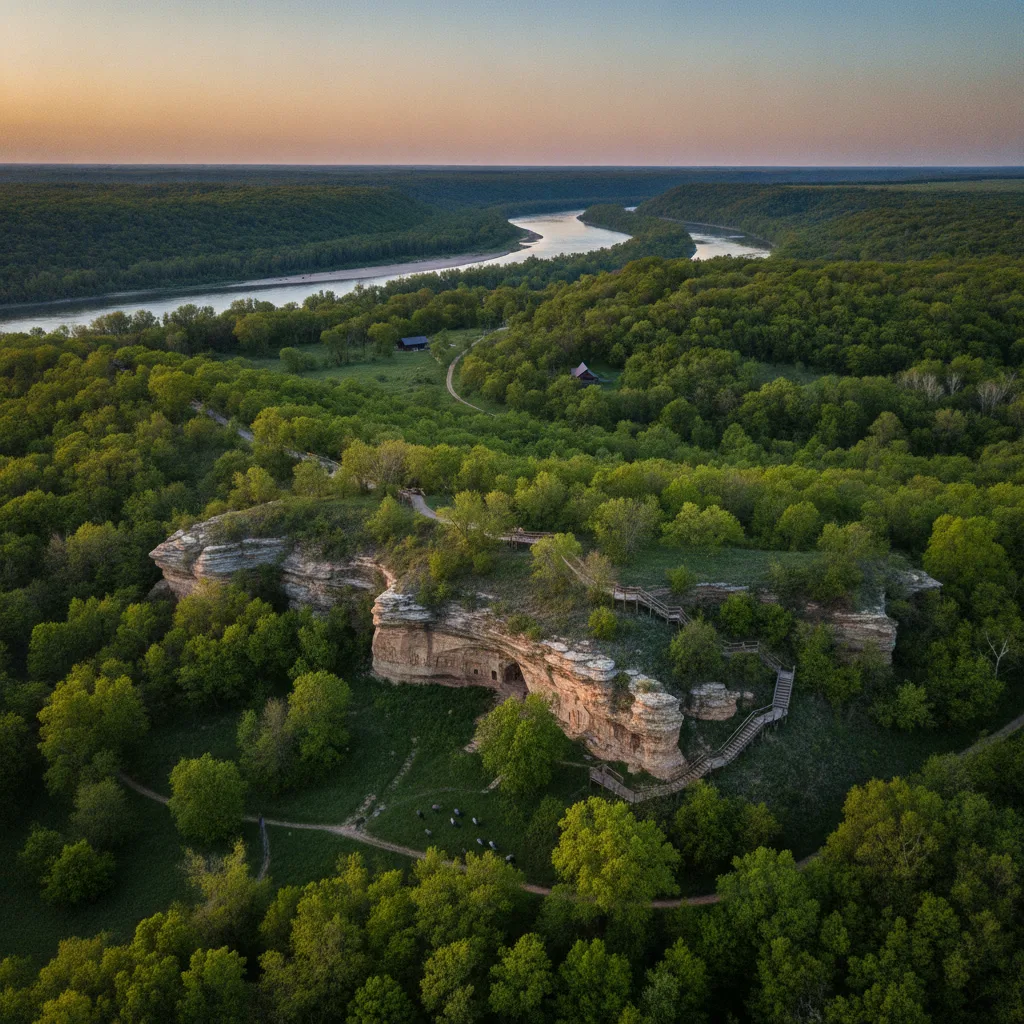
Welcome to our comprehensive guide to Indian Cave State Park Nebraska. Our team at Roam States has meticulously compiled this information to help you plan an unforgettable trip to one of Nebraska's most scenic natural escapes. Forget generic travel advice; we're here to provide confident, specific insights into navigating this rugged park, from its ancient petroglyphs to its expansive Missouri River vistas.
Why Visit Indian Cave State Park
Nestled along the mighty Missouri River in Nebraska's southeastern corner, Indian Cave State Park offers a unique blend of natural beauty, rich history, and outdoor adventure. What draws visitors year after year is the park's dramatic topography—a striking contrast to the state's often-flat landscape—featuring rugged bluffs, dense hardwood forests, and sweeping river views. It's a place where ancient history literally meets the eye, with prehistoric Native American petroglyphs etched into the namesake sandstone cave. Beyond the historical intrigue, the park boasts an extensive network of trails, making it a prime destination for hikers, bikers, and equestrians seeking immersion in nature. Whether you're chasing vibrant fall foliage, seeking a peaceful camping retreat, or exploring the living history of the old river town of St. Deroin, Indian Cave State Park provides a truly distinctive Nebraska experience.
Who It's Best For
Indian Cave State Park is an ideal destination for a diverse range of travelers, but it particularly shines for outdoor enthusiasts and history buffs. If your perfect getaway involves lacing up your hiking boots, exploring miles of trails, or setting up camp under a canopy of stars, this park is for you. Families with children will find plenty to keep little ones engaged, from exploring the cave (with current access restrictions noted) to enjoying the playgrounds and seasonal events like the annual Haunted Hollow. Equestrians will appreciate the dedicated horse trails and camping facilities. Nature photographers, bird watchers (especially those hoping to spot bald eagles along the Missouri River), and anyone seeking a tranquil escape from city life will find solace in its rugged beauty. While the park offers varied terrain, some trails can be challenging, making it a rewarding spot for those who enjoy a moderate to strenuous hike. For those interested in local history, the restored 19th-century town of St. Deroin provides a fascinating glimpse into the past.
Getting There & Parking
Reaching Indian Cave State Park, located in Shubert, Nebraska, is a straightforward journey from major regional cities. If you're coming from Lincoln, head east on Highway 2 to Nebraska City, then south on Highway 75 to Auburn, east on Highway 136 for about 9 miles, south on Highway 67 for another 9 miles, and finally east on Highway 64E for 5 miles. From Omaha, take Highway 75 South, then follow the same directions from Auburn. Alternatively, from Omaha, you can take Interstate I-29 South, exit at #110 to Brownville, NE (heading west on Highway 136), then south on Highway 67 for 9 miles, and east on Highway 64E for 5 miles. Travelers from Kansas City will take I-29 North to exit #110 and follow the Brownville sequence.
Once you arrive at Indian Cave State Park, parking is generally available. For those venturing into the primitive or basic camping areas, you'll find parking spots along the roads, with some sites allowing you to park directly next to your spot and others requiring a short walk of less than 100 yards. If you're heading to the boat ramp, parking is adjacent, though you might have a short walk to reach other park amenities. Our team always recommends arriving earlier in the day, especially on weekends or during peak fall foliage season, to secure the best parking spots and avoid crowds.
Top Things to Do
There are countless things to do at Indian Cave State Park, catering to a wide range of interests. The park's primary draw is its extensive trail system, perfect for hiking, biking, and horseback riding. We'll delve deeper into the Indian Cave State Park hiking trails shortly, but know that you'll find everything from easy, flat paths to challenging, hilly ascents with rewarding views of the Missouri River.
Beyond the trails, a visit to the park's namesake, Indian Cave, is a must. While access to the cave has been restricted due to a landslide, with renovations reported through 2022, visitors can still often view the prehistoric Native American petroglyphs etched into its sandstone walls. Always check the park's official website for the latest accessibility updates before your visit. For a step back in time, explore the living history exhibits at the restored 19th-century river town of St. Deroin, where traditional crafts are demonstrated on weekends from May through October.
The Missouri River itself offers recreational opportunities, with a boat ramp providing access for fishing and paddling. Wildlife viewing is another popular activity, with bald eagles often spotted along the river. The park also features picnic areas, playgrounds, and even disc golf for some casual fun. Seasonal events, such as the annual Haunted Hollow in October, add a festive touch with hayrack rides, campsite decorating contests, and family-friendly activities. These diverse things to do at Indian Cave State Park ensure there's something for everyone.
Indian Cave State Park Hiking Trails
The Indian Cave State Park hiking trails are arguably the park's crown jewel, offering over 22 miles of paths that wind through a majestic hardwood forest, along scenic ridgetops, and past sweeping views of the Missouri River. Our team finds the diversity of the trails particularly appealing, with options suitable for all skill levels.
For an easier stroll, consider Trail 7, a relatively flat 0.3-mile path, or Trail 8A, which is somewhat flat and 0.8 miles long. These are great options for families or those looking for a less strenuous walk. If you're seeking more of a workout, trails like Trail 1 (1.7 miles) and its longer loop involve moderate climbs and descents along ridgetops. Trail 2, at 1.1 miles, passes by the historic Half-Breed Cemetery and crosses a small creek, offering some river views. For a truly rewarding challenge, we recommend Trail 3, a 1.2-mile hike that starts at the Scenic Overlook with a long descent and an invigorating climb back up, all while passing through beautiful woodlands and offering river vistas.
Beyond hiking, 16 miles of dedicated equestrian trails are available for those who bring their horses. Mountain biking is also a popular activity on many of the trails. When planning your trek on the Indian Cave State Park hiking trails, be sure to wear appropriate footwear, carry plenty of water, and check current trail conditions, especially after rain, as some areas can become muddy. The fall foliage season transforms these trails into a spectacular display of color, making it a particularly popular time for hiking.
Indian Cave State Park Camping
For many, the ultimate way to experience the park's natural beauty is through Indian Cave State Park camping. The park offers a robust selection of 134 campsites, ranging from primitive backcountry sites to modern RV spots with full hookups. We appreciate the variety, ensuring there’s an option for every type of camper.
Modern camping facilities, including Electric Plus and Electric sites, are typically open from April 15 to October 31, with the possibility of extending operations if weather permits. These sites, found in campgrounds like Ash Grove and Hackberry Hollow, often come with amenities such as showers, modern restrooms, a laundry facility, and a dump and fill station. Many RV sites offer both 30-amp and 50-amp electrical hookups. Primitive camping, on the other hand, is available year-round for those who prefer a more rugged experience, with tent areas nestled among the scenic hills. Adirondack shelters are also strategically placed along trails for backpackers seeking a unique overnight stay. For horse owners, the park features an established horse camp with basic equestrian camping facilities.
Camping fees at Indian Cave State Park typically range from $7 to $42 per night, in addition to the required daily or annual park entry permit. Reservations for half of the electrical campsites in Ash Grove and Hackberry Hollow campgrounds can be made up to a year in advance online or by phone at 1-844-637-2757 (Monday-Friday 9 a.m.-6 p.m., Saturday-Sunday 9 a.m.-5 p.m.). All other camping is offered on a first-come, first-served basis. Remember that quiet hours are from 10 p.m. to 6 a.m., and pets must be kept on a leash no longer than 6 feet. When planning your Indian Cave State Park camping trip, we recommend booking well in advance, especially for popular fall weekends.
Best Time to Visit
From our experience, the best time to visit Indian Cave State Park is during the spring and fall. These seasons offer mild weather and showcase the park's natural scenery at its peak. In spring, the forests burst with new life, and wildlife is abundant, though some trails might be muddy after spring rains.
However, fall, particularly September and October, is truly spectacular. The oak-hickory canopy transforms into a breathtaking display of autumn colors, making it the ideal time for hiking and enjoying the panoramic views of the Missouri River. Weekdays during the fall are generally less crowded, but expect larger numbers of visitors on weekends, especially during peak foliage.
Summer months can be hot and humid, and reviewers consistently mention the presence of mosquitoes and other insects, so come prepared with insect repellent if you visit then. While winter brings a quiet, frosty beauty, many modern camping facilities close after October 31, and activities are more limited. For the best time to visit Indian Cave State Park, aiming for a weekday in early to mid-October will provide the most comfortable weather and stunning scenery.
Is It Worth Visiting?
Absolutely, is Indian Cave State Park worth visiting? Our unequivocal answer is yes. This park stands out as a true gem in Nebraska, offering a rugged, scenic experience that often surprises first-time visitors expecting flatter landscapes. Its unique combination of historical significance, extensive outdoor activities, and breathtaking natural beauty makes it a compelling destination.
While the actual cave access has faced challenges, the opportunity to see ancient petroglyphs and explore the surrounding bluffs and forests is a powerful draw. The 22 miles of hiking and biking trails alone provide ample reason to visit, offering diverse terrain and stunning vistas of the Missouri River. For families, the living history village and seasonal events add an educational and entertaining dimension. Campers will find well-maintained facilities and a range of options from primitive to full hook-up RV sites. Compared to other attractions in the region, Indian Cave State Park offers a unique blend of adventure and tranquility. So, if you're wondering is Indian Cave State Park worth visiting, we confidently say it's a must-see for anyone exploring Nebraska's natural wonders.
Where to Stay Nearby
While Indian Cave State Park offers excellent camping facilities, for those preferring a roof over their heads, there are several lodging options in nearby towns. The closest significant town with amenities is Brownville, located about 15 miles from the park. Brownville is a charming historic river town known for its unique shops, museums, and a winery, offering a pleasant complement to a day spent in the park. You'll find local guesthouses or bed and breakfasts that provide a cozy, small-town experience.
Slightly further afield, towns like Falls City (13 miles away) and Auburn (about 20-30 miles) offer more conventional hotel and motel options, along with additional dining and shopping choices. For a wider array of accommodations and amenities, Nebraska City is another viable option, roughly 30-40 minutes north of the park. When planning your trip, we recommend checking booking sites for current availability and reviews in these communities. Consider combining your visit to Indian Cave State Park with exploration of other Nebraska highlights, such as the Chimney Rock National Historic Site or a visit to Omaha's Henry Doorly Zoo, both offering distinct experiences across our incredible state. For a complete picture of what Nebraska offers, check out our guide to the Best Places in Nebraska.
Sample 2-Day Itinerary
Day 1: Arrival, Hiking & History
- **Morning (9:00 AM):** Arrive at Indian Cave State Park. Purchase your park entry permit (or show your annual pass). Head directly to the main Indian Cave area. Take the elevated boardwalk to view the prehistoric petroglyphs. Remember to check for any current access restrictions on the cave itself.
- **Late Morning (10:30 AM):** Embark on one of the park's scenic hikes. We suggest Trail 3 (1.2 miles) for its rewarding views of the Missouri River and a good workout, or combine portions of Trails 7 and 8A for an easier, family-friendly walk.
- **Lunch (1:00 PM):** Enjoy a picnic lunch at one of the park's designated picnic areas.
- **Afternoon (2:30 PM):** Immerse yourself in history at the restored 19th-century river town of St. Deroin. Explore the schoolhouse and general store, and if visiting on a weekend between May and October, catch a traditional craft demonstration.
- **Late Afternoon (5:00 PM):** Check into your campsite or nearby lodging.
- **Evening (7:00 PM):** Cook dinner at your campsite or head to Brownville for a meal at a local eatery. Enjoy stargazing; the park's rural location offers excellent night sky views.
Day 2: River Views, More Trails & Departure
- **Morning (8:00 AM):** Start your day with a hearty breakfast.
- **Late Morning (9:30 AM):** Explore more of the park's diverse trails. If you have horses, take advantage of the equestrian trails. Alternatively, head to the Missouri River boat ramp area. Even if you're not launching a boat, it's a great spot for bird watching, especially for bald eagles, and offers different river perspectives.
- **Lunch (12:30 PM):** Grab a quick bite at a local spot in Brownville or pack another picnic.
- **Afternoon (2:00 PM):** Depending on your interests and time, consider revisiting a favorite trail, trying a new one, or exploring more of Brownville's shops and museums. You might also consider a short drive to Falls City to visit the Richardson County Military History Museum or the John Philip Falter Museum.
- **Late Afternoon (4:00 PM):** Begin your journey home, carrying memories of Indian Cave State Park's unique charm.
Last updated: 2026-07-05 by the Roam States team.