Indian Grinding Rock State Historic Park Travel Guide — California
Our Indian Grinding Rock State Historic Park guide covers practical planning for Indian Grinding Rock State Historic Park California — best time to visit, getting there, and what to do on the ground.
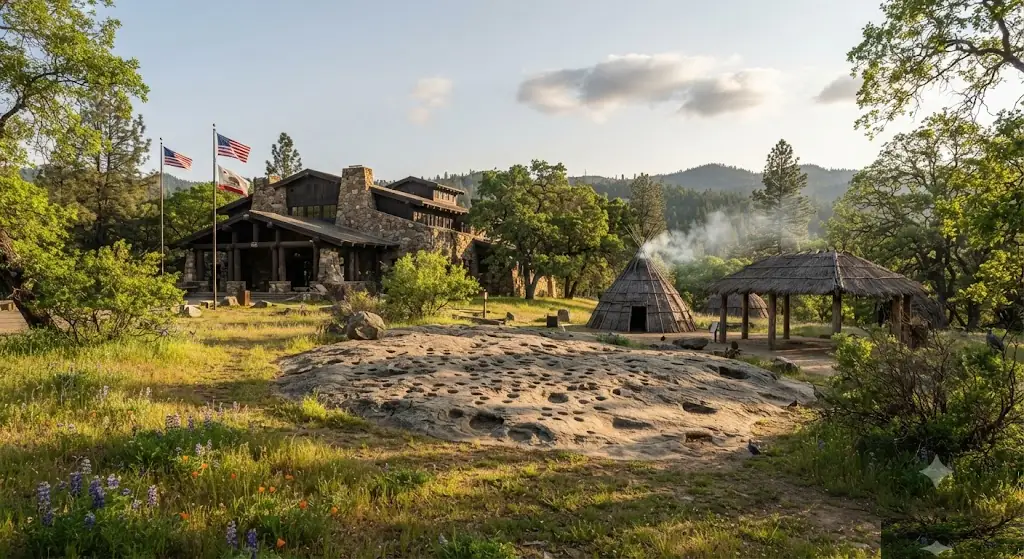
Nestled in California's Sierra Nevada foothills, Indian Grinding Rock State Historic Park California is a truly unique destination that preserves a vital piece of Miwok heritage and culture. We consider it an essential stop for anyone seeking to understand the rich history of Native Americans in the region. This 135-acre park is home to one of North America's largest collections of bedrock mortars, known as "chaw'se" in the Miwok language, carved into a massive outcropping of marbleized limestone. These 1,185 mortar holes, along with 363 petroglyphs, tell a story thousands of years old, showcasing the ingenuity and daily life of the Northern Sierra Miwok people who once gathered here to grind acorns and other seeds into meal.
Why Visit Indian Grinding Rock State Historic Park
We recommend a visit to Indian Grinding Rock State Historic Park for its unparalleled cultural significance and serene natural beauty. It's not just a collection of rocks; it's a living outdoor museum that offers a profound connection to the past. The park provides an intimate look into the lives of the Miwok people through its preserved grinding rocks, a reconstructed Miwok village with traditional bark houses (u'macha) and a ceremonial roundhouse (hun'ge), and the comprehensive Chaw'se Regional Indian Museum.
For those wondering, "is Indian Grinding Rock State Historic Park worth visiting?", our team unequivocally says yes. The sheer scale of the grinding rock, with its thousands of mortar holes, is a powerful sight that sparks imagination and respect for the ancestral practices. Beyond the historical aspects, the park offers peaceful meadows, oak woodlands, and opportunities for wildlife viewing, making it a tranquil escape.
The museum itself is designed to reflect a traditional roundhouse and houses an impressive collection of artifacts from various Sierra Nevada Native American groups, including basketry, feather regalia, jewelry, and tools.
Who It's Best For
Indian Grinding Rock State Historic Park is an ideal destination for a diverse range of travelers. History enthusiasts and cultural explorers will find deep satisfaction in learning about the Miwok people and witnessing the ancient grinding rocks and petroglyphs. Families with children will appreciate the engaging exhibits at the museum and the reconstructed village, which offer hands-on learning opportunities.
Nature lovers and those seeking a peaceful retreat will enjoy the park's open meadows and oak-shaded areas, perfect for picnicking and gentle walks. The park is also a great stop for road trippers exploring California's Gold Country, offering a unique historical and cultural counterpoint to the region's mining history. We believe it's a particularly rewarding experience for anyone interested in Native American history and the natural landscapes of California.
Getting There & Parking
Knowing how to get to Indian Grinding Rock State Historic Park is straightforward, though a car is essential for reaching this Sierra Nevada foothills gem. The park is located at 14881 Pine Grove-Volcano Road, Pine Grove, CA 95665.
From State Highway 88 East, you'll pass through Jackson to the town of Pine Grove. Turn left onto Pine Grove-Volcano Road and continue for approximately 1.5 miles. The first left turn leads to the campground, and the second left turn is the main park entrance, providing access to parking and the museum.
For day use, parking is readily available. As of 2026, the day use fee is $8 per vehicle. Motorcycle day use is also $8. For larger groups, small buses are charged $25 and large buses are $50. Senior discounts of $1 off day use fees are available. We always recommend checking the California State Parks website before your visit for the most up-to-date fee information.
Regarding how to get to Indian Grinding Rock State Historic Park, it's about an 8-mile drive east of Jackson, California, and approximately three hours east of San Francisco. There is designated accessible parking available, including van-accessible spots.
Top Things to Do
There are many fulfilling things to do at Indian Grinding Rock State Historic Park, offering a blend of cultural immersion and natural exploration. Our team suggests dedicating at least half a day, if not more, to fully experience all the park has to offer.
Explore the Chaw'se Regional Indian Museum
The museum is an excellent starting point for understanding the park's significance. Designed in the style of a traditional Miwok roundhouse, it showcases an extensive collection of artifacts from the Miwok and other Sierra Nevada Native American tribes. You'll find examples of basketry, tools, feather regalia, and jewelry, accompanied by interpretive exhibits that bring their history to life. Admission to the museum is free with your paid parking. As of 2026, the museum is open daily from 10 a.m. to 3 p.m., though it's closed on Thanksgiving, Christmas, and New Year's Day. Weekends historically have seen hours extended to 4 p.m.
Visit the Grinding Rock and Petroglyphs
The centerpiece of the park, the massive marbleized limestone outcropping, is a must-see. Here, you'll witness the 1,185 mortar holes created by generations of Miwok women grinding acorns. Alongside these mortars are 363 petroglyphs, ancient carvings that are 2,000 to 3,000 years old, depicting circles, animal and human tracks, and wavy lines. An accessible wooden observation deck provides excellent views of the grinding rock and petroglyphs.
Wander Through the Reconstructed Miwok Village and Roundhouse
Adjacent to the grinding rock, the reconstructed Miwok village offers a tangible glimpse into traditional Miwok life. You can explore bark houses (u'macha), acorn granaries, and a traditional game field. The large ceremonial roundhouse (hun'ge) is still used by Native Americans for ceremonies several times a year, including the annual acorn gathering ceremonies in September. The interior of the roundhouse is typically viewed through a barred door, except during specific celebrations when it's open to the public.
Indian Grinding Rock State Historic Park Hiking Trails
For those who enjoy exploring on foot, Indian Grinding Rock State Historic Park offers two developed trails. The North Trail is a one-mile round-trip loop that begins near the museum. It traverses a ridge, passes an old farm site, crosses a creek, and leads to the reconstructed Miwok village before returning to the museum. A 0.62-mile accessible segment of the North Trail, with a compacted soil surface and generally flat slopes, starts near the main parking area and includes a trestle bridge and views of the Historic Farmhouse.
The South Nature Trail is a half-mile self-guided loop that starts near the roundhouse. It features an accompanying trail guide, available for 50 cents, which identifies plants used by the Miwok people. While dogs are permitted in the campground and on paved paths, they are not allowed on any of the Indian Grinding Rock State Historic Park hiking trails or in the open meadows.
Picnicking and Wildlife Viewing
The park offers several picnic areas, including one near the large grinding rock with a shade ramada that can accommodate groups up to 150 people without reservations. There's also a smaller picnic area next to the museum. It's a great place for children and adults to learn about Miwok culture. The park's diverse ecosystem means opportunities for nature and wildlife viewing, including various birds, deer, foxes, and bobcats.
These things to do at Indian Grinding Rock State Historic Park provide a comprehensive and enriching experience for all visitors.
Best Time to Visit
The best time to visit Indian Grinding Rock State Historic Park largely depends on your preferences for weather and crowd levels. The park is open year-round from sunrise to sunset.
Spring (March to May) is particularly beautiful, with wildflowers blooming in the meadows and comfortable temperatures for hiking and exploring. This season also offers lush greenery after winter rains. Fall (September to November) is another excellent choice, as the oak leaves change color, and the temperatures remain pleasant. The annual acorn gathering ceremonies ("Big Time") often take place in September, offering a chance to witness traditional Miwok activities, including dancing, hand games, singing, and storytelling.
Summer (June to August) can be warm, with temperatures reaching into the 90s, so we recommend visiting in the mornings or late afternoons if you come during this time. Winter (December to February) brings cooler temperatures and occasional rain, and sometimes even snow, but the park remains open and can offer a peaceful, less crowded experience.
Regardless of the season, we advise checking the local weather forecast before your trip and bringing appropriate clothing and plenty of water, especially during warmer months.
Where to Stay Nearby
While Indian Grinding Rock State Historic Park offers its own camping facilities, there are also various lodging options in the surrounding towns for those preferring a hotel or other accommodations. When considering Indian Grinding Rock State Historic Park lodging, you'll find choices ranging from historic inns to modern hotels.
Camping at Indian Grinding Rock State Historic Park
The park features a campground with 22 campsites suitable for tents, small RVs, or trailers up to 27 feet in length. Each campsite includes a picnic table and a fire ring. Reservations are accepted year-round and can be made up to six months in advance via ReserveCalifornia or by calling (800) 444-PARK (7275). As of 2026, camping fees are $30 per night, or $35 during holiday periods. There's an additional $8 reservation fee. Senior discounts of $2 off camping fees are available.
Two campsites (#7 and #13) are ADA accessible, with accessible restrooms and showers available. The park also offers unique Environmental Living/Group Camping in traditional Native American bark houses, ideal for groups up to 44 people seeking a primitive camping experience. Reservations for bark houses can be made by calling the park directly at (209) 296-7488.
Hotels Near Indian Grinding Rock State Historic Park
For those seeking more traditional Indian Grinding Rock State Historic Park lodging, nearby towns like Jackson, Sutter Creek, and Murphys offer a range of options. Jackson, the largest town in Amador County, is about 8 to 12 miles west of the park.
- Jackson: The Best Western Amador Inn and the National Hotel Jackson, Tapestry Collection by Hilton are popular choices, offering comfortable stays with amenities like free breakfast and parking. The Rodeway Inn Jackson - Martell is another option, praised for its helpful staff and ample parking.
- Sutter Creek: Known for its Gold Rush-era architecture, Sutter Creek offers charming accommodations like the Kiota Inn & Event Center Sutter Creek, an Ascend Collection Hotel.
- Murphys: Further afield but still a viable option, Murphys provides more boutique stays. Murphys Suites and Murphys Inn Motel are frequently mentioned, offering free WiFi and parking.
We recommend booking accommodations in advance, especially during peak seasons, as options can fill up quickly. You can find many hotels near Indian Grinding Rock State Historic Park through platforms like Expedia and Travelocity.
Sample 2-Day Itinerary
To help you plan your visit, our team has put together a sample 2-day itinerary for Indian Grinding Rock State Historic Park and the surrounding Amador County region. This itinerary balances cultural immersion with local exploration.
Day 1: Immersion at Indian Grinding Rock State Historic Park
- Morning (9:00 AM - 12:00 PM): Arrive at Indian Grinding Rock State Historic Park. Start your visit at the Chaw'se Regional Indian Museum to gain context and appreciate the artifacts.
- Lunch (12:00 PM - 1:00 PM): Enjoy a picnic lunch at one of the park's shaded picnic areas.
- Afternoon (1:00 PM - 4:00 PM): Explore the main grinding rock with its thousands of mortar holes and ancient petroglyphs. Walk through the reconstructed Miwok village, observe the bark houses, and see the ceremonial roundhouse. Consider taking the North Trail for a gentle hike through the park's natural landscape.
- Late Afternoon (4:00 PM - 5:00 PM): Revisit any favorite spots or enjoy some quiet contemplation in the meadows.
- Evening: Check into your chosen lodging in Pine Grove, Jackson, or Sutter Creek. Enjoy dinner at a local restaurant.
Day 2: Gold Country Exploration
- Morning (9:00 AM - 12:00 PM): Delve deeper into Amador County's rich history. We suggest a visit to the Kennedy Gold Mine in Jackson, one of California's richest gold producers, offering tours of historic mining buildings. Alternatively, explore the unique geological formations at Black Chasm Cavern National Landmark in nearby Volcano.
- Lunch (12:00 PM - 1:00 PM): Grab lunch in Jackson or Sutter Creek, enjoying the charm of these historic Gold Rush towns.
- Afternoon (1:00 PM - 4:00 PM): Experience Amador Wine Country, known for its Zinfandels and other varietals. Many wineries offer tastings and scenic views. You could also explore the antique shops and boutiques in Amador City.
- Late Afternoon: Depending on your travel plans, you might head towards other Best places in California like Alcatraz Island, Anza-Borrego Desert Park, or Big Sur & PCH, or begin your journey home. Consider using our USA Road Trip Planner for further adventures.
Frequently Asked Questions
Indian Grinding Rock State Historic Park camping
Indian Grinding Rock State Historic Park offers 22 campsites for tents, small RVs, or trailers up to 27 feet. Each site includes a picnic table and fire ring. Reservations are available year-round through ReserveCalifornia or by phone, and fees are $30 per night ($35 on holidays) plus an $8 reservation fee. Two sites are ADA accessible. Unique group camping in traditional bark houses is also available by contacting the park directly.
Things to do in Pine Grove, Amador County
Beyond Indian Grinding Rock State Historic Park, Pine Grove and the surrounding Amador County offer various attractions. You can explore other historic Gold Rush towns like Jackson and Sutter Creek, visit local wineries in Amador Wine Country, or pan for gold at Roaring Camp Mining Company. Other popular activities include exploring Black Chasm Cavern National Landmark, visiting the Kennedy Gold Mine, and enjoying seasonal events.
Indian Grinding Rock State Historic Park with kids
Indian Grinding Rock State Historic Park is an excellent destination for families with kids. Children will enjoy exploring the reconstructed Miwok village and bark houses, learning about Native American culture at the Chaw'se Regional Indian Museum, and seeing the impressive grinding rocks and petroglyphs. The park's gentle hiking trails and picnic areas also provide opportunities for outdoor fun.
Best hotels near Indian Grinding Rock State Historic Park
The best hotels near Indian Grinding Rock State Historic Park are primarily found in nearby towns like Jackson and Sutter Creek. Popular options include the Best Western Amador Inn and the National Hotel Jackson, Tapestry Collection by Hilton in Jackson, and the Kiota Inn & Event Center Sutter Creek in Sutter Creek. These hotels offer amenities like free breakfast, WiFi, and parking.
Indian Grinding Rock State Historic Park tips
Our top tips for visiting Indian Grinding Rock State Historic Park include wearing comfortable shoes for exploring the village and trails, bringing plenty of water, especially during warmer months, and packing a picnic to enjoy at one of the park's scenic areas. We also recommend starting your visit at the Chaw'se Regional Indian Museum for context and checking the California State Parks website for current hours, fees, and any special events or closures before you go. Remember that dogs are allowed on paved paths and in the campground but not on hiking trails.
Where to stay near Indian Grinding Rock State Historic Park
Beyond the park's own campground, visitors can find accommodations in nearby towns. Jackson, California, offers several hotels, including the Best Western Amador Inn and the National Hotel Jackson. Sutter Creek also provides lodging options like the Kiota Inn & Event Center. For a broader selection, Murphys is another town with hotels and motels, though it's a bit further away.
Our team at Roam States believes that Indian Grinding Rock State Historic Park offers a truly invaluable experience for understanding California's deep cultural roots. It's a place where history comes alive, allowing visitors to connect with the enduring legacy of the Miwok people amidst a beautiful natural setting. We highly recommend including this unique historic park in your California travel plans for an enriching and memorable journey.
Last updated: 2026-07-13 by the Roam States team.