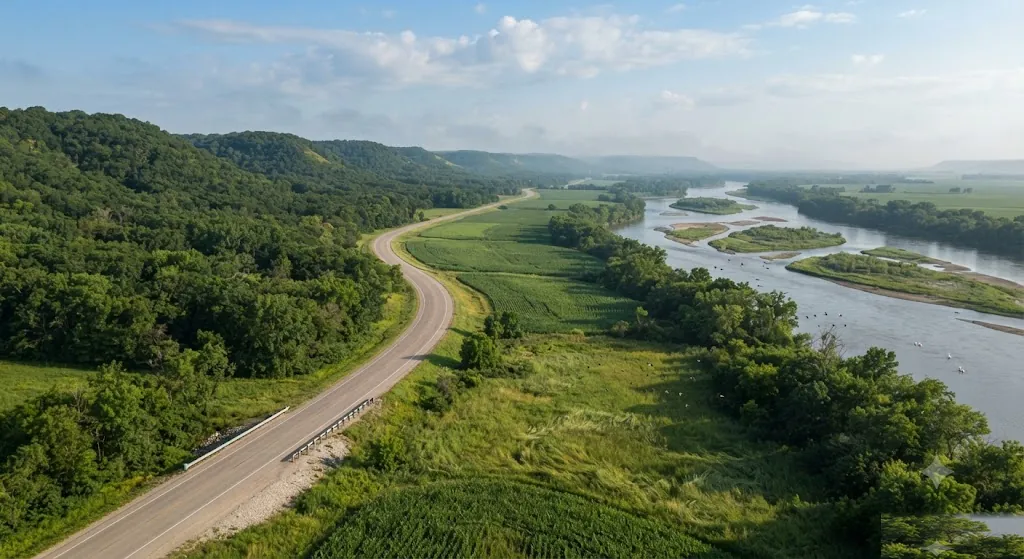
Our Lewis and Clark Scenic Byway guide covers practical planning for the Lewis and Clark Scenic Byway Nebraska — best time to visit, getting there, and what to do on the ground. This 82-mile route along U.S. Highway 75 from north of Omaha to South Sioux City offers spectacular views of the Missouri River and beautiful forests, allowing travelers to follow the path of the famous explorers. We've compiled essential information to ensure your journey is as smooth and enriching as possible.
Why Visit Lewis and Clark Scenic Byway
For those drawn to the confluence of American history and natural beauty, the Lewis and Clark Scenic Byway Nebraska is an essential journey. This isn't just a drive; it's an immersion into the landscapes that captivated Lewis and Clark themselves over two centuries ago. We find that the byway offers a unique blend of historical significance, stunning river vistas, and opportunities for outdoor adventure, setting it apart from more generic road trips. The route traces a pivotal section of the Missouri River, a waterway that was the lifeblood of the Corps of Discovery, providing travelers with a tangible connection to their epic expedition.
Beyond the historical narrative, the byway showcases the diverse terrain of Northeast Nebraska, from rolling farmlands and dense forests to dramatic river bluffs. It's a region rich in cultural heritage, home to the Omaha and Winnebago Native American nations, whose stories are deeply intertwined with the land and the river. We believe that experiencing this byway offers a deeper understanding of the American frontier, the challenges faced by early explorers, and the enduring beauty of the Missouri River Valley. It’s a chance to witness firsthand the "unspoiled terrain" that continues to inspire.
Who It's Best For
The Lewis and Clark Scenic Byway is ideally suited for a diverse range of travelers, but we particularly recommend it for history enthusiasts, nature lovers, and families seeking an educational yet engaging road trip. If you're fascinated by the story of the Lewis and Clark Expedition, this byway provides an authentic backdrop to their journey, with numerous interpretive sites along the way. Likewise, birdwatchers and wildlife photographers will find ample opportunities to spot migratory birds and other local fauna, especially at places like DeSoto National Wildlife Refuge.
Families will appreciate the blend of scenic drives with accessible historical parks and outdoor activities. Many sites offer educational programs that bring history to life for younger travelers. For those who prefer a slower pace, the byway offers plenty of overlooks for quiet contemplation of the Missouri River. We also find it perfect for photographers looking to capture dramatic river landscapes, especially during the vibrant autumn months. Ultimately, if you appreciate journeys that combine learning with picturesque scenery and a sense of discovery, this byway is for you.
Getting There & Parking
How to Get There
The Lewis and Clark Scenic Byway Nebraska is conveniently located along U.S. Highway 75, making it easily accessible for travelers. The 82-mile route officially begins just north of Omaha and extends northward to South Sioux City. For those flying in, Omaha's Eppley Airfield (OMA) is the closest major airport, offering a straightforward starting point for your journey. From Omaha, simply head north on U.S. Highway 75 to begin your exploration of the byway.
If you're driving from other parts of Nebraska or neighboring states, major interstates like I-29 (from Iowa or Missouri) and I-80 (east-west across Nebraska) connect directly or indirectly to Omaha, providing clear routes to the byway's southern terminus. We recommend consulting a USA Road Trip Planner to integrate this scenic drive into a larger regional adventure. Keep an eye on Nebraska 511 for current road conditions, especially during inclement weather, to ensure a smooth trip.
Parking
Parking along the Lewis and Clark Scenic Byway is generally straightforward, with designated lots available at most major attractions and state parks. For sites like Fort Atkinson State Historical Park and DeSoto National Wildlife Refuge, you'll find ample parking near visitor centers and trailheads. At state parks such as Ponca State Park, there are numerous parking areas, including those for day-use visitors and campers.
It's important to note that while there is no fee to drive the byway itself, individual attractions, particularly state parks and wildlife refuges, may charge entrance fees or require a state park permit. For example, a valid Nebraska State Park Permit is required for entry to state parks like Fort Atkinson and Ponca State Park. Daily permits for Nebraska-licensed vehicles are $7, while non-Nebraska licensed vehicles require a $14 daily permit. Annual permits are also available. DeSoto National Wildlife Refuge charges a daily entrance fee of $3 per vehicle, or you can use a Federal Recreational Lands Pass. We advise checking the specific requirements for each site you plan to visit to avoid any surprises. Parking at these locations is typically well-marked and accommodates standard vehicles.
Top Things to Do
The Lewis and Clark Scenic Byway offers a wealth of experiences, making it a prime destination for those seeking things to do in Northeast Nebraska. Our team has identified key attractions and activities that truly capture the spirit of the region and the historic expedition.
Explore Fort Atkinson State Historical Park
One of the most significant things to do at Lewis and Clark Scenic Byway is a visit to Fort Atkinson State Historical Park near Fort Calhoun. This reconstructed 1820s military fort stands on the site where Lewis and Clark first met with the Otoe-Missouria tribe in 1804. The park grounds are open year-round from 8:00 AM to 5:00 PM. The Harold W. Andersen Visitor Center is open Monday through Friday from Memorial Day weekend through Labor Day, from 10:00 AM to 5:00 PM, with seasonal weekend hours available by calling ahead. Admission to the visitor center is $2 for adults and $1 for children under 13 (children under 3 are free). A valid Nebraska state park entry permit is required for park entry. We highly recommend timing your visit with one of their living history weekends, usually held the first Saturday and Sunday of the month from May through October, where volunteers recreate 1820s frontier life.
Discover Wildlife at DeSoto National Wildlife Refuge
Another top item on our list of things to do at Lewis and Clark Scenic Byway is a stop at DeSoto National Wildlife Refuge. Straddling the Missouri River between Nebraska and Iowa, this refuge is a critical stopover for migratory birds, especially snow geese and ducks during spring and fall migrations. The refuge is open daily from half an hour before sunrise until half an hour after sunset. The Visitor Center and Bertrand Museum are open Tuesday through Saturday from 8:30 AM to 4:30 PM, closing on most federal holidays. A daily entrance fee of $3 per vehicle is required, though a $15 annual pass or Federal Recreational Lands Passes are also accepted. From April 15 to October 14, more areas, including the full auto tour loop, are open for public use. The museum houses artifacts from the Steamboat Bertrand, which sank in 1865, offering a fascinating glimpse into 19th-century river commerce.
Experience Ponca State Park
Further north, Ponca State Park offers stunning views from the Missouri River bluffs and a wide array of outdoor activities, making it an excellent choice for things to do in Northeast Nebraska. The park provides over 20 miles of trails for hiking and mountain biking, with options ranging from easy overlooks to more challenging routes. Fishing, swimming (seasonal), horseback riding, and kayaking are also popular. A Nebraska State Park Permit is required for entry; daily permits are $7 for Nebraska-licensed vehicles and $14 for non-Nebraska licensed vehicles. The park office hours vary seasonally, but modern facilities generally operate from April to October. We suggest checking their website for current hours and program schedules, especially for interpretive programs on the area's history, biology, and geology.
Visit the Lewis and Clark National Historic Trail Headquarters & Visitor Center
While technically at the southern end of the byway's influence in Omaha, the Lewis and Clark National Historic Trail Headquarters and Visitor Center is a crucial stop for understanding the larger expedition. Located at 601 Riverfront Drive in Omaha, this center is open daily from 8:30 AM to 4:30 PM, and admission is free. It is closed on Thanksgiving, Christmas Day, and New Year's Day. Here, you can meet with Park Rangers, explore exhibits, and gather information for planning your journey along the broader 4,900-mile Lewis and Clark National Historic Trail. It's an excellent starting point to contextualize your drive along the Lewis and Clark Scenic Byway Nebraska.
Explore Smaller Towns and Overlooks
Don't overlook the charm of the smaller towns along the byway, such as Decatur, and the numerous scenic overlooks. These offer opportunities to pause, take photographs, and appreciate the unspoiled beauty of the Missouri River Valley. The byway itself is a continuous scenic experience, with farmland, rolling hills, and river bluffs providing a picturesque backdrop.
Best Time to Visit
The Lewis and Clark Scenic Byway offers distinct charms throughout the year, but our team generally recommends visiting during the spring or fall for the most pleasant experience. These seasons provide ideal weather for exploring historical sites and enjoying outdoor activities without the extremes of summer heat or winter cold.
- Spring (April to May): Spring brings a burst of green to the landscape, with wildflowers blooming and migratory birds returning to areas like DeSoto National Wildlife Refuge. The temperatures are mild, making it perfect for hiking and exploring Fort Atkinson State Historical Park. Early spring trails at Ponca State Park can be muddy, so check conditions.
- Summer (June to August): Summer offers the warmest weather and full access to all recreational activities, including swimming pools at state parks. However, it can also be the busiest season, with higher temperatures and potential for humidity. Reservations for lodging and activities are essential during this peak time.
- Fall (September to October): Fall is arguably the most spectacular time to visit the Lewis and Clark Scenic Byway. The foliage transforms into vibrant hues of red, orange, and gold, creating breathtaking scenic drives, especially along the river bluffs. The cooler temperatures are ideal for hiking, and migratory bird activity is high at DeSoto National Wildlife Refuge. Ponca State Park is particularly noted for its striking fall scenery.
- Winter (November to March): While some outdoor activities may be limited by snow and cold, winter offers a quieter, more serene experience. It's an excellent time for eagle watching along the Missouri River. Some facilities, like modern camping at Ponca State Park, may close seasonally, but primitive camping is available year-round. Always check specific park hours and road conditions if planning a winter trip.
Ultimately, the best time to visit depends on your preferences, but for a balance of comfortable weather and stunning scenery, we lean towards late spring or early fall.
Where to Stay Nearby
Lewis and Clark Scenic Byway Lodging
When planning your trip along the Lewis and Clark Scenic Byway, you'll find a range of lodging options to suit various preferences, from rustic cabins to modern hotels. While the byway itself is a scenic drive, the towns along and near the route, such as Fort Calhoun, Blair, Tekamah, Decatur, and Ponca, offer convenient places to stay. For those seeking a blend of nature and comfort, Ponca State Park provides an excellent Lewis and Clark Scenic Byway lodging option. It features 14 modern two-bedroom cabins and larger four-bedroom mini lodges available year-round. These cabins are equipped with amenities like air conditioning and kitchenettes. Camping is also available, with over 70 electric campsites and more than 40 primitive tent sites. Reservations for cabins and half of the electrical campsites at Ponca State Park can be made up to a year in advance, and we strongly recommend booking early, especially for peak seasons.
In larger towns like Omaha, at the southern gateway to the byway, you'll find a comprehensive selection of hotels, from budget-friendly to upscale. Omaha offers a vibrant dining scene and attractions like the Joslyn Art Museum and the Omaha's Henry Doorly Zoo and Aquarium, making it a great base for the start or end of your byway adventure. For a unique historical stay, consider the charming bed and breakfasts in smaller communities, which often provide a more intimate experience. We advise checking availability and making reservations well in advance, particularly if your visit coincides with local events or peak travel times. For broader Nebraska travel, explore our guide to Best Places in Nebraska for additional ideas.
Sample 2-Day Itinerary
Our team has crafted a sample 2-day itinerary for exploring the Lewis and Clark Scenic Byway Nebraska, designed to maximize your experience of history, nature, and local charm.
Day 1: History and Wildlife (South to North)
- Morning (9:00 AM - 1:00 PM): Omaha and Fort Atkinson
Begin your journey in Omaha. We recommend starting at the Lewis and Clark National Historic Trail Headquarters and Visitor Center (601 Riverfront Dr, Omaha) to gain context for the expedition. It's open daily from 8:30 AM to 4:30 PM and is free to enter. Afterward, head north on U.S. Highway 75 to Fort Calhoun to explore Fort Atkinson State Historical Park. Allow at least 2-3 hours to explore the reconstructed fort and visitor center. Remember, a Nebraska state park entry permit is required, and there's a small admission fee for the visitor center.
- Lunch (1:00 PM - 2:00 PM): Fort Calhoun or Blair
Grab a casual lunch in Fort Calhoun or continue a short drive north to Blair for more dining options.
- Afternoon (2:00 PM - 5:00 PM): DeSoto National Wildlife Refuge
Continue north to DeSoto National Wildlife Refuge. Dedicate your afternoon to driving the auto tour loop (seasonal access from April 15 to October 14) and visiting the Bertrand Museum, home to artifacts from a sunken steamboat. The refuge is open until half an hour after sunset, and the visitor center closes at 4:30 PM. Don't forget the $3 per vehicle entrance fee.
- Evening: Check into Lodging in Tekamah or Decatur
After a day of exploration, check into a hotel or local lodging in Tekamah or Decatur, offering a quieter small-town experience. Enjoy dinner at a local restaurant.
Day 2: River Views and Outdoor Adventure
- Morning (9:00 AM - 1:00 PM): Ponca State Park
Drive further north on the byway to Ponca State Park. Spend your morning hiking the scenic trails that offer stunning views of the Missouri River bluffs. The Overlook Trail is a popular, easier option. Consider a canoe or kayak rental if conditions allow. A Nebraska state park entry permit is required for entry.
- Lunch (1:00 PM - 2:00 PM): Ponca or South Sioux City
Enjoy a picnic lunch within Ponca State Park or head into the nearby town of Ponca for local eateries. Alternatively, continue to South Sioux City for more options.
- Afternoon (2:00 PM - 5:00 PM): South Sioux City and Departure
Conclude your Lewis and Clark Scenic Byway adventure in South Sioux City. You can explore the riverfront or visit local points of interest before heading to your next destination. For those interested in extending their trip into South Dakota, Badlands National Park is a popular option, though it requires a longer drive northwest.
This itinerary provides a solid framework, but feel free to adjust it based on your interests. Whether you're drawn to history, wildlife, or simply the scenic beauty of the Missouri River, the Lewis and Clark Scenic Byway offers a memorable journey.
Frequently Asked Questions
Lewis and Clark Scenic Byway with kids
The Lewis and Clark Scenic Byway is an excellent destination for families with kids. Sites like Fort Atkinson State Historical Park offer living history events that bring the past to life, while DeSoto National Wildlife Refuge provides opportunities for wildlife viewing and easy nature walks. Ponca State Park is particularly kid-friendly, with hiking trails of varying difficulty, a swimming pool (seasonal), and educational programs. We recommend checking each attraction's website for specific child-focused activities and events during your visit.
Best hotels near Lewis and Clark Scenic Byway
For the best hotels near the Lewis and Clark Scenic Byway, we recommend looking at options in Omaha at the southern end or South Sioux City at the northern end for a wider selection of modern accommodations. Smaller towns along the byway, such as Blair, Tekamah, and Decatur, offer more modest, locally-owned motels or guesthouses. For a unique experience directly on the byway, consider the cabins at Ponca State Park, which provide a comfortable, nature-immersed stay. Always book in advance, especially during peak seasons.
Lewis and Clark Scenic Byway tips
Our top tips for visiting the Lewis and Clark Scenic Byway include: plan your stops in advance, as attractions have varying hours and fees; bring binoculars for wildlife viewing, especially at DeSoto National Wildlife Refuge; wear comfortable shoes for exploring historical sites and hiking trails; and carry water and snacks, as services can be spread out between towns. We also advise checking for any road closures or construction on U.S. Highway 75, particularly during the summer. Don't forget your camera to capture the stunning Missouri River views!
Where to stay near Lewis and Clark Scenic Byway
Beyond the cabin and camping options at Ponca State Park, you can find lodging in the towns adjacent to the Lewis and Clark Scenic Byway. Omaha, at the southern terminus, offers the most extensive choice of hotels. As you travel north, towns like Blair, Tekamah, and Decatur provide smaller, local lodging establishments. South Sioux City, at the northern end, also has several hotel chains. For a truly immersive experience, consider the cabins and camping at Ponca State Park, which offer direct access to outdoor activities and scenic views.
Lewis and Clark Scenic Byway parking
Parking along the Lewis and Clark Scenic Byway is readily available at all major attractions and state parks. Expect designated parking lots at places like Fort Atkinson State Historical Park, DeSoto National Wildlife Refuge, and Ponca State Park. While driving the byway itself is free, many of these individual sites require a state park permit or an entrance fee for parking and access. Always look for official signage and adhere to parking regulations.
Best time to visit Lewis and Clark Scenic Byway
The best time to visit the Lewis and Clark Scenic Byway is during the spring (April-May) or fall (September-October). Spring offers pleasant temperatures and blooming wildflowers, while fall showcases spectacular autumn foliage along the Missouri River bluffs. Both seasons are excellent for hiking, wildlife observation, and exploring historical sites. Summer can be hot and busy, while winter provides a quieter experience, often with opportunities for eagle watching, though some facilities may have reduced hours or seasonal closures.
The Lewis and Clark Scenic Byway Nebraska offers a journey rich in history and natural splendor, inviting travelers to trace the footsteps of legendary explorers while enjoying the captivating landscapes of Northeast Nebraska. From the living history at Fort Atkinson to the migratory bird spectacles at DeSoto National Wildlife Refuge and the scenic bluffs of Ponca State Park, this route promises an unforgettable adventure. We encourage you to plan your trip, embrace the spirit of discovery, and experience one of Nebraska's most cherished scenic drives. For more inspiration on exploring the Cornhusker State, be sure to check out our guides to Ashfall Fossil Beds, Boys Town, and Carhenge.
Last updated: 2026-07-13 by the Roam States team.